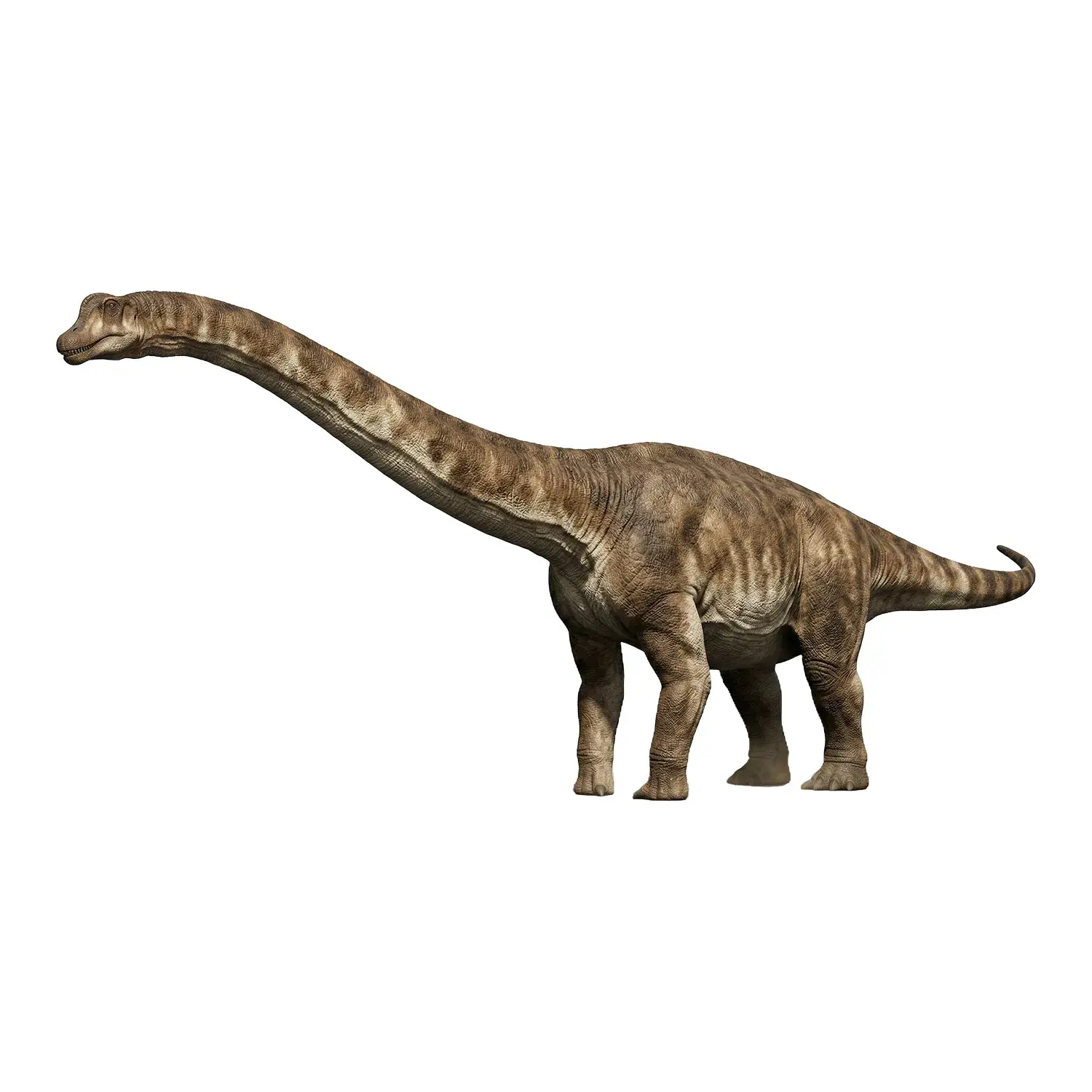
Erketu
Name Origin
God of Power
Classification
Diapsida, Saurischia, Sauropodomorpha
Habitat (Discovery Location)
Mongolia
Period
Late Cretaceous
Length
Approximately 15 meters
Diet
Herbivore (Plant-eater)
You might also like... 

-
 Afrovenator
- Classification
- Theropods
- Characteristics
- Carnivorous
- Era
- Jurassic period
- Archaeopteryx
- Classification
- Theropods
- Characteristics
- Carnivorous
- Era
- Jurassic period
- Moros
- Classification
- Theropods
- Characteristics
- Carnivorous
- Era
- Cretaceous period
- Eustreptospondylus
- Classification
- Theropods
- Characteristics
- Carnivorous
- Era
- Jurassic period
-
Sponsored Links
-
Sponsored Links




![[Latest Research] What Was the Function of Spinosaurus's Giant "Sail"? Exploring the Mysteries of Thermoregulation and Underwater Locomotion](https://dinosaurmuseum.jp/wp/wp-content/uploads/eyecatch_spinosaurus-sail-function_en-1024x512.webp)
![[Latest Discovery] A Third Type of Skin, Neither Scales Nor Feathers? Meet "Haolong dongi," a New Dinosaur Species Covered Entirely in Spikes](https://dinosaurmuseum.jp/wp/wp-content/uploads/eyecatch_dinosaur-spiky-skin-discovery_en-1024x512.webp)

Description
While various massive sauropodomorphs existed during the dinosaur era, “Erketu” boasts singularly unique proportions among them.
Described in 2006 by Mark Norell of the American Museum of Natural History, this dinosaur was discovered in Mongolian strata.
Its scientific name holds the meaning “God of Power.”
The “God of Power” with a Neck Twice as Long as its Body
Extraordinary Proportions
The greatest characteristic of Erketu is, without a doubt, its extremely long neck.
While long necks are common among sauropodomorphs, Erketu’s length was in a league of its own.
Surprisingly, the neck alone is estimated to have been about twice the length of its torso.
A Heavy Body to Maintain Balance
Possessing such an extremely long neck makes maintaining the body’s center of gravity very difficult.
Therefore, to balance the long neck extending forward, Erketu’s body (torso section) appears to have been quite heavy.
It is believed that this heavy torso acted as an anchor, supporting the long neck.
The Wonder of Evolution: Supporting Itself with a “Suspension Bridge” Structure
So, how did they physically support this abnormally long neck?
The secret lay in the special structure of their spine.
Bifurcated “Neural Spines”
In general sauropodomorphs, the “neural spine”—a projection extending upward from the vertebra—is often a single bone.
However, in the case of Erketu, the neural spines from the neck section backwards had a characteristic structure of being split into two (bifurcated).
Cable Structure Utilizing Ligaments
Thick ligaments ran between these bifurcated neural spines.
It is believed that these ligaments played the role of cables, firmly pulling up and supporting the long neck.
This support system using bone and ligament is remarkably similar to the structure of the “suspension bridges” we use today.
To efficiently support its long neck, Erketu had evolved a mechanical system within its own body identical to that of a suspension bridge.
The “God of Power” found in the lands of Mongolia is a dinosaur that displays a powerful skeleton worthy of its name and the amazing ingenuity of evolution.