
Einiosaurus

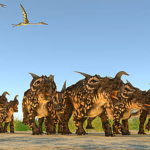
Name Origin
Bull-like Lizard
Family
Ceratopsidae
Classification
Diapsida, Ornithischia, Marginocephalia
Habitat (Discovery Location)
United States
Period
Approximately 75 million years ago (Late Cretaceous)
Length
Approximately 6 meters
Weight
Approximately 3–5 tons
Diet
Herbivore
You might also like... 

-
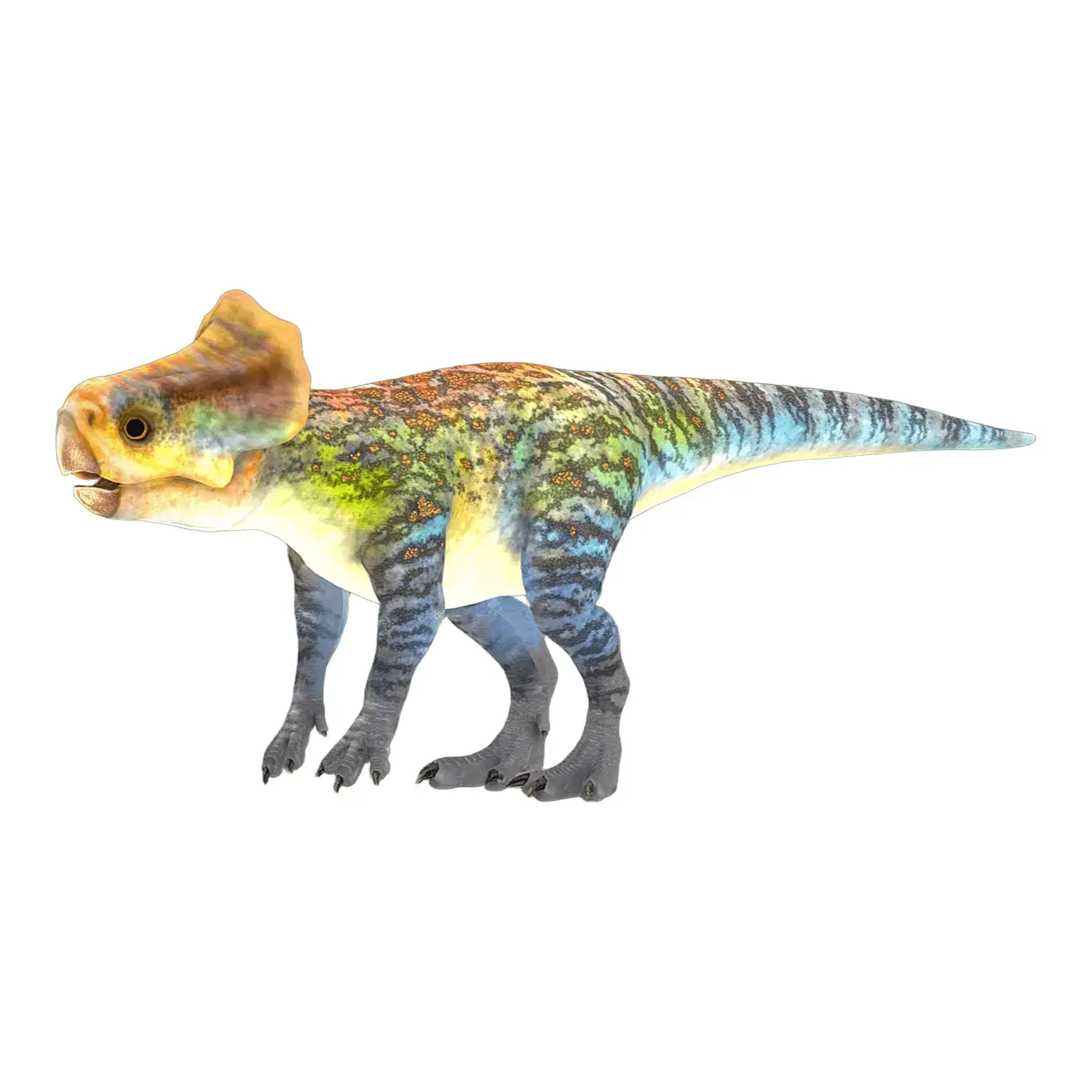
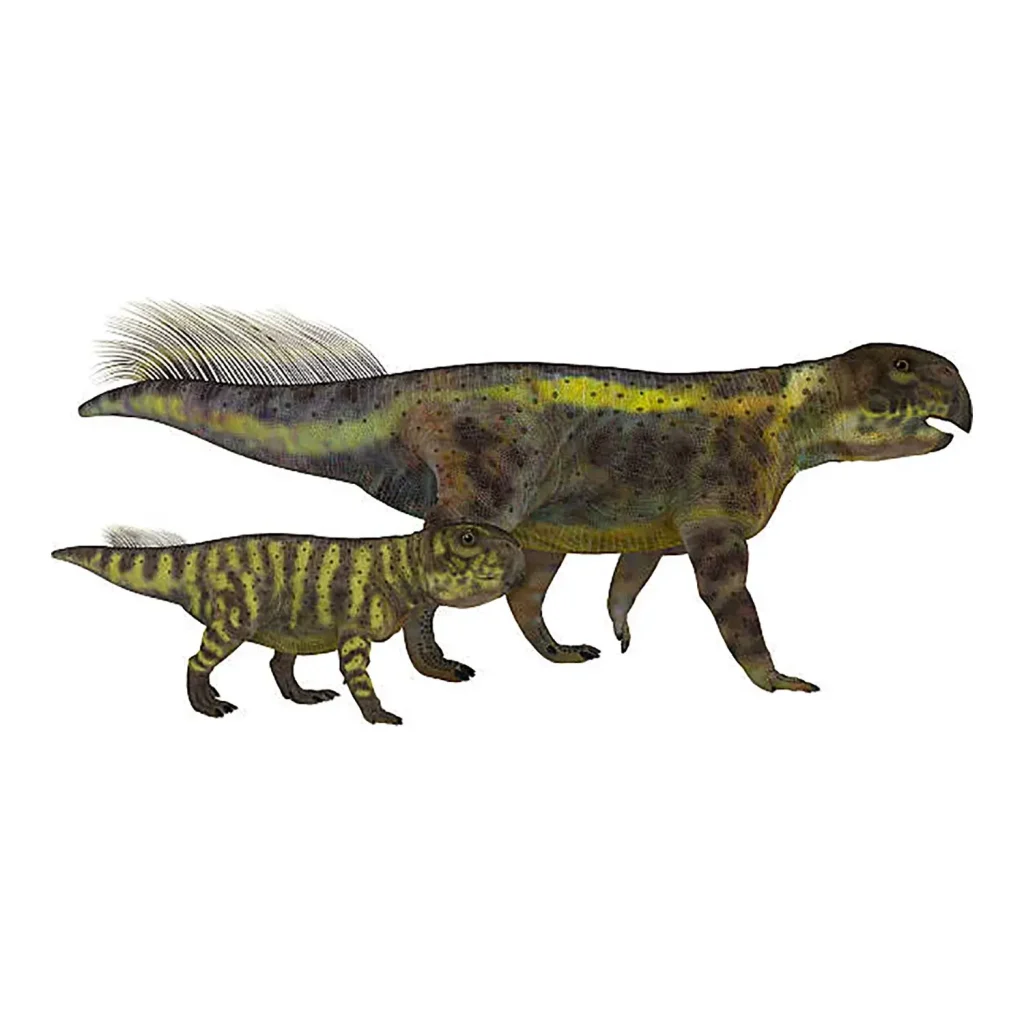
 Psittacosaurus
- Classification
- Marginocephalia
- Characteristics
- Herbivorous
- Era
- Cretaceous period
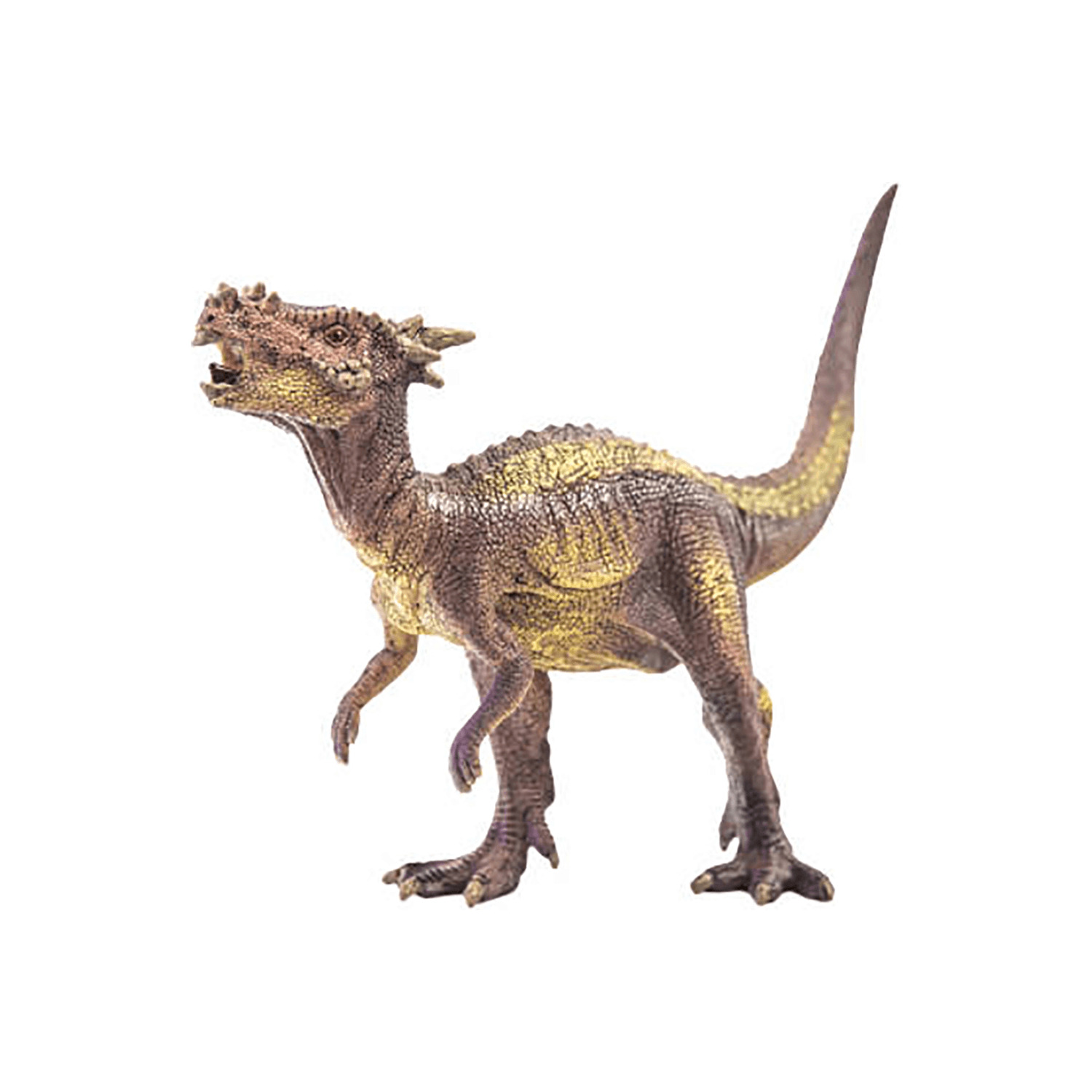
- Gasosaurus
- Classification
- Theropods
- Characteristics
- Carnivorous
- Era
- Jurassic period
- Archaeornithomimus
- Classification
- Theropods
- Characteristics
- Omnivorous
- Era
- Cretaceous period
- Amargasaurus
- Classification
- Sauropods
- Characteristics
- Herbivorous
- Era
- Cretaceous period
-
Sponsored Links
-
Sponsored Links










![[Latest Research] What Was the Function of Spinosaurus's Giant "Sail"? Exploring the Mysteries of Thermoregulation and Underwater Locomotion](https://dinosaurmuseum.jp/wp/wp-content/uploads/eyecatch_spinosaurus-sail-function_en-1024x512.webp)
![[Latest Discovery] A Third Type of Skin, Neither Scales Nor Feathers? Meet "Haolong dongi," a New Dinosaur Species Covered Entirely in Spikes](https://dinosaurmuseum.jp/wp/wp-content/uploads/eyecatch_dinosaur-spiky-skin-discovery_en-1024x512.webp)
Description
North America during the Late Cretaceous period, approximately 75 million years ago.
In this era, when numerous ceratopsians roamed, lived a dinosaur with particularly unique characteristics.
Its name was “Einiosaurus”.
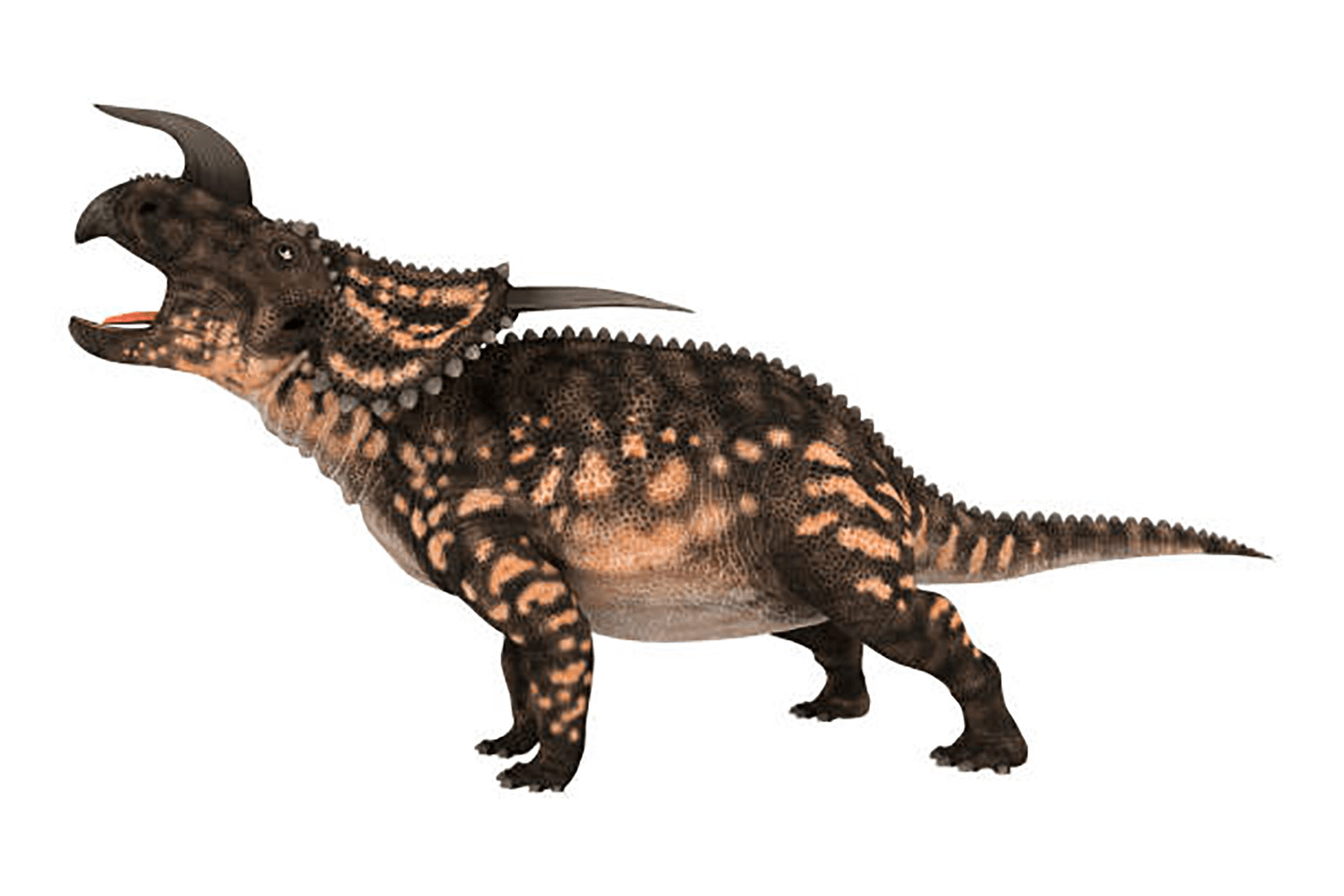
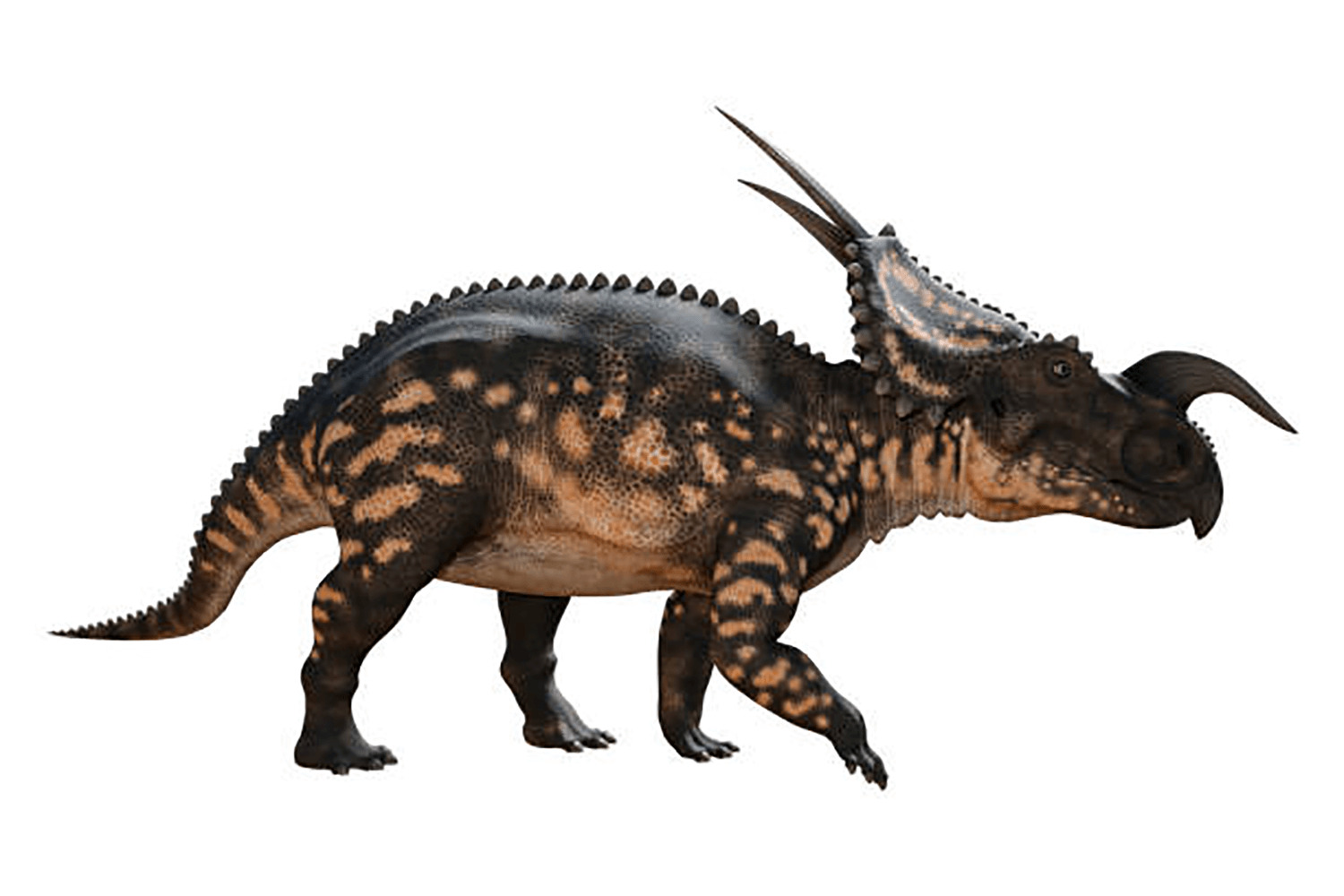
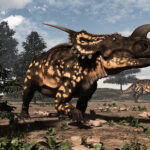
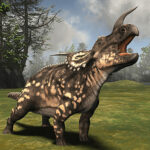
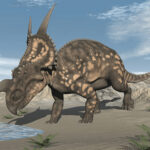
With a medium-sized body about 6 meters in length and a mysteriously shaped horn that looked as if it had melted forward, this dinosaur has revealed many interesting facts through its fossils.
Discovered in a Native American Sacred Site: Named After the “Buffalo”
A Rare Dinosaur Exclusive to Montana
Fossils of Einiosaurus were discovered in the present-day state of Montana, United States.
To this day, fossils of this dinosaur have only been found in Montana, making it a very regionally specific existence.
Meaning of the Scientific Name: “Buffalo-like Reptile with a Forward-Curving Horn”
Notably, the initial discovery site was within a Native American reservation (a sacred site).
In honor of this discovery location, their language was incorporated into the scientific name.
Einio
Means “buffalo” in the language of the Blackfoot tribe of Native Americans.
In other words, Einiosaurus means “Buffalo Lizard” (or Buffalo-like reptile) in the Blackfoot language.
The scientific name Einiosaurus procurvicornis, formally named in 1995, encompasses the meaning “Buffalo-like reptile with a forward-curving horn,” a name that beautifully fuses its distinctive appearance with local culture.
*Note: However, its actual movements are believed to have been much slower than a buffalo, incapable of running violently.
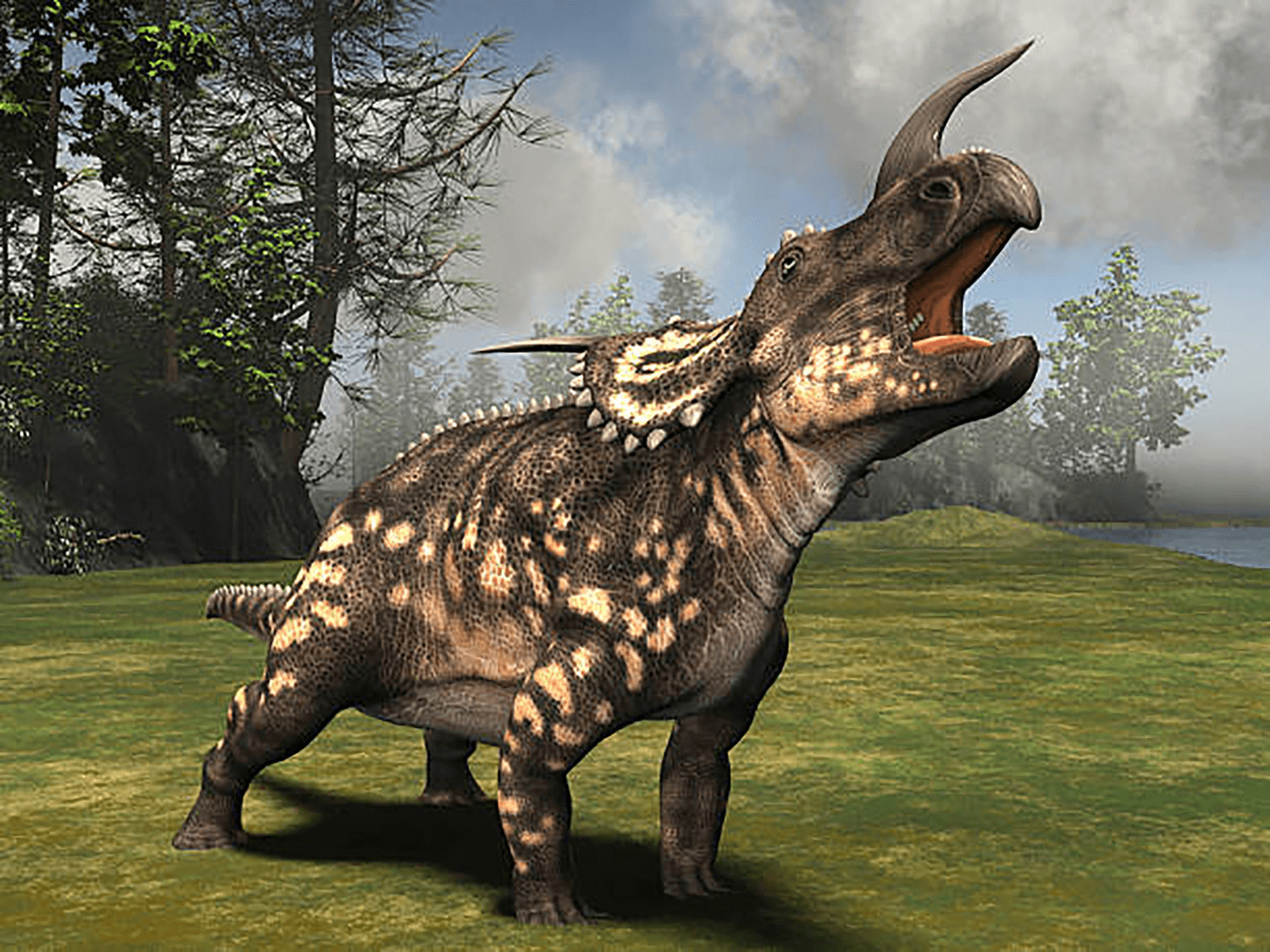
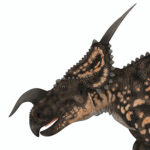
A Nose Horn Like a “Giant Can Opener” and a Unique Head
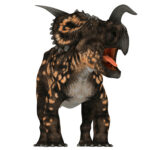
While Einiosaurus falls into the somewhat smaller category among ceratopsians, which include giant species, its head possessed a striking individuality.
A “Nose Horn” Curved Like a Reverse Hook
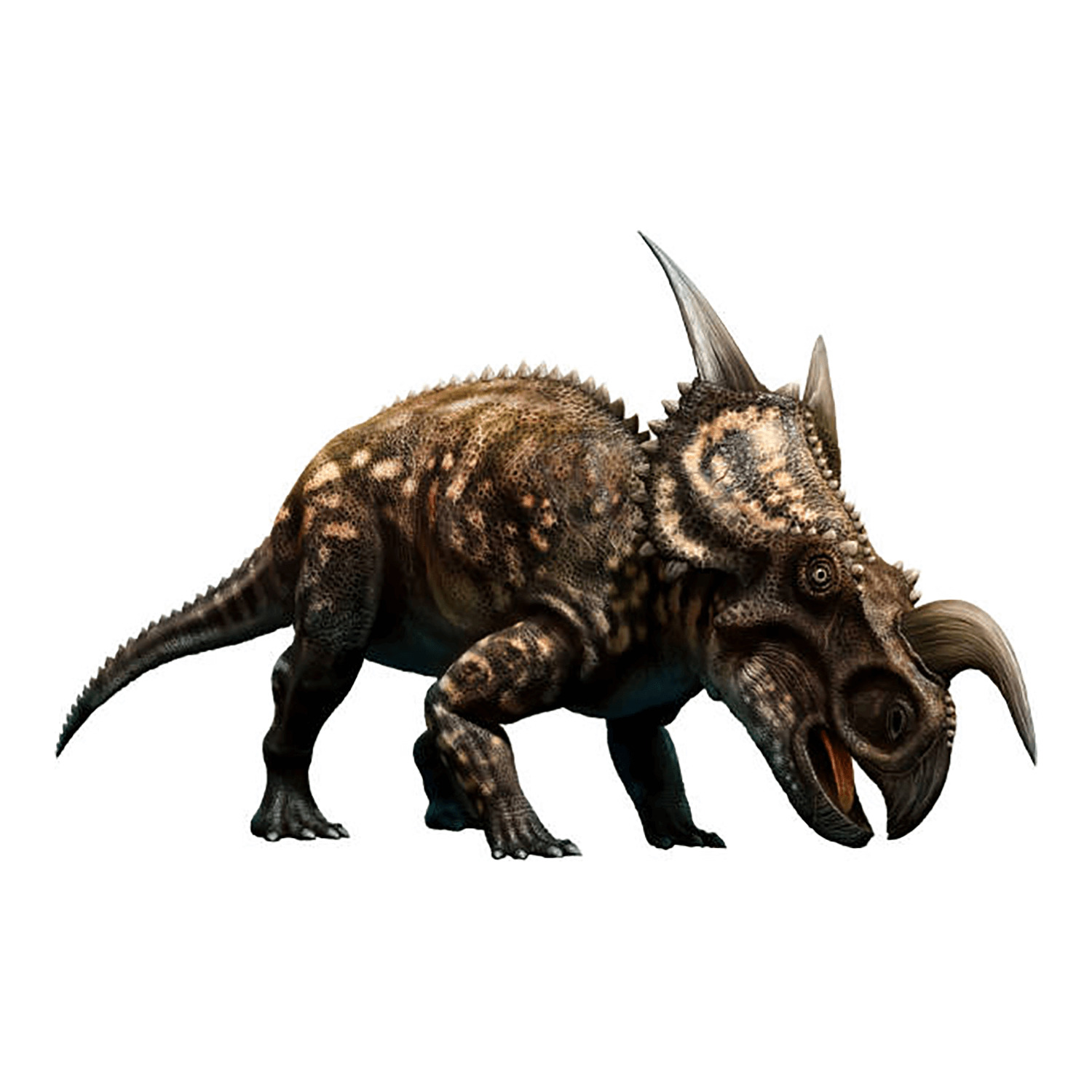
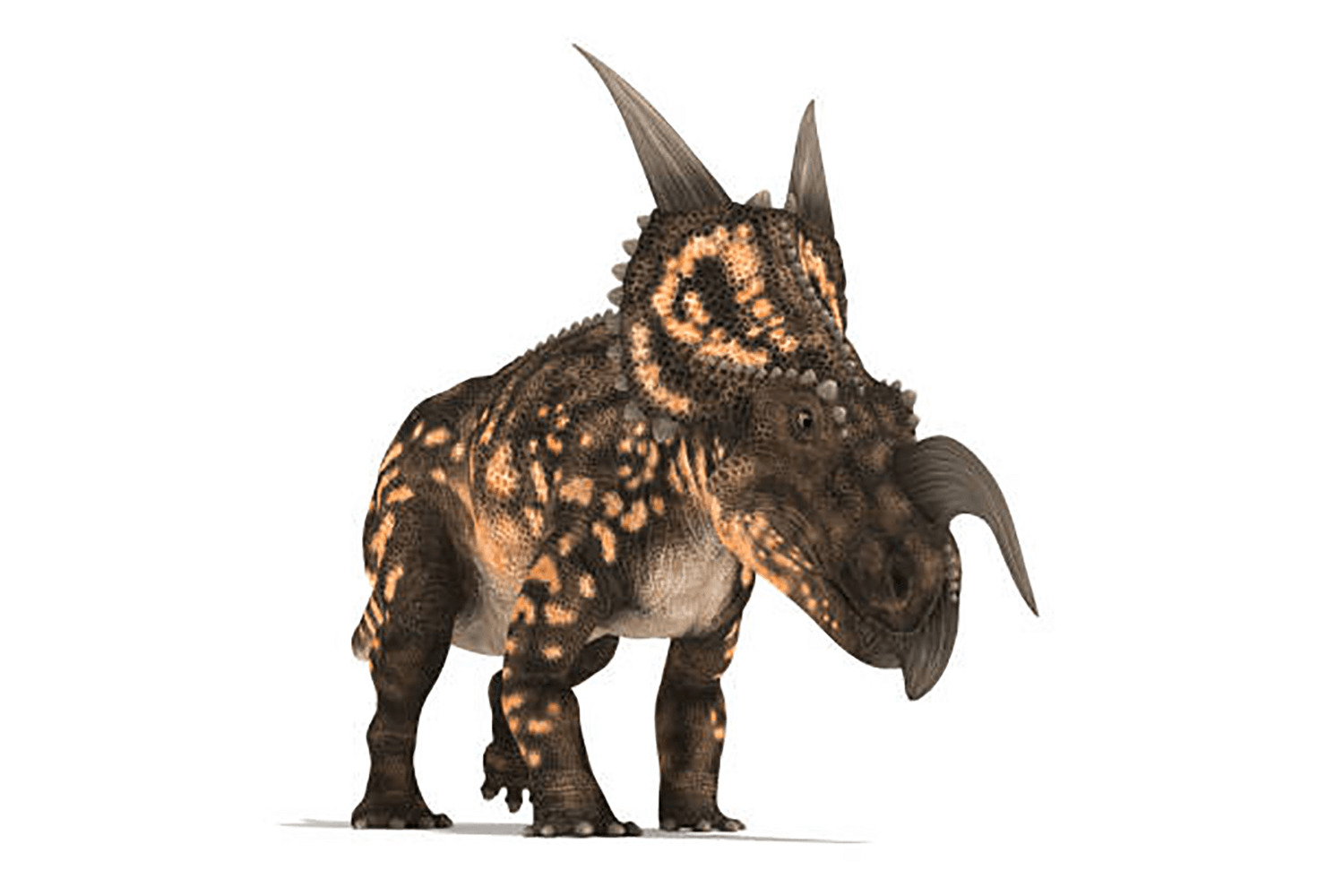
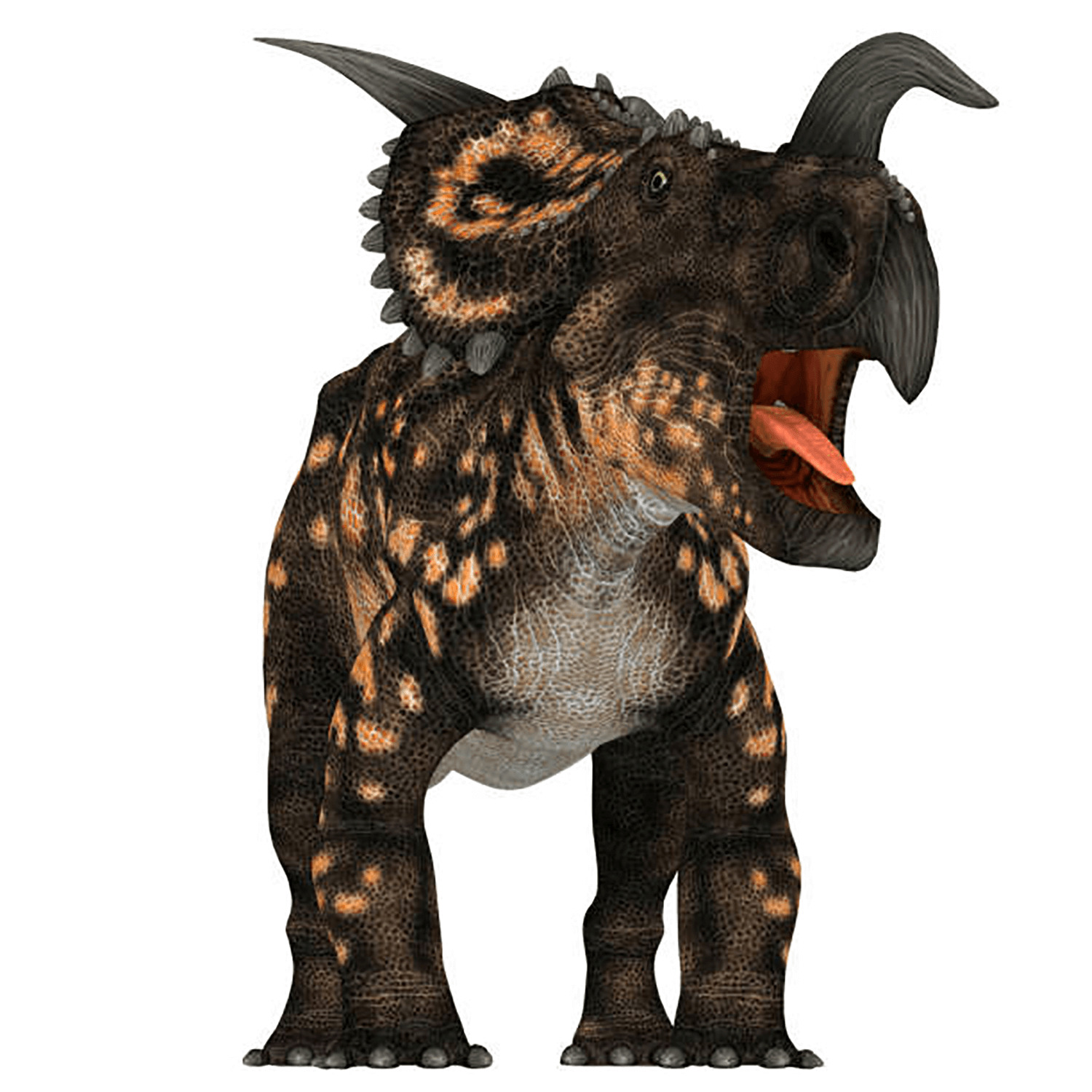
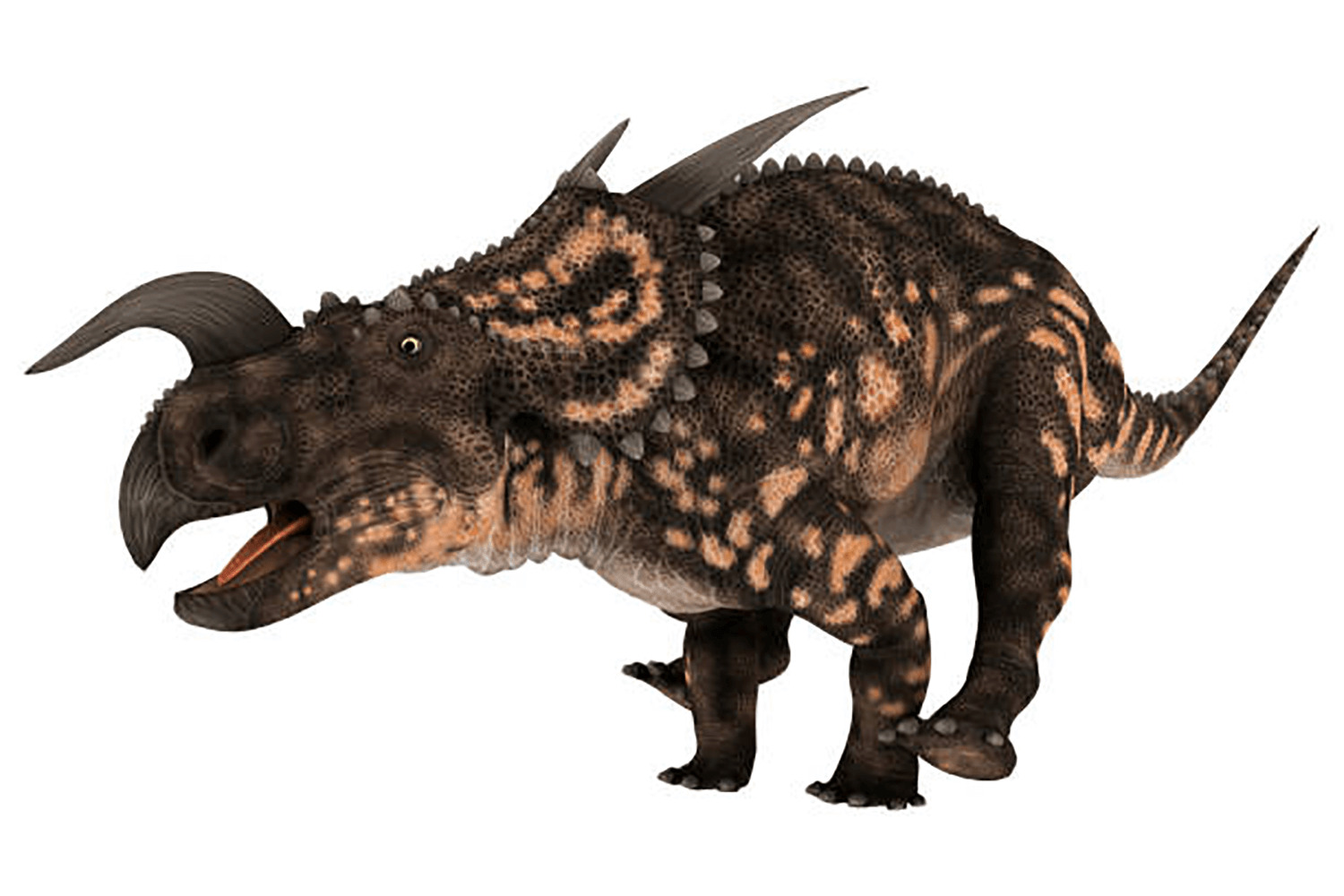
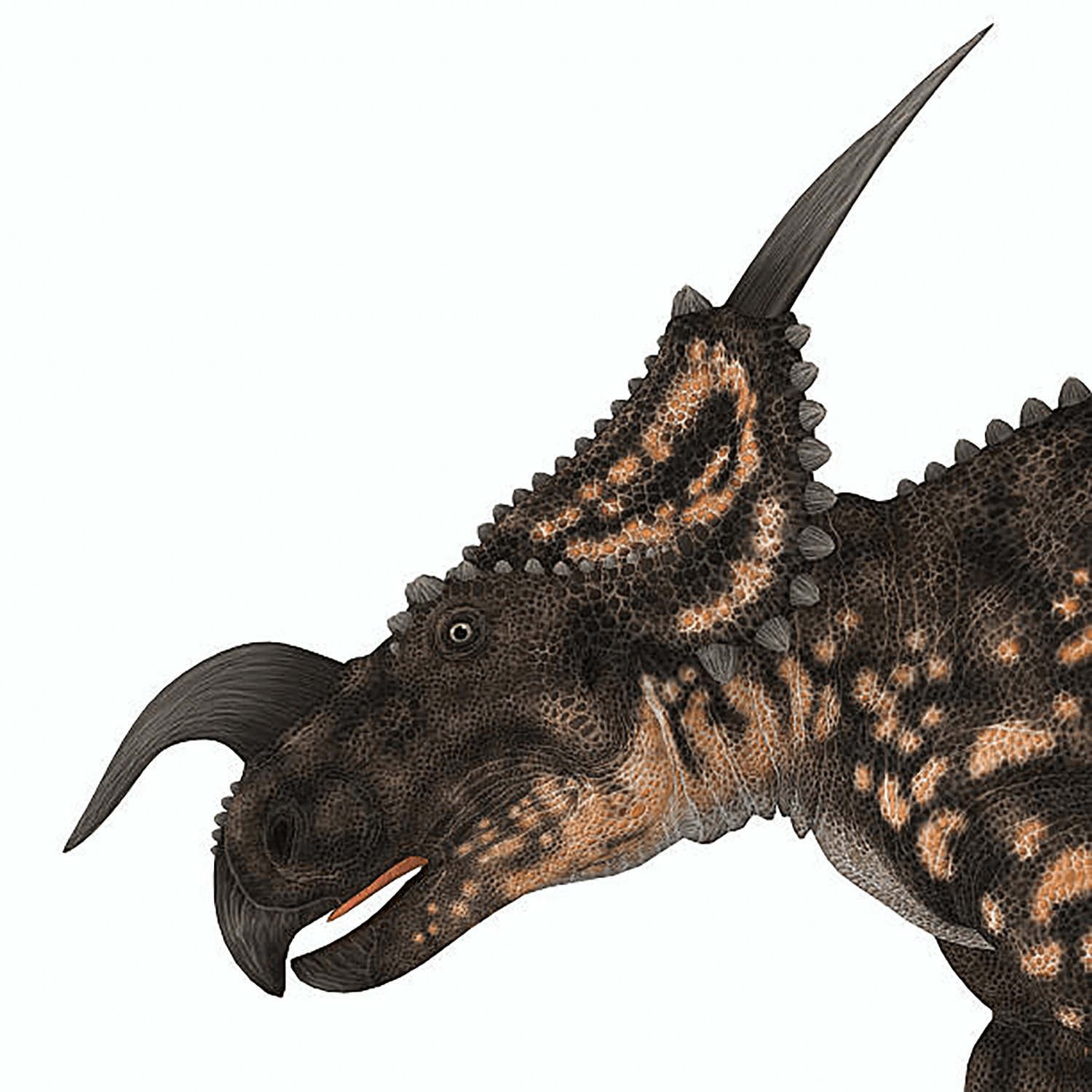
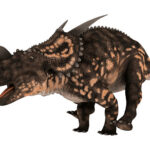
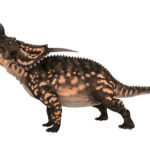
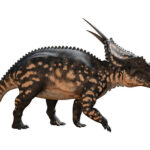
Its greatest feature is the shape of the horn on its nose.
It curled downwards toward the front, drawing a spectacular “reverse hook” arc.
Its shape is described as drooping forward like “melted soft-serve ice cream” or resembling a “giant can opener.”
Described as “melted soft-serve ice cream” or a “giant can opener”
Frill Spikes to Boost Defense
On the frill (neck shield) at the back of its head, there were large curved horns or two long, sharp, thick spikes, which enhanced its rear defense.
The skull itself was about 1.5 meters in size, which was compact compared to similar ceratopsians (which could reach the 3-meter class).
Unsuited for Battle? The Role of the Enigmatic “Curved Horn”
A horn so extremely curved and pointing downwards is clearly unsuitable as a weapon for piercing enemies.
Why it took this shape remains a subject of debate, with the following theories primarily proposed.
Theories Regarding Usage
Foraging Tool Theory
Used to dig up plant roots or rhizomes growing in the ground.
Defense Theory
While the shape was not ideal, it also served to protect against enemies.
Display Theory
Used for species identification or to appeal to the opposite sex (display).
Theories Regarding Formation Factors
Malformation/Mutation Theory
Could it be that an individual with a curved nose was simply born by chance due to a genetic mutation?
Fossil Deformation Theory
Could the fossil itself have been deformed as a result of compression within the geological strata?
In fact, since only one fossil with a well-preserved snout has been discovered so far, the truth remains a mystery.
Evolutionary Missing Link Theory
It was once thought that this unique horn might be a “missing link” showing the process of evolution.
The speculation is that it is an intermediate species where the horn gradually curved forward during the evolution from the nose-horn-developed “Styracosaurus” to “Pachyrhinosaurus,” which possessed a large boss instead of a horn.
Life in “Herds” and Sociality as Told by Bone Beds
Traces of Mass Death by Flood or Drought
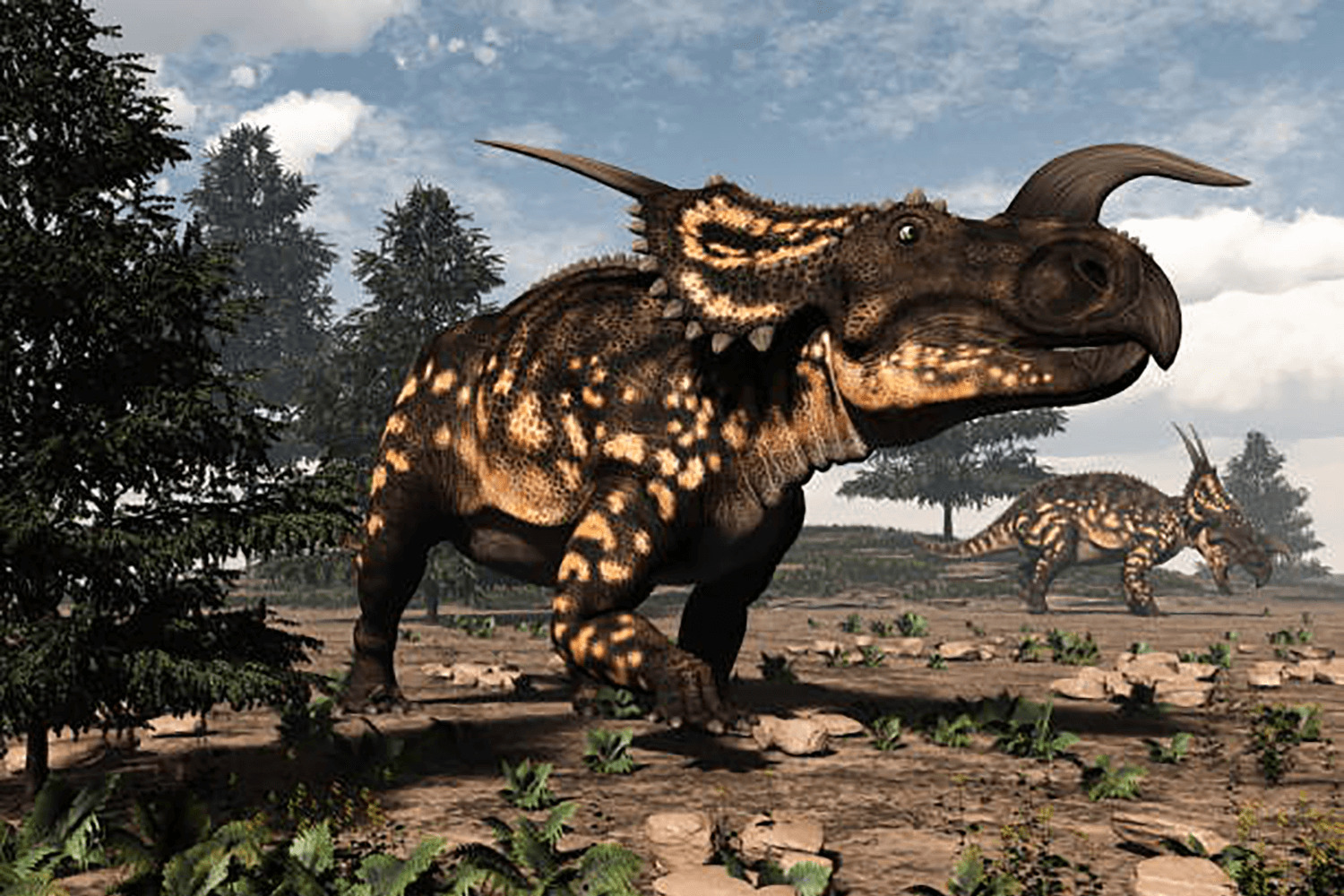
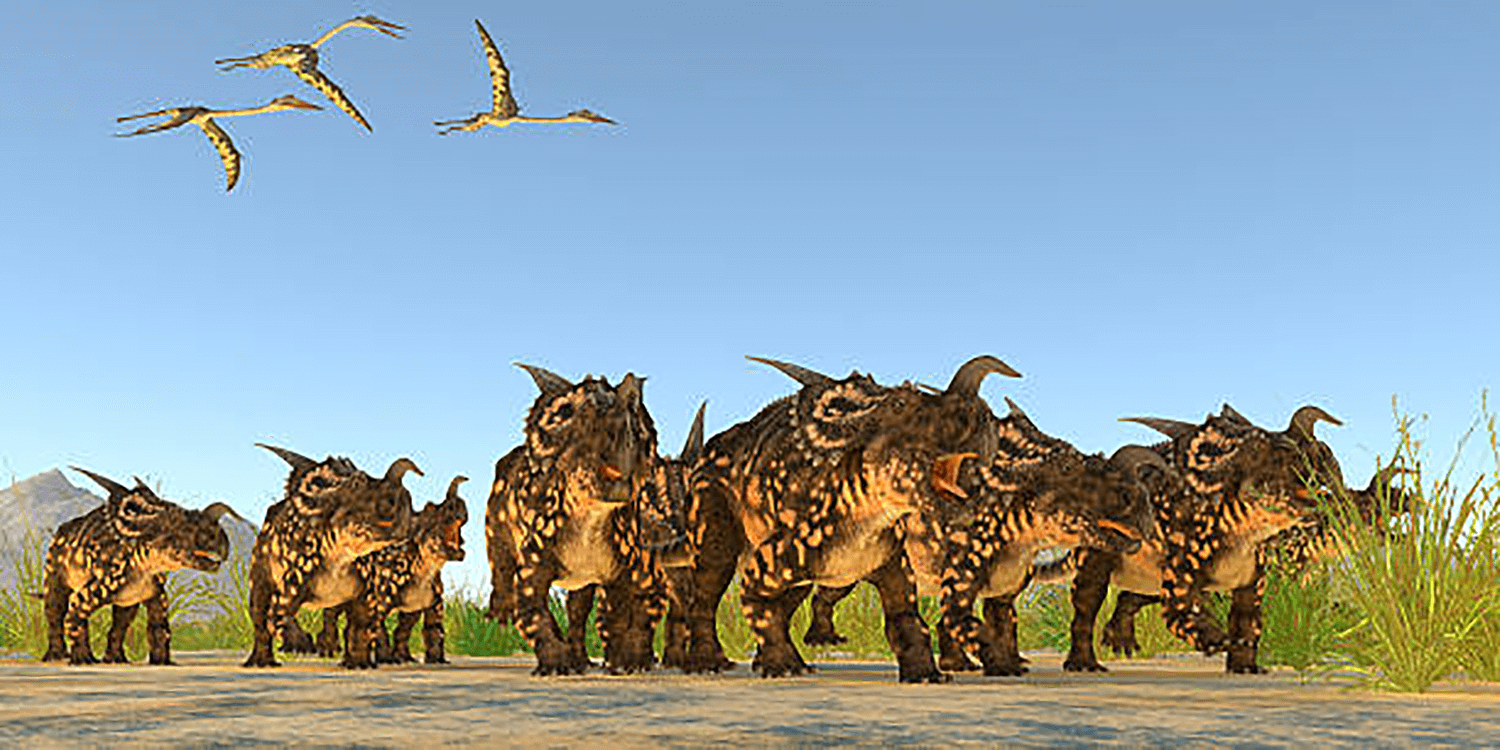
Einiosaurus is believed to have lived in “herds” rather than alone.
Believed to have lived in “herds” rather than alone
The basis for this is the bone bed (a dense concentration of bones) at the “Dino Ridge Quarry” in the Two Medicine Formation of Montana.
Here, hundreds of bones representing more than 15 individuals were found at once, suggesting a high possibility that the entire herd perished simultaneously after being caught in some sudden accident or disaster (such as a flood or drought).
Protecting Themselves in Multi-Generational Herds
The discovered fossils included individuals of various ages, indicating that they formed herds containing everything from adults to children.
Ferocious predators such as Daspletosaurus existed in North America at that time.
For the Einiosaurus, which was not fast on its feet, forming herds was likely the best survival strategy to deter attacks from predators.