
Sinornithosaurus
Name Origin
Chinese Bird-Lizard
Family
Dromaeosauridae
Classification
Diapsida, Saurischia, Theropoda
Habitat (Discovery Location)
China
Period
Approximately 125 million years ago (Early Cretaceous)
Length
Approximately 0.9–1.2 meters
Weight
Approximately 3 kg
Diet
Carnivore (Meat-eater)

You might also like... 

-
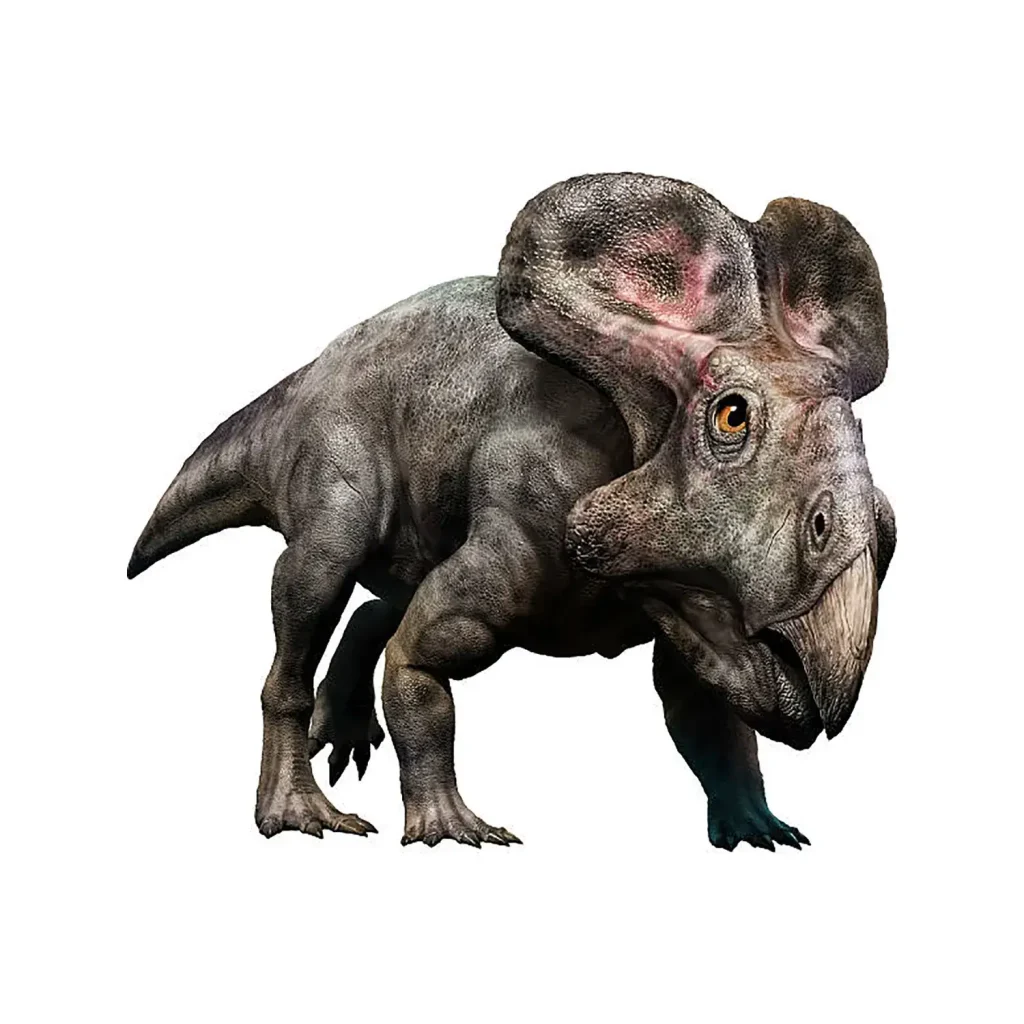
 Protoceratops
- Classification
- Marginocephalia
- Characteristics
- Herbivorous
- Era
- Cretaceous period
- Tuojiangosaurus
- Classification
- Thyreophora
- Characteristics
- Herbivorous
- Era
- Jurassic period
- Plateosaurus
- Classification
- Sauropods
- Characteristics
- Herbivorous
- Era
- Triassic period
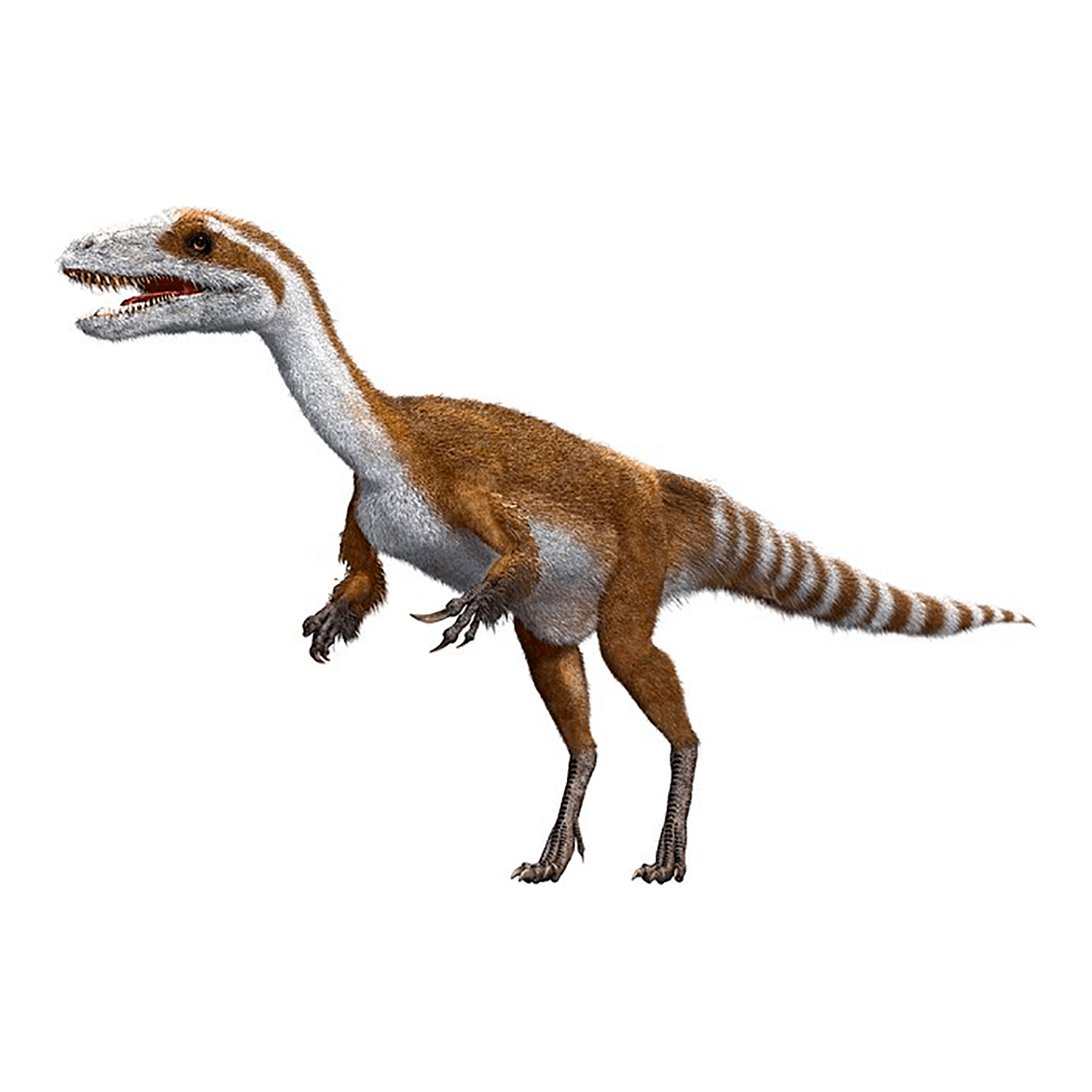
- Guanlong
- Classification
- Theropods
- Characteristics
- Carnivorous
- Feathered
- Era
- Jurassic period
-
Sponsored Links
-
Sponsored Links







![[Latest Research] What Was the Function of Spinosaurus's Giant "Sail"? Exploring the Mysteries of Thermoregulation and Underwater Locomotion](https://dinosaurmuseum.jp/wp/wp-content/uploads/eyecatch_spinosaurus-sail-function_en-1024x512.webp)
![[Latest Discovery] A Third Type of Skin, Neither Scales Nor Feathers? Meet "Haolong dongi," a New Dinosaur Species Covered Entirely in Spikes](https://dinosaurmuseum.jp/wp/wp-content/uploads/eyecatch_dinosaur-spiky-skin-discovery_en-1024x512.webp)
Description
The geological strata of Liaoning Province, China, are a “treasure trove” indispensable for telling the story of the evolution from dinosaurs to birds.
In this land during the Early Cretaceous (approximately 125 million years ago), numerous feathered dinosaurs connected to modern birds once lived.
Among them, one dinosaur caused a stir worldwide with a shocking theory: it “might have been venomous.”
That dinosaur is the small dromaeosaurid, “Sinornithosaurus.”
Bearing a name that means “Chinese Bird-Lizard,” and contrary to their charming appearance, they attracted attention as hunters harboring the potential to be the first “venom users” in dinosaur history.
Vividly Colored Feathers and the Dawn of “Flapping”
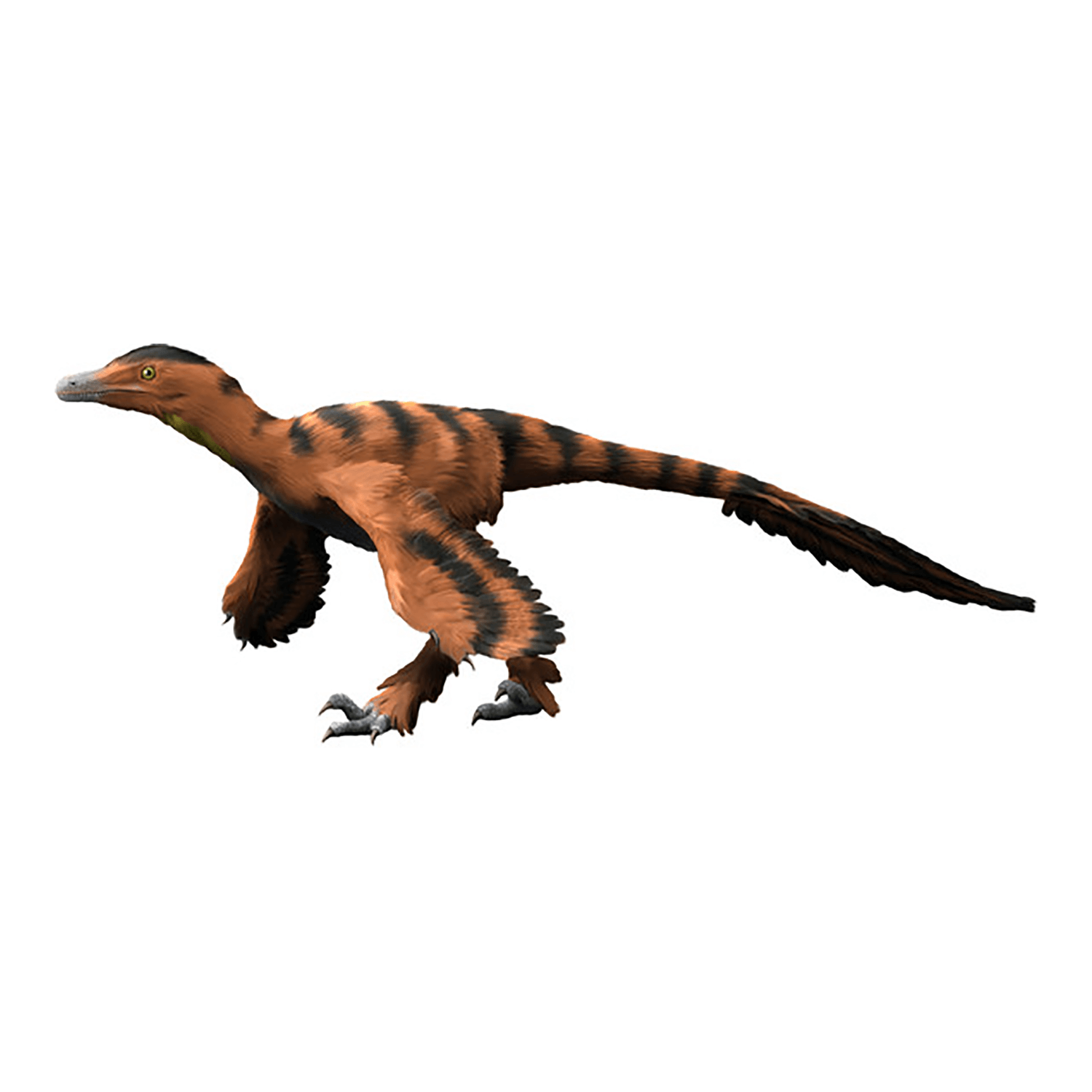
Sinornithosaurus measured about 0.9 to 1.2 meters in length.
It was similar in size to a modern bird of prey or a large chicken.
Their greatest characteristic lies in the well-preserved feathers covering their entire bodies.
Scientifically Determined “Feather Colors”
The torso was covered in down-like feathers about 3–4.5 cm long, primarily used for thermoregulation.
Furthermore, in 2010, an analysis of cellular structures (melanosomes) using a microscope identified the “pigments” left in the feathers.
According to research, the feather colors varied by body part, suggesting a colorful appearance with a mix of reddish-brown, black, and gray.
This vibrant look was likely used for displays to attract mates or for communication with others of their kind.
Flightless, Yet Capable of Flapping Arms
Their arms possessed primitive “flight feathers” like those of modern birds, yet they could not fly through the sky.
Why, then, did they have wing-like arms?
Skeletal studies have revealed that the joints in their arms were extremely flexible, allowing for a “flapping” motion similar to birds.
It is believed this motion was used for tree climbing, maintaining balance when jumping, or pinning down prey.
They were at an evolutionary stage just on the verge of flight, and their physical functions were certainly approaching those of birds.
The “Venomous Fang” Suspicion That Shook the Scientific Community
What catapulted Sinornithosaurus to fame was a sensational theory published in 2009 suggesting they “may have possessed venom.”
The Theory of the First Venomous Dinosaur in History
When the research team examined the skull, they discovered the following features:
Grooved Teeth
Vertical “groove-like depressions” running along the outside of the long fangs in the upper jaw.
Bone Cavities
The existence of mysterious hollows (pockets) in the bone at the base of the teeth.
Comparing these to modern venomous snakes (like King Cobras) and venomous lizards, they hypothesized a mechanism where “venom from glands in the bone cavities flowed down the grooves of the teeth and into the opponent.”
If true, they would be the “first venomous dinosaurs in history.”
Skeptical Views and the Current Consensus
However, many counterarguments were raised against this sensational theory.
Teeth Grooves
This feature is also seen in non-venomous animals like baboons and mandrills, so it is not definitive proof of venom fangs.
Absence of Venom Glands
The cavities thought to house venom glands are likely just sinuses (air passages).
Currently, the mainstream view is that “the evidence is too weak to be certain (the possibility of them having venom is low),” but it has not been completely disproven.
This controversy continues to be told as an intriguing topic that stirs the imagination regarding the “invisible ecology” of dinosaurs.
The Eat-or-Be-Eaten Cretaceous: True Ability as a Predator
Regardless of whether it had venom, there is no doubt that Sinornithosaurus was an excellent hunter.
Its feet were equipped with the “sickle claws” characteristic of dromaeosaurids, allowing it to catch lizards and small animals with swift movements.
Evidence of “Being Eaten” Found in a Stomach
However, the Cretaceous forest was a world where the weak were meat for the strong.
Being small, they were always on the side of “being hunted” as well.
As cruel evidence of this, a hind leg of a Sinornithosaurus was discovered inside the stomach of a fossilized “Sinocalliopteryx,” a large feathered dinosaur that lived in the same region.
Even with the potential of venomous fangs, it seems they were merely one of the suitable prey items for larger, voracious predators.