Stygimoloch
Name Origin
Demon of the River Styx
Family
Pachycephalosauridae
Classification
Diapsida, Ornithischia, Marginocephalia
Habitat (Discovery Location)
United States
Period
Approximately 66 million years ago (Late Cretaceous)
Length
Approximately 3 meters
Weight
Approximately 80 to 90 kg
Diet
Herbivore (Plant-eater)
 Jurassic
Park / World Featured Dinosaur
Appearance in Jurassic World: Fallen Kingdom
It made its memorable screen debut in this film.
Characterized by its spiky, hard, dome-shaped head, it is affectionately referred to by the nickname "Stiggy" in the movie. It successfully filled the role of its "senior," the Pachycephalosaurus (nicknamed "Pachy"), which appeared only briefly in the previous film, Jurassic World.
Notably, while the prevailing theory in modern paleontology suggests that Stygimoloch is merely a sub-adult (juvenile) form of Pachycephalosaurus, the film intentionally depicts them as distinct species.
In the film, at least five individuals were captured on Isla Nublar, three of which were transported to the "Lockwood Estate" on the U.S. mainland.
Midway through the story, one individual—held in a cell adjacent to where Owen and Claire were imprisoned by Eli Mills—plays an unexpectedly major role. Owen, eyeing its signature hard head, provoked it by whistling. Falling for the bait, Stiggy smashed through the brick wall with a headbutt. Consequently, this created the decisive opportunity for the pair to escape (successfully freeing them, albeit unconsciously).
Furthermore, guided by Owen, it later boarded an elevator and stormed into the corrupt dinosaur auction hall where its fellow islanders were being sold off.
By rampaging through the venue, causing chaos, and knocking down security guards, it successfully prevented the final sale and transport of the biological weapon, the Indoraptor. Portrayed almost like a hero of salvation, it protected the future of many dinosaurs and specialized in unwittingly helping others. After fulfilling its role, it safely escaped into the outside world.
However, its intelligence is depicted with a touch of charm. It shows a comical side, suggesting it "isn't the brightest bulb"—easily falling for Owen's provocations to headbutt blindly, and even stumbling after accidentally headbutting a steel beam in the auction hall with too much momentum.Appearance in Jurassic World: Dominion
In the black market, a hub for illegal dinosaur trafficking, captive individuals can be seen. While they were crowd-pleasers with their rampage in the previous film, this time they are depicted in a grim situation—victims of human poaching, stripped of their freedom.
According to information from the official promotional website "Dinotracker," sightings in various scenarios have been reported globally, highlighting the realities of feral populations and smuggling operations.
South Korea
Sightings have been confirmed in Seoraksan National Park, located in the northeastern part of the country.
Kenya
In Kenya, reports describe individuals being attacked by lions—the local apex predators—suggesting violent clashes are occurring within the modern ecosystem.
Costa Rica
Reports of illegally smuggled individuals have emerged from Costa Rica, confirming that they remain a commodity in the criminal underworld.
Queensland
In Queensland, Australia, there was a report of an individual being rescued by a farmer, offering a rare glimpse of a relatively positive relationship formed with humans.

You might also like... 

-
 Maiasaura
- Classification
- Ornithopoda
- Characteristics
- Herbivorous
- Era
- Cretaceous period
- Masiakasaurus
- Classification
- Theropods
- Characteristics
- Carnivorous
- Era
- Cretaceous period
- Oviraptor
- Classification
- Theropods
- Characteristics
- Omnivorous
- Feathered
- Era
- Cretaceous period
- Majungasaurus
- Classification
- Theropods
- Characteristics
- Carnivorous
- Era
- Cretaceous period
-
Sponsored Links
-
Sponsored Links






![[Latest Research] What Was the Function of Spinosaurus's Giant "Sail"? Exploring the Mysteries of Thermoregulation and Underwater Locomotion](https://dinosaurmuseum.jp/wp/wp-content/uploads/eyecatch_spinosaurus-sail-function_en-1024x512.webp)
![[Latest Discovery] A Third Type of Skin, Neither Scales Nor Feathers? Meet "Haolong dongi," a New Dinosaur Species Covered Entirely in Spikes](https://dinosaurmuseum.jp/wp/wp-content/uploads/eyecatch_dinosaur-spiky-skin-discovery_en-1024x512.webp)
Description
Stygimoloch was a species of pachycephalosaur that lived in North America during the Late Cretaceous period.
With its ominous yet fascinating name and the unique ornamentation on its head, it boasts high popularity among dinosaur fans.
However, recent research has raised the shocking theory that this dinosaur was not an independent species, but rather the “youthful form” of a certain famous dinosaur, sparking major debate in the paleontological community.
“Demon of the River Styx”: The Shocking Origin of Its Name
The scientific name Stygimoloch carries a very dramatic meaning derived from its appearance and the location of its discovery.
Moloch’s Horns
The long, elaborate horns growing around its head were reminiscent of “Moloch,” a deity worshipped in the ancient Middle East who was later demonized.
The River of Hell
The fossil was excavated from the “Hell Creek Formation,” which spans Montana and South Dakota in the United States.
Combining these two elements with “Styx,” the river of the underworld in Greek mythology, it was named Stygimoloch, meaning “Demon of the River Styx (Moloch of the Styx).”
Incidentally, another dinosaur named Acheroraptor (“Thief of the Acheron River”), also named after an underworld river, has been discovered in the same Hell Creek Formation.
A Head Full of Spikes and Physical Characteristics
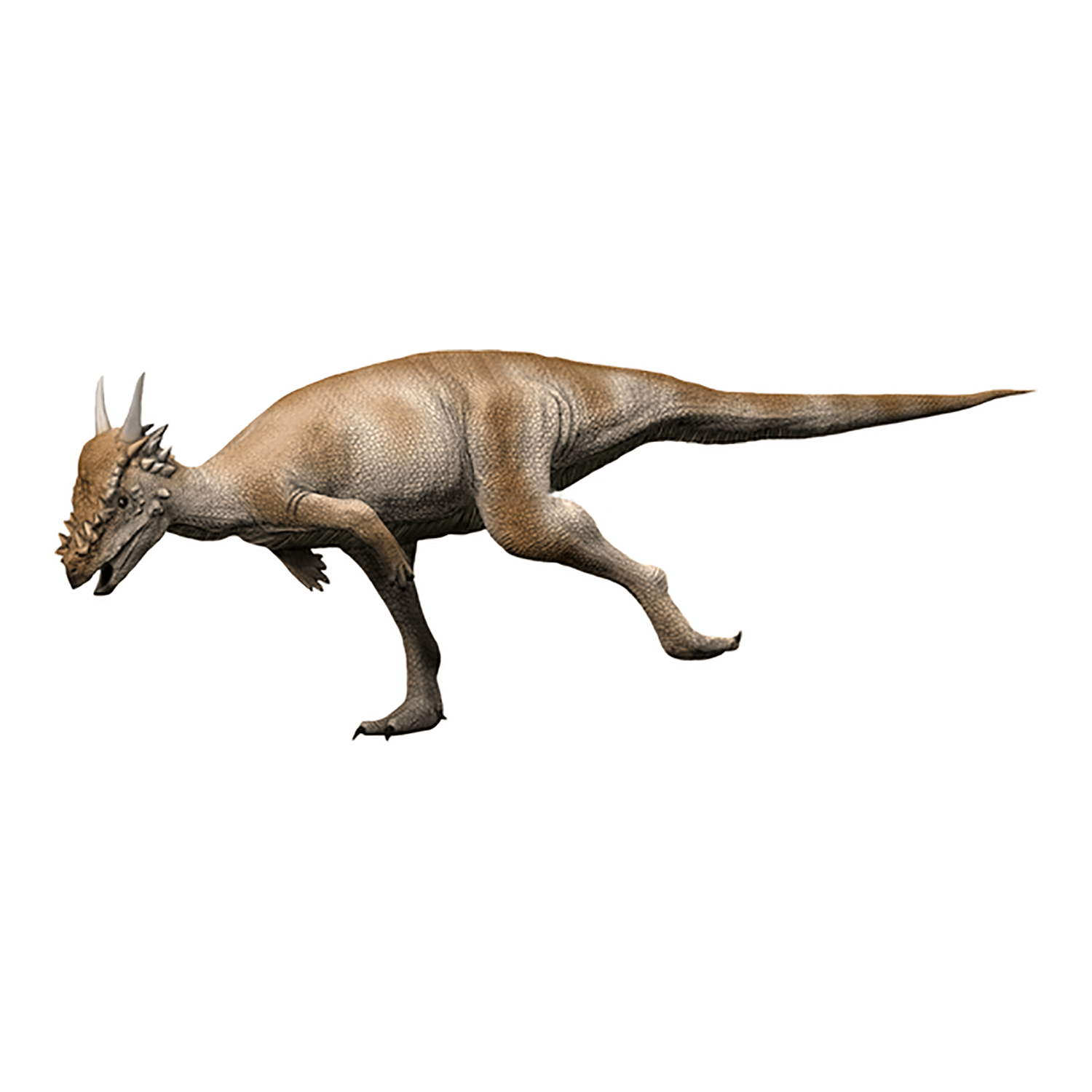
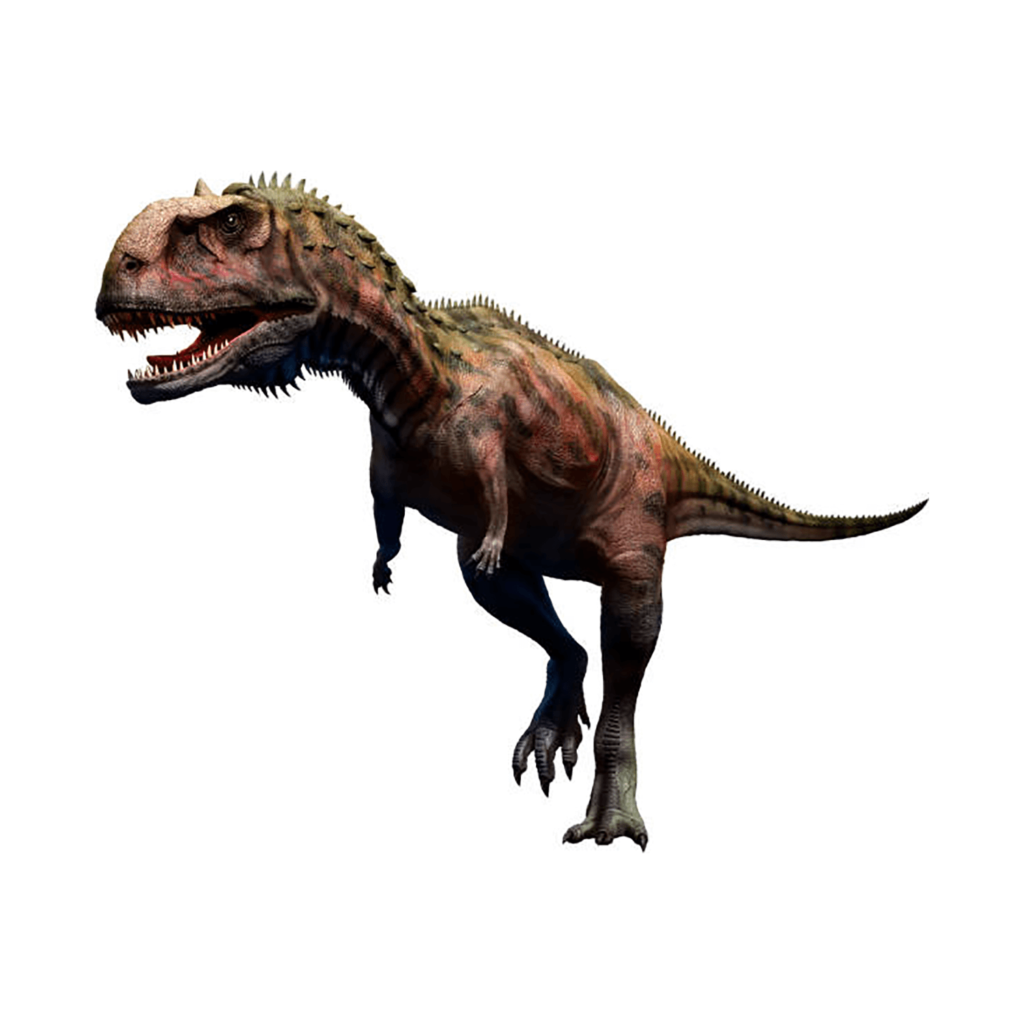
Stygimoloch was about 3 meters long, making it a medium to somewhat small pachycephalosaur.
It lived in the same era and region as Pachycephalosaurus, the quintessential pachycephalosaur, and the flat-headed Dracorex.
Unique Dome and Sharp Horns
The most distinctive feature of Stygimoloch was undoubtedly its skull.
While the skull of Pachycephalosaurus was a thick, raised, complete dome, the crown of Stygimoloch was relatively small, possessing a somewhat flat, pear-shaped dome that sloped to the sides.
It is sometimes described as having a “flat shape without thickness, with a bump in the middle popping out like a knob.”
Furthermore, from the sides of the dome to the back of the head, it was equipped with numerous sharp, icepick-like horns arranged like a crown.
These horns were long and elaborate compared to related species, with some reaching over 10 cm in length.
Purpose of the Horns
There are several theories about the use of these flashy horns and the cranial bump.
Display Theory
The theory that they were ornaments used to attract mates with their flashy appearance or to intimidate rivals.
As they grew, they must have used their appearance to intimidate members of their own species, signaling, “I have the power to defend my territory.”
Weapon Theory
The theory that they fought by locking horns like deer, or used the spikes on the sides of their heads to deliver follow-up attacks after a headbutt.
If they engaged in fierce tackles and then pursued their fallen opponents with these spikes, they might have been very ferocious and romanticized hunters.
In any case, it is believed that the domes and spikes on the heads of these pachycephalosaurs developed robustly as they grew.
Shaken Identity: Is It the Same Species as Pachycephalosaurus?
Despite its fame, Stygimoloch is a mysterious dinosaur, and currently, a major “suspicion” hangs over it.
That is the theory that “Stygimoloch is actually the same species as Pachycephalosaurus.”
The theory gaining traction suggests that Stygimoloch, Pachycephalosaurus, and Dracorex—previously thought to be three different pachycephalosaurs—are actually the same species, and the differences in head shape are due to differences in sex or growth stages.
Dr. Jack Horner’s Growth Stage Theory
This theory is strongly advocated by the renowned paleontologist Jack Horner, who is also known as the model for Dr. Alan Grant in the movie Jurassic Park.
He is the same person who previously surprised the world with the theory that “Triceratops and Torosaurus are the same species, and Torosaurus is a mature Triceratops.”
Research since the 2000s has highlighted the following points:
Only Juveniles Found
All discovered fossils of Stygimoloch and Dracorex are of developing juveniles or sub-adults; no fully mature adult fossils have been found.
Only Adults Found
Conversely, fossils of Pachycephalosaurus with complete domes are exclusively from mature adults.
Shared Characteristics
The position and shape of the horns seen on the skulls of Stygimoloch and Dracorex match the positions of the knobs and projections remaining on the skulls of Pachycephalosaurus.
Based on these facts, Horner proposed the following growth process hypothesis around 2007:
Child (Dracorex)
The head is flat, and the horns are long and sharp.
Youth (Stygimoloch)
As it grows, the top of the head begins to swell, forming a small dome.
The horns are still prominent.
Adult (Pachycephalosaurus)
The dome becomes gigantic and complete, while the horns around the head are reabsorbed, becoming shorter and knob-like.
In other words, the three dinosaurs previously thought to be separate species are merely different growth stages (metamorphosis) of a single dinosaur.
If this theory is correct, the uniqueness of Stygimoloch as a species would be lost, and it would be integrated as the “sub-adult (adolescent)” form of Pachycephalosaurus.
Conclusion: Role in Movies and Future Outlook
Currently, this “growth stage theory” is gathering significant support, but it has not been completely confirmed.
Because the number of discovered fossils is small and many are fragmentary, we have not yet reached the stage of definitively concluding that they are the “same species because they might be growing.”
On the other hand, in the world of entertainment, Stygimoloch’s individuality remains strong.
In creative works like the movie Jurassic World: Fallen Kingdom, it appears as a distinctly different species from Pachycephalosaurus, playing a major role with its characteristic horns and headbutts.
Is Stygimoloch an independent species, or is it the youthful form of Pachycephalosaurus?
As more fossils are discovered and its reality becomes clearer, attention is focused on how it will remain in the encyclopedias (or if it will be integrated and its name will disappear).
Even if its classification changes, the fascinating appearance of the dinosaur bearing the name of a “demon” will never fade.