
Plesiosaurus
Name Origin
Near Lizard
Family
Plesiosauridae
Classification
Reptilia, Diapsida, Sauropterygia
Habitat (Discovery Location)
United Kingdom, France, Germany
Period
Approximately 199.6 to 175.6 million years ago (Early Jurassic)
Length
Approximately 2 to 5 meters
Weight
Approximately 90 kg
Diet
Piscivore (Fish-eater)
TODAY'S QUIZ
Correct answer = 1 coin
How are plesiosaurs, including Plesiosaurus, thought to have given birth to their young?
Loading…
You might also like... 

-
 Fabrosaurus
- Classification
- Ornithischia
- Characteristics
- Herbivorous
- Era
- Jurassic period
- Herrerasaurus
- Classification
- Saurischia
- Characteristics
- Carnivorous
- Era
- Triassic period
- Giraffatitan
- Classification
- Sauropods
- Characteristics
- Herbivorous
- Era
- Jurassic period
- Segnosaurus
- Classification
- Theropods
- Characteristics
- Herbivorous
- Era
- Cretaceous period
-
Sponsored Links
-
Sponsored Links









![[Latest Research] What Was the Function of Spinosaurus's Giant "Sail"? Exploring the Mysteries of Thermoregulation and Underwater Locomotion](https://dinosaurmuseum.jp/wp/wp-content/uploads/eyecatch_spinosaurus-sail-function_en-1024x512.webp)
![[Latest Discovery] A Third Type of Skin, Neither Scales Nor Feathers? Meet "Haolong dongi," a New Dinosaur Species Covered Entirely in Spikes](https://dinosaurmuseum.jp/wp/wp-content/uploads/eyecatch_dinosaur-spiky-skin-discovery_en-1024x512.webp)



Description
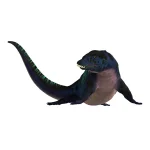
When you hear the word “plesiosaur,” what kind of image comes to mind?
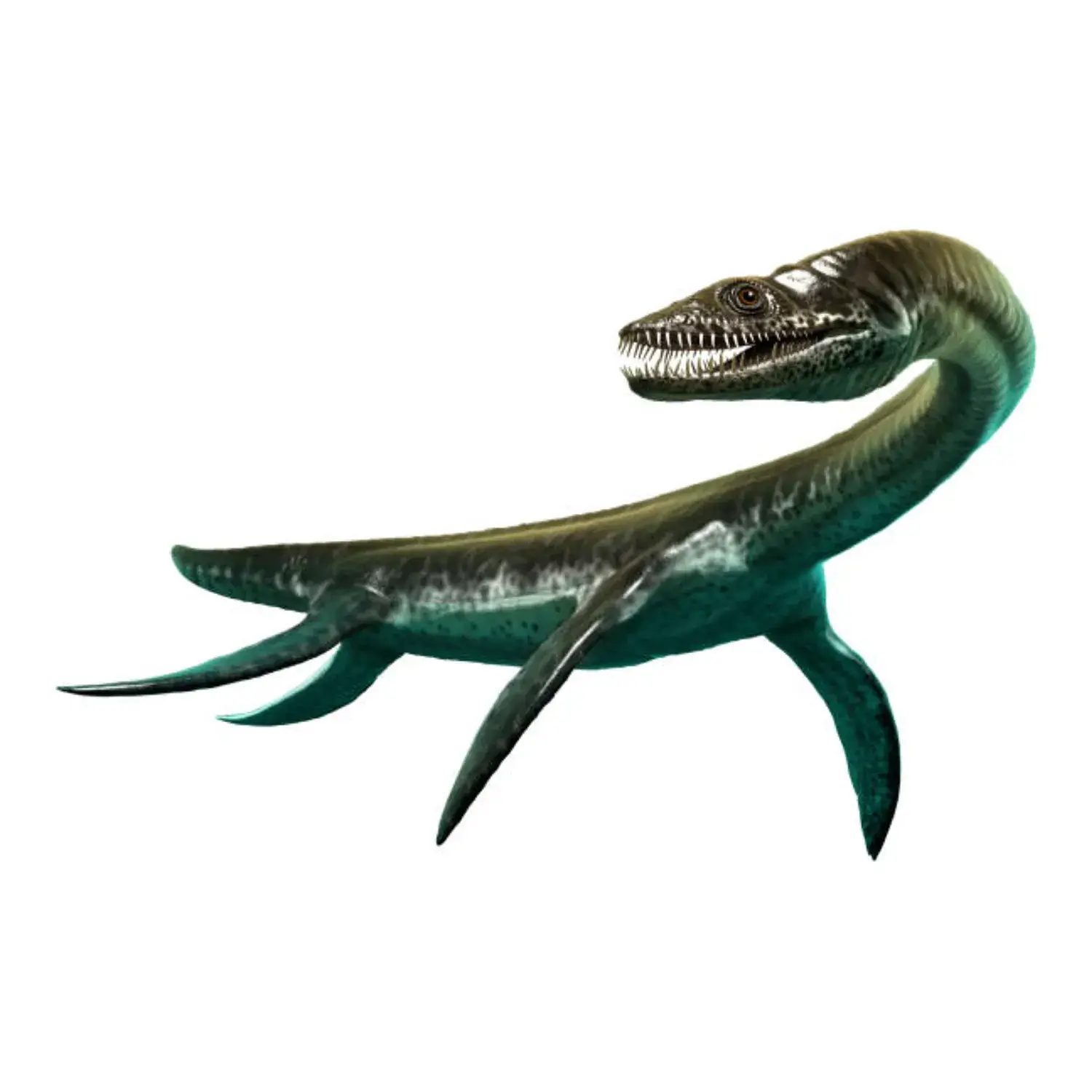
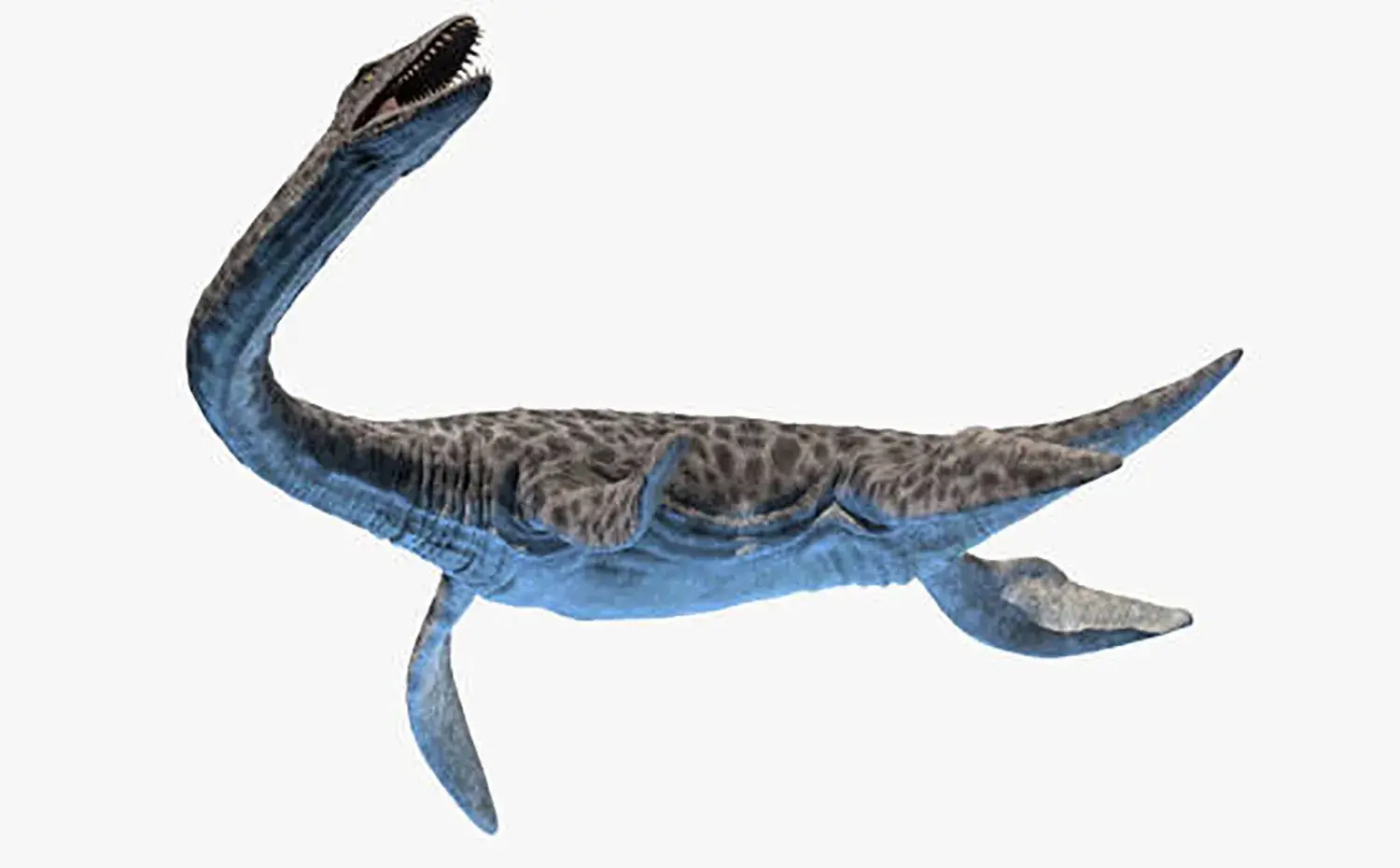
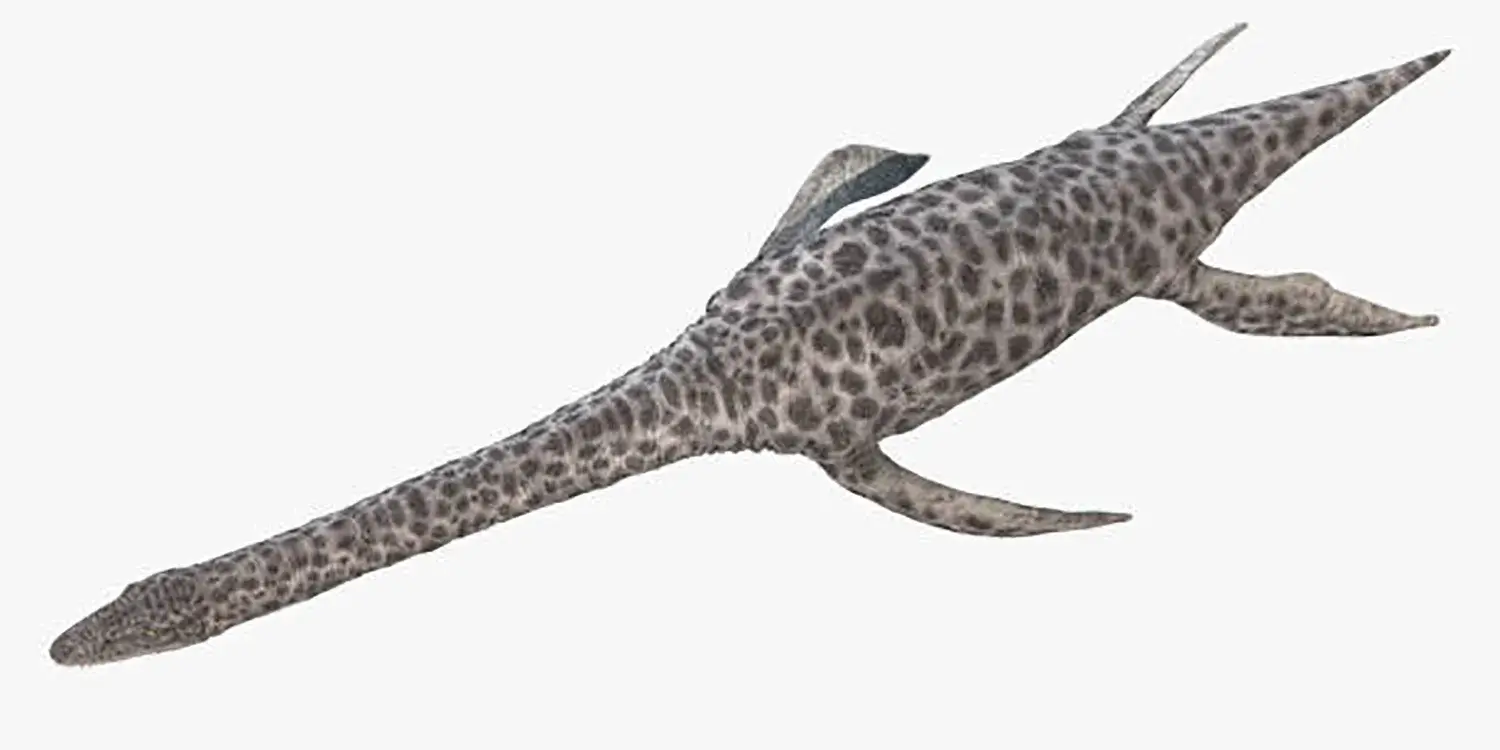
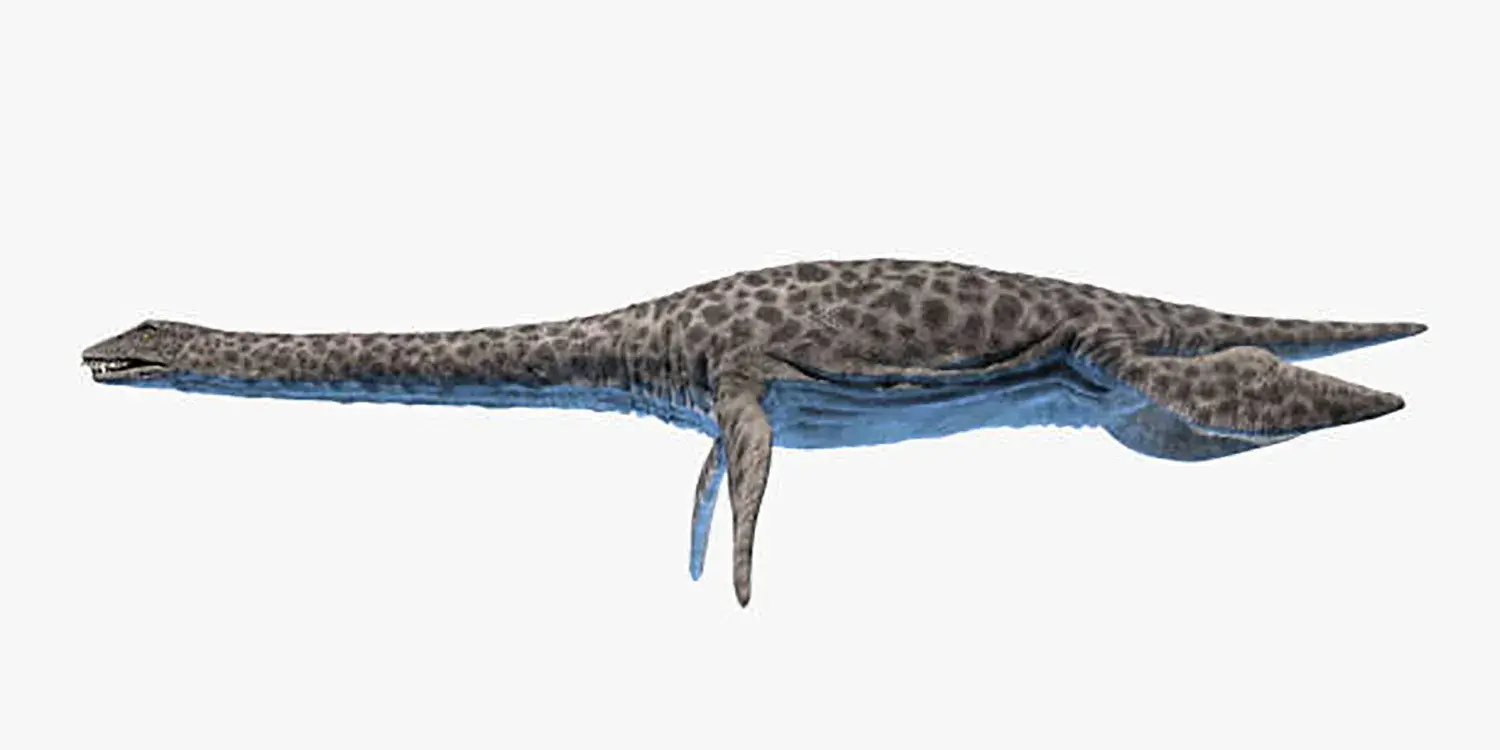
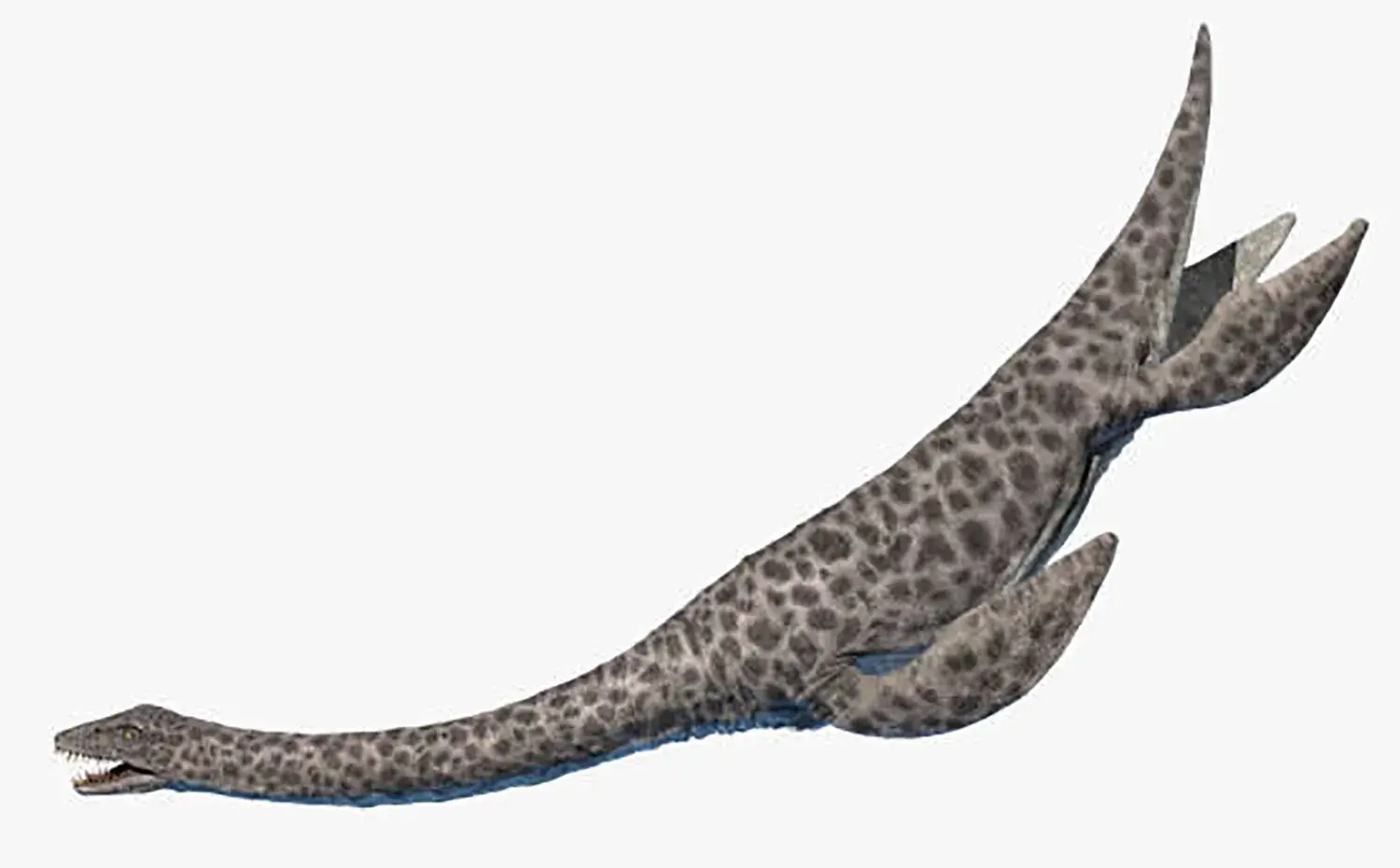
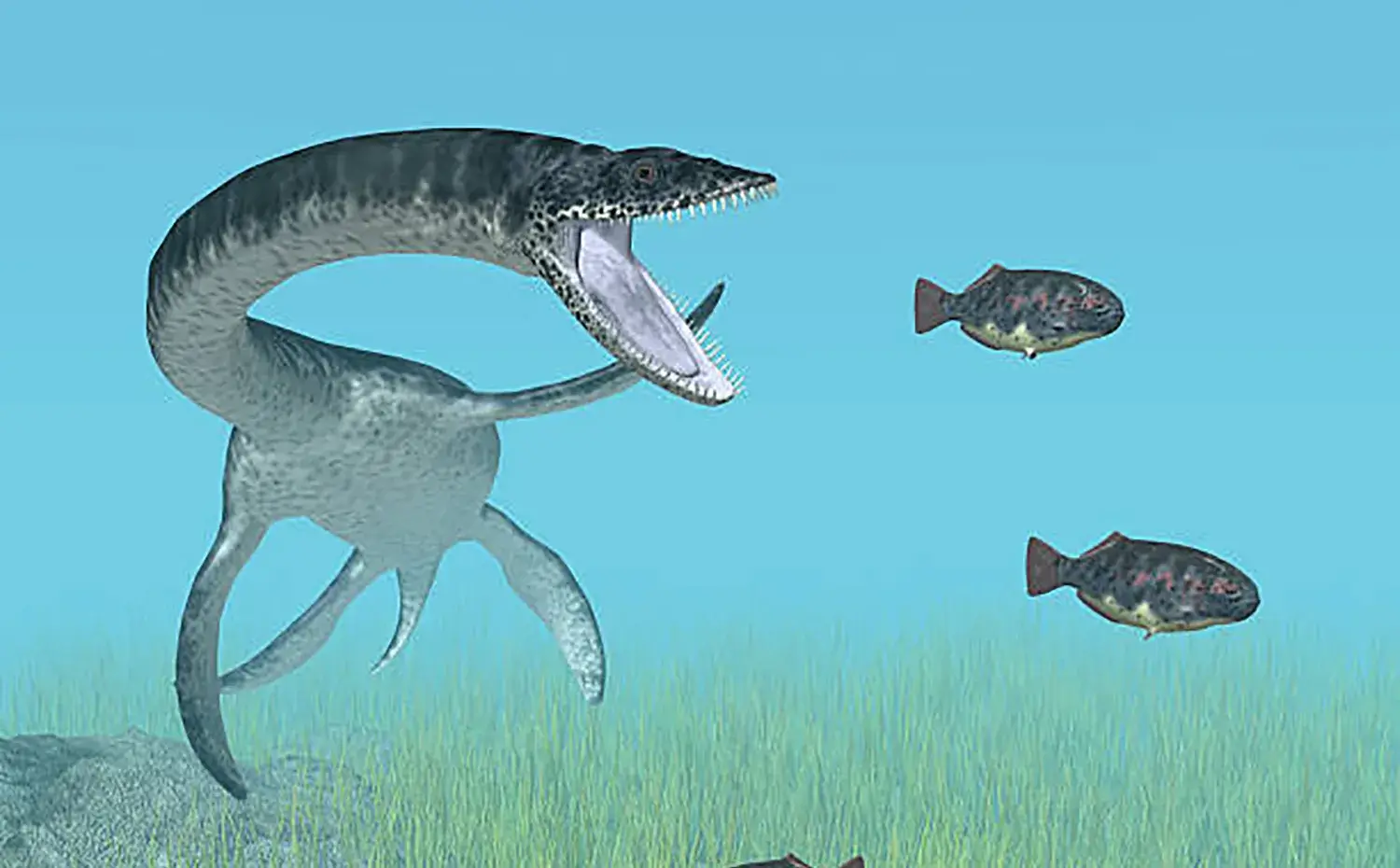
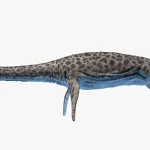
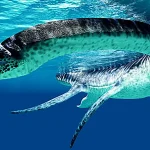
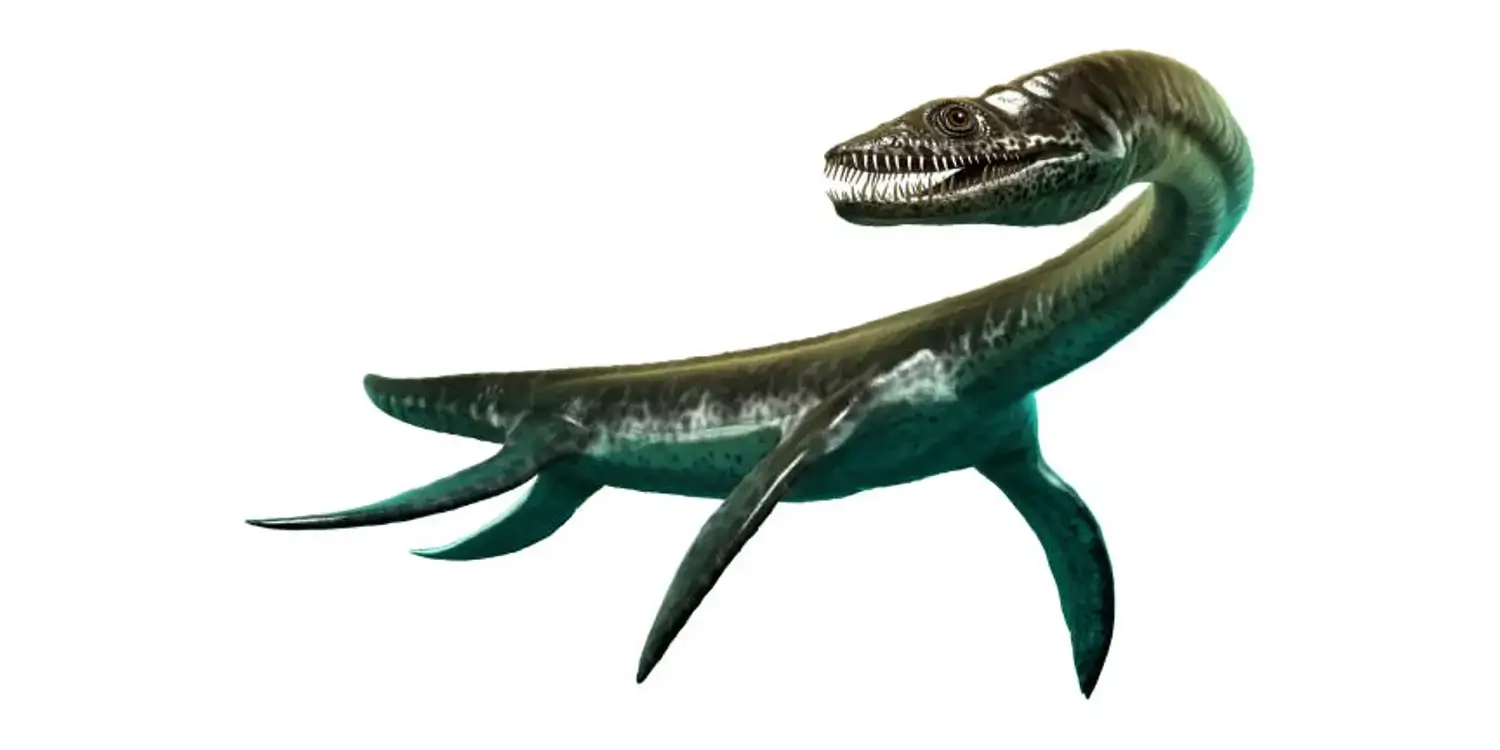
A neck as long as a snake, a body like a turtle, and four flippers.
The archetype of that image, and the marine reptile famous as the potential true identity of the cryptid “Nessie,” is “Plesiosaurus.”
Living in Europe during the Early Jurassic of the Mesozoic Era, they can be considered the “founders” of the plesiosaurs that ruled the seas of the dinosaur age.
Discovery by the Legendary “Fossil Lady” and the Origin of the Name
Plesiosaurus made its appearance in history in the 19th century.
The Feat of Mary Anning
The discoverer was the legendary fossil collector Mary Anning, known as the “Fossil Lady.”
The fossils she found were described in 1821 by H.T. De la Beche and William D. Conybeare.
This was the first plesiosaur scientifically reported in the world, marking a monumental event in the history of paleontology.
The Meaning “Near Reptile”
Initially upon discovery, this creature was speculated to be “intermediate between fish and reptiles.”
However, because it possessed characteristics closer to reptiles, it was named “Plesiosaurus,” meaning “near reptile” (or near lizard) in Greek.
Currently, it mainly refers to the species “Plesiosaurus dolichodeirus,” but the name is sometimes used as a general term for all plesiosaurs.
2 to 5 Meters in Length! Primitive yet Complete Skeleton
The body length of Plesiosaurus was approximately 2 to 5 meters.
Although small compared to the later Elasmosaurus (over 13 meters), it was one of the largest aquatic reptiles in the environment of that time.
Neck and Head
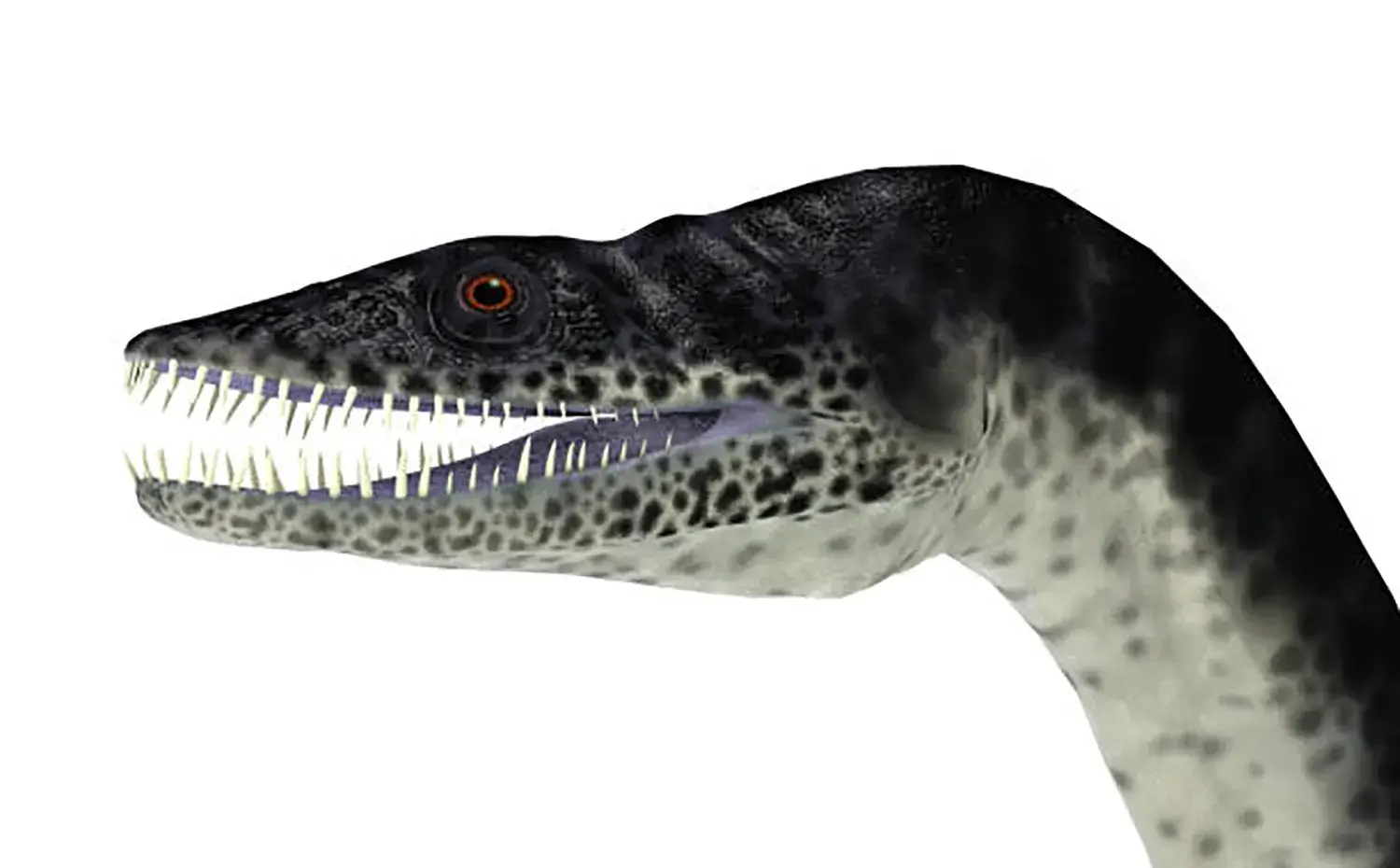
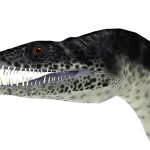
It had a neck longer than its torso, topped with a small head lined with sharp, conical teeth.
A small head lined with sharp, conical teeth
Gastralia (Belly Ribs)
The bones of the torso were mesh-like, forming a sturdy, barrel-like trunk.
Primitive Characteristics
It retained primitive skeletal structures not seen in later, evolved species, such as the presence of an “interclavicle” and unfused left and right scapulae.
Swimming Focused on Maneuverability and Unique Hunting
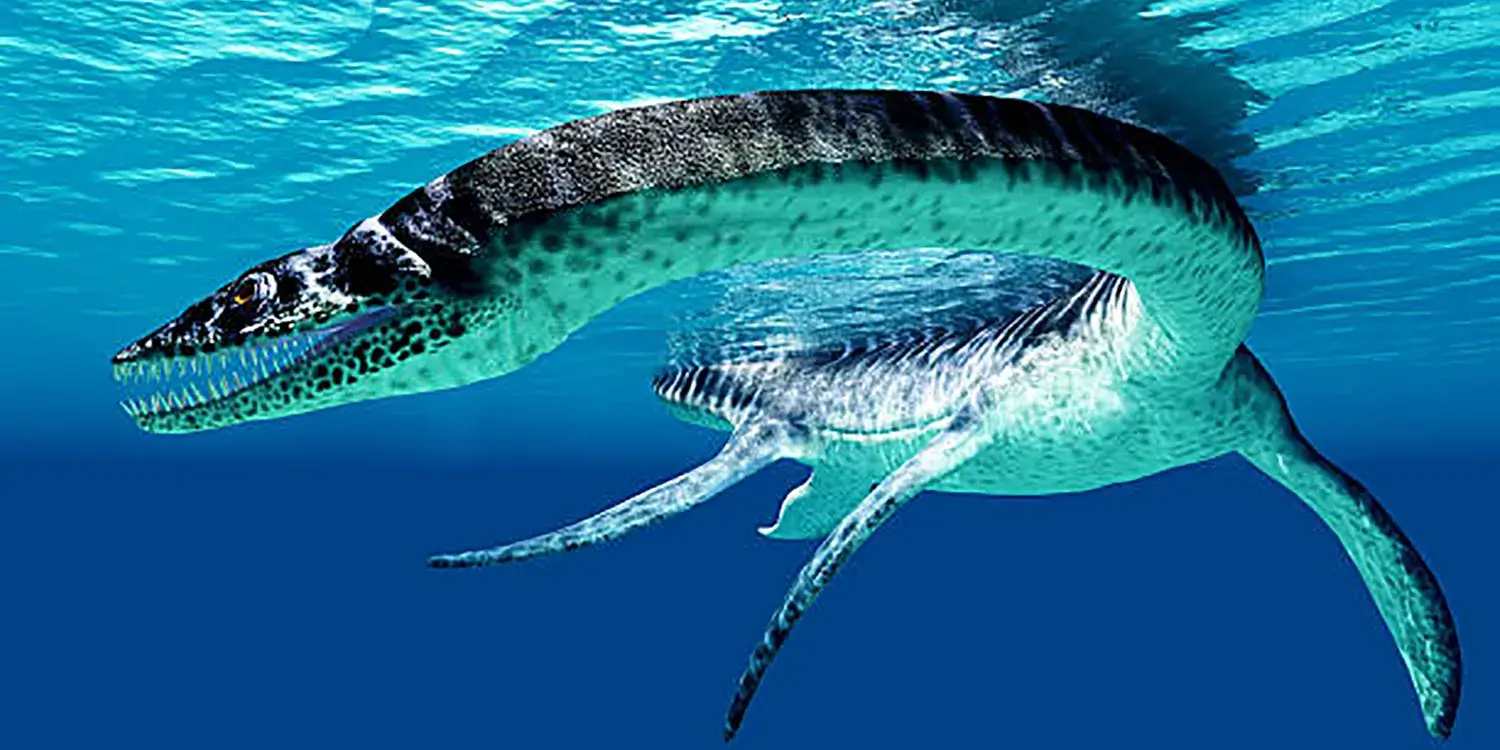
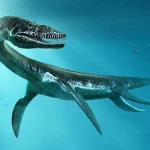
Plesiosaurus swam using four “flippers” like modern sea lions and sea turtles.
Swam using four flippers
Swimming with Paddle-like Flippers
The flippers were structured to move up, down, left, and right, and by using them like canoe paddles, quick directional changes were possible.
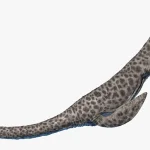
Unlike ichthyosaurs, they did not swim by wagging their tails, and it is thought that they prioritized “high maneuverability (tight turns)” over speed.
Predatory Style Using the Neck
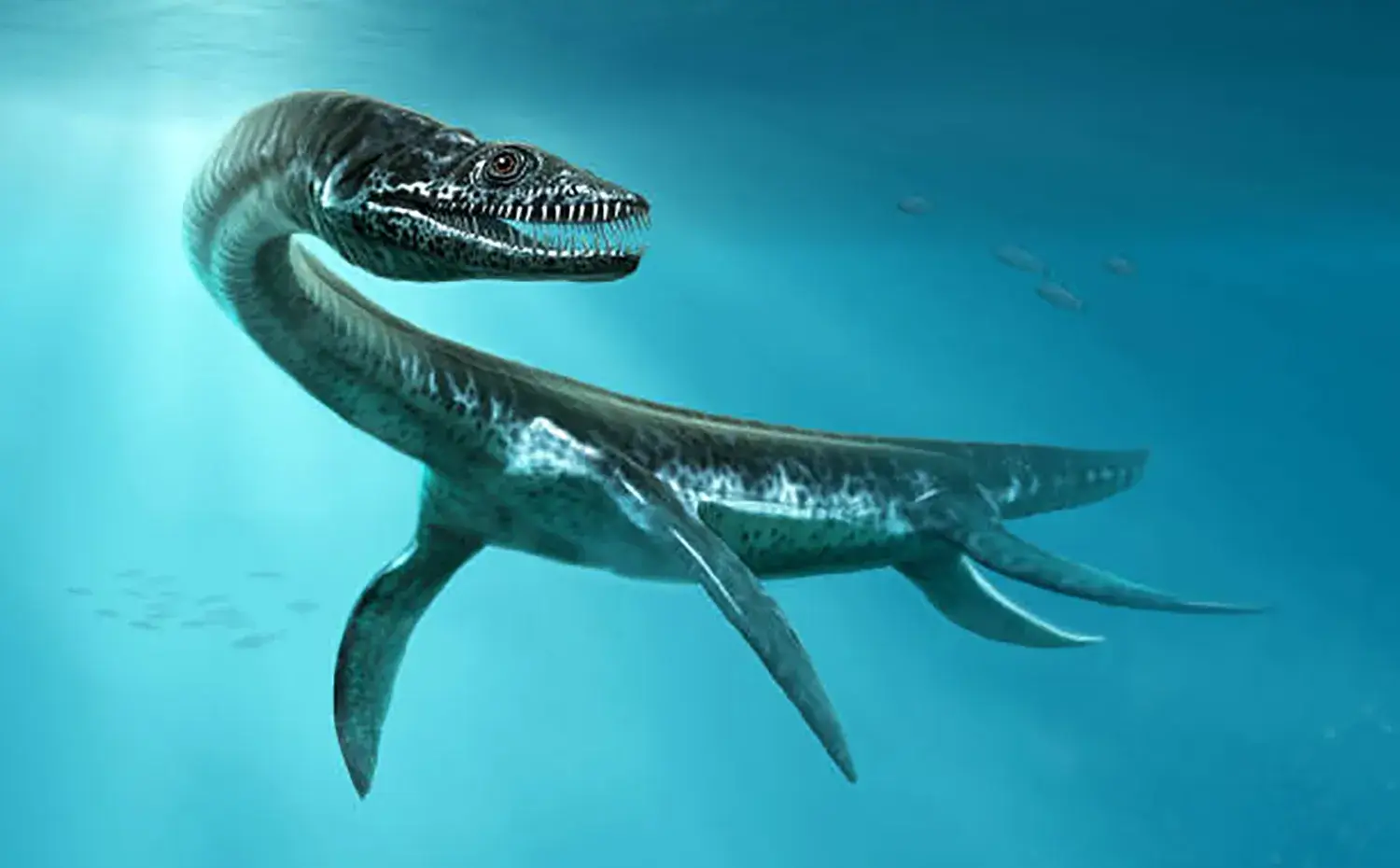
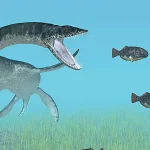
They preyed on soft-bodied animals like squid and fish in coastal shallows.
Preyed on soft-bodied animals like squid and fish
Recent research has found that the neck was mainly suitable for bending “downward.”
The neck was mainly suitable for bending “downward”
It is pointed out that they may have searched for prey hiding in the mud of the seabed in addition to chasing swimming fish, and research on related species (Morturneria) suggests the possibility of “filter feeding” on plankton.
Did They Not Lay Eggs? The Surprising “Viviparity” Theory
While reptiles are typically associated with “eggs,” it is considered highly likely that plesiosaurs, including Plesiosaurus, were “ovoviviparous” or “viviparous.”
Giving Birth in the Sea
“Bones of offspring” have been discovered within the abdominal fossils of adults, providing strong evidence that they did not go ashore to lay eggs but gave birth to live young directly in the sea.
They did not need to go ashore like sea turtles and were adapted to a fully aquatic life, spending their entire lives in the sea.
The True Identity of the Eternal Idol “Nessie”
Plesiosaurus boasts immense popularity not only for its academic importance but also in pop culture.
The biggest reason is that it has been viewed as the most likely candidate for the true identity of the cryptid “Nessie” in Loch Ness, Scotland.
The image of “a giant shadow lifting a long neck above the lake surface” is exactly that of Plesiosaurus.
Plesiosaur-type cryptids reported around the world are generally often spoken of as “survivors of Plesiosaurus,” and they continue to be loved as an existence symbolizing the romance of the ancient world.