Did the Dinosaurs Go Extinct? The Truth Unraveled by the Latest Research
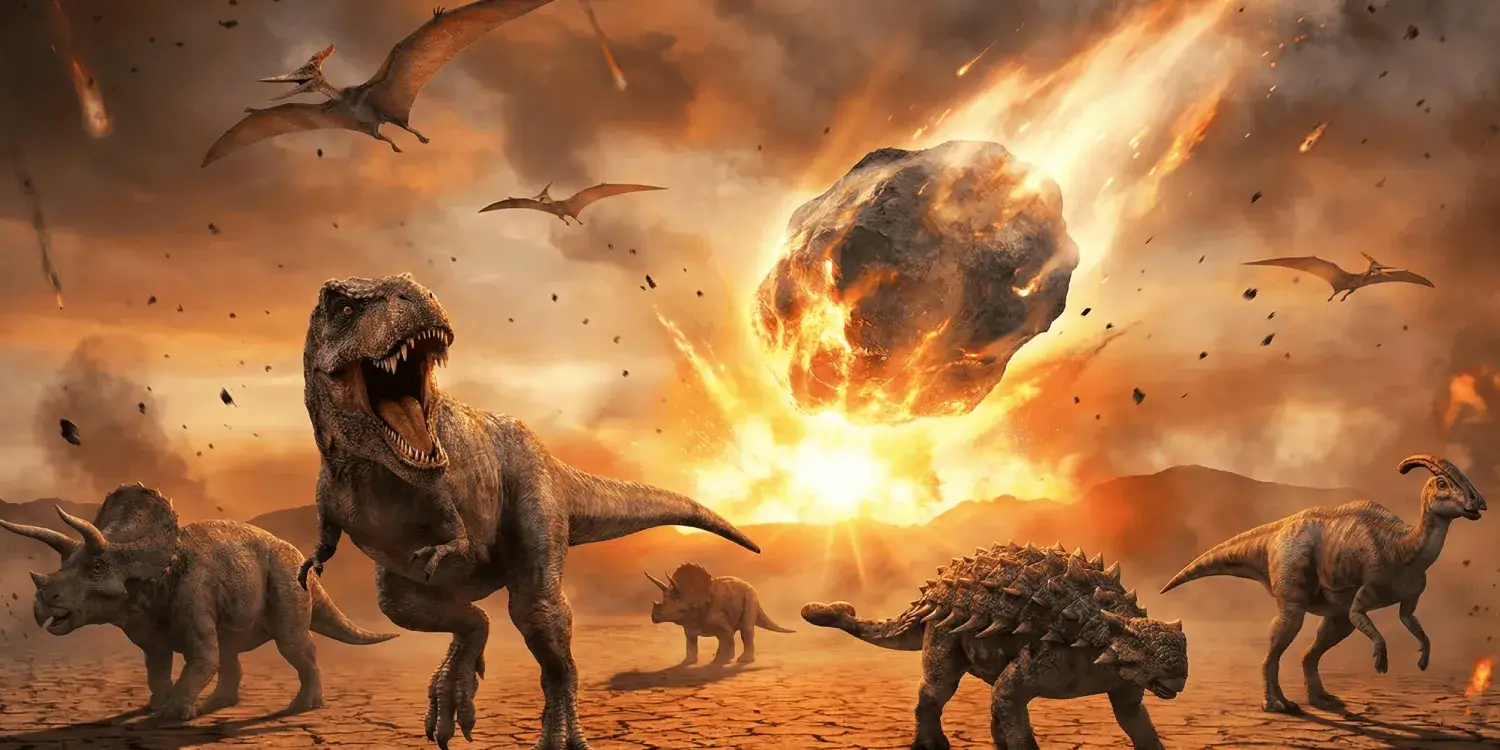
The giant dinosaurs we all imagine went extinct at the end of the Cretaceous period, about 66 million years ago.
This mass extinction corresponds to the boundary between the Cretaceous and the following Paleogene period, so it is called the K-Pg extinction event.
However, recent research is overturning the conventional understanding that dinosaurs completely perished.
The Established Theory of Extinction: The Controversy Surrounding the “Asteroid Impact Theory”
Regarding the cause of dinosaur extinction, over 100 theories were once debated.
Among them, the one currently viewed as most likely is the “Asteroid Impact Theory,” which states that a giant meteorite with a diameter of about 10 km crashed into Earth approximately 66 million years ago.
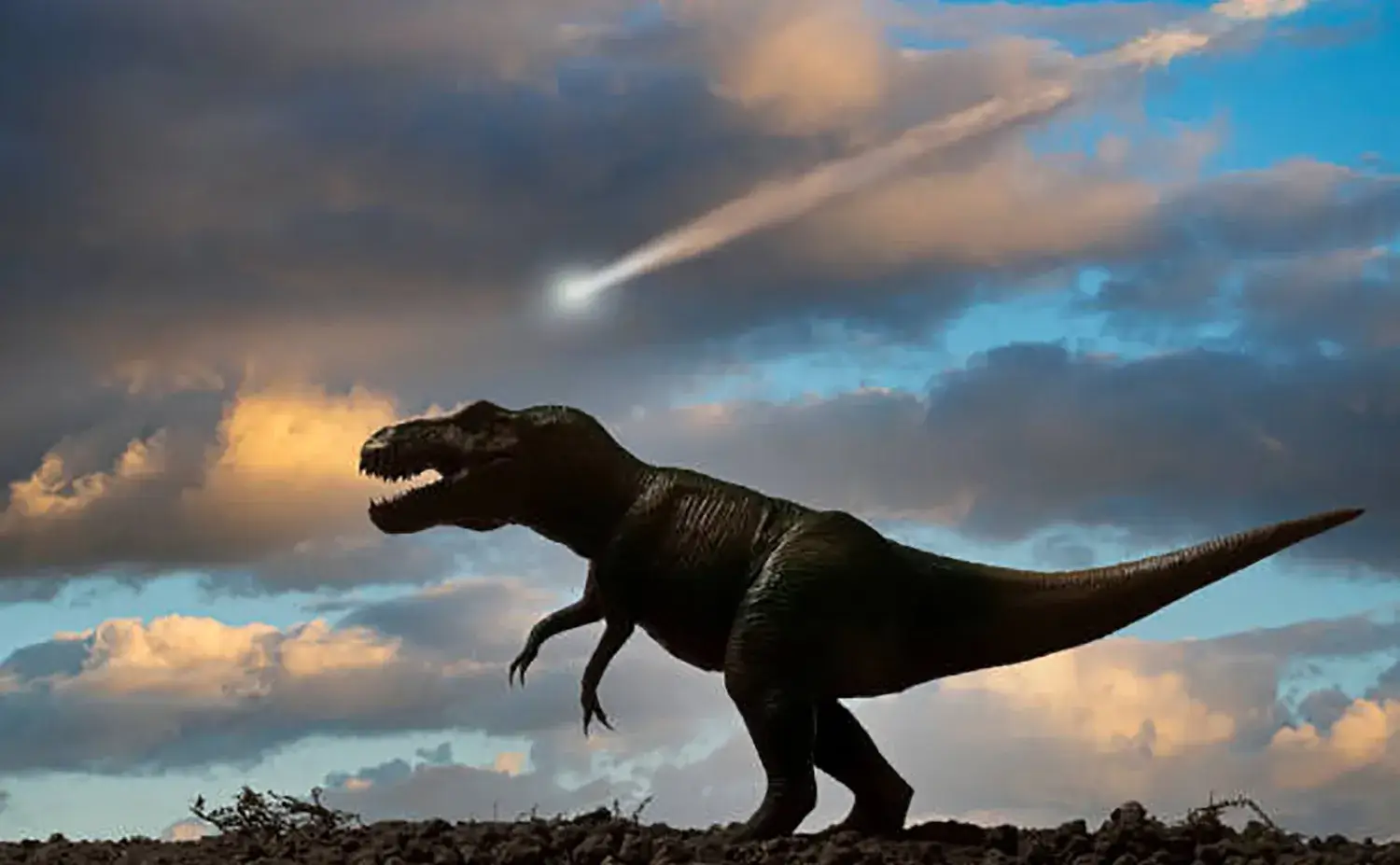
The “Asteroid Impact Theory” said to have driven dinosaurs to extinction
Since the discovery of traces of a giant crater on the Yucatan Peninsula in Mexico, this theory has become the established one.
It is thought that the massive amount of dust and debris caused by the collision blocked sunlight, cooled the Earth, and collapsed the food chain.
However, this theory has been subject to constant debate.
Gradual Decline Theory
Research exists suggesting that dinosaur diversity was gradually decreasing toward the end of the Cretaceous, proposing that extinction was not sudden but progressed slowly.
Age of the Crater
Counterarguments were raised stating that the crater on the Yucatan Peninsula was about 300,000 years older than the extinction, and thus not direct evidence.
However, in 2004, a new theory was announced stating they “went extinct within a few weeks after the meteorite impact,” and the meteorite impact theory resurfaced as a strong contender.
It is expected that debate will continue regarding whether the extinction was sudden or gradual.
Dinosaurs Still Live Today as Birds
The most important fact here is that not all dinosaurs actually went extinct.
With the successive discoveries of feathered dinosaurs since the late 1990s, it became clear that by the Late Jurassic at the latest, one lineage of dinosaurs had evolved into birds and expanded their habitat into the new environment of the “sky.”
Modern birds are direct descendants of dinosaurs that evolved from feathered theropods (feathered dinosaurs).
Archaeopteryx is an early bird that lived in the Late Jurassic, and because it possesses characteristics of both dinosaurs and birds, it has been considered an important link between the two.
Nowadays, it is common to classify birds as one of the groups within Dinosauria.

Dinosaurs still live today as birds
In other words, birds such as sparrows, pigeons, and eagles are the very dinosaurs living in the present.
Living bird species number about 10,000, boasting a force more than double that of mammals (just under 5,000 species).
Seeing this prosperity of birds, it can be said that the age of dinosaurs continues even now, with the sky as its main stage.









![[Latest Research] What Was the Function of Spinosaurus's Giant "Sail"? Exploring the Mysteries of Thermoregulation and Underwater Locomotion](https://dinosaurmuseum.jp/wp/wp-content/uploads/eyecatch_spinosaurus-sail-function_en-1024x512.webp)
![[Latest Discovery] A Third Type of Skin, Neither Scales Nor Feathers? Meet "Haolong dongi," a New Dinosaur Species Covered Entirely in Spikes](https://dinosaurmuseum.jp/wp/wp-content/uploads/eyecatch_dinosaur-spiky-skin-discovery_en-1024x512.webp)