
Indosuchus Raptorius
Name Origin
Indian Crocodile
Family
Abelisauridae
Classification
Diapsida, Saurischia, Theropoda
Habitat (Discovery Location)
India
Period
Approximately 70–66 million years ago (Late Cretaceous)
Length
Approximately 6–8 meters
Weight
Approximately 1.2 tons
Diet
Carnivore (Meat-eater)
You might also like... 

-
 Fukuiraptor
- Classification
- Theropods
- Characteristics
- Carnivorous
- Era
- Cretaceous period
-
 Moros intrepidus
- Classification
- Theropods
- Characteristics
- Carnivorous
- Era
- Cretaceous period
- Aquilops
- Classification
- Marginocephalia
- Characteristics
- Herbivorous
- Era
- Cretaceous period
- Equijubus
- Classification
- Ornithopoda
- Characteristics
- Herbivorous
- Era
- Cretaceous period
-
Sponsored Links
-
Sponsored Links












Description
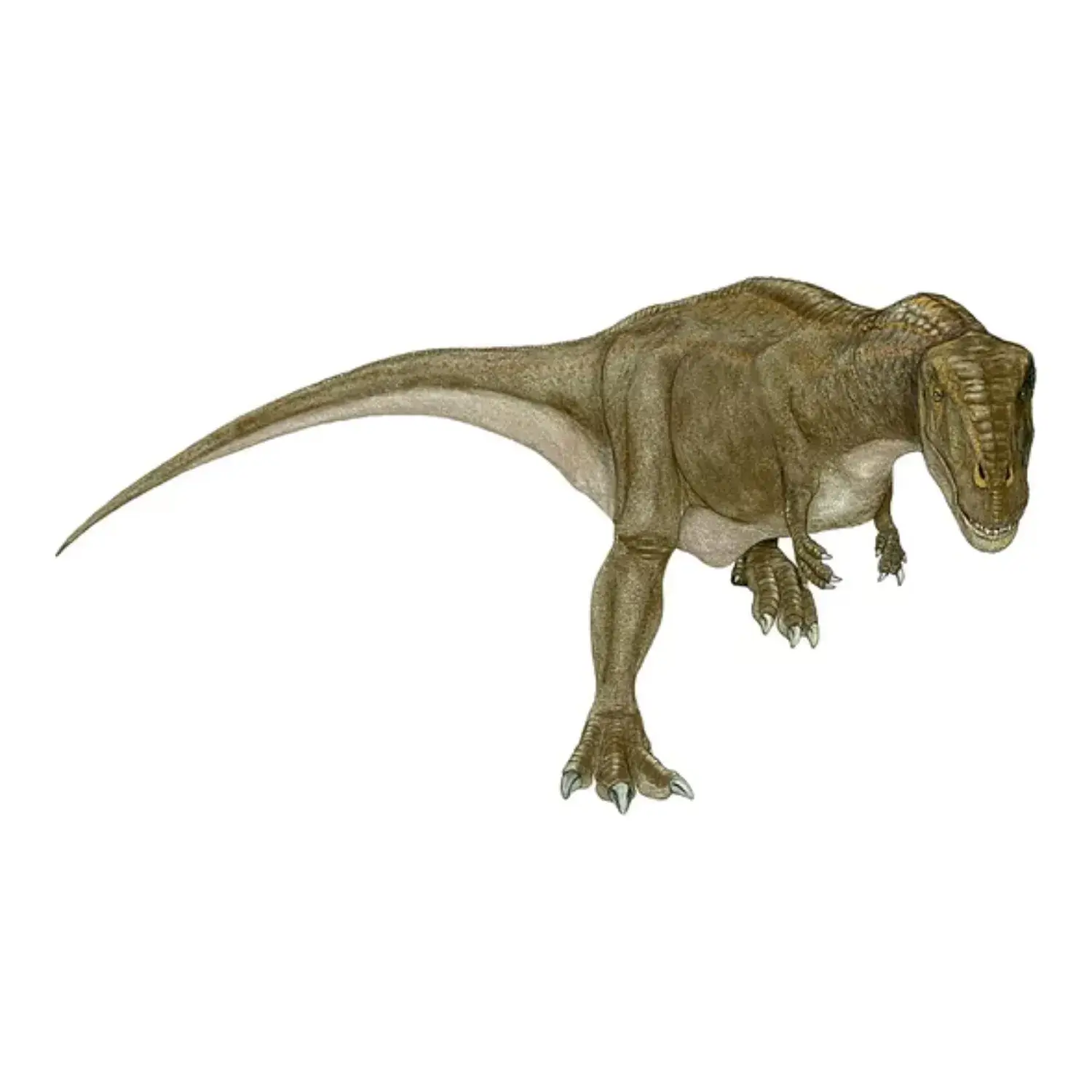
Indosuchus is a large Carnivore dinosaur that lived in India during the Late Cretaceous period (Maastrichtian stage, approximately 70 to 66 million years ago).
Its fossils were discovered in Madhya Pradesh, India, and the genus name means “Indian Crocodile” in reference to the location of its discovery.
Ecology and Size: The Apex Predator of the Indian Ecosystem
Taxonomically, Indosuchus belongs to the family “Abelisauridae.”
It was a bipedal theropod, and its total length is estimated to be approximately 6 to 8 meters.
The Hunter that Ruled Ancient India
Given its imposing physique, it is believed to have reigned as a top predator in the ecosystem of that time, hunting other creatures.
Physical Characteristics Deciphered from Partial Fossils
To date, only three partial skulls of Indosuchus have been discovered.
However, these limited specimens have revealed several distinct physical characteristics.
Uniquely Shaped Skull
Narrow Width
The overall shape of the skull is narrow.
Flat Top
The top of the skull (the roof of the head) was flat.
Small Nostrils
Compared to other Carnivore dinosaurs, it is characterized by having relatively small nostrils.
“Jaws” and “Teeth” Designed to Tear Prey
Its powerful jaws and teeth vividly demonstrate its capabilities as a predator.
Robust Lower Jaw
It possessed a very sturdy lower jaw.
Sharp Teeth
Although the teeth lining its jaw were relatively short, they were sharp, tapered, and serrated (saw-like).
These structures were well-suited for slicing through the flesh of prey, leaving no doubt that Indosuchus was a powerful Carnivore dinosaur.
Classification History: From Tyrannosauridae to Abelisauridae
A Long-Standing Mystery
When it was first discovered, the classification of Indosuchus was shrouded in mystery.
Because only skulls were found, available information was limited, and its true nature remained unclear for a long time.
Early research suggested it might belong to one of the following groups:
Clarification Through the Discovery of Carnotaurus
However, the subsequent discovery of other dinosaurs in the Abelisauridae family, such as Carnotaurus, allowed for more detailed comparative research.
As a result, its phylogenetic position as a member of the Abelisauridae family has now been established.
Research Challenges: Why Details Remain Scarce
Biologically, Indosuchus is a valuable dinosaur for understanding evolutionary processes, but unfortunately, research has not progressed significantly.
This is partly due to safety concerns in the regions of India where the fossils are found.
As with other dinosaurs discovered in India, conducting detailed field surveys and research remains difficult, and it is expected that uncovering the full picture will take more time.