
Shonisaurus
Name Origin
Lizard of the Shoshone Mountains
Family
Shonisauridae
Classification
Reptilia, Ichthyosauria
Habitat (Discovery Location)
United States, Canada
Period
Approximately 220 million years ago (Late Triassic)
Length
Approximately 15–21 meters
Weight
Approximately 20–35 tons
Diet
Piscivore (Fish-eater)
You might also like... 

-
 Nothosaurus
- Classification
- Marine reptiles
- Characteristics
- Carnivorous
- Era
- Triassic period
- Majungasaurus
- Classification
- Theropods
- Characteristics
- Carnivorous
- Era
- Cretaceous period
- Quetzalcoatlus
- Classification
- Flying reptiles
- Characteristics
- Carnivorous
- Era
- Cretaceous period
- Microraptor
- Classification
- Theropods
- Characteristics
- Carnivorous
- Feathered
- Era
- Cretaceous period
-
Sponsored Links
-
Sponsored Links









![[Latest Research] What Was the Function of Spinosaurus's Giant "Sail"? Exploring the Mysteries of Thermoregulation and Underwater Locomotion](https://dinosaurmuseum.jp/wp/wp-content/uploads/eyecatch_spinosaurus-sail-function_en-1024x512.webp)
![[Latest Discovery] A Third Type of Skin, Neither Scales Nor Feathers? Meet "Haolong dongi," a New Dinosaur Species Covered Entirely in Spikes](https://dinosaurmuseum.jp/wp/wp-content/uploads/eyecatch_dinosaur-spiky-skin-discovery_en-1024x512.webp)
Description
The Triassic period (approximately 250 million years ago) marked the dawn of the dinosaur era.
In those days, creatures were generally only about 2 to 3 meters in size.
However, an unconventional monster appeared in the sea that defied this norm.
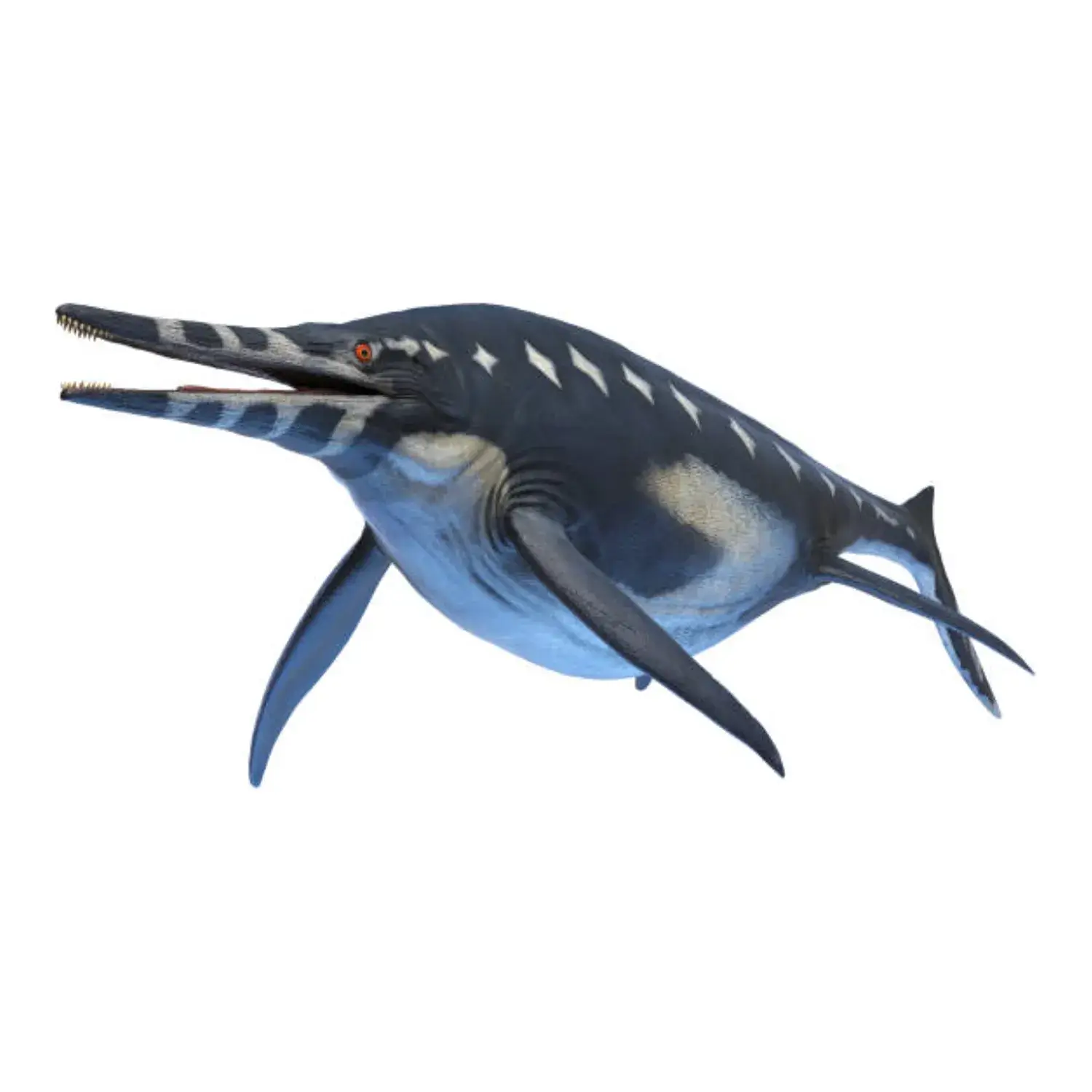
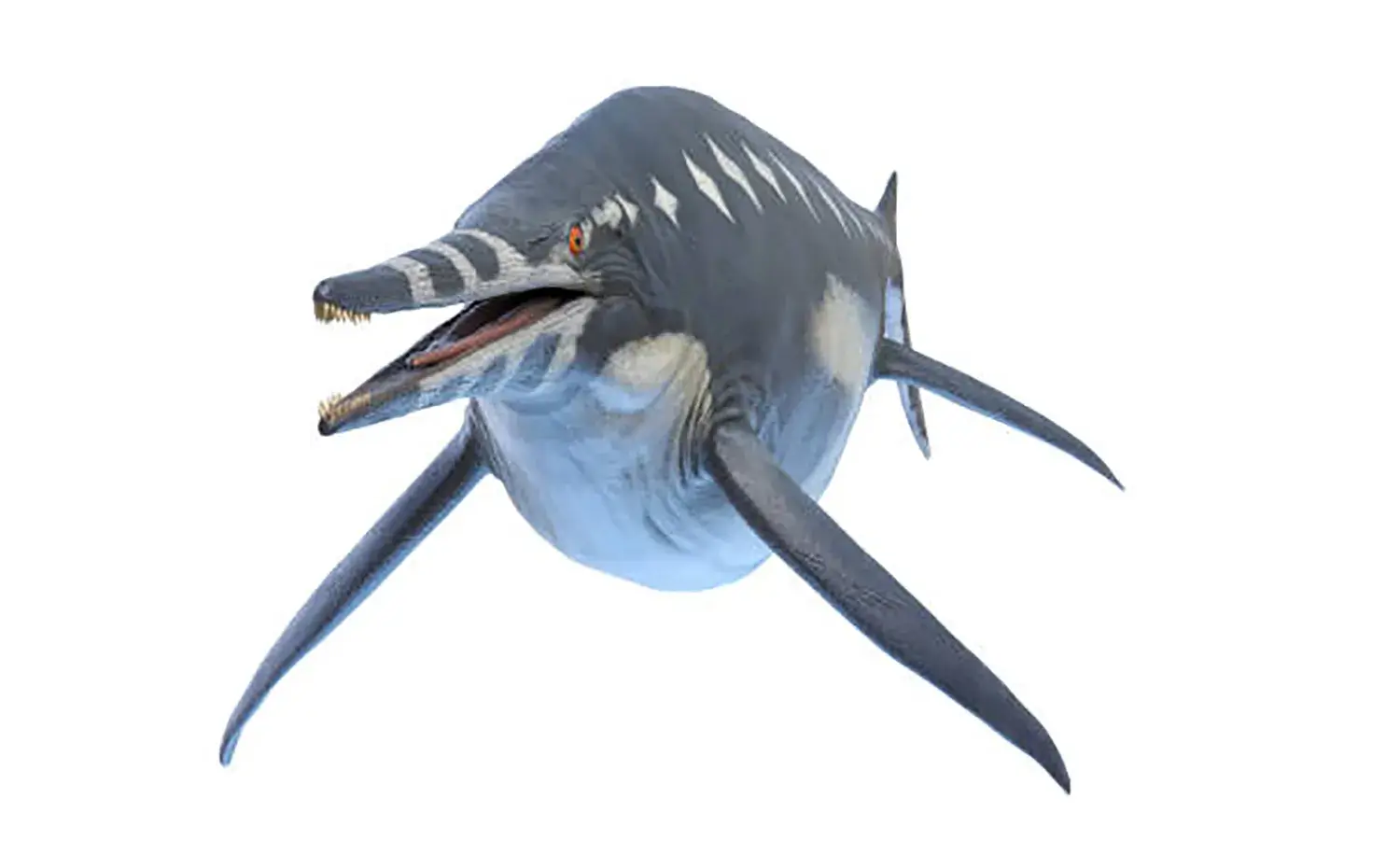
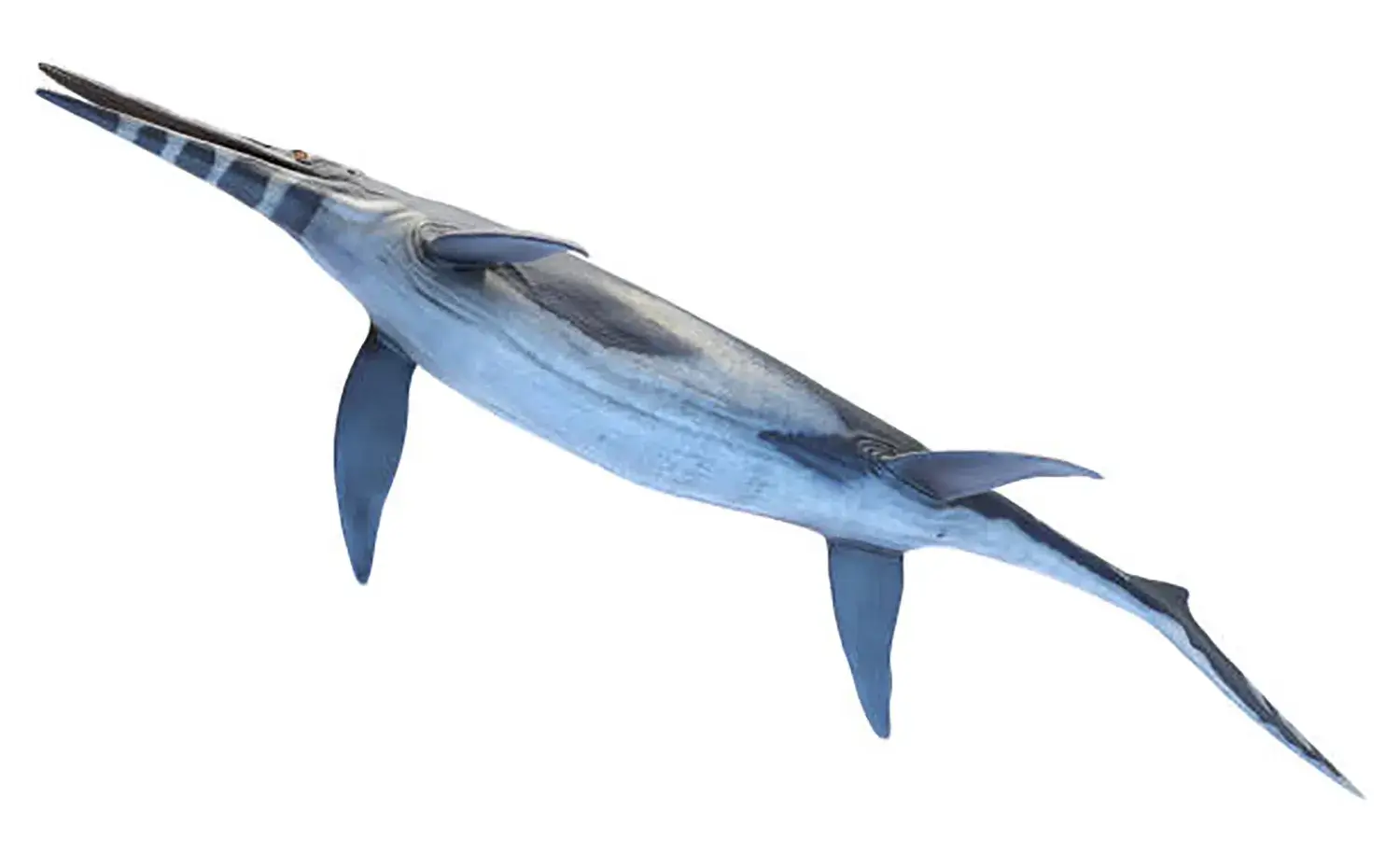
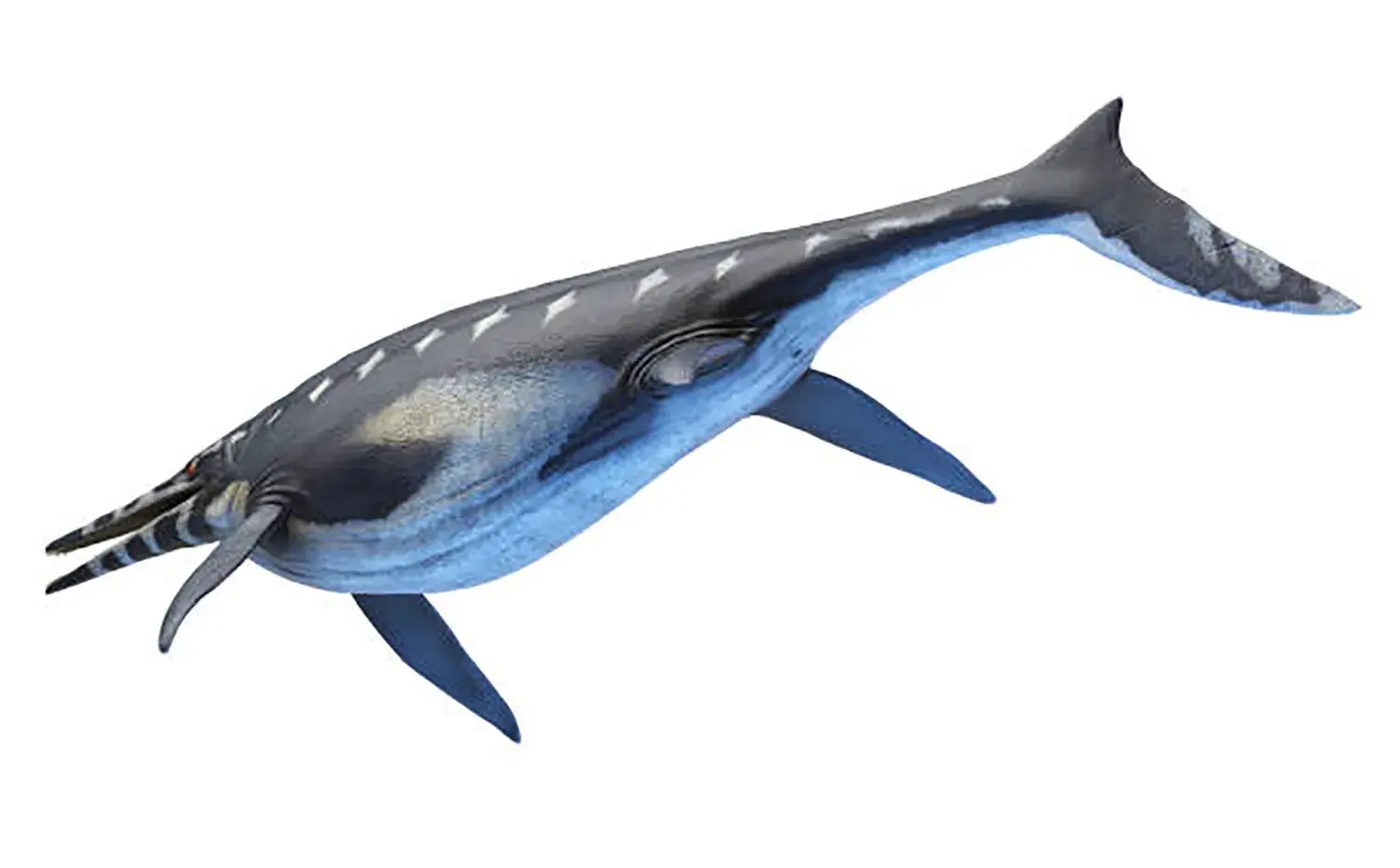
This was “Shonisaurus,” a member of the ichthyosaurs—reptiles resembling dolphins and whales—that boasted a colossal body surpassing even the later Mosasaurus and modern sperm whales.
21 Meters Long! What is “Shonisaurus,” the Largest Ichthyosaur of the Triassic?
A “Leviathan” That Transcended Its Era
The greatest characteristic of Shonisaurus is its immense size.
Fossils discovered in Canada in the 1990s reached an astounding total length of 21 meters and an estimated weight of 35 tons.
This far exceeds the modern whale shark (approx. 13.7m) and stands as one of the largest records among formally described ichthyosaurs.
Considering that the contemporary Ichthyosaurus was only about 2 to 3 meters long, their existence in the Triassic, a time when organisms had not yet grown large, was a shock on the level of an “out-of-place artifact.”
Name Origin and Mass Fossils
The scientific name “Shonisaurus” is derived from the “Shoshone Mountains” in Nevada, USA, where the fossils were discovered, meaning “Lizard of the Shoshone Mountains.”
As many as 37 skeletons have been found in a quarry in Nevada, suggesting the possibility that they traveled in pods or died en masse due to some cause.
Different from Dolphins? A Stocky Body and Four Fins
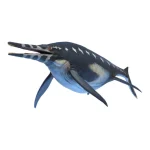
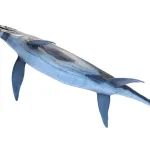
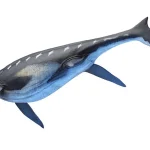
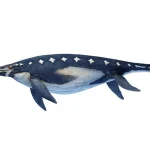
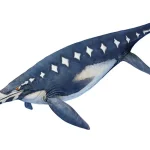
Although Shonisaurus is an ichthyosaur, it had a unique appearance different from the streamlined Ichthyosaurus often seen in illustrated reference books.
A Barrel-Like Body and a Shark-Like Tail
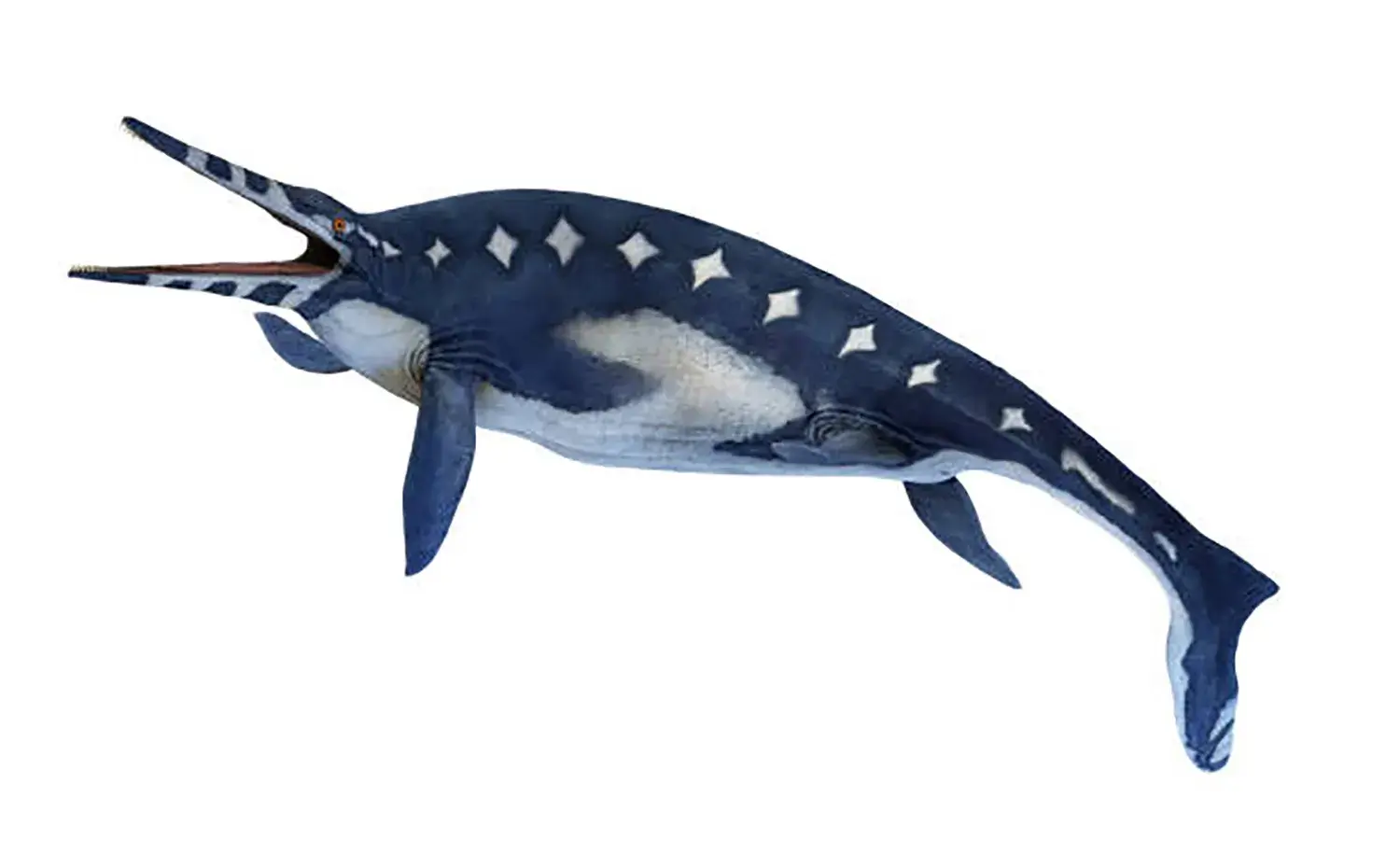
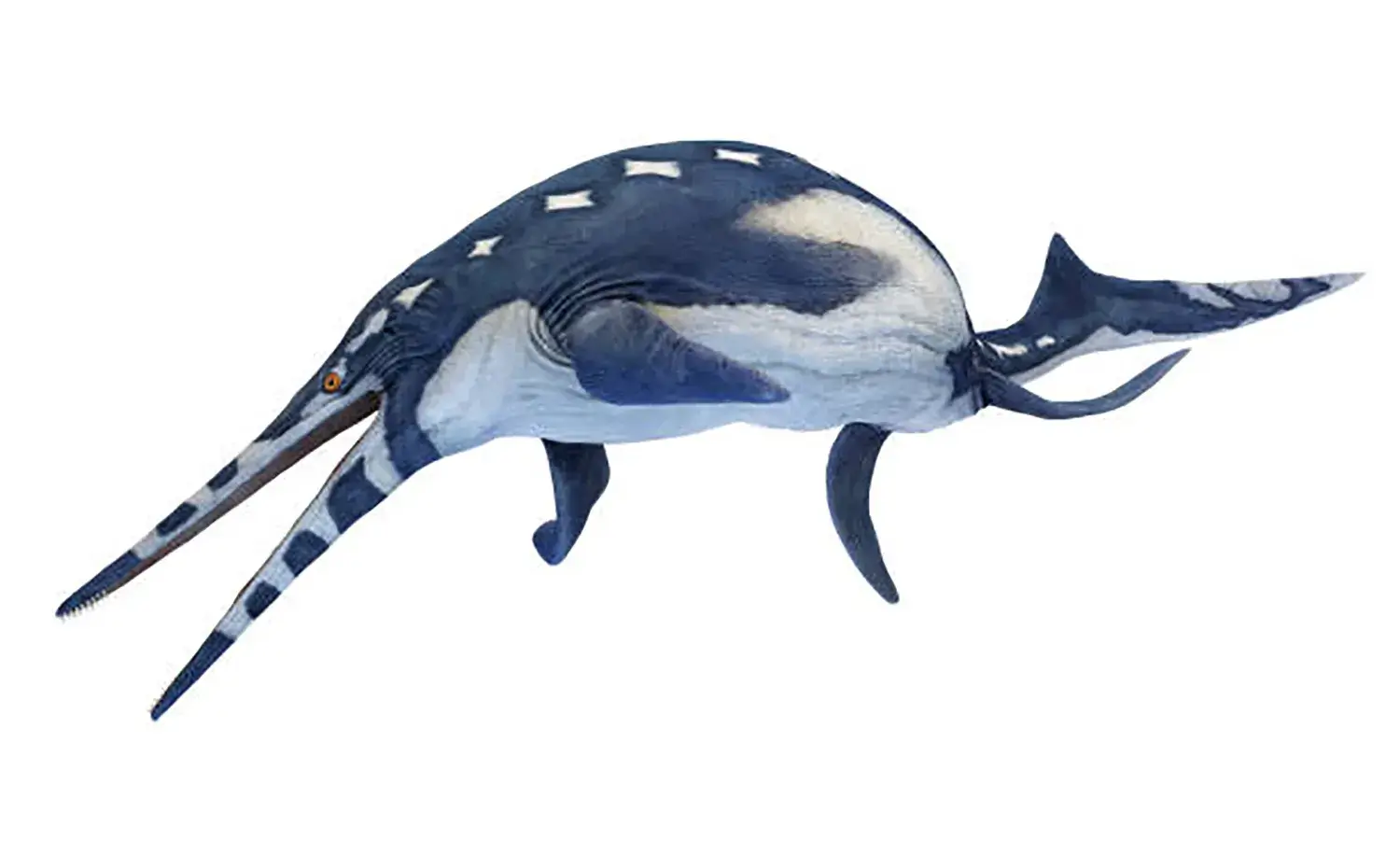
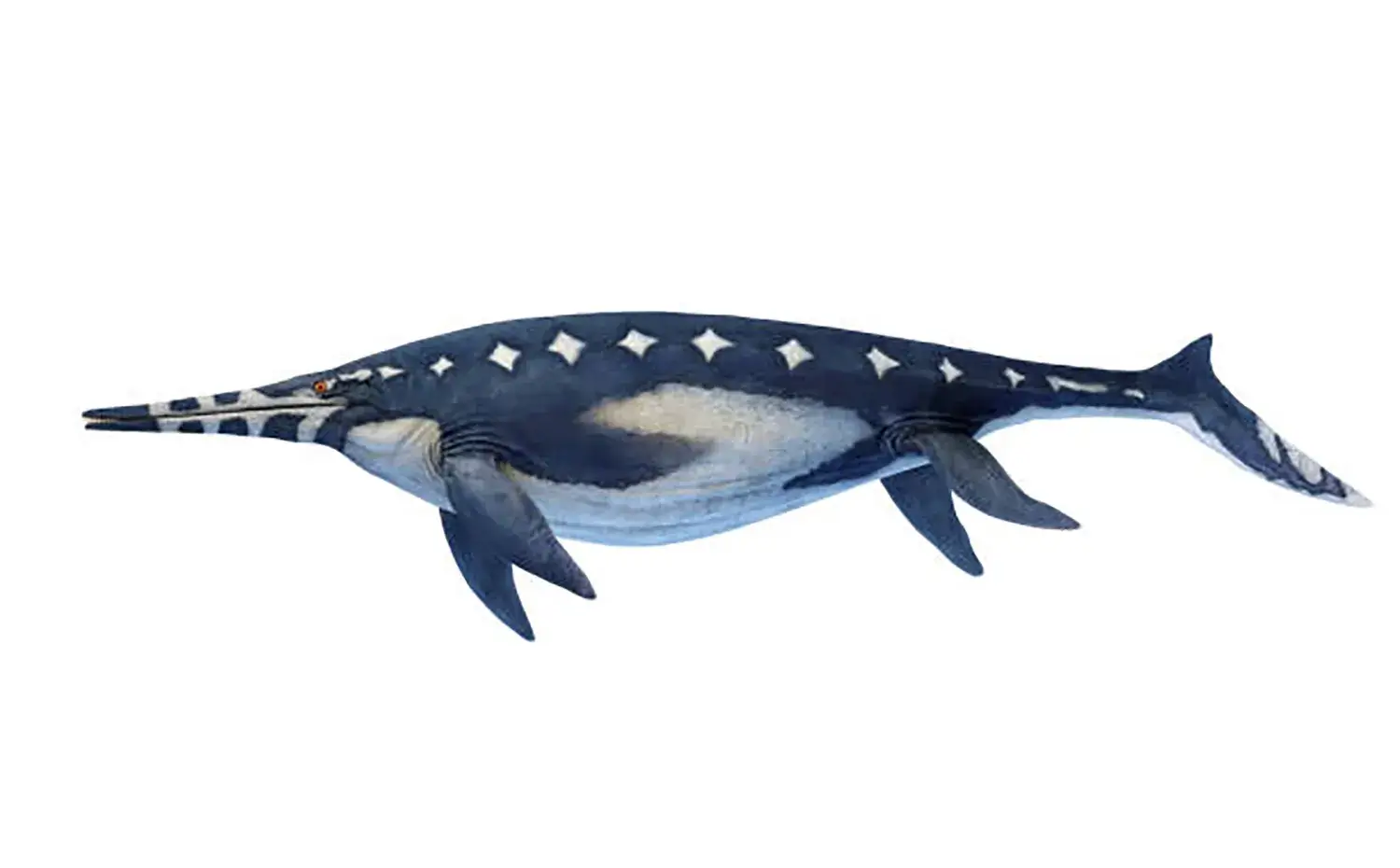
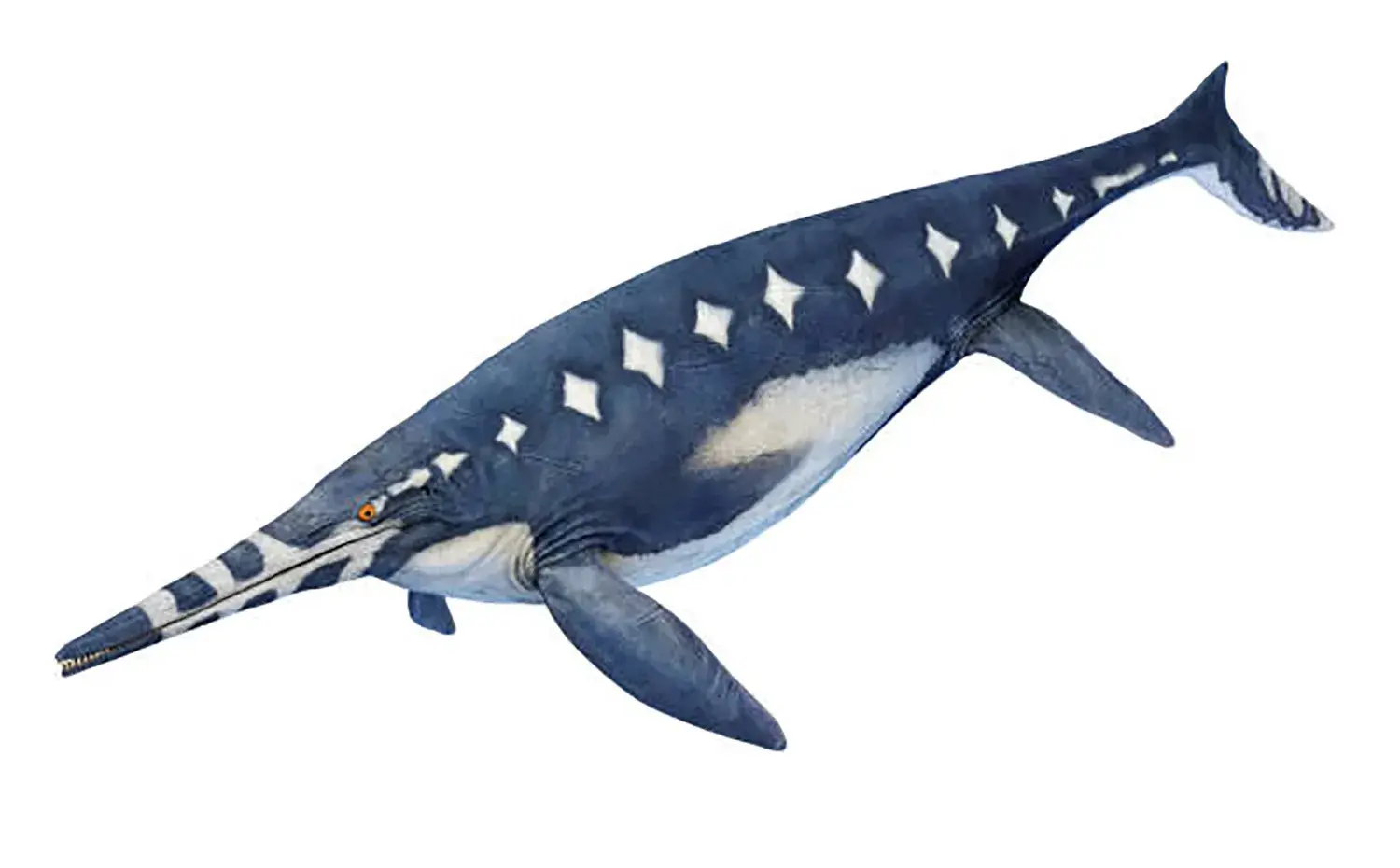
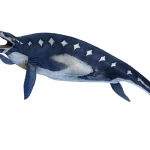
Their torsos were extremely thick and generally stocky, possessing proportions resembling a giant barrel or an airship.
The torso was extremely thick and generally stocky.
This is a primitive feature for ichthyosaurs.
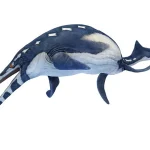
The dorsal fin was undeveloped (or absent), leaving the back smooth, and the tail fin was shaped like an inverted shark tail to generate propulsion.
Four Fins of “Equal Length” Front and Back
The greatest feature is the four fins on the abdomen.
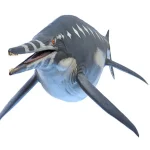
While typical ichthyosaurs generally have large front fins and small rear fins, Shonisaurus had front and rear fins of almost the same length, both being long and slender.
The front and rear fins were of almost the same length, and both were long and slender.
These likely served as stabilizers to steady their massive bodies, but it is speculated that it would have been difficult for them to swim agilely like modern dolphins.
Teeth or No Teeth? A Diet Shrouded in Mystery and Adaptation to the Deep Sea
There is a major mystery regarding the ecology of Shonisaurus that has been debated for many years.
That is the “presence or absence of teeth” and the diet derived from that fact.
Conventional Theory: Only Children Had Teeth?
In early research, it was thought that “they had teeth as juveniles, but they fell out as they became adults.”
Therefore, it was speculated that adults were “filter feeders” eating plankton like whales, or “suction feeders” sucking in squid and other prey.
Their appearance, swimming slowly with giant bodies, was truly that of ancient whales.
Latest Findings: Actually Powerful Predators?
However, recent re-examinations have begun to suggest the possibility that even adults possessed strong teeth.
If so, they were not docile filter feeders, but active predators that used their massive size to attack large prey.
Eyes That See Through the Deep Sea
The head featured very large eyes along with a long, slender mouth.
The eyes were protected by bones called “sclerotic rings,” a structure designed to withstand high water pressure.
They likely dove into the lightless deep sea, using their giant eyes to search for squid and fish.