
Sinraptor
Name Origin
Chinese Plunderer
Family
Metriacanthosauridae
Classification
Diapsida, Saurischia, Theropoda
Habitat (Discovery Location)
China
Period
Late Jurassic
Length
Approximately 7.6 meters
Weight
Approximately 1.2 tons
Diet
Carnivore (Meat-eater)

You might also like... 

-
 Leaellynasaura
- Classification
- Ornithopoda
- Characteristics
- Herbivorous
- Era
- Cretaceous period
- Nothosaurus
- Classification
- Marine reptiles
- Characteristics
- Carnivorous
- Era
- Triassic period
- Argentinosaurus
- Classification
- Sauropods
- Characteristics
- Herbivorous
- Era
- Cretaceous period
- Giganotosaurus
- Classification
- Theropods
- Characteristics
- Carnivorous
- Era
- Cretaceous period
-
Sponsored Links
-
Sponsored Links











Description
During the Late Jurassic, the middle of the dinosaur era, the Chinese continent was a fierce battleground where giant dinosaurs roamed.
One of the carnivorous dinosaurs that reigned at the top of this ecosystem was “Sinraptor.”
Because its name includes “raptor,” you might imagine small dinosaurs like the Velociraptor from the movie Jurassic Park, but that image is completely wrong.
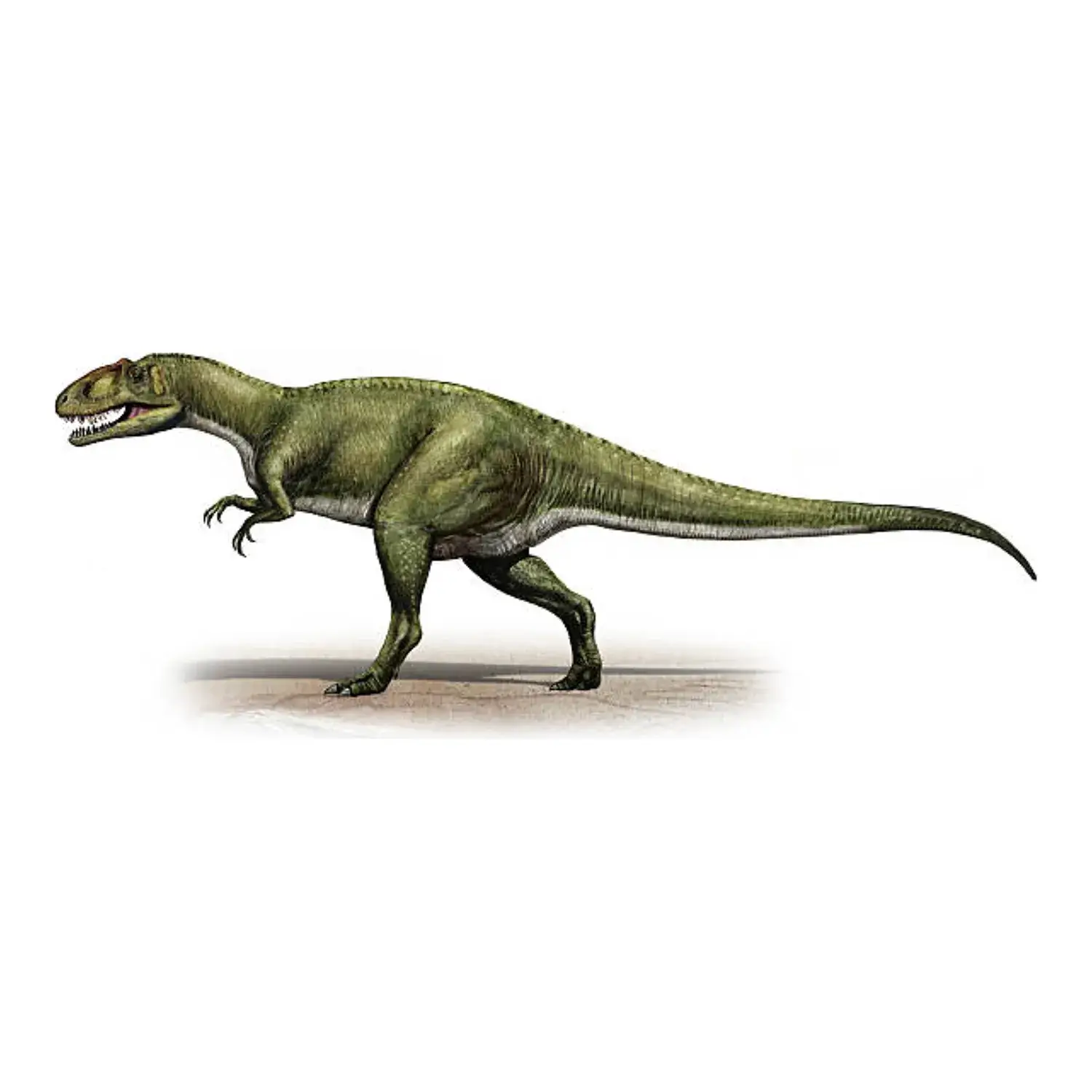
Sinraptor boasted a magnificent, giant body exceeding 7 meters in length and was a powerful predator ranking alongside Allosaurus.
“Chinese Plunderer”: The Paradox of Name and Classification
The scientific name Sinraptor means “Chinese (Sino) Plunderer (Raptor).”
It was discovered in the Xinjiang Uygur Autonomous Region in 1987 and named in 1993.
Not a Raptor, but a Relative of “Allosaurus”
Generally, “raptor” refers to small dromaeosaurids with sickle-like claws.
However, taxonomically, Sinraptor belongs to the “Carnosauria,” a completely different group.
Specifically, they are relatives of Allosaurus, the large carnivorous dinosaur representing the Jurassic period.
In other words, they were not small, agile dinosaurs, but giant predators that could be called the “Chinese version of Allosaurus.”
Relationship with Yangchuanosaurus
In Late Jurassic China, the famous “Yangchuanosaurus” also existed.
Sinraptor is very closely related to it, but is distinguished by the following features:
Currently, the genus Sinraptor is considered to include two species: the type species “Sinraptor dongi” and “Sinraptor hepingensis,” which was formerly classified as Yangchuanosaurus (though classification debates exist).
Largest of the Jurassic! Huge Body and Features Rivaling Allosaurus
A Giant Body of 7.6 Meters
Among the carnivorous dinosaurs of the Jurassic, Sinraptor boasted a size second only to the North American king, Allosaurus.
Even a standard individual measured about 7.6 meters in total length and about 3 meters in height.
This is the largest class for medium-sized carnivorous dinosaurs.
Furthermore, discovered fragmentary fossils include those of even larger individuals, suggesting that adults could have been much bigger.
A 1-Meter Skull and Primitive Face
A distinctive feature is its huge skull, which reached about 1 meter.
Although it resembles Allosaurus, it lacks the “horns above the eyes” and has a low crest, giving it an overall “long, flat face.”
This is a more primitive characteristic among the Allosauroidea.
Additionally, the skull shows numerous hollows (pneumatization) to contain air and reduce weight, and because the preservation state is extremely good, it is used as a reference for many studies.
“Bloody Struggles” Told by Fossils
The fossils of Sinraptor bear shocking traces that tell the story of their violent nature.
Tooth Marks of Their Own Kind Left on the Face
On the surface of a well-preserved skull, “scars” from sharp teeth remained clearly visible.
Analysis revealed that the attacker was, surprisingly, “another Sinraptor.”
This is definitive evidence that these giant carnivorous dinosaurs, with 1-meter skulls, engaged in fierce battles biting at each other’s faces.
Whether it was a turf war, a fight over prey, or a duel for a female.
There is no doubt that they were extremely belligerent dinosaurs that would “bite on sight.”
As the Apex of the Ecosystem: Hunting Mamenchisaurus
The Chinese continent at that time was inhabited by giant sauropods like “Mamenchisaurus.”
Sinraptor was a hunter that targeted such massive prey.
It is believed that they hunted by using the sharp teeth, powerful jaws, and claws characteristic of allosauroids to slash the throats of their prey.
Although its name includes “raptor,” the reality is that it was an Asian ruler close to Allosaurus.
Living up to the name “Chinese Plunderer,” they were true apex predators—voracious, powerful, and ferocious enough to wound even their own kind.