Mamenchisaurus
Name Origin
Lizard from Mamenxi (named after the Mamenxi ferry crossing locality)
Family
Mamenchisauridae
Classification
Diapsida, Saurischia, Sauropodomorpha
Habitat (Discovery Location)
China
Period
Approximately 161 to 156 million years ago (Late Jurassic)
Length
Approximately 22 to 35 meters
Weight
Approximately 18 to 50 tons
Diet
Herbivore (Plant-eater)
 Jurassic
Park / World Featured Dinosaur
Appearance in The Lost World: Jurassic Park
This large sauropod appears in place of the Brachiosaurus from the previous film. Its screen time is extremely limited, consisting only of a single scene where one of the hunters on a motorcycle drives between its legs.
You might also like... 

-
 Baryonyx
- Classification
- Theropods
- Characteristics
- Carnivorous
- Era
- Cretaceous period
- Scutellosaurus
- Classification
- Thyreophora
- Characteristics
- Herbivorous
- Era
- Jurassic period
- Rhomaleosaurus
- Classification
- Marine reptiles
- Characteristics
- Carnivorous
- Era
- Jurassic period
- Nasutoceratops
- Classification
- Marginocephalia
- Characteristics
- Herbivorous
- Era
- Cretaceous period
-
Sponsored Links
-
Sponsored Links



![[Latest Research] What Was the Function of Spinosaurus's Giant "Sail"? Exploring the Mysteries of Thermoregulation and Underwater Locomotion](https://dinosaurmuseum.jp/wp/wp-content/uploads/eyecatch_spinosaurus-sail-function_en-1024x512.webp)
![[Latest Discovery] A Third Type of Skin, Neither Scales Nor Feathers? Meet "Haolong dongi," a New Dinosaur Species Covered Entirely in Spikes](https://dinosaurmuseum.jp/wp/wp-content/uploads/eyecatch_dinosaur-spiky-skin-discovery_en-1024x512.webp)



Description
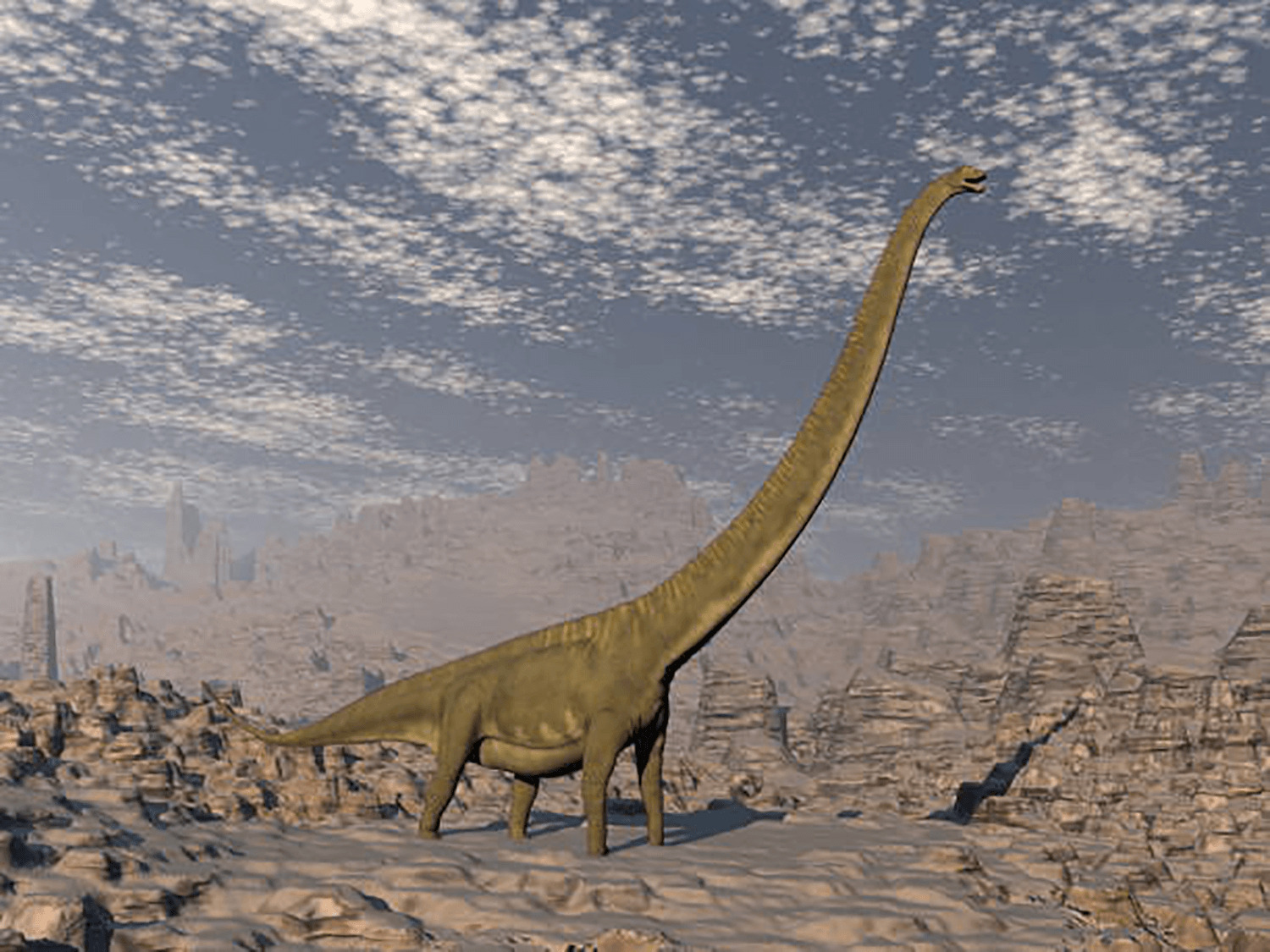
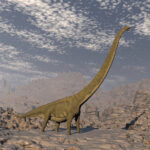
Mamenchisaurus was a super-sized sauropodomorph that lived in what is now mainland China during the Middle to Late Jurassic period.
Its name was given in 1954, in reference to the “Mamenxi” (Mǎménxī) ferry crossing in Sichuan Province, China, where its first fossil was discovered in 1952.
This dinosaur is known worldwide for its extremely long neck, even among sauropodomorphs.
Astonishing Neck Structure
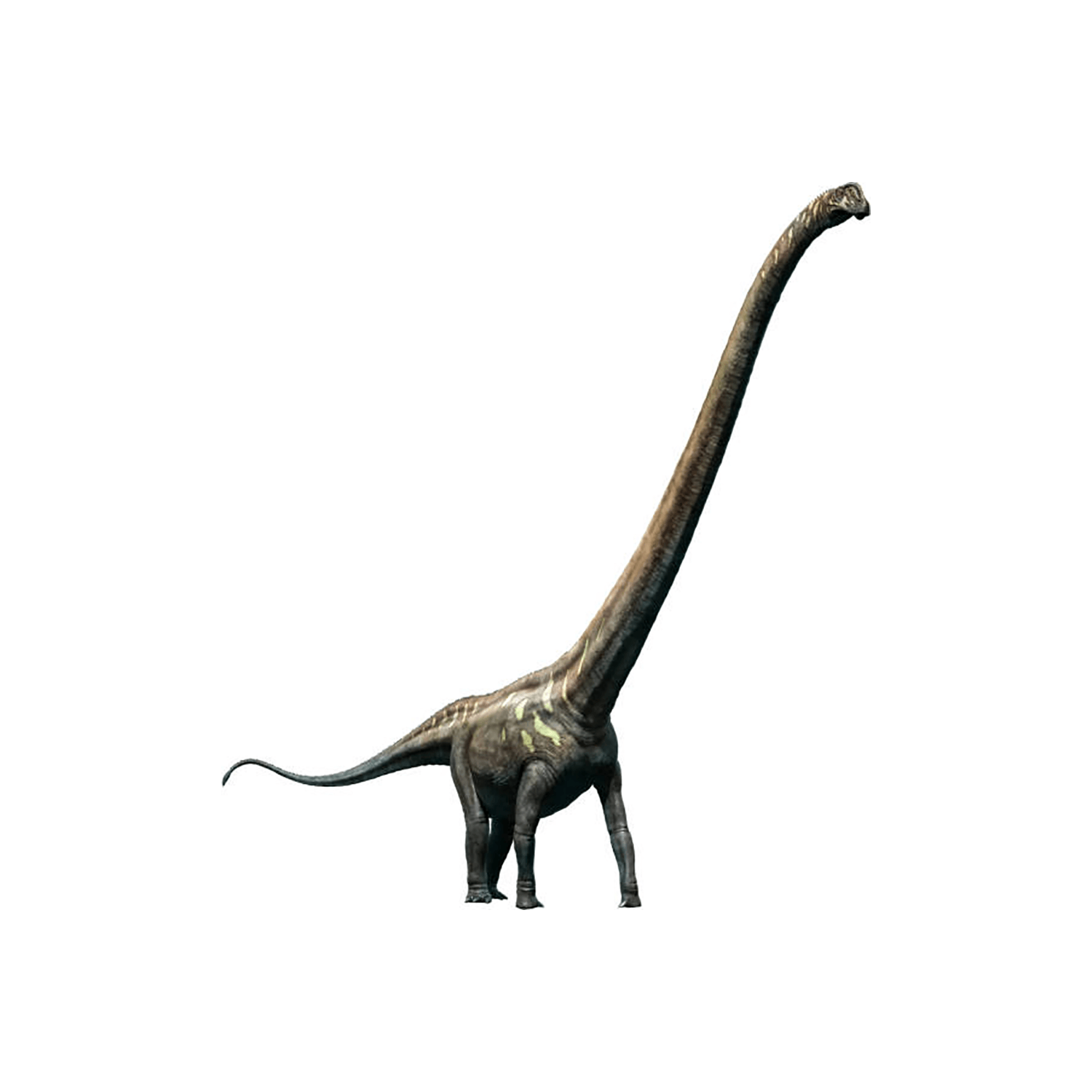
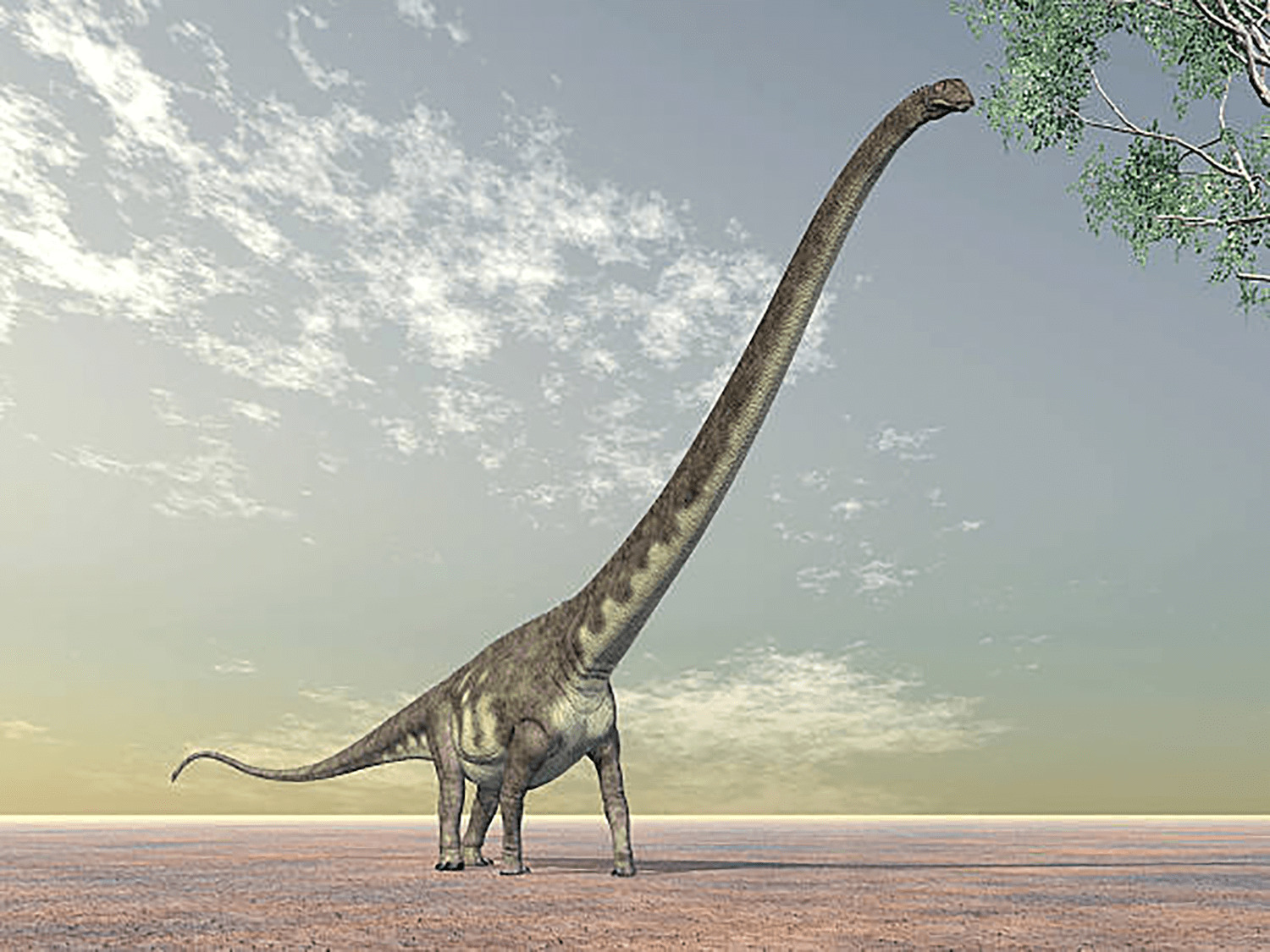
The most prominent feature of Mamenchisaurus is its abnormally long neck.
In some species, the neck accounted for more than half of the total body length, reaching from 12 meters up to a maximum of 16.9 meters.
This incredible length is a characteristic that sets it apart from all other sauropodomorphs.
Its neck is said to have reached a maximum of 16.9m.
19 Cervical Vertebrae (Neck Bones)
This extraordinary length was achieved by its number of neck bones, or cervical vertebrae.
While typical sauropodomorphs have 15 or fewer cervical vertebrae, Mamenchisaurus had an astounding 19.
Lightweight Strength to Support the Neck
Mamenchisaurus had an amazing physical structure to support a neck of this length.
Lightweighting
Each cervical vertebra was hollowed out on both sides, making them extremely light.
This is a feature also seen in theropods and modern birds, and it was an adaptation to prevent the long neck from becoming too heavy and causing a loss of balance.
Ensuring Strength (Suspension Bridge Structure)
Lightweight bones can be a concern for strength, but Mamenchisaurus’s cervical ribs (neck ribs) overlapped and bundled with the preceding and succeeding bones, creating a “suspension bridge” structure that increased its strength.
This allowed it to have a neck that was both light and strong.
The Debate Over the Purpose of Its Long Neck
So, why did Mamenchisaurus evolve such a long neck?
The purpose of this feature is still debated today.
The “Vertical Movement” Theory (Conventional Theory)
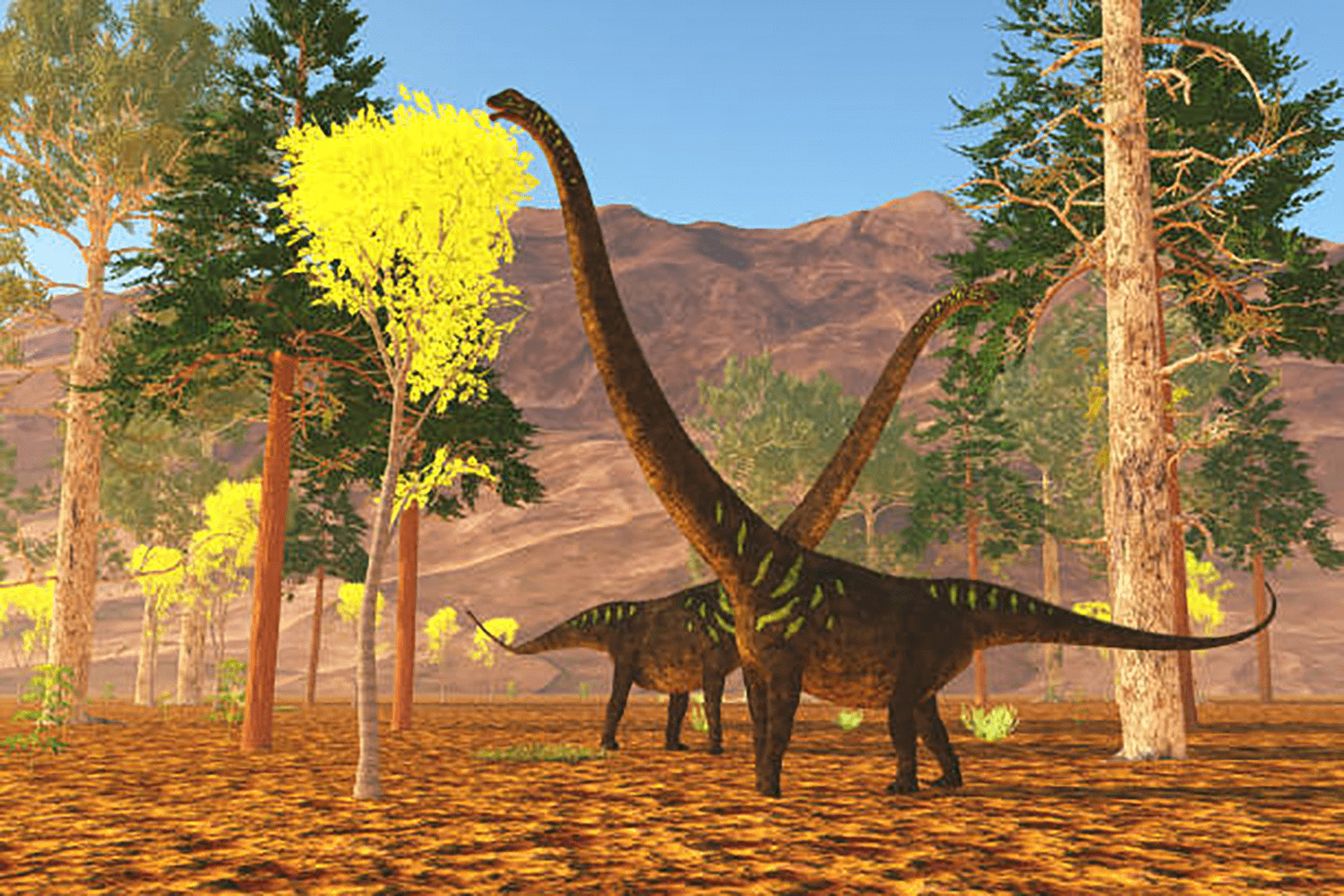
It was once believed that it held its long neck high, like a giraffe, to eat conifers and new shoots from tall trees that other dinosaurs could not reach.
It was believed to eat conifers and new shoots from tall trees.
As its skeletal structure seemed to make lateral movement difficult, this theory suggested it primarily moved its head up and down, monopolizing high-elevation food sources.
The “Horizontal Movement” Theory (Recent Theory)
Recent sauropodomorph research has pointed out that lifting the neck high would require an enormous amount of energy and put a massive strain on the heart.
Detailed analysis of the cervical vertebrae structure showed that it was not suited for lifting the neck vertically, and the “vertical movement” theory has now been discredited.
It is now believed that in order to minimize energy loss, it evolved to seek food by moving its neck. It likely stretched its neck out horizontally to efficiently graze on a wide range of plants (ground cover and low shrubs) without having to move its body.
Regardless of which theory is correct, there is no doubt that Mamenchisaurus utilized its unique neck structure to its fullest advantage to survive the harsh competition for survival.
History of Discovery and Research Progress
Mamenchisaurus fossils have only been found in the Sichuan, Gansu, and Xinjiang provinces of China.
First Discovery and Naming
Mamenchisaurus was first discovered in 1952 at a highway construction site in Sichuan Province, China.
The fossils found at this time were fragmentary and in very poor condition.
It was later named Mamenchisaurus constructus in 1954 by the representative Chinese paleontologist Yang Zhongjian.
Research Progress
Later, based on a well-preserved skeleton discovered in 1957, Mamenchisaurus hochuanensis was described in 1972, revealing the extremely long neck of Mamenchisaurus.
In 1996, a nearly complete, articulated skeleton, including a skull, was also discovered.
These specimens have shown that they were a more advanced species that evolved from dinosaurs like Vulcanodon and Shunosaurus.
Size, Classification, and the “Wastebasket Taxon” Mystery
The genus Mamenchisaurus was also an extremely diverse group.
Gigantic Size
The most well-known species, Mamenchisaurus hochuanensis, was 22m long, but Mamenchisaurus sinocanadorum from Xinjiang reached a length of 35m and a weight of 50 tons, making it one of the largest dinosaurs in history.
Unique Asian Evolution
While long thought to be closely related to Diplodocus, research on the skulls of Mamenchisaurus sinocanadorum and Mamenchisaurus youngi has led to the belief that they were a unique lineage of sauropods that evolved in Asia.
Omeisaurus and Chuanjiesaurus are cited as close relatives.
The “Wastebasket Taxon” Problem
For many years, Mamenchisaurus served as a “wastebasket taxon,” where many long-necked sauropods discovered in China’s Jurassic layers were classified.
However, the type specimen that was first named Mamenchisaurus was actually a very fragmentary fossil.
Therefore, it remains uncertain whether the more complete specimens discovered later truly belong to the “same genus” as the original Mamenchisaurus.
Recent research suggests that many of the species previously classified as Mamenchisaurus are actually likely to be separate, independent genera of dinosaurs.
For example, the massive Mamenchisaurus sinocanadorum is now strongly believed to be a separate genus, Xinjiangtitan.
Scientists are currently in the process of sorting out this taxonomic confusion.
Tail Hammer and “Death Pits”
Mamenchisaurus had other surprising features besides its long neck.
Tail Hammer
Amazingly, the tip of the tail of Mamenchisaurus hochuanensis was found to have a small bone club, formed from several fused vertebrae.
This is thought to have evolved independently of the weapons of Ankylosaurus and may have been used for defense, although some theories suggest it was merely a pathology (a result of injury or disease) or a type of sensory organ.
Skin and Footprints
Skin impressions of Mamenchisaurus have also been found, providing important clues about sauropod skin.
Furthermore, giant footprint fossils, believed to be from a Mamenchisaurid, have been discovered in the Junggar Basin in China.
These footprints, left in volcanic ash-laden mud, eventually became “death pits” where other small dinosaurs became trapped.
Fossils of dinosaurs like Guanlong, which were caught in these footprint traps, have been found, offering a glimpse into the ecology of the time.
Mamenchisaurus and Japan
Fossils of Mamenchisaurus hochuanensis have frequently been exhibited in Japan since the 1980s, making it a very well-known dinosaur in the country.
Currently, a reconstructed skeleton of Mamenchisaurus hochuanensis can be seen at the Fukui Prefectural Dinosaur Museum and other locations.
Also, Moshiryu, discovered in Iwate in 1978, was until recently said to be closely related to Mamenchisaurus, but it is now considered a sauropod of indeterminate classification (possibly a titanosauriform).
With its extraordinary neck length and unique evolution, Mamenchisaurus continues to be an extremely important presence in unraveling the mysteries of dinosaur diversity and gigantism.