
Arambourgiania
Name Origin
Named after its discoverer, Arambourg
Family
Azhdarchidae
Classification
Diapsida, Pterosauria
Habitat (Discovery Location)
Jordan
Period
Late Cretaceous
Length
Approximately 7 to 10 meters (wingspan)
You might also like... 

-
 Imperobator
- Classification
- Theropods
- Characteristics
- Carnivorous
- Era
- Cretaceous period
- Polacanthus
- Classification
- Thyreophora
- Characteristics
- Herbivorous
- Era
- Cretaceous period
- Kulindadromeus
- Classification
- Ornithopoda
- Characteristics
- Herbivorous
- Feathered
- Era
- Jurassic period
- Struthiomimus
- Classification
- Theropods
- Characteristics
- Herbivorous
- Omnivorous
- Feathered
- Era
- Cretaceous period
-
Sponsored Links
-
Sponsored Links










![[Latest Research] What Was the Function of Spinosaurus's Giant "Sail"? Exploring the Mysteries of Thermoregulation and Underwater Locomotion](https://dinosaurmuseum.jp/wp/wp-content/uploads/eyecatch_spinosaurus-sail-function_en-1024x512.webp)
![[Latest Discovery] A Third Type of Skin, Neither Scales Nor Feathers? Meet "Haolong dongi," a New Dinosaur Species Covered Entirely in Spikes](https://dinosaurmuseum.jp/wp/wp-content/uploads/eyecatch_dinosaur-spiky-skin-discovery_en-1024x512.webp)



Description
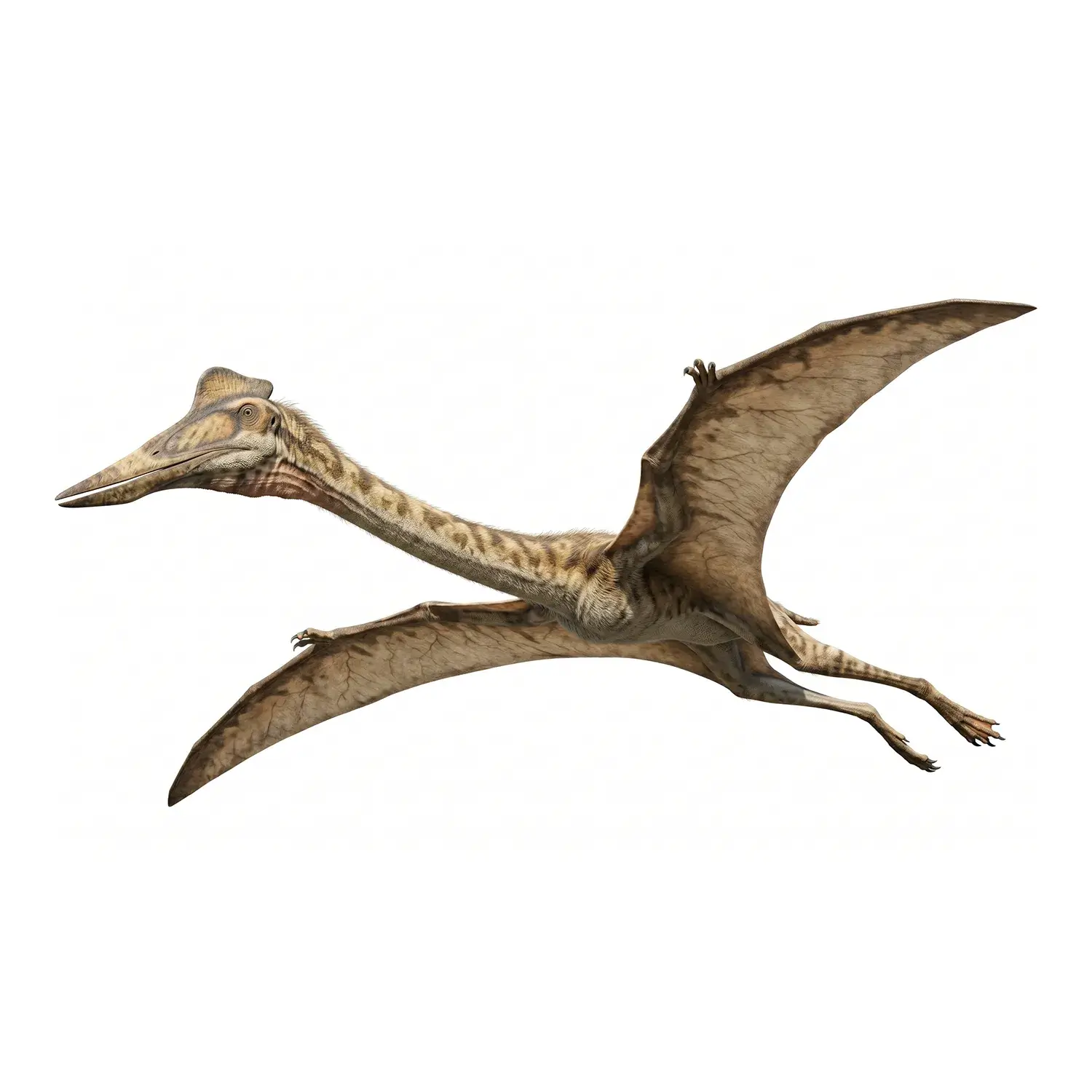
“Arambourgiania” was a massive pterosaur that inhabited Jordan during the Late Cretaceous period (Maastrichtian stage).
Alongside famous giant pterosaurs like Quetzalcoatlus and Hatzegopteryx, it is known as one of the largest flying creatures in Earth’s history.
From “Giant Wing” to a New Name! The History Surrounding Its Naming
The history of this pterosaur’s discovery followed a somewhat unusual path.
When it was first described in 1959 by the French paleontologist Camille Arambourg, the fossil was given the scientific name “Titanopteryx,” meaning “giant wing.”
However, it was later discovered that this name was already in use for a species of black fly (an insect).
Therefore, in 1989—thirty years after its initial description—it was renamed to its current name, “Arambourgiania,” in honor of its discoverer, Arambourg.
Discovered Fossils and Its Astonishing Scale
Although only a few fossils have been discovered to date, they reveal an unfathomably immense size.
A “Giant Neck Bone” Exceeding 78 cm
The first type specimen discovered was a single massive cervical vertebra (neck bone) measuring 62 cm (24.4 inches) in length.
Arambourg initially misidentified this as a “metacarpal” (wing finger bone), but later research revealed it to be a cervical vertebra.
Taking into account some missing parts, it is said that its original length astonishingly exceeded 78 cm (30.7 inches).
A New Discovery in 2024
Furthermore, in 2024, a portion of a massive right humerus was newly discovered at the Ruseifa mine in Jordan.
The Possibility of Being the World’s Largest Pterosaur
While it is difficult to estimate its overall size from these sparse fossils, comparisons with closely related pterosaurs suggest that its wingspan reached 7 to 10 meters (23.0 to 32.8 feet).
At one point, there was even a theory estimating its wingspan to have “reached 13 meters (42.7 feet).” It remains one of the largest pterosaurs currently known in the world, holding the potential that it might have been even larger than the famous Quetzalcoatlus.