Guanlong
Name Origin
Crowned Dragon
Family
Proceratosauridae
Classification
Diapsida, Saurischia, Theropoda
Habitat (Discovery Location)
China
Period
Approximately 160 million years ago (Late Jurassic)
Length
Approximately 3 meters
Weight
Approximately 70–100 kilograms
Diet
Carnivore (Meat-eater)
You might also like... 

-
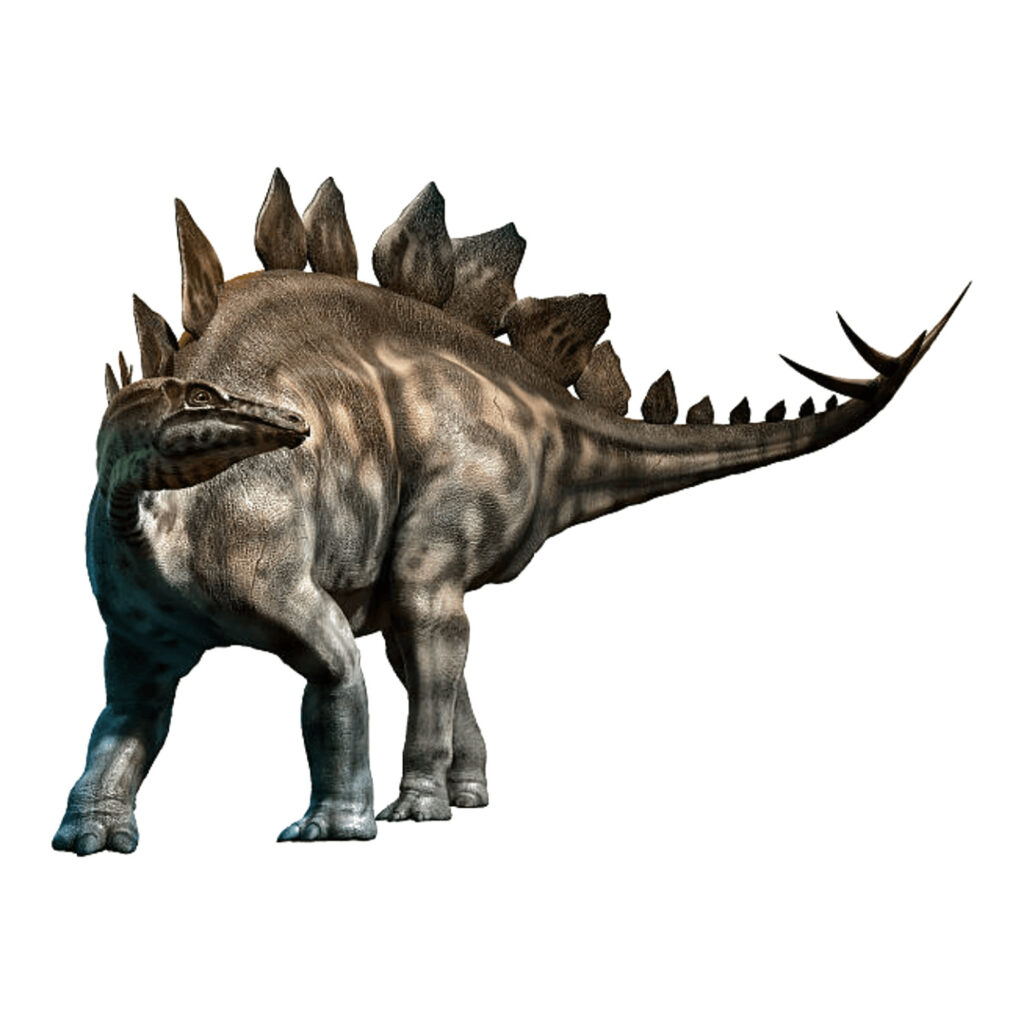
 Stegosaurus
- Classification
- Thyreophora
- Characteristics
- Herbivorous
- Era
- Jurassic period
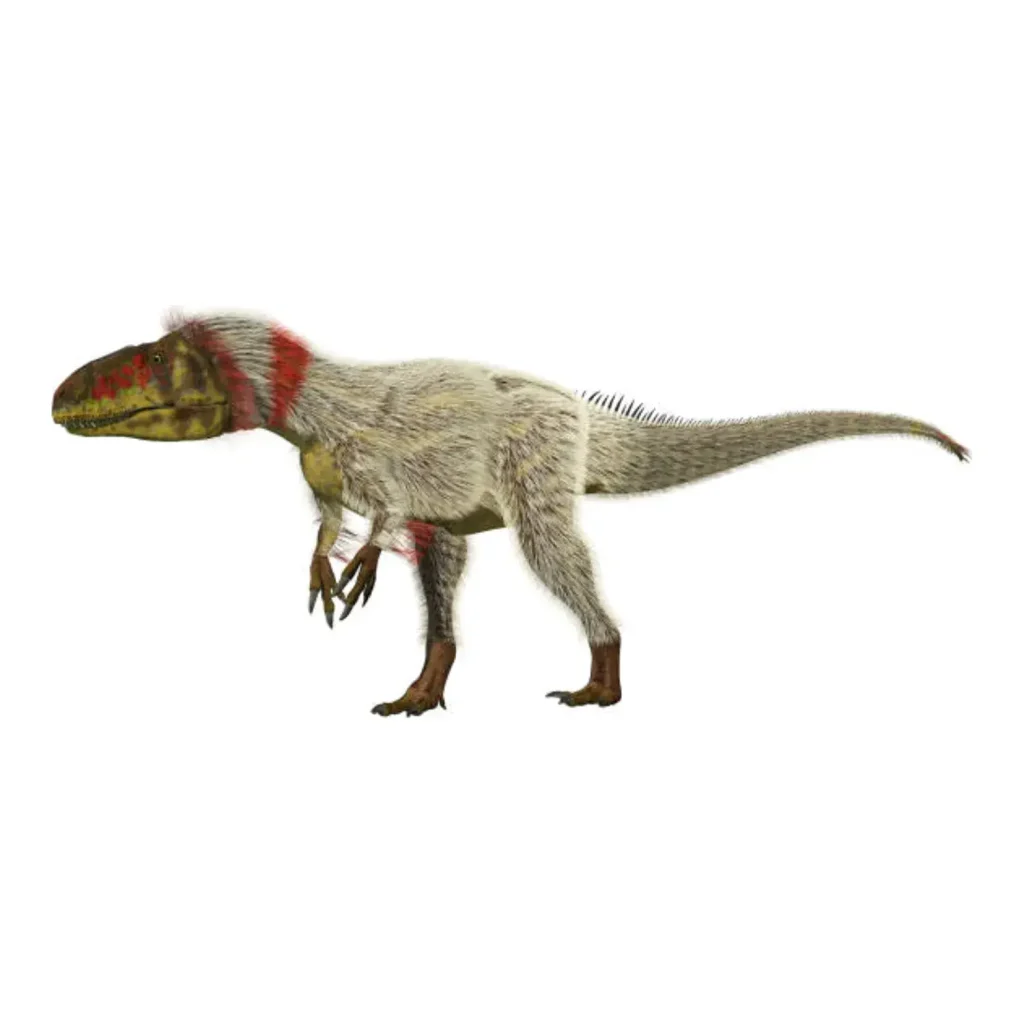
- Yutyrannus
- Classification
- Theropods
- Characteristics
- Carnivorous
- Era
- Cretaceous period
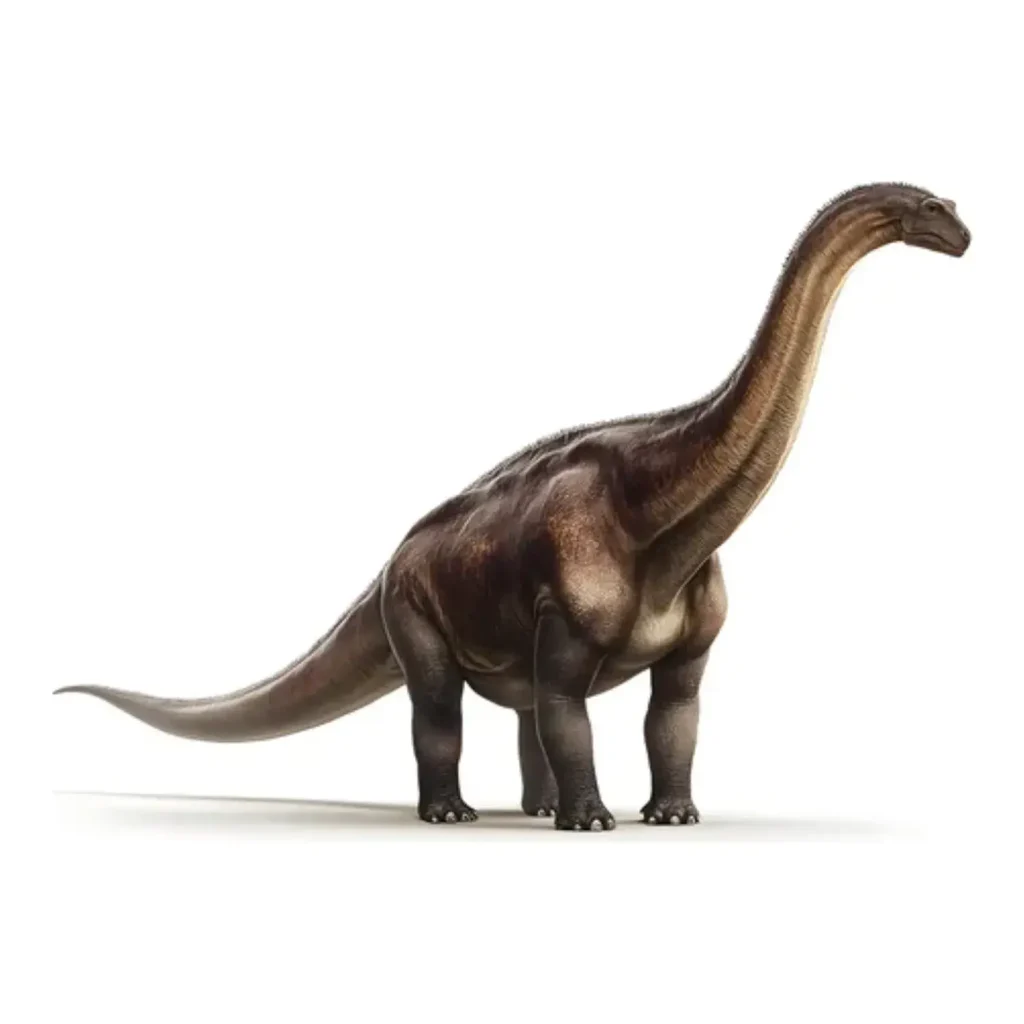
- Patagotitan
- Classification
- Sauropods
- Characteristics
- Herbivorous
- Era
- Cretaceous period
- Dimorphodon
- Classification
- Flying reptiles
- Characteristics
- Carnivorous
- Era
- Jurassic period
-
Sponsored Links
-
Sponsored Links



![[Latest Research] What Was the Function of Spinosaurus's Giant "Sail"? Exploring the Mysteries of Thermoregulation and Underwater Locomotion](https://dinosaurmuseum.jp/wp/wp-content/uploads/eyecatch_spinosaurus-sail-function_en-1024x512.webp)
![[Latest Discovery] A Third Type of Skin, Neither Scales Nor Feathers? Meet "Haolong dongi," a New Dinosaur Species Covered Entirely in Spikes](https://dinosaurmuseum.jp/wp/wp-content/uploads/eyecatch_dinosaur-spiky-skin-discovery_en-1024x512.webp)

Description
The ultimate emperor that graced the finale of the dinosaur age is the Tyrannosaurus.
The path to its absolute hegemony was a long evolutionary journey spanning tens to hundreds of millions of years.
On the very first page of that story exists a dinosaur that stands as the “oldest ancestor” of the emperor.
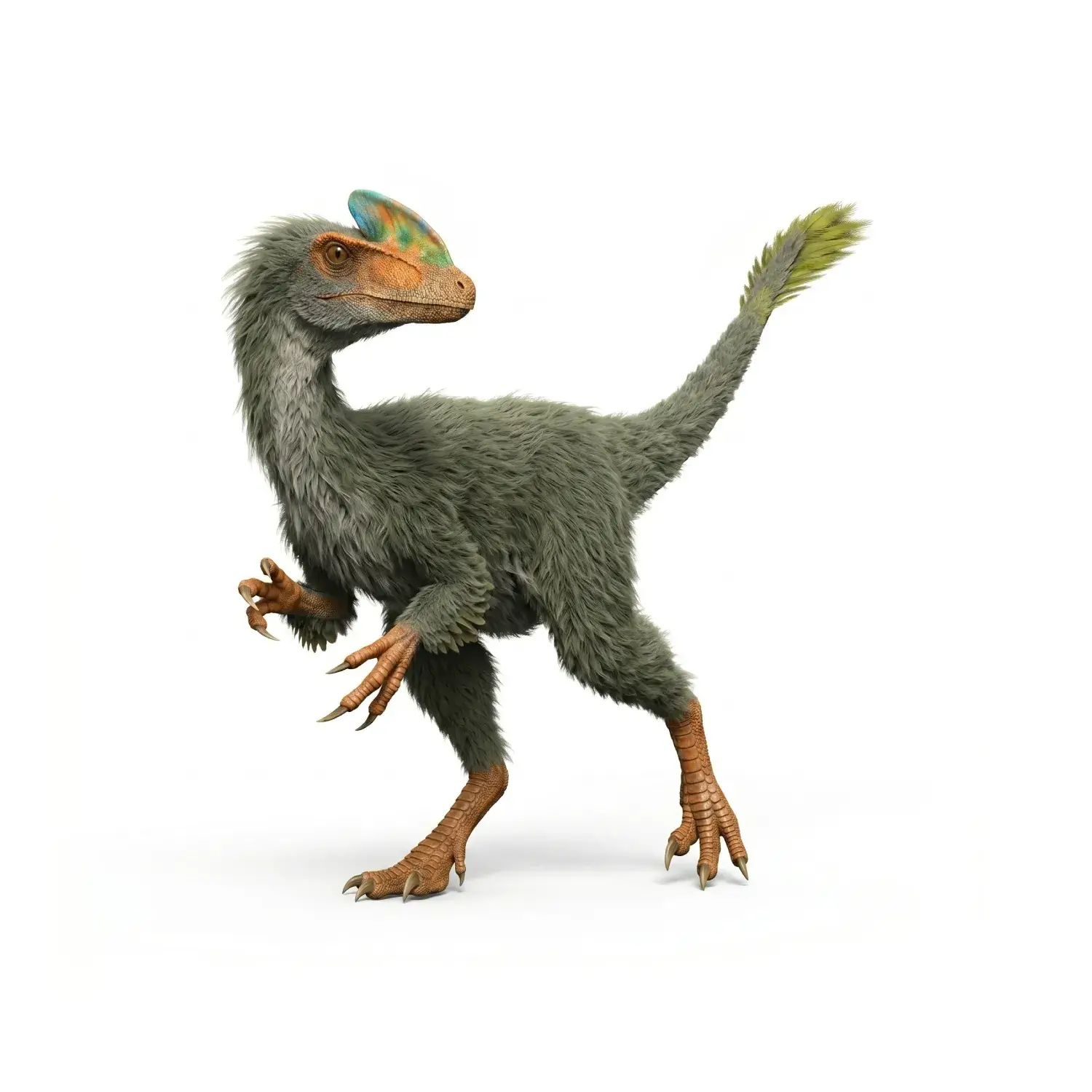
It is “Guanlong,” a carnivorous dinosaur that lived in China during the Late Jurassic period.
Discovered in 2005, this dinosaur pushed the history of tyrannosaurs back by about 30 million years. Although petite at about 3 meters (9.8 feet) in length, it possessed a highly distinctive and beautiful “crest” on its head.
The Dinosaur Named “Five-Colored Crown Dragon”: A Slender but Ferocious Hunter
The Origin of Its Name and Its Impact
The scientific name “Guanlong” is derived from the Chinese words “Wucai Guanlong,” which translates to “crown dragon of five colors.”
This name pays homage to the vibrant colors of the rock formation where its fossils were discovered (Wucaiwan) and the characteristic ornamental crest on its head.
A Minimal Body with Powerful Jaws
With a body length of about 3 meters (9.8 feet) and a weight of about 100 kg (220 lbs), it was miniature in size compared to the later Tyrannosaurus, and it is believed its body was covered in primitive feathers.
However, its mouth was equipped with “front teeth with D-shaped cross-sections,” a defining characteristic of tyrannosaurs.
This shape was well-suited for crushing not just meat but also bone, indicating that despite their small size, they were powerful predators.
Arms with Three Fingers
Another crucial difference from Tyrannosaurus was its “arms.”
While these arms would degenerate to have only two fingers in later eras, Guanlong’s arms were long and well-developed, complete with “three” fingers.
They were well-balanced hunters that used both their jaws and their arms to catch their prey.
The Functions and Mysteries Hidden in the “Crown” (Crest) Atop Its Head
A Fragile and Beautiful Display
Its most striking feature, the massive crest on its head, reached a height of about 6 cm (2.4 inches) but was extremely thin and hollow (filled with air).
Therefore, it was useless as a weapon and was so delicate that it would likely have been irreparable once broken.
Why Was Such a Cumbersome Ornament Necessary?
Currently, the following two theories are the most prominent:
Display (Courtship and Recognition)
Like the feathers of a peacock, it served as a billboard to flaunt its strength to the opposite sex or to visually recognize members of its own species.
The Handicap Principle
An evolutionary adaptation to prove, “I am so strong that I can survive even with such a fragile and conspicuous ornament.”
Comparisons of fossils reveal that the crest grew larger as the dinosaur matured, suggesting it functioned as physical proof of “transformation” into an adult.
The Emperor’s Lineage Began in Asia
A Discovery Filling a 30-Million-Year Gap
Its discovery in 2005 definitively proved that the origins of tyrannosaurs lay in “Asia.”
Guanlong, from the Late Jurassic (about 160 million years ago), is a vital piece of evidence showing that the roots of the giant emperors of North America actually trace back to small dinosaurs in Asia.
A Long-Lasting Bloodline
Taxonomically, it belongs to the “Proceratosauridae” family. It was a distinguished bloodline that survived across many epochs alongside relatives like the feathered dinosaurs Yutyrannus and Dilong.
Herein lies the evolutionary drama of how a small, feathered ancestor transformed into the massive Tyrannosaurus over the course of 90 million years.
A Muddy Tragedy and the Truth Told by Bones
The two fully articulated skeletons were discovered in a situation resembling a suspense drama.
The Trap of a Giant Footprint
They were found inside a fossilized depression created by the footprint of a massive sauropod (a mamenchisaurid).
At the time, this footprint had become a “death trap” resembling a bottomless pit, filled with a mixture of volcanic ash and mud.
A Chain of Death and Cannibalism
In this mud trap, small theropods like Limusaurus fell victim first. Drawn by their carcasses, the Guanlong also got their feet stuck in the mud and perished.
Even more shockingly, there are traces indicating that the adult Guanlong attacked the subadult (youngster) that fell in with it, suggesting the possibility that “cannibalism” took place under extreme survival conditions.
Lifespan Revealed by the “Tree Rings” of Bones
Bone analyses revealed that the adult died at 12 years old, and the subadult died at 6 years old.
Their lifespans were significantly shorter than that of the later Tyrannosaurus, suggesting they led fast-paced, harsh, and brief lives.