
Neovenator
Name Origin
New hunter
Family
Neovenatoridae
Classification
Diapsida, Saurischia, Theropoda
Habitat (Discovery Location)
United Kingdom
Period
Approximately 125 million years ago (Early Cretaceous)
Length
Approximately 7 to 7.5 meters
Weight
Approximately 1 to 2 tons
Diet
Carnivore (Meat-eater)
You might also like... 

-
 Byronosaurus
- Classification
- Theropods
- Characteristics
- Carnivorous
- Era
- Cretaceous period
- Kryptops
- Classification
- Theropods
- Characteristics
- Carnivorous
- Era
- Cretaceous period
- Tylosaurus
- Classification
- Marine reptiles
- Characteristics
- Carnivorous
- Era
- Cretaceous period
- Alioramus
- Classification
- Theropods
- Characteristics
- Carnivorous
- Era
- Cretaceous period
-
Sponsored Links
-
Sponsored Links









![[Latest Research] What Was the Function of Spinosaurus's Giant "Sail"? Exploring the Mysteries of Thermoregulation and Underwater Locomotion](https://dinosaurmuseum.jp/wp/wp-content/uploads/eyecatch_spinosaurus-sail-function_en-1024x512.webp)
![[Latest Discovery] A Third Type of Skin, Neither Scales Nor Feathers? Meet "Haolong dongi," a New Dinosaur Species Covered Entirely in Spikes](https://dinosaurmuseum.jp/wp/wp-content/uploads/eyecatch_dinosaur-spiky-skin-discovery_en-1024x512.webp)




Description
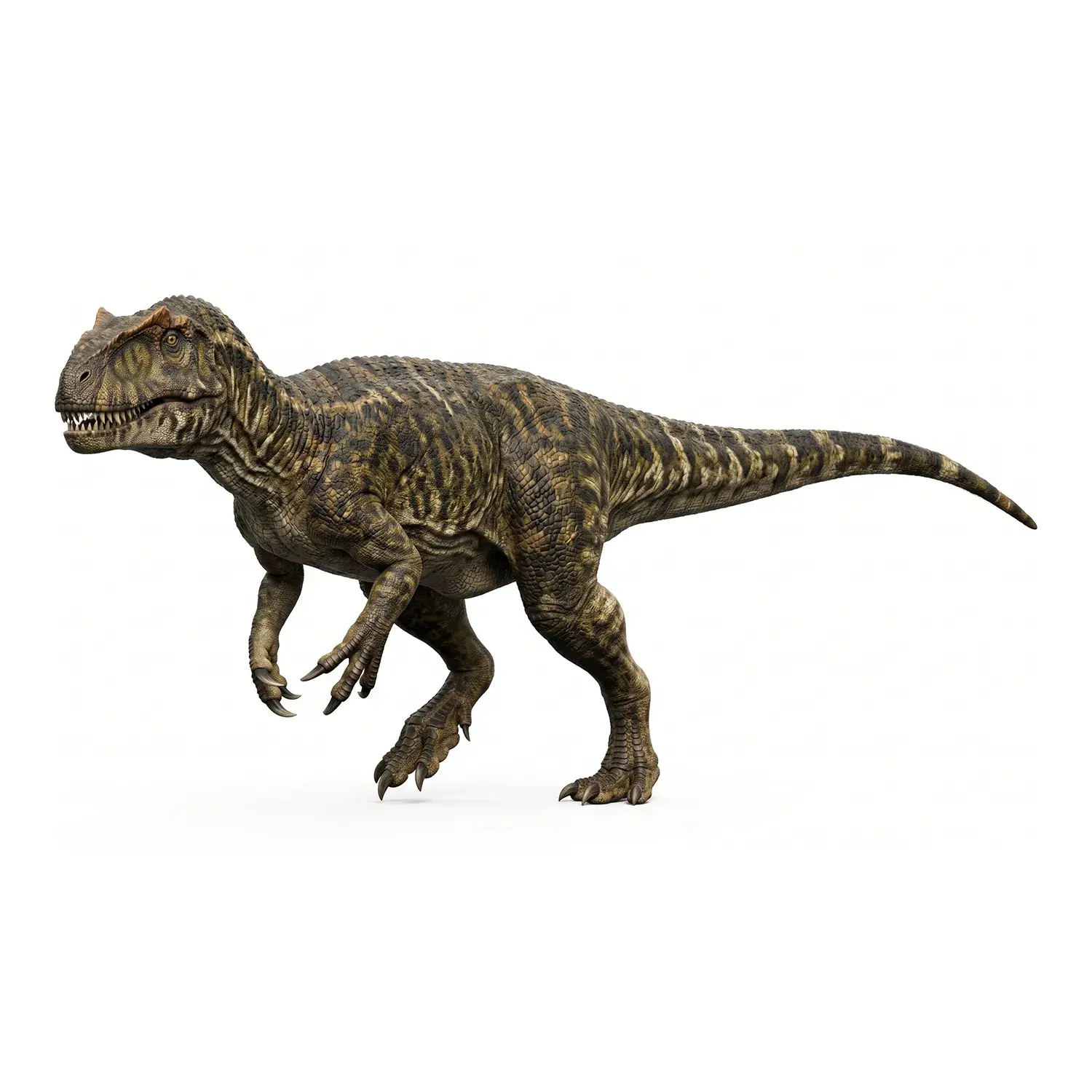
Neovenator, which lived in the United Kingdom during the Early Cretaceous period of the Mesozoic Era, is a theropod (carnivorous dinosaur) discovered on the Isle of Wight, one of the UK’s premier dinosaur fossil sites.
Its name means “new hunter,” and it reigned as an apex predator, being one of the largest carnivores in the British ecosystem of its time.
A Crest on Its Snout and a Slender Build
With a total length of about 7 to 7.5 meters (23 to 24.6 feet), Neovenator falls into the medium-sized category among carnivorous dinosaurs, but it possessed a very slender and sleek build.
*Although fragmentary, fossils of larger individuals reaching over 10 meters (33 feet) have also been found.
A Crest Like Monolophosaurus
A major feature of its appearance was a “crest much like that of Monolophosaurus” on the snout of its elongated head.
Related to this, it has also been revealed that the inside of its nasal cavity had a highly complex structure.
An “Apex Predator” Targeting Iguanodon
Neovenator was one of the largest carnivores in the British ecosystem at the time, reigning as an apex predator.
It preyed on herbivorous dinosaurs living in the same region, such as Iguanodon, Hypsilophodon, and Polacanthus. In fact, an Iguanodon fossil has been discovered bearing bite marks that are believed to belong to this species.
Fossils Revealing “Scars from Fierce Battles”
Even as an apex predator, hunting in those days was always a matter of life and death.
The first Neovenator fossil ever discovered bears traces that tell the story of fierce battles, including the following:
These vivid scars indicate that their herbivorous dinosaur prey did not simply let themselves be eaten but fought back desperately, resulting in fierce “eat-or-be-eaten” life-and-death struggles.
The Evolving Taxonomy Through Ongoing Research
When first discovered, Neovenator was thought to be a descendant of Allosaurus, which thrived in Europe.
However, recent studies have revised its classification, and it is now grouped as a “species closely related to Carcharodontosaurus,” or placed within its own more derived family, the “Neovenatoridae” (or considered closely related to megaraptorans).
Neovenator, bearing the name “new hunter,” is characterized by its slender, sleek build and the crest on its snout.
Although standing at the top of Early Cretaceous England, their hunts were never easy; the image of them fighting for survival while bearing scars all over their bodies conveys the harsh reality of prehistoric ecosystems to us today.