
Amargasaurus
Name Origin
Lizard from Amarga
Family
Dicraeosauridae
Classification
Diapsida, Saurischia, Sauropodomorpha
Habitat (Discovery Location)
Argentina
Period
Approximately 129.4 to 122.46 million years ago (Early Cretaceous)
Length
Approximately 10 meters
Weight
Approximately 3 to 4 tons
Diet
Herbivore (Plant-eater)
TODAY'S QUIZ
Correct answer = 1 coin
What are two proposed functions of the long, sharp spikes running along Amargasaurus’s neck and back?
Loading…
You might also like... 

-
 Ceratosaurus
- Classification
- Theropods
- Characteristics
- Carnivorous
- Era
- Jurassic period
- Sinovenator
- Classification
- Theropods
- Characteristics
- Carnivorous
- Feathered
- Era
- Cretaceous period
- Selmasaurus
- Classification
- Marine reptiles
- Characteristics
- Carnivorous
- Era
- Cretaceous period
- Mei
- Classification
- Theropods
- Characteristics
- Carnivorous
- Era
- Cretaceous period
-
Sponsored Links
-
Sponsored Links









![[Latest Research] What Was the Function of Spinosaurus's Giant "Sail"? Exploring the Mysteries of Thermoregulation and Underwater Locomotion](https://dinosaurmuseum.jp/wp/wp-content/uploads/eyecatch_spinosaurus-sail-function_en-1024x512.webp)
![[Latest Discovery] A Third Type of Skin, Neither Scales Nor Feathers? Meet "Haolong dongi," a New Dinosaur Species Covered Entirely in Spikes](https://dinosaurmuseum.jp/wp/wp-content/uploads/eyecatch_dinosaur-spiky-skin-discovery_en-1024x512.webp)



Description
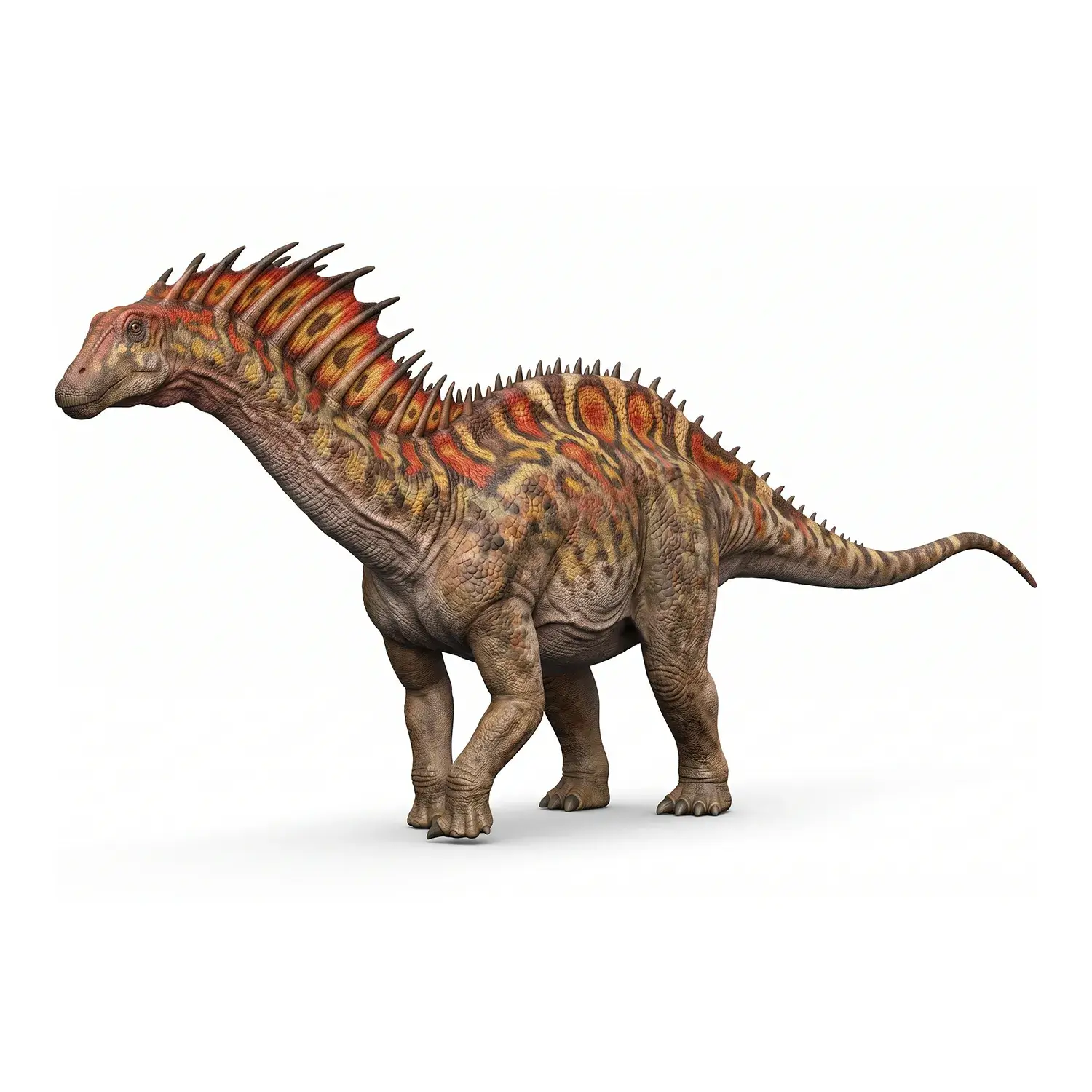
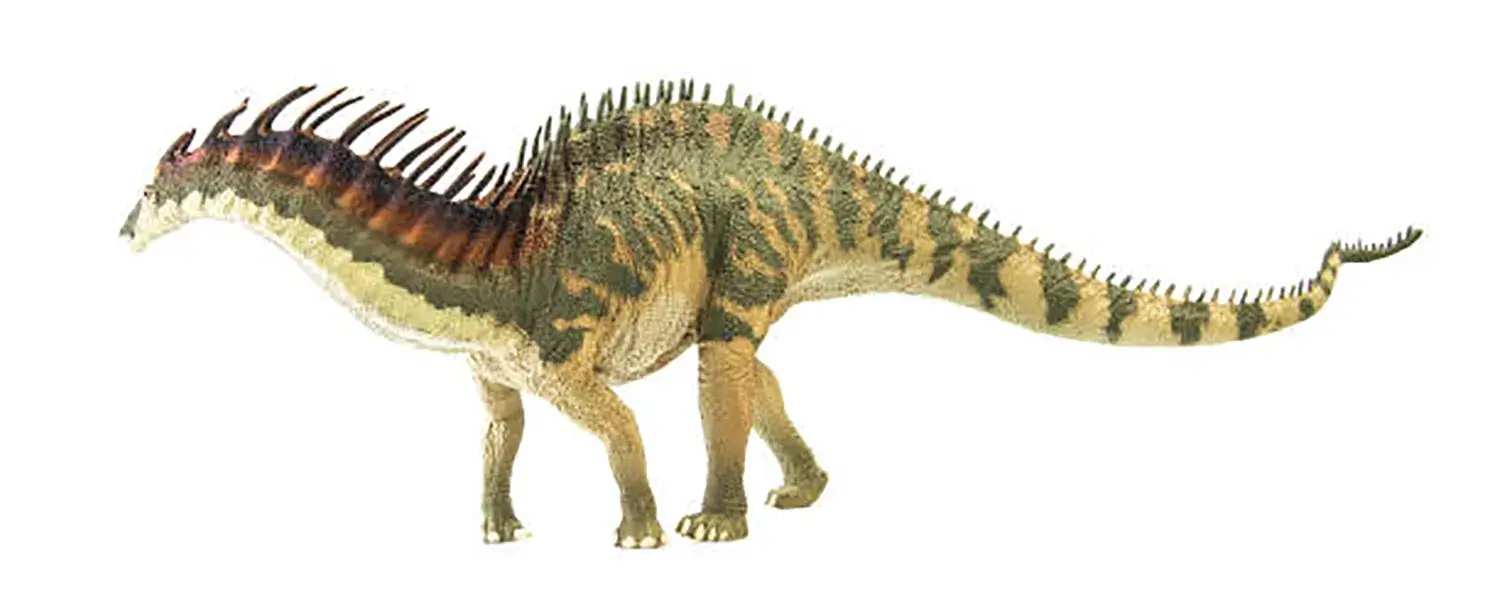
Amargasaurus is a medium-sized sauropodomorph that lived in South America, in present-day Argentina, during the Early Cretaceous period.
With a total length of about 10 meters (33 feet) and a weight of 3 to 4 tons—roughly the same as an elephant—it was relatively small for a sauropodomorph.
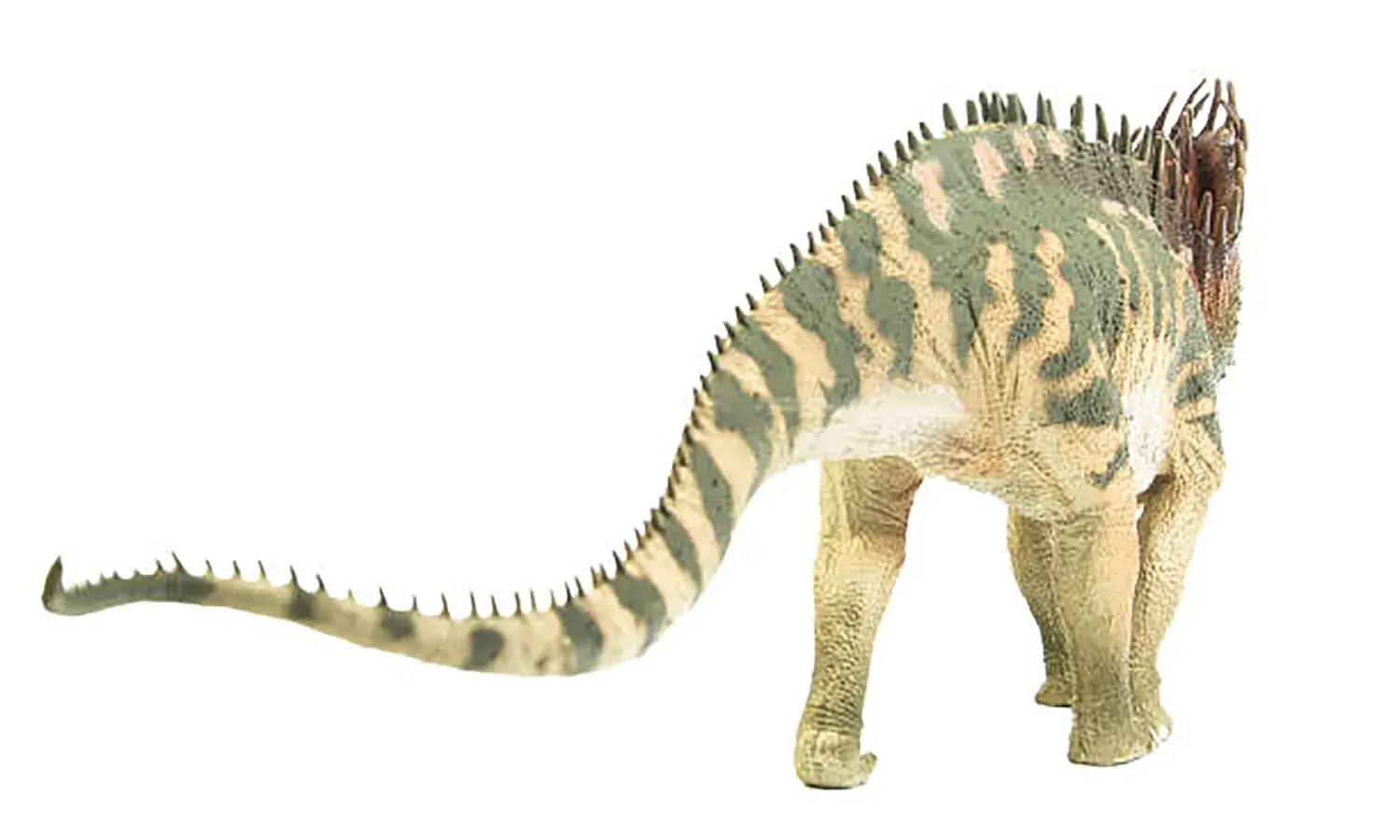
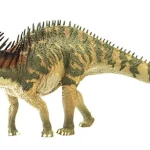
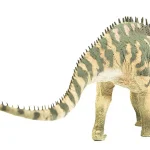
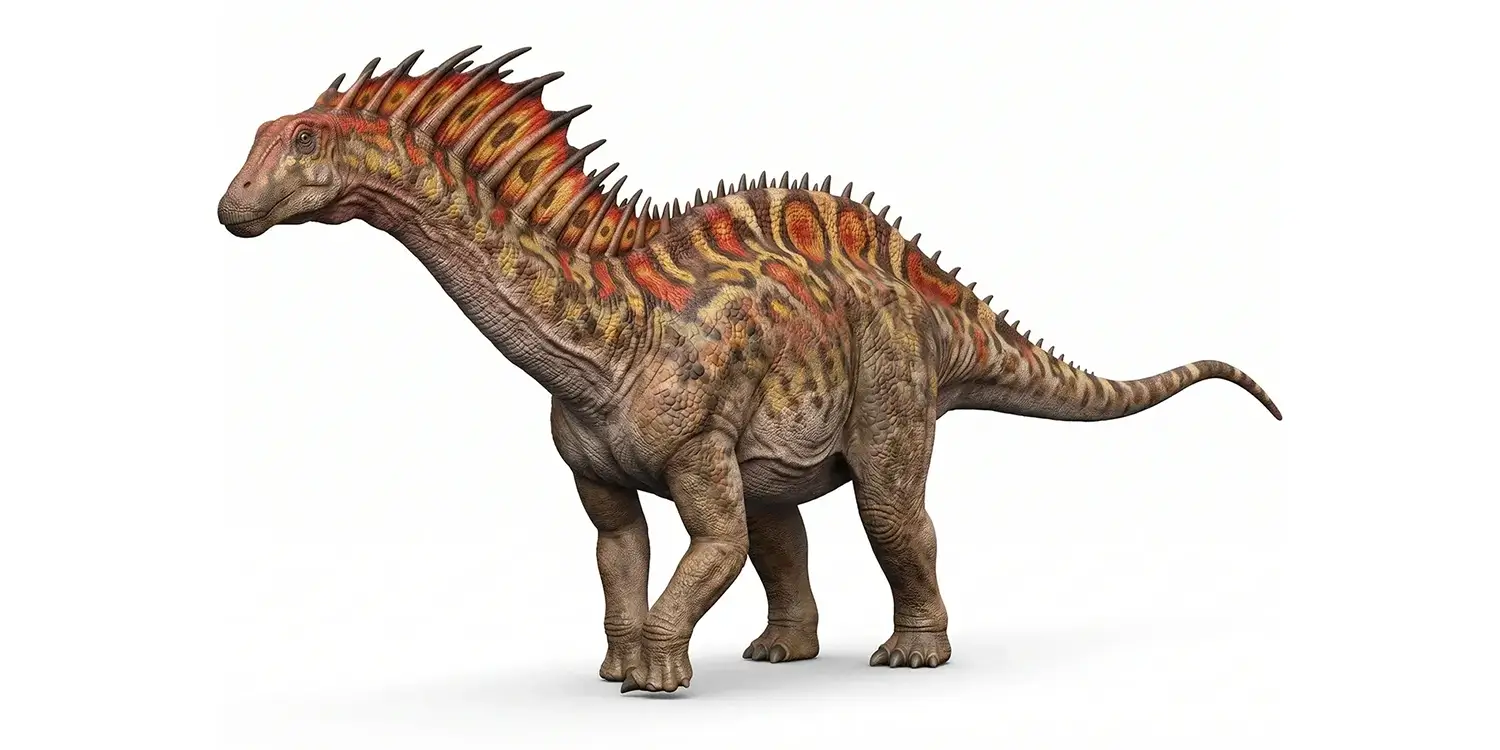
Its most defining feature is the two rows of long, sharp, spine-like spikes running from its neck down its back, with the longest reaching over 50 centimeters (20 inches).
Characterized by two rows of spine-like spikes running from its neck down its back
This bizarre appearance gives it an almost punk-rocker vibe, a unique feature unseen in any other sauropodomorph.
The Mystery Behind the Spikes
To this day, there is much debate over the purpose of these distinctive spikes, which are essentially synonymous with Amargasaurus.
The main hypotheses are as follows:
Defense Theory
A leading theory suggests they functioned as a physical barrier or weapon to prevent carnivorous dinosaurs from biting their necks.
Because the projections are made of bone and are believed not to grow back if broken, they may have been weapons used in life-or-death situations.
Display Theory
Another theory posits that the long, flashy spines were used as “ornaments” to identify fellow members of their species or to court mates.
Based on studies of closely related species, it is thought that males had more developed spines, making it highly likely they were used to appeal to females.
Thermoregulation Theory
In the past, it was thought that a membrane of skin stretched between the spines, forming a “sail” used for regulating body temperature.
However, because the cross-sections of the spines are circular, the current prevailing view is that they were independent, individual spikes.
It is also possible that they served not just one purpose, but combined multiple functions.
Ecology and Unique Physical Characteristics
Amargasaurus had a relatively short neck for a sauropodomorph.
Therefore, rather than eating leaves from tall trees, it is considered to have been a “low browser” whose staple diet consisted of plants close to the ground, such as ferns.
The region where its fossils were found was a rich floodplain with a network of braided rivers at the time.
The head of Amargasaurus resembles that of Diplodocus, but its body was much smaller in comparison.
Its forelimbs were longer than its hindlimbs, it had five toes on each foot, and its feet are said to have resembled those of modern elephants.
In 2014, a study was conducted where its skull was CT scanned to create a 3D model of its brain cavity and inner ear. The structure of the inner ear suggests that Amargasaurus had poorer hearing compared to other sauropodomorphs.
Surprising Relatives and Future Research
The family Dicraeosauridae, to which Amargasaurus belongs, is known for possessing bizarre spines.
In recent years, a close relative named Bajadasaurus was discovered in the same country of Argentina. It possessed terrifying spines that were even longer than those of Amargasaurus and curved sharply forward.
This discovery illustrates just how uniquely dicraeosaurid dinosaurs evolved to survive the struggle for existence.
Currently, only one incomplete fossilized skeleton of Amargasaurus has been discovered, leaving many mysteries about its overall anatomy and ecology.
It is hoped that future research will reveal more secrets of this uniquely shaped dinosaur.