Saurornithoides
Name Origin
Bird-like lizard
Family
Troodontidae
Classification
Diapsida, Saurischia, Theropoda
Habitat (Discovery Location)
Mongolia
Period
Late Cretaceous
Length
Approximately 1.75 to 2 meters
Weight
Approximately 30 kilograms
Diet
Carnivore (Meat-eater)
You might also like... 

-
 Massospondylus
- Classification
- Sauropods
- Characteristics
- Herbivorous
- Era
- Jurassic period
- Centrosaurus
- Classification
- Marginocephalia
- Characteristics
- Herbivorous
- Era
- Cretaceous period
- Megapnosaurus
- Classification
- Theropods
- Characteristics
- Carnivorous
- Era
- Jurassic period
- Bambiraptor
- Classification
- Theropods
- Characteristics
- Carnivorous
- Feathered
- Era
- Cretaceous period
-
Sponsored Links
-
Sponsored Links



![[Latest Research] What Was the Function of Spinosaurus's Giant "Sail"? Exploring the Mysteries of Thermoregulation and Underwater Locomotion](https://dinosaurmuseum.jp/wp/wp-content/uploads/eyecatch_spinosaurus-sail-function_en-1024x512.webp)
![[Latest Discovery] A Third Type of Skin, Neither Scales Nor Feathers? Meet "Haolong dongi," a New Dinosaur Species Covered Entirely in Spikes](https://dinosaurmuseum.jp/wp/wp-content/uploads/eyecatch_dinosaur-spiky-skin-discovery_en-1024x512.webp)

Description
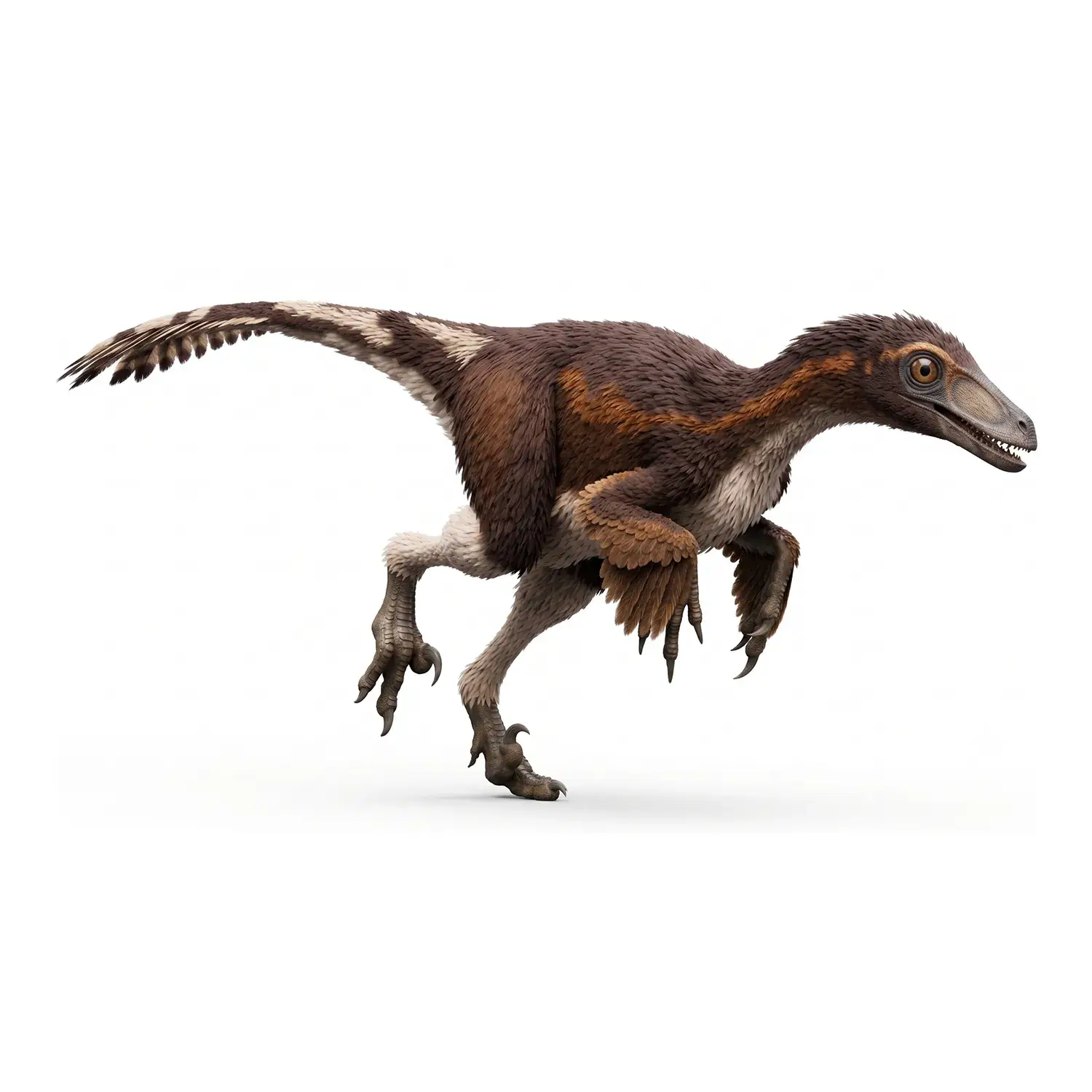
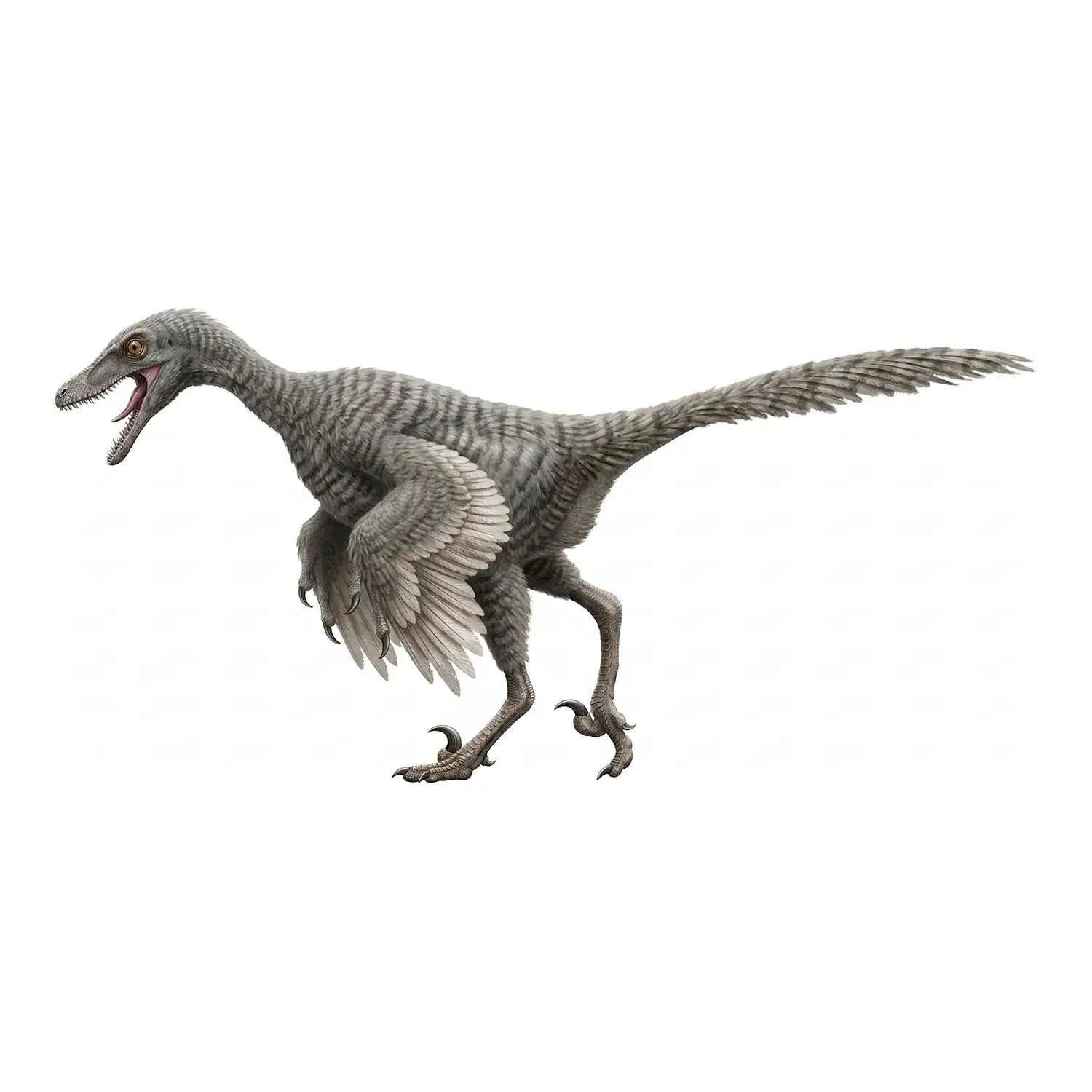
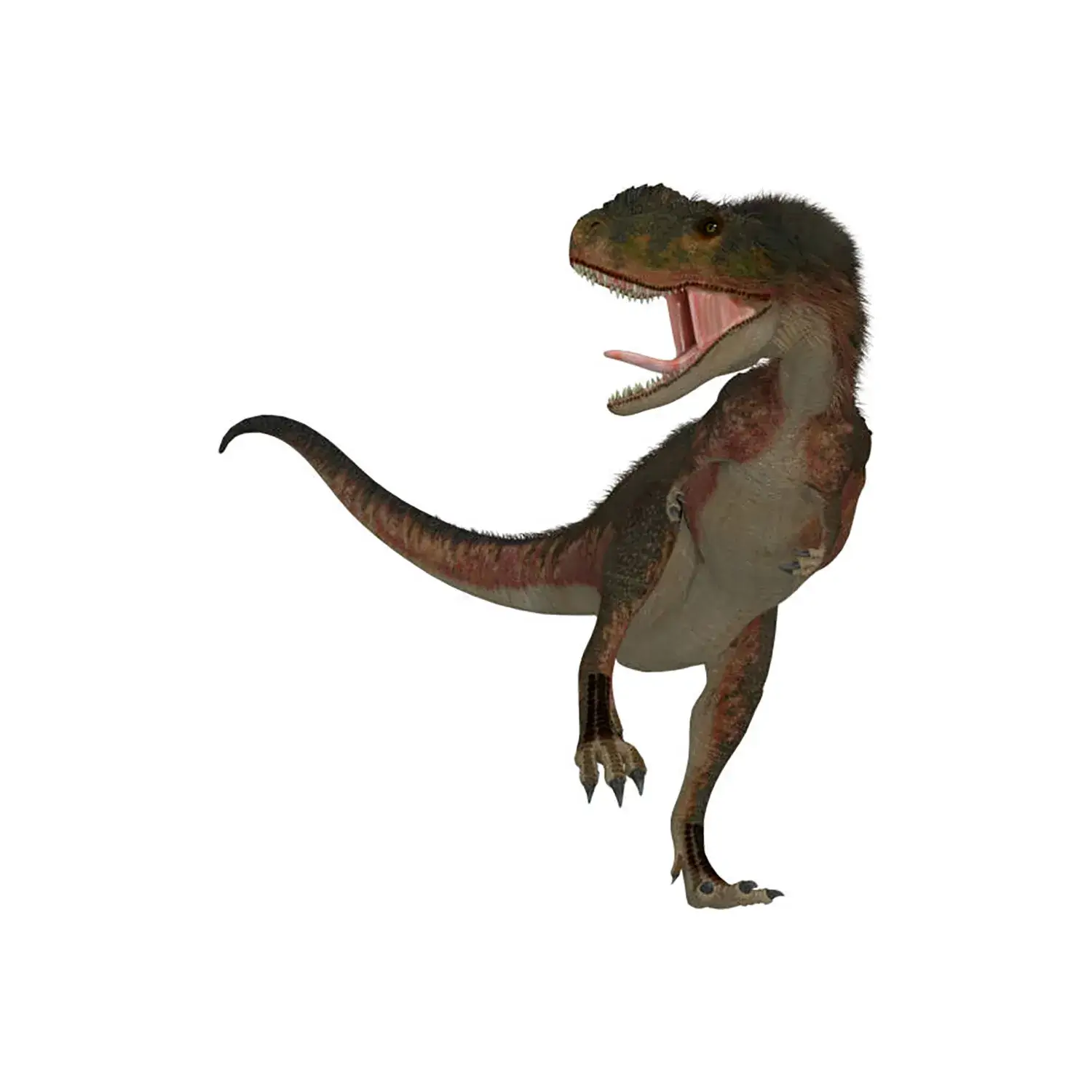
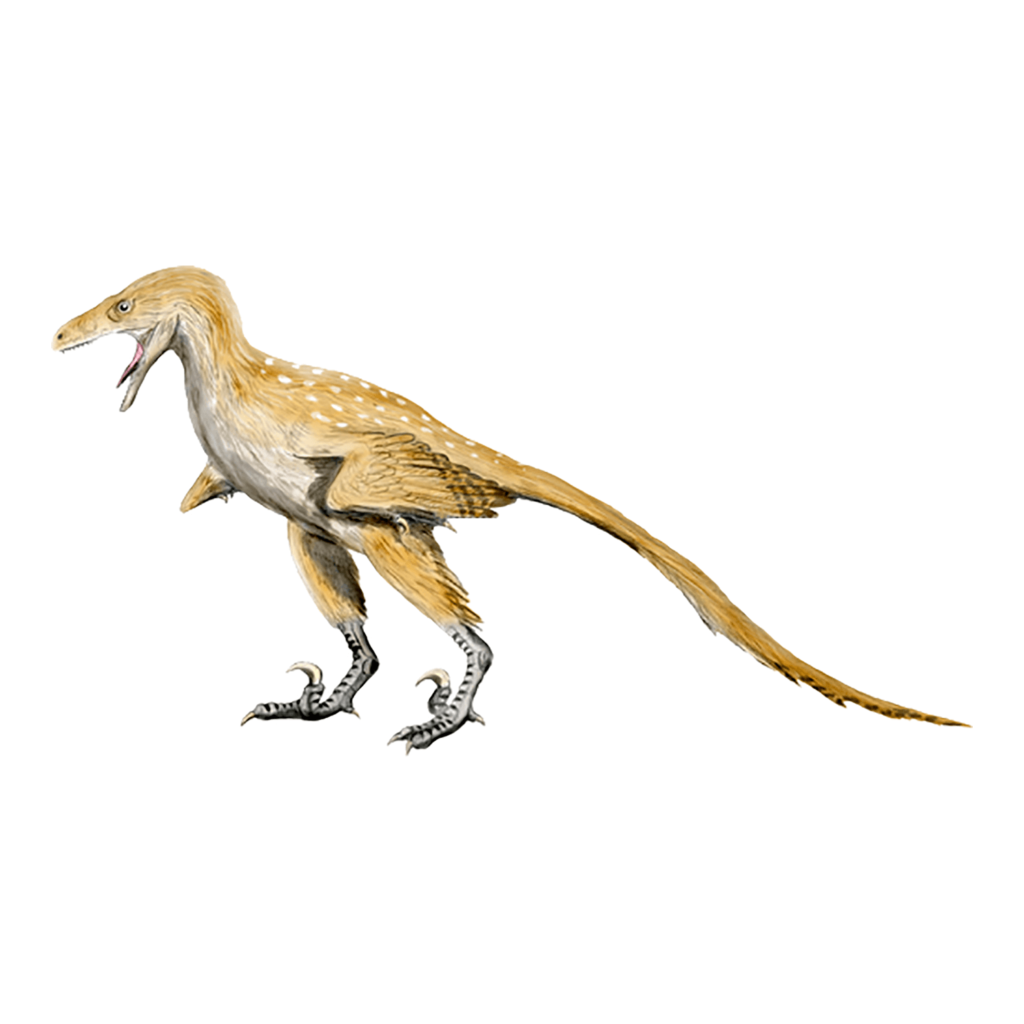
Saurornithoides was a small theropod dinosaur that lived in Mongolia during the Late Cretaceous period.
Belonging to the troodontid family, this dinosaur is believed to have possessed some of the highest intelligence and keenest eyesight in the dinosaur world, despite its lightweight and slender frame.
Discovery and the Origin of Its Name: The “Bird-Like Lizard”
The scientific name Saurornithoides is a coined word combining the ancient Greek words “sauros” (lizard), “ornithos” (bird), and “oid” (form/shape), meaning “bird-like reptile (lizard).”
Its fossils were discovered in Mongolia by the Central Asiatic Expeditions sent by the American Museum of Natural History, and it was officially described in 1924 by the renowned paleontologist Henry Fairfield Osborn.
Only two specimens have been discovered to date, but because they include both adult and juvenile fossils—and both were exceptionally well-preserved—researchers have been able to unravel many of its physical characteristics.
Incidentally, fossils of other “bird-like dinosaurs” such as Velociraptor and Oviraptor have also been found near the site where they were discovered.
Small Yet Refined Physical Characteristics
The total length of Saurornithoides was about 1.75 to 2 meters (5.7 to 6.6 feet), making it an unusually small species not only among carnivorous dinosaurs as a whole, but even within the entire troodontid family.
However, for a bipedal theropod, it had relatively long forelimbs, and its hands were equipped with three sharp claws.
Head and Teeth
Its snout (from the tip of the nose to the mouth) was slender, and it was lined with far more teeth than its close relative Velociraptor, which was of a similar build.
Leg Structure
Each hind limb had four toes.
Furthermore, like other troodontids, its metatarsals featured a specialized and refined mechanism designed to reduce stress on the feet while running.
A “Nocturnal Hunter” with Exceptional Vision
Their skulls featured “massive orbits (eye sockets),” indicating that they had extremely large eyes.
These eyes were well-equipped with stereoscopic vision and depth perception, much like modern birds of prey, allowing them to accurately judge the distance to their prey.
Moreover, because their eyes were structured to see well even in the dark, some researchers argue that Saurornithoides might have been a nocturnal hunter.
Utilizing their keen eyesight and swift feet, they may have hunted small prey under the cover of darkness.
Unrivaled Brain Capacity in the Dinosaur World and the “Dinosauroid” Hypothesis
The most remarkable aspect of Saurornithoides is its “outstandingly high intelligence.”
It possessed a skull capable of housing a large-capacity brain, making it one of the largest-brained dinosaurs known.
It stood out even among the famously intelligent troodontid family, with a brain size a staggering six times larger than that of a crocodile of the same weight.
The Romance of the “Dinosauroid” that Captivated Intellectuals
This extraordinary level of intelligence stimulated the imaginations of many researchers and intellectuals.
The renowned astronomer Carl Sagan featured this dinosaur in his 1977 book, “The Dragons of Eden.”
In it, he suggested the fascinating, romantic possibility of a “Dinosauroid” (dinosaur-human)—the idea that “if the extinction of the dinosaurs had not occurred, this dinosaur might have evolved into a human-like intelligent lifeform,” which generated significant buzz.
Summary
Saurornithoides sprinted across Cretaceous Mongolia.
Packed into its small body was exceptional vision to reliably catch prey, a leg structure designed to reduce stress, and a phenomenal brain capacity that even sparked imaginations of future intelligent evolution.
Being able to read such a rich ecology from just two fossils ensures that this dinosaur continues to endlessly fascinate paleontology fans to this day.