
Qianzhousaurus
Name Origin
Qianzhou lizard
Family
Tyrannosauridae
Classification
Diapsida, Saurischia, Theropoda
Habitat (Discovery Location)
China
Period
Approximately 66 million years ago (Late Cretaceous)
Length
Approximately 7.5 to 9 meters
Weight
Approximately 1 ton
Diet
Carnivore (Meat-eater)
You might also like... 

-
 Aquilops
- Classification
- Marginocephalia
- Characteristics
- Herbivorous
- Era
- Cretaceous period
- Shuvuuia
- Classification
- Theropods
- Characteristics
- Carnivorous
- Feathered
- Era
- Cretaceous period
- Zephyrosaurus
- Classification
- Ornithopoda
- Characteristics
- Herbivorous
- Era
- Cretaceous period
- Megapnosaurus
- Classification
- Theropods
- Characteristics
- Carnivorous
- Era
- Jurassic period
-
Sponsored Links
-
Sponsored Links










![[Latest Research] What Was the Function of Spinosaurus's Giant "Sail"? Exploring the Mysteries of Thermoregulation and Underwater Locomotion](https://dinosaurmuseum.jp/wp/wp-content/uploads/eyecatch_spinosaurus-sail-function_en-1024x512.webp)
![[Latest Discovery] A Third Type of Skin, Neither Scales Nor Feathers? Meet "Haolong dongi," a New Dinosaur Species Covered Entirely in Spikes](https://dinosaurmuseum.jp/wp/wp-content/uploads/eyecatch_dinosaur-spiky-skin-discovery_en-1024x512.webp)

Description
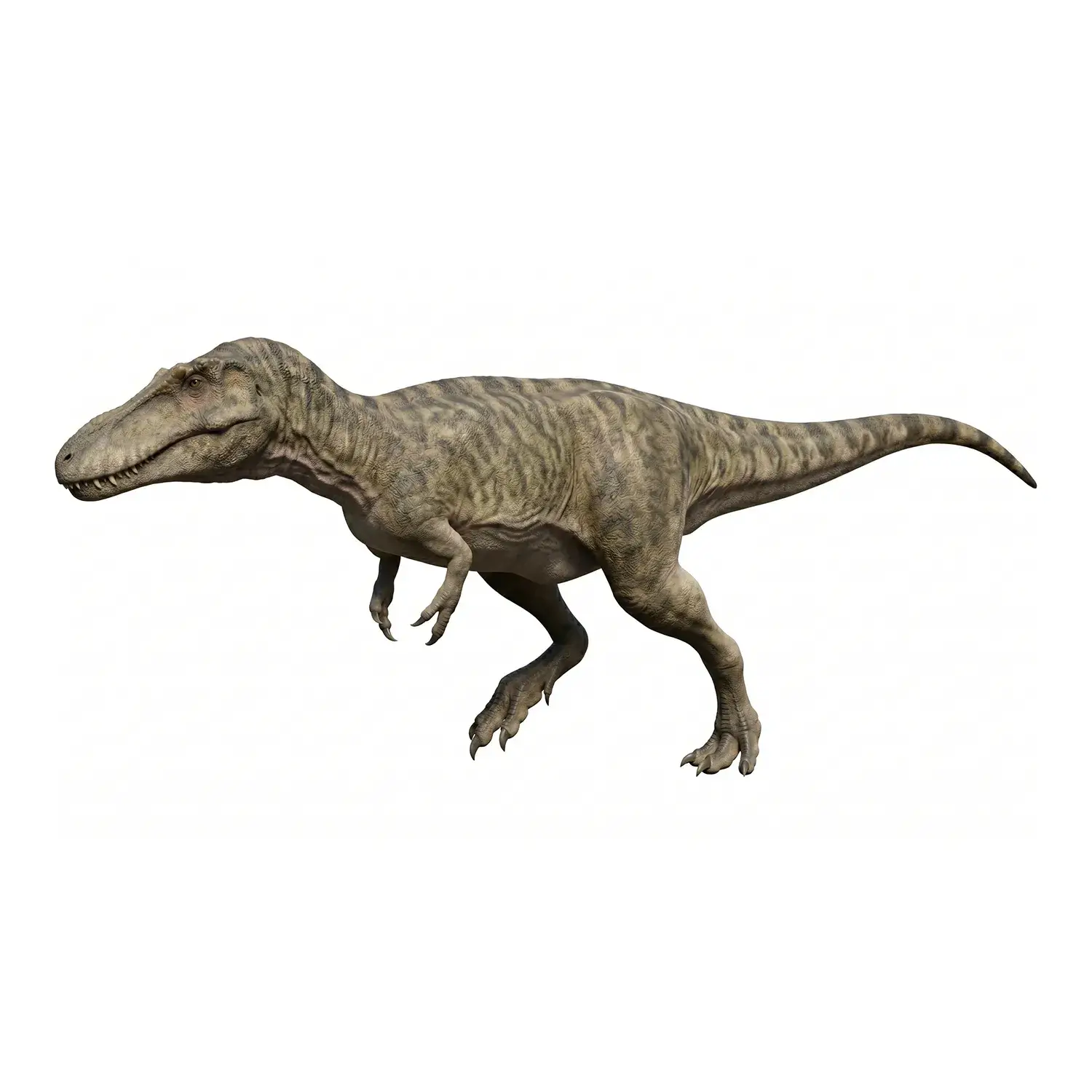
Qianzhousaurus was a theropod dinosaur that lived in southern China during the Late Cretaceous period, approximately 66 million years ago.
Although it belongs to the Tyrannosauridae family, it possessed an extremely long and slender snout, earning it the popular nickname “Pinocchio rex” after the fairytale character.
Its Greatest Feature: A Long, Slender “Pinocchio”-like Snout
The most defining characteristic of this dinosaur is its extremely elongated snout.
Due to its unique shape, it evokes the image of the fairytale protagonist whose nose grew when he lied, hence the name “Pinocchio rex.”
A Snout Reaching 90 cm in Length
The snout portion of its skull reached up to 90 cm (35.4 inches) in length, compared to a height of 25 cm (9.8 inches) and a width of 20 cm (7.9 inches).
Additionally, a row of small, short horns lined its upper surface.
Long, Thin, and “Shallow” Teeth
When thinking of tyrannosaur teeth, they are typically thick, robust, and deeply rooted in the jaw to powerfully crush bone.
However, Qianzhousaurus possessed the contrasting characteristic of having “long, thin teeth that were shallowly rooted.”
A Slender Build and a “Specialized Diet” That Exploited a Niche
Compared to large, closely related species like Tyrannosaurus and Tarbosaurus, the body of Qianzhousaurus was very slender and relatively small, giving it a sleek appearance that at first glance resembled a juvenile of a larger species.
When first described, it was estimated to be about 6.3 meters (20.7 feet) long and weigh about 757 kg (1,670 lbs). However, a 2019 study suggested that it could have reached a maximum length of 7.5 to 9 meters (24.6 to 29.5 feet) and a weight of 1 ton (2,200 lbs).
A Diet That Avoided Competition with Large Species
Due to its long, slender snout and thin teeth, it was not suited for overpowering large prey by brute force.
Therefore, it is believed to have had a specialized diet, targeting prey such as:
During the same period, powerful, large tyrannosaurs such as Tarbosaurus and Zhuchengtyrannus lived in Asia. It is presumed that by altering its target prey, Qianzhousaurus successfully avoided direct competition for survival with them.
An “Adult” Fossil That Unlocked Evolutionary Mysteries
Taxonomically, Qianzhousaurus forms a group called the “Alioramini tribe” alongside its close relative, “Alioramus.”
In fact, its discovery was crucial in solving a long-standing evolutionary mystery.
Overturning the Theory That “Only Juveniles Have Slender Snouts”
Until Qianzhousaurus was discovered, Alioramus was the only known tyrannosaur with a similarly long and slender snout.
Furthermore, because all Alioramus fossils found were of subadults (near-adults), there was a theory that “a long, slender snout is merely a characteristic unique to juveniles.”
However, the discovered skeleton of Qianzhousaurus was clearly an “adult,” brilliantly proving that they maintained their slender snouts even into adulthood.
A Face That Doesn’t Change?
A 2022 study on its cranial anatomy also pointed out the possibility that they did not undergo the “secondary metamorphosis”—where the face becomes more robust and blocky with growth—seen in other members of the Tyrannosauridae family.
Amidst a Tyrannosauridae family that was evolving to become massive and heavily armed, Qianzhousaurus deliberately maintained its sleek build and specialized diet.
They can be considered highly important creatures that narrate the diverse evolutionary paths of dinosaurs to us today.