
Tsintaosaurus
Name Origin
Qingdao lizard
Family
Hadrosauridae
Classification
Diapsida, Ornithischia, Ornithopoda
Habitat (Discovery Location)
China
Period
Approximately 80 million years ago (Late Cretaceous)
Length
Approximately 10 meters
Diet
Herbivore (Plant-eater)
You might also like... 

-
 Megapnosaurus
- Classification
- Theropods
- Characteristics
- Carnivorous
- Era
- Jurassic period
- Pliosaurus
- Classification
- Marine reptiles
- Characteristics
- Carnivorous
- Era
- Jurassic period
- Therizinosaurus
- Classification
- Theropods
- Characteristics
- Herbivorous
- Era
- Cretaceous period
- Saurornitholestes
- Classification
- Theropods
- Characteristics
- Carnivorous
- Era
- Cretaceous period
-
Sponsored Links
-
Sponsored Links









![[Latest Research] What Was the Function of Spinosaurus's Giant "Sail"? Exploring the Mysteries of Thermoregulation and Underwater Locomotion](https://dinosaurmuseum.jp/wp/wp-content/uploads/eyecatch_spinosaurus-sail-function_en-1024x512.webp)
![[Latest Discovery] A Third Type of Skin, Neither Scales Nor Feathers? Meet "Haolong dongi," a New Dinosaur Species Covered Entirely in Spikes](https://dinosaurmuseum.jp/wp/wp-content/uploads/eyecatch_dinosaur-spiky-skin-discovery_en-1024x512.webp)

Description
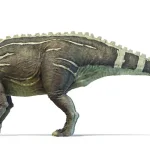
Tsintaosaurus was a large herbivorous dinosaur that lived on the Chinese continent during the Late Cretaceous period, about 80 million years ago.
As an ornithopod belonging to the hadrosaurs (specifically the Lambeosaurinae subfamily)—commonly known as duck-billed dinosaurs—it is famous for having caused quite a stir in the paleontological community for many years due to the highly bizarre “crest” on its head.
The Shock of the “Single Horn” and the Unicorn Legend
What made Tsintaosaurus famous was the very first skull fossil ever discovered.
From its forehead area, a “single rod-like bone” about 40 cm (15.7 inches) long extended straight up toward the sky.
The Birth of the Unicorn Dinosaur
At the time of its announcement, its appearance with a single horn, much like a mythical unicorn, caused an uproar in the academic world and left a massive impact.
Because of this look, it was given the specific name “spinorhinus” (meaning “spine-like nose”), instantly making it the talk of the time.
Various Early Speculations
Initially, theories were proposed regarding the role of this horn, suggesting it was a “weapon against carnivorous dinosaurs” or a “snorkel for when it escaped into the water.”
However, these theories were rejected because the bone itself was too fragile to be used as a weapon, and its tip was completely closed off.
The Emergence and Dismissal of the “No-Crest Theory”
Some researchers even suggested that “the nasal bone simply bent and protruded during the fossilization process, and the crest itself never existed.” However, since a similar crest was found on another individual, it was proven to be a structure that naturally existed.
The “Truth Behind the Single Horn” Revealed by a 2013 Study
For a long time, it was considered a “bizarre single-horned dinosaur,” but in 2013, a groundbreaking fact was revealed when a research team led by paleontologist Dr. Albert Prieto-Márquez re-examined the fossil in detail using modern technology such as CT scans.
The truth was that the initially discovered skull had been “damaged by the intense pressure of the geological strata” during the fossilization process.
A part of the bone that should have smoothly connected from the snout to the back of the head had simply snapped and folded upward, pointing straight up like a unicorn’s horn.
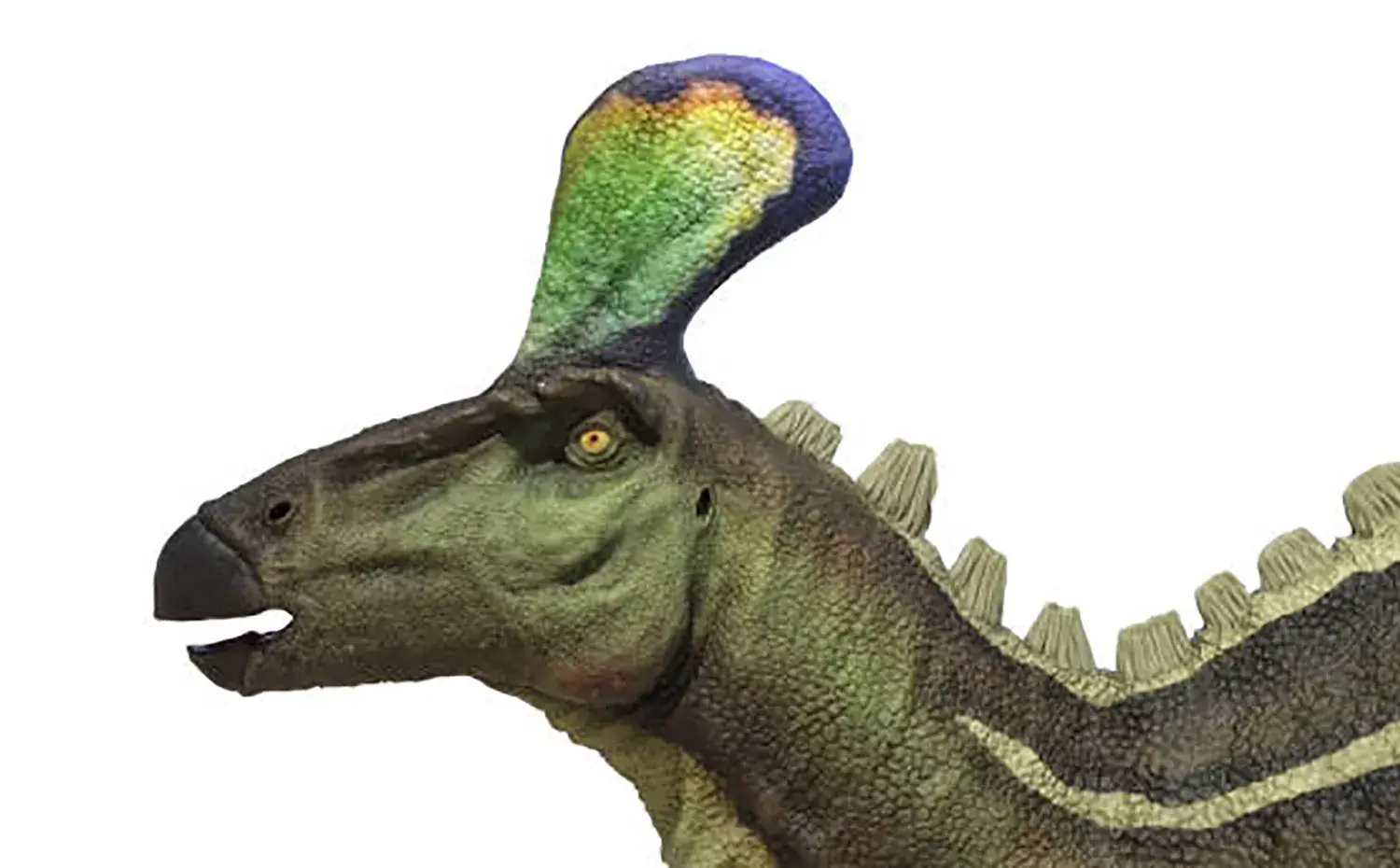
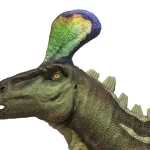
It was brought to light that what was thought to be a horn was not an independent single horn at all, but merely “a portion (the rear part) of a massive, flat, paddle-like crest that flared out toward the sky.”
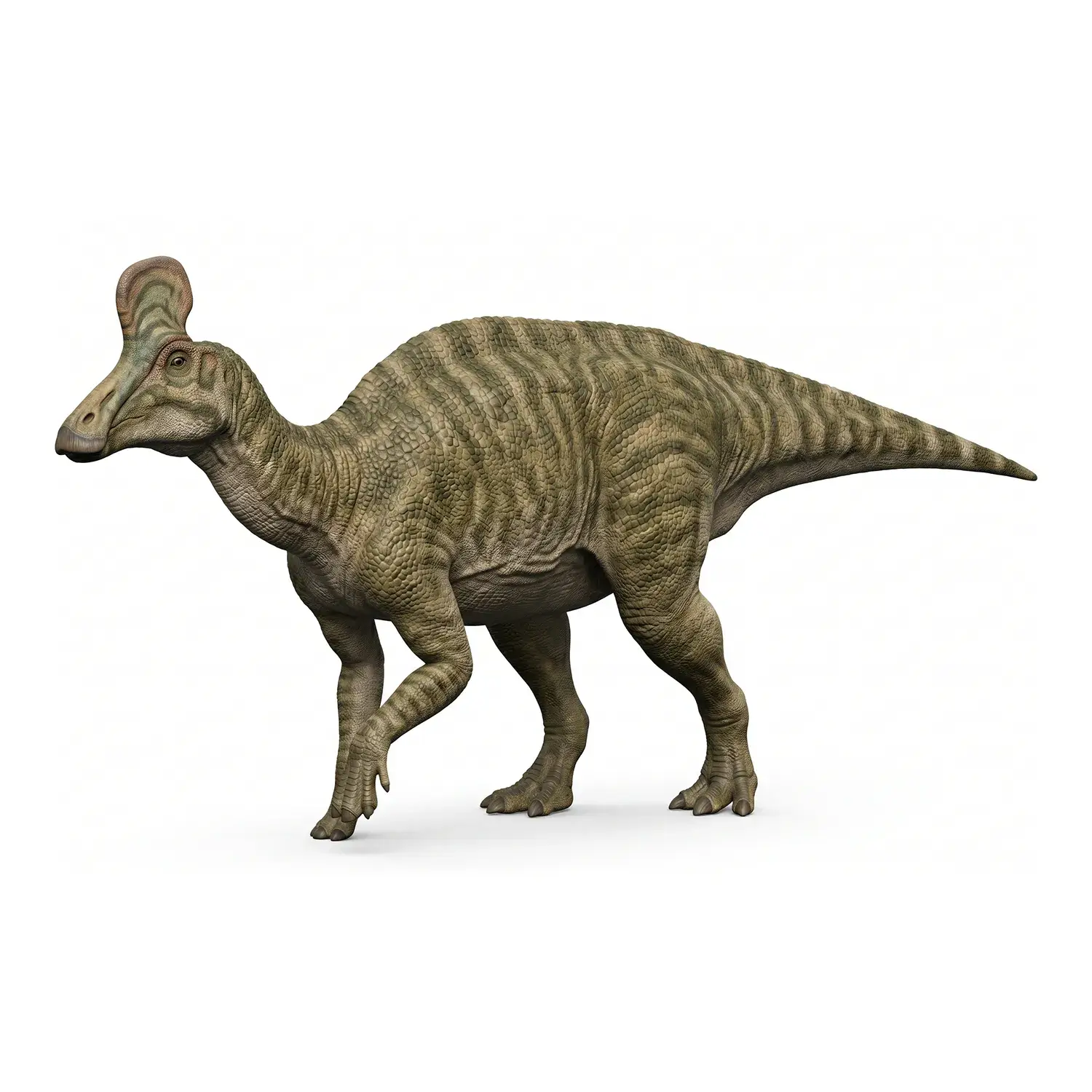
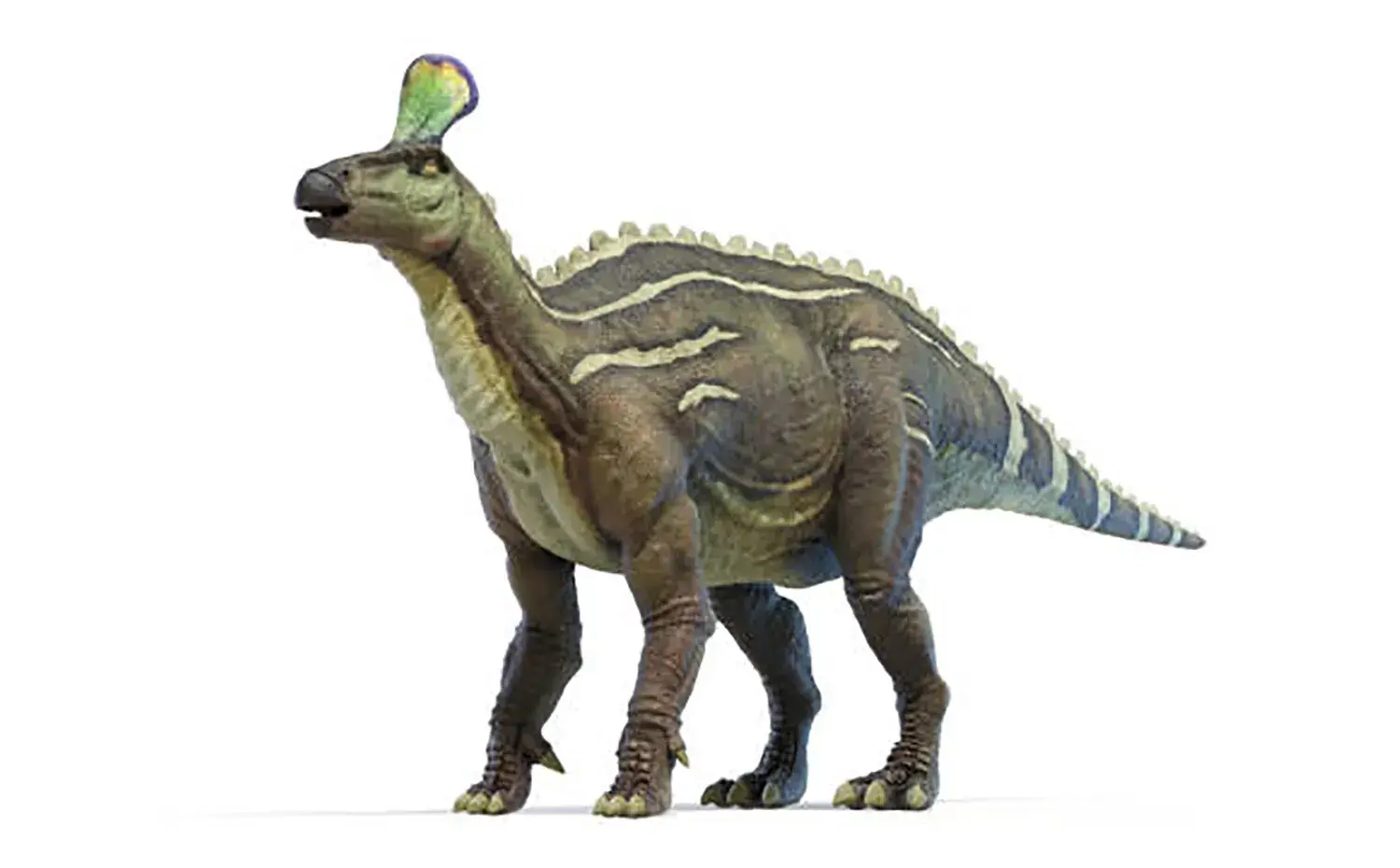
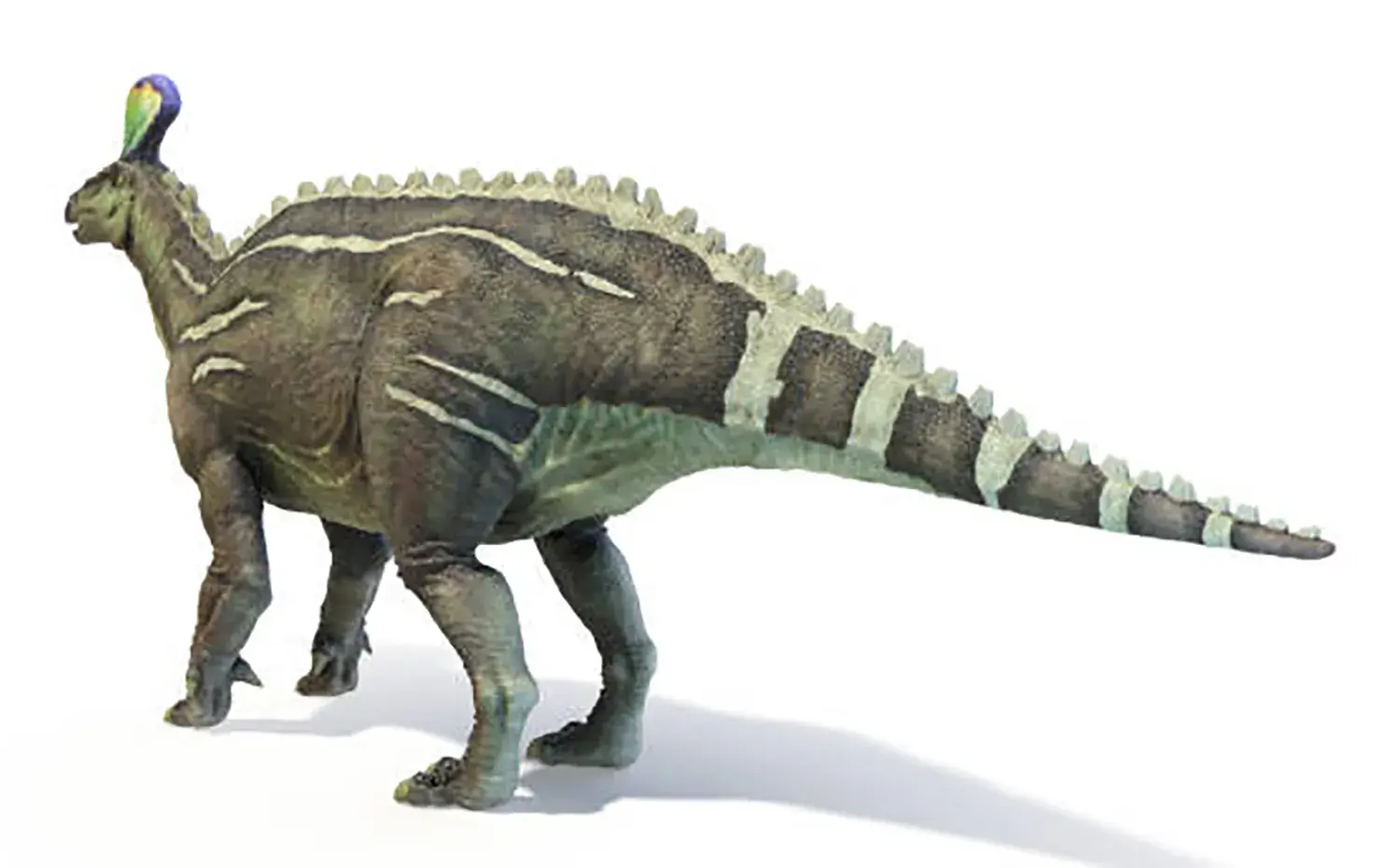
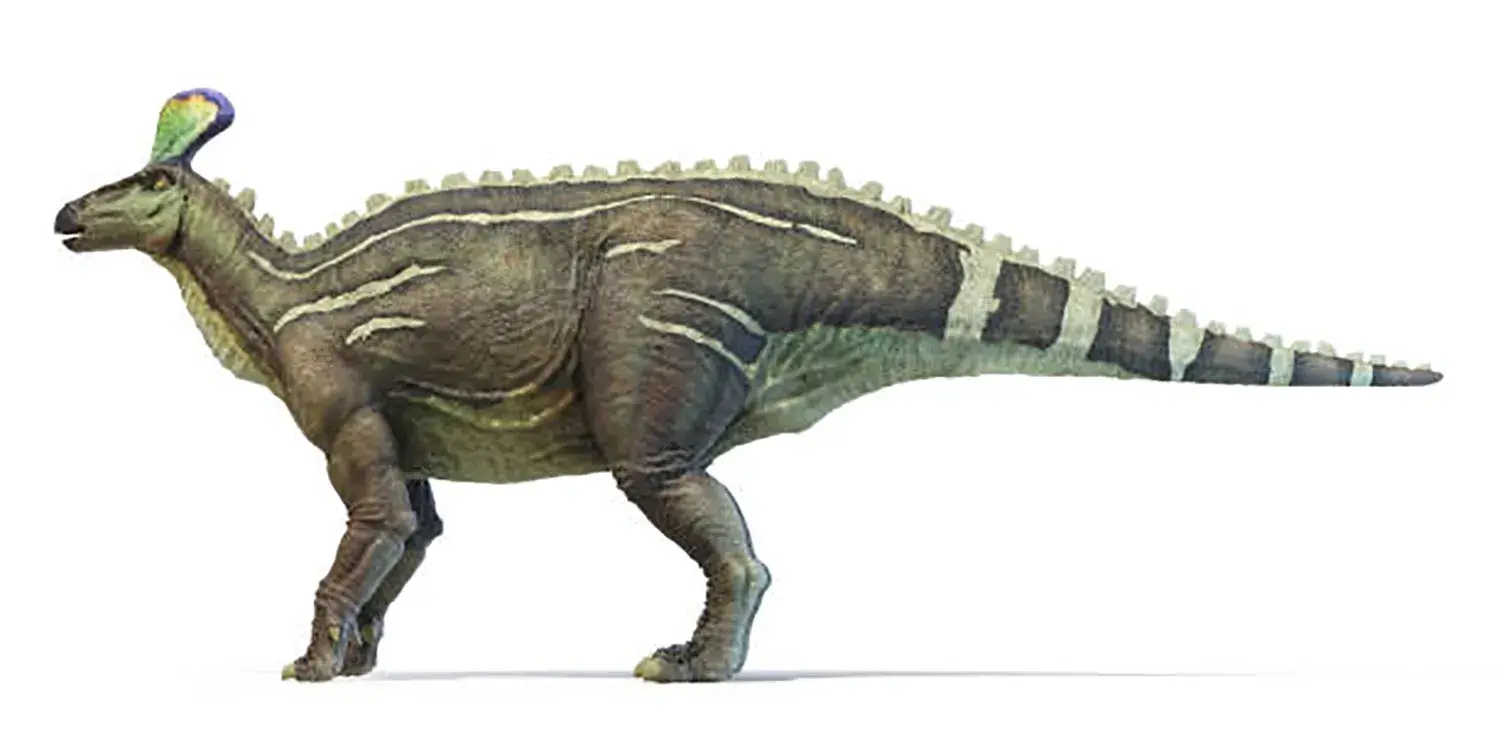
As a result, in modern reconstructions, rather than the bizarre single horn of the past, it is now often depicted with “a giant, elliptical crest resting on the top of its head, resembling a slightly widened version of Lambeosaurus’s crest.”
A giant, elliptical crest resting on the top of its head
What Was the True Role of the Crest?
What role did this giant crest, based on the new reconstruction, actually play?
“Vocal Resonance” Like a Trombone
Like other dinosaurs in the Lambeosaurinae subfamily (such as Parasaurolophus), the inside of the crest was hollow and connected to the nasal cavity.
It is believed that by blowing air into this space, they resonated loud sounds like a trombone, echoing their unique calls to communicate with their herd.
Visual Display
It is speculated that its massive and unique shape itself played an important role within the herd as a “visual display,” used to identify members from afar or to show off differences in sex and age.
Starting from a monumental misunderstanding of a “unicorn dinosaur” brought about by fossil deformation, Tsintaosaurus has finally reclaimed its true form thanks to modern science.
Its research history teaches us the immense difficulty of interpreting fossils in paleontology, as well as the fascinating reality that science is constantly being updated.