
Cryodrakon
Name Origin
Cold dragon
Family
Azhdarchidae
Classification
Diapsida, Pterosauria
Habitat (Discovery Location)
Canada
Period
Approximately 77 to 76 million years ago (Late Cretaceous)
Length
Approximately 5 to 10 meters
Weight
Approximately 250 kilograms
Diet
Carnivore (Meat-eater)
You might also like... 

-
 Pliosaurus
- Classification
- Marine reptiles
- Characteristics
- Carnivorous
- Era
- Jurassic period
- Sinovenator
- Classification
- Theropods
- Characteristics
- Carnivorous
- Feathered
- Era
- Cretaceous period
- Giraffatitan
- Classification
- Sauropods
- Characteristics
- Herbivorous
- Era
- Jurassic period
- Neovenator
- Classification
- Theropods
- Characteristics
- Carnivorous
- Era
- Cretaceous period
-
Sponsored Links
-
Sponsored Links




![[Latest Research] What Was the Function of Spinosaurus's Giant "Sail"? Exploring the Mysteries of Thermoregulation and Underwater Locomotion](https://dinosaurmuseum.jp/wp/wp-content/uploads/eyecatch_spinosaurus-sail-function_en-1024x512.webp)
![[Latest Discovery] A Third Type of Skin, Neither Scales Nor Feathers? Meet "Haolong dongi," a New Dinosaur Species Covered Entirely in Spikes](https://dinosaurmuseum.jp/wp/wp-content/uploads/eyecatch_dinosaur-spiky-skin-discovery_en-1024x512.webp)

Description
Approximately 77 to 76 million years ago, during the Campanian stage of the Late Cretaceous period, in Alberta, Canada.
In an era when famous dinosaurs like Tyrannosaurus and Triceratops roamed the earth, massive pterosaurs the size of airplanes reigned over the Mesozoic skies.
Its name is Cryodrakon.
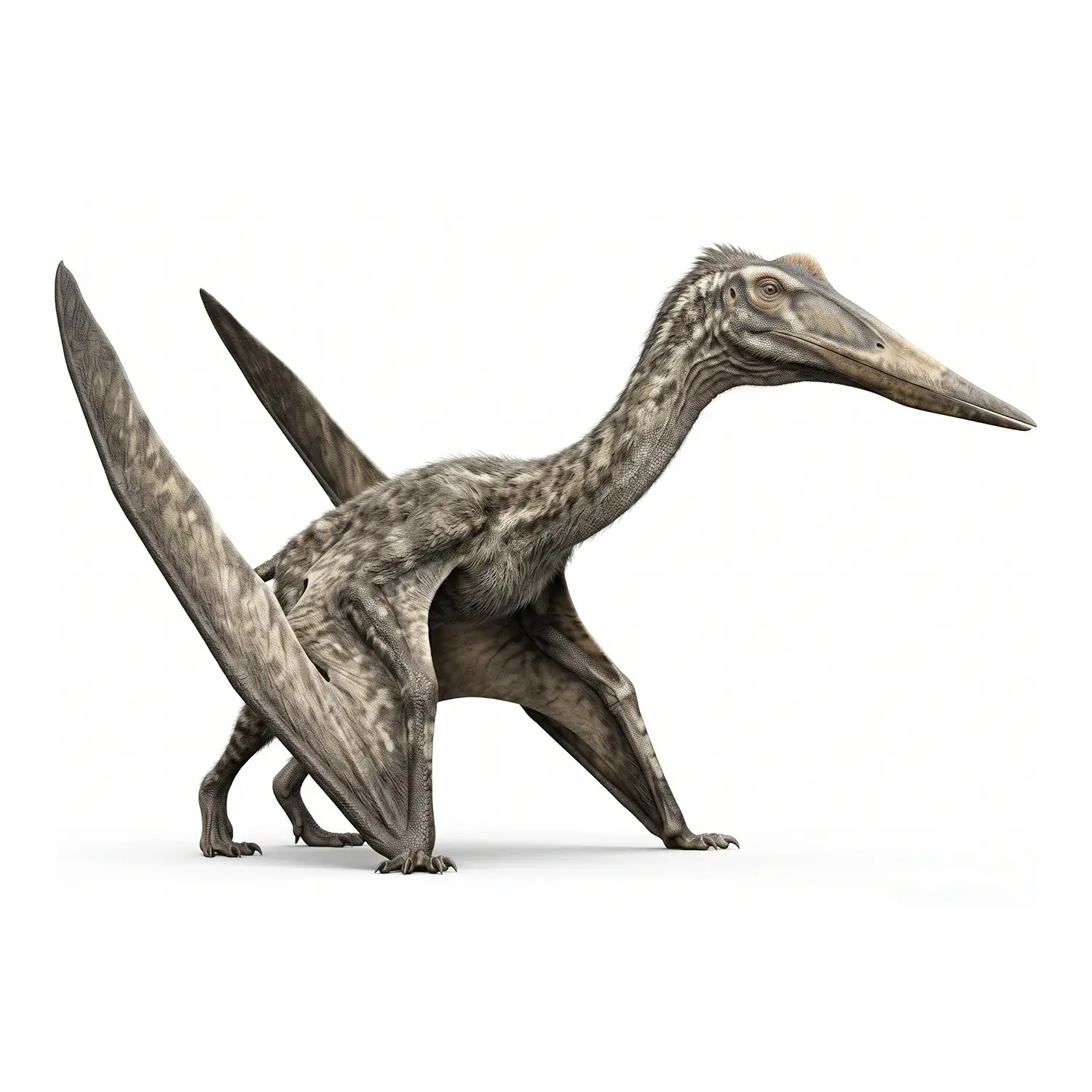
Classified in the azhdarchid family of the suborder Pterodactyloidea (pterodactyloids), this pterosaur is a newly discovered flying animal whose true identity was only recently revealed after long being mistaken for another species.
“Cold Dragon of the North Wind”! The Origin of Its Stylish Name and Anecdotes
Its newly given scientific name, Cryodrakon boreas, literally translates to “cold dragon of the north wind,” carrying a very romantic meaning.
It is a perfect name for the cold, northern image of Canada.
As an interesting anecdote, before it was announced as a new species, researchers apparently considered naming it after “Viserion,” the ice dragon from the hit fantasy drama Game of Thrones.
Although they ultimately settled on Cryodrakon, it is clear that this creature had such a strong impact on the researchers that it reminded them of a fantasy dragon.
Announced as a New Species After 30 Years of Confusion with Quetzalcoatlus
Fossils of Cryodrakon had actually been unearthed in Alberta, Canada, as early as 1972.
Years of Misunderstanding
At the time, only partial skeletons had been discovered, and it was not considered a new species.
It was mistakenly classified as belonging to the famous, closely related Quetzalcoatlus, which also lived in North America, and went largely unnoticed for many years.
A Major Discovery Through Re-examination in 2019
In September 2019, more than 30 years after the initial discovery, a research team from Queen Mary University of London (led by Dr. David Hone) re-examined the fossils.
By conducting detailed analyses of partial juvenile fossils and perfectly preserved massive neck bones of an adult, they determined it was a distinctly different genus of pterosaur from Quetzalcoatlus.
Thus, it was officially announced as a new species of giant pterosaur in the Journal of Vertebrate Paleontology.
A 10-Meter Wingspan! An Exceptionally Giant Body the Size of an Airplane
Cryodrakon belongs to the azhdarchid family, just like Quetzalcoatlus, one of the largest flying animals in history, and its physical size was equally extraordinary.
A Size Comparable to a Light Aircraft
Its wingspan is estimated to have been a minimum of 5 meters (16 feet), reaching an astonishing 10 meters (33 feet) in fully grown adults, with a weight estimated at approximately 250 kg (550 lbs).
This is a size comparable to a small light aircraft.
A Life Based Inland
Despite having such a massive body, it is highly likely that they possessed the ability to fly across wide bodies of water.
However, according to Dr. Hone, the lead author of the paper, analyses of the fossil discovery sites and its physical characteristics suggest that they “primarily based their lives inland.”
A Hunter Targeting Baby Dinosaurs and the Harsh Struggle for Survival on the Ground
Living inland, Cryodrakon was a carnivorous pterosaur that used its massive body and aerial mobility to prey on small animals on the ground below, including lizards, small mammals, and even baby dinosaurs.
However, while they might have seemed invincible in the sky, they by no means stood at the “absolute apex” of the ecosystem of their time.
Once they landed on the ground, they faced the harsh reality of the struggle for survival.
It is believed they were no match for large carnivorous dinosaurs of the tyrannosaurid family or agile and ferocious carnivorous dinosaurs like the dromaeosaurids.
In fact, bite marks deeply embedded by the teeth of a carnivorous dinosaur called Saurornitholestes (a member of the dromaeosaurid family) have been confirmed on a Cryodrakon bone fossil discovered in Canada.
Even as the lords of the sky, they survived in a harsh environment where their lives were constantly threatened by terrestrial predators.
Summary
Freed from years of misunderstanding, Cryodrakon, the “cold dragon of the north wind,” has finally etched its name in history.
Its realistic ecology—soaring through Mesozoic skies with an airplane-sized, 10-meter wingspan, snatching baby dinosaurs while simultaneously being exposed to the threat of terrestrial carnivorous dinosaurs—teaches us the complexity of the rich natural environment of the Late Cretaceous.
It is hoped that further fossil research in the future will uncover new secrets of this ice dragon.