
Nanuqsaurus
Name Origin
Polar bear lizard
Family
Tyrannosauridae
Classification
Diapsida, Saurischia, Theropoda
Habitat (Discovery Location)
United States
Period
Approximately 70 million years ago (Late Cretaceous)
Length
Approximately 6 meters
Weight
Approximately 500 kilograms to 1 metric ton
Diet
Carnivore (Meat-eater)
You might also like... 

-
 Chindesaurus
- Classification
- Theropods
- Characteristics
- Carnivorous
- Era
- Triassic period
- Alvarezsaurus
- Classification
- Theropods
- Characteristics
- Carnivorous
- Era
- Cretaceous period
- Ouranosaurus
- Classification
- Ornithopoda
- Characteristics
- Herbivorous
- Era
- Cretaceous period
- Angaturama
- Classification
- Theropods
- Characteristics
- Carnivorous
- Era
- Cretaceous period
-
Sponsored Links
-
Sponsored Links







![[Latest Research] What Was the Function of Spinosaurus's Giant "Sail"? Exploring the Mysteries of Thermoregulation and Underwater Locomotion](https://dinosaurmuseum.jp/wp/wp-content/uploads/eyecatch_spinosaurus-sail-function_en-1024x512.webp)
![[Latest Discovery] A Third Type of Skin, Neither Scales Nor Feathers? Meet "Haolong dongi," a New Dinosaur Species Covered Entirely in Spikes](https://dinosaurmuseum.jp/wp/wp-content/uploads/eyecatch_dinosaur-spiky-skin-discovery_en-1024x512.webp)


Description
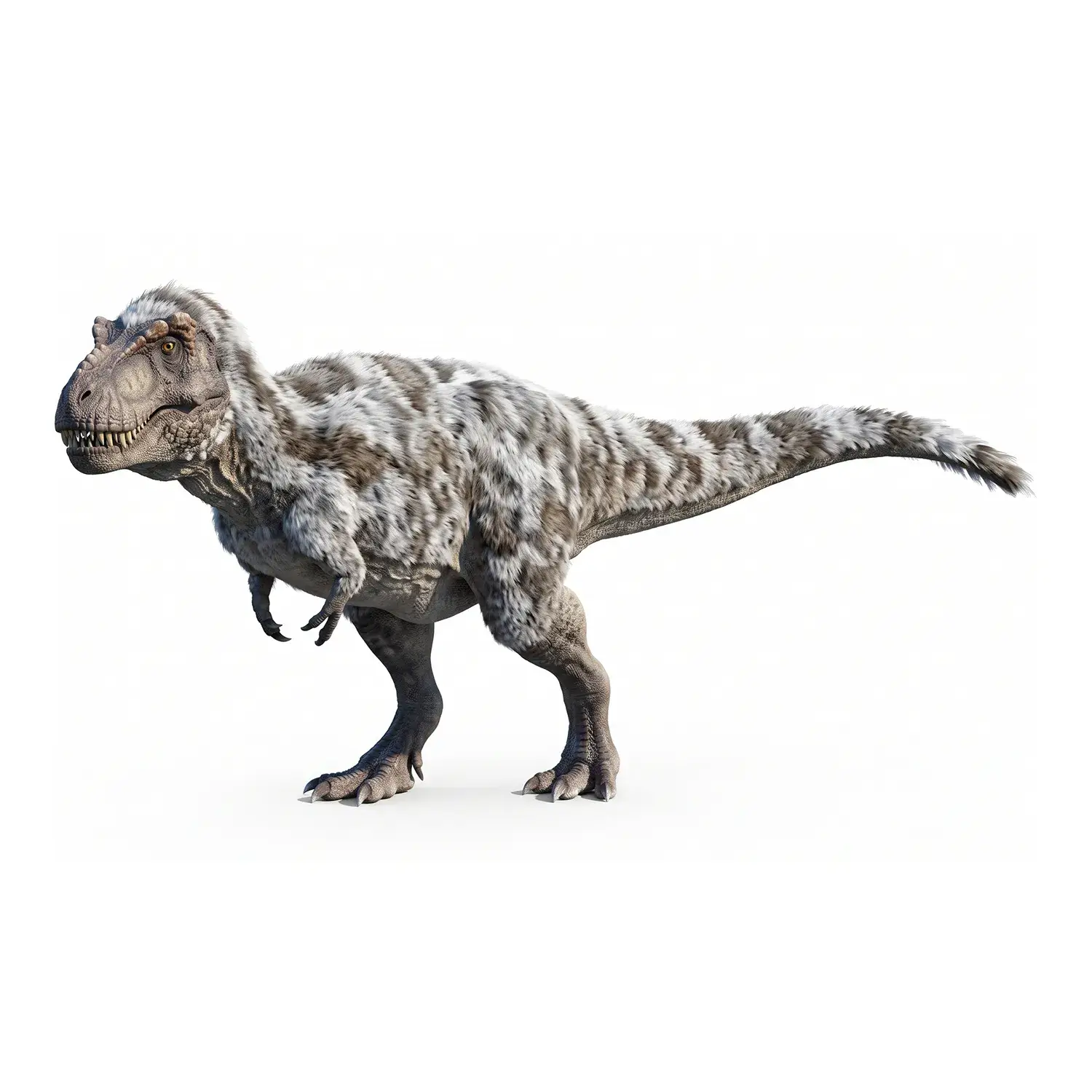
Nanuqsaurus was a carnivorous dinosaur that lived during the Late Cretaceous period, approximately 70 million years ago, in northern Alaska—an area that is now part of the Arctic Circle.
Although it is a very close relative of the giant Tyrannosaurus rex we all know so well, it is known for possessing a strikingly smaller build.
Breaking Away from “The Alaskan Gorgosaurus” and Its Naming
The history of the discovery of Nanuqsaurus fossils was quite unexpected.
In 2006, while an excavation team led by paleontologist Tony Fiorillo was searching for ceratopsian fossils in Alaska’s Prince Creek Formation, they discovered an unfamiliar skull fragment.
Initially, this fossil was thought to belong to another tyrannosaur called Gorgosaurus, and in media reports prior to 2014, it was sometimes referred to as the “Alaskan Gorgosaurus.”
However, after closely examining unique ridge-like projections on its head in 2014, researchers determined it was a new genus and species extremely closely related to Tyrannosaurus rex.
The “Nanuq” in its scientific name, Nanuqsaurus hoglundi, means “polar bear” in the language of the indigenous Iñupiaq people of Alaska.
This indicates that, much like the modern polar bear, it was an apex predator standing at the top of the ecosystem. The “hoglundi” portion is in honor of the philanthropist Forrest Hoglund.
Cretaceous Alaska: Where Polar Nights and Lush Forests Coexisted
Part of the ancient subcontinent of Laramidia (northern Alaska) where Nanuqsaurus lived was not the freezing world of ice and snow it is today.
A Climate Similar to Seattle
Although it was cold for the Mesozoic era, the climate was similar to modern-day Seattle, Washington.
It is theorized that flowers bloomed profusely on the coastal plains, tall redwood forests flourished, and it hunted hadrosaurid (duck-billed) dinosaurs in the valleys at the foot of snow-capped mountains.
The Dark, Long Winters of the “Polar Night”
The region experienced extreme fluctuations in daylight hours unique to the Arctic Circle, including a “polar night” in winter when the sun never rose.
While prey exploded in numbers during the summer, they drastically declined in the winter, making it a harsh environment prone to severe food shortages.
“The Mystery of Its Size” Contradicting Bergmann’s Rule
The most defining characteristic of Nanuqsaurus is its size.
While its close relative Tyrannosaurus rex reached lengths of about 13 meters (43 feet), Nanuqsaurus was only about half that size, measuring around 6 meters (20 feet).
Fiorillo speculated about this dwarfing, stating, “Due to food shortages during the dark, long winters, they were unable to consume the calories necessary to maintain a massive body.”
However, this directly conflicted with a general biological principle known as “Bergmann’s rule” (which states that warm-blooded animals in colder regions tend to be larger to maintain body heat).
Paleontologist Matt Lamanna also pointed out that “it’s strange in light of the rule.”
Indeed, modern polar bears are the largest of the bear family, and the small theropod Troodon, which lived in Alaska around the same time, grew twice as large as its relatives in warmer regions.
Why the polar-dwelling Nanuqsaurus alone was so small was considered a great mystery for a long time.
A 2023 Study and a “Thick Feather Coat”
In recent years, new light has been shed on this mystery.
A study published in 2023 suggested that the Nanuqsaurus specimens discovered thus far may actually be “subadults (young individuals on the verge of adulthood) around 14 years old.”
If this hypothesis is correct, fully grown adults would have reached lengths of about 8 meters (26 feet) (comparable to Gorgosaurus), raising the possibility that it was not necessarily an extreme dwarf species.
Furthermore, it is believed its appearance differed from its southern relatives.
As a warm-blooded animal living in a cold region, it is highly likely that it was clad in a thicker, denser integument (a feather coat) than its counterparts in other regions to protect itself from the cold.
Nanuqsaurus established its position as an apex predator in the harsh lands of Alaska, where the sun never rose during the winter polar nights.
Differing from the standard Tyrannosaurus image we typically imagine, the vision of a “polar bear-like dinosaur” stalking through redwood forests against a backdrop of snow-capped mountains vividly tells the story of ancient Earth’s diversity and the resilience of life.