
Huanansaurus
Name Origin
Lizard of Huanan
Family
Oviraptoridae
Classification
Diapsida, Saurischia, Theropoda
Habitat (Discovery Location)
China
Period
Approximately 83.6 to 66 million years ago (Late Cretaceous)
Length
Approximately 3 meters
You might also like... 

-
 Mosasaurus
- Classification
- Marine reptiles
- Characteristics
- Carnivorous
- Era
- Cretaceous period
- Frenguellisaurus
- Classification
- Theropods
- Characteristics
- Carnivorous
- Era
- Triassic period
- Anurognathus
- Classification
- Flying reptiles
- Era
- Jurassic period
- Megalosaurus
- Classification
- Theropods
- Characteristics
- Carnivorous
- Era
- Jurassic period
-
Sponsored Links
-
Sponsored Links








![[Latest Research] What Was the Function of Spinosaurus's Giant "Sail"? Exploring the Mysteries of Thermoregulation and Underwater Locomotion](https://dinosaurmuseum.jp/wp/wp-content/uploads/eyecatch_spinosaurus-sail-function_en-1024x512.webp)
![[Latest Discovery] A Third Type of Skin, Neither Scales Nor Feathers? Meet "Haolong dongi," a New Dinosaur Species Covered Entirely in Spikes](https://dinosaurmuseum.jp/wp/wp-content/uploads/eyecatch_dinosaur-spiky-skin-discovery_en-1024x512.webp)


Description
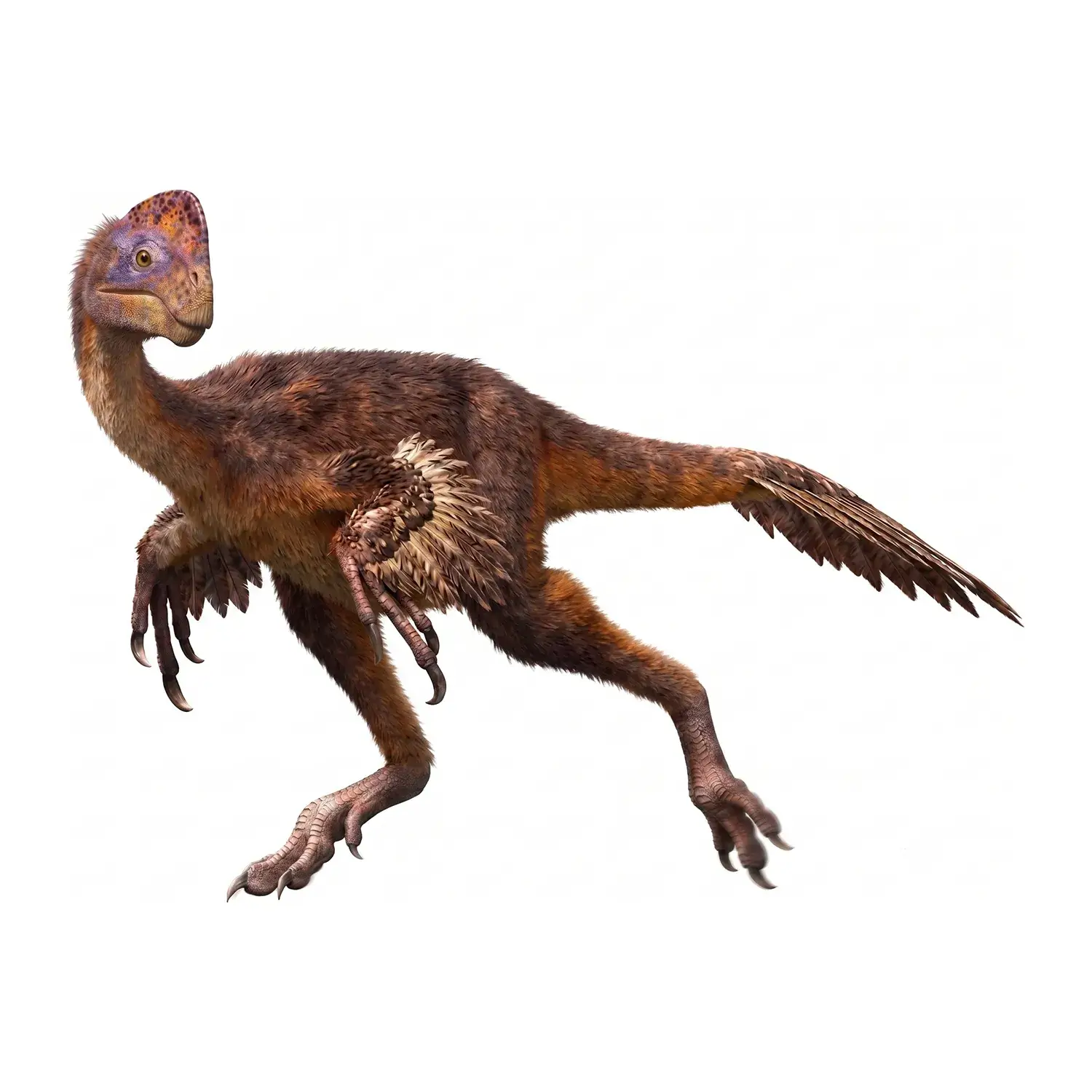
Discovered in Jiangxi Province, China, Huanansaurus is a type of theropod dinosaur that lived during the Late Cretaceous period.
Classified in the oviraptorid family—a group characterized by their bird-like beaks and crests—it serves as a vital clue for understanding the “diversity” and “habitat segregation” of dinosaurs in Asia during that era.
The Discovery of Fossils Named After “Huanan” (Southern China)
The fossils of Huanansaurus were discovered in a rather unexpected location: a train station construction site in Ganzhou City, Jiangxi Province, China.
The discovered fossil was highly significant as a type specimen for a new species. It featured a nearly complete skull, along with beautifully preserved partial bones from the neck, arms, and legs.
Described as a new species by paleontologists in 2015, it was named “Huanansaurus ganzhouensis” (meaning “Lizard of Huanan, from Ganzhou”), honoring Ganzhou City in the Jiangxi Province of Southern China (the Huanan region) where the fossil was found.
A Hollow Crest and a Unique Jaw
Huanansaurus possesses many unique anatomical features in its skull and overall skeleton not seen in other dinosaurs.
The “Hollow Crest” on Its Head
On top of its head was a prominence resembling a bird’s crest.
The bone inside this crest was hollow, which is one of their most defining characteristics.
A Complex Jaw Structure
The bones in Huanansaurus’s skull and jaw had a distinct shape, with joint positions and bone articulation angles that were unique even when compared to its close relatives.
What is particularly noteworthy is the “tip of the lower jaw.”
Among dinosaurs in the same group, some had lower jaws that bent downwards at the tip, while others were straight. Huanansaurus belonged to the type that was “slightly bent downwards.”
Differences in jaw shape indicate that they had different preferred foods and feeding methods.
Slender Forelimbs
It is also known that the finger bones of its forelimbs were slender and elongated, and the areas where muscles attached were well-developed.
“Habitat Segregation” Between Distant Relatives and Neighbors
Numerous other members of the oviraptorid family have been discovered in Southern China, where Huanansaurus was found.
Interestingly, however, detailed comparative studies of their skeletal frameworks (phylogenetic analyses) revealed that Huanansaurus’s closest relative was not among its local neighbors, but rather Citipati, found far away in Mongolia. (Subsequent research has also indicated it shares a very close relationship with Corythoraptor from the same region.)
What They Teach Us About the Ancient Ecosystem
Why are so many different species of closely related, similar-looking dinosaurs found in the same region?
The answer is that they coexisted by slightly altering their diets and living environments to avoid unnecessary conflict.
In ecological terms, this is called “niche partitioning,” or simply “habitat segregation.”
The discovery of Huanansaurus serves as fantastic evidence proving that oviraptorid dinosaurs in Asia during that time evolved into a wide variety of species, cleverly carving out their own niches to build a rich and thriving ecosystem.