
Neuquensaurus
Name Origin
Lizard of the Neuquén River
Family
Saltasauridae
Classification
Diapsida, Saurischia, Sauropodomorpha
Habitat (Discovery Location)
Argentina, Uruguay
Period
Approximately 80 million years ago (Late Cretaceous)
Length
Approximately 6–8 meters
Diet
Herbivore (Plant-eater)
TODAY'S QUIZ
Correct answer = 1 coin
What are the bones that form within the skin and may have protected Neuquensaurus called?
Loading…
You might also like... 

-
 Jobaria
- Classification
- Sauropods
- Characteristics
- Herbivorous
- Era
- Jurassic period
- Acrocanthosaurus
- Classification
- Theropods
- Characteristics
- Carnivorous
- Era
- Cretaceous period
- Shuvuuia
- Classification
- Theropods
- Characteristics
- Carnivorous
- Feathered
- Era
- Cretaceous period
- Futabasaurus
- Classification
- Marine reptiles
- Characteristics
- Carnivorous
- Era
- Cretaceous period
-
Sponsored Links
-
Sponsored Links















Description
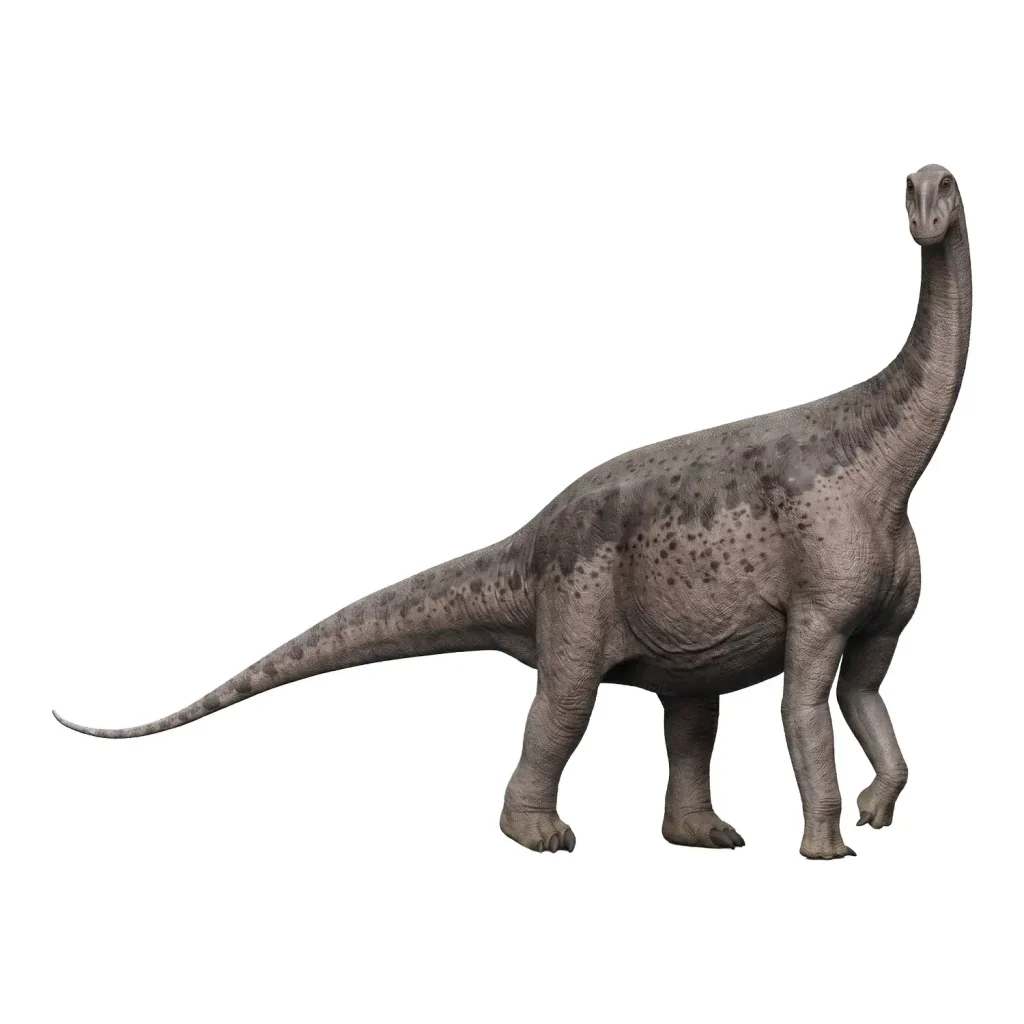
Neuquensaurus was a herbivorous dinosaur that lived in South America during the Late Cretaceous.
It belonged to the sauropodomorph group of dinosaurs, characterized by long necks and tails, and was classified as a titanosaur. It is particularly well known as a close relative of Saltasaurus.
When people think of sauropodomorphs, they often imagine enormous dinosaurs that reached several dozen meters in length.
However, Neuquensaurus is estimated to have measured approximately 6–8 m (20–26 ft) long, making it relatively small compared with some of its larger relatives.
Fossils also indicate that Neuquensaurus may have had bony structures on the surface of its body that functioned as protective armor.
With its relatively small body and armor-like bones, Neuquensaurus is an intriguing dinosaur that helps us understand the diversity of sauropodomorphs that lived in South America during the Late Cretaceous.
The Discovery of Neuquensaurus Fossils and the Origin of Its Name
Neuquensaurus fossils had already been discovered by the end of the 19th century.
Over the following decades, several researchers revisited the classification of these fossils, eventually leading to the current classification of the genus Neuquensaurus.
Fossils Discovered in the Late 19th Century
In 1893, British paleontologist Richard Lydekker named the dinosaur “Titanosaurus australis” based on fossilized vertebrae and limb bones.
Later, in 1929, Friedrich von Huene treated limb fossils as belonging to a separate species and named it “Titanosaurus robustus.”
At the time, however, the possibility that these fossils belonged to a dinosaur distinct from the genus Titanosaurus had not been fully established.
Reclassification as Neuquensaurus
In the second half of the 20th century, researchers began to reexamine the characteristics and classification of these fossils.
In 1986, paleontologist Jaime Powell proposed classifying the dinosaur in the genus Neuquensaurus. However, the original name was not accepted as valid because of formal issues with its scientific description.
The dinosaur was subsequently redescribed in 1992 as Neuquensaurus australis, establishing the classification recognized today.
The name Neuquensaurus refers to the location where its fossils were discovered and means “lizard of the Neuquén River.”
The fossils were found in geological deposits near the Neuquén River in what is now Argentina.
The taxonomic relationship between Neuquensaurus and its close relative Saltasaurus remains debated. Some researchers have proposed including both dinosaurs in the same genus.
How Big Was Neuquensaurus? A Sauropod Approximately 6–8 Meters Long
Neuquensaurus is estimated to have measured approximately 6–8 m (20–26 ft) in length.
Some sauropodomorphs reached several dozen meters in length, but Neuquensaurus was relatively small compared with its larger relatives.
Although it had the long neck and tail typical of sauropodomorphs, its overall body size was comparatively compact.
So why was Neuquensaurus relatively small?
There is no definitive answer to this question.
The evolutionary process in which animals living in restricted environments, such as islands, become smaller over successive generations is known as “insular dwarfism.”
However, given the environment of South America during the time Neuquensaurus lived, it is thought that this phenomenon alone is unlikely to explain its relatively small size.
As a result, the relatively small body of Neuquensaurus remains an intriguing subject of research into its evolution and ecology.
Did Neuquensaurus Have Protective Body Armor?
One of the notable features of Neuquensaurus is the evidence suggesting that it had armor-like bony structures on the surface of its body.
These structures are known as osteoderms, a type of bone that develops in the outer tissues of an animal’s body.
Osteoderm fossils have also been identified in Neuquensaurus, suggesting that it may have had structures that helped protect its body.
In 2005, researchers described a well-preserved, partially articulated specimen.
This specimen included osteoderms, making it an important source of information for studying the body structure of Neuquensaurus.
Among sauropodomorphs, Neuquensaurus stands out for its distinctive characteristics, including the possible presence of armor-like bones on the surface of its body.
However, conclusions about how the osteoderms covered its body and how effectively they protected it must be based on the available fossil evidence.
What Can We Learn from the Neuquensaurus Skeleton?
Neuquensaurus is also known as a sauropod represented by relatively well-preserved skeletal material.
In addition to a partially articulated specimen containing osteoderms, fossils of bones such as the scapula have also been discovered.
These skeletal remains help researchers understand the anatomy of Neuquensaurus itself and compare its characteristics with those of other titanosaurs.
Although sauropodomorphs share many characteristics, differences can also be seen in the shape of their bones and the structure of their bodies.
Comparing multiple bones is therefore important for examining the relationships between closely related species and evaluating their classification.
The fossils of Neuquensaurus are valuable scientific resources that help researchers understand the diversity of sauropodomorphs that lived in South America during the Late Cretaceous.
Museums in Japan Where You Can See a Neuquensaurus Skeleton Reconstruction
Neuquensaurus is a dinosaur whose reconstructed skeleton can also be seen in Japan.
The Tokushima Prefectural Museum in Tokushima Prefecture displays a reconstructed skeleton of Neuquensaurus australis.
Viewing the reconstruction makes it easier to appreciate the dinosaur’s estimated length of approximately 6–8 m (20–26 ft) and its characteristic sauropodomorph body shape, with a long neck and tail.
One of the attractions of Neuquensaurus is the opportunity to see a reconstruction and better visualize its overall appearance, which can be difficult to imagine from fossil evidence alone.