
Huaxiaosaurus
Name Origin
Huaxia Lizard
Family
Hadrosauridae
Classification
Diapsida, Ornithischia, Ornithopoda
Habitat (Discovery Location)
China
Period
Late Cretaceous
Length
Approximately 19 meters
Diet
Herbivore (Plant-eater)
TODAY'S QUIZ
Correct answer = 1 coin
What is an important detail to remember about the reconstructed skeleton of Huaxiaosaurus?
Loading…
You might also like... 

-
 Hylaeosaurus
- Classification
- Thyreophora
- Characteristics
- Herbivorous
- Era
- Cretaceous period
- Peloroplites
- Classification
- Thyreophora
- Characteristics
- Herbivorous
- Era
- Cretaceous period
- Kentrosaurus
- Classification
- Thyreophora
- Characteristics
- Herbivorous
- Era
- Jurassic period
- Gallimimus
- Classification
- Theropods
- Characteristics
- Omnivorous
- Era
- Cretaceous period
-
Sponsored Links
-
Sponsored Links














Description
Huaxiaosaurus was a large herbivorous dinosaur that lived in what is now China during the Late Cretaceous.
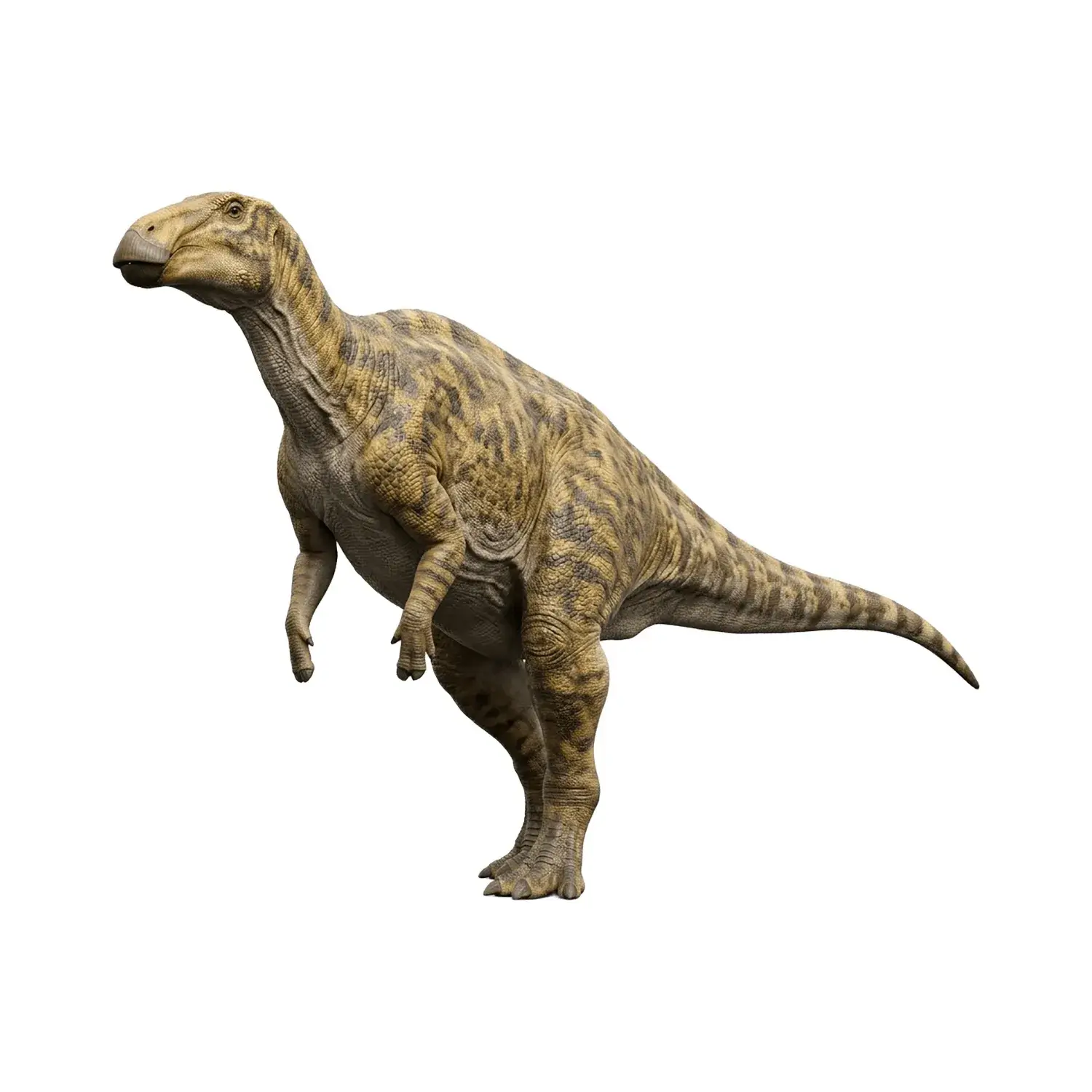
It was a hadrosaurid, belonging to the group commonly known as duck-billed dinosaurs. It is estimated to have reached approximately 19 meters in length and stood approximately 11 meters tall when fully upright.
If these estimates are accurate, Huaxiaosaurus was even larger than Hadrosaurus, another giant member of the Hadrosauridae family.
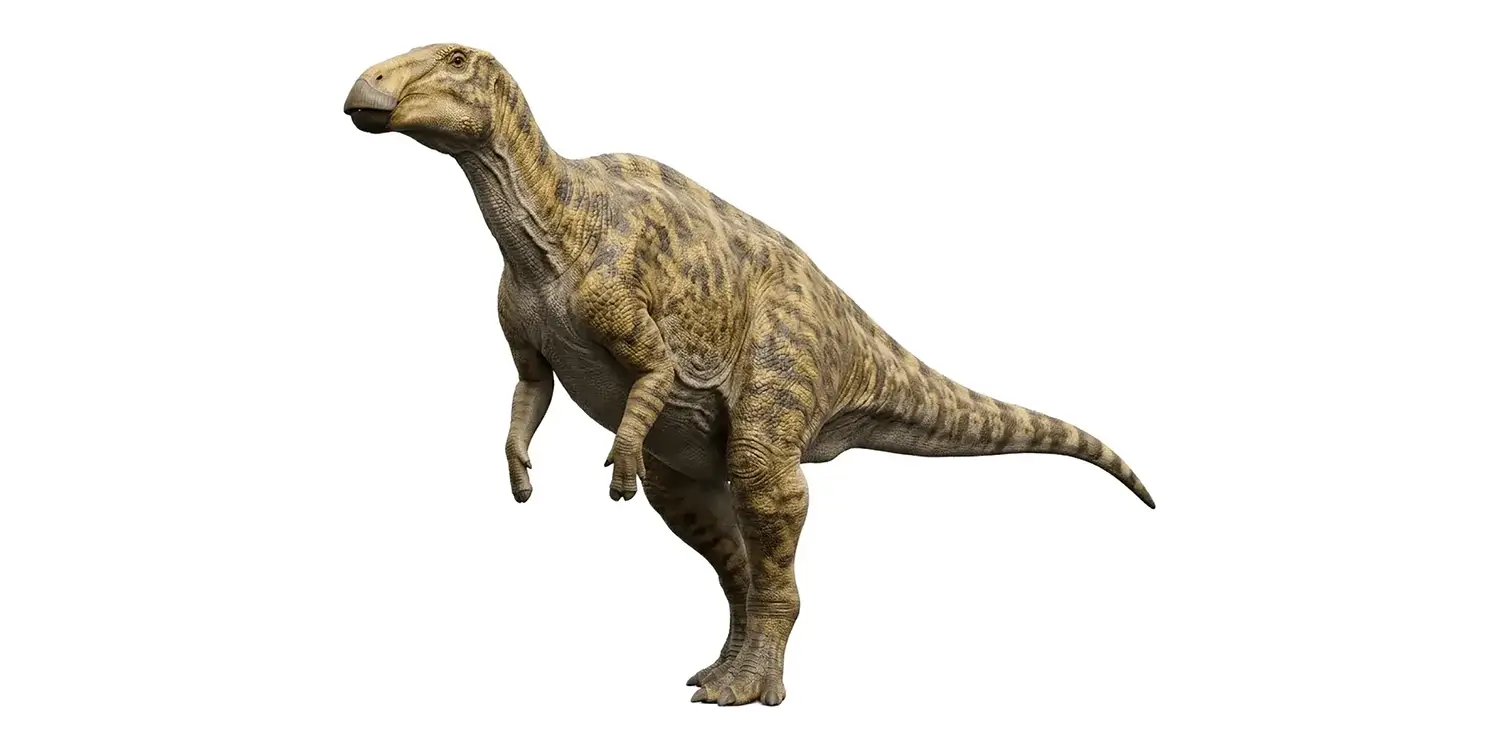
It was also characterized by forelimbs that were extremely short in proportion to its body size and robust hind limbs.
These unusual skeletal features suggest that it may have had a lifestyle different from that of other hadrosaurids.
Fossils Discovered in Zhucheng and the Size of Huaxiaosaurus
Huaxiaosaurus fossils were discovered in 2008 in Zhucheng, Shandong Province, China.
Its scientific name is “Huaxiaosaurus aigahtens.”
It was formally described as a new genus and species in 2011 and classified within the Saurolophinae subfamily of Hadrosauridae.
The reconstructed skeleton, assembled from the discovered fossils, was reported to measure approximately 18.7 meters in length and approximately 11.3 meters in height.
However, this reconstruction was assembled using bones collected from multiple individuals, rather than representing the complete fossil remains of a single individual.
Even so, Huaxiaosaurus may have been one of the largest members of Hadrosauridae, making it a notable giant herbivorous dinosaur.
Features Revealed by Its Extremely Short Forelimbs and Robust Hind Limbs
One of the most distinctive features of Huaxiaosaurus was its extremely short forelimbs relative to its large body.
Typical hadrosaurids had long hind limbs and relatively well-developed forelimbs, and are thought to have been capable of switching between bipedal and quadrupedal locomotion.
In contrast, Huaxiaosaurus had exceptionally small forelimbs and thick, robust hind limbs.
Although it may also have been capable of walking on all fours, it may have relied primarily on its two hind limbs when running.
It has also been suggested that Huaxiaosaurus could support its body using its powerful hind limbs and long tail, allowing it to raise its upper body considerably.
This posture may have enabled it to feed on plants growing at heights beyond the reach of other herbivorous dinosaurs.
Taxonomic Relationships with Shantungosaurus and Zhuchengosaurus
Other large hadrosaurids, including Shantungosaurus and Zhuchengosaurus, have also been discovered in Shandong Province, where Huaxiaosaurus was found.
Shantungosaurus is estimated to have reached approximately 16 meters in length, while Zhuchengosaurus is estimated to have reached approximately 17 meters. Both were enormous dinosaurs.
These three dinosaurs share many similar features. For this reason, later studies have suggested that different individuals or growth stages of Shantungosaurus may have been mistakenly classified as separate dinosaurs.
Indeed, some researchers consider Zhuchengosaurus and Huaxiaosaurus to be junior synonyms of Shantungosaurus.
However, Huaxiaosaurus has one distinctive feature that sets it apart from the other two: its forelimbs were exceptionally short.
This difference may have affected its lifestyle, including how it moved and how it gathered food.
For this reason, further careful examination is needed to determine whether Huaxiaosaurus was the same species as Shantungosaurus or should be recognized as a distinct dinosaur.