
Xiongguanlong
Name Origin
Malevolent Dragon of Xiongguan
Classification
Diapsida, Saurischia, Theropoda
Habitat (Discovery Location)
China
Period
Approximately 120 - 110 million years ago (Early Cretaceous)
Length
Approximately 4 - 4.5 meters
Weight
Approximately 270 - 300 kilograms
Diet
Carnivore (Meat-eater)
TODAY'S QUIZ
Correct answer = 1 coin
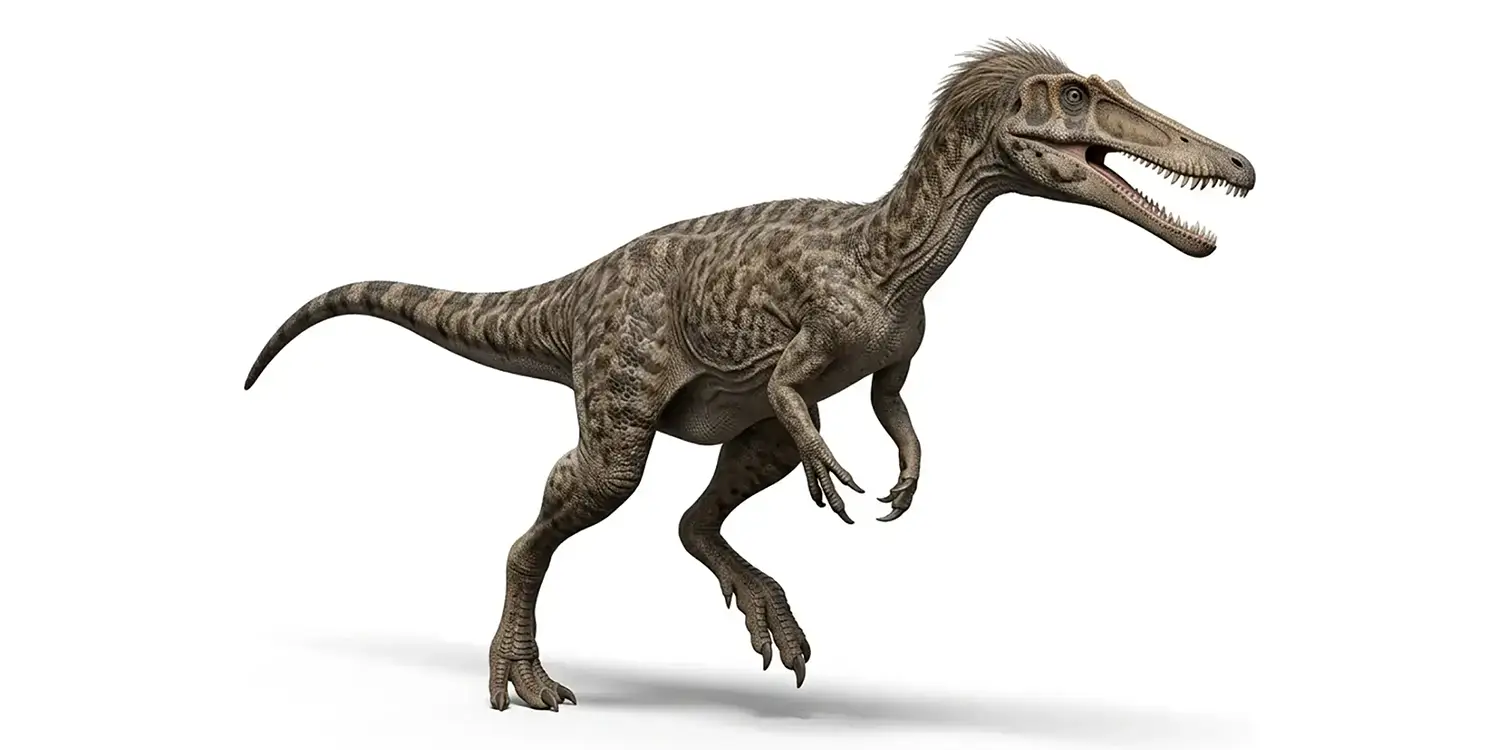
Which modern animal does the long, flattened skull of Xiongguanlong most closely resemble?
Loading…
You might also like... 

-
 Albertaceratops
- Classification
- Marginocephalia
- Characteristics
- Herbivorous
- Era
- Cretaceous period
- Velociraptor
- Classification
- Theropods
- Characteristics
- Carnivorous
- Era
- Cretaceous period
- Abelisaurus
- Classification
- Theropods
- Characteristics
- Carnivorous
- Era
- Cretaceous period
- Isanosaurus
- Classification
- Sauropods
- Characteristics
- Herbivorous
- Era
- Triassic period
-
Sponsored Links
-
Sponsored Links














Description
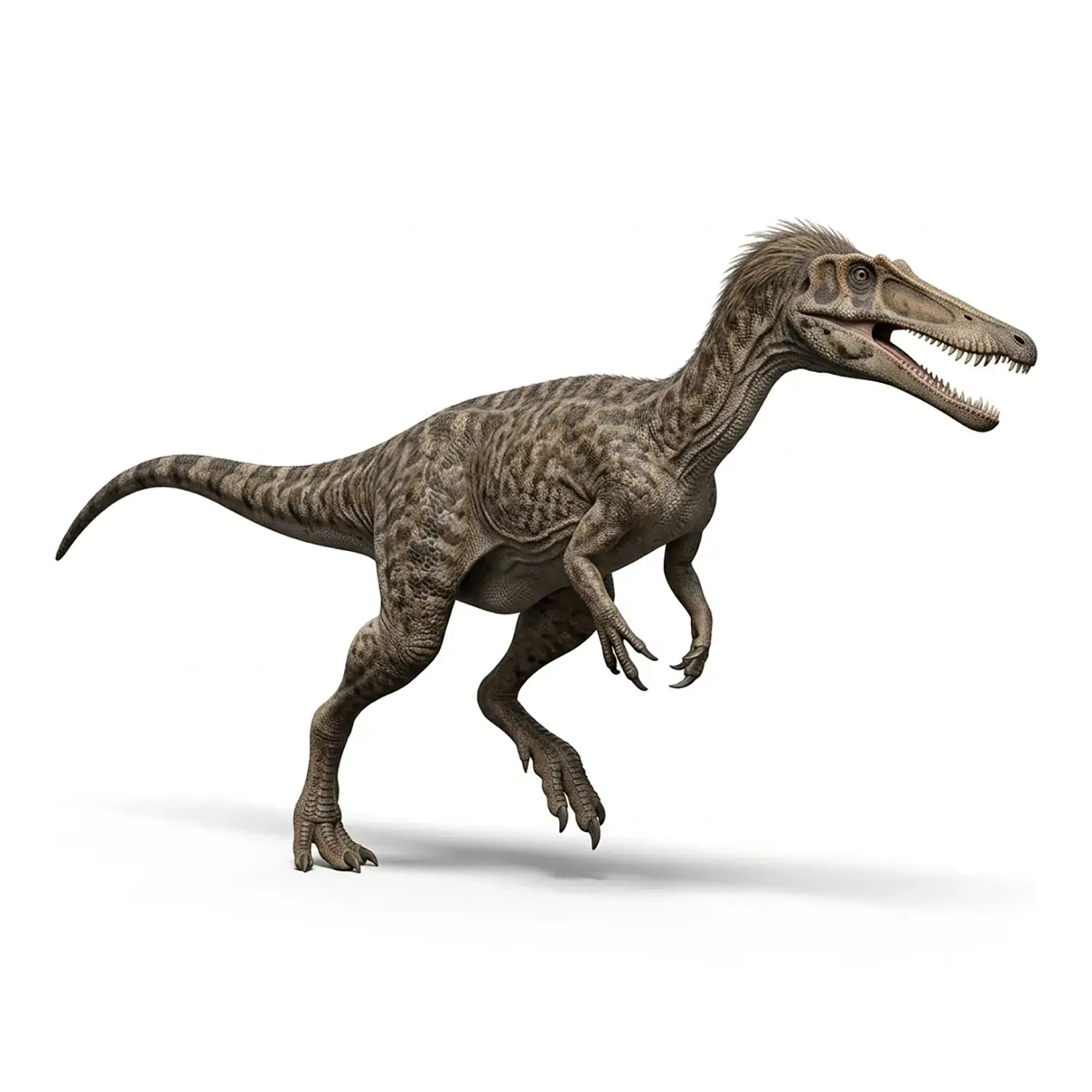
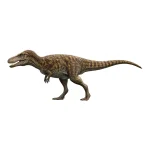
Xiongguanlong was a carnivorous tyrannosauroid dinosaur that lived in China during the Early Cretaceous.
It is estimated to have reached approximately 4 – 4.5 meters in length and weighed approximately 270 – 300 kilograms, making it relatively small compared with later tyrannosaurs such as Tyrannosaurus and Tarbosaurus.
Its most distinctive features were its long, narrow skull, reminiscent of a modern gharial, and its robust neck and torso.
It combined characteristics of primitive, small-bodied tyrannosaurids with those of the later, larger Tyrannosauridae, making it an important dinosaur for understanding the evolution of tyrannosaurs.
However, there is no conclusive evidence that Xiongguanlong was a direct ancestor of the large tyrannosaurs that appeared later.
Its distinctive skeleton provides valuable clues for understanding how tyrannosaurs evolved toward larger body sizes.
Fossil Discovery in Gansu Province, China, and the Origin of Its Name
Fossils of Xiongguanlong were discovered around the Jiuquan Basin in Gansu Province, northwestern China.
During joint Chinese-American expeditions conducted in the mid-2000s, researchers recovered fossils of its skull, vertebrae, pelvis, femur, and other bones.
The dinosaur was formally described in 2009 by a research team including Peter Makovicky and Li Daqing.
Its scientific name is “Xiongguanlong baimoensis.”
The genus name “Xiongguan” is derived from Jiayuguan, a location near where the fossils were discovered.
Jiayuguan was an important strategic point along the Silk Road and is also known as the western end of the Great Wall of China.
Because Jiayuguan is also known by the name “Tianxia Diyi Xiongguan,” meaning “the greatest and most majestic pass under heaven,” the genus name carries the meaning of “Majestic Pass Dragon.”
The species name “baimoensis” is derived from “Baimocheng,” a local name for the area where the fossils were discovered.
Although Xiongguanlong is sometimes introduced using a name that includes the characters for “crested dragon,” there is no evidence of a prominent crest on its head like that of Guanlong.
A Medium-Sized Tyrannosaur Approximately 4 Meters Long
Xiongguanlong is estimated to have reached approximately 4 – 4.5 meters in length and weighed approximately 270 – 300 kilograms.
Guanlong, which lived during the Late Jurassic, is estimated to have been approximately 3 meters long, while Dilong, from the Early Cretaceous, is thought to have reached approximately 1.6 meters in length. Compared with these dinosaurs, Xiongguanlong was considerably larger.
By contrast, later tyrannosaurs such as Tyrannosaurus and Tarbosaurus grew to enormous sizes, weighing several tons.
Xiongguanlong was a medium-sized predator that lived before these large tyrannosaurs appeared.
However, there is no conclusive evidence that Xiongguanlong was a direct ancestor of the large tyrannosaurs.
It serves as an important point of comparison for understanding the evolutionary transition from small-bodied tyrannosaurs to larger predators.
A Long, Narrow Skull Resembling a Gharial and a Robust Neck
The most distinctive feature of Xiongguanlong was its elongated, narrow skull.
Its skull reached approximately 50 centimeters in length and was low in height and elongated from front to back, particularly around the snout and eye region.
Its appearance was reminiscent of a modern gharial, a fish-eating crocodilian.
This type of elongated snout is also seen in later Asian tyrannosaurs such as Alioramus and Qianzhousaurus.
It may have been useful for catching small, fast-moving prey.
In contrast, the rear portion of the skull was relatively broad, with well-developed areas for the attachment of the jaw muscles.
Its cervical vertebrae, which supported the heavy head, were short and robust. Its skeleton is thought to have been stronger than that of earlier, small-bodied tyrannosaurs.
Thus, one of Xiongguanlong’s defining characteristics was the combination of an elongated skull and a robust skeleton with features also seen in later, larger species.
It is worth noting that the discovered skull may have been compressed during the fossilization process.
Therefore, the shape of its head in life may not have been exactly the same as its preserved fossil appearance.
What Did It Eat in Early Cretaceous Northwestern China?
Approximately 120 – 110 million years ago, when Xiongguanlong lived, inland environments with extensive lakes and rivers existed in what is now northwestern China.
The surrounding landscape supported coniferous forests, ferns, and a diverse range of dinosaurs.
Other dinosaurs discovered in the same group of geological formations include Beishanlong, a large ornithomimosaur; Suzhousaurus, a therizinosaur; Archaeoceratops, a primitive ceratopsian; and Tsintaosaurus, an iguanodontian related to Iguanodon.
In this environment, inhabited by a diverse range of dinosaurs, Xiongguanlong is thought to have lived as a carnivorous predator.
It may have used its approximately 4-meter-long body and elongated jaws to prey on small theropods and young herbivorous dinosaurs.
It may have pursued its prey using its long hind limbs before catching it with its sharp teeth.
However, direct evidence of its specific prey and hunting methods is limited, and many aspects of its ecology remain unknown.