
[New Study] Was Triceratops’ Giant “Nose” a Brain-Cooling Radiator? Unraveling the Mystery of Its Thermoregulation
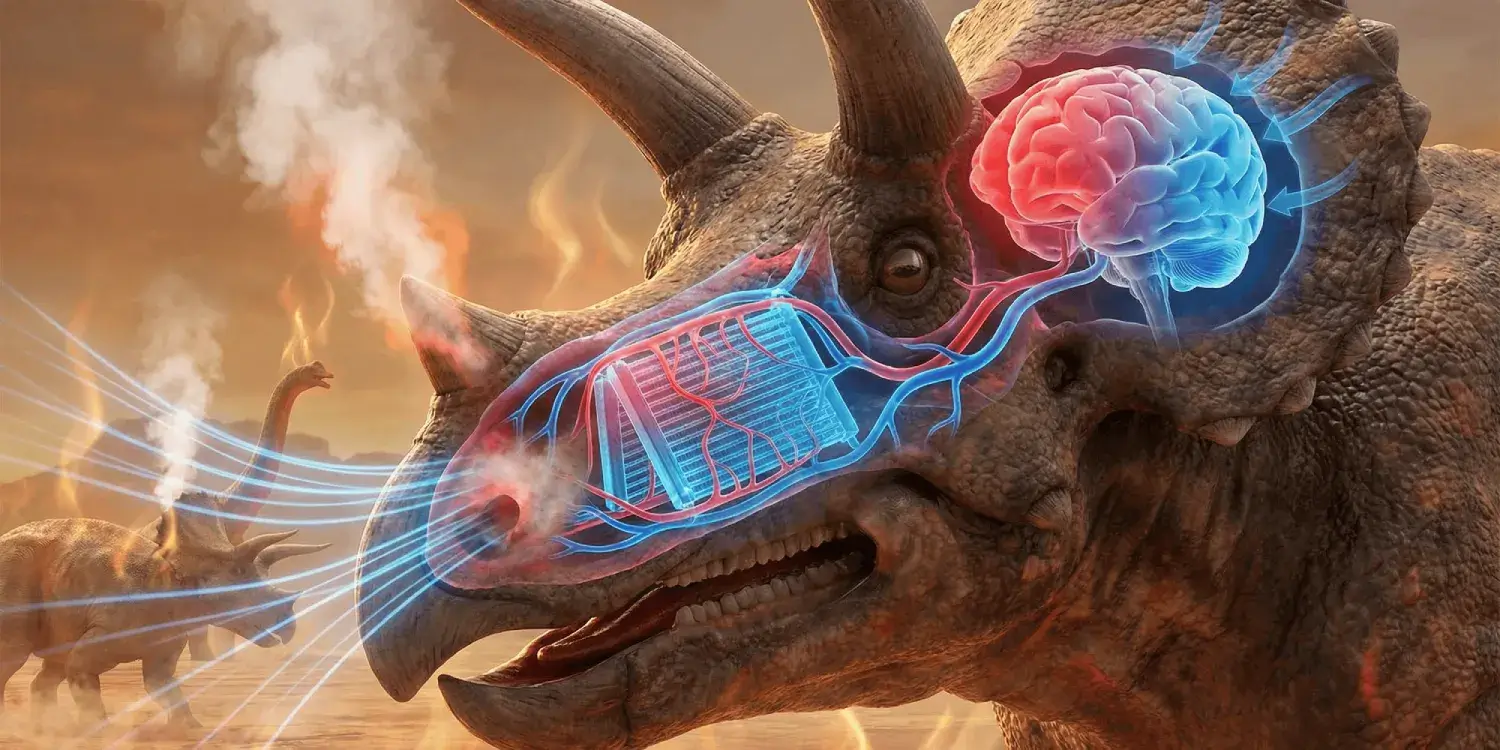
Among dinosaurs, Triceratops boasts immense popularity right alongside Tyrannosaurus.
When we think of its appearance, the long “horns” above its eyes and the “frill” (neck shield) at the back of its head are famous, but if you observe its head closely, you will notice that the “nose” region is also extremely large and well-developed.
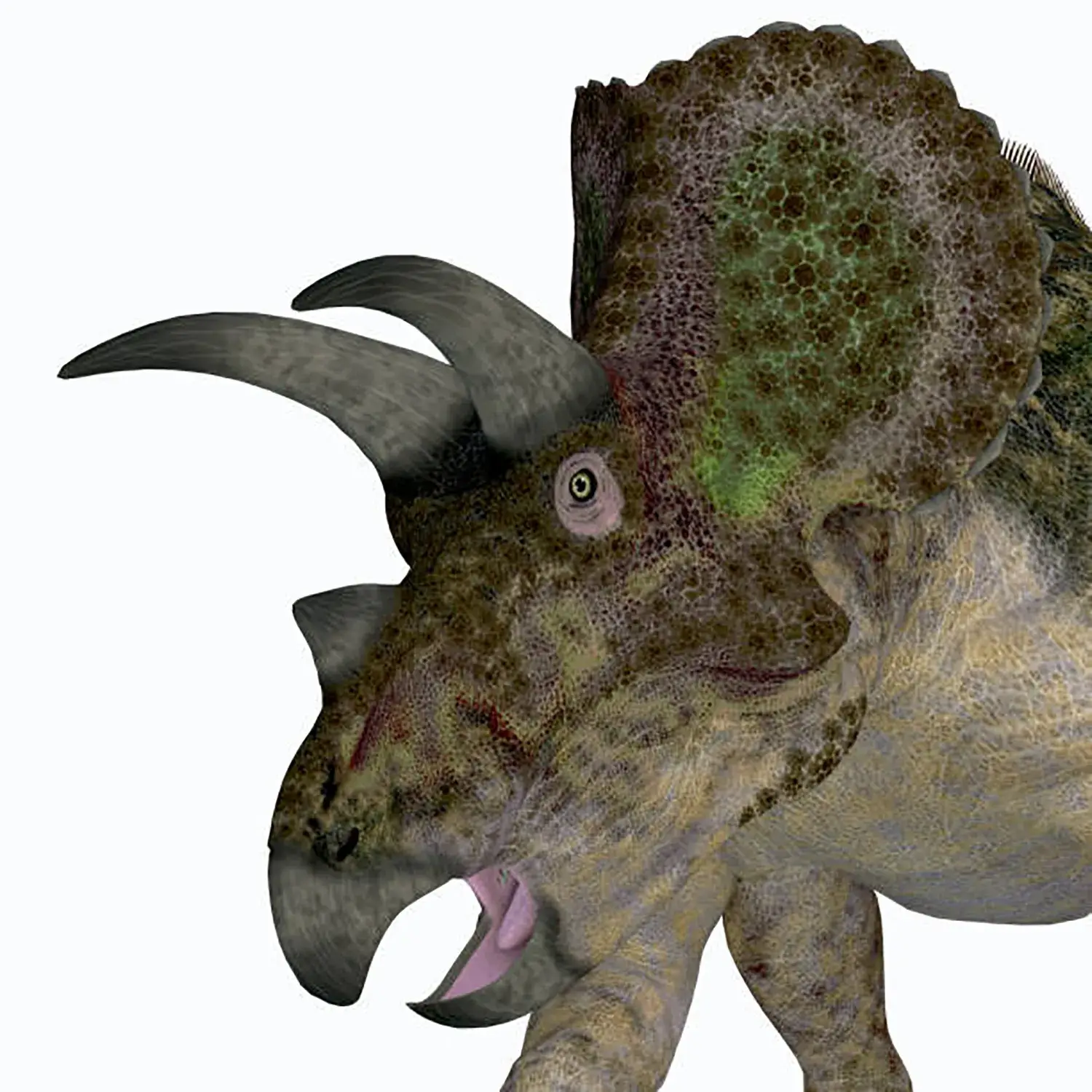
While the “horns” above the eyes and the “frill” at the back of the head are famous, the “nose” region is also extremely large and well-developed.
For many years, the role of this giant nose has been a major mystery in paleontology.
However, in February 2026, a joint research team in Japan, centered around the University of Tokyo, presented a groundbreaking answer to this mystery.
They suggest it is highly likely that the nose of Triceratops functioned as a “radiator” to protect its brain from the heat trapped inside its massive head.
In this article, we will provide a detailed explanation of this latest research, which used cutting-edge methods to reconstruct the “soft tissues” that do not fossilize, unraveling the amazing thermoregulatory mechanism of ceratopsians.
The Overlooked Mystery of the Triceratops’ “Nose”
“Ceratopsians,” represented by Triceratops, underwent extreme specialization during their evolutionary process, developing massive heads.
The Barrier of Soft Tissues and the Difficulty of Comparative Research
Until now, research on ceratopsian heads has primarily focused on the “horns” and “frills,” which were weapons for defense and display.
On the other hand, there has been very little progress in the anatomical understanding of the nasal region, including the giant “bony naris” (nasal opening) that occupies the front of the skull.
Reason 1
The nasal structure of ceratopsians was so uniquely specialized that simple comparisons with other dinosaurs were difficult.
Reason 2
“Soft tissues,” such as the nerves and blood vessels inside the nose, do not remain as fossils, making it supposedly impossible to directly confirm their actual state.
CT Scans Breathe Life into Fossils! Reconstructing Soft Tissues
Taking on this difficult challenge was a joint research team consisting of experts from the University of Tokyo, the National Museum of Nature and Science, the Satsumasendai City Koshiki Museum, the Abiko City Museum of Birds, and Fukui Prefectural University.
(The research results were published in the American Association for Anatomy’s journal, The Anatomical Record, on February 7, 2026.)
Logically Inferring from Bone “Traces”
The research team conducted CT scans on the bone spanning from the snout to the nose (the premaxilla) of Triceratops.
They performed a 3D analysis of the network of fine tubes and grooves (traces where nerves and blood vessels passed through) inside the bone, which are invisible from the fossil’s surface.
Furthermore, by comparing this data with anatomical data from extant reptiles like birds and crocodilians, they adopted a groundbreaking approach to logically infer the existence and layout of the lost soft tissues.
A Unique Network Revealed
As a result of comprehensive analysis, it was found that derived (more highly evolved) ceratopsians possessed unique anatomical features not seen in other reptiles.
Estimating the Major Organs of the Nose
They succeeded in estimating the presence and layout of the “nasal glands” and “nasolacrimal ducts,” which had previously been unclear.
Unique Arrangement of Blood Vessels and Nerves
It was revealed that bundles of nerves and blood vessels called “ophthalmic neurovascular bundles” were predominantly distributed around the giant nasal opening and toward the rostrum (snout).
Complex Folded Structures
The findings indicated the possibility that they had complex, folded structures called “respiratory turbinates” inside their nasal cavities.
The Radiator Function Protecting the Brain from “Heat,” the Weakness of a Giant Head
Why did ceratopsians need such a rich network of blood vessels and nerves around their noses?
The answer lies in the risks associated with their “overly massive heads.”
A Cooling System to Prevent Brain Overheating
The head of Triceratops, boasting one of the largest sizes among terrestrial vertebrates, was covered in thick bone and massive muscles, making it a “structure highly prone to trapping heat.”
Nerve tissues like the brain are extremely sensitive to temperature changes, and if heat is trapped and the temperature rises too much, they suffer fatal damage.
Therefore, a powerful cooling system was essential to keep their massive heads at an optimal temperature.
Efficient Heat Exchange Through Nasal Breathing
This is where the newly discovered soft tissues of the nose come into play.
Through the rich vascular network in the nasal cavity, warm blood comes into contact with the outside air (cold air) with every breath, exchanging heat.
Furthermore, if they possessed the folded structures of the “respiratory turbinates,” the surface area would increase exponentially, dramatically improving heat exchange efficiency.
In other words, the giant nose of Triceratops is thought to have functioned like a “radiator” that cools a car engine.
By circulating a large amount of blood to the snout and inside the nasal cavity to release heat, it protected the vital brain located deeper inside from overheating.
A “More Realistic Image of Dinosaurs” Painted by the Latest Research
While the findings announced this time are a “hypothesis” derived from bone traces, this is the first case to provide detailed anatomical information about the ceratopsian rostrum, an area where knowledge was severely lacking, and its academic significance is extremely profound.
The fact that “their giant noses might have been radiators cooling their brains” tells us that they were not merely sluggish reptiles, but highly active creatures equipped with a highly sophisticated thermoregulatory system.
As this kind of research shedding light on soft tissues that do not fossilize progresses, the image of dinosaurs we envision will undoubtedly be updated into something much clearer and more realistic.











![[Latest Research] What Was the Function of Spinosaurus's Giant "Sail"? Exploring the Mysteries of Thermoregulation and Underwater Locomotion](https://dinosaurmuseum.jp/wp/wp-content/uploads/eyecatch_spinosaurus-sail-function_en-1024x512.webp)
![[Latest Discovery] A Third Type of Skin, Neither Scales Nor Feathers? Meet "Haolong dongi," a New Dinosaur Species Covered Entirely in Spikes](https://dinosaurmuseum.jp/wp/wp-content/uploads/eyecatch_dinosaur-spiky-skin-discovery_en-1024x512.webp)