Therizinosaurus
Name Origin
Scythe Lizard (or Reaping Lizard)
Family
Therizinosauridae
Classification
Diapsida, Saurischia, Theropoda
Habitat (Discovery Location)
Mongolia, Kazakhstan
Period
Approximately 83–70 million years ago (Late Cretaceous)
Length
Approximately 8–11 meters
Weight
Approximately 5 tons
Diet
Herbivore (Plant-eater)
 Jurassic
Park / World Featured Dinosaur
Appearance in Jurassic World: Dominion
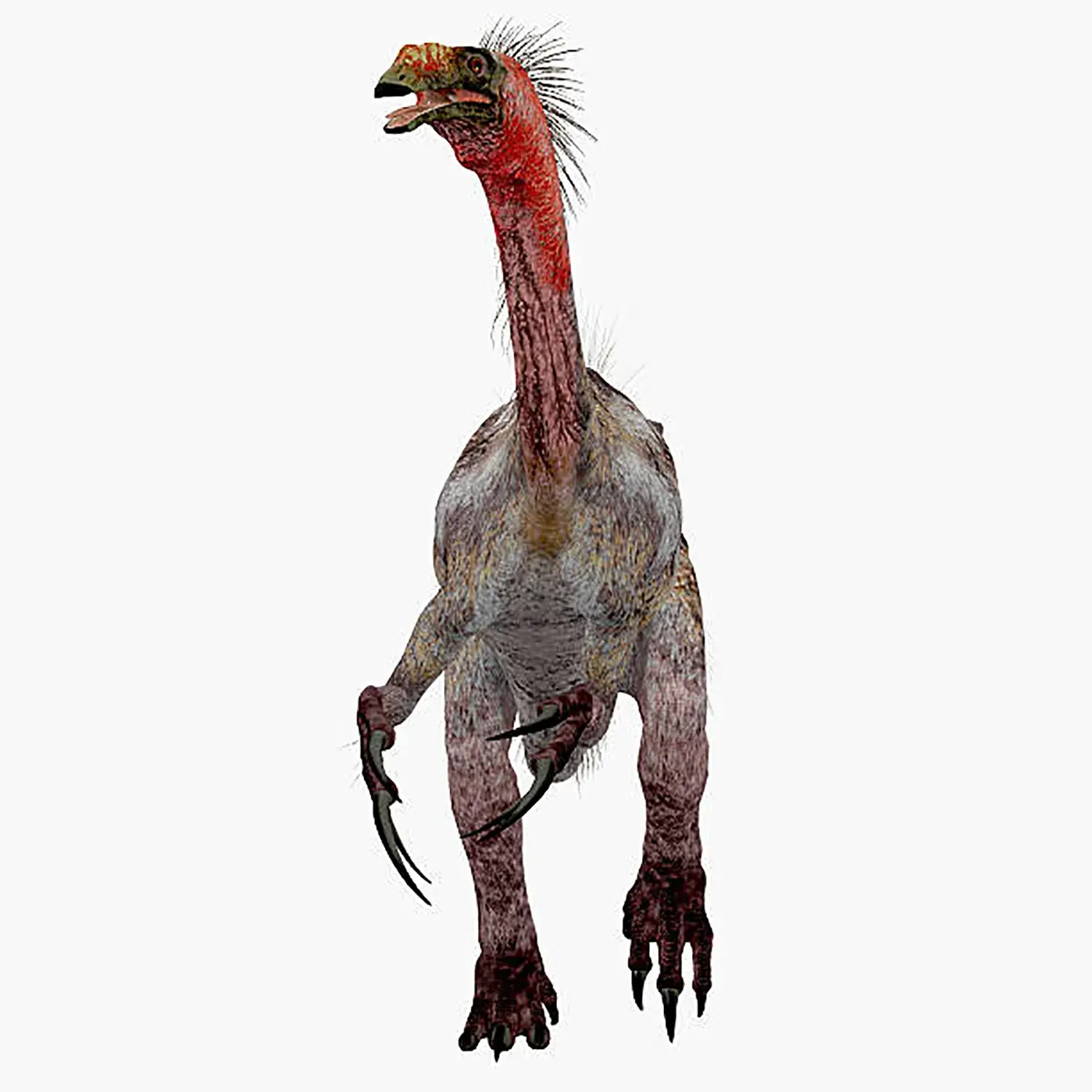
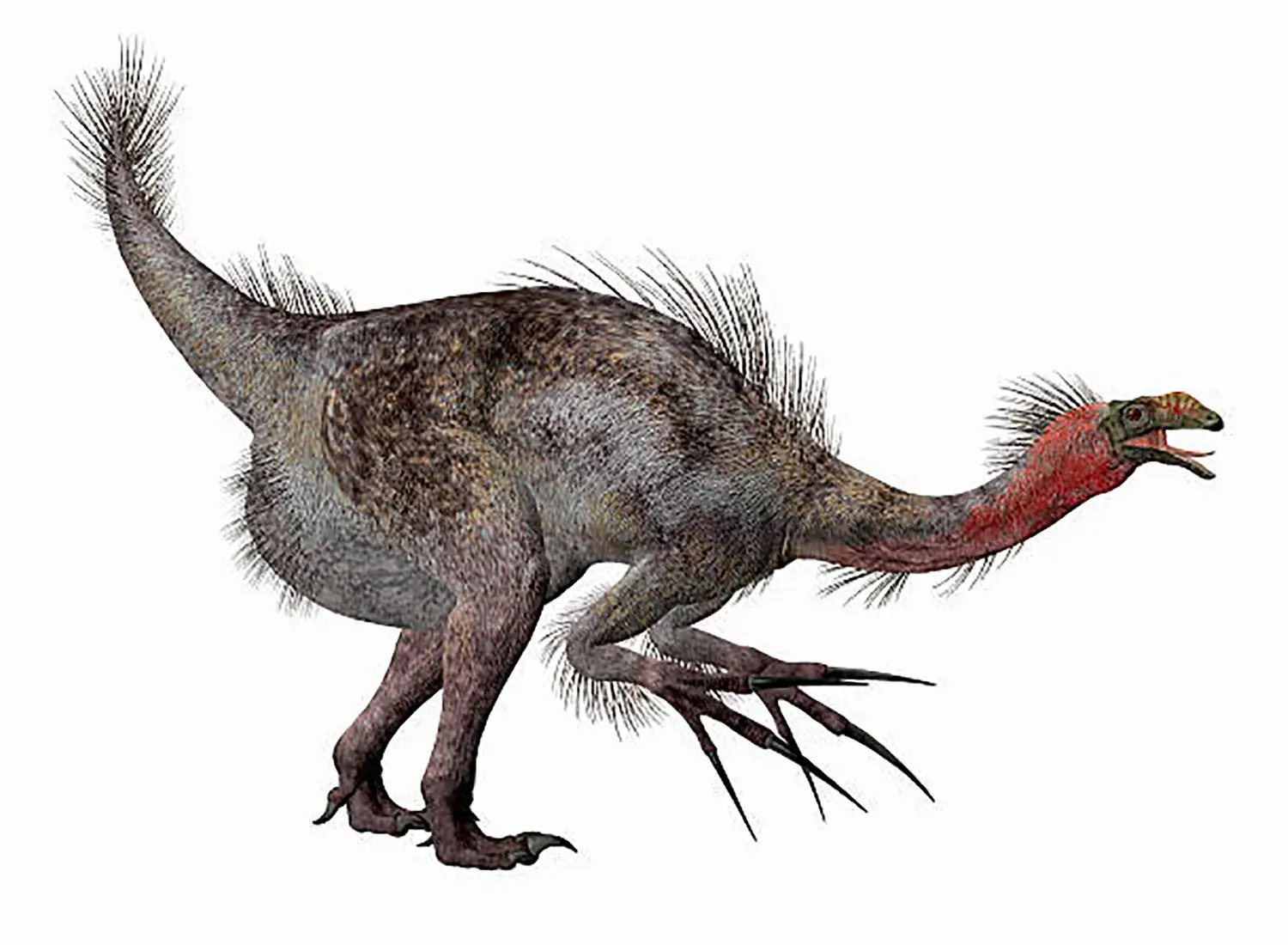
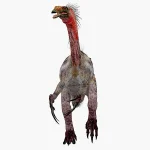
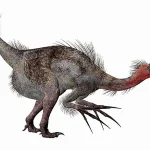
Finally making its long-awaited debut in the series, the Therizinosaurus left a lasting impact on the story. Inhabiting the Biosyn Sanctuary, this female individual is depicted with a full coat of feathers and wields long, sharp claws the size of baseball bats as her primary weapons.
Although naturally a herbivore, the Therizinosaurus in this film is portrayed as highly territorial and aggressive. This temperament stems from her poor eyesight (blindness); to compensate for her limited vision, she reacts hypersensitively to any movement nearby, driven by a fierce instinct to eliminate potential threats.
She emits unique, eerie cries reminiscent of bats or whales, using the rebounding echoes to assess her surroundings. The scene where she stalks her prey while making clicking sounds—similar to a tongue click—provided one of the film's standout horror elements.
In the film, she relentlessly pursued Claire, who had crash-landed in the Biosyn Sanctuary.
Right in front of Claire, who was holding her breath while submerged in a pond to hide, the dinosaur killed a passing deer with a single swipe. This display of the lethal power of her claws and her intolerance for intruders instilled a "make a sound and you die" level of tension in the audience.
In the story's climax, she faced off against the apex predator, the Giganotosaurus, and held her own in a fierce battle.
Using her long claws, she managed to buy time until the knocked-out Tyrannosaurus regained consciousness, though she had one of her left claws snapped off in the struggle. However, the moment the revived Tyrannosaurus slammed the Giganotosaurus backward, the Therizinosaurus positioned her sharp claws to impale the Giga's body, killing it instantly.
Although it was an inadvertent team-up, she played a pivotal role in defeating the ultimate enemy alongside the legendary dinosaur, marking one of the most significant debuts in the series' history.
TODAY'S QUIZ
Correct answer = 1 coin
What were the enormous claws of Therizinosaurus most likely used for?
Loading…
You might also like... 

-
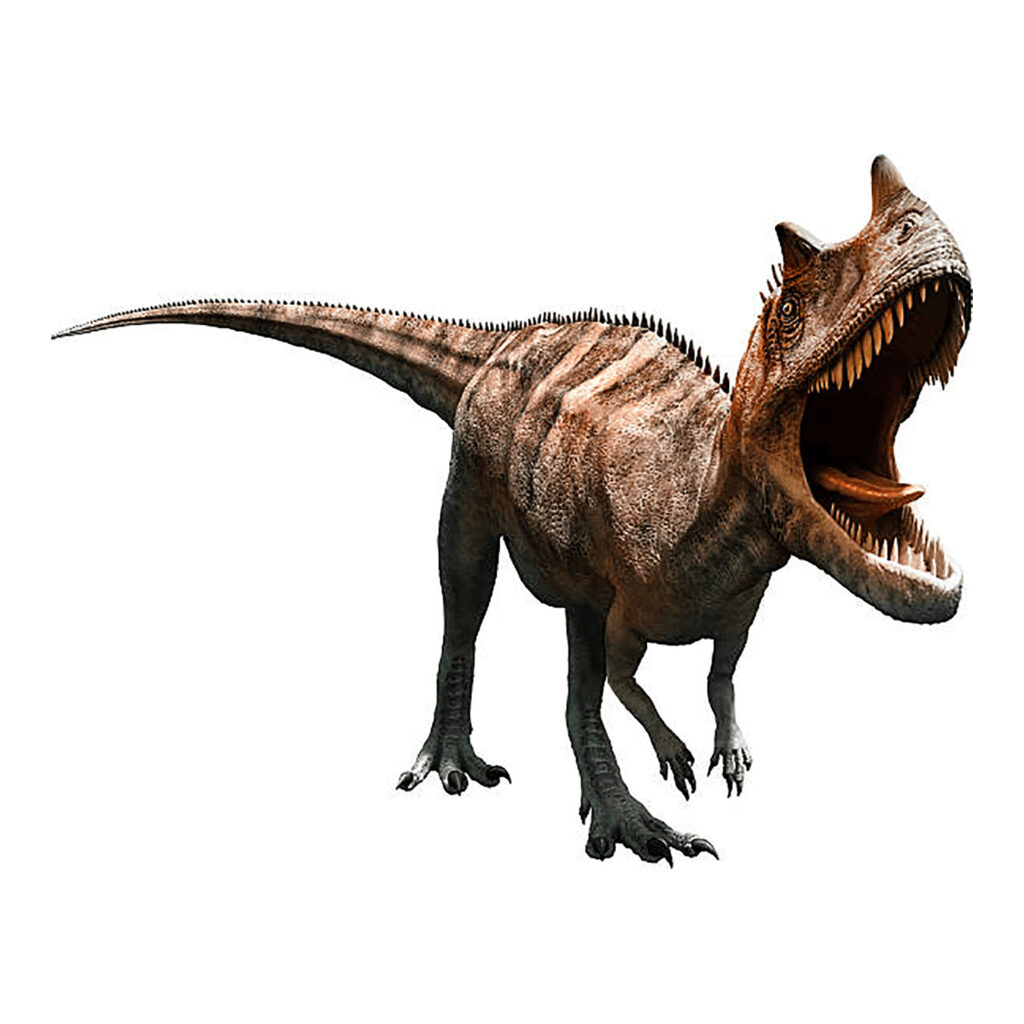
 Ceratosaurus
- Classification
- Theropods
- Characteristics
- Carnivorous
- Era
- Jurassic period
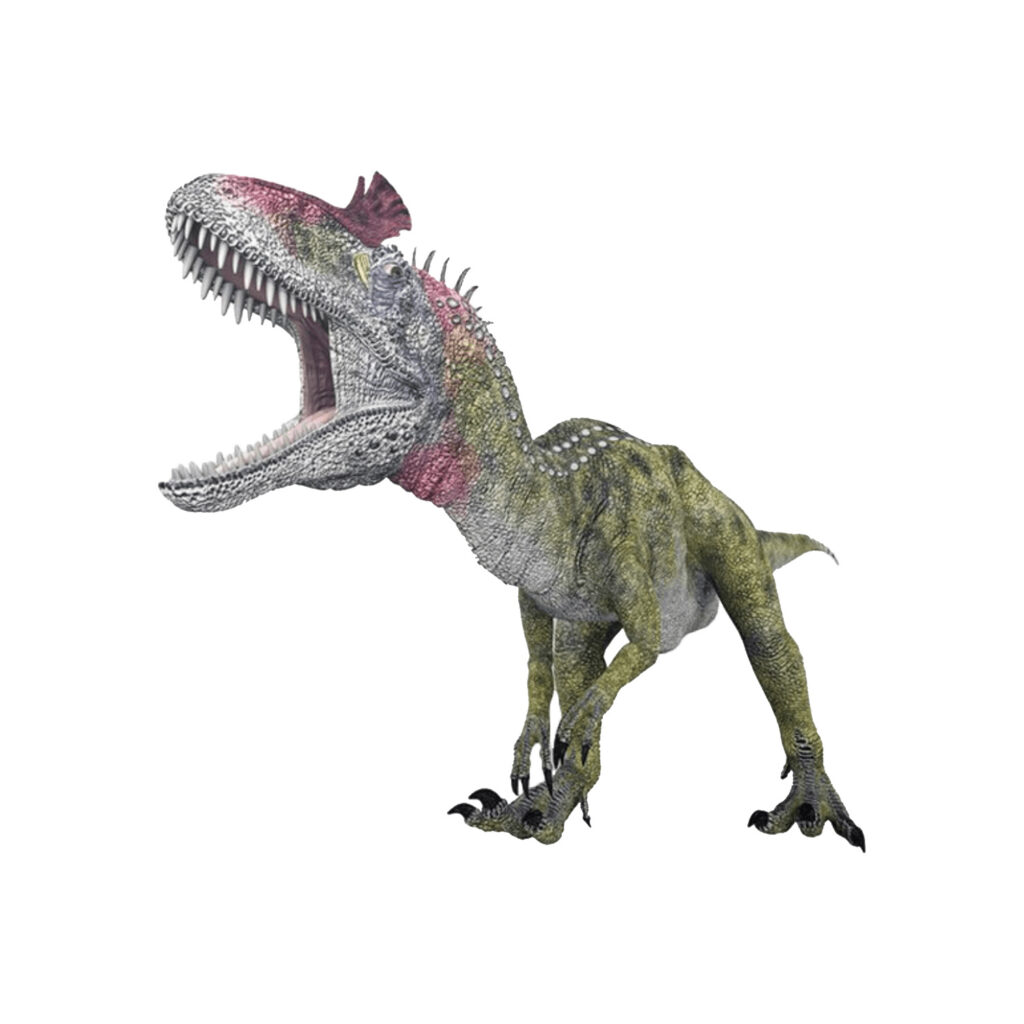
- Cryolophosaurus
- Classification
- Theropods
- Characteristics
- Carnivorous
- Feathered
- Era
- Jurassic period
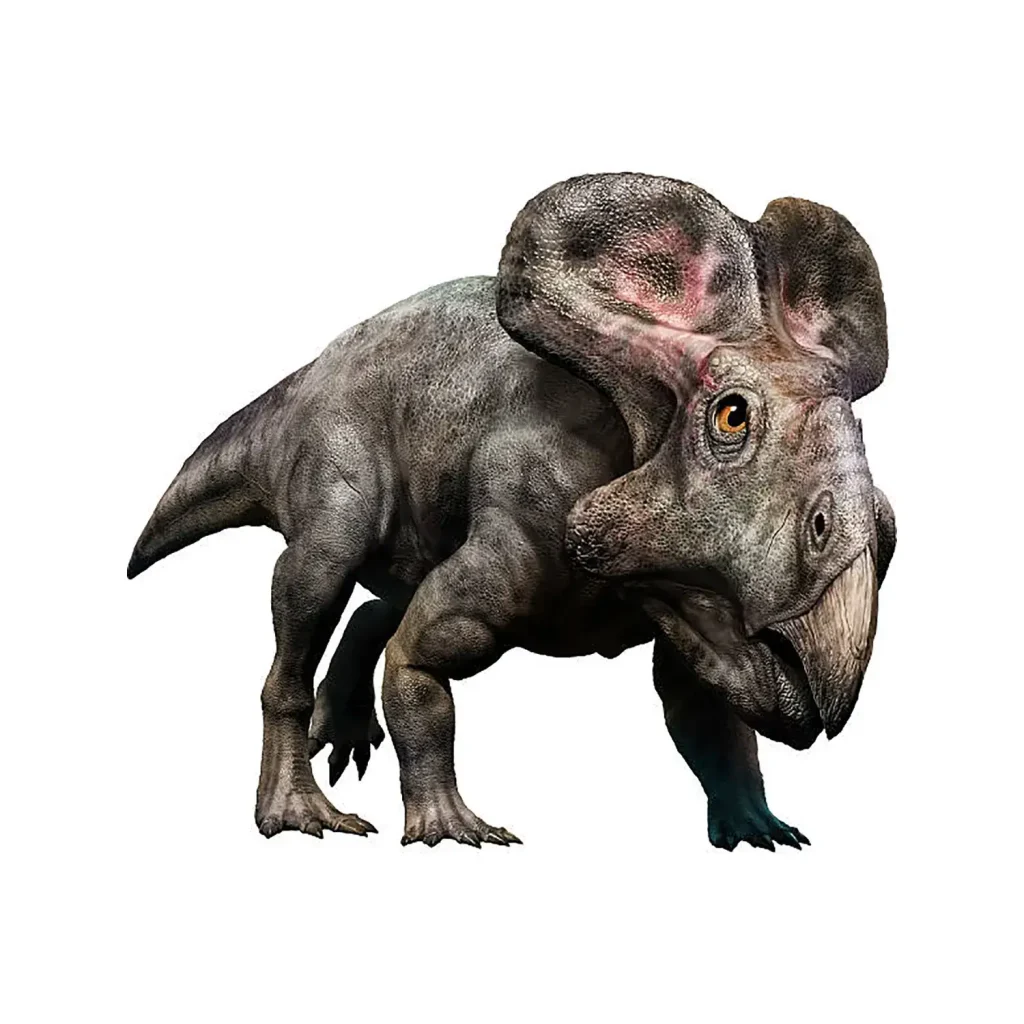
- Protoceratops
- Classification
- Marginocephalia
- Characteristics
- Herbivorous
- Era
- Cretaceous period
- Einiosaurus
- Classification
- Marginocephalia
- Characteristics
- Herbivorous
- Era
- Cretaceous period
-
Sponsored Links
-
Sponsored Links



![[Latest Research] What Was the Function of Spinosaurus's Giant "Sail"? Exploring the Mysteries of Thermoregulation and Underwater Locomotion](https://dinosaurmuseum.jp/wp/wp-content/uploads/eyecatch_spinosaurus-sail-function_en-1024x512.webp)
![[Latest Discovery] A Third Type of Skin, Neither Scales Nor Feathers? Meet "Haolong dongi," a New Dinosaur Species Covered Entirely in Spikes](https://dinosaurmuseum.jp/wp/wp-content/uploads/eyecatch_dinosaur-spiky-skin-discovery_en-1024x512.webp)
Description
Among the long history of dinosaurs, Therizinosaurus stands out as a truly unique existence.
Possessing a name that means “Scythe Lizard,” this dinosaur was a large theropod that inhabited Mongolia and Kazakhstan during the Late Cretaceous period.
Therizinosaurus is a creature of contradictions: it possessed massive claws—some of the largest in biological history—yet it was a herbivore.
Once mistaken for a turtle or a gigantic carnivorous dinosaur, this mysterious creature has baffled scientists for years. We delve into the full picture of this enigmatic dinosaur.
Discovery and Confusion: Bizarre Fossils Mistaken for Turtle Bones
The first discovery of Therizinosaurus dates back to 1948 in the Nemegt Formation of the Gobi Desert, Mongolia.
What was found consisted only of giant forelimbs measuring 2 meters in length, claws, and a few remaining leg bones and ribs.
At the time, there was no precedent for such bizarre fossils, leading to an astonishing misunderstanding upon their initial discovery.
Was it Thought to be a Giant Turtle?
The giant claws of Therizinosaurus resembled the ribs of a modern leatherback sea turtle.
Consequently, they were initially mistaken not for dinosaur bones, but for the bones of a “giant turtle-like reptile.”
The specific name “cheloniformis” means “turtle-formed,” and reconstructions from that era commonly depicted it as a “turtle with absurdly long claws.”
The Carnivore Theory and Classification Chaos
Even after the turtle theory was debunked, confusion reigned. Some theorized it was a “super-giant carnivore with a physique like Allosaurus to match the arm size,” while others deemed it a new, unclassifiable biological group due to bone features resembling both saurischians and ornithischians.
Today, it is understood that these strange features were actually “secondary adaptations for eating plants.”
Claws Possessing the Largest “Scythes” in Biological History
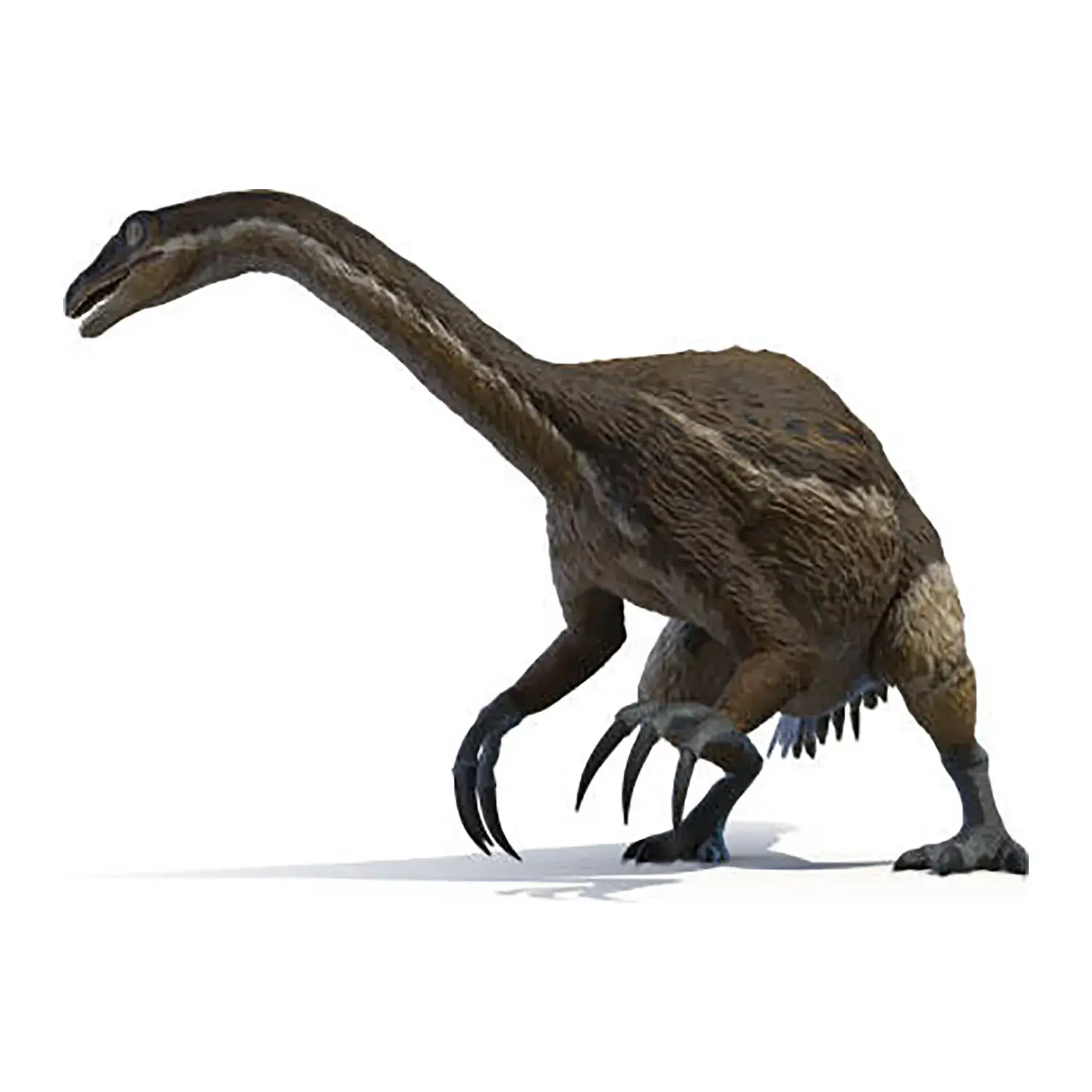
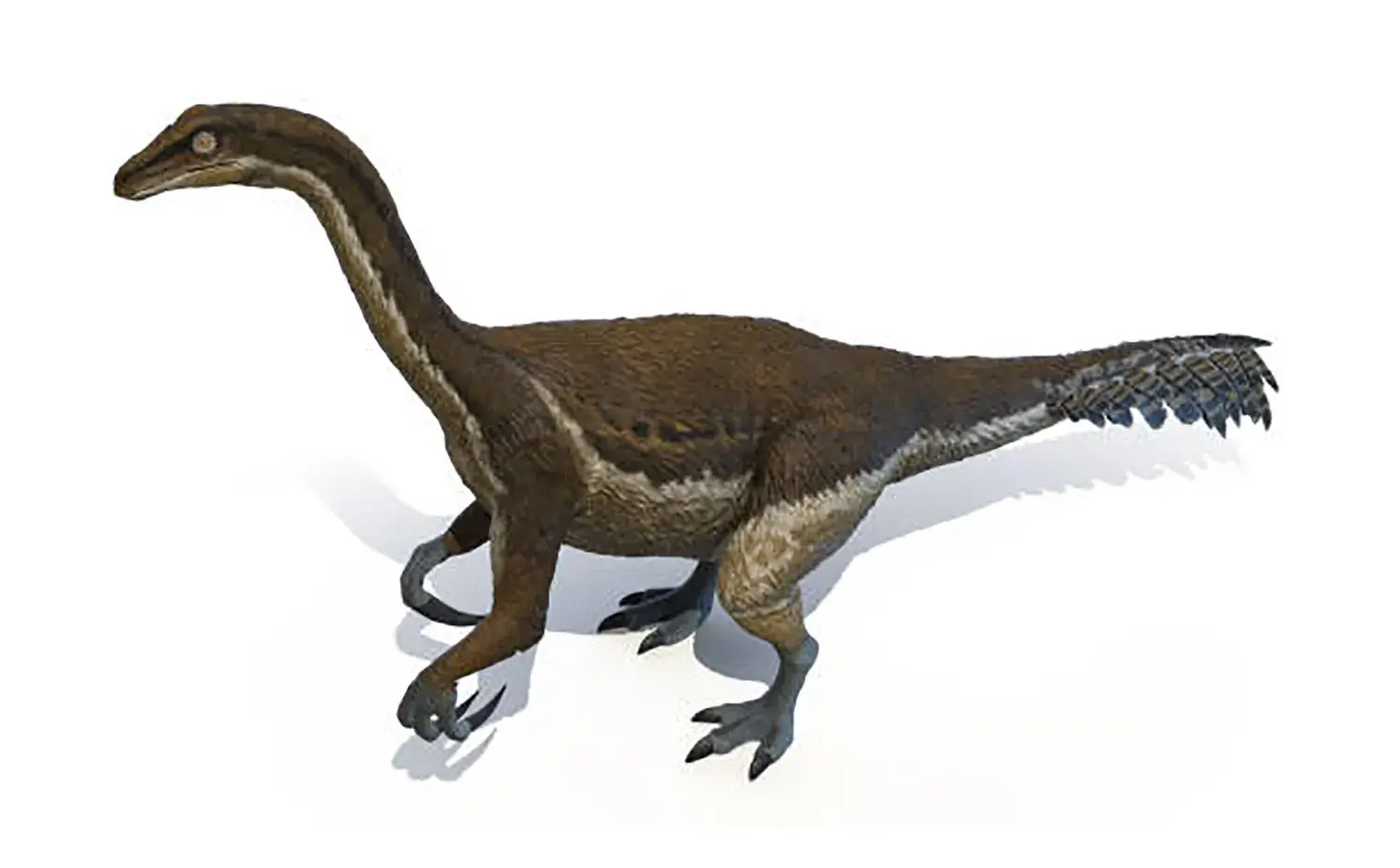
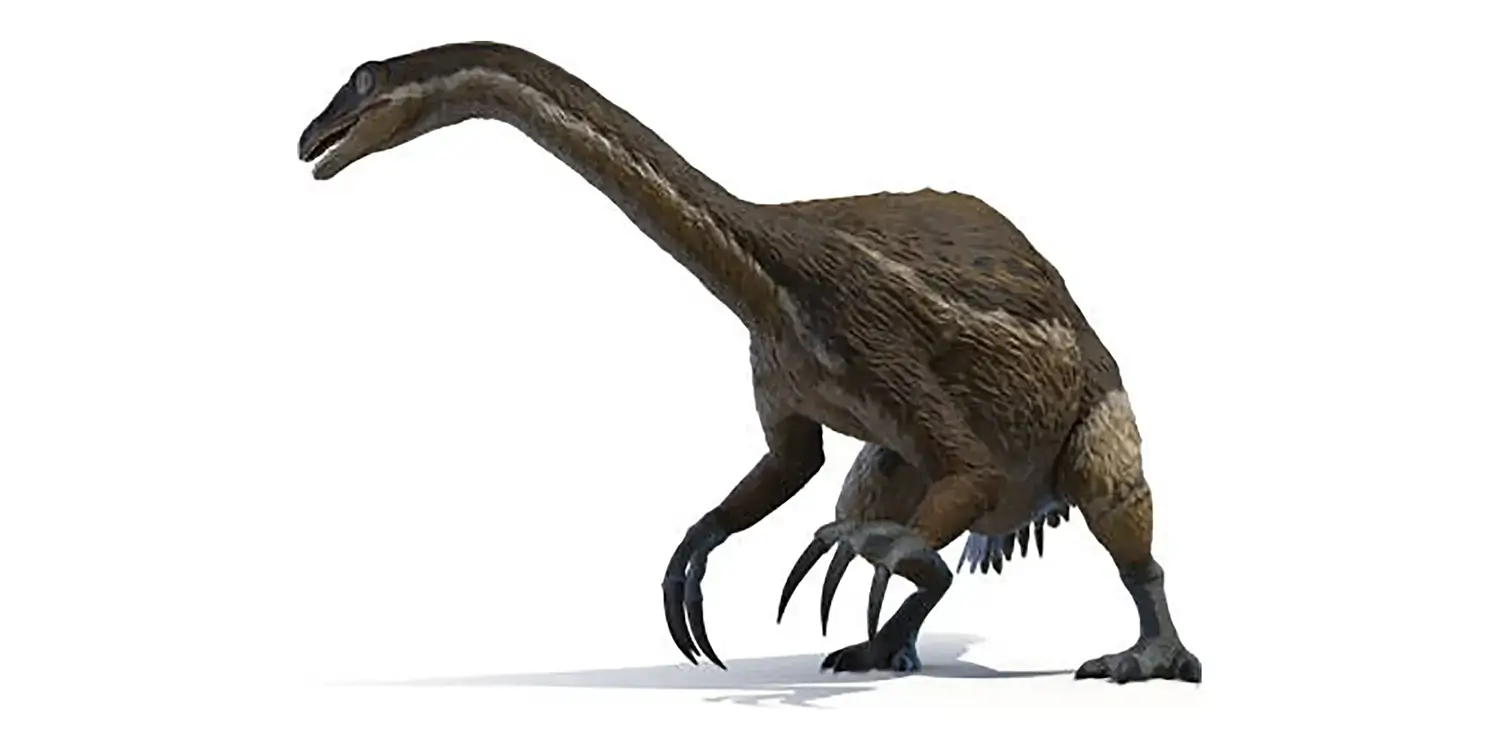
The most defining feature of Therizinosaurus is undoubtedly the massive claws equipped on the tips of its forelimbs.
The biggest feature is the giant claws on its forelimbs
The arms themselves reached lengths of about 2 meters, and the claws at the tips measured over 70 cm in bone alone.
In life, including the keratinous sheath, they likely exceeded 90 cm, and are considered to be the largest claws in the history of life.
What Were These Claws Used For?
Debate continues regarding the purpose of these “giant scythes.”
Tool for Herbivory (Prevalent Theory)
Acting like a rake to pull down branches or gather vegetation.
Weapon for Self-Defense (Prevalent Theory)
A powerful weapon to protect itself from large carnivorous dinosaurs of the same era, such as Tarbosaurus.
Termite Mound Destruction Theory
Used to break open termite mounds to eat the insects inside.
Recent research leans towards the theory that they primarily functioned as tools for feeding on plants, while serving as a means of self-defense in emergencies.
A Strange Appearance as a Theropod “Oddball”
With the discovery of closely related species (such as Alxasaurus and Erliansaurus), the full picture of Therizinosaurus has finally become clear.
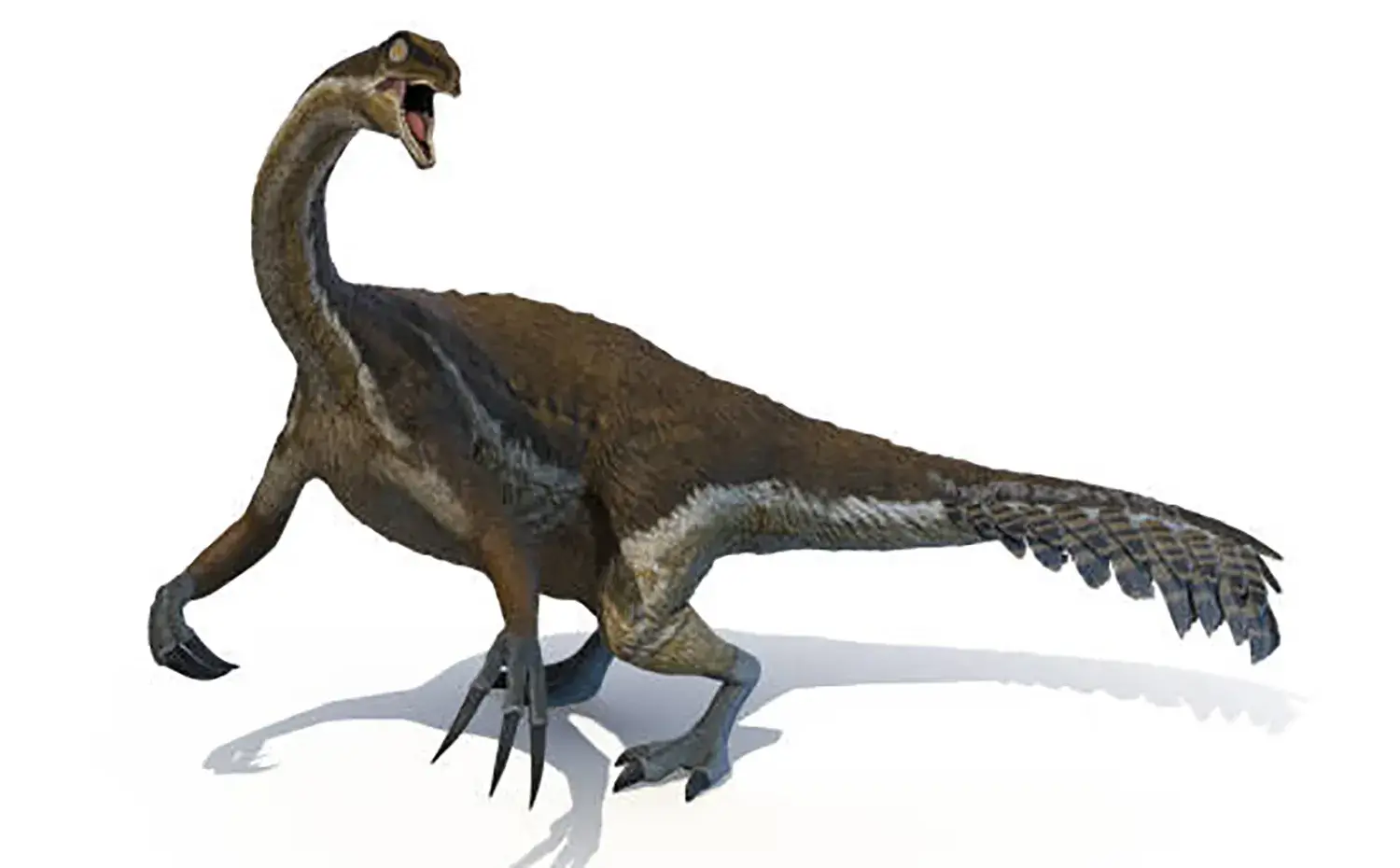
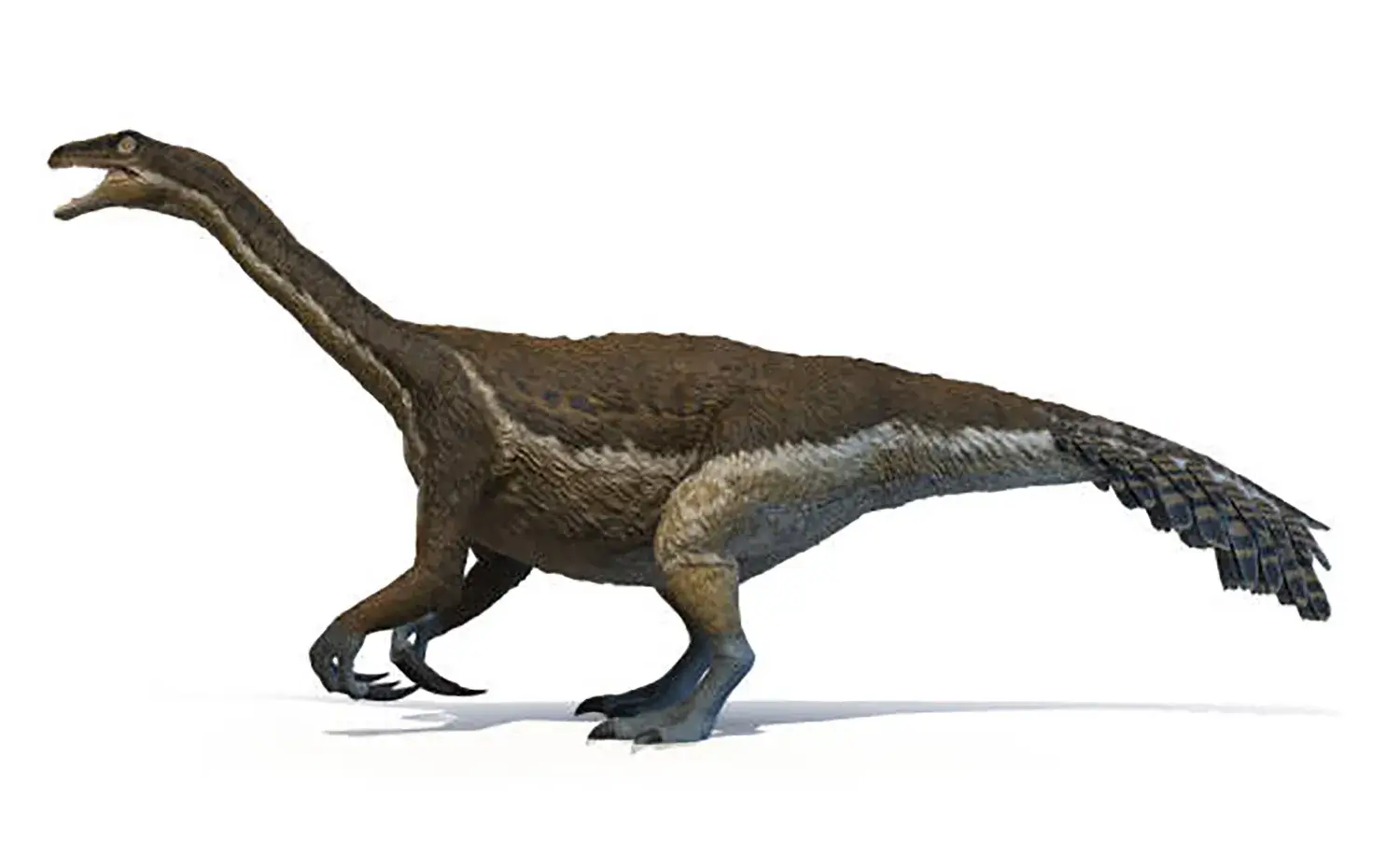
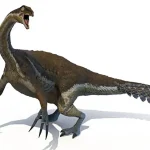
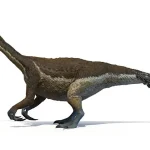
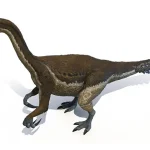
The estimated total length is 8 to 11 meters.
Its silhouette is often likened to “Big Bird from Sesame Street with giant forelimbs attached.”
A “Pot-Bellied” Physique Adapted for Plants
Compared to other theropods, its body was voluminous and barrel-shaped.
The body was voluminous like a barrel
This was to accommodate the massive digestive tract needed to process plants.
Also, while typical theropods walked on three toes, Therizinosaurus walked with four toes touching the ground.
This is thought to be an adaptation to support its heavy body or to walk through swampy areas.
A Herbivore in a Lineage of Carnivores
Despite being a “theropod”—a group that includes ferocious carnivores—it was a rare herbivore (or an omnivore with a strong preference for plants).
Instead of sharp teeth, it possessed leaf-shaped teeth and a beak, making it an “evolutionary oddball” that evolved much like the Giant Panda did to eat bamboo.
Some theories suggest its movements and lifestyle might have been similar to those of a modern sloth.
Environment and Ecology of the Time
The area around the Gobi Desert during the Late Cretaceous, where Therizinosaurus lived, was different from today; it was a lush natural environment, warm and humid.
Tall vegetation flourished there, and Therizinosaurus’s long neck and large body would have been well-suited for eating leaves and fruits from high places, much like a modern giraffe.
They may have used their long necks and giant claws to exclusively exploit these rich plant resources.
Enduring Mysteries and Future Prospects
Many mysteries remain as to why they evolved such a unique appearance.
Regarding Feathers
While often depicted with feathers in reconstructions, fossilized feathers of Therizinosaurus itself have not been found.
Closely related species (like Beipiaosaurus) show traces of feathers, but given Therizinosaurus’s large size and environment, its plumage might have been limited.
Discoveries in Japan and Clues for the Future
Although fossil discoveries are still partial, closely related species like “Paralitherizinosaurus” and “Fukuivenator” have been found in Japan, advancing research across Asia.
Once mistaken for a giant turtle and now known as a bizarre herbivorous dinosaur with giant scythes, Therizinosaurus continues to fascinate.
Dinosaur fans everywhere are eagerly awaiting the next discovery to learn the truth told by its claws.