
Ichthyosaurus




Name Origin
Fish Lizard
Family
Ichthyosauridae
Classification
Diapsida, Ichthyosauria
Habitat (Discovery Location)
United Kingdom, Germany, Canada
Period
Approximately 206–140 million years ago (Early Jurassic)
Length
Approximately 2–3 meters
Weight
Approximately 90 kg
Diet
Piscivore (Fish-eater)
TODAY'S QUIZ
Correct answer = 1 coin
What fossil evidence showed that Ichthyosaurus reproduced without having to come ashore?
Loading…
You might also like... 

-
 Scelidosaurus
- Classification
- Thyreophora
- Characteristics
- Herbivorous
- Era
- Jurassic period
- Microraptor
- Classification
- Theropods
- Characteristics
- Carnivorous
- Feathered
- Era
- Cretaceous period
- Psittacosaurus
- Classification
- Marginocephalia
- Characteristics
- Herbivorous
- Era
- Cretaceous period
- Pawpawsaurus
- Classification
- Thyreophora
- Characteristics
- Herbivorous
- Era
- Cretaceous period
-
Sponsored Links
-
Sponsored Links









![[Latest Research] What Was the Function of Spinosaurus's Giant "Sail"? Exploring the Mysteries of Thermoregulation and Underwater Locomotion](https://dinosaurmuseum.jp/wp/wp-content/uploads/eyecatch_spinosaurus-sail-function_en-1024x512.webp)
![[Latest Discovery] A Third Type of Skin, Neither Scales Nor Feathers? Meet "Haolong dongi," a New Dinosaur Species Covered Entirely in Spikes](https://dinosaurmuseum.jp/wp/wp-content/uploads/eyecatch_dinosaur-spiky-skin-discovery_en-1024x512.webp)






Description
The seas spanning from the Late Triassic to the Early Jurassic.
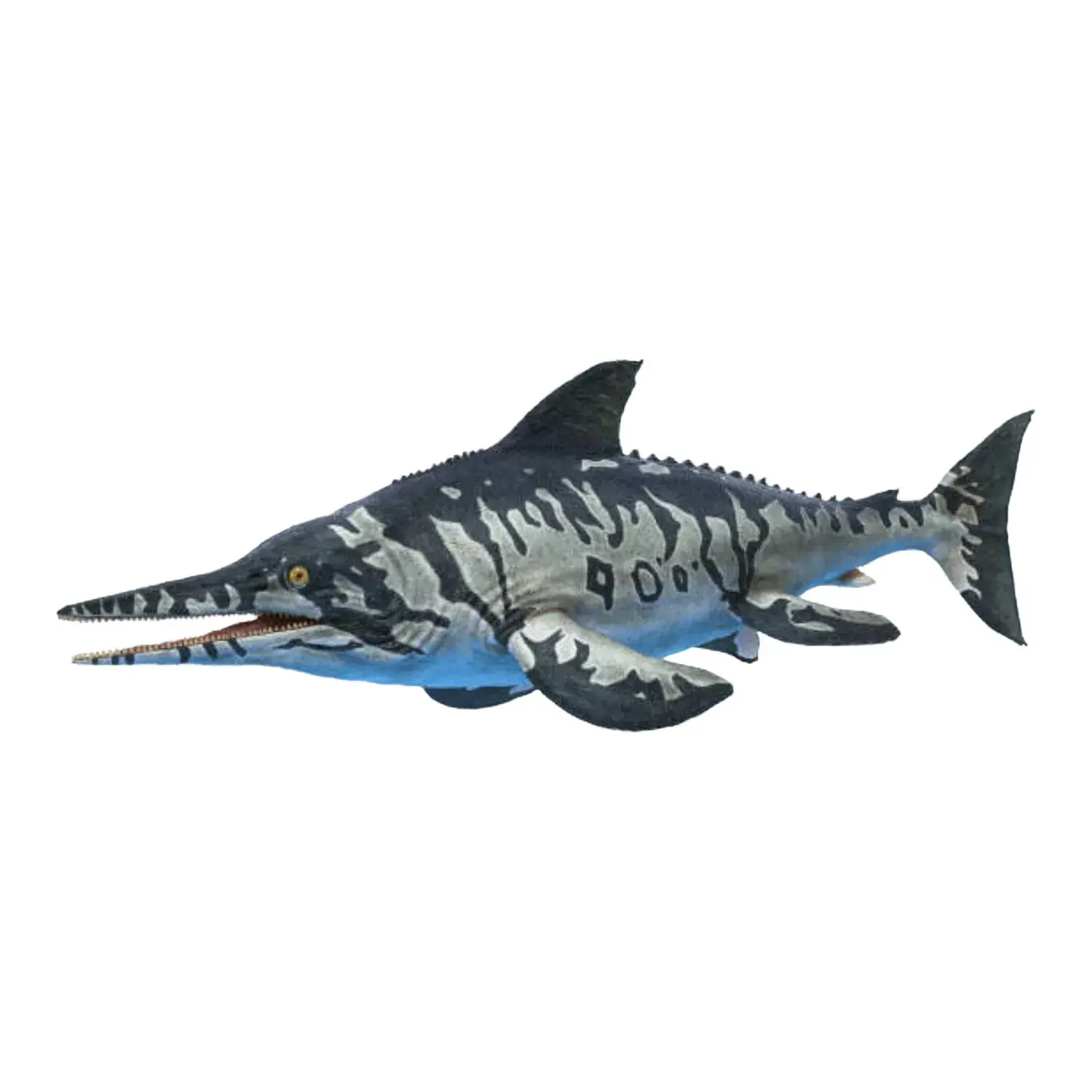
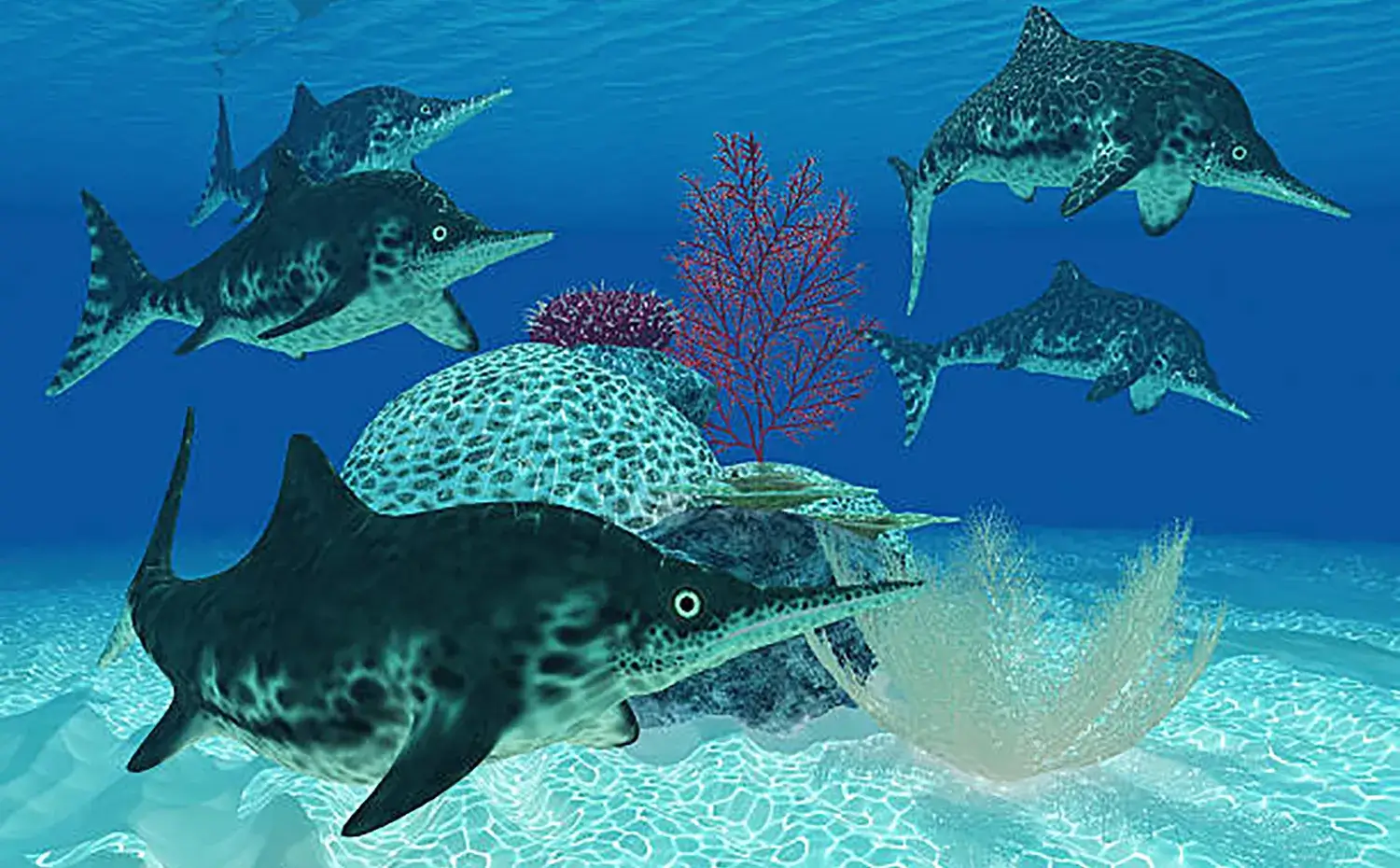
In these waters swam reptiles that bore a striking resemblance to dolphins, rather than dinosaurs.
Their name: “Ichthyosaurus”.
With hundreds of complete skeletons discovered, it is one of the most widely known ichthyosaurs.
As a reptile that evolved into a form perfectly suited for aquatic life, its appearance tells the story of a dramatic history of environmental adaptation.
Discovery by the “Mother of Paleontology,” Mary Anning
Ichthyosaurus is a type of marine reptile, much like the famous Elasmosaurus and Mosasaurus, but it belongs to a different group known as “ichthyosaurs” (fish lizards).
It was truly a creature that could be described as the “reptilian version of a dolphin.”
A creature that could be described as the reptilian version of a dolphin
Fossils of this creature were first discovered in England around the year 1800.
The discoverer was Mary Anning, who would later become known as the “Mother of Paleontology.”
She would later earn worldwide acclaim for unearthing Plesiosaurus and Dimorphodon, but her first great achievement was the discovery of this Ichthyosaurus.
This discovery served as the stepping stone for her career and holds immense significance in the development of paleontology.
A Streamlined Body and Physical Characteristics
A Beautifully Streamlined Form and a Shark-Like Tail
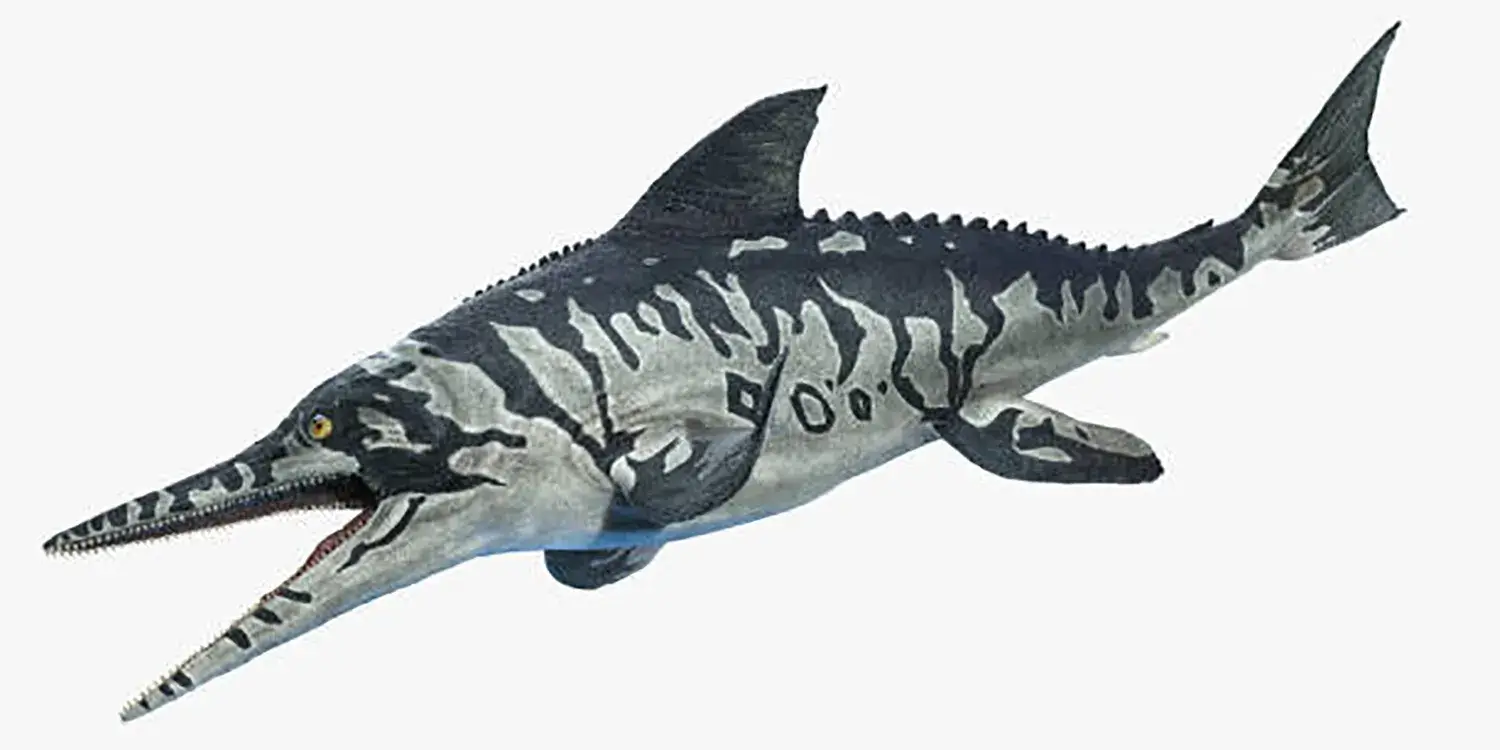
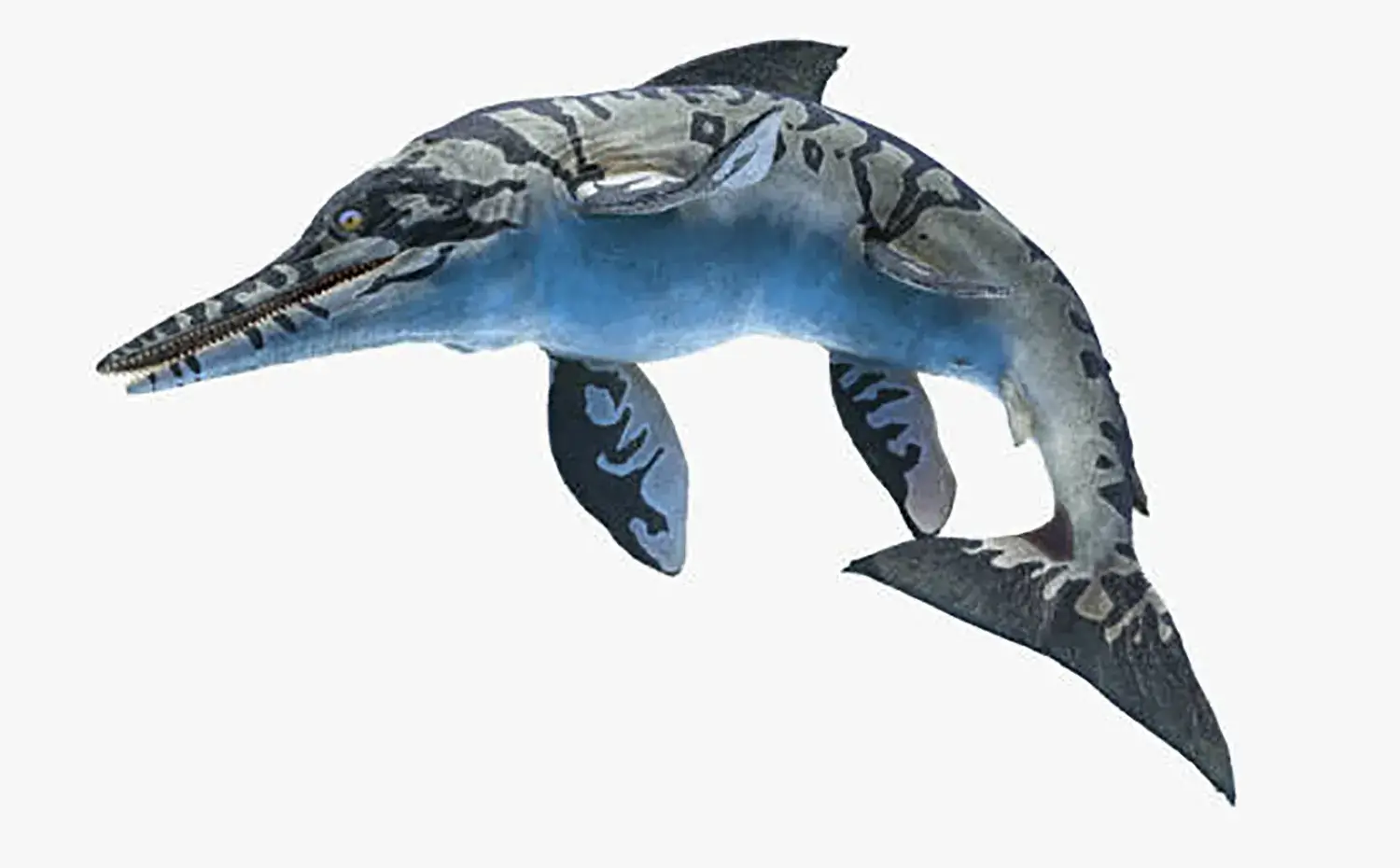
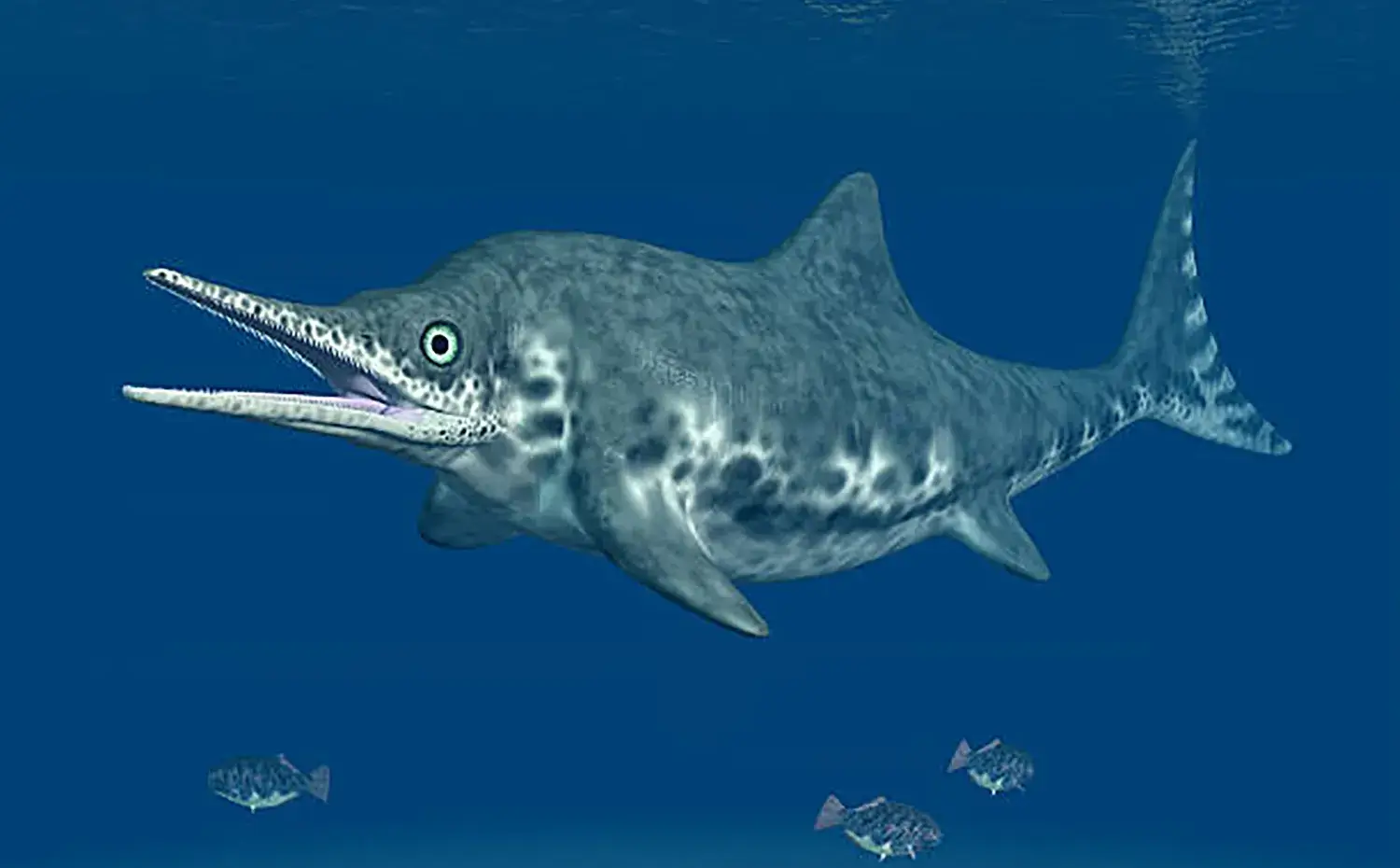
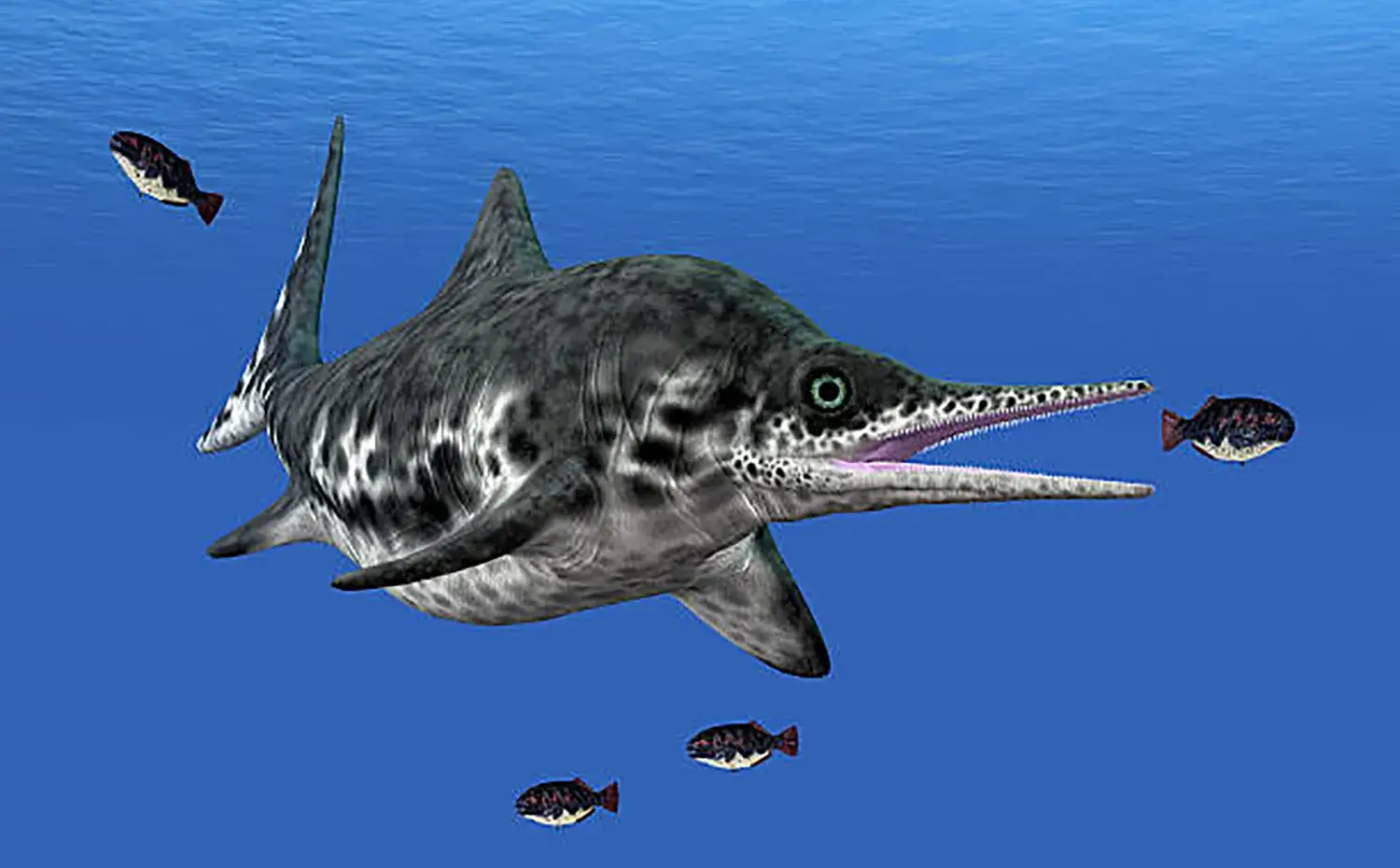
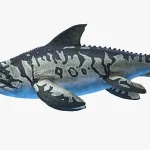
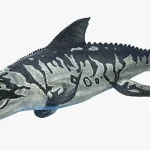
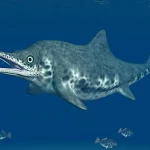
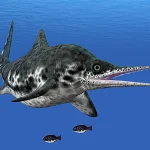
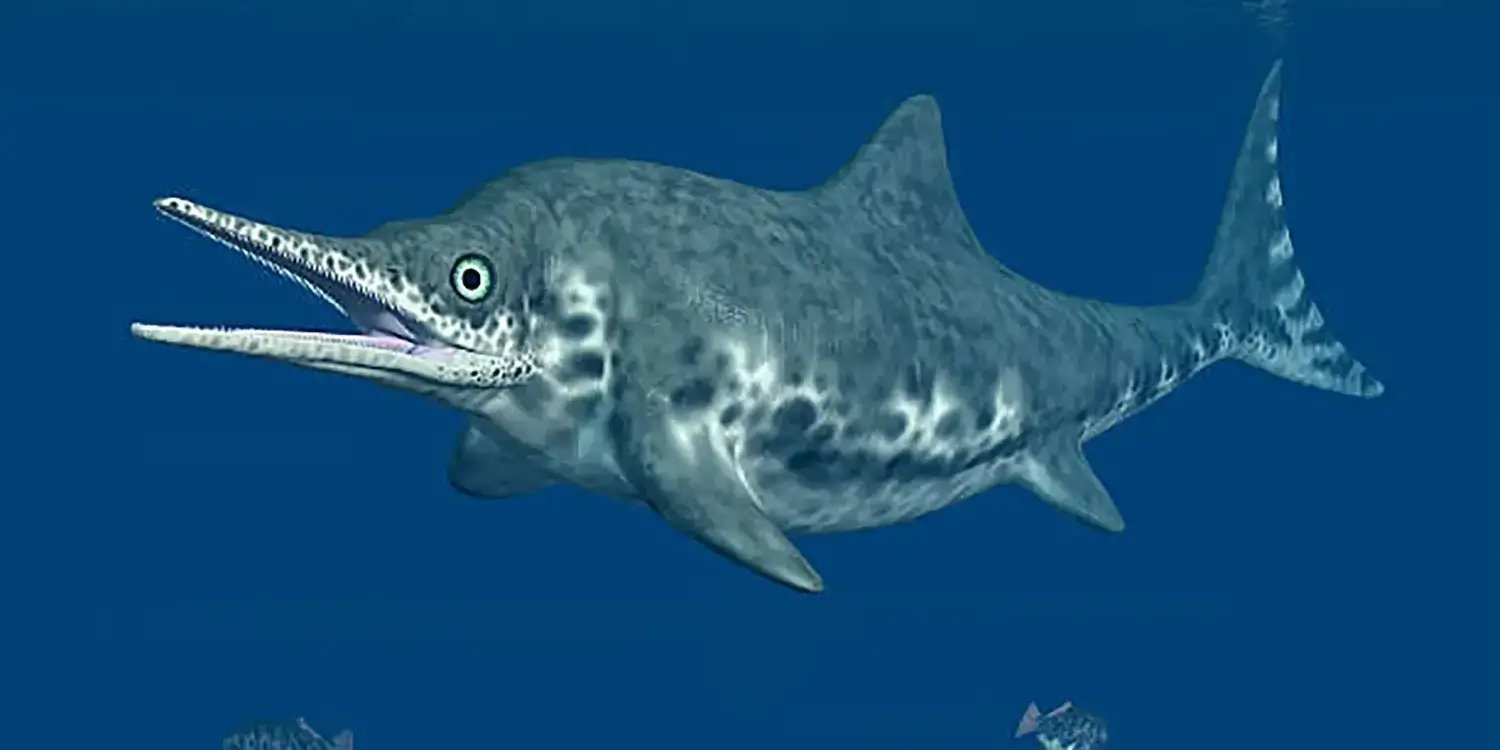
The most prominent feature of Ichthyosaurus is its beautiful, streamlined form, much like a modern dolphin.
A beautifully streamlined form like a dolphin
It had a large dorsal fin on its back, and its tail fin stood vertically in a crescent shape.
Its shape closely resembled the tail fin of a modern shark, indicating it had completely transformed into a fish-like body.
It is believed they gained speed by swinging this tail, swimming freely through the ocean.
Additionally, their skin was smooth, rather than bumpy like typical reptiles.
The Evolution of Flippers and Size
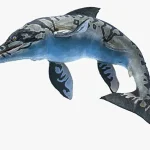
Their limbs had completely evolved into “flippers” perfectly suited for marine life, but they differed in size from front to back.
While the forelimbs were quite large and well-developed, the hindlimbs were incredibly short and small.
While the forelimbs were quite large and well-developed, the hindlimbs were incredibly short and small.
Its body length was around 2 to 3 meters (6.6 to 9.8 feet).
This is roughly the same size as a modern bluefin tuna.
Compared to the giant fish Leedsichthys, the massive marine reptile Liopleurodon, or ichthyosaurs from later eras that lived in the same oceans, it falls into a rather small category.
Advanced Sensory Organs: “Ears” to Hear Vibrations and “Eyes” to See the Deep Sea
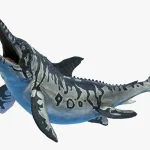
Ichthyosaurus possessed highly developed sensory organs to catch prey.
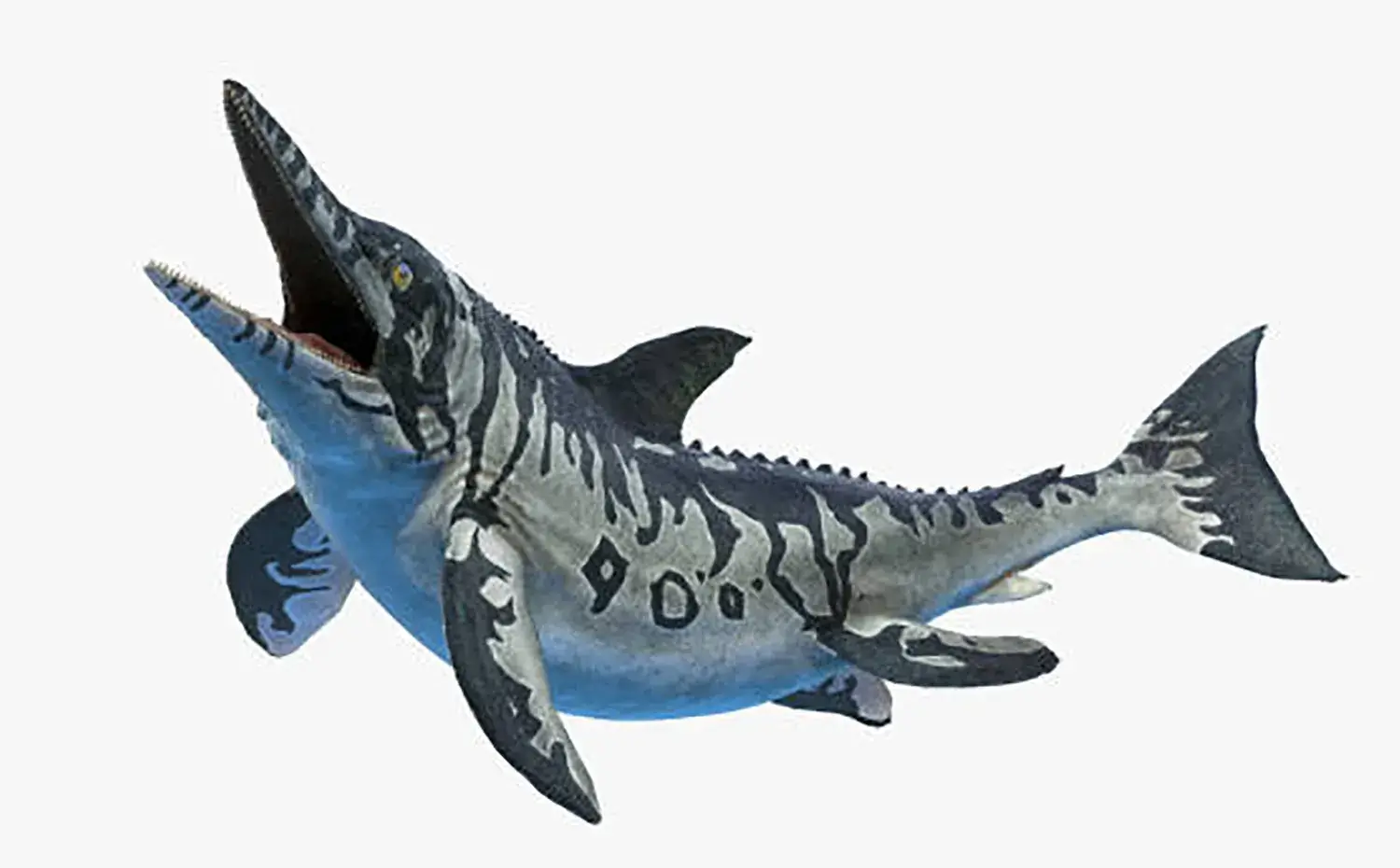
True to its carnivorous nature, its mouth was lined with small, sharp teeth, and it hunted using the following abilities:
“Ears” That Sensed Vibrations
They possessed exceptionally well-developed, large ear bones.
With excellent hearing, it is believed they could accurately pinpoint the distance to their prey or predators by sensing the faint water vibrations caused by small marine creatures.
They could accurately pinpoint the distance to their prey or predators
“Eyes” That Saw Through the Deep Sea
Their vision was also incredibly sharp.
Their large eyes were protected by a rigid “sclerotic ring,” allowing them to demonstrate excellent eyesight even in the murky depths of the ocean.
Evolution to Live Birth: The Truth of Reproduction Told by Fossils
Because Ichthyosaurus was a reptile, it was once thought that they “came ashore to lay eggs” like sea turtles.
However, subsequent research and discoveries overturned this established theory.
“Live Birth” Proven by Fetuses in the Belly
The deciding factor was the discovery of fossils with eggs or fetuses preserved inside their abdomens.
This revealed that Ichthyosaurus was either “ovoviviparous” (hatching eggs inside the body) or “viviparous” (giving birth to live young).
They left descendants in the ocean without ever coming on land.
It is believed that newborns would instinctively swim to the surface to take their first breath of air, being perfectly adapted as residents of the water from the very moment of birth.