
Ornitholestes
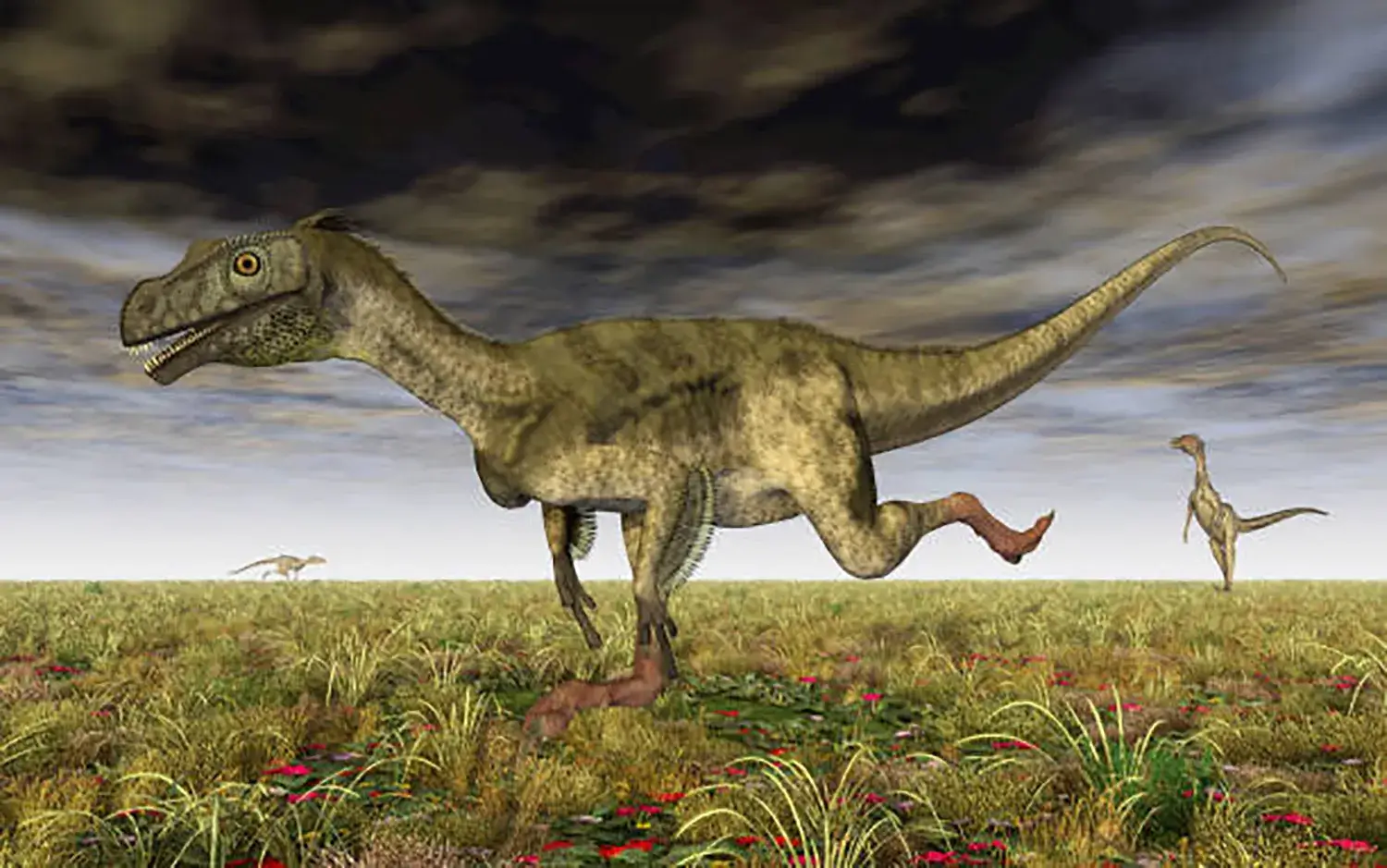
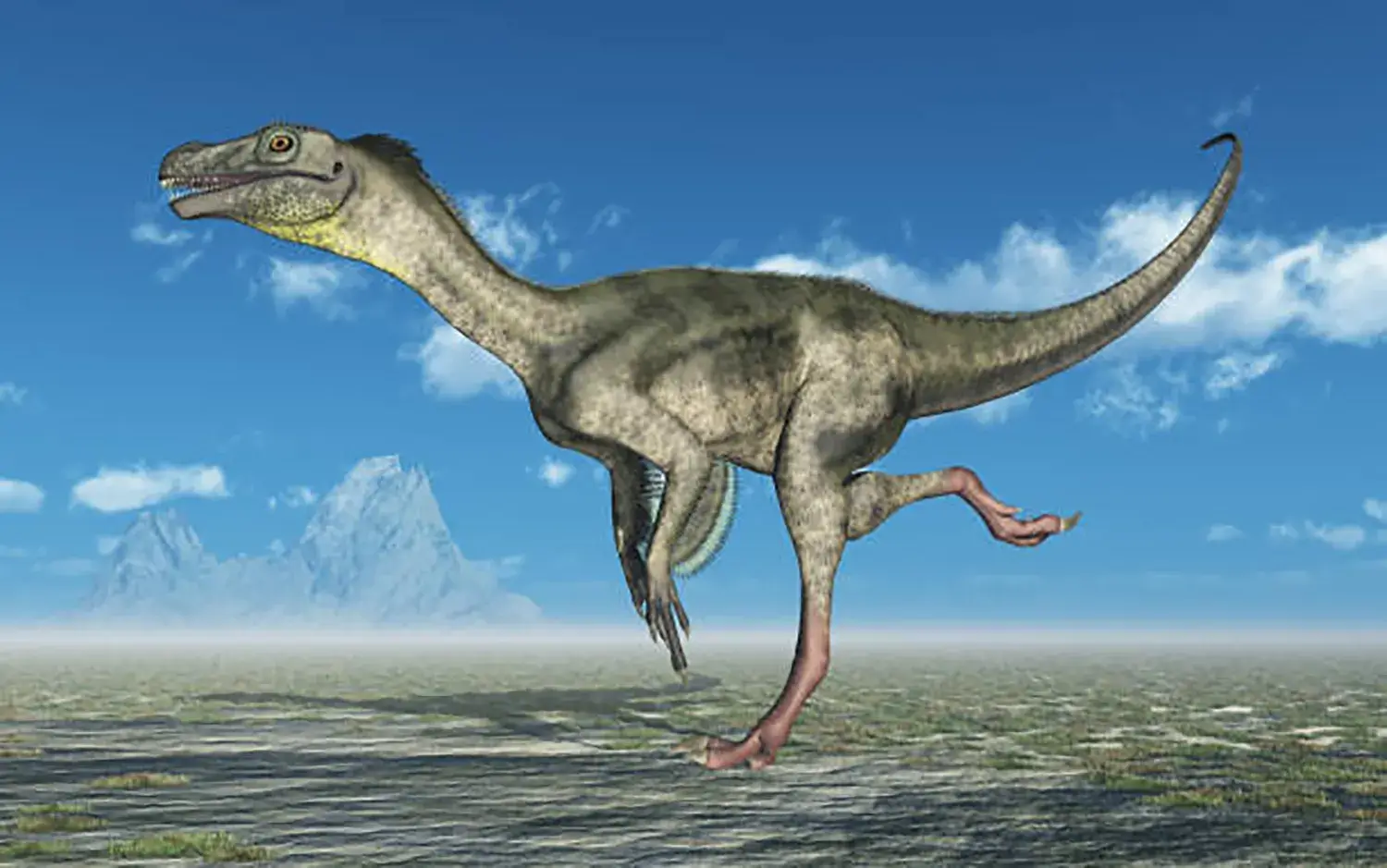

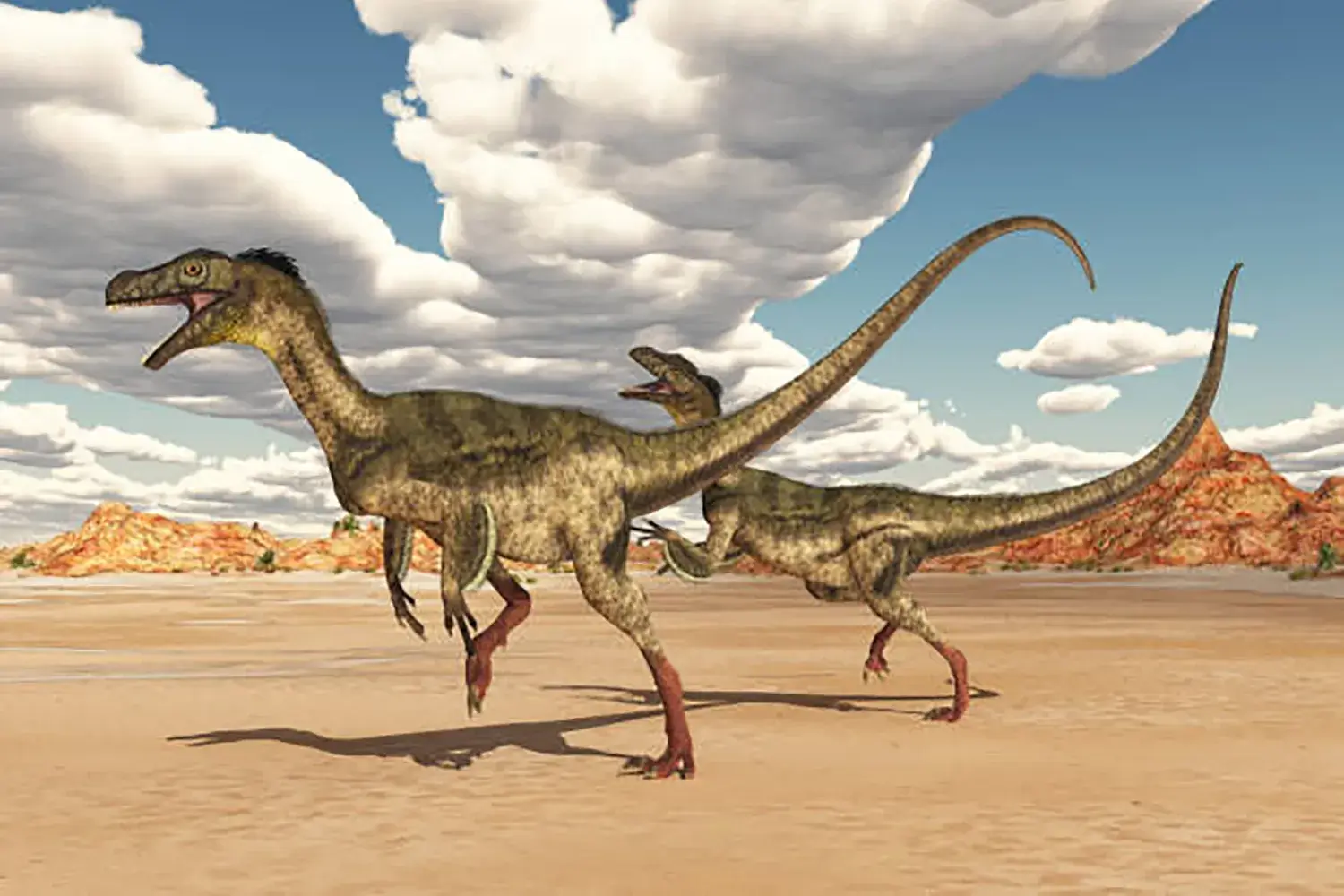
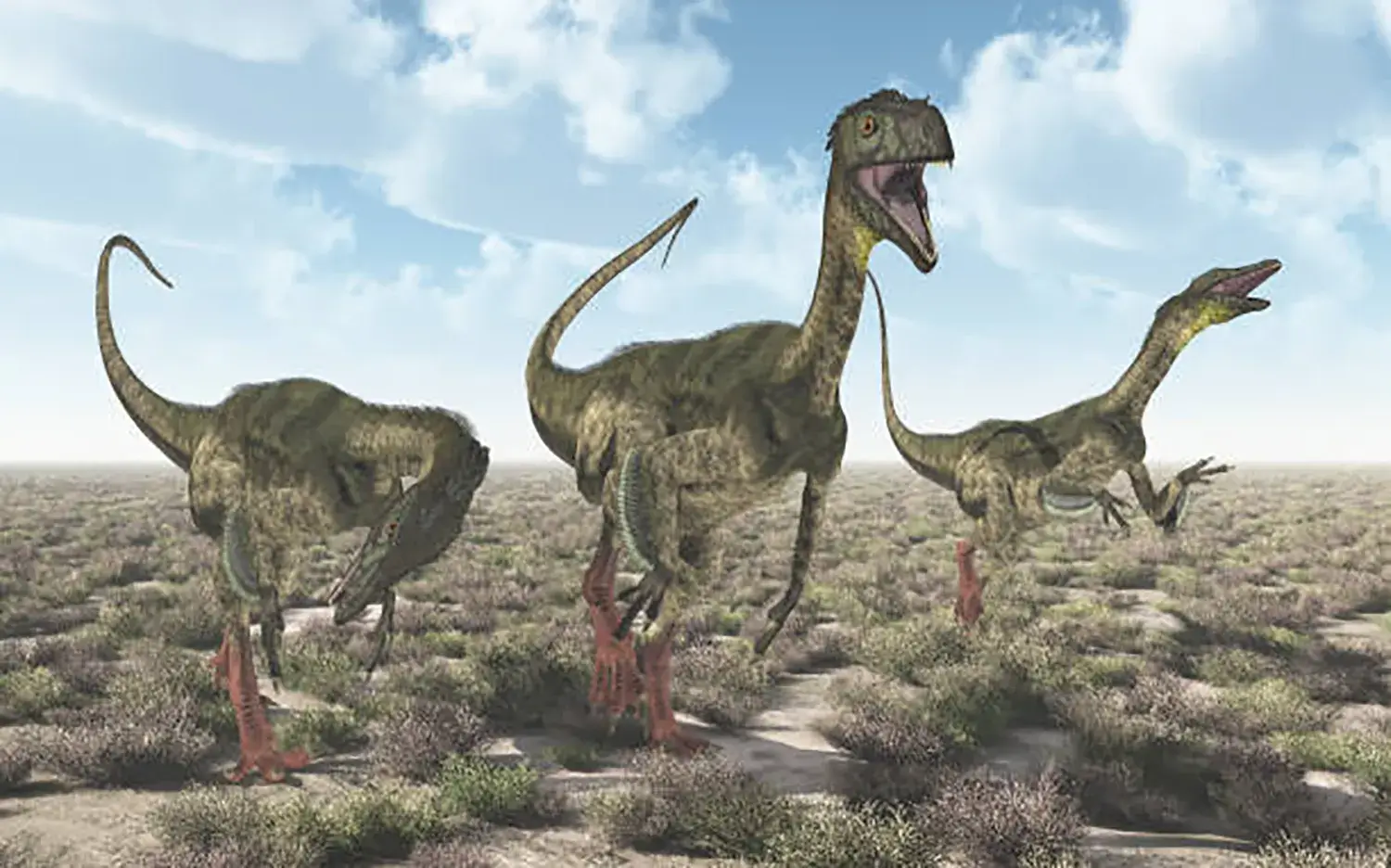

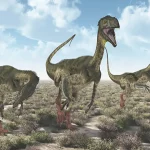
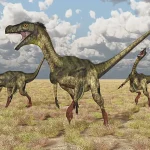
Name Origin
Bird Robber
Family
Coeluridae
Classification
Reptilia, Saurischia, Theropoda
Habitat (Discovery Location)
United States
Period
Approximately 154 million years ago (Late Jurassic)
Length
Approximately 2 meters
Weight
Approximately 12–20 kilograms
Diet
Carnivore (Meat-eater)

You might also like... 

-
 Alwalkeria
- Classification
- Theropods
- Characteristics
- Carnivorous
- Herbivorous
- Omnivorous
- Era
- Triassic period
- Arambourgiania
- Classification
- Flying reptiles
- Era
- Cretaceous period
- Szechuanosaurus
- Classification
- Theropods
- Characteristics
- Carnivorous
- Era
- Jurassic period
- Pachycephalosaurus
- Classification
- Marginocephalia
- Characteristics
- Herbivorous
- Era
- Cretaceous period
-
Sponsored Links
-
Sponsored Links









![[Latest Research] What Was the Function of Spinosaurus's Giant "Sail"? Exploring the Mysteries of Thermoregulation and Underwater Locomotion](https://dinosaurmuseum.jp/wp/wp-content/uploads/eyecatch_spinosaurus-sail-function_en-1024x512.webp)
![[Latest Discovery] A Third Type of Skin, Neither Scales Nor Feathers? Meet "Haolong dongi," a New Dinosaur Species Covered Entirely in Spikes](https://dinosaurmuseum.jp/wp/wp-content/uploads/eyecatch_dinosaur-spiky-skin-discovery_en-1024x512.webp)



Description
In the long history of dinosaur research, there are some dinosaurs that remain shrouded in many mysteries, even more than a century after their discovery.
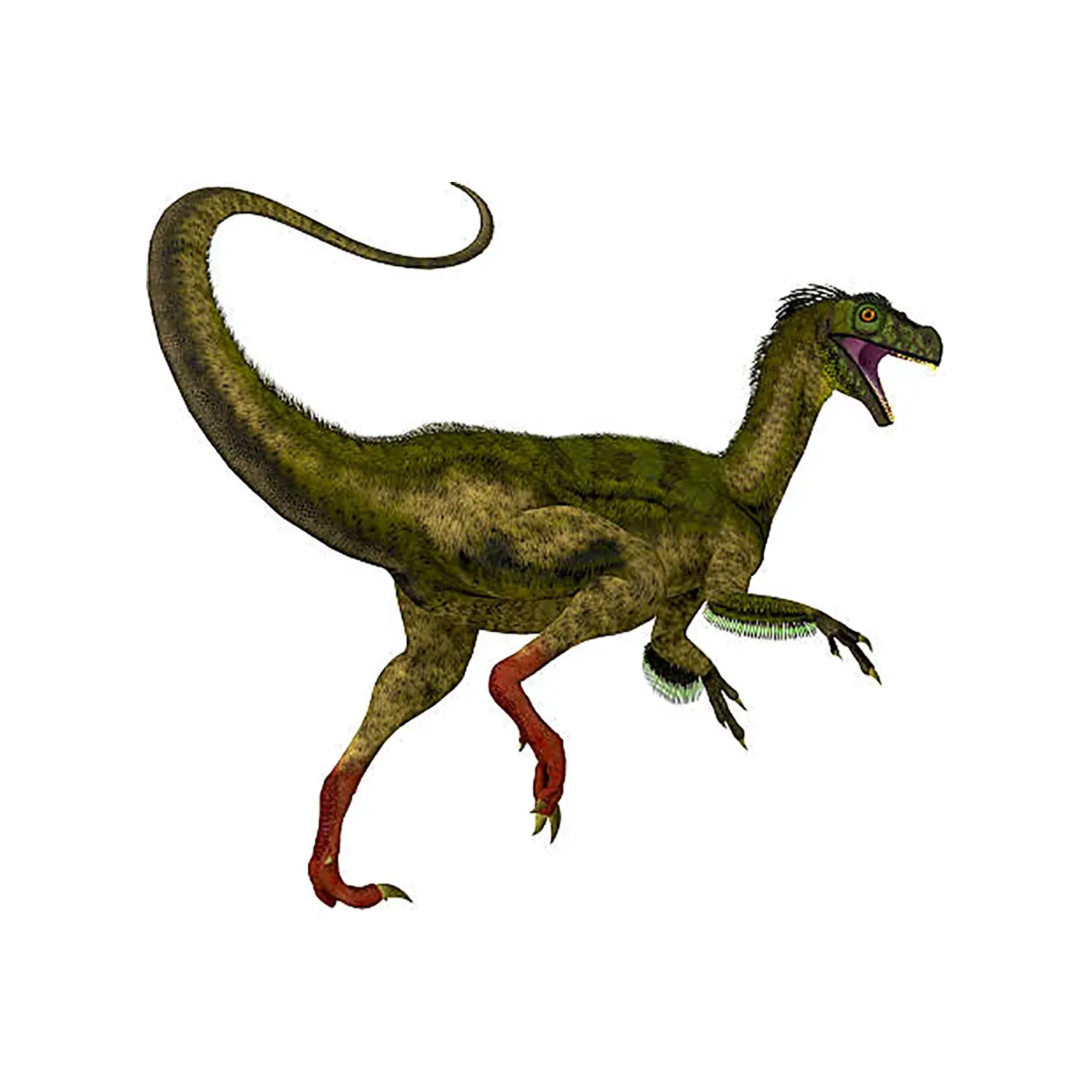
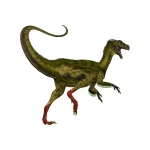
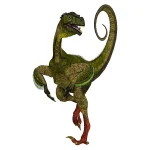
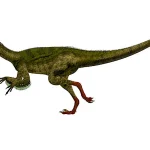
A prime example of this is “Ornitholestes,” a small carnivorous dinosaur that lived in North America during the Late Jurassic period of the Mesozoic Era.
Although this dinosaur, with a length of about 2 meters and a weight of 12–20 kg, is a familiar presence in picture books and museums, its true nature remains wrapped in a thick veil.
This is because, since its discovery in 1900, it has revealed itself to humanity only once (only one fossil has ever been found).
Over 100 Years, Only One Fossil
A Gift from the Morrison Formation
The story of Ornitholestes began in 1900 at the famous “Bone Cabin Quarry” (Morrison Formation) in Wyoming, USA.
The discovered skeletal specimen was preserved in a nearly complete state, including the skull.
Normally, research would progress dramatically with such a find, but there was a major pitfall.
Taxonomic Isolation and “Loneliness”
In fact, other than this first specimen, no definitive fossils of Ornitholestes have been discovered to this day.
It is an anomalous situation that a second specimen has not been found, despite it being discovered in the Morrison Formation, which is one of the most thoroughly surveyed sites in the world.
Because there are no specimens for comparative study, detailed research has been extremely difficult, and even closely related species have not been identified.
The “Bird Robber”: Misconceptions and Truths
Origin of the Scientific Name
The scientific name “Ornitholestes” is a coined word combining the Greek words for “Bird” (Ornis) and “Robber” or “Plunderer” (Lestes), meaning “Bird Robber.”
Debunking the Archaeopteryx Predation Theory
At the time of its naming, it was given this name because its agile body and hands capable of grasping led researchers to speculate that it preyed upon the contemporary Archaeopteryx.
However, subsequent research has refuted this theory.
Ornitholestes is from North America, while Archaeopteryx is from Europe. Since their habitats were geographically far apart, there is no evidence of coexistence.
Today, the name “Bird Robber” is considered a remnant of the romanticized imagination of the scholars of that time.
Physical Abilities Specialized for Hunting
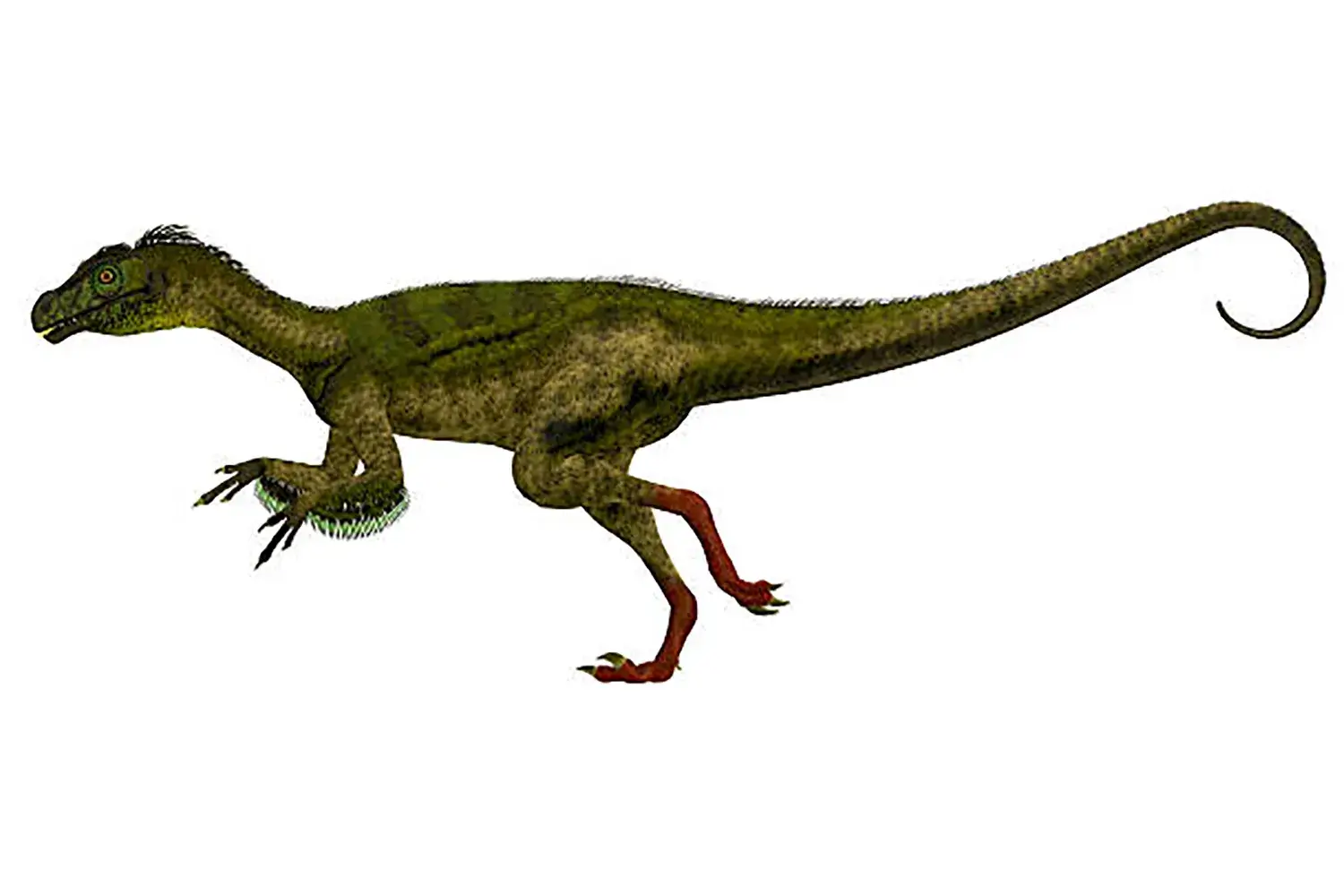
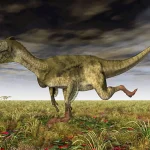
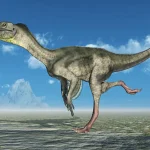
The total length of Ornitholestes was about 2 meters.
However, its body structure shows high-level adaptations for surely bringing down prey.
Dexterous Forelimbs Usable Like “Hands”
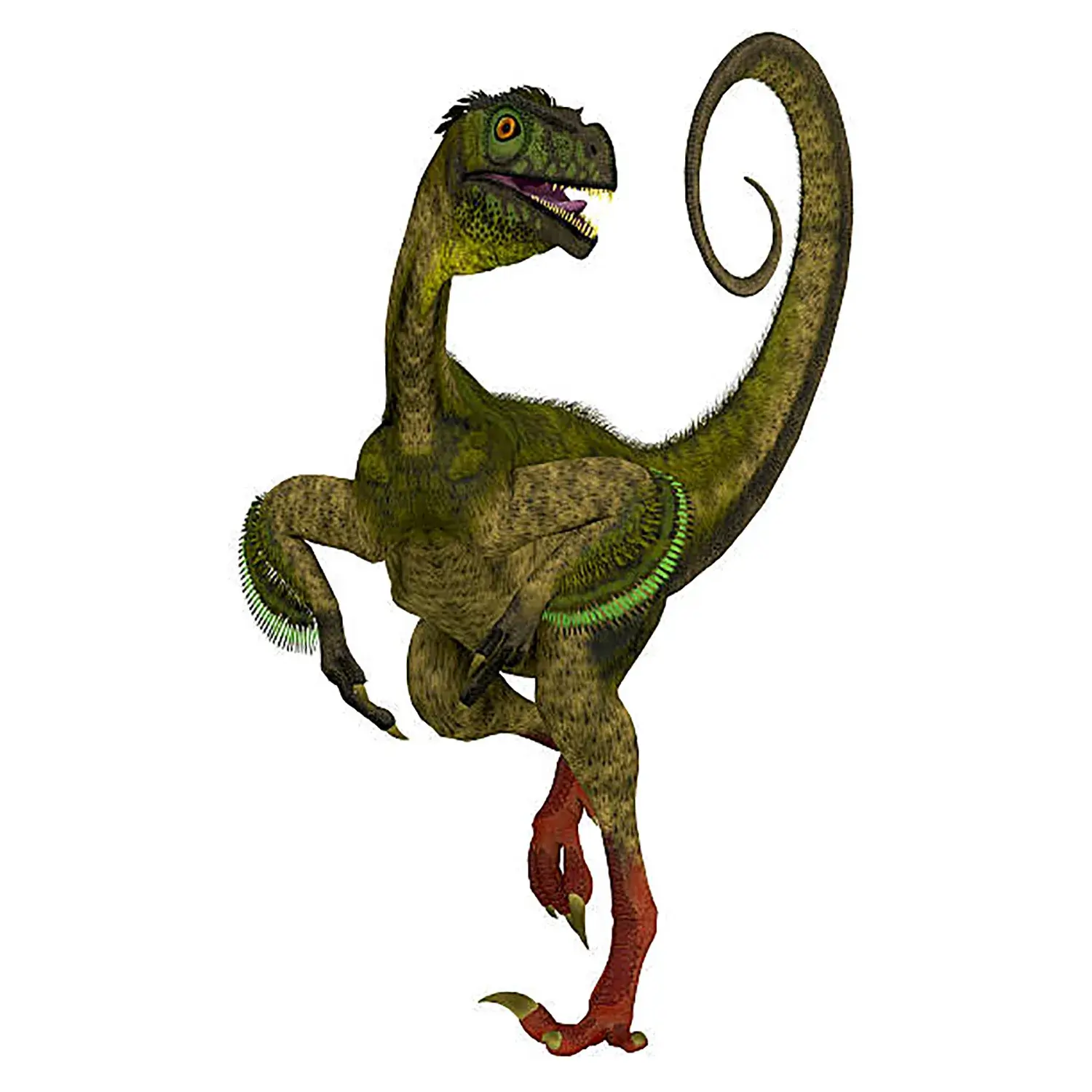
Its arms were well-developed, and the fingers of its forelimbs were long and slender.
The tips of the fingers had sharp claws, and it is believed that “it was possible to grasp somewhat with the three fingers of the hand.”
Utilizing this grip strength, it could easily catch small animals that served as its prey.
A Sturdy Yet Lightweight Body
Its body was muscular and sturdy, but the skull was lightweight, and the long tail acted as a balancer while running.
Its skull was lightweight, and its long tail acted as a balancer while running.
Combining power and speed, they were excellent hunters sprinting through the Jurassic forests.
Possibility of Feathers
Since feathers have been found on closely related coelurosaurs, it is considered highly likely that Ornitholestes also had feathers.
However, no traces have been found on the single existing fossil, so there is no confirmation.
The “Bony Crest”: Misconceptions and Truths
Changing Reconstructions
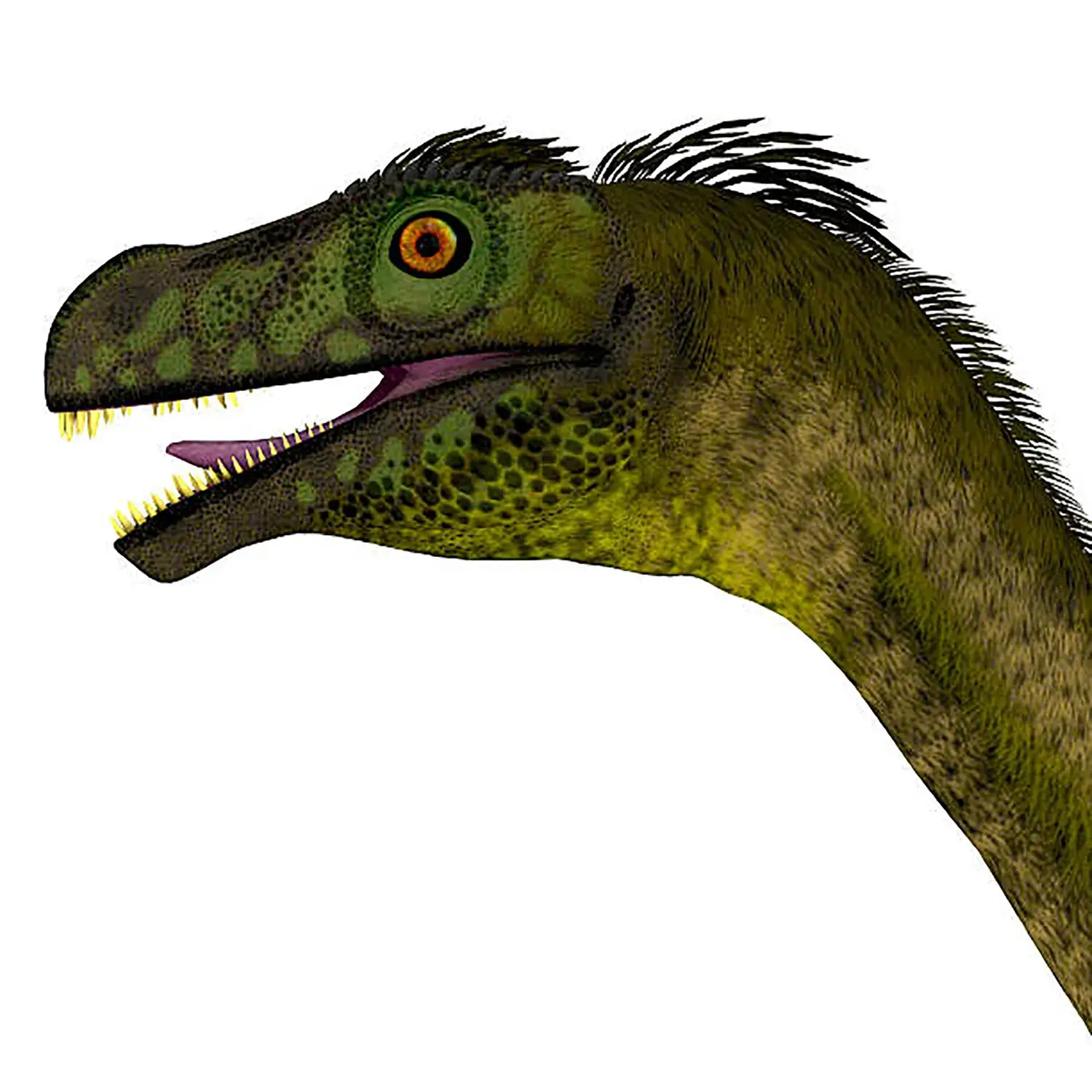
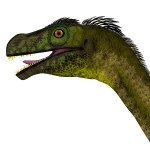
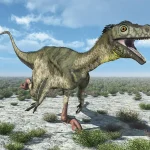
In older picture books, a rhinoceros-like “bony crest” is sometimes depicted on its nose, but it is absent in the latest illustrations.
There is a reason for this.
The Mystery of the Nasal Bone and Current Interpretation
It was once thought to have a bony crest on its nose, but re-examination revealed that it is highly likely that the nasal bone broke and deformed during the fossilization process, leading to a misidentification.
Current academic theory states that “at the very least, there was no crest made of bone.”
Current academic theory states that “at the very least, there was no crest made of bone.”
However, the possibility of a soft tissue crest (made of flesh or skin) has not been ruled out.
Role in the Jurassic Ecosystem
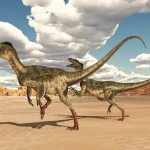
They utilized their vaunted speed to run around forests and plains.
They utilized their vaunted speed to run around forests and plains.
Their main prey was not “birds” as their name suggests, but small animals such as early mammals, insects, and lizards, or the eggs and hatchlings of other dinosaurs.
In the Jurassic world where large dinosaurs like Allosaurus roamed, they seem to have established a unique niche (ecological status) by nimbly catching small prey, thereby avoiding competition.