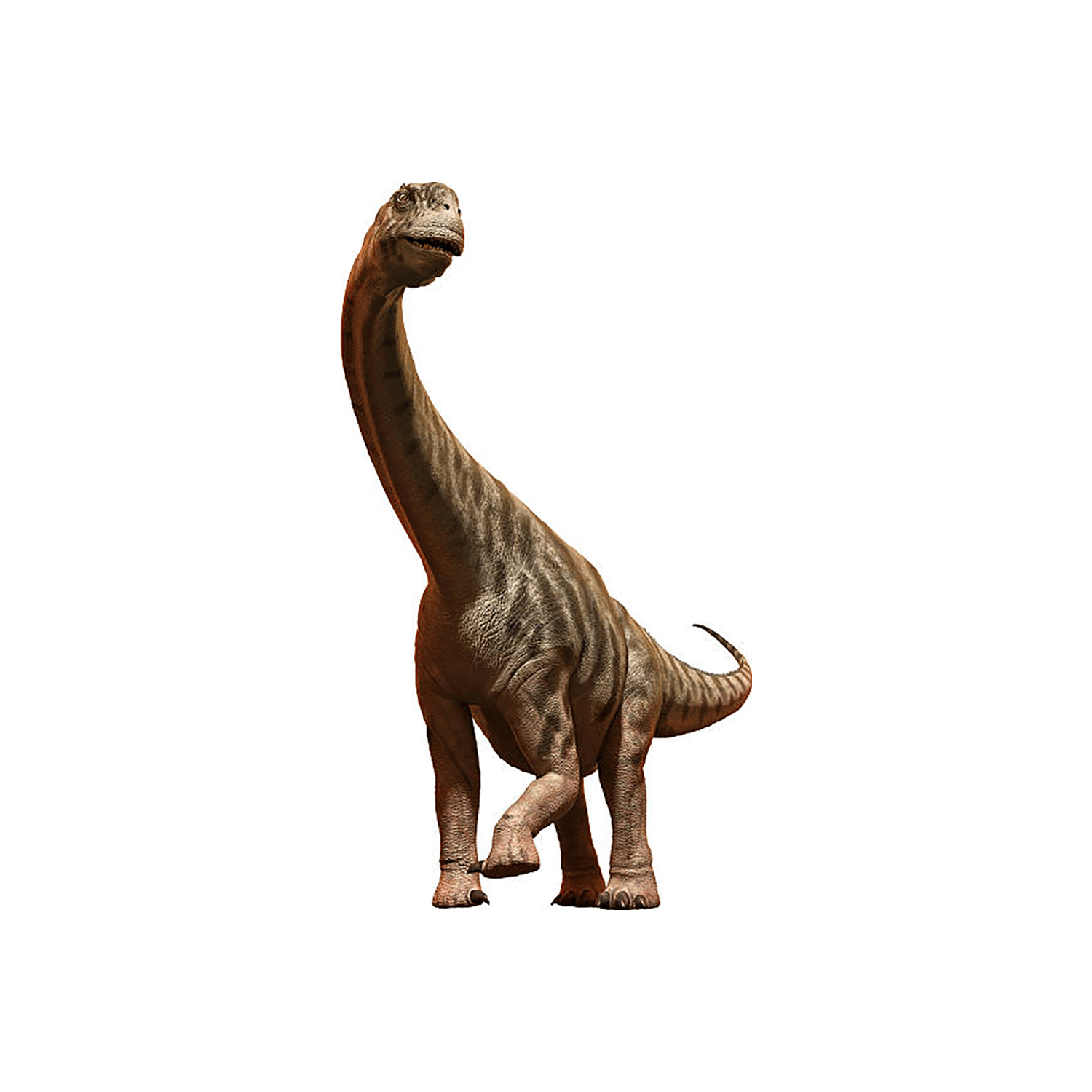
Camarasaurus



Name Origin
Chambered Lizard
Family
Camarasauridae
Classification
Diapsida, Saurischia, Sauropodomorpha
Habitat (Discovery Location)
United States
Period
Approximately 155–145 million years ago (Late Jurassic)
Length
Approximately 9–23 meters
Weight
Approximately 20–30 tons
Diet
Herbivore (Plant-eater)
TODAY'S QUIZ
Correct answer = 1 coin
What shape were the teeth of Camarasaurus?
Loading…
You might also like... 

-
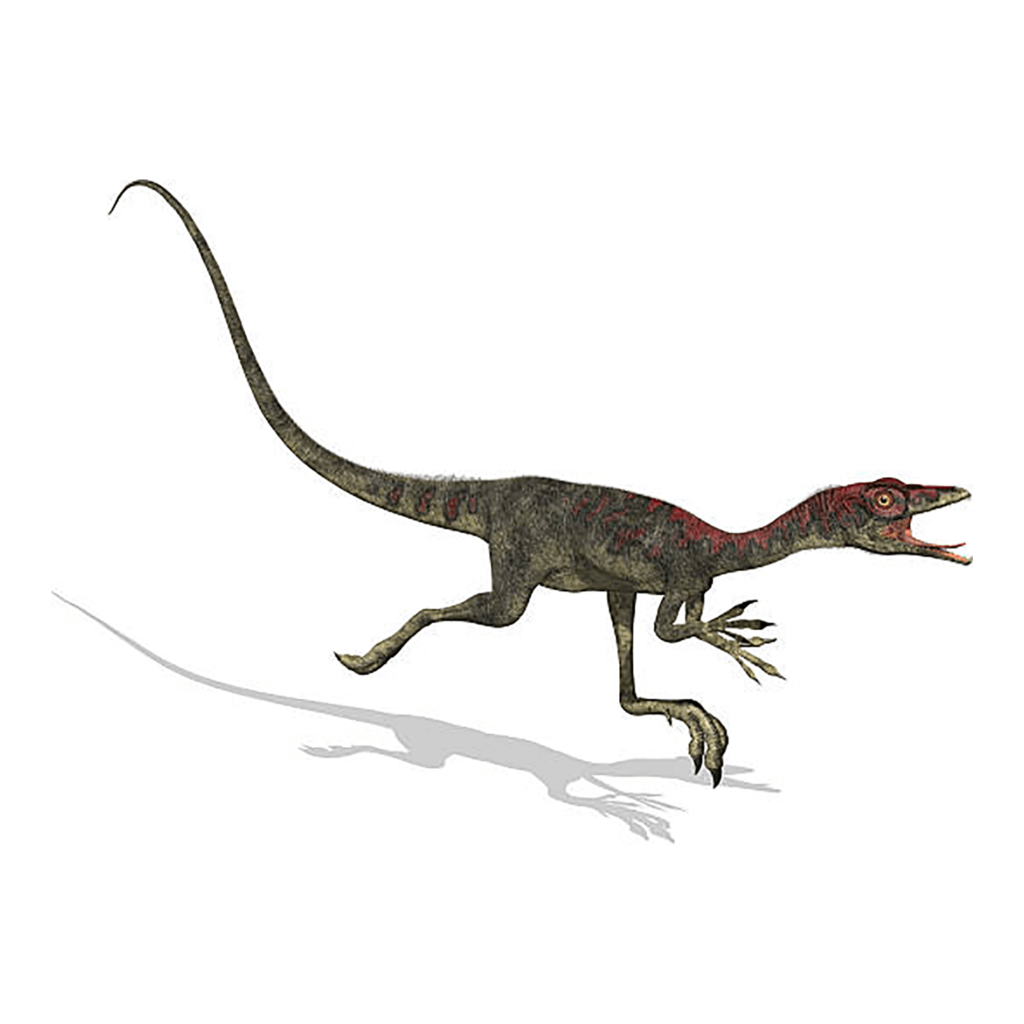
 Compsognathus
- Classification
- Theropods
- Characteristics
- Carnivorous
- Feathered
- Era
- Jurassic period
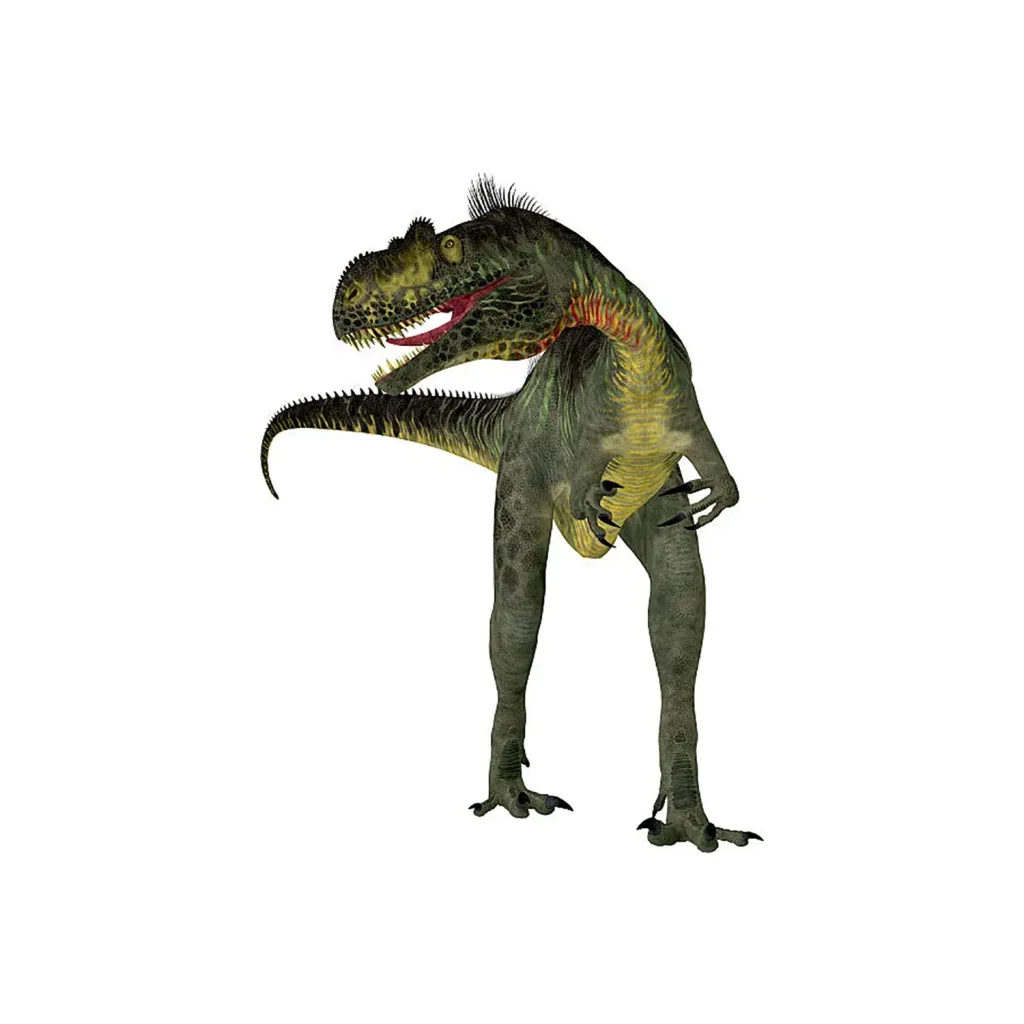
- Megalosaurus
- Classification
- Theropods
- Characteristics
- Carnivorous
- Era
- Jurassic period
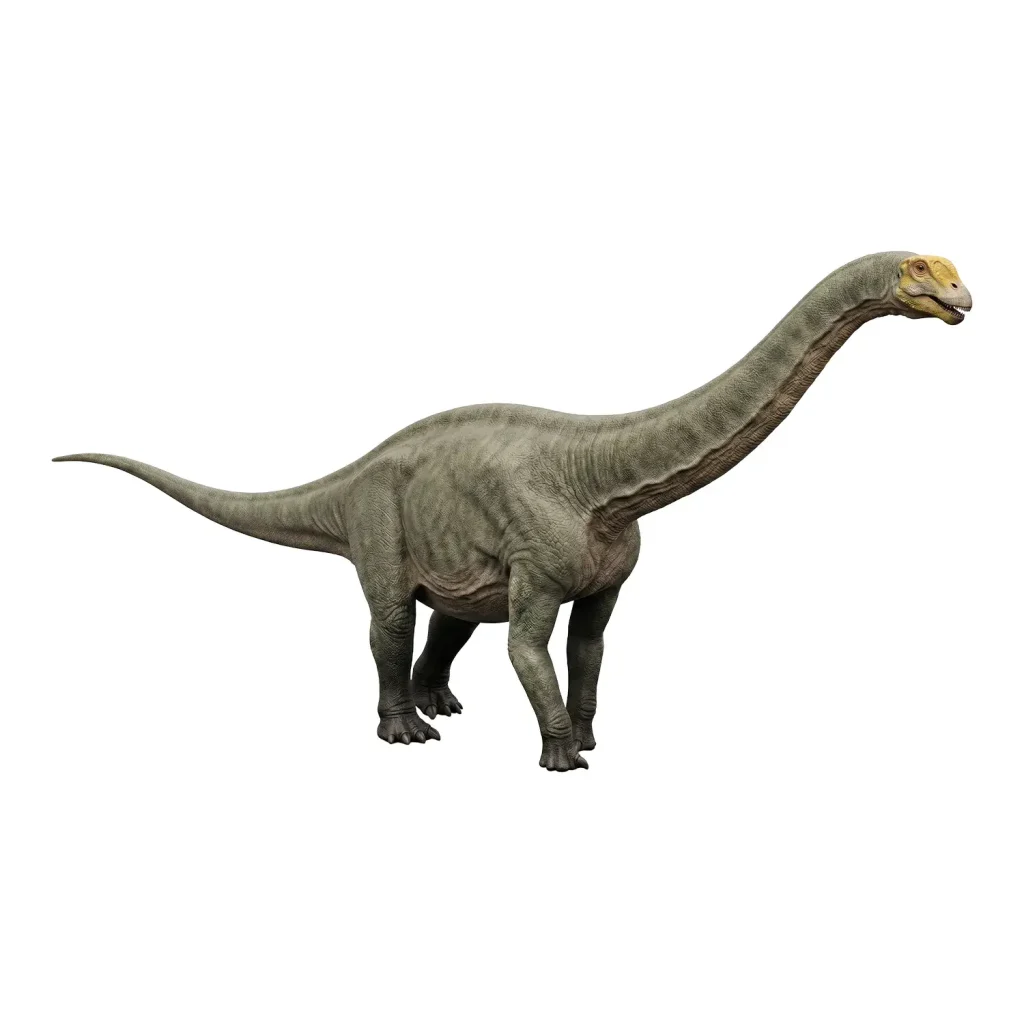
- Euhelopus
- Classification
- Sauropods
- Characteristics
- Herbivorous
- Era
- Cretaceous period
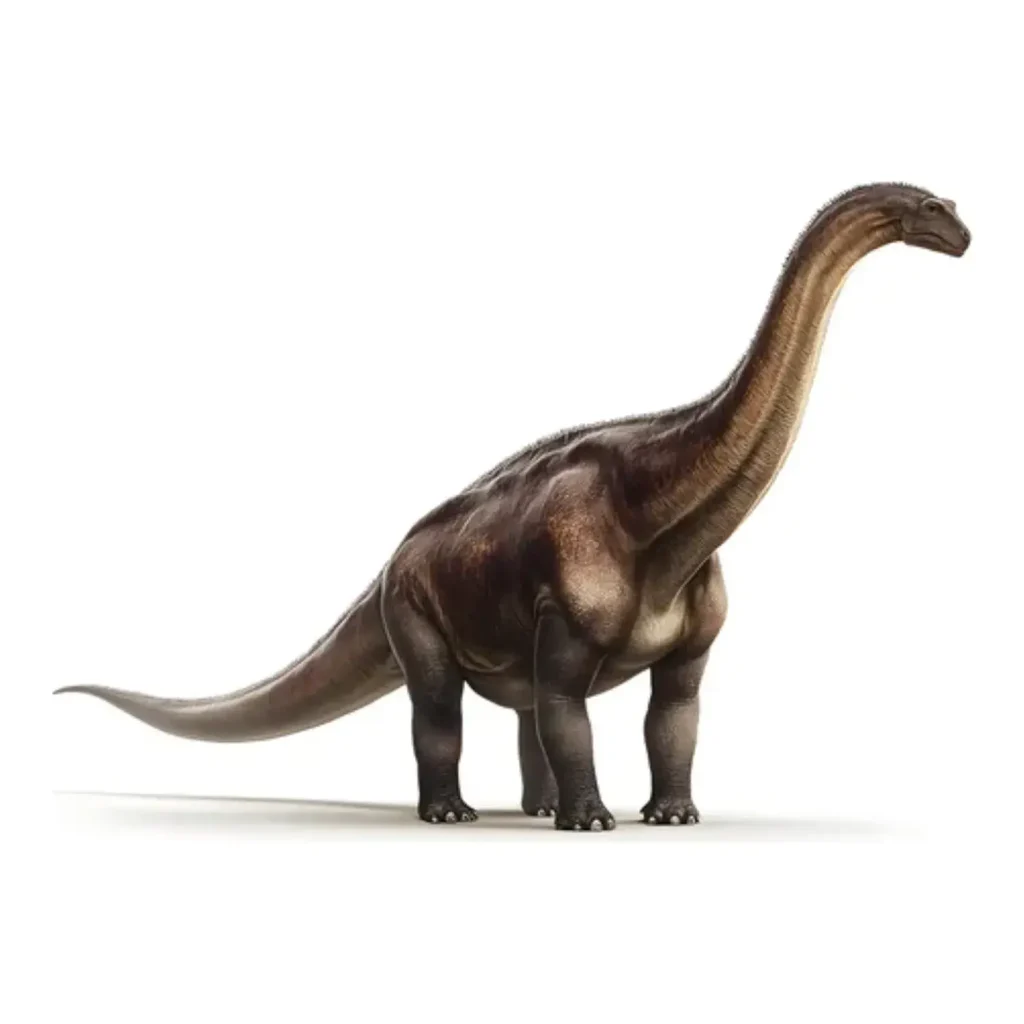
- Patagotitan
- Classification
- Sauropods
- Characteristics
- Herbivorous
- Era
- Cretaceous period
-
Sponsored Links
-
Sponsored Links





![[Latest Research] What Was the Function of Spinosaurus's Giant "Sail"? Exploring the Mysteries of Thermoregulation and Underwater Locomotion](https://dinosaurmuseum.jp/wp/wp-content/uploads/eyecatch_spinosaurus-sail-function_en-1024x512.webp)
![[Latest Discovery] A Third Type of Skin, Neither Scales Nor Feathers? Meet "Haolong dongi," a New Dinosaur Species Covered Entirely in Spikes](https://dinosaurmuseum.jp/wp/wp-content/uploads/eyecatch_dinosaur-spiky-skin-discovery_en-1024x512.webp)


Description
About 150 million years ago, on the North American continent during the Late Jurassic period.
In this “Era of Giants,” where super-giant dinosaurs like Brachiosaurus and Diplodocus roamed, there was actually one sauropod that was the most numerous and prosperous of them all.
Its name is “Camarasaurus.”
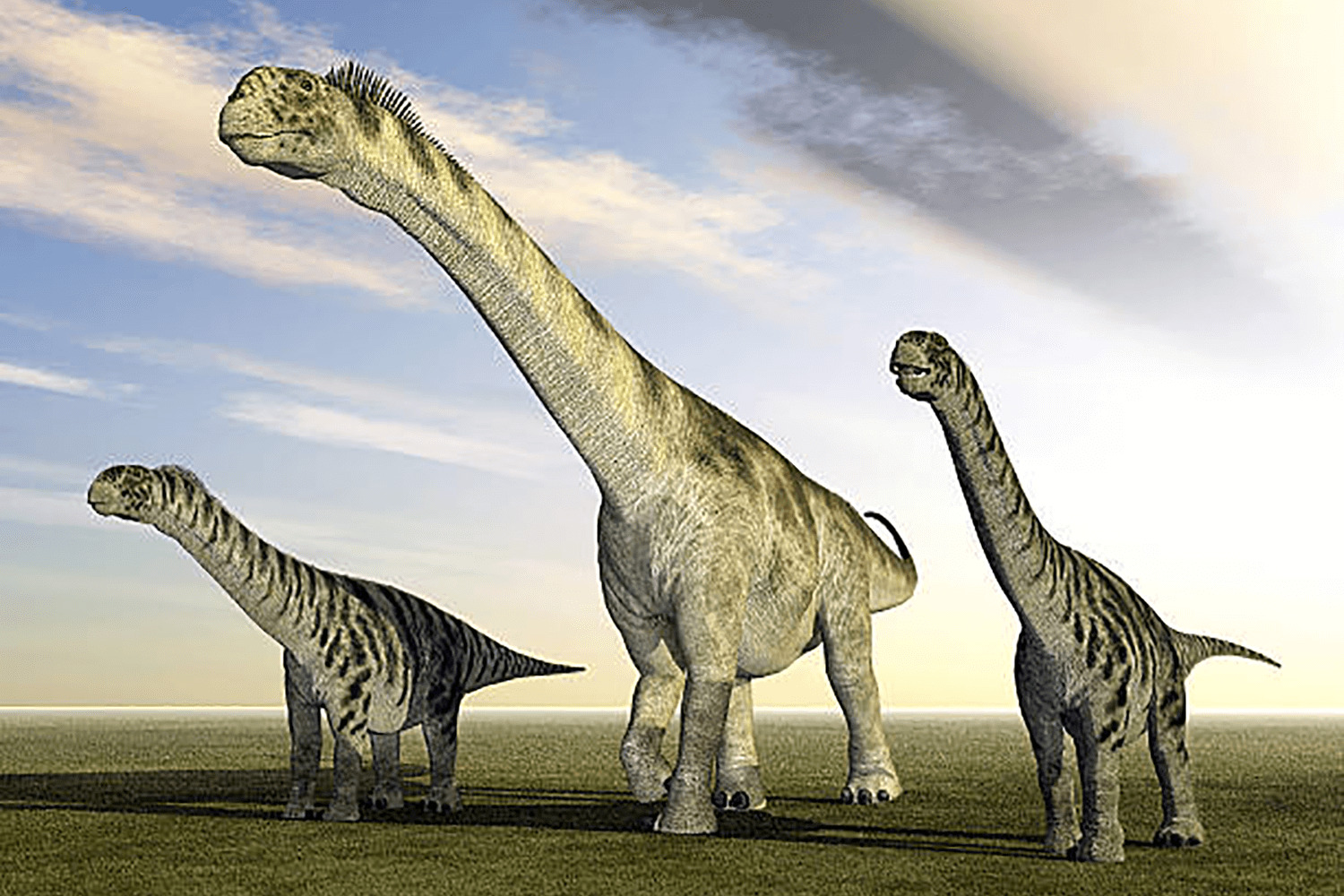
Reaching lengths of 9 to 23 meters and estimated weights of 20 to 30 tons, this dinosaur was one of the most successful species on the American continent.
“Chambered Lizard”: Weight-Reduction Technology and a Giant Nose
Origin of the Scientific Name
The scientific name Camarasaurus is derived from the Greek words “kamara” (chambered or vaulted) and “sauros” (lizard), meaning “Chambered Lizard.”
“Rooms” Inside the Bones
This name comes from the characteristic hollow structures called “pleurocoels” found inside its vertebrae (backbones).
By making the interior of the bones hollow like a honeycomb structure, they minimized weight to the extreme while maintaining strength.
Furthermore, these hollows housed “air sacs” of the respiratory system, serving as an evolutionary solution to efficiently move a body weighing over 20 tons.
The Mysterious “Giant Nostrils”
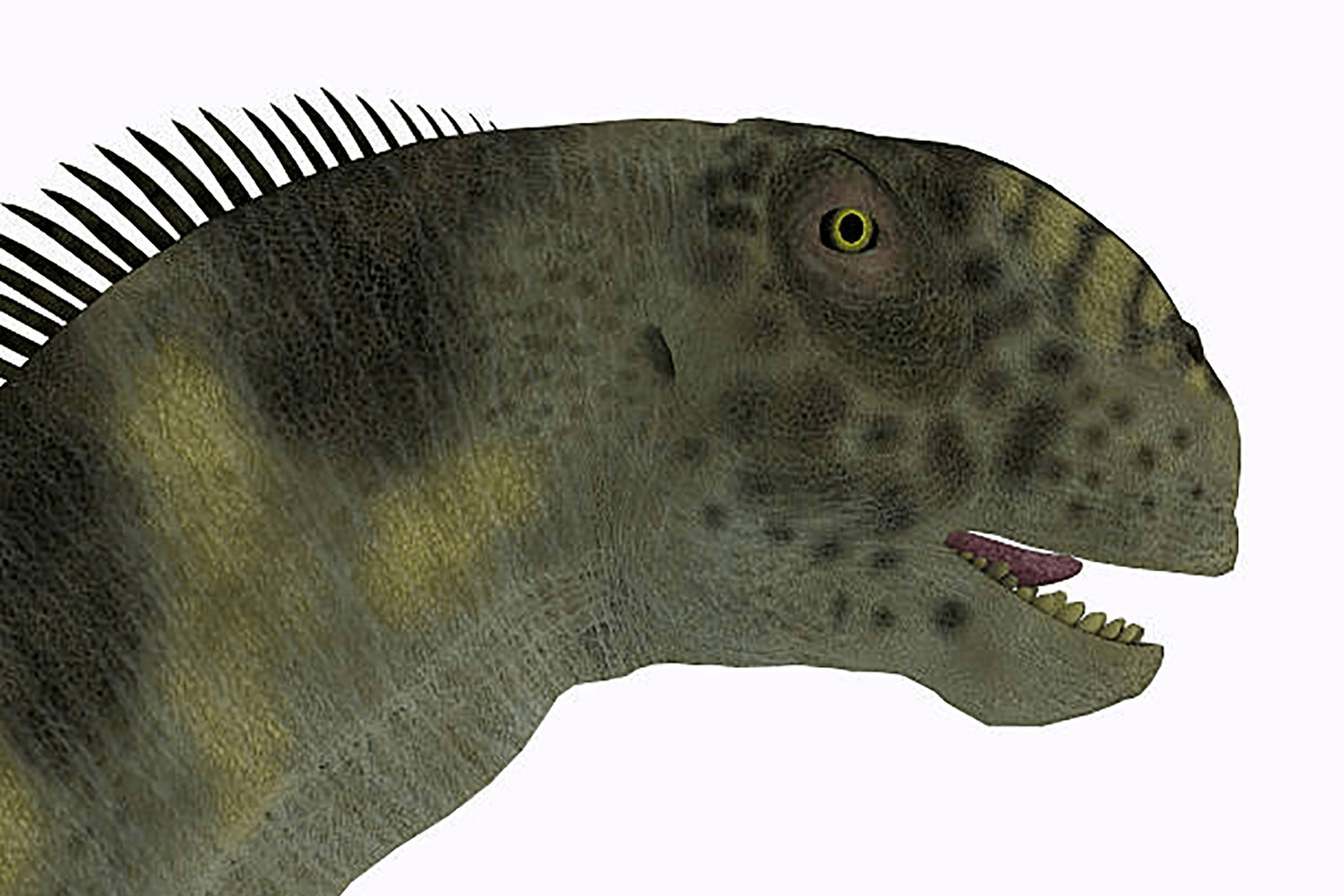
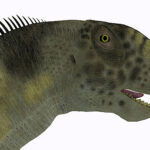
On the top of its head, there were two “giant nasal openings” that occupied a large portion of its face.
There were “giant nasal openings” on the top of the head
While previously thought to be for cooling the brain or for breathing, recent theories suggest they may have played a role in “enhancing the sense of smell.”
They may have evolved these giant noses to search for food and mates across the vast land.
“Small” but Huge? Unique Body Shape and Growth Mystery
Stocky Proportions
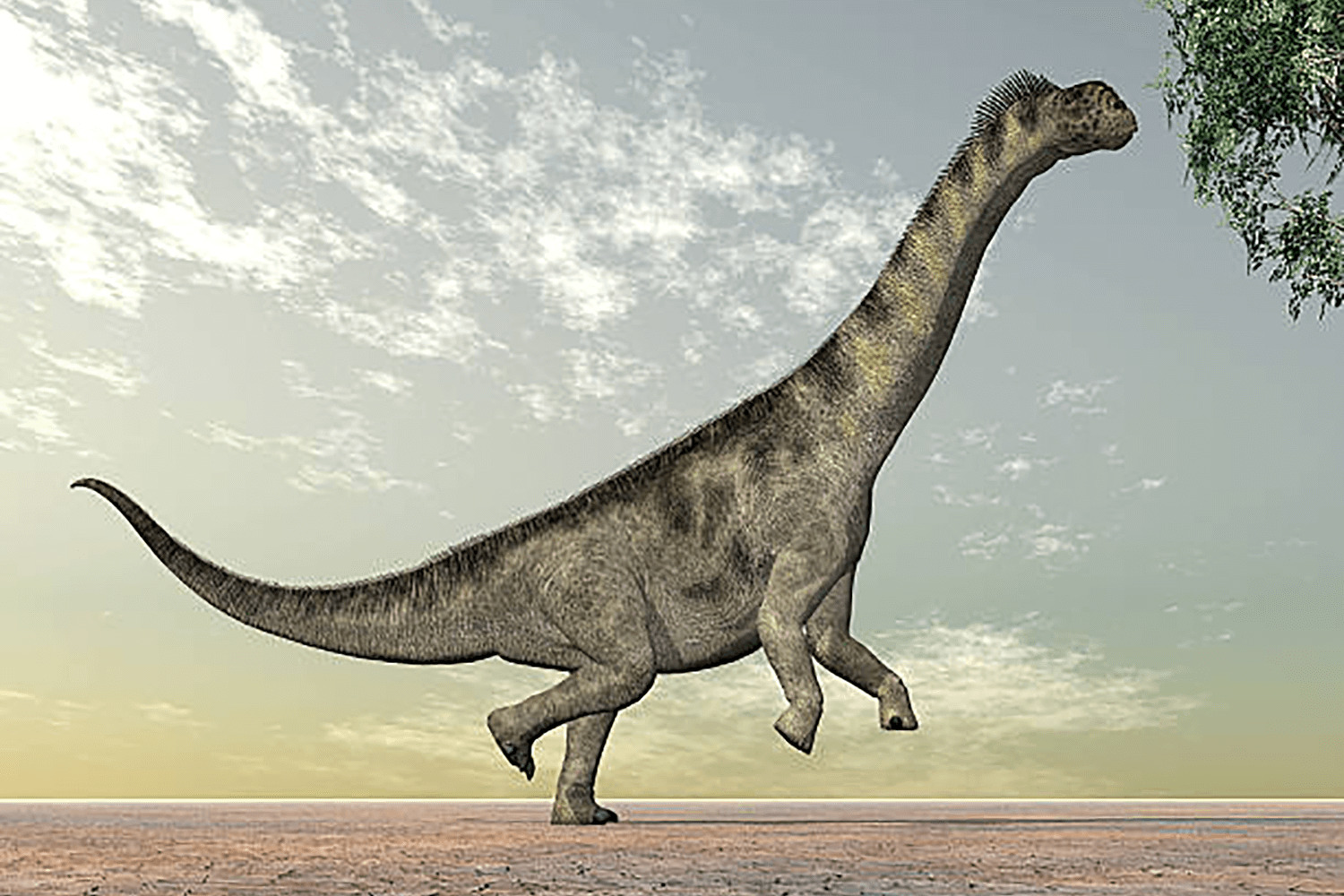
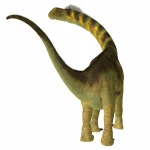
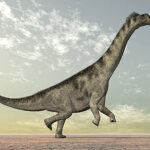
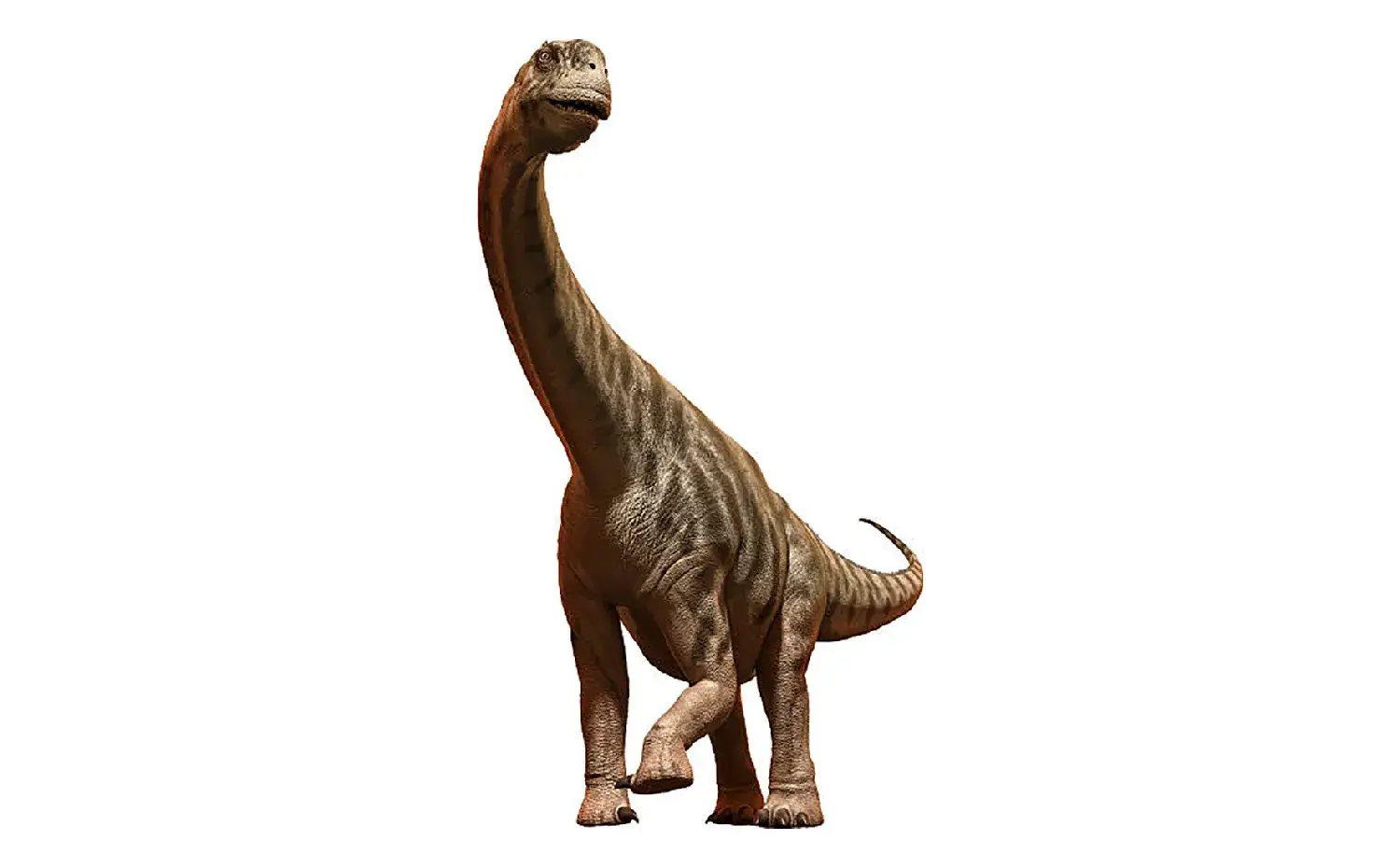
Although they reached a maximum length of 23 meters, they were “small” compared to other super-giant sauropods, characterized by a “stocky” body shape with a relatively short neck and tail.
Characterized by a “stocky” body shape with a relatively short neck and tail
Unlike Brachiosaurus which ate leaves from high places, or Diplodocus which ate ferns from low places, Camarasaurus had a highly “versatile” design suitable for stably eating plants of medium height.
Do Neck Bones Get Thinner as They Grow?
There are strange research results regarding the growth of Camarasaurus.
Normally, bones should become thicker as an animal grows, but it is said that their neck bones “actually became thinner as they grew and the neck lengthened.”
Whether this was the ultimate form of weight reduction or a behavioral change depending on the growth stage remains a subject of debate.
48 “Spoon-shaped Teeth” and a Small Brain
Eating Hard Plants with Sturdy Teeth
Instead of the pencil-like teeth found in other sauropods, about 48 sturdy “spoon-shaped teeth” lined their mouths.
The teeth reached up to 16 cm in length and were replaced in short cycles averaging 62 days.
Thanks to these powerful teeth and a gastrolith (stomach stone) system, they were able to “tear off and swallow whole” even hard, fibrous plants.
Brain Size was 13 cm
On the other hand, relative to a massive body exceeding 9 meters, the brain size was very small, at about 13 cm.
Instead of high intelligence, they survived harsh eras through adaptability to the environment, sociality, and sturdy bodies.
Seasonal Great Migration and Battle with Allosaurus
A 300 km Journey Told by Teeth
In a 2011 study, analysis of oxygen isotopes in Camarasaurus teeth revealed that they undertook “seasonal migrations of about 300 km back and forth between highlands and lowlands.”
They secured food even in harsh environments by moving to the mountains during the dry season and to the plains during the rainy season.
Offense and Defense with Predators
At that time, Allosaurus reigned at the top of the ecosystem.
In fact, tooth marks from Allosaurus have been found on Camarasaurus pelvic fossils.
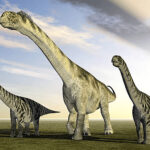
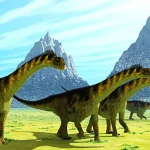
It is believed they fought back using their massive bodies, sharp claws, and powerful tails as weapons, and also increased their defensive capabilities by living in herds.
They increased their defensive capabilities by living in herds
Discovery Over 100 Years Ago and “Real” Fossils
The history of the discovery of Camarasaurus dates back to the “Bone Wars” era of the 19th century.
The namer was Edward Drinker Cope, but traces of fierce competition remain, such as his rival Marsh describing it as “Morosaurus.”
Camarasaurus fossils are well-preserved, and there are full skeletal mounts in museums that use “real fossil bones” rather than replicas.
The distortions and deformations seen in the real fossils convey the weight of the long time span of 150 million years to us today.