
Noasaurus
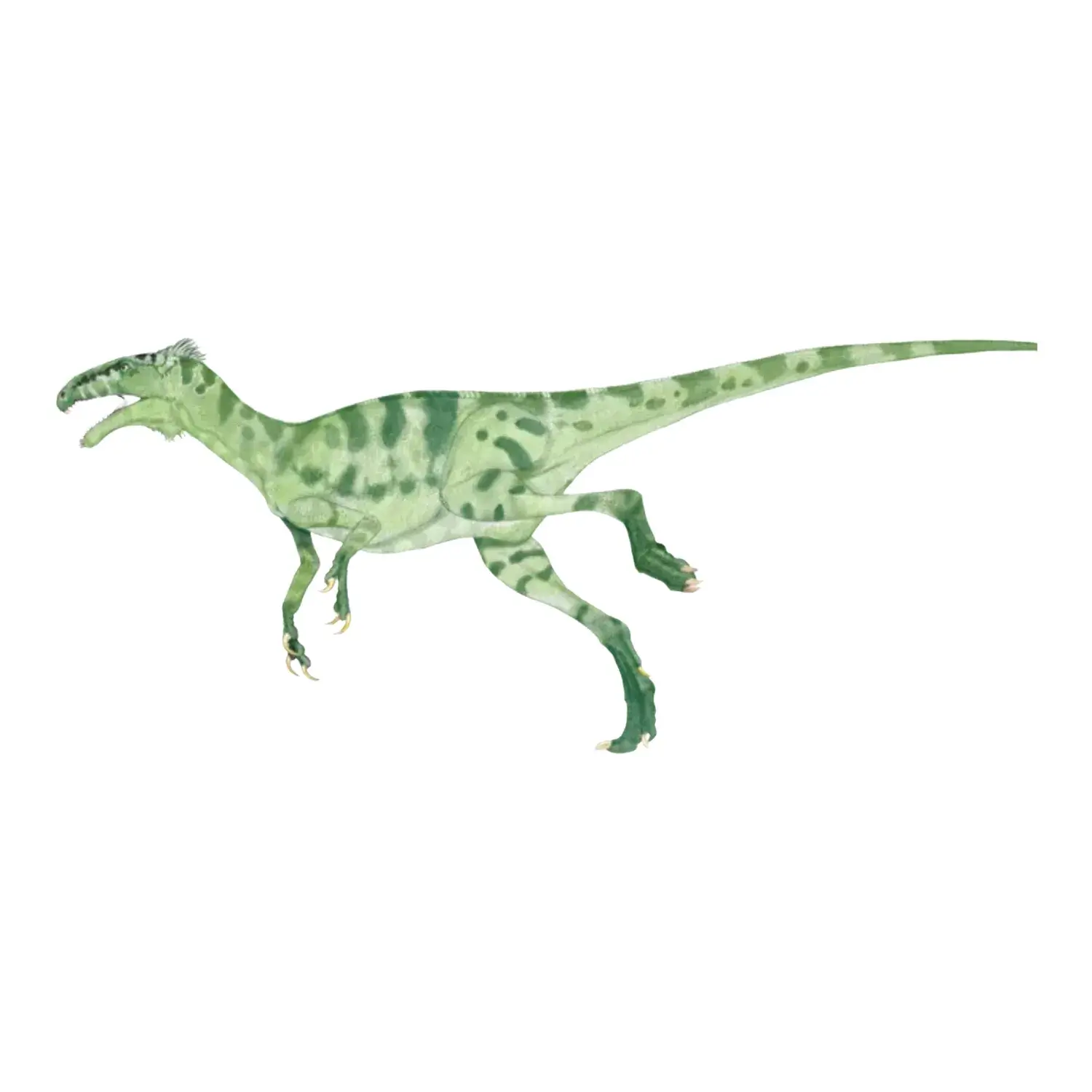
Name Origin
Lizard of Northwestern Argentina
Family
Noasauridae
Classification
Diapsida, Saurischia, Theropoda
Habitat (Discovery Location)
Argentina
Period
Approximately 70 million years ago (Late Cretaceous)
Length
Approximately 1.5–1.8 meters
Weight
Approximately 15 kg
Diet
Carnivore (Meat-eater)
You might also like... 

-
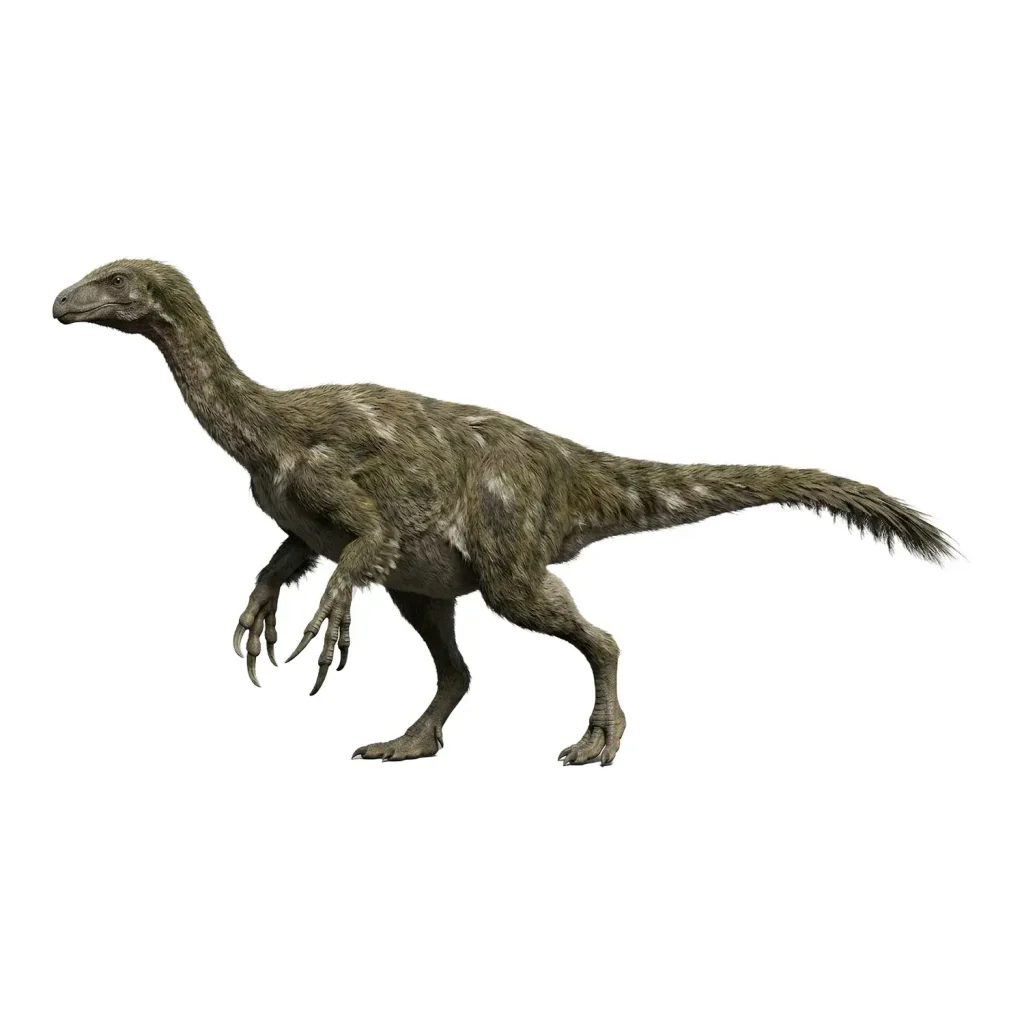
 Jianchangosaurus
- Classification
- Theropods
- Characteristics
- Herbivorous
- Feathered
- Era
- Cretaceous period
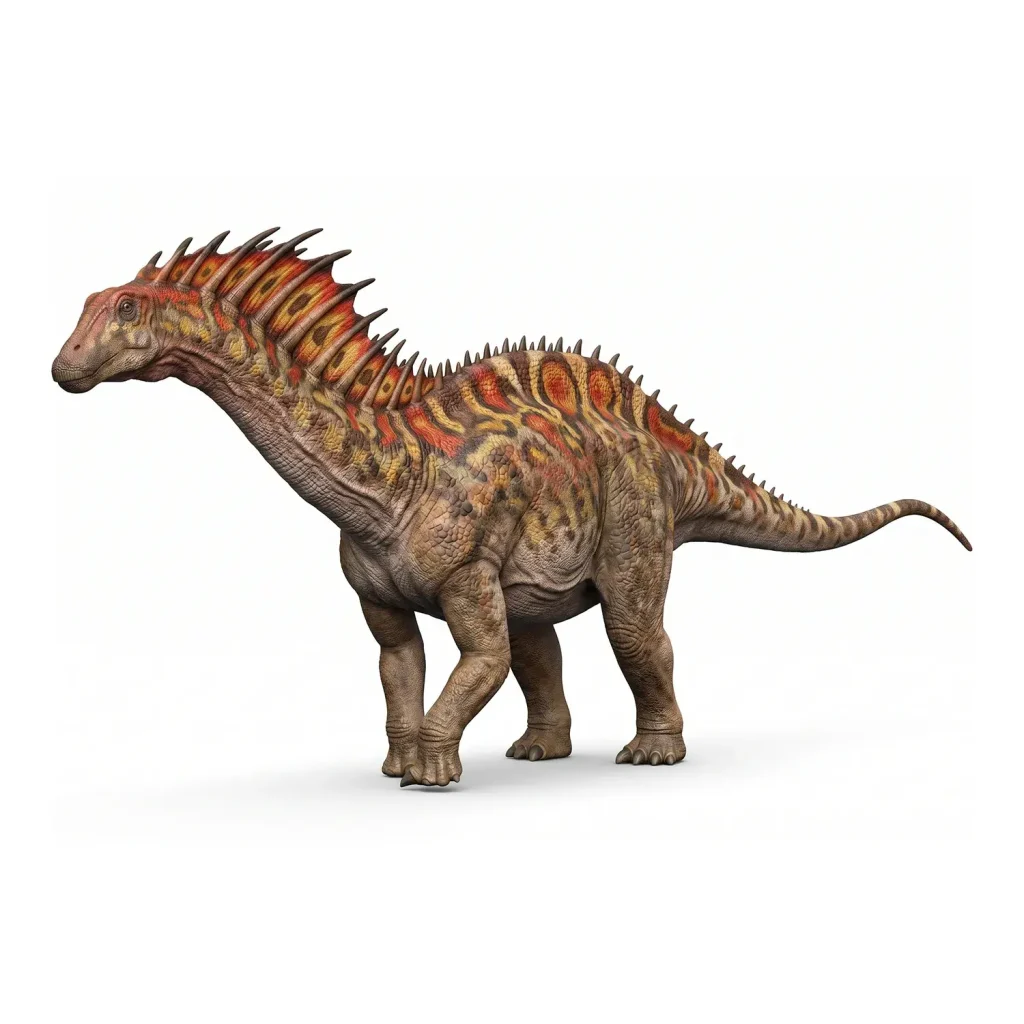
- Amargasaurus
- Classification
- Sauropods
- Characteristics
- Herbivorous
- Era
- Cretaceous period
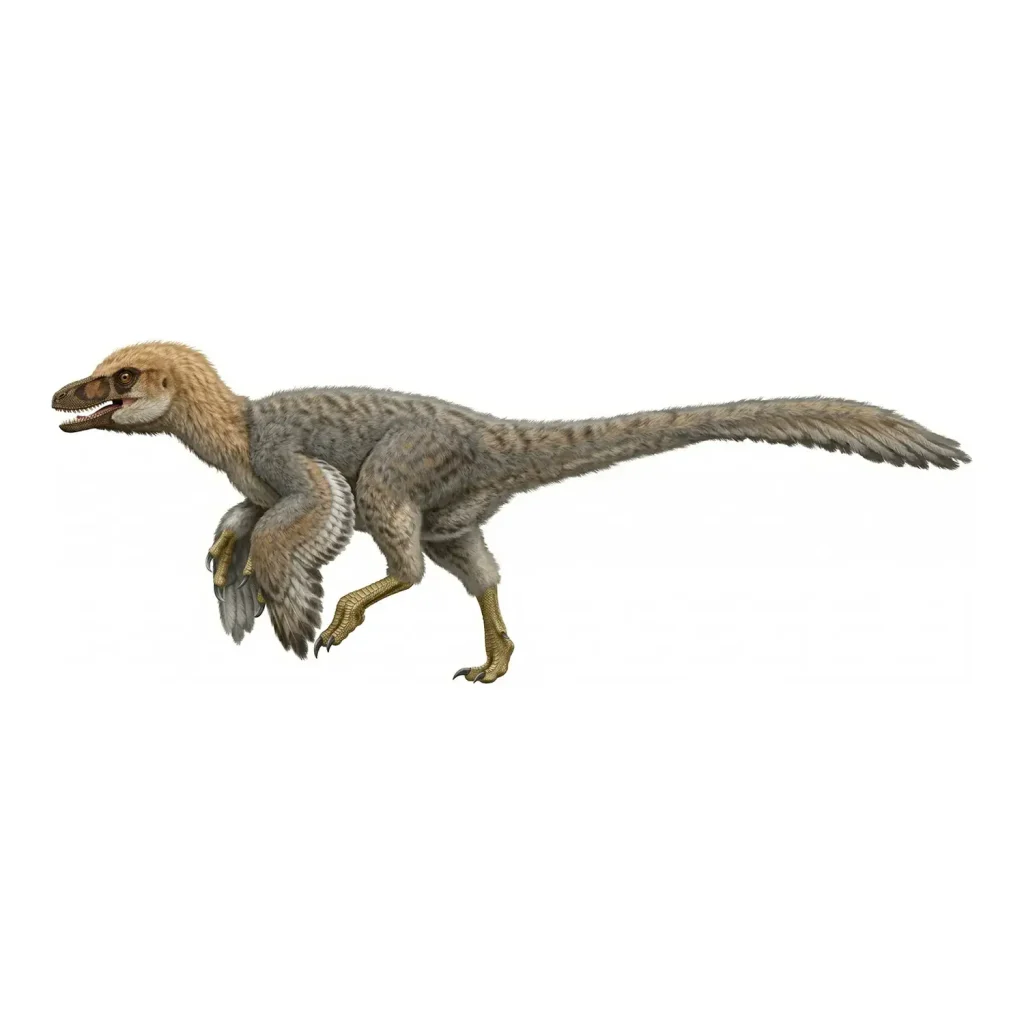
- Imperobator
- Classification
- Theropods
- Characteristics
- Carnivorous
- Era
- Cretaceous period
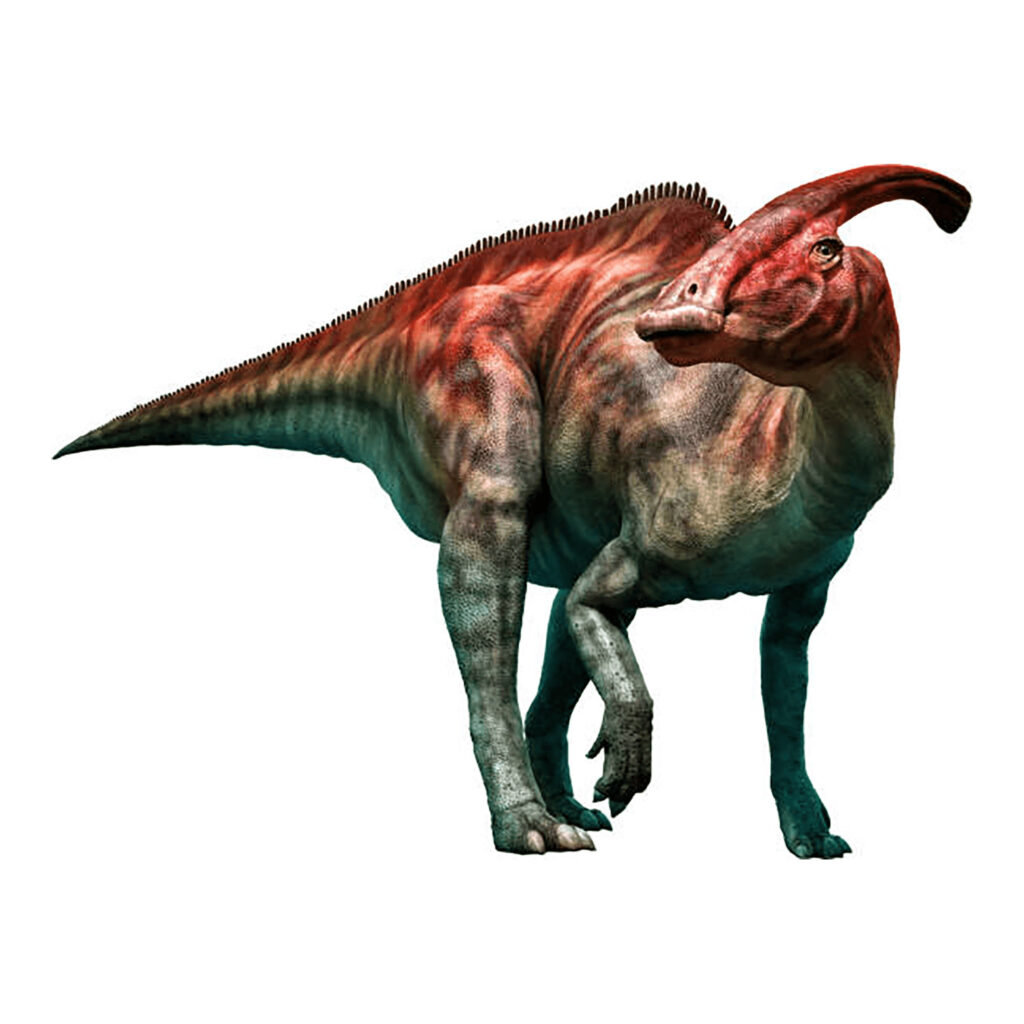
- Parasaurolophus
- Classification
- Ornithopoda
- Characteristics
- Herbivorous
- Era
- Cretaceous period
-
Sponsored Links
-
Sponsored Links




![[Latest Research] What Was the Function of Spinosaurus's Giant "Sail"? Exploring the Mysteries of Thermoregulation and Underwater Locomotion](https://dinosaurmuseum.jp/wp/wp-content/uploads/eyecatch_spinosaurus-sail-function_en-1024x512.webp)
![[Latest Discovery] A Third Type of Skin, Neither Scales Nor Feathers? Meet "Haolong dongi," a New Dinosaur Species Covered Entirely in Spikes](https://dinosaurmuseum.jp/wp/wp-content/uploads/eyecatch_dinosaur-spiky-skin-discovery_en-1024x512.webp)

Description
Argentina during the Late Cretaceous period.
In a corner of the South American continent where giant dinosaurs roamed, lived a very small carnivorous dinosaur measuring only about 1.5 meters in length.
That dinosaur’s name is “Noasaurus.”
At first glance, it appears to be a common small theropod. However, when it was first discovered, due to a specific feature, it was confused with the raptors (Dromaeosauridae) of the Northern Hemisphere and attracted attention as an example of the wonders of evolution.
Not “Noah’s Ark”? The Origin of the Name
At first glance, the scientific name Noasaurus might seem related to the biblical “Noah’s Ark,” but in fact, there is no connection at all.
Northwestern Argentina (NOA)
The name is derived from the location where the fossils were discovered: “Northwestern Argentina.”
It was named by taking the initials (NOA) of the Spanish term “Noroeste Argentina” and combining it with “saurus,” meaning lizard.
In other words, it literally translates to “Lizard of Northwestern Argentina.”
The Mystery of the “Claw” That Baffled Paleontologists
Essential to the story of Noasaurus is the episode surrounding the fossil of a certain “sharp claw.”
Interpretations of where this claw was attached to the body caused reconstructions of this dinosaur to change dramatically.
Former Theory: A Southern Hemisphere Raptor?
When described by Jaime Powell and José Bonaparte in 1980, the discovered sickle-like sharp claw was thought to be attached to the “second toe of the hind limb.”
“Sickle-shaped claws on the hind limbs” are synonymous with the Dromaeosauridae (such as Deinonychus and Velociraptor) of the Northern Hemisphere.
However, the skeleton of Noasaurus was closer to Abelisauroids, indicating a completely different lineage.
Therefore, it was thought that “since there were no raptors in the Southern Hemisphere, they evolved foot claws independently,” and for a long time, it was treated as a “Southern Hemisphere raptor lookalike.”
Latest Theory: The Claw Was on the “Hand”
However, recent research has significantly overturned this established theory.
It was revealed that the claw, once thought to be on the hind limb, was actually attached to the “forelimb (hand).”
This debunked the image of a “dinosaur that slashes with foot claws like a raptor.”
It is now speculated to have resembled its close relative from Madagascar, “Masiakasaurus.”
Classification and Physical Characteristics
Small Abelisauroids
Noasaurus belongs to the primitive “Ceratosauria” within the theropods and is classified into its own unique group, the “Noasauridae.”
Structures such as its spine closely resemble those of the large South American carnivorous dinosaur “Abelisaurus.”
Lightweight and Slender Body
Its total length was approximately 1.5 to 1.8 meters.
Unlike Abelisaurus, which had a massive head, Noasaurus had a very lightweight and slender build.
Ecology and Diet: A Hunter Targeting Small Animals
It was carnivorous and is believed to have lived by hunting.
However, due to its small size, it did not attack large dinosaurs like Tyrannosaurus.
Main Prey
Birds, lizards, juveniles (children) of other dinosaurs, etc.
Hunting Method
It is believed to have used the sharp claws on its forelimbs (hands) to catch or pin down agile small animals.
History of Discovery
Noasaurus fossils were discovered in Late Cretaceous strata in northwestern Argentina.
Following its description in 1980, and after the surprising re-evaluation that what was believed to be a foot claw was actually a hand claw, it has reclaimed its true identity as a “uniquely evolved small Abelisauroid.”