The Jurassic Period: The Golden Age of Giant Dinosaurs! The Breakup of Pangea and the Low-Oxygen Environment Explained
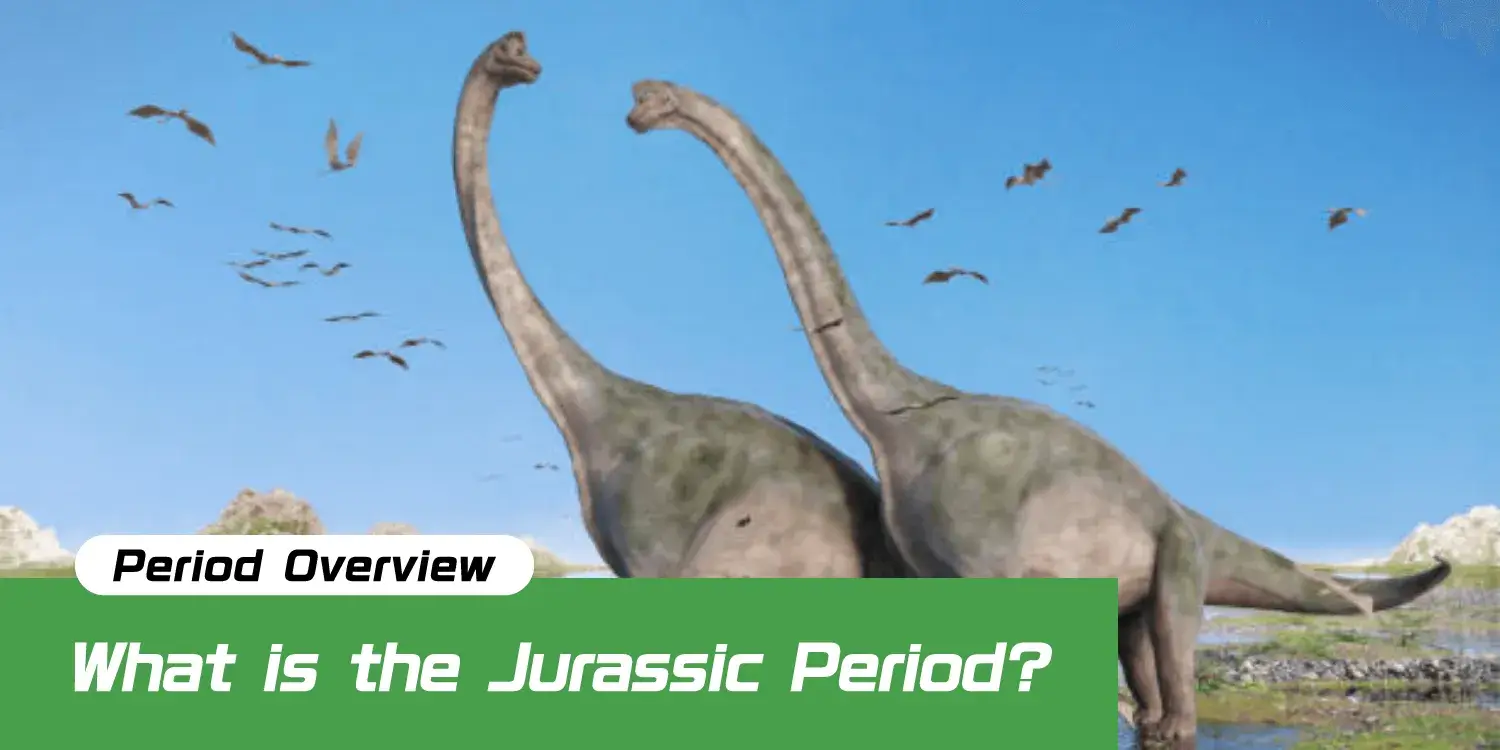
Famous for the title of the movie “Jurassic Park,” the “Jurassic Period.”
Referring to the span from approximately 199.6 million to 145.5 million years ago, this era sits between the Triassic Period and the Cretaceous Period, marking the “Golden Age” when dinosaurs reigned as the rulers of the Earth.
Following the mass extinction at the end of the Triassic Period, and with the disappearance of rivals (such as crurotarsans), dinosaurs underwent explosive evolution.
In this article, we explain the full scope of the Jurassic Period, covering the breakup of continents, the surprisingly low-oxygen environment, and the emergence of giant dinosaurs like Brachiosaurus as well as the birth of birds.
Earth’s Environment in the Jurassic: Continental Drift and “Low Oxygen”
The Earth during the Jurassic possessed a map and atmospheric environment completely different from today.
The Breakup of Pangea
At the beginning of the era, the supercontinent “Pangea” existed, but it began to split as the Jurassic commenced.
It divided into “Laurasia” in the north and “Gondwana” in the south, creating a sea between them.
This geographical isolation encouraged unique evolution among dinosaurs in each region, sparking diversity.
Warm, Humid Climate and Expanding Forests
In a complete turnaround from the dry climate of the Triassic Period, the Jurassic became warm and humid.
Increased rainfall allowed conifers like ginkgo and Araucaria (monkey puzzle trees) to flourish, covering the entire globe in lush green forests.
In the latter half of the period, “angiosperms” (flowering plants) also appeared.
Surprisingly “Low Oxygen” Environment
Contrary to the lush forests, the oxygen concentration in the atmosphere was surprisingly low.
Compared to the current oxygen concentration of about 20%, the Jurassic average was about 13%.
This is a level low enough to cause altitude sickness in modern humans even on flat land.
In the oceans, “Oceanic Anoxic Events” where oxygen drastically depleted occurred frequently, making it a harsh environment for life.
Dinosaur Evolution: Why Did They Become Giants?
Symbolizing this era are the “gigantism” of dinosaurs and the “birth of birds.”
Abundant Plants and Gigantism
Using the abundant plant resources from the warm climate as an energy source, sauropods (such as Brachiosaurus and Apatosaurus) appeared.
They grew to sizes that challenged the limits of terrestrial biology, and in response, carnivorous dinosaurs also grew larger.
The entire ecosystem scaled up.
The Birth of Birds
The Jurassic is also the era when “birds,” the rulers of the sky, were born.
Primitive birds like Archaeopteryx diverged from theropods.
This evolution, occurring amidst a selection process where many reptiles (such as aetosaurs) went extinct, formed the foundation for the diversity that would continue into the next era, the Cretaceous Period.
Sea, Sky, and Mammals: The Ecosystem Beyond Dinosaurs
Beyond dinosaurs, various creatures thrived in the sea, sky, and at the water’s edge.
Mammals
Evolving from synapsids, they progressed from egg-laying to marsupials, and then to eutherians possessing placentas.
Forms resembling beavers and flying squirrels appeared, showing they were undergoing trial and error to establish their ecological niches.
Sea
Ammonites, which had declined in the Triassic Period, made a comeback.
Plesiosaurs and ichthyosaurs dominated, and Leedsichthys, the largest bony fish in history, also inhabited the waters.
Sky
Pterosaurs prospered, and in the latter half of the period, Lepidoptera (butterflies and moths) also appeared.
Water’s Edge
Crocodilians rose to prominence while large amphibians declined.
Meanwhile, lissamphibians, leading to modern frogs and newts, appeared.

![[Latest Research] What Was the Function of Spinosaurus's Giant "Sail"? Exploring the Mysteries of Thermoregulation and Underwater Locomotion](https://dinosaurmuseum.jp/wp/wp-content/uploads/eyecatch_spinosaurus-sail-function_en-1024x512.webp)









![[Latest Discovery] A Third Type of Skin, Neither Scales Nor Feathers? Meet "Haolong dongi," a New Dinosaur Species Covered Entirely in Spikes](https://dinosaurmuseum.jp/wp/wp-content/uploads/eyecatch_dinosaur-spiky-skin-discovery_en-1024x512.webp)