
Centrosaurus


Name Origin
Horned Lizard
Family
Ceratopsidae
Classification
Diapsida, Ornithischia, Marginocephalia
Habitat (Discovery Location)
Canada
Period
Approximately 76.5–75.5 million years ago (Late Cretaceous)
Length
Approximately 6 meters
Weight
Approximately 3 tons
Diet
Herbivore
You might also like... 

-
 Gastonia
- Classification
- Thyreophora
- Characteristics
- Herbivorous
- Era
- Cretaceous period
- Oviraptor
- Classification
- Theropods
- Characteristics
- Omnivorous
- Feathered
- Era
- Cretaceous period
- Giganotosaurus
- Classification
- Theropods
- Characteristics
- Carnivorous
- Era
- Cretaceous period
- Byronosaurus
- Classification
- Theropods
- Characteristics
- Carnivorous
- Era
- Cretaceous period
-
Sponsored Links
-
Sponsored Links








![[Latest Research] What Was the Function of Spinosaurus's Giant "Sail"? Exploring the Mysteries of Thermoregulation and Underwater Locomotion](https://dinosaurmuseum.jp/wp/wp-content/uploads/eyecatch_spinosaurus-sail-function_en-1024x512.webp)
![[Latest Discovery] A Third Type of Skin, Neither Scales Nor Feathers? Meet "Haolong dongi," a New Dinosaur Species Covered Entirely in Spikes](https://dinosaurmuseum.jp/wp/wp-content/uploads/eyecatch_dinosaur-spiky-skin-discovery_en-1024x512.webp)
Description
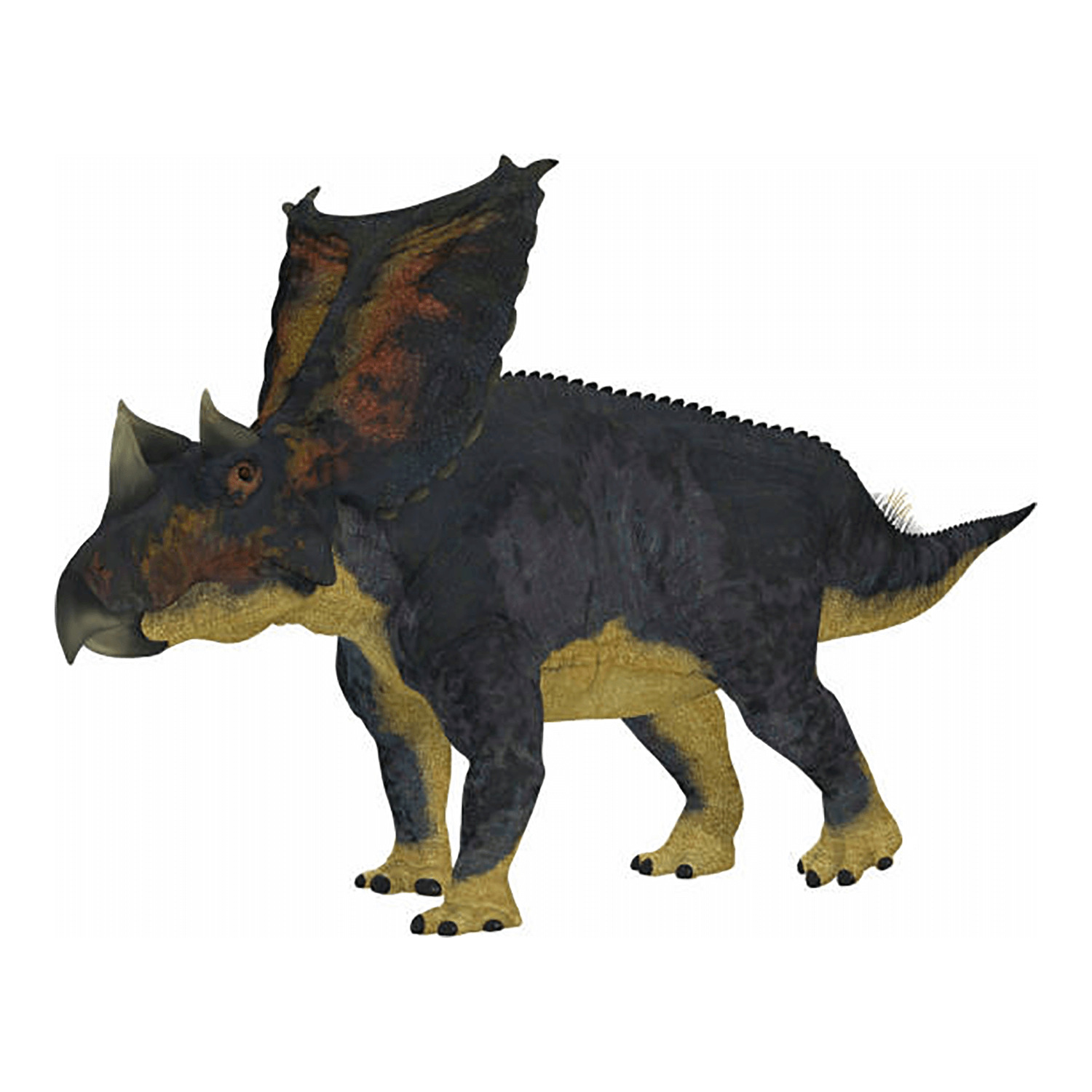
The Late Cretaceous period on the North American continent marked the final chapter of the dinosaur era.
In the region that is now Alberta, Canada, ceratopsians (horned dinosaurs) covered the land, forming massive herds numbering in the thousands—or even tens of thousands.
Their name was “Centrosaurus.”
While not as huge as Triceratops nor as flashy as Styracosaurus, they were one of the most successful herbivorous dinosaurs in North America during this era.
“Pointed Lizard”: The Misunderstandings and Truths Hidden in the Name
The scientific name Centrosaurus means “pointed lizard” in Greek.
Looking at their characteristic “large single horn on the nose,” the name seems fitting, but there is actually a somewhat complex story behind it.
Not a Nose Horn, but “Part of the Frill”?
At the time of naming in 1904, the specimen referenced was not the nasal horn but “part of the frill.”
Researchers mistakenly interpreted a hook-like projection on the rear edge of the frill as a “horn on the nose.”
The misunderstanding was later cleared up, but since they actually possessed a magnificent nasal horn, the name and the reality ended up matching perfectly.
Confusion Over the Name
Also, since the name was already used for a type of lizard at the time of naming, an attempt was made to rename it “Eucentrosaurus” (though Centrosaurus is now established for the dinosaur).
Note that although the spelling is similar to the stegosaur “Kentrosaurus,” it is a completely different dinosaur.
The Standard Model of the Centrosaurinae
Centrosaurus is the representative genus of the “Centrosaurinae” subfamily.
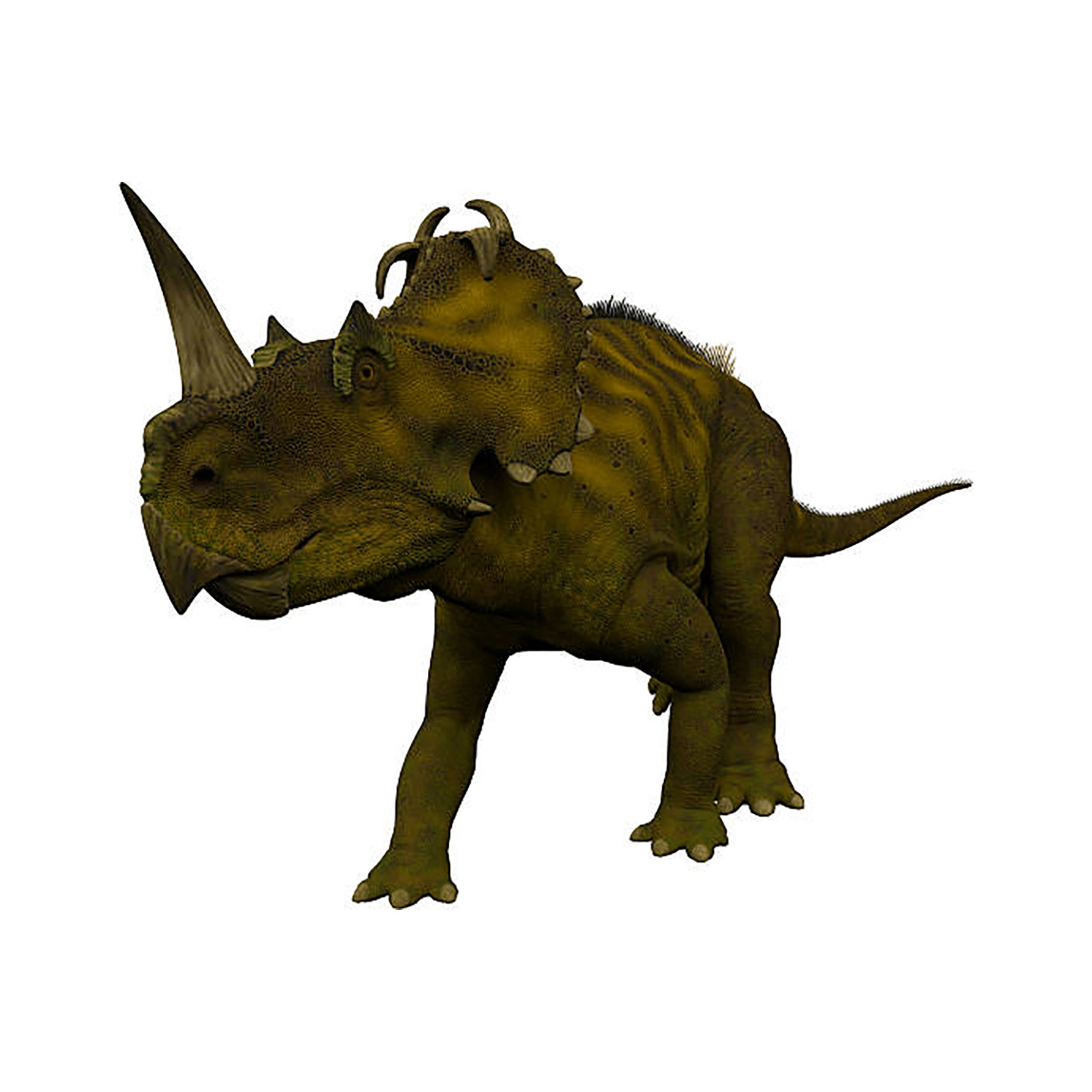
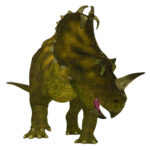
It lacks the “long horns above the eyes” seen in Triceratops (Chasmosaurinae), and instead has a developed “long single horn on the nose.”
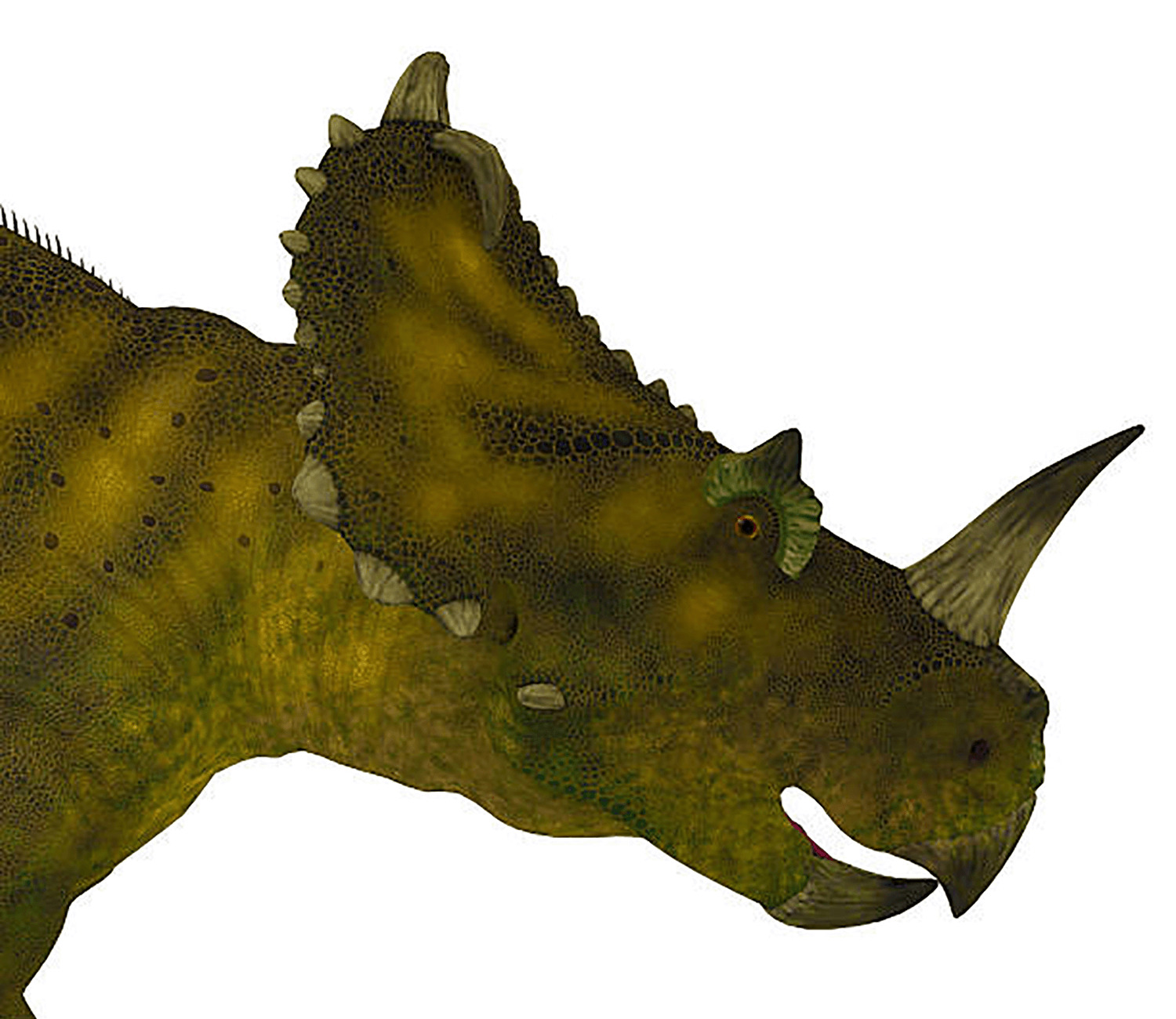
A “long single horn on the nose” is developed
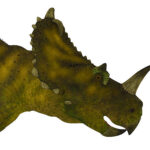
Nasal Horn
Individual variation is significant; it can curve forward or backward, or stand upright.
Frill
It is relatively short, with hook-like projections (hooks) on the rear curving towards the face.
These are believed to have functioned as displays to peers or “fashion” for species identification.
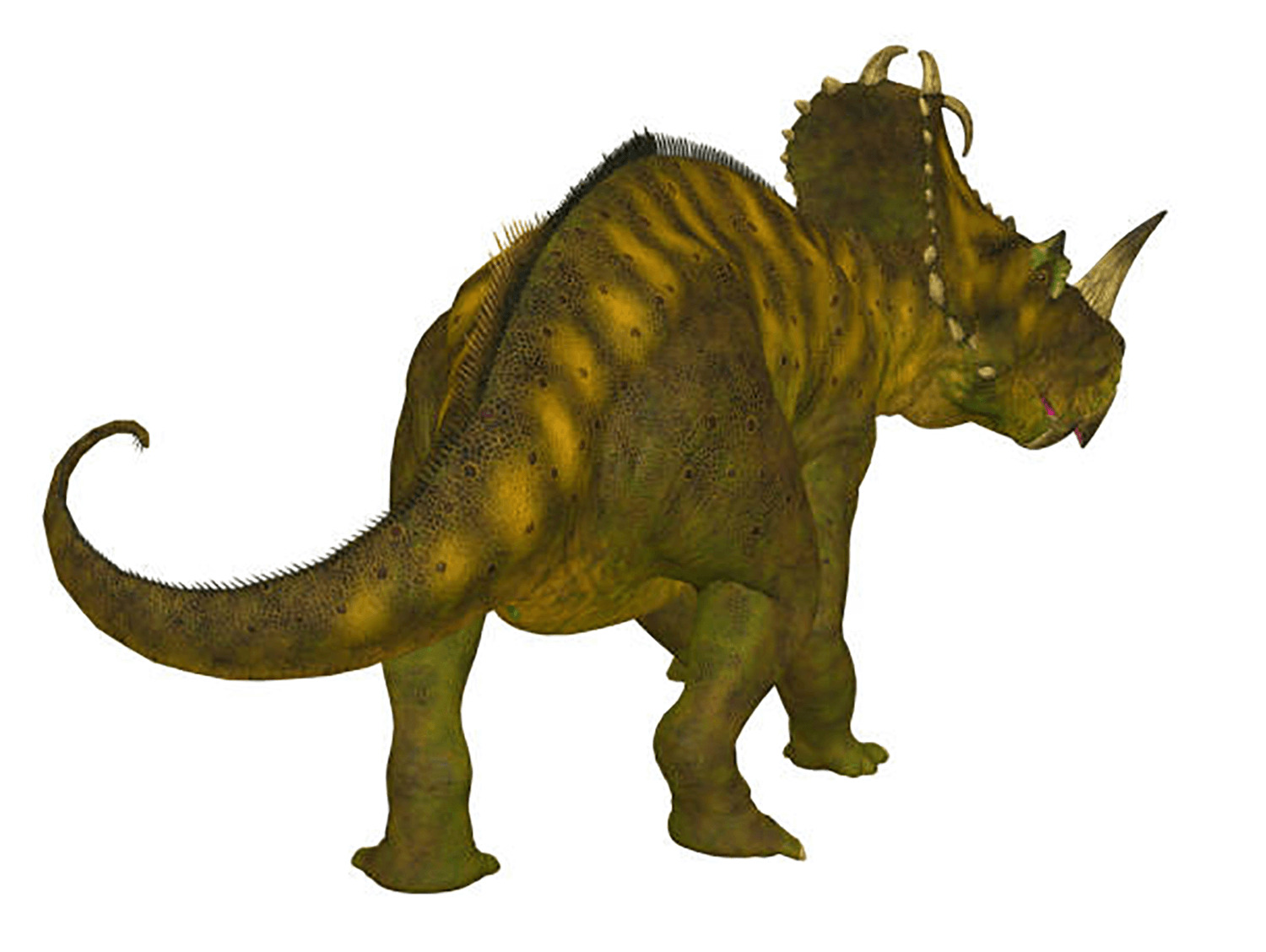
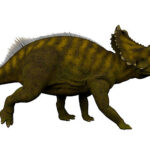
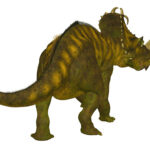
Their body shape was thick like a barrel, with a stable structure and a low center of gravity.
Alberta’s Bone Beds: A “Wildebeest-like Life” of 10,000
From “Dinosaur Provincial Park” in Alberta, Canada, fossils are discovered in such vast quantities that even if paleontologists from all over the world gathered, they couldn’t dig them all up.
Massive Herds Lost to Muddy Streams
“Bone beds,” where bones are concentrated in specific locations, contain the remains of thousands to ten thousand individuals.
The cause of death is considered to be mass drowning due to “river flooding,” rather than carnivorous dinosaurs or disease.
They migrated seasonally in massive herds, much like modern African wildebeests.
While crossing rivers, they were caught in floods, and the entire herd was swallowed by the muddy stream.
This tragic record is irrefutable evidence that they were highly social animals.
Evolutionary Mysteries and Records of Disease
Horn Evolution and the “Peaceful Resolution” Theory
There is an interesting hypothesis regarding the evolution of the Centrosaurinae.
The theory suggests they evolved from the sharp-horned Centrosaurus to “Achelousaurus” with stump-like horns, and then to “Pachyrhinosaurus” with a massive boss (bump).
Sharp horns carry the risk of inflicting fatal injuries in fights between the same species.
Therefore, it is thought that by evolving into a “boss” used for head-butting matches, they avoided unnecessary killing and ensured the prosperity of the species.
Dinosaurs Also Suffered from Disease
Thanks to the vast number of fossil samples, traces of healed fractures and osteosarcoma (bone cancer) have been found.
Mummified fossils with remaining skin also exist, and their appearance while alive is being revealed in detail.