
Deinonychus
Name Origin
Terrible Claw
Family
Deinonychidae
Classification
Diapsida, Saurischia, Theropoda
Habitat (Discovery Location)
United States
Period
Approximately 110 million years ago (Early Cretaceous)
Length
Approximately 2.5–4 meters
Weight
Approximately 50–70 kg
Diet
Carnivore (Meat-eater)
You might also like... 

-
 Brachiosaurus
- Classification
- Sauropods
- Characteristics
- Herbivorous
- Era
- Jurassic period
- Scutellosaurus
- Classification
- Thyreophora
- Characteristics
- Herbivorous
- Era
- Jurassic period
- Bambiraptor
- Classification
- Theropods
- Characteristics
- Carnivorous
- Feathered
- Era
- Cretaceous period
- Leaellynasaura
- Classification
- Ornithopoda
- Characteristics
- Herbivorous
- Era
- Cretaceous period
-
Sponsored Links
-
Sponsored Links









![[Latest Research] What Was the Function of Spinosaurus's Giant "Sail"? Exploring the Mysteries of Thermoregulation and Underwater Locomotion](https://dinosaurmuseum.jp/wp/wp-content/uploads/eyecatch_spinosaurus-sail-function_en-1024x512.webp)
![[Latest Discovery] A Third Type of Skin, Neither Scales Nor Feathers? Meet "Haolong dongi," a New Dinosaur Species Covered Entirely in Spikes](https://dinosaurmuseum.jp/wp/wp-content/uploads/eyecatch_dinosaur-spiky-skin-discovery_en-1024x512.webp)
Description
In the 1960s, a revolution occurred in the world of paleontology.
Until then, the common image of dinosaurs was that of “sluggish, stupid, giant lizard-like cold-blooded animals,” but the discovery of one small dinosaur shattered that image to pieces.
The name of that dinosaur is “Deinonychus.”
Sharp claws, a large brain, and an agile skeleton.
Through his research on them, discoverer Dr. John Ostrom proposed the “dinosaur warm-blooded theory,” bringing about a paradigm shift (the Dinosaur Renaissance) in dinosaur research.
The True Identity of “Terrible Claw”: Sickle Claws and Physical Abilities
Name and Basic Specs
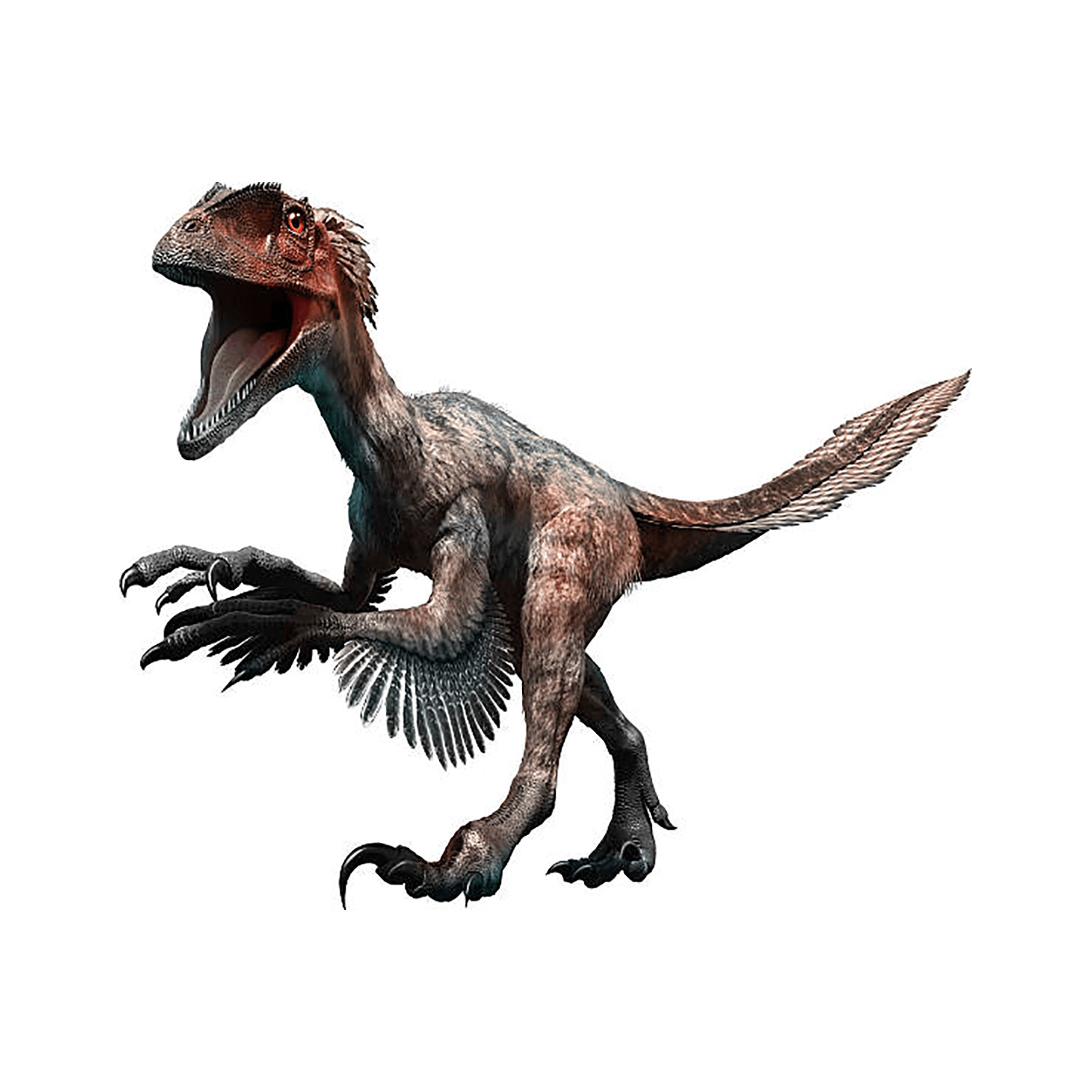
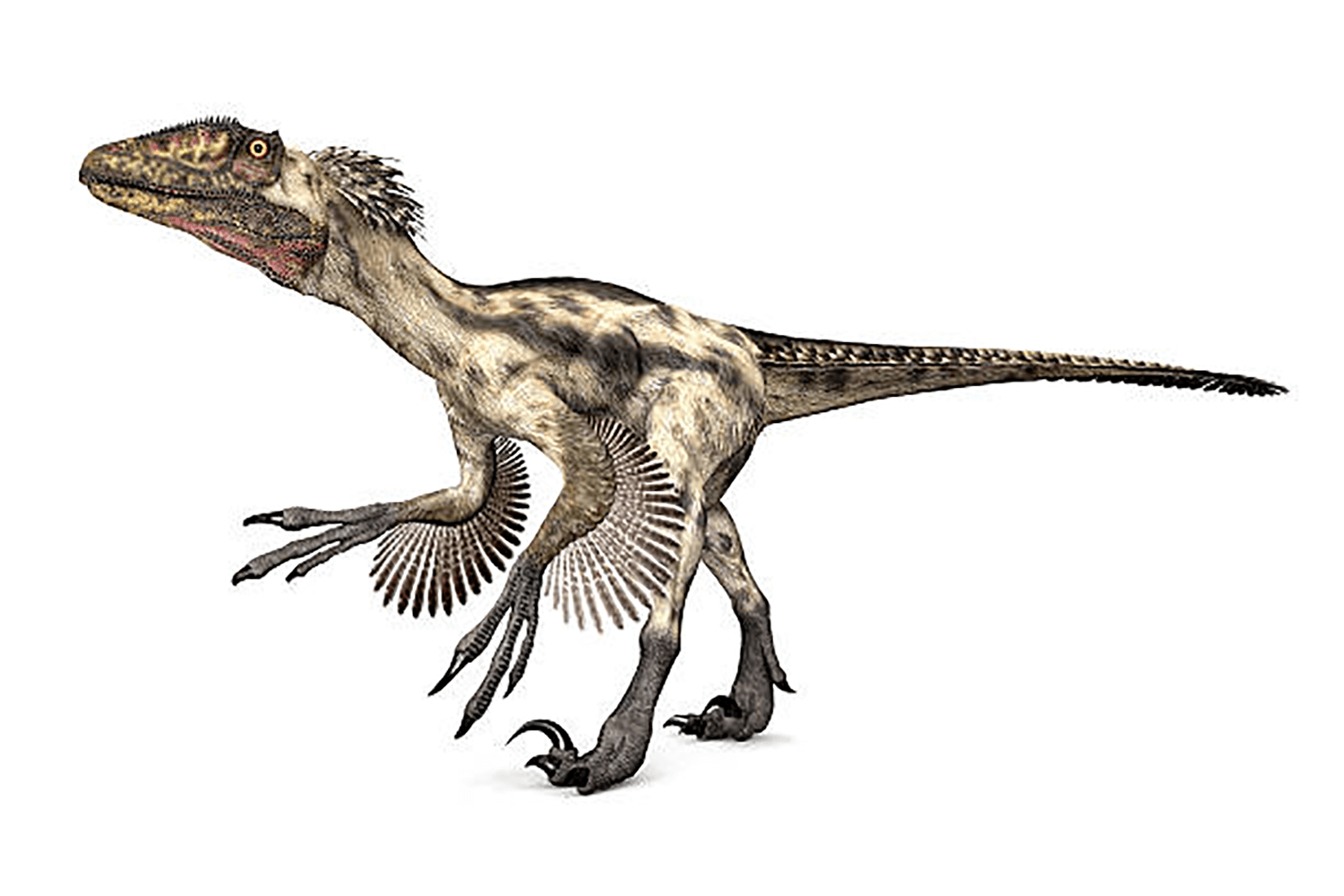
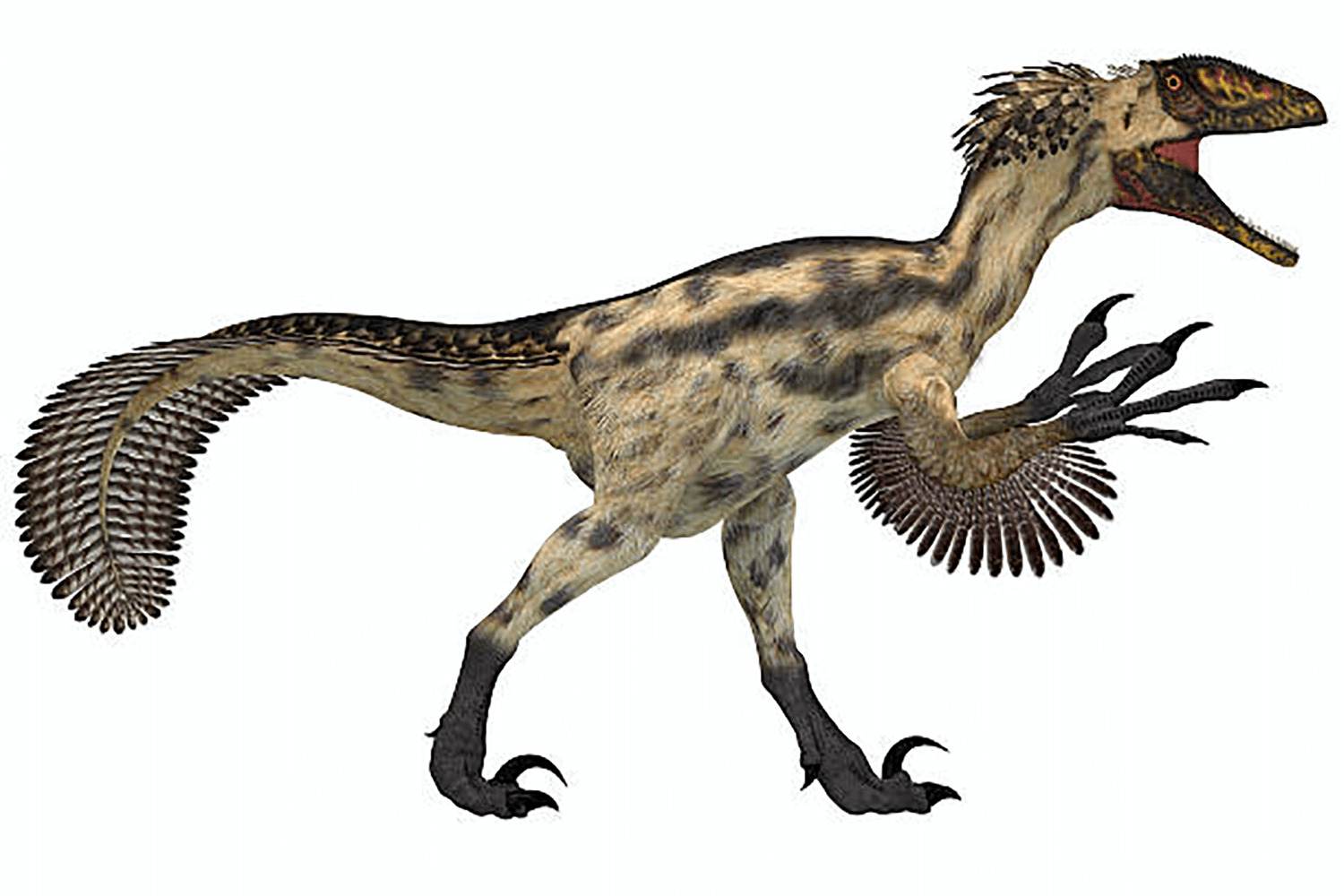
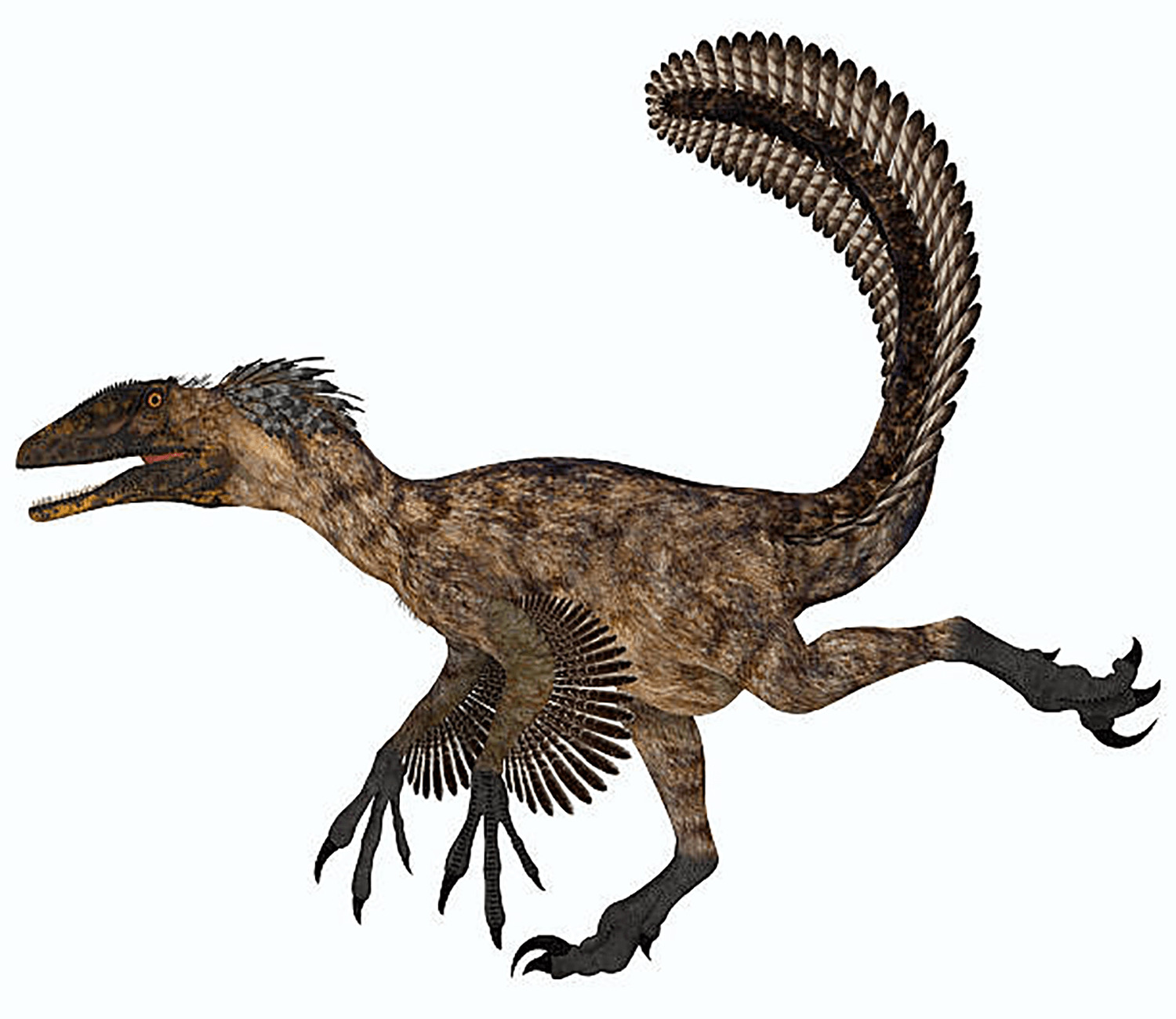
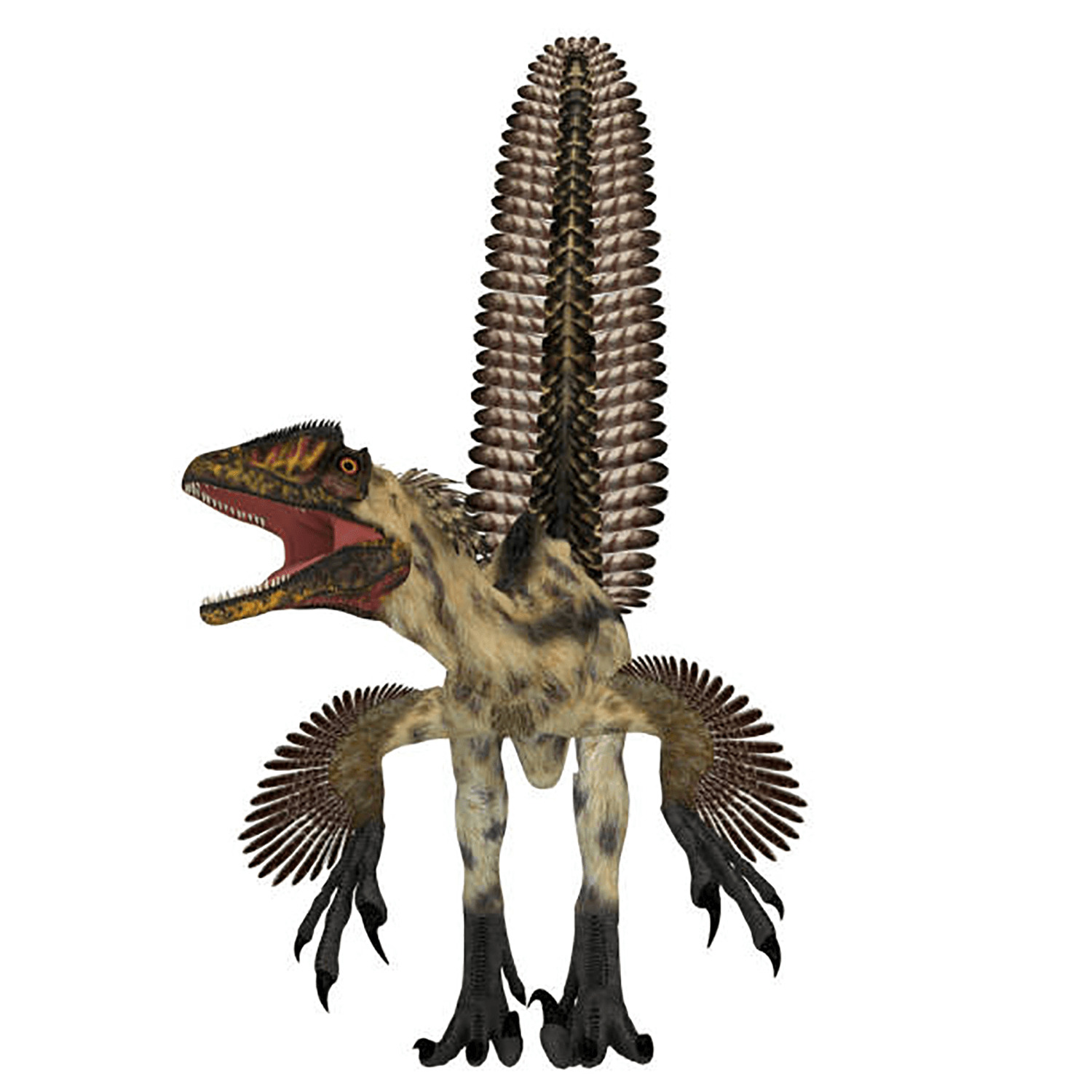
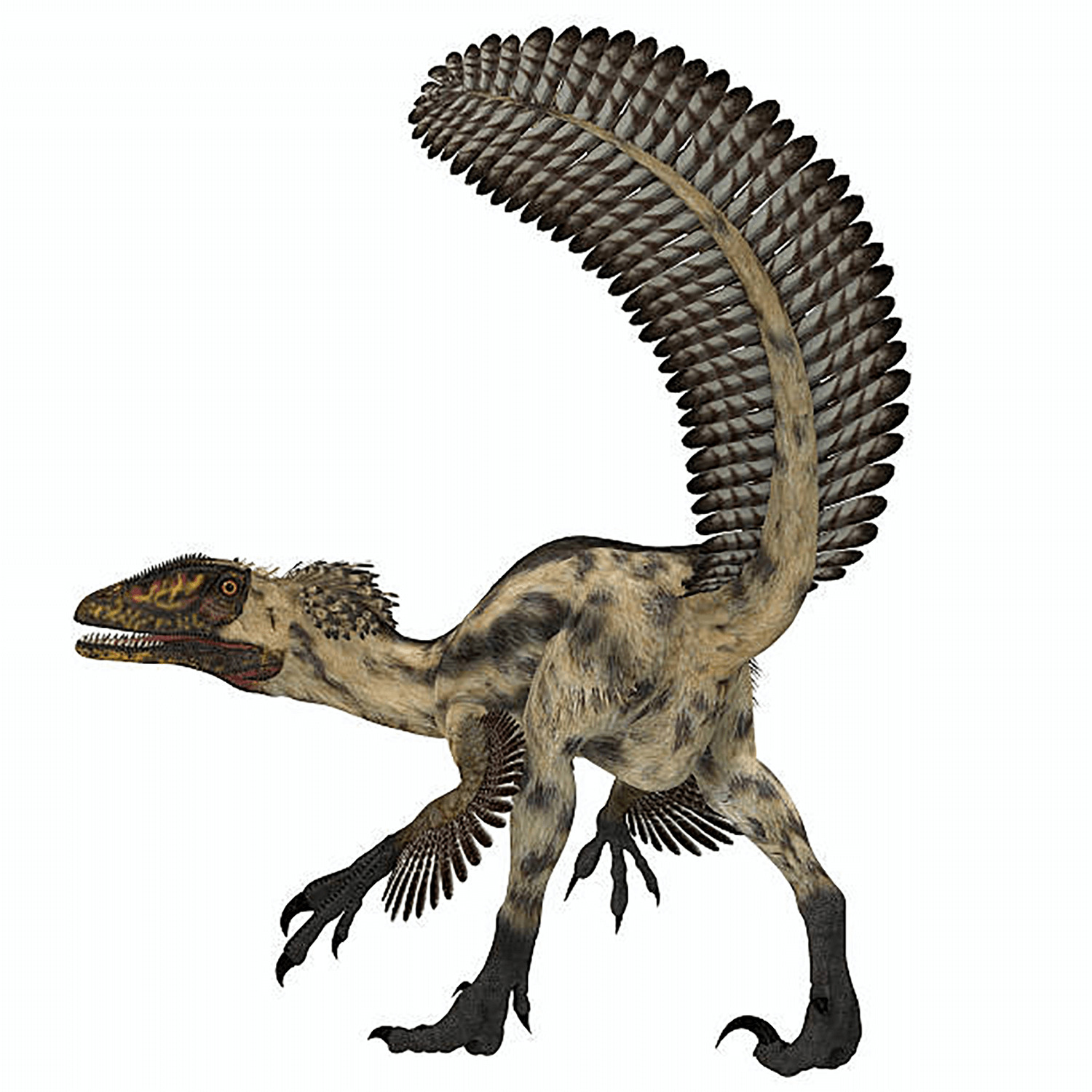
The scientific name means “Terrible Claw” in Latin.
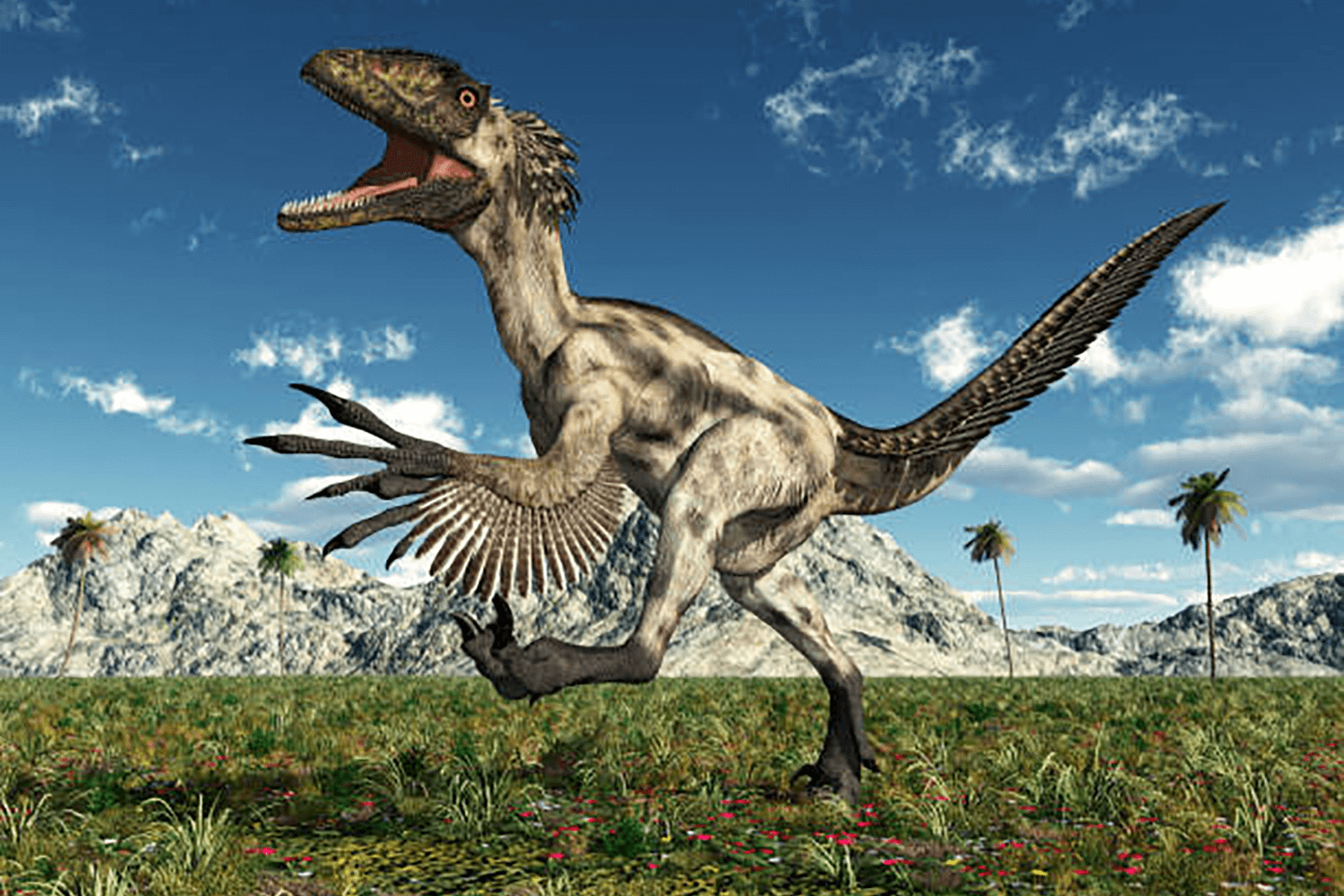
It was a medium-to-small dinosaur, 2.5 to 4 meters long and weighing 50 to 70 kg, that lived in North America during the Early Cretaceous period (approximately 110 million years ago).
It is a representative member of the “Dromaeosauridae” family, the same as Velociraptor.
The Deadly “Sickle Claw”
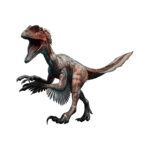
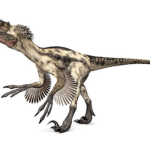
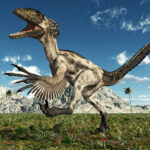
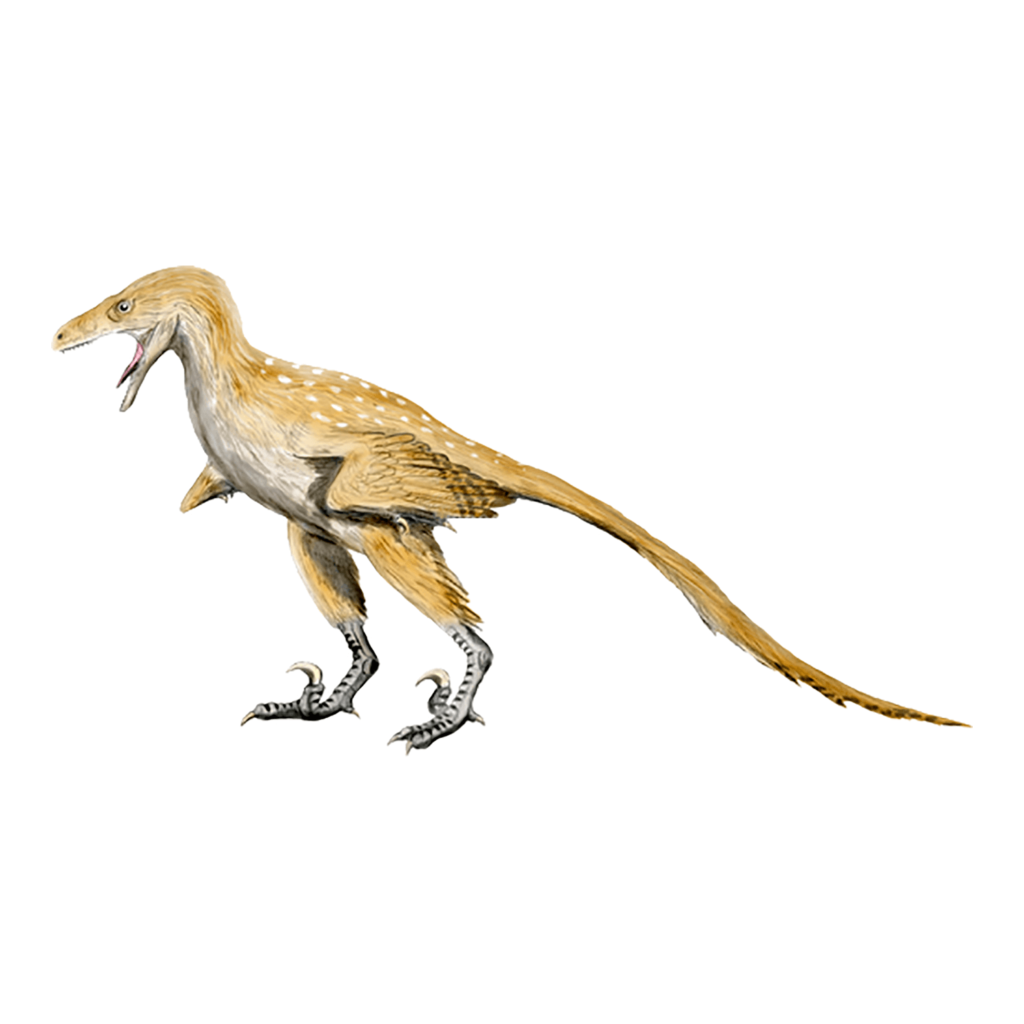
Its most distinctive feature is the massive hooked claw, the “sickle claw,” on the second toe of its hind limbs.
Its most distinctive feature is the massive hooked claw on the second toe of its hind limbs.
It was over 15 cm long (in life).
It walked with the claw raised high to prevent wear and tear, swinging it down only when attacking.
It was once considered a “slashing weapon,” but recent research suggests a strong theory that it was a weapon for “piercing and pinning down prey,” like modern birds of prey (eagles and hawks).
They would fix the prey in place with their sharp claws and finish it off with their saw-like teeth.
Excellent Sense of Balance
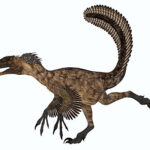
The long tail had a structure like a “single stiff rod,” solidified by bony tendons.
The long tail had a structure like a “single stiff rod,” solidified by bony tendons.
This functioned as a balancer when running or a counterweight during violent movements, supporting acrobatic maneuvers.
Intelligence and Athleticism: The Path to the Warm-Blooded Dinosaur Theory
Smart Brain and High Visual Capabilities
Its brain was relatively large, possessing top-class intelligence among dinosaurs of that time.
Large eyes facing the front of the face enabled “stereoscopic vision,” allowing it to accurately measure the distance to prey.
They were highly advanced predators capable of situational judgment.
Active “Warm-Blooded Animals”
The basis for Dr. Ostrom’s “warm-blooded theory” lay in their high athletic ability.
Moving around violently requires more energy than the metabolism of cold-blooded animals (reptiles) can provide.
The discovery of Deinonychus established the current prevailing theory that “dinosaurs were active, endothermic animals with warm blood flowing through them, like birds.”
Pack or Solitary? The Truth Behind the “Pack Hunting” Theory
Movie Image vs. Reality
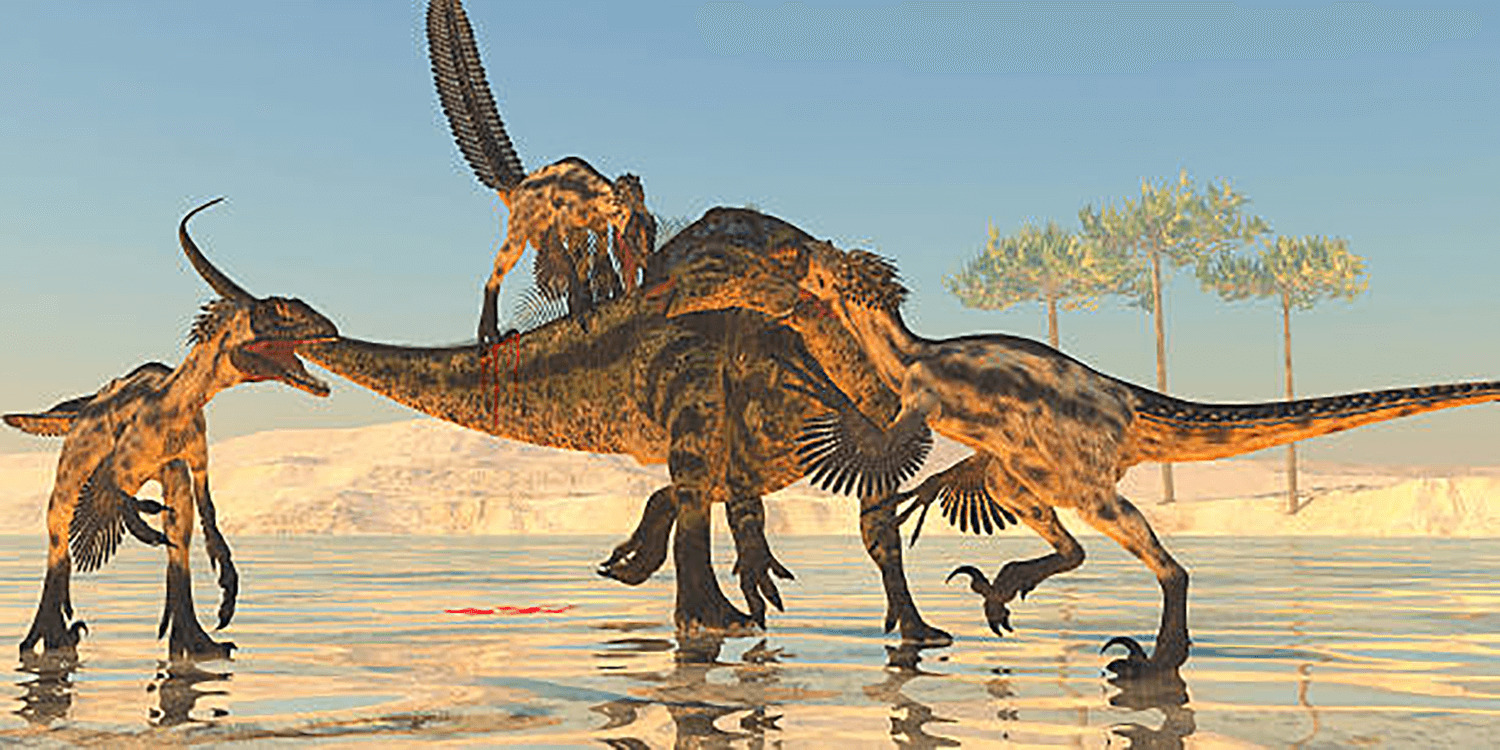
Due to the influence of movies like Jurassic Park, the image of Deinonychus “hunting in organized herds like wolves (pack hunting)” became established.
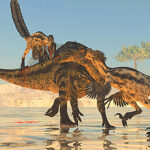
The fact that multiple fossils were found around the giant herbivore Tenontosaurus was cited as evidence.
“Mob-like” Cannibalism Theory
However, recent studies have cast doubt on this image.
Fossils show traces of fighting among the same species and cannibalism, and it has been revealed that adults and juveniles ate different things (indicating no child-rearing).
The current leading theory suggests a “mob-like” sociality similar to Komodo dragons.
They were basically solitary, gathering in swarms only when prey was found, and likely scrambling for meat (sometimes even attacking each other).
Theory of “Mob-like” sociality
Of course, the possibility of some degree of cooperation, like Harris’s hawks, cannot be completely ruled out.
Discovery of Feathers and the Connection to “Birds”
Evolution into Birds
The skeletal structure of Deinonychus’s wrists and shoulders closely resembles that of Archaeopteryx and modern birds, providing strong support for the theory that “birds are descendants of dinosaurs.”
Appearance as a Feathered Dinosaur
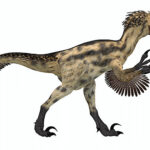
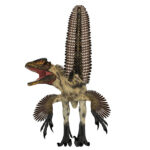
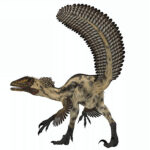
Based on discoveries of related species, it is considered almost certain that Deinonychus was also covered in feathers.
Its entire body was covered in feathers
Although they could not fly, feathers were used for thermal insulation, brooding, and display.
There is also a theory that juveniles had some gliding ability, so they truly looked like “birds running on the ground.”