
Dilong



Name Origin
Emperor Dragon
Family
Tyrannosauroidea
Classification
Diapsida, Saurischia, Theropoda
Habitat (Discovery Location)
China
Period
Approximately 126 million years ago (Early Cretaceous)
Length
Approximately 1.6 meters
Diet
Carnivore (Meat-eater)
You might also like... 

-
 Anchiornis
- Classification
- Theropods
- Characteristics
- Carnivorous
- Era
- Jurassic period
- Sinornithomimus
- Classification
- Theropods
- Characteristics
- Omnivorous
- Feathered
- Era
- Cretaceous period
- Avimimus
- Classification
- Theropods
- Characteristics
- Carnivorous
- Omnivorous
- Feathered
- Era
- Cretaceous period
- Torosaurus
- Classification
- Marginocephalia
- Characteristics
- Herbivorous
- Era
- Cretaceous period
-
Sponsored Links
-
Sponsored Links






![[Latest Research] What Was the Function of Spinosaurus's Giant "Sail"? Exploring the Mysteries of Thermoregulation and Underwater Locomotion](https://dinosaurmuseum.jp/wp/wp-content/uploads/eyecatch_spinosaurus-sail-function_en-1024x512.webp)
![[Latest Discovery] A Third Type of Skin, Neither Scales Nor Feathers? Meet "Haolong dongi," a New Dinosaur Species Covered Entirely in Spikes](https://dinosaurmuseum.jp/wp/wp-content/uploads/eyecatch_dinosaur-spiky-skin-discovery_en-1024x512.webp)
Description
Tyrannosaurus rex is the star of dinosaur movies and known as the mightiest carnivorous dinosaur.
The long-standing image of a “gigantic, ferocious monster covered in scales” was fundamentally overturned by the discovery of a single small dinosaur.
That dinosaur’s name is “Dilong.”
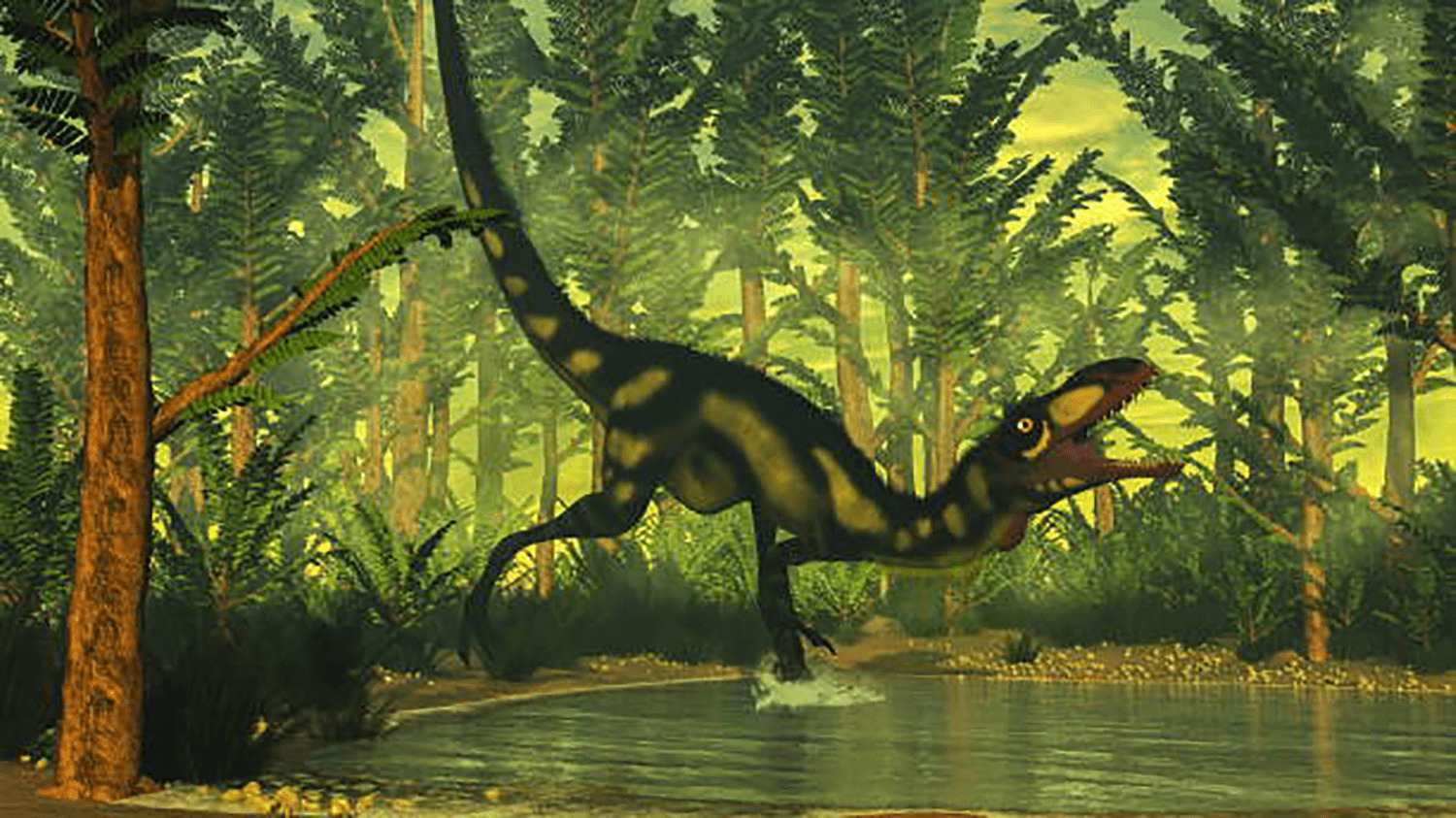
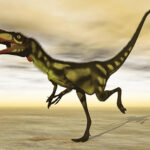
Discovered in Liaoning Province, China, in 2004, this fossil retained clear traces of “feathers.”
The Paradox Named “Emperor Dragon”
Name and Size
Dilong lived during the Early Cretaceous period, approximately 126 million years ago.
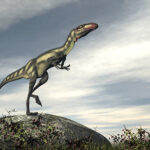
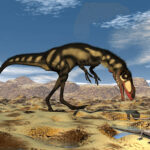
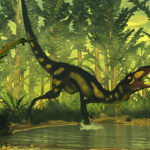
The scientific name “Dilong” means “Emperor Dragon,” combining the Chinese words for “Emperor” (Di) and “Dragon” (long).
Its total length was only about 1.6 meters.
It is a majestic name symbolizing its lineage connected to the later Tyrannosaurus (which exceeded 12 meters in length).
The Shock Implied by “Paradoxus”
The specific name “paradoxus” carries the meaning of “paradoxical” or “transcending common sense.”
At the time, the fact that “it was a relative of Tyrannosaurus yet small and covered in feathers” defied conventional wisdom.
The discovery that a tyrannosauroid—strongly associated with a gigantic, primitive image—possessed feathers was truly a paradoxical shock.
“Protofeathers” Found in the Holy Land of Feathered Dinosaurs
The fossil of Dilong was discovered in the “Yixian Formation” in Liaoning Province, China, renowned as a holy land for feathered dinosaurs.
Feathers as a Flightless “Coat”
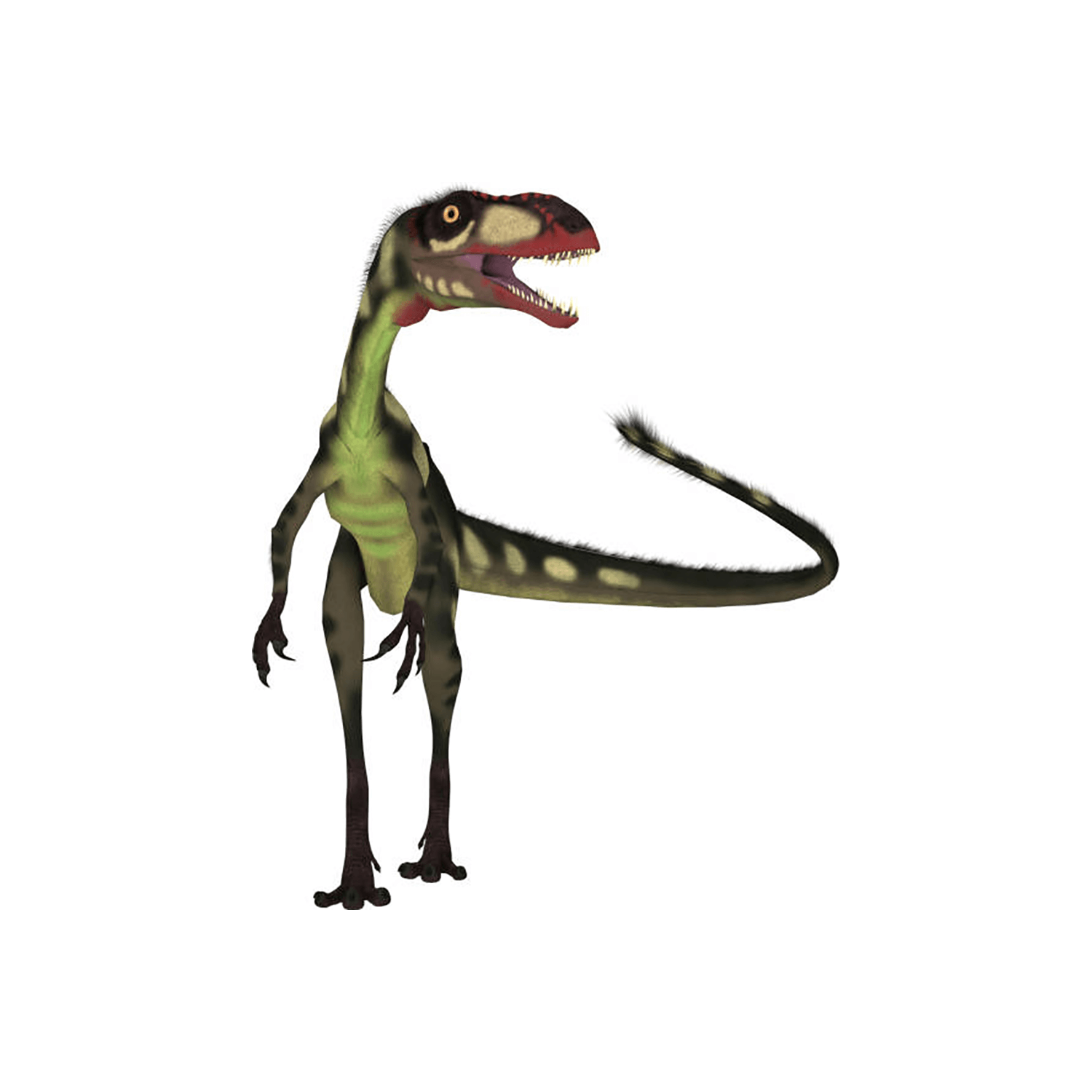
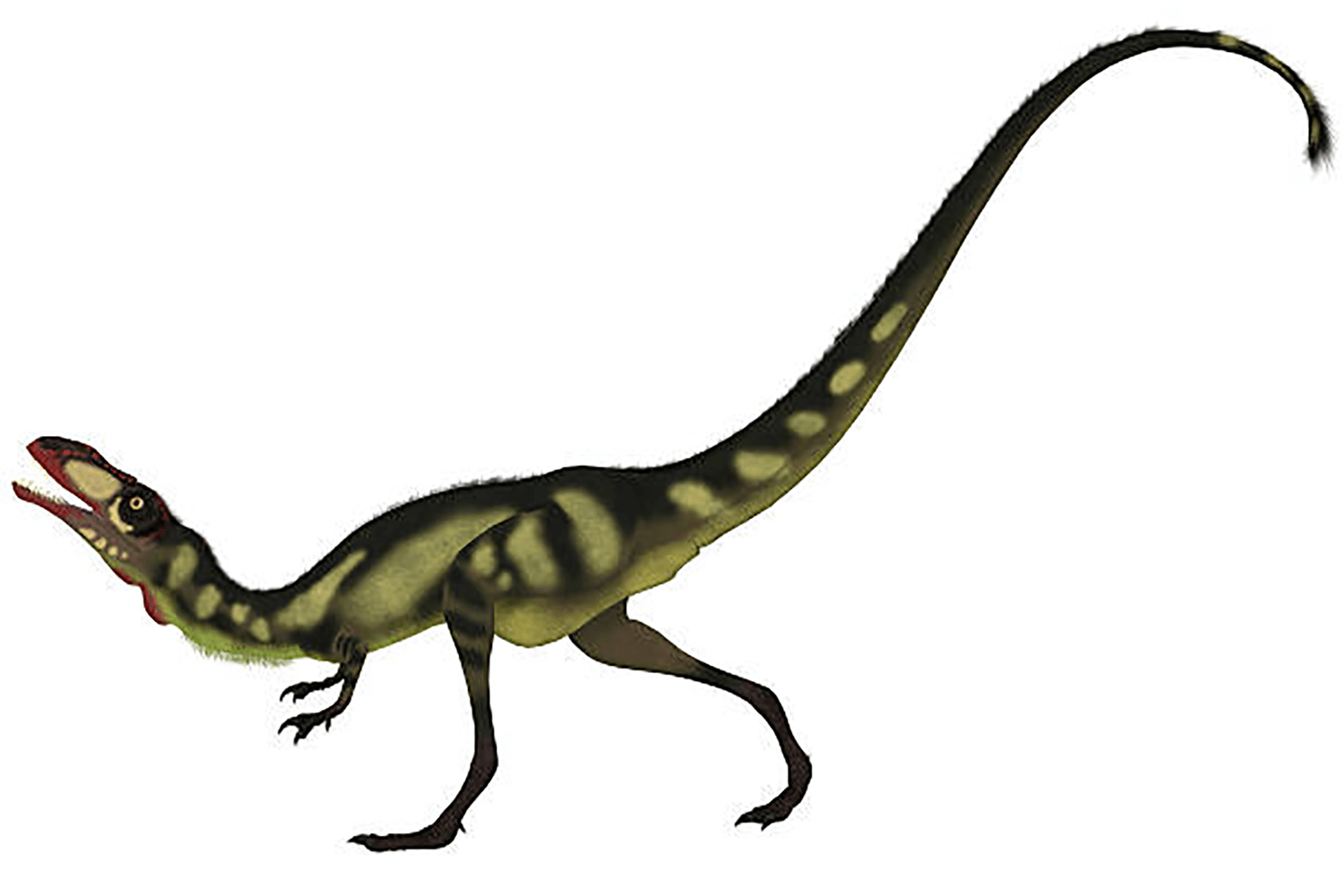
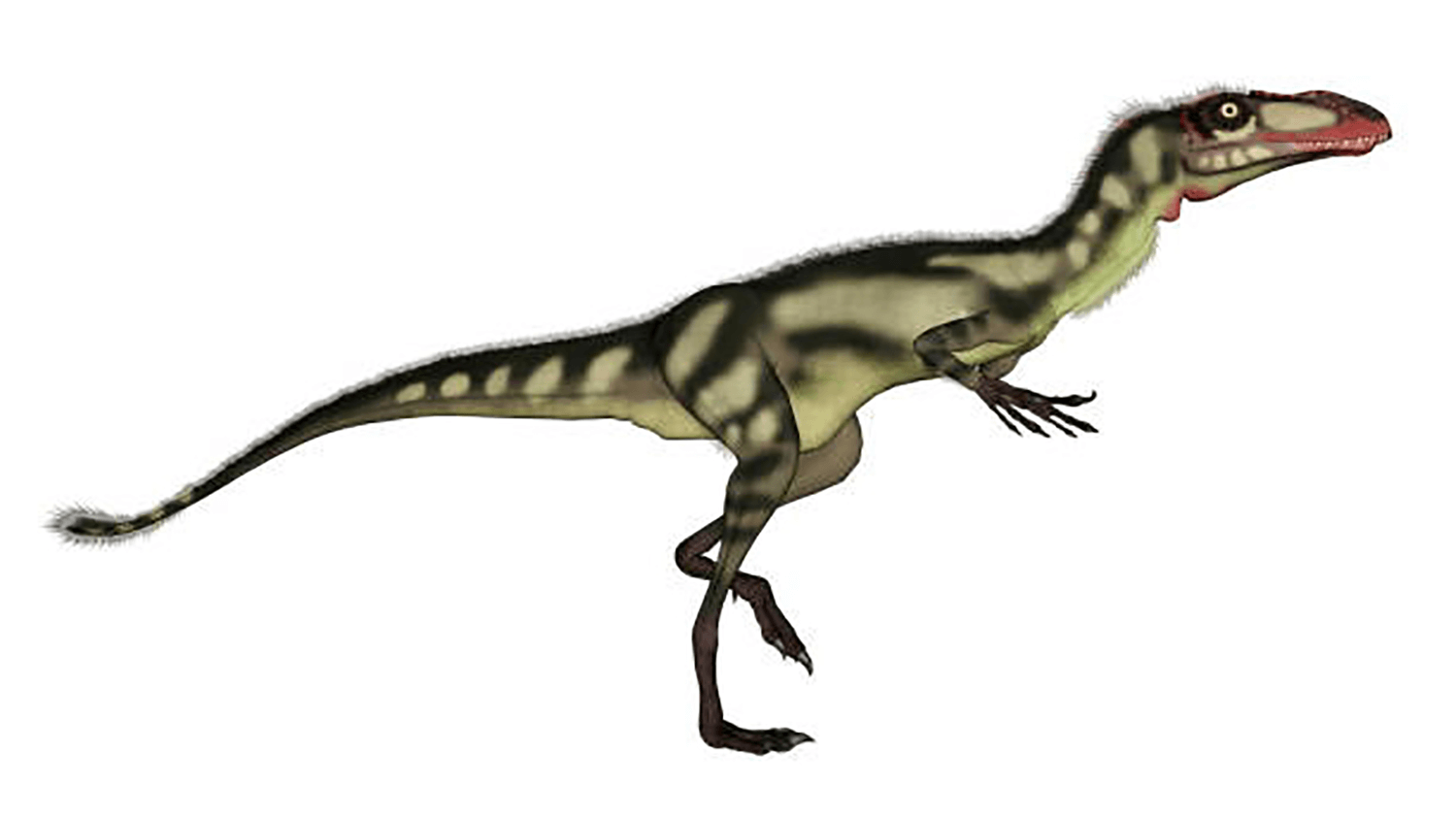
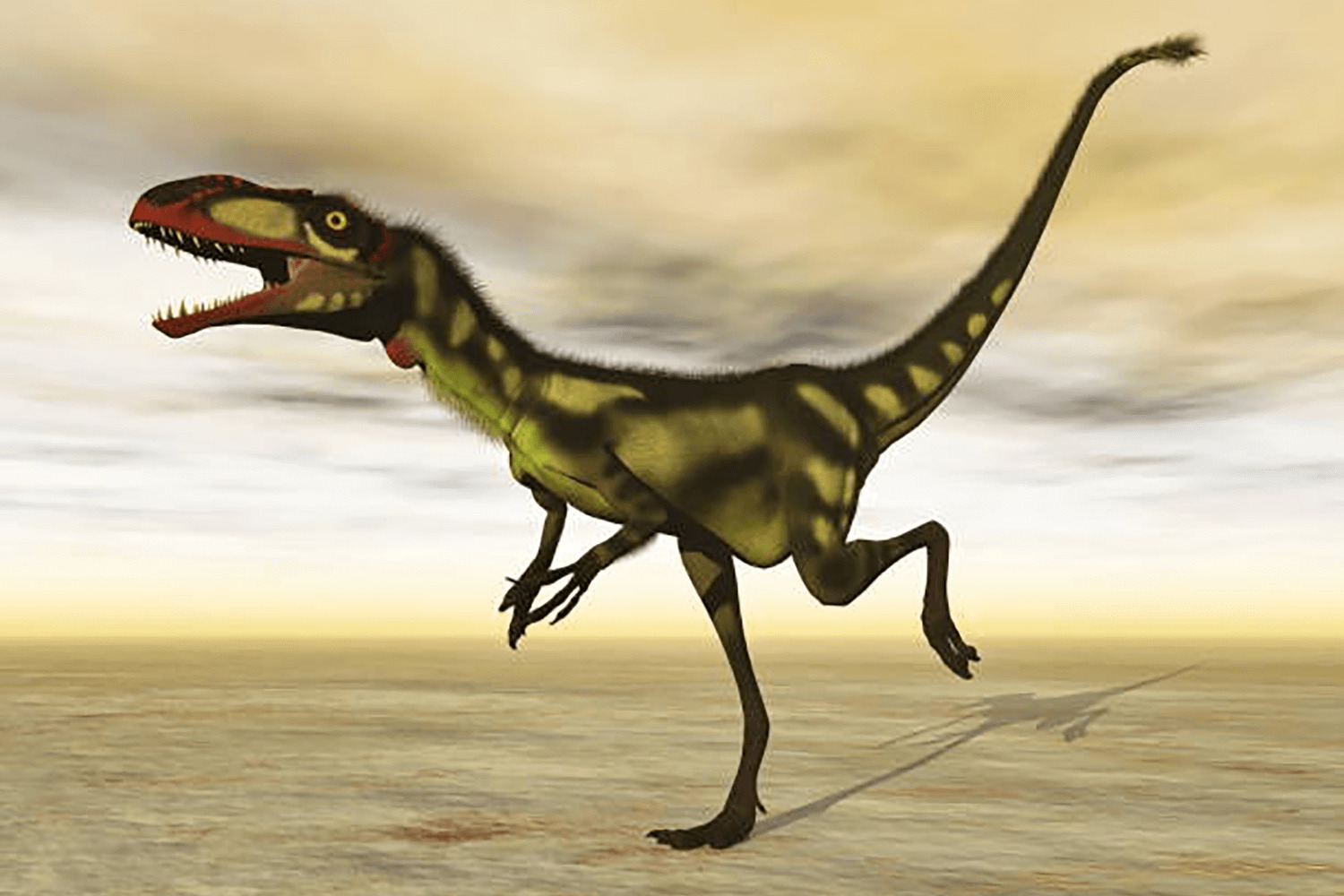
The discovered fossil of a young individual showed clear traces of feathers on the tip of the tail and the lower jaw.
These were not for flying, but simple, branched, fibrous “protofeathers.”
They are believed to have functioned as insulation to maintain body temperature for its small body.
The Price of Gigantism and the Missing Link of Evolution
Was Tyrannosaurus Fluffy Too?
The discovery of Dilong strongly suggested the possibility that “Tyrannosaurus and its kin were originally feathered dinosaurs.”
However, only scales have been found in fossils of the later, gigantic Tyrannosaurus (with the exception of the related Yutyrannus).
It is believed that they lost their feathers secondarily to prevent overheating as they grew gigantic and heat became harder to dissipate (similar to how elephants and rhinos have sparse hair).
On the other hand, it is considered highly likely that the small juveniles (babies) of Tyrannosaurus were wrapped in fluffy feathers for warmth, just like Dilong.
Ecology as an Agile Small Hunter
Long Arms with Three Fingers
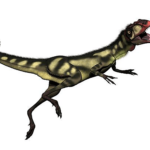
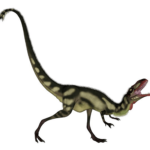
While the arms of later Tyrannosaurs degenerated into two fingers, the early Dilong possessed relatively long, large arms and “three fingers.”
Its sharp claws were powerful weapons for catching prey.
Prey of the Speedster
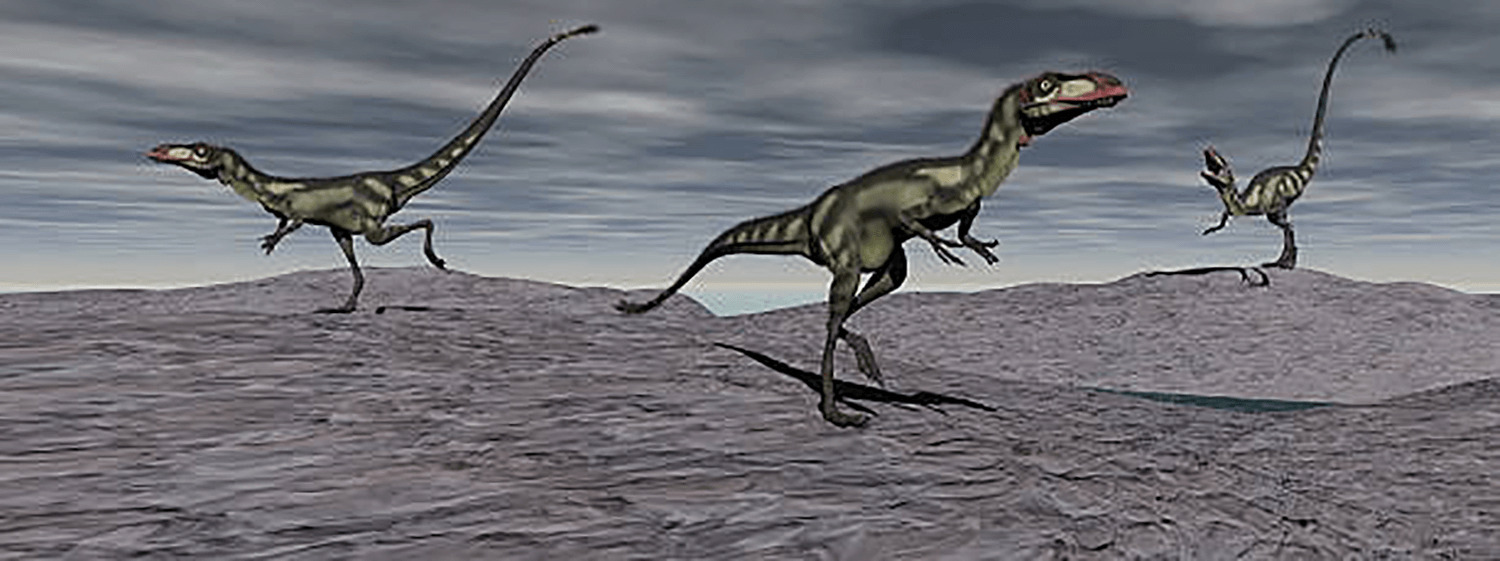
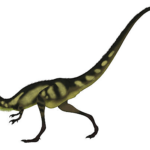
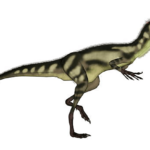
With its lightweight body and long hind limbs, it was able to run very quickly.
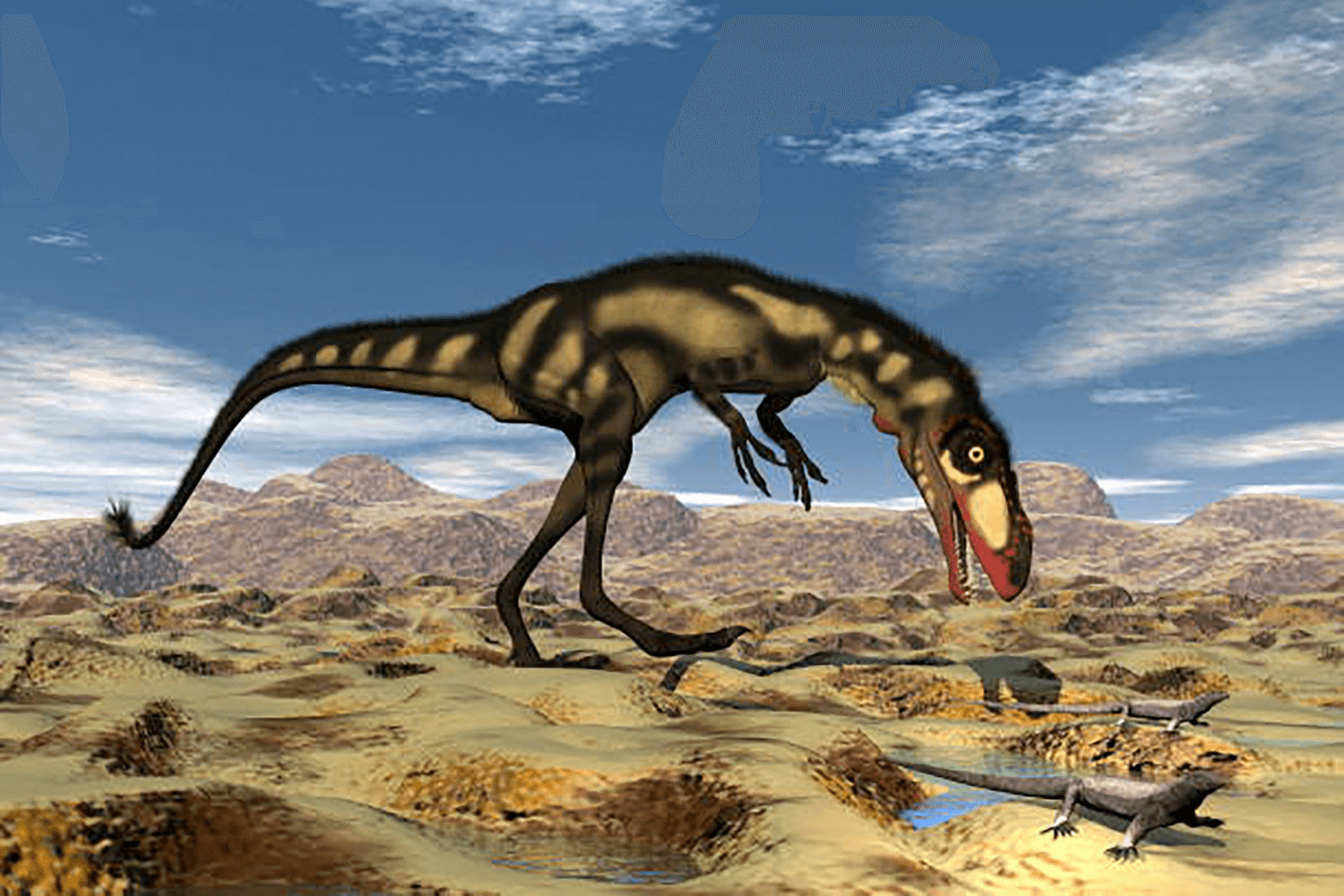
Utilizing its speed and long arms, it was a smart and skillful hunter that targeted the small ceratopsian “Psittacosaurus,” lizards, and mammals living in the same region.