
Hadrosaurus
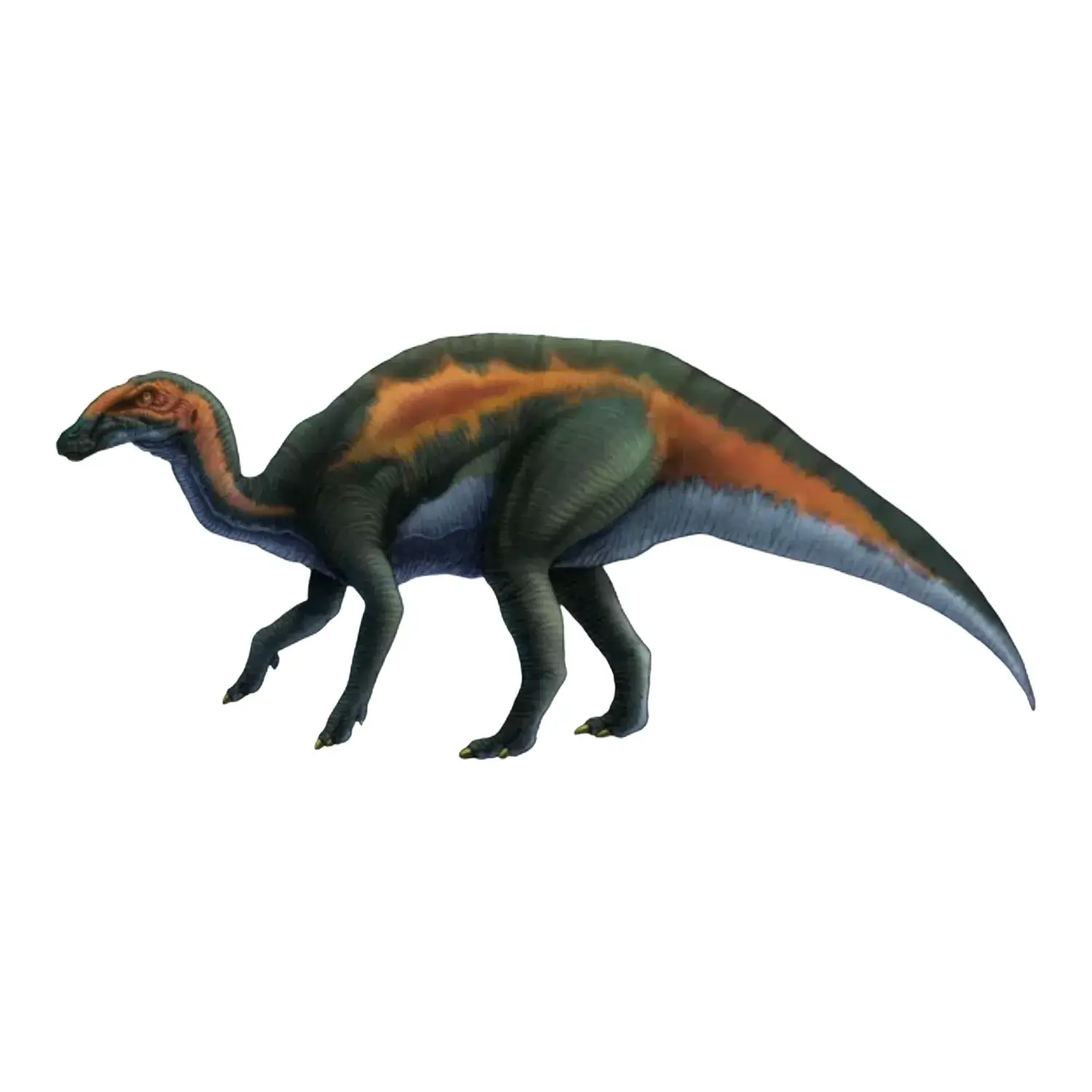
Name Origin
Sturdy Lizard
Family
Hadrosauridae
Classification
Diapsida, Ornithischia, Ornithopoda
Habitat (Discovery Location)
United States
Period
Approximately 80 to 74 million years ago (Late Cretaceous)
Length
Approximately 7 meters
Weight
Approximately 3 to 4 tons
Diet
Herbivore (Plant-eater)
You might also like... 

-
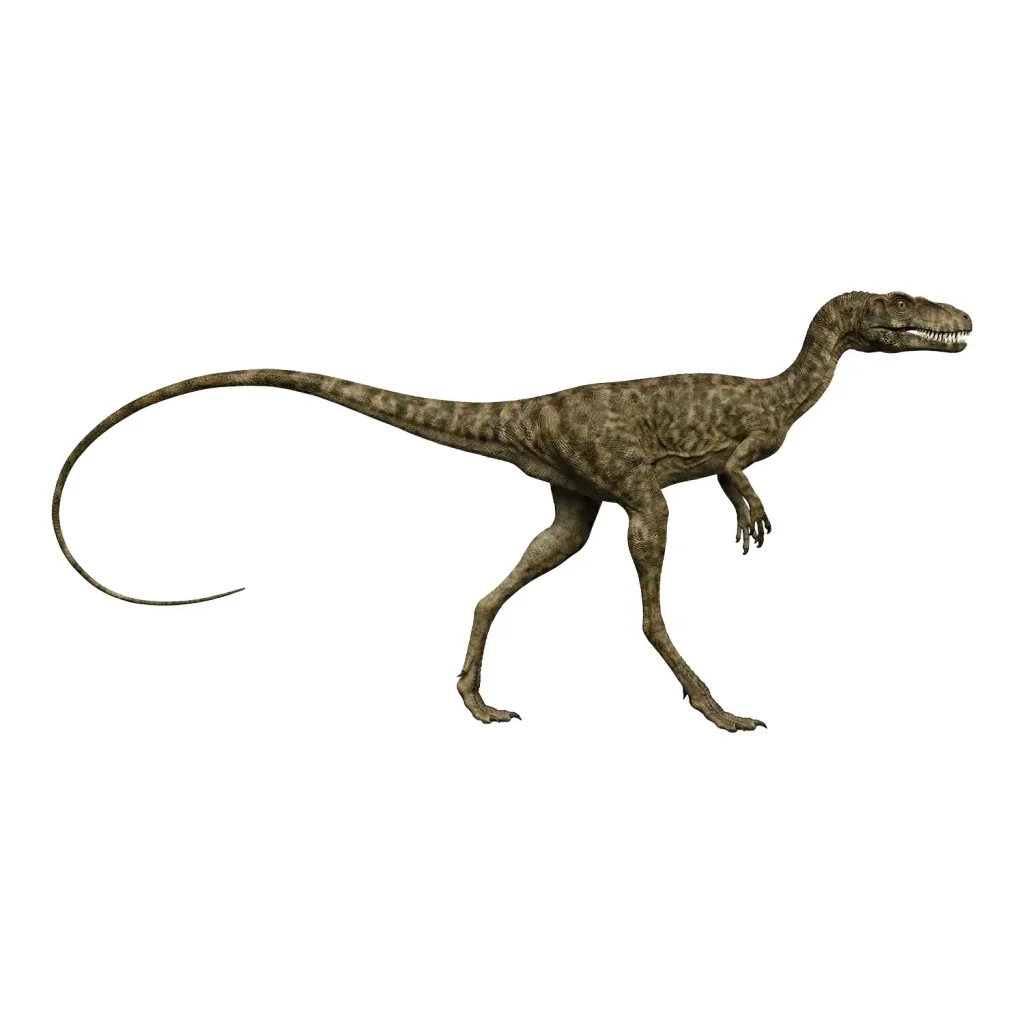
 Chindesaurus
- Classification
- Theropods
- Characteristics
- Carnivorous
- Era
- Triassic period
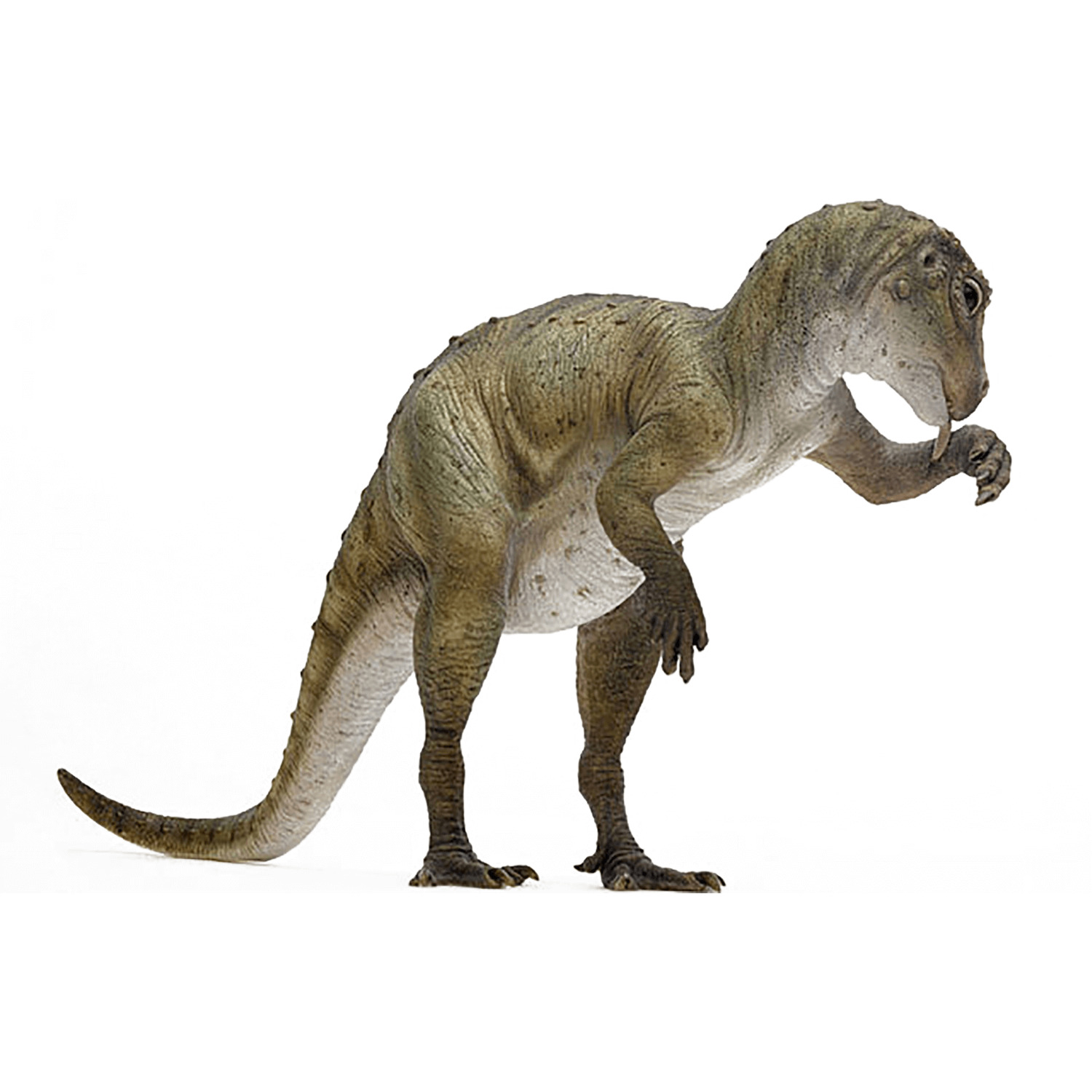
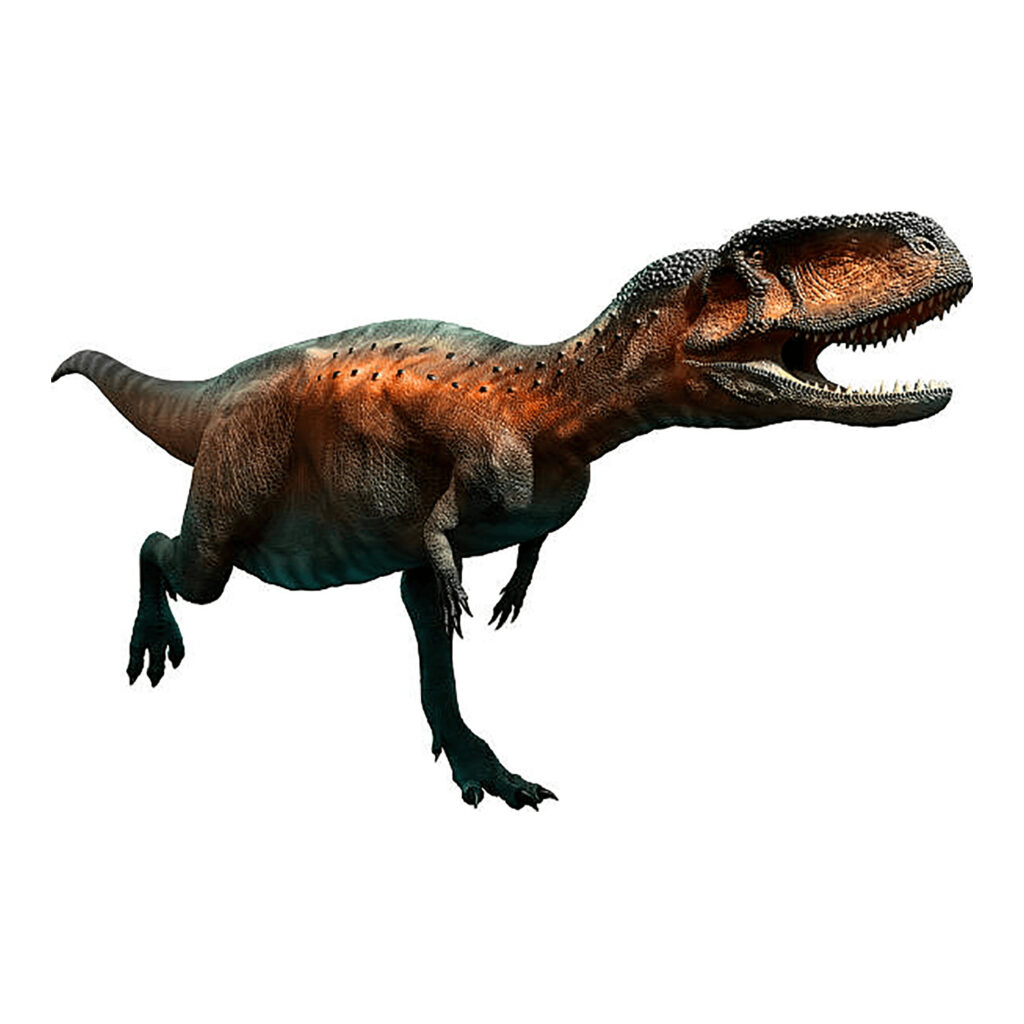
- Abelisaurus
- Classification
- Theropods
- Characteristics
- Carnivorous
- Era
- Cretaceous period
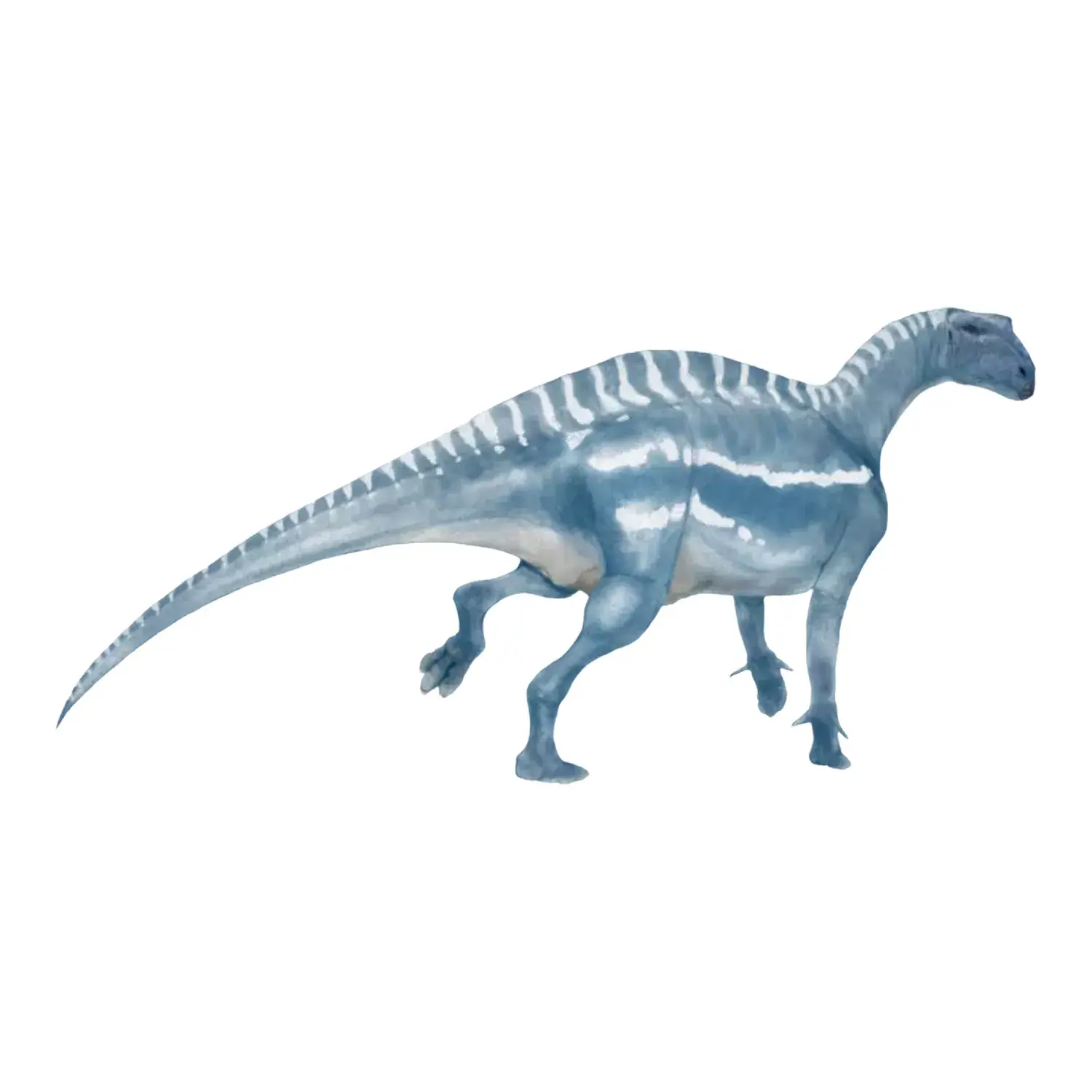
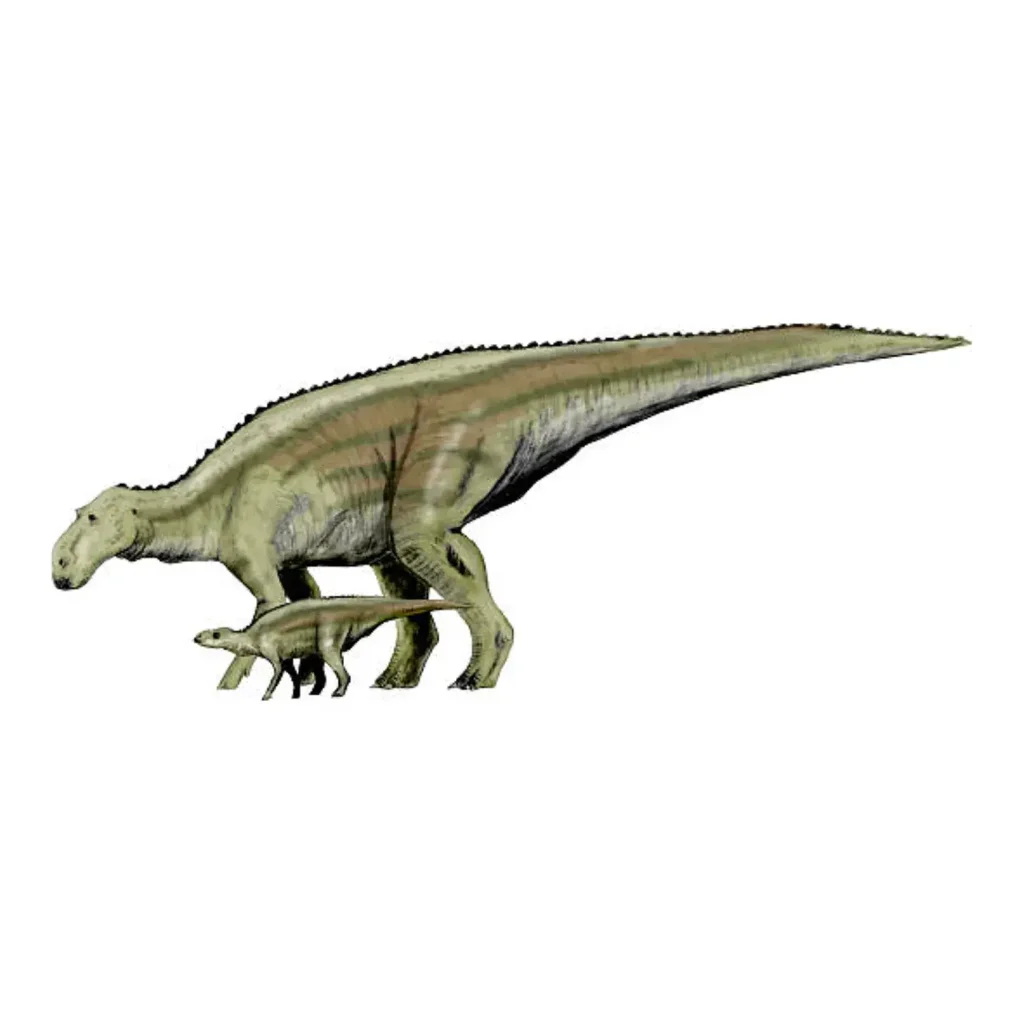
- Maiasaura
- Classification
- Ornithopoda
- Characteristics
- Herbivorous
- Era
- Cretaceous period
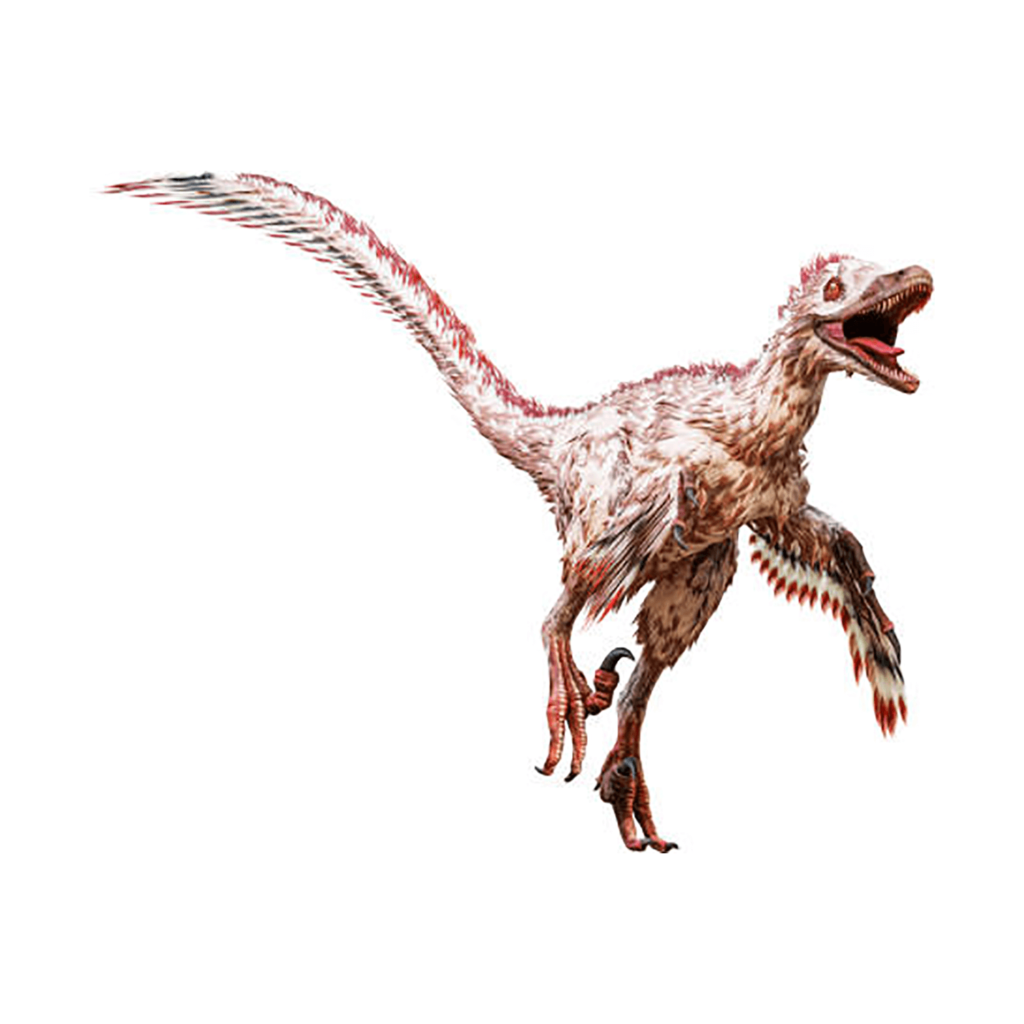
- Velociraptor
- Classification
- Theropods
- Characteristics
- Carnivorous
- Era
- Cretaceous period
-
Sponsored Links
-
Sponsored Links










![[Latest Research] What Was the Function of Spinosaurus's Giant "Sail"? Exploring the Mysteries of Thermoregulation and Underwater Locomotion](https://dinosaurmuseum.jp/wp/wp-content/uploads/eyecatch_spinosaurus-sail-function_en-1024x512.webp)
![[Latest Discovery] A Third Type of Skin, Neither Scales Nor Feathers? Meet "Haolong dongi," a New Dinosaur Species Covered Entirely in Spikes](https://dinosaurmuseum.jp/wp/wp-content/uploads/eyecatch_dinosaur-spiky-skin-discovery_en-1024x512.webp)
Description
When speaking of “dinosaurs,” Tyrannosaurus and Triceratops are famous, but there is an entity that cannot be ignored when talking about the history of dinosaur research in America—a “founder,” so to speak.
That is “Hadrosaurus.”
Living on the North American continent during the Late Cretaceous, this herbivorous dinosaur was the first dinosaur named in the United States and reigns as the head (type species) of the Hadrosauridae family, which bundles together numerous duck-billed dinosaurs.
The Origin of American Dinosaur History! The Historic Discovery of 1858
The scientific name Hadrosaurus means “Sturdy Lizard” in Greek.
Its history is very old; the first fossil discovery was in 1838.
Later, after full-scale research, it was formally named in 1858.
An Existence That Supported the Dawn of Dinosaur Research
This was a monumental event in the United States, as it was the “first dinosaur” to be scientifically named.
Globally, it is positioned as an extremely important existence, following early research subjects like Iguanodon and Megalosaurus.
Resident of the Continent of Appalachia
The North American continent at the time was divided east and west by the “Western Interior Seaway.”
While many famous dinosaurs are discovered in the west (the continent of Laramidia), Hadrosaurus lived in the east, on the “continent of Appalachia (near present-day New Jersey).”
It serves as a valuable clue to understanding the dinosaur fauna of the east.
Appearance Unknown Despite Being the “Chief”? The Mystery of the Missing Skull
Although it is the namesake of the huge group called Hadrosauridae and serves as its “chief,” ironically, many aspects of its appearance remain unknown.
Lack of Decisive Parts
The biggest reason is the scarcity of discovered fossils.
In particular, a complete fossil of the “skull,” which is most important for identifying the species, has not been found.
Therefore, current accurate classification and detailed reconstruction of its appearance must rely on conjectures based on closely related species (such as Gryposaurus and Kritosaurus).
Estimated Appearance and Ecology
Length
Estimated to exceed 7 meters.
Diet
Ate hard plants by grinding them with a duck-like flat beak (duckbill) and countless teeth.
Locomotion
Usually quadrupedal, but could run on two legs when escaping from enemies.
Crest
Said to resemble Edmontosaurus, but the possibility of having a crest has also been pointed out.
The Mummy Fossil “Dakota” and the Mystery of the Skin
A noteworthy point in the research of hadrosaurs is that many skin impression fossils and “mummy fossils” have been discovered.
Scale-like Skin
A famous example is the mummified specimen called “Dakota.”
The state of the skin from when it was alive remains vividly, revealing that they did not have feathers but had scale-like skin similar to lizards.
However, it has not been determined whether this Dakota belongs to Hadrosaurus itself.
Did It Survive Extinction? The Mystery of the K-Pg Boundary
Hadrosaurus may have survived until the “K-Pg Boundary” (mass extinction approximately 66 million years ago) that signaled the end of the dinosaur era.
Some theories suggest that, like Alamosaurus, it might have survived the extinction event into the early Cenozoic Era (Paleocene), but no definitive evidence has been found, and the truth remains in the dark.