
Kulindadromeus
Name Origin
Runner from Kulinda (named after the Kulinda geological site in Russia)
Classification
Diapsida, Neornithischia, Ornithopoda
Habitat (Discovery Location)
Russia
Period
Approximately 160 million years ago (Middle Jurassic to Late Jurassic)
Length
Approximately 1.5 meters
Weight
Approximately 2 kilograms
Diet
Herbivore (Plant-eater)
You might also like... 

-
 Caudipteryx
- Classification
- Theropods
- Characteristics
- Omnivorous
- Feathered
- Era
- Cretaceous period
- Quetzalcoatlus
- Classification
- Flying reptiles
- Characteristics
- Carnivorous
- Era
- Cretaceous period
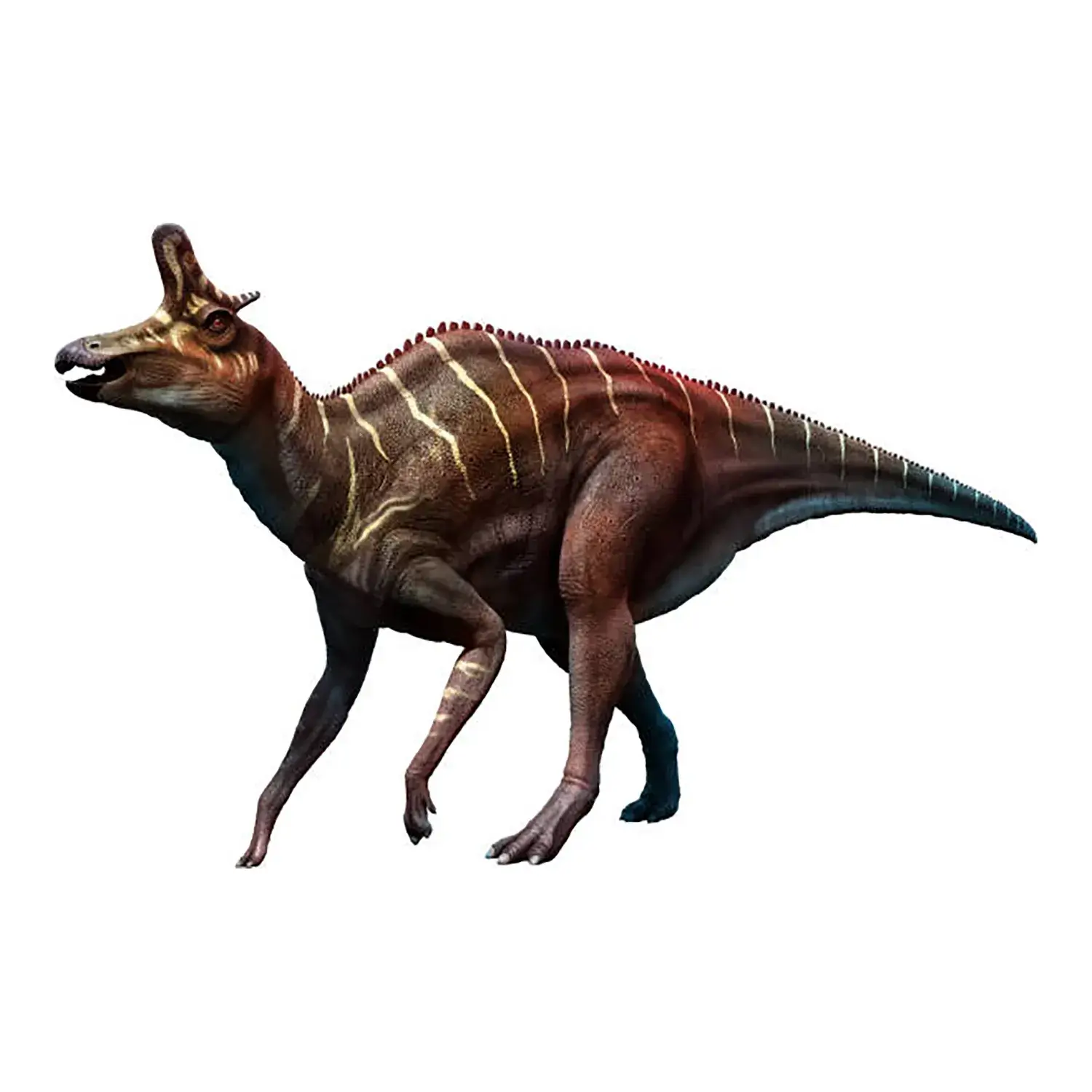
- Kerberosaurus
- Classification
- Ornithopoda
- Characteristics
- Herbivorous
- Era
- Cretaceous period
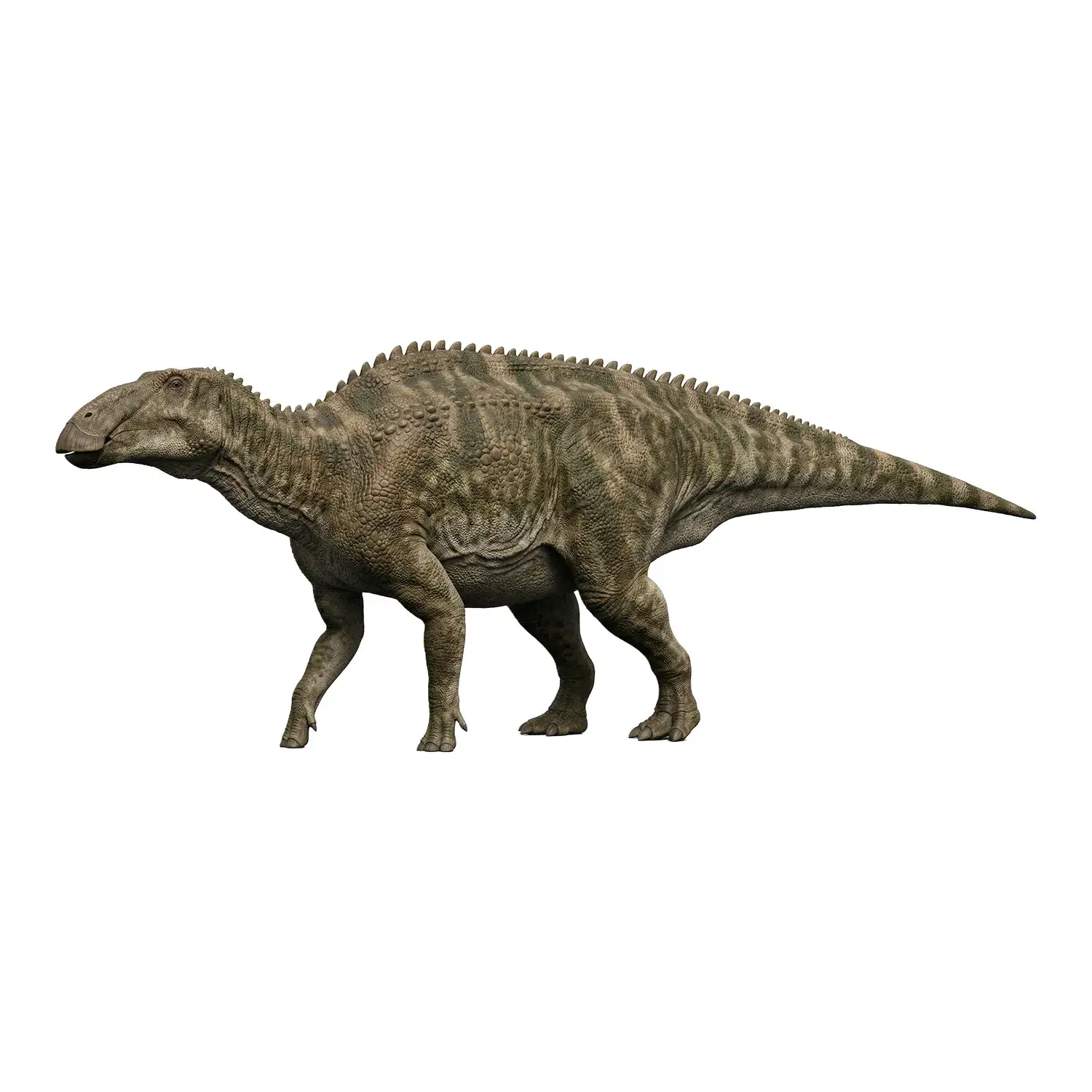
- Heterodontosaurus
- Classification
- Ornithopoda
- Characteristics
- Herbivorous
- Era
- Jurassic period
-
Sponsored Links
-
Sponsored Links










![[Latest Research] What Was the Function of Spinosaurus's Giant "Sail"? Exploring the Mysteries of Thermoregulation and Underwater Locomotion](https://dinosaurmuseum.jp/wp/wp-content/uploads/eyecatch_spinosaurus-sail-function_en-1024x512.webp)
![[Latest Discovery] A Third Type of Skin, Neither Scales Nor Feathers? Meet "Haolong dongi," a New Dinosaur Species Covered Entirely in Spikes](https://dinosaurmuseum.jp/wp/wp-content/uploads/eyecatch_dinosaur-spiky-skin-discovery_en-1024x512.webp)

Description
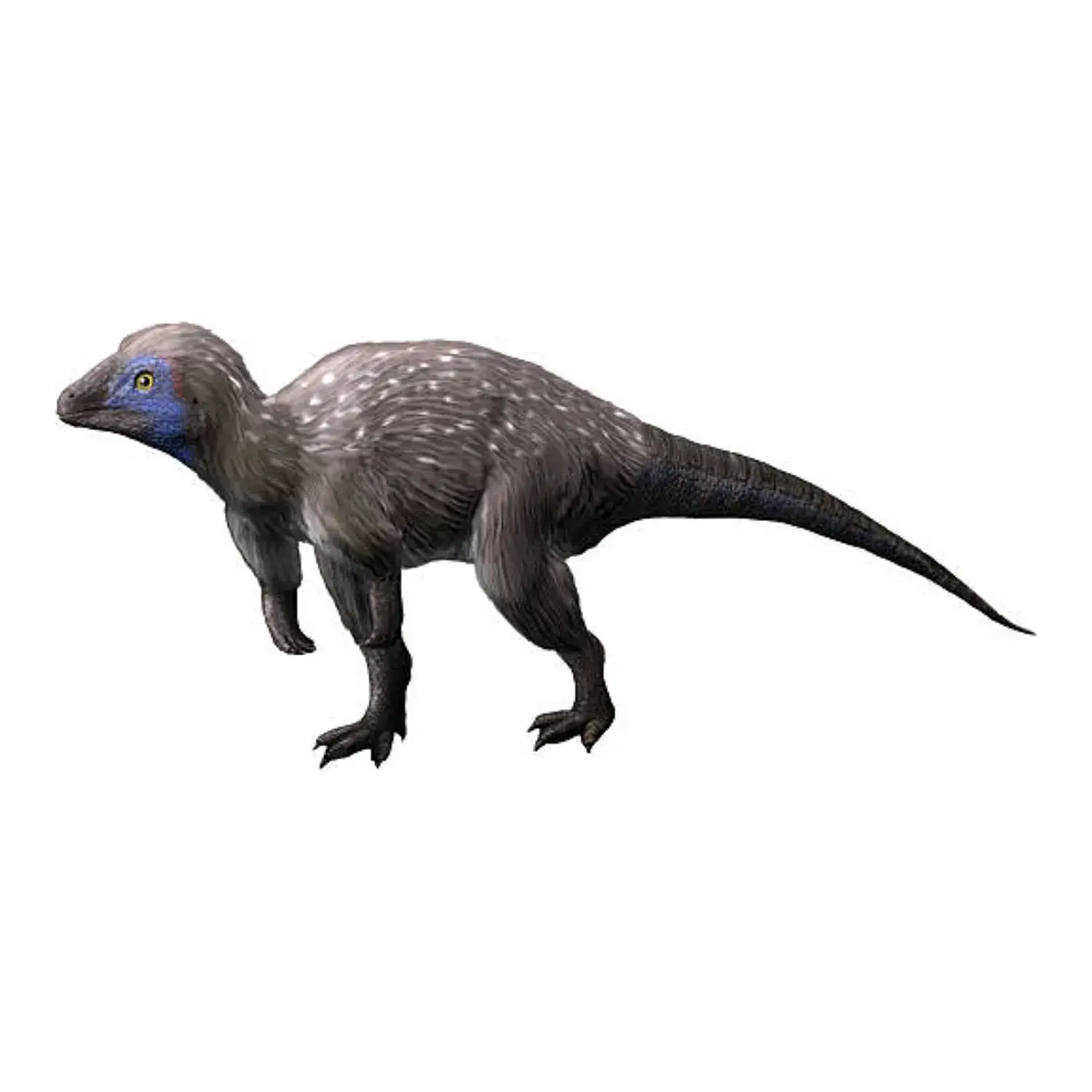
Kulindadromeus is a new species of dinosaur that lived in the southeastern Siberia region of Russia during the Middle to Late Jurassic periods, about 160 million years ago.
It was a small herbivorous dinosaur, approximately 1.5m long and weighing about 2kg, but its description in 2014 was revolutionary, fundamentally overturning the conventional wisdom regarding the origin of dinosaur feathers.
A Discovery That Overturned Dinosaur Evolutionary Consensus
The discovery of Kulindadromeus sent shockwaves through the paleontological community.
The reason is that it provided definitive evidence pushing back the origins of feathers.
Feathers Found on Ornithischians, Distant Relatives of Birds
Previously, almost all dinosaurs confirmed to have feathers belonged to the “Theropod” (Saurischian) lineage, which includes Tyrannosaurus.
Theropods are the group considered to be the ancestors of birds.
However, Kulindadromeus belongs to the “Ornithischian” lineage, which is only distantly related to the ancestors of birds.
Kulindadromeus was the first dinosaur from the Ornithischia group discovered with feathers.
The “Feathered Ancestor” Theory Gains Ground
The confirmation that the feathers of Kulindadromeus and those of theropods shared a common origin strongly suggested that the initial emergence of feathers occurred much earlier in the dinosaurs’ evolutionary history.
This finding supports the powerful hypothesis that feathers may have been present on the very first dinosaurs, before the split between the Saurischia and Ornithischia lineages.
This idea instantly brought credibility to the theory that “all dinosaurs may have had some form of feathering, just as all mammals possess hair.”
A Mosaic of Feathers and Scales
The fossil of Kulindadromeus was astonishing due to its excellent state of preservation.
Skin from various parts of the body was preserved along with hundreds of skeletal bones, including the skull.
Traces and Diversity of Feathers
At least three different types of feathers were confirmed on the Kulindadromeus fossil.
Head and Torso
Covered in simple, thread-like, downy feathers, which are thought to have primarily functioned as insulation to maintain body temperature.
Lower Legs (Shanks)
Featured complex, ribbon-like structures made of multiple bundled filaments.
These may have been used as a display to identify or signal other members of the species.
Coexistence with Scales
The tail and the ends of the hind limbs of Kulindadromeus were not covered in feathers, but scales were visible.
The feet, from the ankle down, were covered in small, hexagonal scales.
This shows that different epidermal structures—feathers and scales—coexisted on a single individual.
Ecology and Evolutionary Significance
It is believed that Kulindadromeus used its feathers to maintain a constant body temperature, allowing it to remain active and successfully survive the Jurassic environment as a herbivorous dinosaur.
The Miracle of Fossil Preservation and the Key to Evolution
The miraculous preservation of the feather traces of Kulindadromeus was achieved because the fossil was covered by fine ash from a volcanic eruption.
This discovery suggests the possibility that “the common ancestor of dinosaurs acquired the structures that would become feathers, and in subsequent evolution, some groups developed them into feathers, while others secondarily reverted to scales.”
The existence of Kulindadromeus, confirmed by an international research team that included Associate Professor Yoshitsugu Kobayashi of Hokkaido University, opened a new page in the history of dinosaur evolution, proving that dinosaurs were not just “scaled lizards.”