Ouranosaurus


Name Origin
Brave Lizard
Family
Iguanodontidae
Classification
Diapsida, Ornithischia, Ornithopoda
Habitat (Discovery Location)
Niger
Period
Approximately 110 million years ago (Early Cretaceous)
Length
Approximately 6–7 meters
Weight
Approximately 2.2–4 tons
Diet
Herbivore
You might also like... 
-
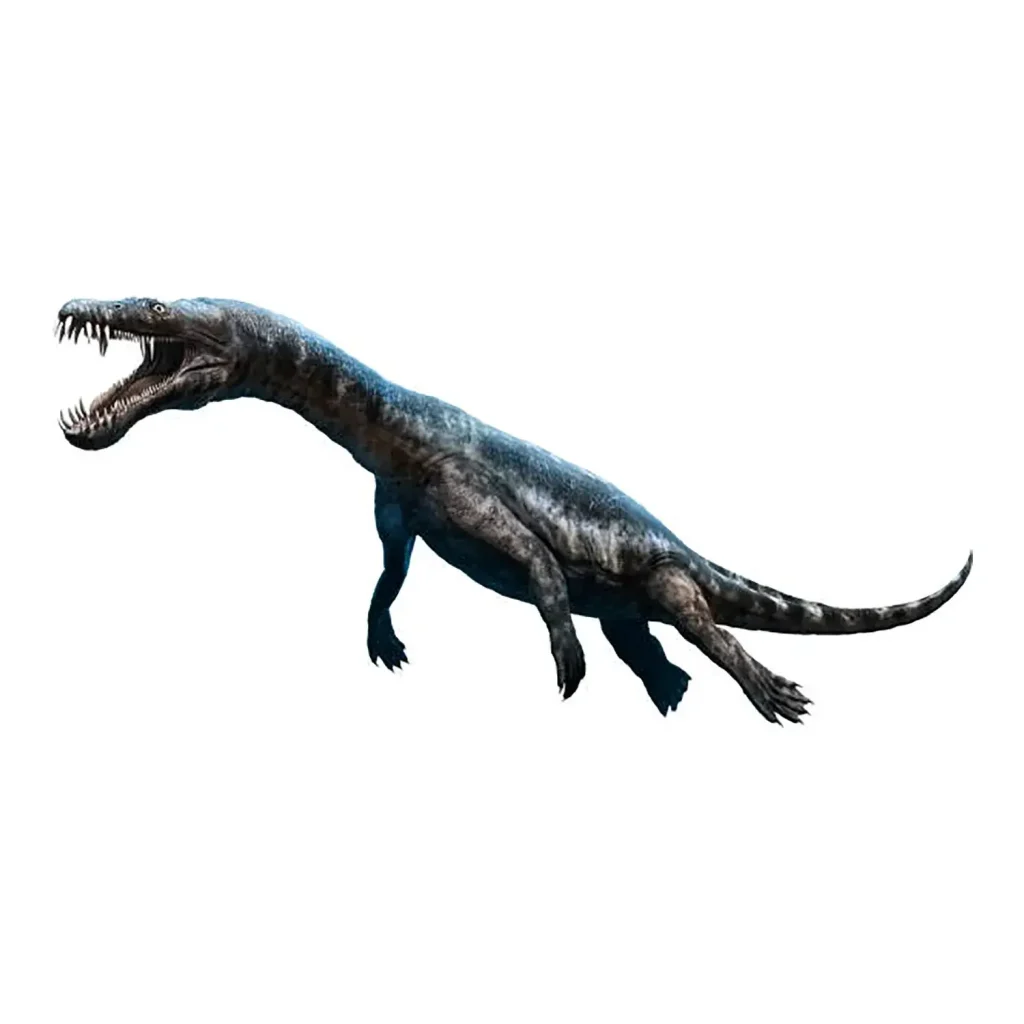
 Nothosaurus
- Classification
- Marine reptiles
- Characteristics
- Carnivorous
- Era
- Triassic period
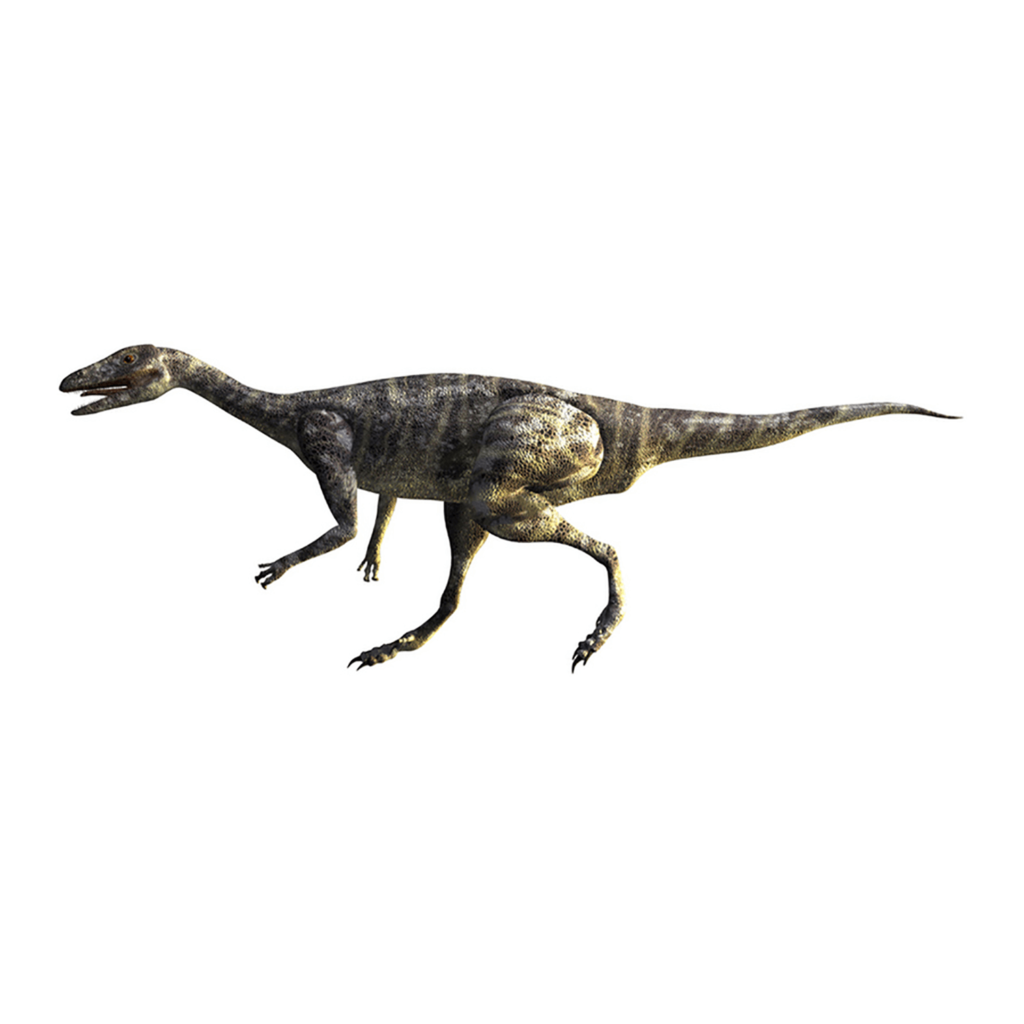
- Eoraptor
- Classification
- Sauropods
- Characteristics
- Omnivorous
- Era
- Triassic period
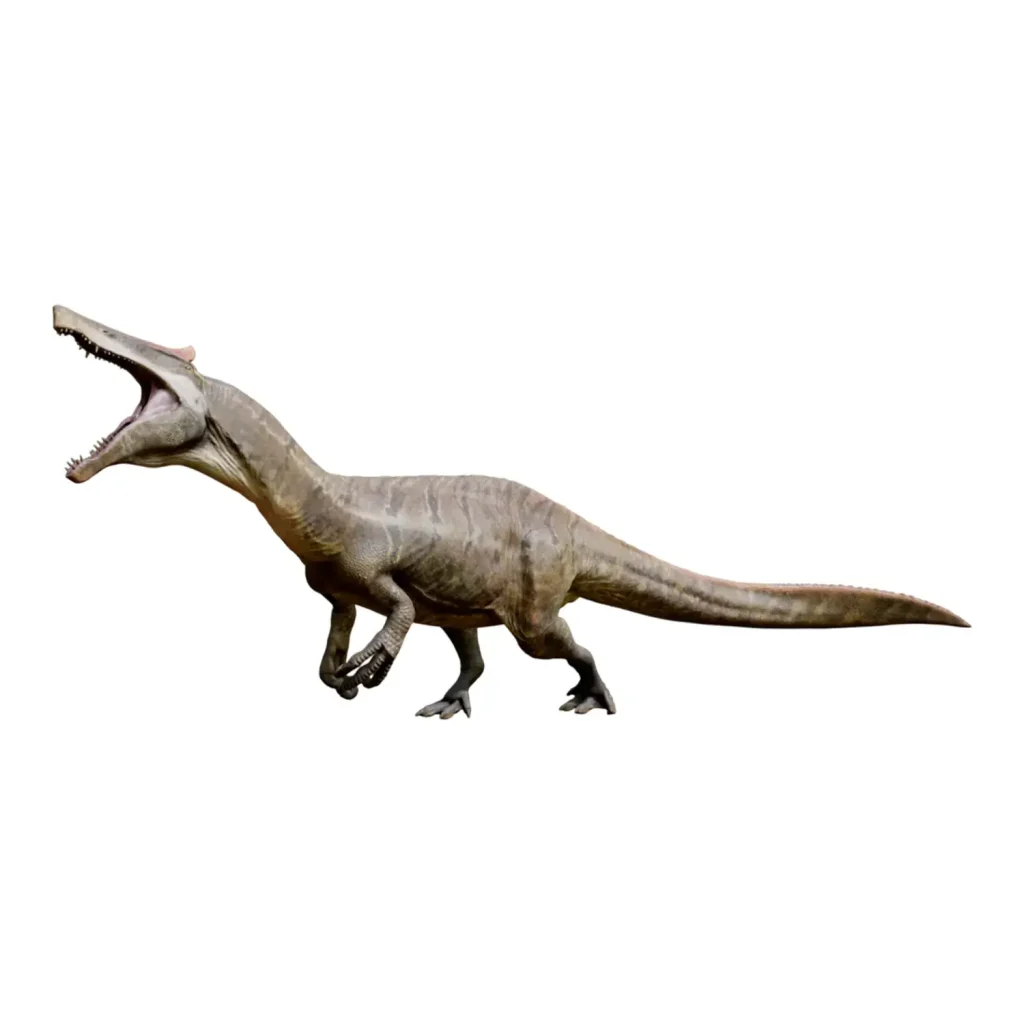
- Irritator
- Classification
- Theropods
- Characteristics
- Carnivorous
- Era
- Cretaceous period
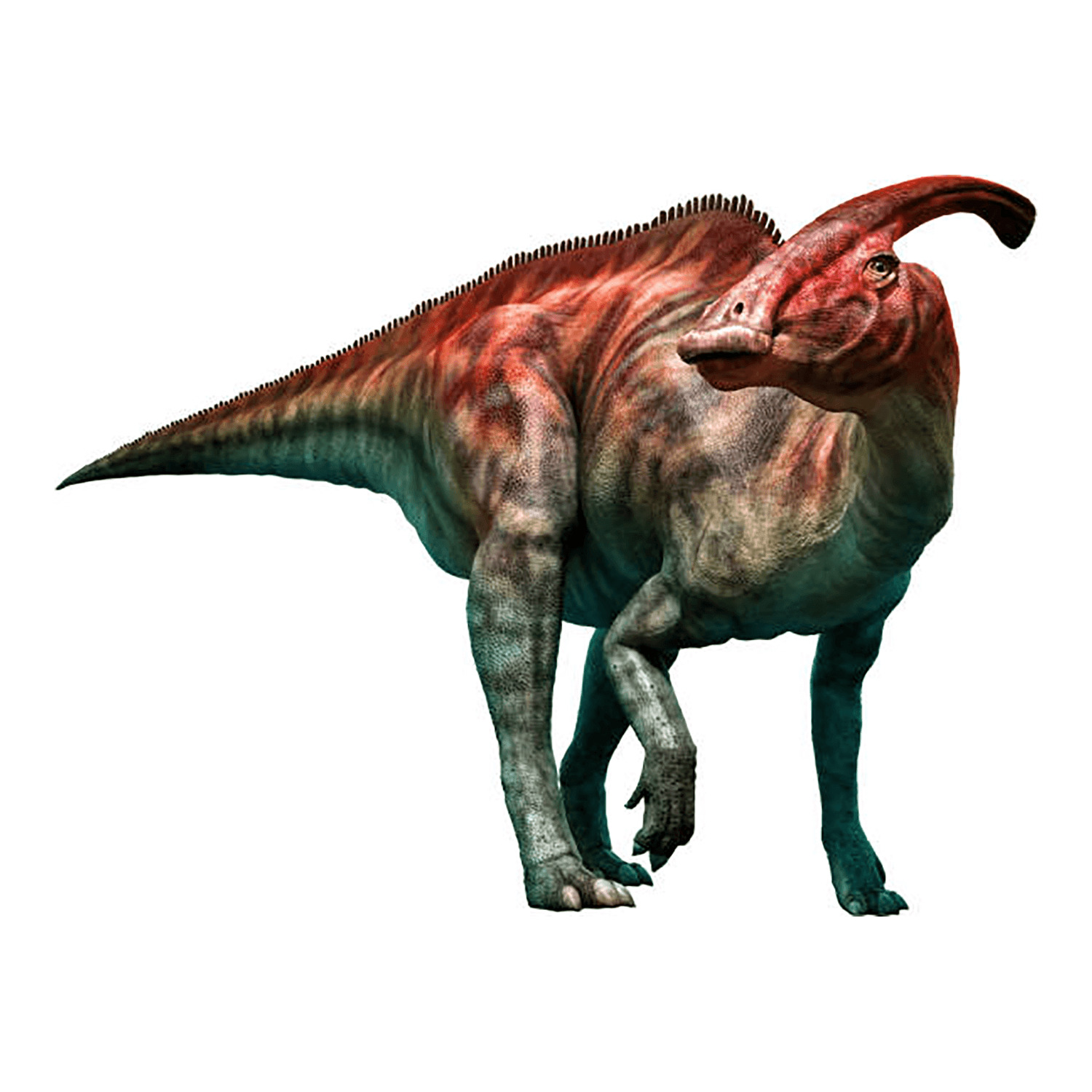
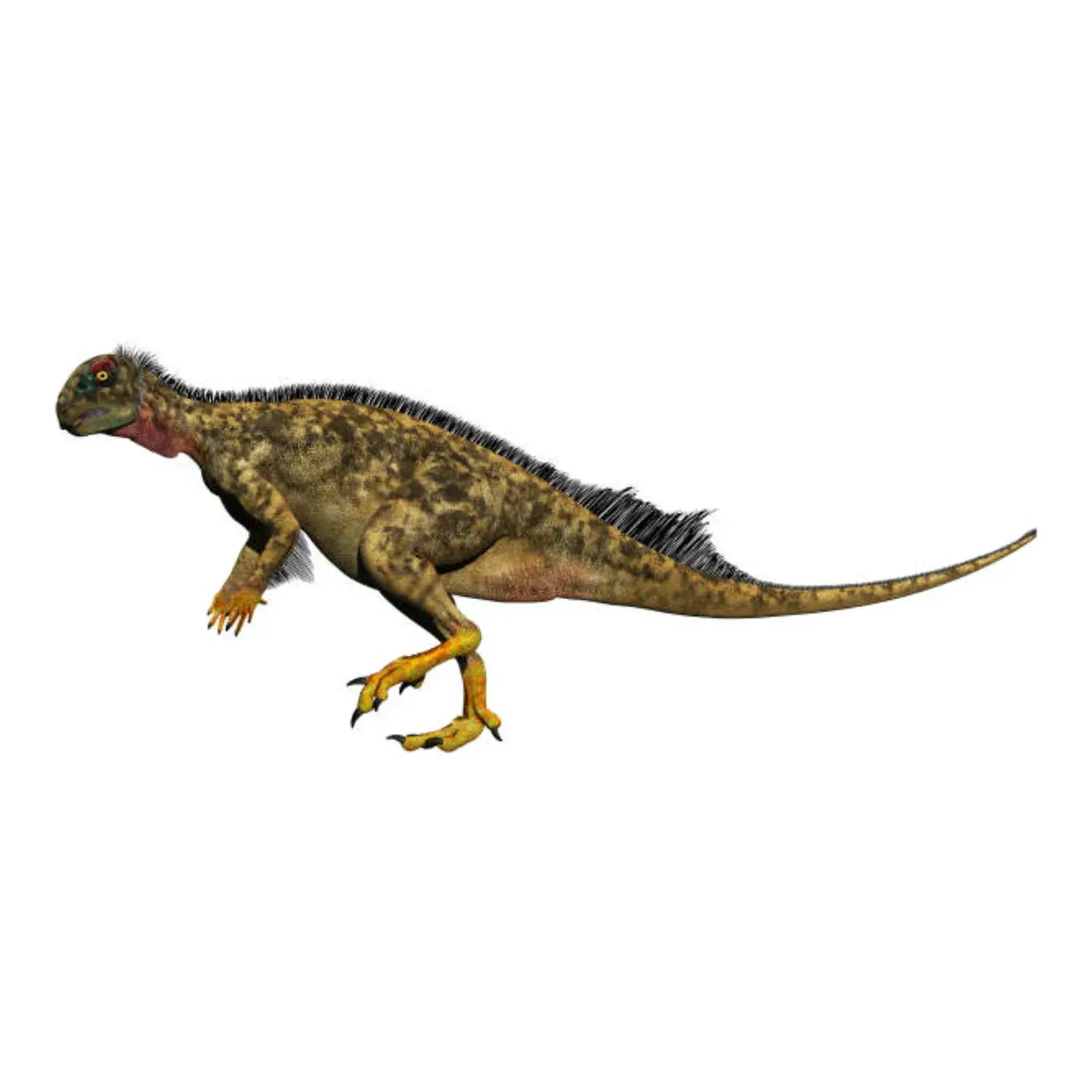
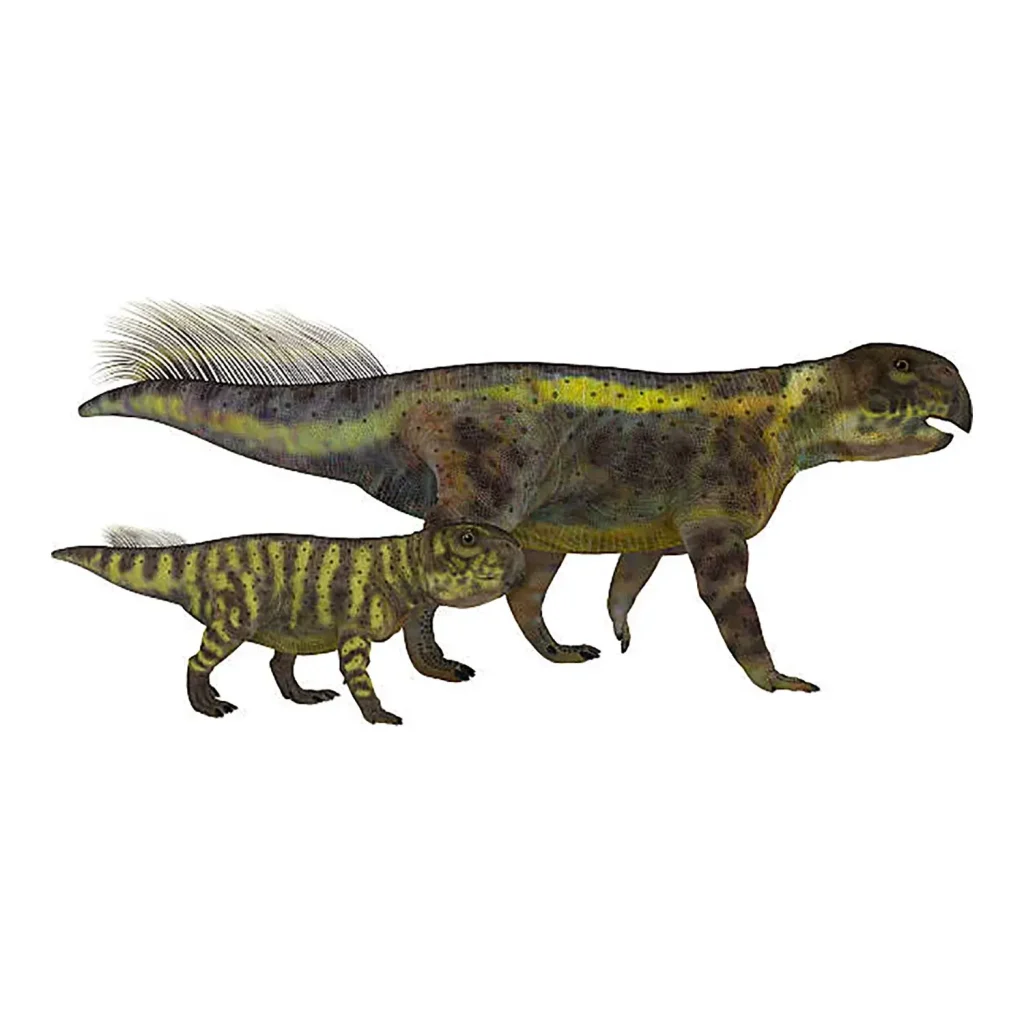
- Psittacosaurus
- Classification
- Marginocephalia
- Characteristics
- Herbivorous
- Era
- Cretaceous period
-
Sponsored Links
-
Sponsored Links

![[Latest Research] What Was the Function of Spinosaurus's Giant "Sail"? Exploring the Mysteries of Thermoregulation and Underwater Locomotion](https://dinosaurmuseum.jp/wp/wp-content/uploads/eyecatch_spinosaurus-sail-function_en-1024x512.webp)
![[Latest Discovery] A Third Type of Skin, Neither Scales Nor Feathers? Meet "Haolong dongi," a New Dinosaur Species Covered Entirely in Spikes](https://dinosaurmuseum.jp/wp/wp-content/uploads/eyecatch_dinosaur-spiky-skin-discovery_en-1024x512.webp)
Description
Approximately 110 million years ago, on the African continent during the Early Cretaceous period.
In the place where the barren Sahara Desert now sprawls, there once existed rivers brimming with water and lush green lands—a “paradise of life.”
When we think of Africa during this era, the giant carnivorous dinosaur Spinosaurus with a sail on its back is famous. However, did you know that another dinosaur possessing a distinctive “sail on its back” lived in the same era and in the same location?
Unlike its counterpart, this dinosaur was not carnivorous, but a gentle herbivore that ate plants.
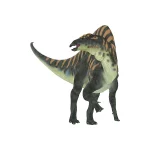
Its name is “Ouranosaurus”.
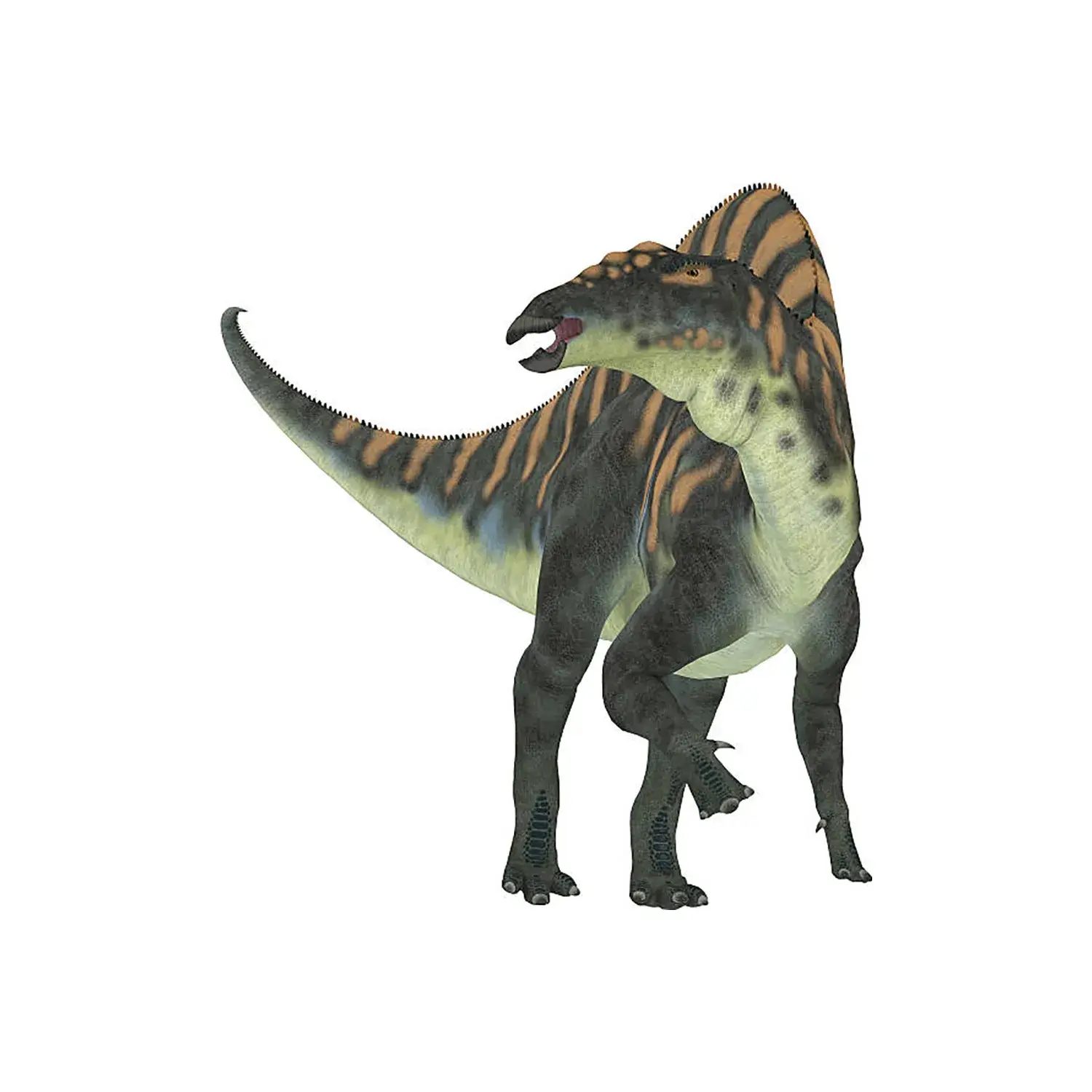
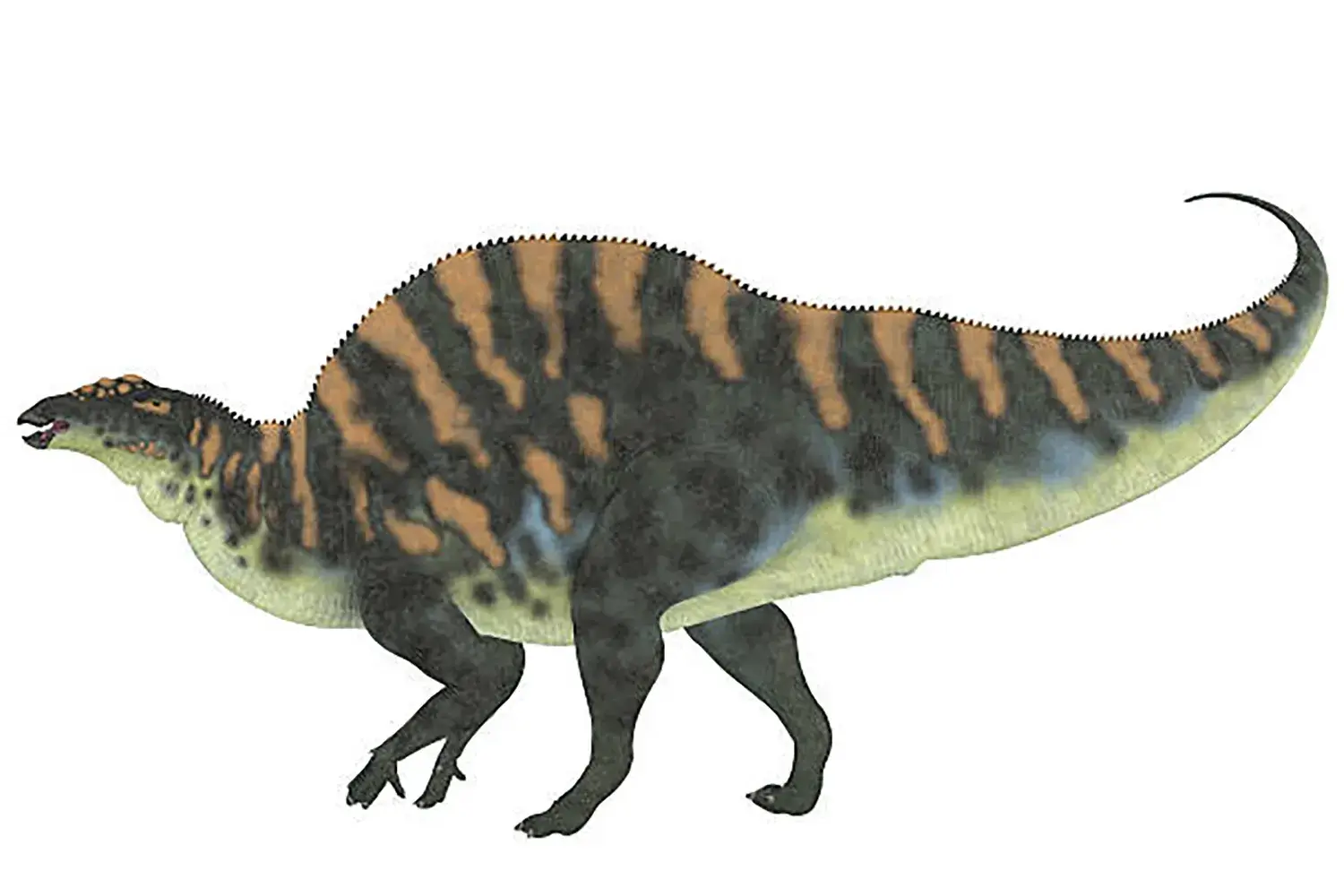
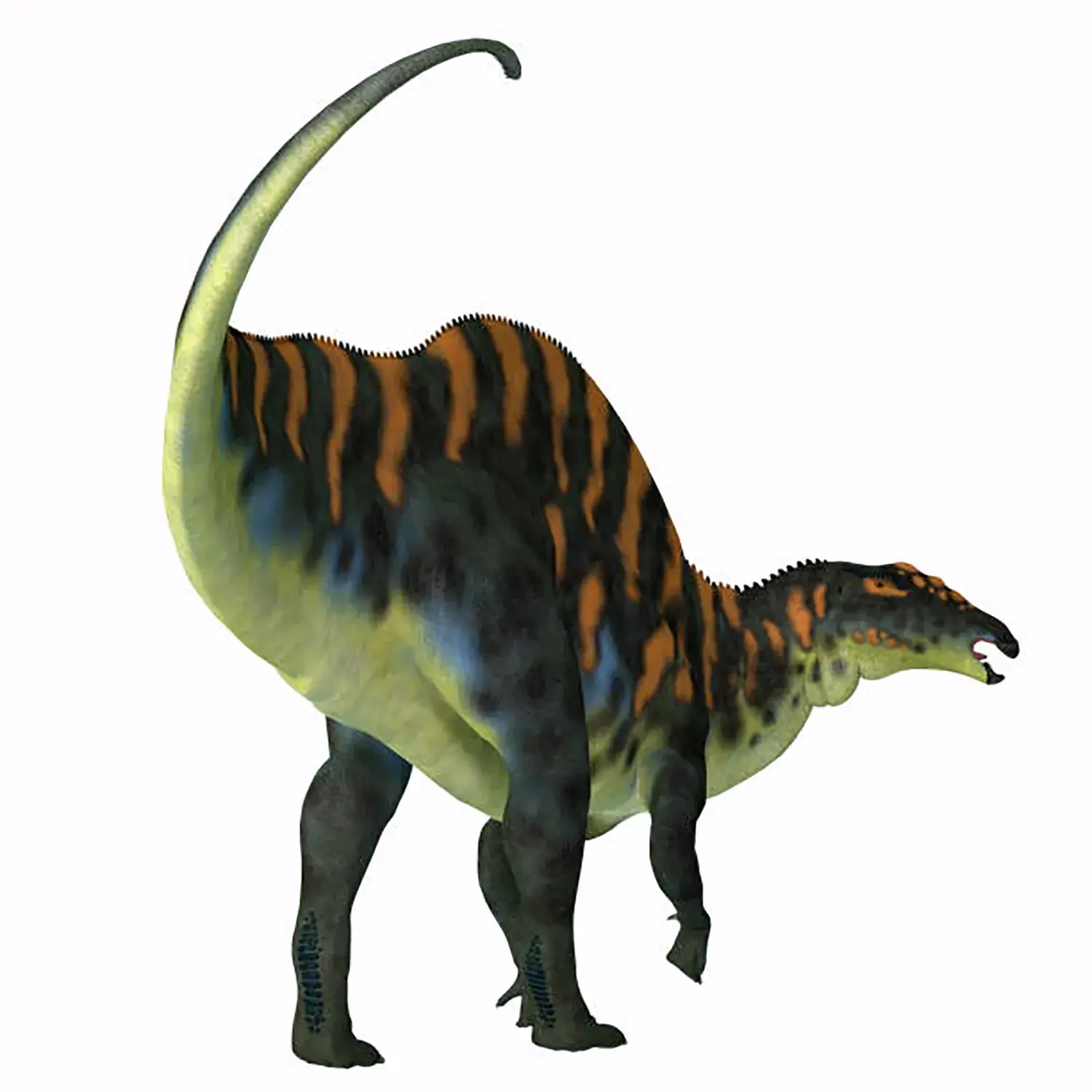
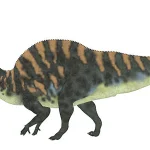
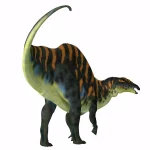
Despite being a medium-sized herbivorous dinosaur with a total length of 6 to 7 meters, this dinosaur possessed abnormally developed protrusions on its back. It is an extremely important figure when discussing the history of African dinosaurs.
Miracle Born from Uranium Exploration: Discovery of the “Brave Lizard”
“Earth’s Treasure” Found While Searching for Nuclear Power
The discovery of Ouranosaurus involves an episode that intersects with modern history.
The Tenere Desert in Niger, West Africa, 1966.
At that time, it was not paleontologists who were in this land, but geologists from the French Atomic Energy Commission.
Their objective was to search for “uranium ore,” a future energy source.
What they dug up in the scorching desert was not inorganic ore, but dinosaur fossils conveying the breath of the ancient Earth.
Finding a complete skeleton of a large ornithopod on the African continent is extremely rare. It was the moment a team searching for energy resources struck a different kind of “treasure” that money cannot buy.
Meaning of Scientific Name: “Brave Lizard of Niger”
It was formally described by paleontologist Philippe Taquet in 1976.
The genus name “Ourano” in the scientific name “Ouranosaurus nigeriensis” means “brave” in the local Arabic dialect.
It was named the “Brave Lizard of Niger” with respect for its figure, standing tall against harsh survival competition and environmental changes.
The Biggest Mystery: Are the Protrusions on the Back a “Sail” or a “Hump”?
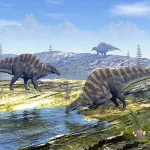
The greatest characteristic of Ouranosaurus is the “neural spines” extending long from its backbone.
The greatest characteristic is the “neural spines” extending long from the backbone.
Regarding this structure, which shares characteristics with Spinosaurus, three theories are currently being debated.
Theory 1: A “Sail” for Thermoregulation
The theory that was once mainstream.
The idea is that a membrane of skin covered the bones, forming a fan-shaped “sail.”
It is speculated that it played the role of a radiator (thermoregulation), cooling down by exposing the sail rich in capillaries to the wind, or conversely warming the blood by bathing in sunlight.
Theory 2: A “Fleshy Hump” Storing Nutrients
A theory considered likely in recent years.
The idea is that it supported a “fleshy hump” packed with muscle and fat, like modern bison or camels.
It may have functioned as a storage tank for nutrients and moisture to survive harsh environments such as dry seasons.
Theory 3: Function as a Display
A theory proposing a visual role separate from physiological functions.
It is believed to have been used for identification within the herd, appeal to the opposite sex (courtship), or intimidation against natural enemies (display) by making the back appear larger.
Dangerous Paradise and Natural Enemies: Offense and Defense with Carcharodontosaurus
Roaming Giant Predators
At that time, Africa was a danger zone where some of the largest carnivorous dinosaurs in history roamed.
Spinosaurus reigned at the waterside, and the theropod “Carcharodontosaurus,” comparable to Tyrannosaurus, reigned on land.
Offense and Defense Against Hunters
Carcharodontosaurus, with its sharp teeth and massive jaws, was the greatest threat to Ouranosaurus.
As medium-sized herbivores, they could never let their guard down against giant hunters seeking fresh meat.
The name “Brave Lizard” might be a testament to surviving in such a world crowded with formidable enemies.
Evolutionary Bridge: From Iguanodon to Duck-billed Dinosaurs
The Only Iguanodontid in Africa?
Ouranosaurus is also important as an evolutionary missing link.
Its sturdy physique, limb structure, and sharp thumb claws retain primitive characteristics of the Iguanodon group.
Evolved Face and Primitive Body
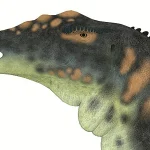
On the other hand, the skull had a “vertically low and horizontally long” shape, and the snout was broad and flat.
The skull had a “vertically low and horizontally long” shape, and the snout was broad and flat.
This closely resembles the evolved Hadrosauridae (duck-billed dinosaurs).
The unbalanced characteristic of “a primitive body but an evolved face” indicates that they are an existence like a “bridge” positioned right in the middle of the process of evolving from Iguanodon types to Hadrosaurs.
Physical Abilities and Flexible Walking Style
Flexible Walking and “Hooves”
Although the forelimbs were half the length of the hind limbs, their lifestyle was flexible.
The fingertips were flat and “hoof-like,” allowing them to switch between bipedal and quadrupedal walking.
They likely used four legs for moving and resting, and two legs when eating high leaves.
Weapons and Diet
The thumb of the forelimb had a “sharp conical claw,” which may have been used when gathering plants or as a defensive weapon in emergencies.
Also, the wide snout was suitable for pecking at a lot of ground plants at once, suggesting they enjoyed the vegetation of the rich waterside.