Segnosaurus
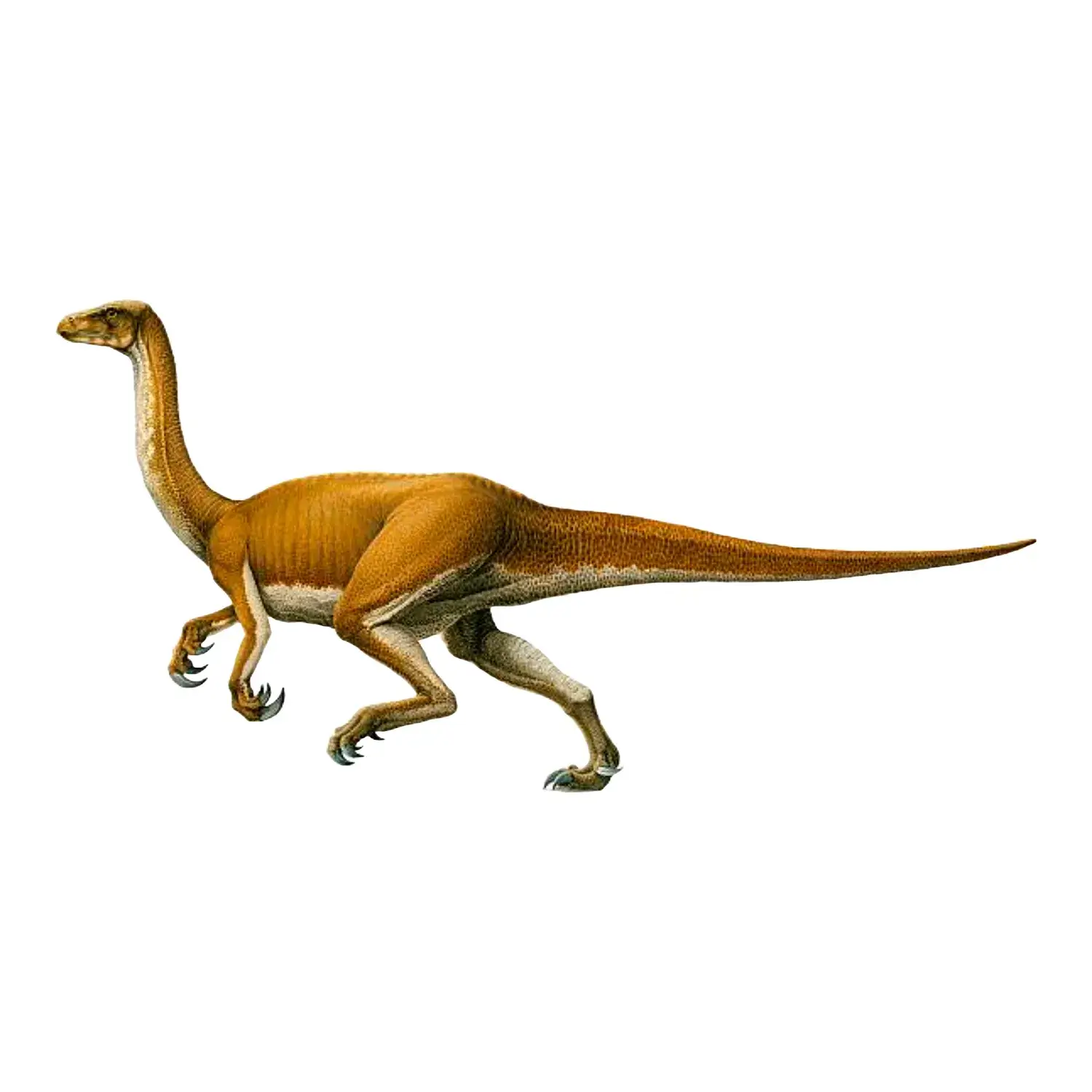
Name Origin
Slow Lizard
Family
Therizinosauridae
Classification
Diapsida, Saurischia, Theropoda
Habitat (Discovery Location)
Mongolia
Period
Approximately 93 million years ago (Late Cretaceous)
Length
Approximately 6.5 meters
Weight
Approximately 3–10 tons
Diet
Herbivore
You might also like... 

-
 Alwalkeria
- Classification
- Theropods
- Characteristics
- Carnivorous
- Herbivorous
- Omnivorous
- Era
- Triassic period
- Caudipteryx
- Classification
- Theropods
- Characteristics
- Omnivorous
- Feathered
- Era
- Cretaceous period
- Brachiosaurus
- Classification
- Sauropods
- Characteristics
- Herbivorous
- Era
- Jurassic period
- Leaellynasaura
- Classification
- Ornithopoda
- Characteristics
- Herbivorous
- Era
- Cretaceous period
-
Sponsored Links
-
Sponsored Links





Description
In the history of dinosaur research, there exists a “mysterious dinosaur” that greatly puzzled researchers upon its discovery and sent shockwaves through the academic world.
Inhabiting Mongolia during the Late Cretaceous period (approximately 93 million years ago), this dinosaur belonged to a group of carnivorous dinosaurs, yet for some reason possessed numerous characteristics resembling those of herbivorous dinosaurs.
Its appearance was so contradictory that at one time, a strange theory even circulated that it might be an “independent third group, neither Saurischian nor Ornithischian.”
The Mystery of the “Unclassifiable” Skeleton That Shook the Academic World
When Segnosaurus was discovered, paleontologists were baffled.
This was because its skeleton contained a mix of “contradictions” unthinkable by the common knowledge of the time.
An “Ornithischian” Pelvis Despite Being a Saurischian?
Dinosaurs are broadly divided into “Saurischia” (like Tyrannosaurus) and “Ornithischia” (like Triceratops) based on the shape of their pelvis.
Segnosaurus possessed characteristics of theropods (Saurischia), but both the “pubis” and “ischium” of its pelvis pointed backward.
This is a characteristic originally seen in “Ornithischia.”
For this reason, they were called “Ornithischians pretending to be Saurischians” or suspected of being “descendants of an independent ‘third dinosaur group’.”
Resembling “Prosauropods” That Should Have Been Extinct?
What caused further confusion were the features of the head and teeth.
The small, weak teeth lining its long skull bore a striking resemblance to “prosauropods” (such as Plateosaurus) that were supposed to have gone extinct long ago (Triassic to Early Jurassic).
Because of this, the theory that they were “descendants of prosauropods that miraculously survived until the Late Cretaceous” was seriously debated.
*Currently, these theories have been refuted, and it has been determined that they are “theropods that secondarily evolved to become herbivores (Therizinosaurus family).”
The unique pelvis is considered to be a result of evolution to support the massive internal organs needed to digest plants.
A Hybrid of Carnivore and Herbivore? A Strange, Patchwork Body
The Therizinosauridae, including Segnosaurus, have a unique appearance that looks as if parts from different dinosaurs were patched together.
Sharp Claws and Weak Teeth
Their bodies contained a mix of carnivorous and herbivorous dinosaur parts.
Forelimbs
They possessed three sharp, long claws, a remnant of carnivorous dinosaurs.
Mouth
Lined with 48 small, weak, pencil-like teeth, with a beak-shaped tip for plucking plants.
In the past, there was a “piscivore theory” suggesting they used these claws to catch fish, but currently, based on the shape of their teeth and body structure, they are considered to have been completely herbivorous.
Rare “Four-Toed” Feet
The structure of their feet is also unique.
While many theropods stood on three toes, Segnosaurus walked with all of its wide “four toes” touching the ground.
The hind limbs were broad and sturdy but short; this was a feature not for running, but for supporting their heavy weight.
Name Means “Laid-back”: Position Within the Therizinosaurs
Meaning of Scientific Name and Ecology
The scientific name Segnosaurus means “slow lizard” in Latin.
The pelvis was wide, and the torso was thick and swollen like a barrel.
True to their name, they likely trod the earth with their heavy bodies, moving in slow motion while eating plants.
A Medium-Sized Dinosaur Representing the Group
The total length was approximately 6.5m.
Although small compared to Therizinosaurus which reached 11m, it is a relatively large size within the group and is one of the representative species.
Before the name Therizinosauridae became established, this group was sometimes called “Segnosaurs.”
A complete skeleton has not yet been found, and it still holds many mysteries.
If a definitive fossil is discovered in the future, they may once again become the “eye of the storm” in the paleontological world.