
Sinocalliopteryx
Name Origin
Chinese Beautiful Feather
Family
Compsognathidae
Classification
Diapsida, Saurischia, Theropoda
Habitat (Discovery Location)
China
Period
Approximately 124.6 million years ago (Early Cretaceous)
Length
Approximately 2.4 meters
Weight
Approximately 20 kg
Diet
Carnivore (Meat-eater)

You might also like... 

-
 Unaysaurus
- Classification
- Sauropods
- Characteristics
- Herbivorous
- Era
- Triassic period
- Centrosaurus
- Classification
- Marginocephalia
- Characteristics
- Herbivorous
- Era
- Cretaceous period
- Triceratops
- Classification
- Marginocephalia
- Characteristics
- Herbivorous
- Era
- Cretaceous period
- Hypsilophodon
- Classification
- Ornithopoda
- Characteristics
- Herbivorous
- Era
- Cretaceous period
-
Sponsored Links
-
Sponsored Links










![[Latest Research] What Was the Function of Spinosaurus's Giant "Sail"? Exploring the Mysteries of Thermoregulation and Underwater Locomotion](https://dinosaurmuseum.jp/wp/wp-content/uploads/eyecatch_spinosaurus-sail-function_en-1024x512.webp)
![[Latest Discovery] A Third Type of Skin, Neither Scales Nor Feathers? Meet "Haolong dongi," a New Dinosaur Species Covered Entirely in Spikes](https://dinosaurmuseum.jp/wp/wp-content/uploads/eyecatch_dinosaur-spiky-skin-discovery_en-1024x512.webp)
Description
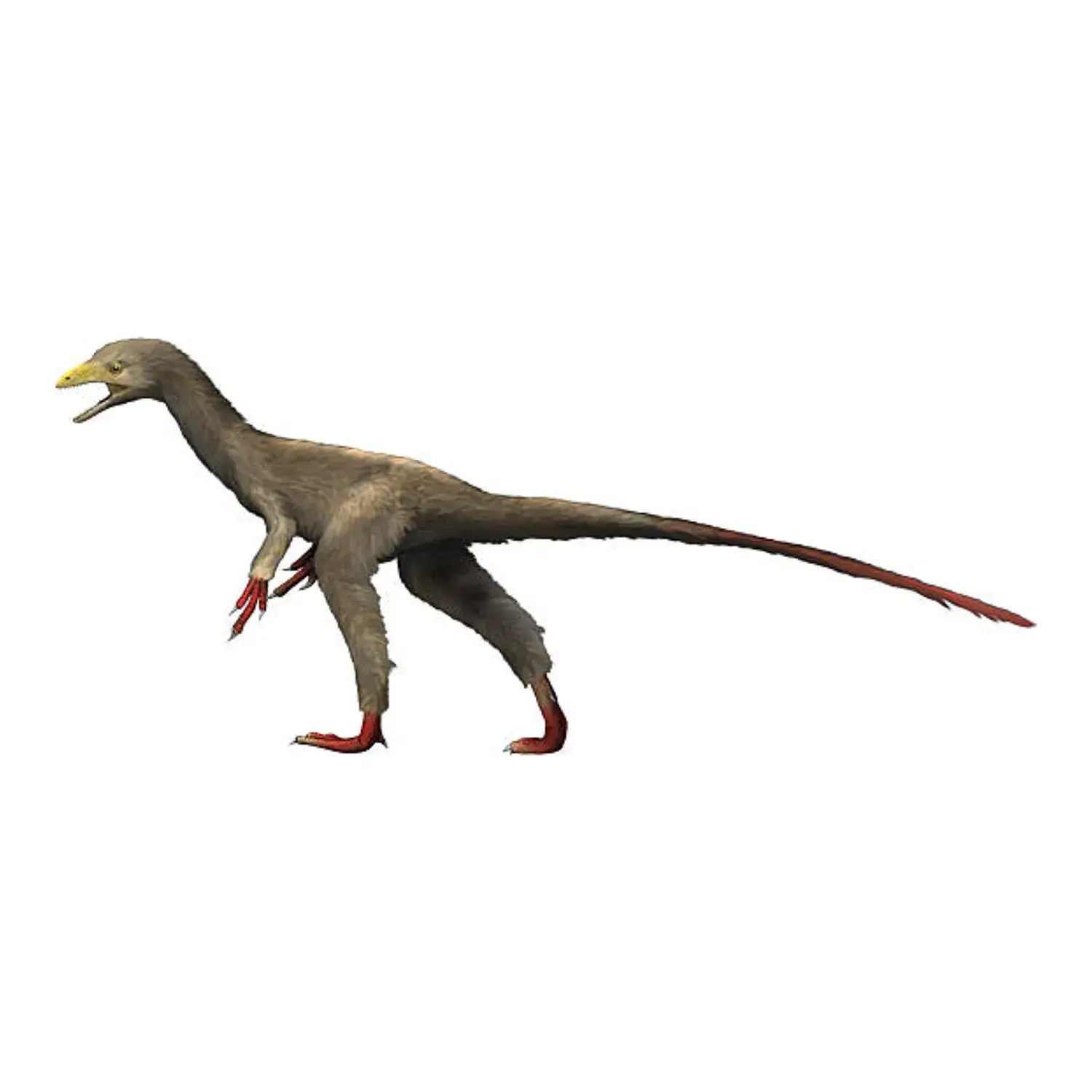
In Early Cretaceous China, there lived a carnivorous dinosaur with an astonishing appetite, quite contrary to its elegant name.
Its scientific name means “Chinese Beautiful Feather.”
However, the reality is that it was a voracious predator in the ecosystem of that time, attacking and devouring birds and other dinosaurs.
We explain the characteristics of Sinocalliopteryx, which boasts the largest body size among compsognathids, covering its feathered body and the identity of the shocking “prey” found inside its fossilized stomach.
Largest of the Compsognathids! Characteristics of the Feathers Covering its Body
Sinocalliopteryx belongs to the “Coelurosauria,” a group related to the small theropod Compsognathus that flourished during the Jurassic period.
A Giant Body Exceeding 2 Meters
It boasts the largest body length among the feathered dinosaurs of this group.
With a total length of approximately 2.4 meters, it was about twice the size of its close relative Huaxiagnathus, which was discovered in the same region.
Flightless Feathers for “Insulation”
Its body shape is characterized by long limbs and a slender, pointed face.
Although its entire body was covered in feathers, these were not flight feathers for flying, but rather hair-like feathers suited for “insulation.”
These feathers grew thickly down to the ankles and are believed to have helped maintain body temperature.
Prey Intact Inside the Stomach? A Shocking Diet
The greatest characteristic of this dinosaur lies in its surprising “diet” revealed by fossils.
From the stomach area of discovered specimens, the prey it ate was found remaining in its original shape, alongside “gastroliths” (stomach stones) used to aid digestion.
List of Prey Found Inside the Stomach
The evidence of what they ate was shocking.
Confuciusornis
A primitive bird.
Surprisingly, three of these were found in the abdomen of a single individual.
Sinornithosaurus
Another feathered dinosaur.
A torn-off hind limb was discovered.
Others
Parts of dromaeosaurids and fossils of the herbivorous dinosaur Psittacosaurus have also been found.
This shows that they were extremely ferocious hunters that actively attacked and ate not only small animals like lizards but also dinosaurs similar to themselves and even flying birds.
Why Such a Glutton? The Relationship Between Feathers and Metabolism
Why did Sinocalliopteryx require so much food?
The reason is related to the “feathers” covering them.
Possessing feathers indicates a high possibility that they were “endotherms” capable of maintaining a constant body temperature.
To maintain a high body temperature and metabolism while moving around actively, they had to constantly consume large amounts of energy (food).
Beneath the “beautiful feathers,” the wild power to survive burned with an insatiable appetite.