
Sonidosaurus

Name Origin
Lizard of Sonid (a place name)
Classification
Diapsida, Saurischia, Sauropoda
Habitat (Discovery Location)
China
Period
Late Cretaceous
Length
Approximately 9 meters
Diet
Herbivore
You might also like... 

-
 Amargasaurus
- Classification
- Sauropods
- Characteristics
- Herbivorous
- Era
- Cretaceous period
- Siats meekerorum
- Classification
- Theropods
- Characteristics
- Carnivorous
- Era
- Cretaceous period
- Euskelosaurus
- Classification
- Sauropods
- Characteristics
- Herbivorous
- Era
- Triassic period
- Parasaurolophus
- Classification
- Ornithopoda
- Characteristics
- Herbivorous
- Era
- Cretaceous period
-
Sponsored Links
-
Sponsored Links










![[Latest Research] What Was the Function of Spinosaurus's Giant "Sail"? Exploring the Mysteries of Thermoregulation and Underwater Locomotion](https://dinosaurmuseum.jp/wp/wp-content/uploads/eyecatch_spinosaurus-sail-function_en-1024x512.webp)
![[Latest Discovery] A Third Type of Skin, Neither Scales Nor Feathers? Meet "Haolong dongi," a New Dinosaur Species Covered Entirely in Spikes](https://dinosaurmuseum.jp/wp/wp-content/uploads/eyecatch_dinosaur-spiky-skin-discovery_en-1024x512.webp)

Description
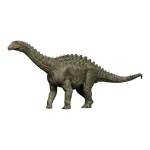
In the Inner Mongolia Autonomous Region of China, fossils of a rare dinosaur, seldom found in the Asian region, have been discovered.
“Sonidosaurus,” described in 2006, is a sauropod belonging to the Titanosauria group.
They are known not only for their massive bodies but also for possessing “armor” along their spines for self-defense.
“Lizard of Sonid”: A Rare Species Discovered in Inner Mongolia
Origin of the Name
The scientific name Sonidosaurus was named after “Sonid” (Sunite), the place in the Inner Mongolia Autonomous Region, China, where it was discovered.
It directly translates to “Lizard of Sonid.”
Asian Titanosaurs
When we think of Titanosaurs, giant dinosaurs like Argentinosaurus that flourished in South America are famous, but discoveries in Asia are relatively rare.
Sonidosaurus has become a significant discovery for understanding the diversity of sauropods in this region.
“Spike-like Armor” Protecting the Back
One of the major characteristics of Titanosaurs is the presence of “armor” on their body surface for protection (e.g., Saltasaurus).
Defense Against Predators
Sonidosaurus is no exception.
It is believed that large, thick spike-like armor lined its spine.
This armament likely played a major role in protecting them from predators, such as the carnivorous dinosaurs of that time.
Evidence of “Unique Evolution” with Old and New Traits
Sonidosaurus is a very interesting existence in the evolutionary history of dinosaurs.
The discovered fossils displayed a mix of both “primitive characteristics” and more “evolved characteristics” of Titanosaurs.
Based on these “mosaic” features, the following hypothesis has been proposed.
It is possible that early Titanosaurs that migrated to Asia followed a different evolutionary path than their relatives in other regions, evolving uniquely within the environment of the Asian continent to become this species.
Their fossils convey the story of the evolutionary journey taken by these giants who crossed continents.