
Nothosaurus



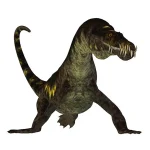
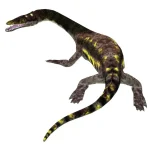
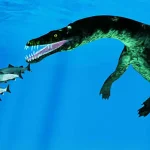
Name Origin
False Lizard
Family
Nothosauridae
Classification
Diapsida, Sauropterygia, Nothosauria
Habitat (Discovery Location)
France, Germany, Italy, Russia, China
Period
Approximately 240–210 million years ago (Late Triassic)
Length
Approximately 1–4 meters
Weight
Approximately 90 kg
Diet
Piscivore
You might also like... 

-
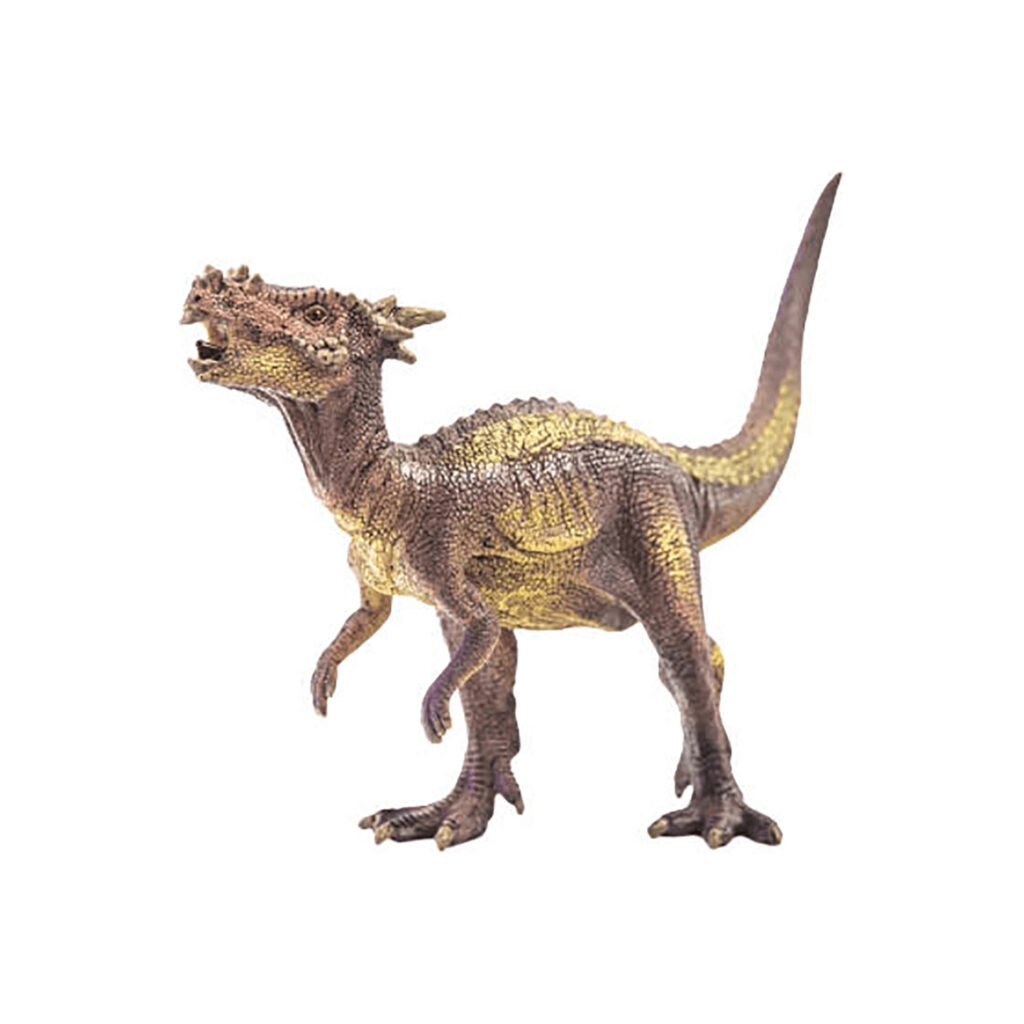
 Dracorex
- Classification
- Marginocephalia
- Characteristics
- Herbivorous
- Era
- Cretaceous period
- Hypsilophodon
- Classification
- Ornithopoda
- Characteristics
- Herbivorous
- Era
- Cretaceous period
- Eotyrannus
- Classification
- Theropods
- Characteristics
- Carnivorous
- Era
- Cretaceous period
- Apatosaurus
- Classification
- Sauropods
- Characteristics
- Herbivorous
- Era
- Jurassic period
-
Sponsored Links
-
Sponsored Links




![[Latest Research] What Was the Function of Spinosaurus's Giant "Sail"? Exploring the Mysteries of Thermoregulation and Underwater Locomotion](https://dinosaurmuseum.jp/wp/wp-content/uploads/eyecatch_spinosaurus-sail-function_en-1024x512.webp)
![[Latest Discovery] A Third Type of Skin, Neither Scales Nor Feathers? Meet "Haolong dongi," a New Dinosaur Species Covered Entirely in Spikes](https://dinosaurmuseum.jp/wp/wp-content/uploads/eyecatch_dinosaur-spiky-skin-discovery_en-1024x512.webp)

Description
The Mesozoic Era, Triassic Period.
Just before the age when dinosaurs became the absolute rulers of the land, a creature swam in the seas that could be called the ancestor of the marine reptiles that would flourish in later eras.
Its name was “Nothosaurus”.
Moving between land and sea like modern sea lions or crocodiles, this creature dominated the ancient shallows and serves as a pivotal existence for understanding the evolution from land animals to marine reptiles.
The Aquatic Reptile Bearing a Name of “Falsehood”
Origin and Meaning of the Name: “False Lizard”
Taxonomically, Nothosaurus is not a dinosaur.
Its scientific name holds a slightly unusual meaning.
The “Notho” in its name comes from Ancient Greek, meaning “false” or “illegitimate.”
In other words, Nothosaurus translates to “False Lizard,” or “Bastard Lizard,” implying a “deceptive lizard.”
It looked like a lizard at first glance, yet it was not fully terrestrial, nor was it as fully aquatic as later marine reptiles.
Its name symbolizes its strange position of living in the gap between these two worlds.
Species Diversity and Size
Five species of Nothosaurus have been confirmed to date.
Body size varied by species, ranging from small types around 1 meter in length to large types reaching up to 4 meters.
They diversified extensively in the Triassic seas, adapting to their respective ecological niches.
Evidence of Evolution: A Body Adapted for the Gap Between Land and Sea
Nothosaurus was a creature whose ancestors had evolved on land but returned to the sea, gaining the ability to swim like fish.
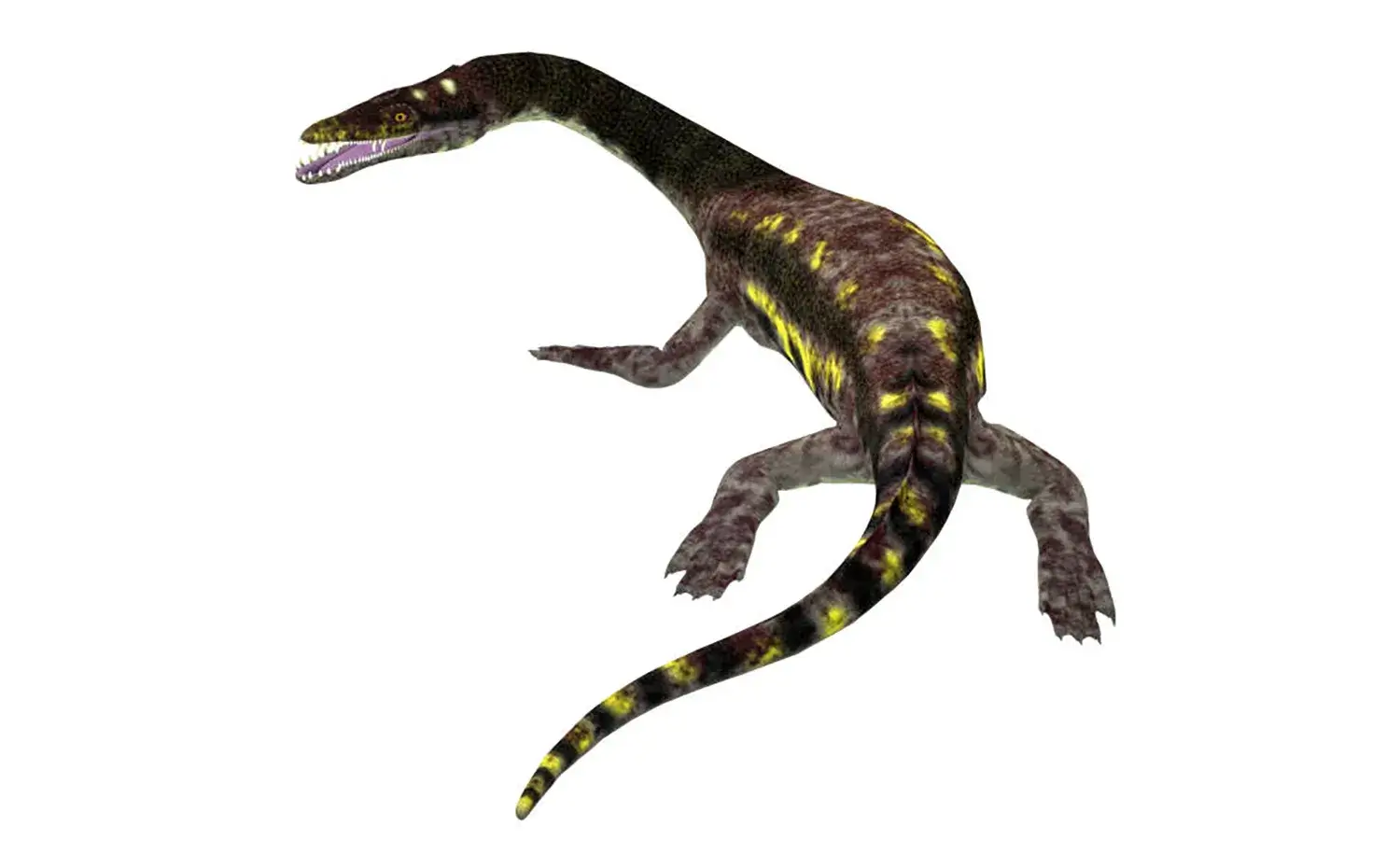
Its appearance possessed characteristics that could be described as an amphibious “hybrid.”
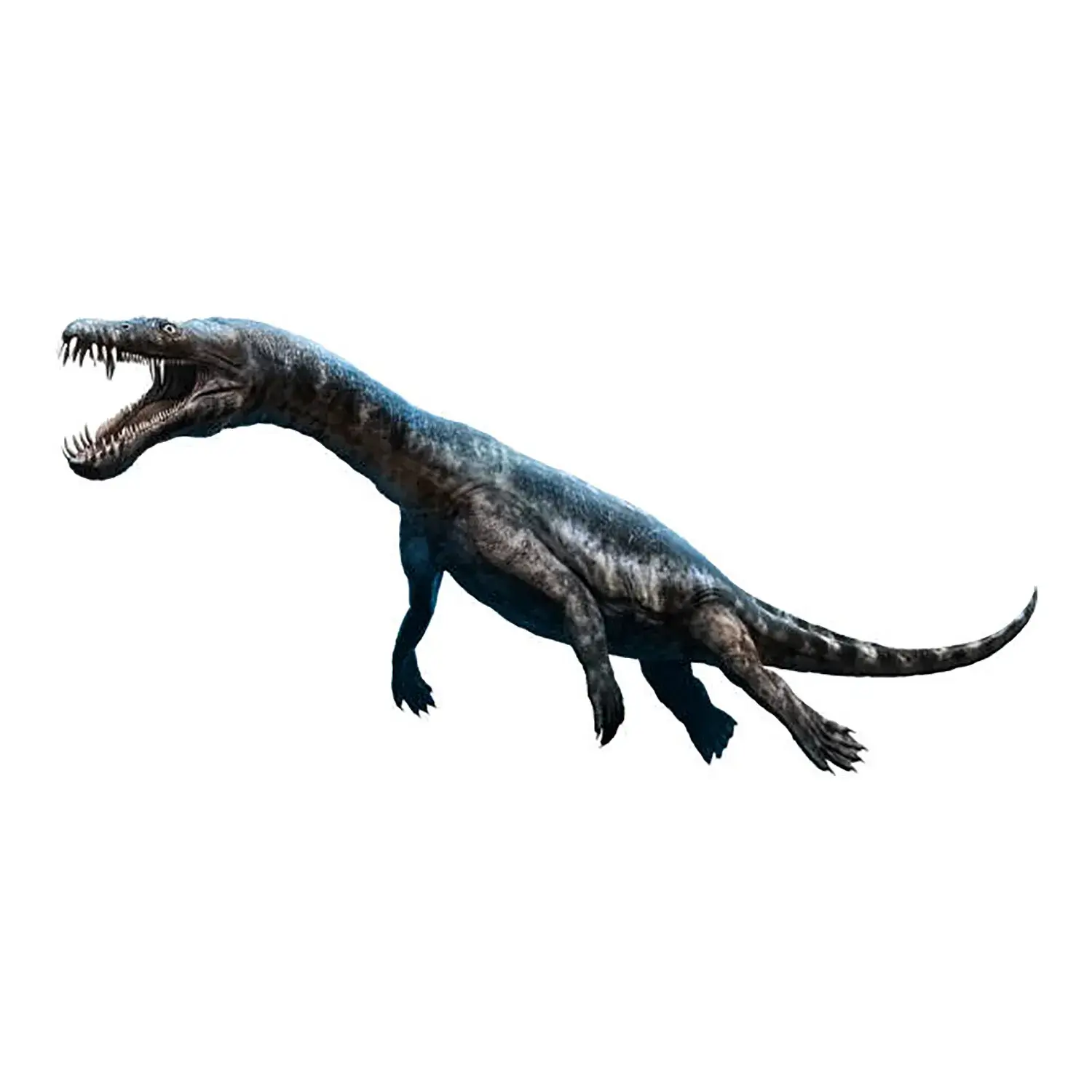
A Strange Head and “Jaws of Death”
Facial Shape
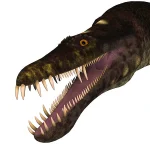
Seen from the side, it is long and slender like a crocodile, but from the front, it is flat and wide.
A crocodile-like face
Position of Nostrils
Curiously, the nostrils were located right near the eyes.
This is a mysterious feature for a creature that breathed air and needed to surface to breathe.
Powerful Teeth
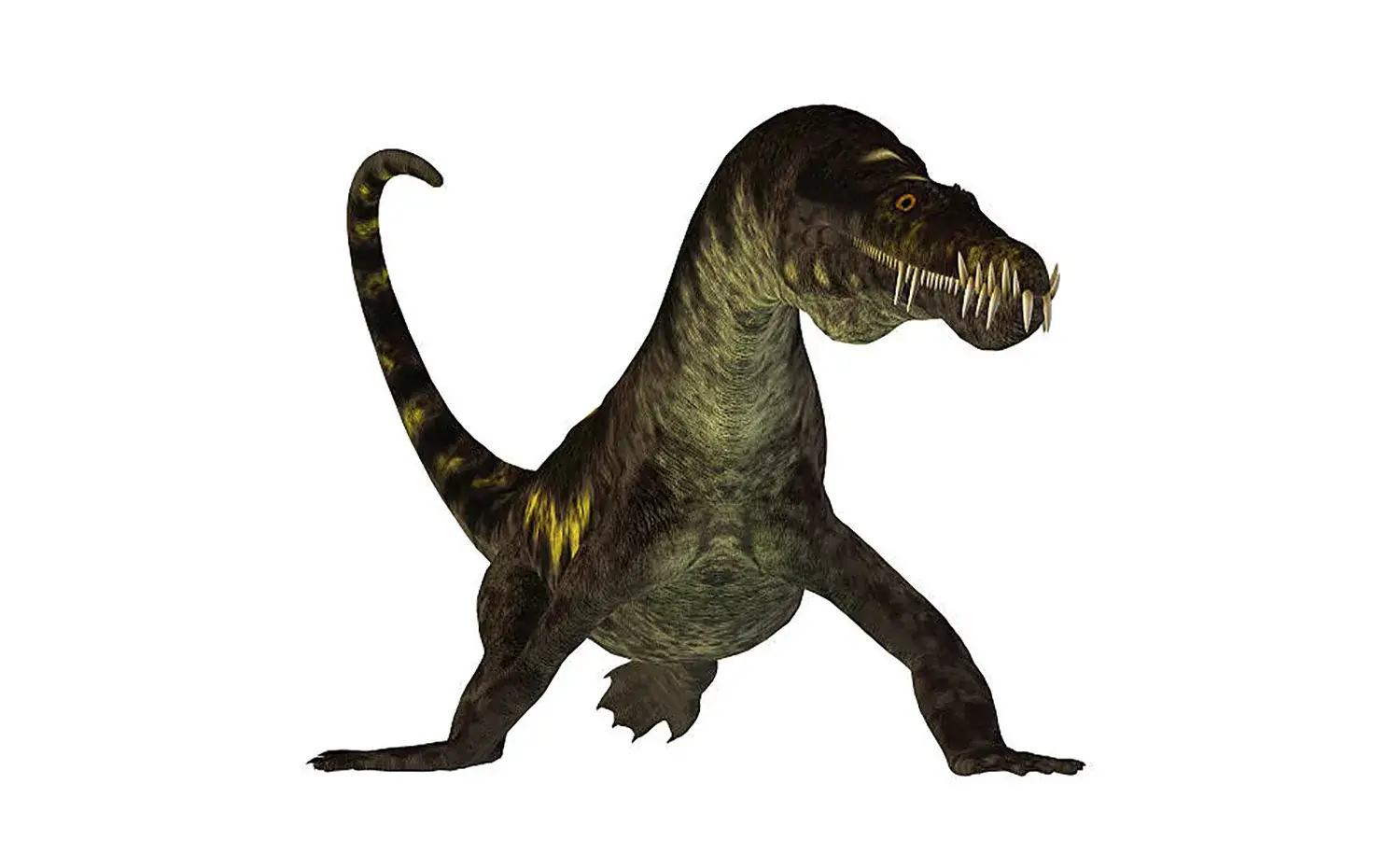
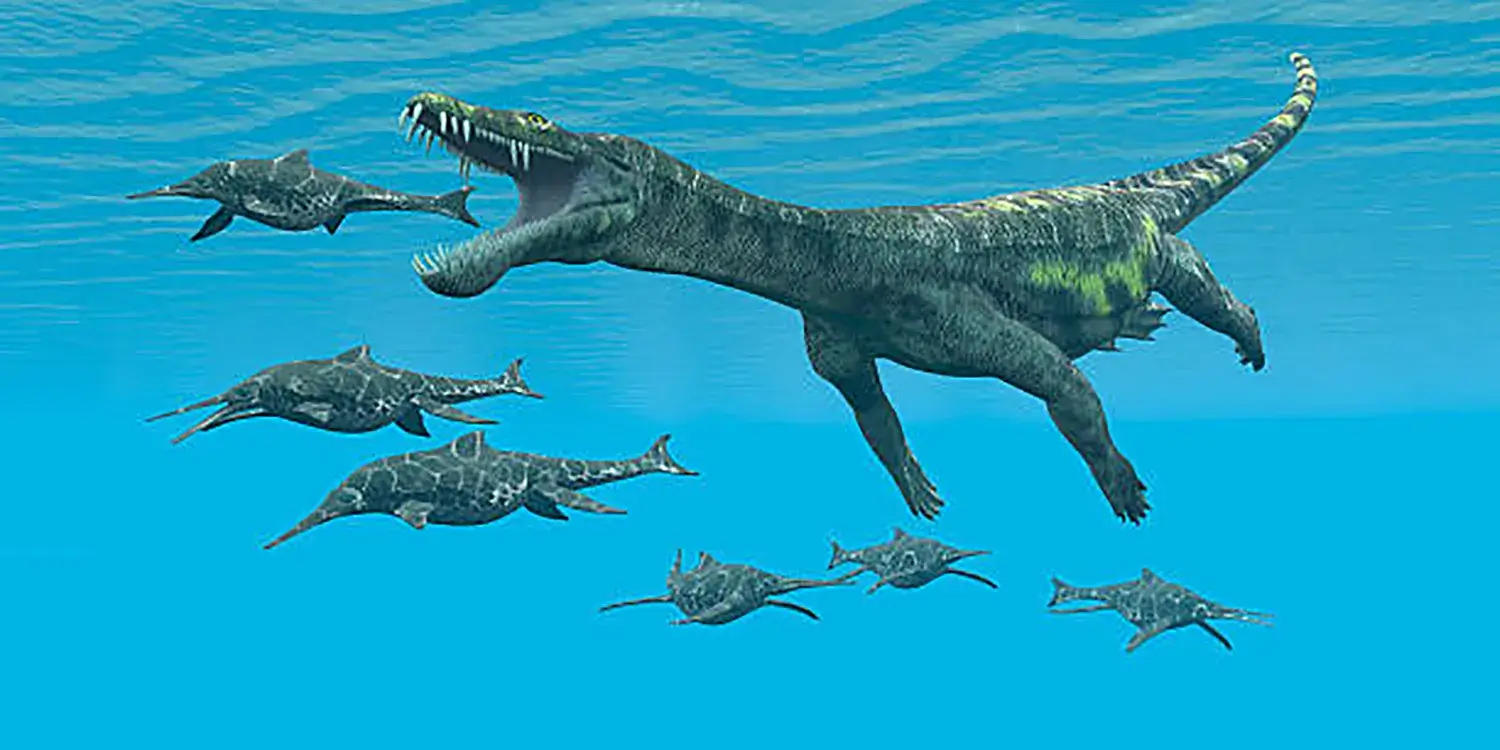
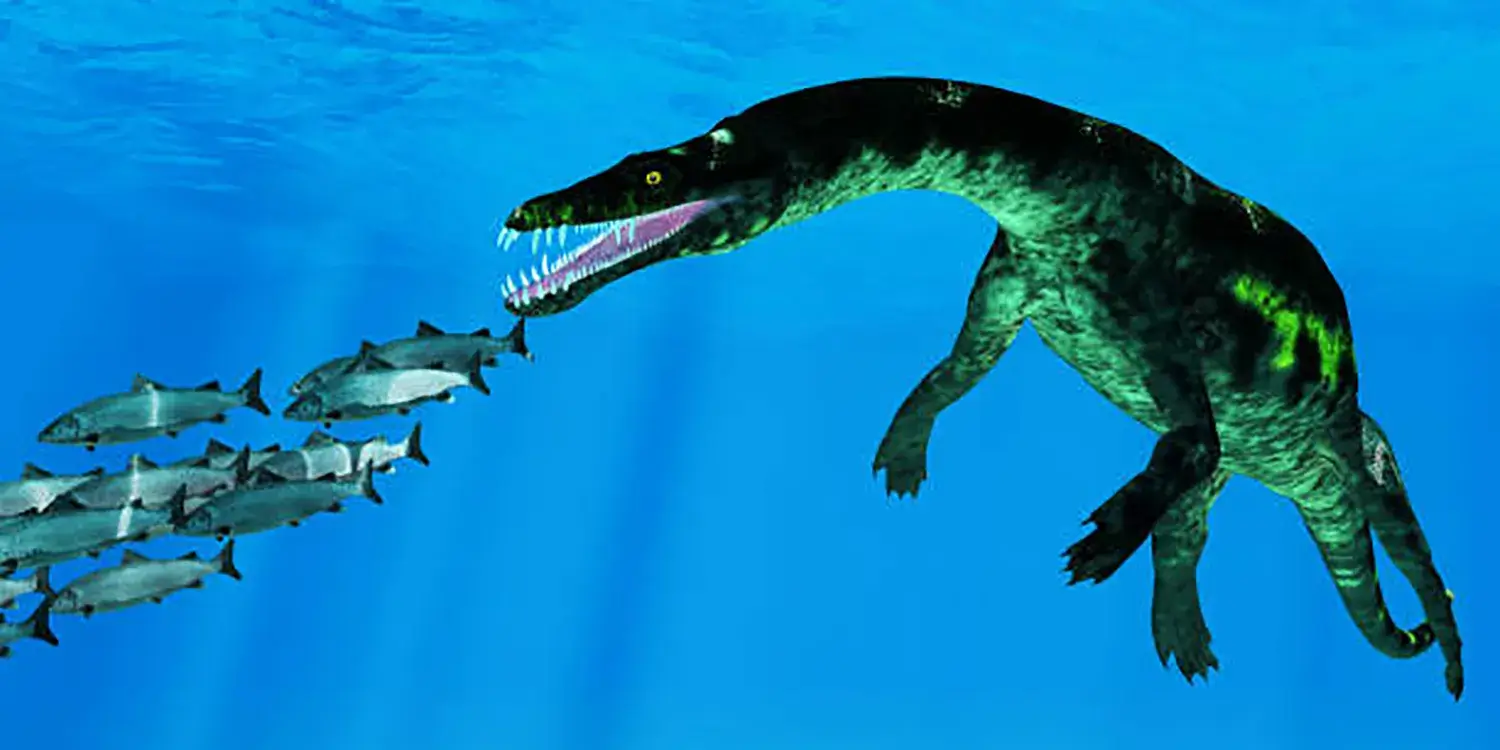
Its mouth was lined with sharp teeth, including long fangs designed to skewer slippery fish.
The “interlocking” structure, where the upper and lower teeth mesh together, functioned as a powerful trap that would not let prey escape once bitten.
Teeth that won’t let prey escape once bitten
“Fingers” Remaining on Fins and Swimming Method
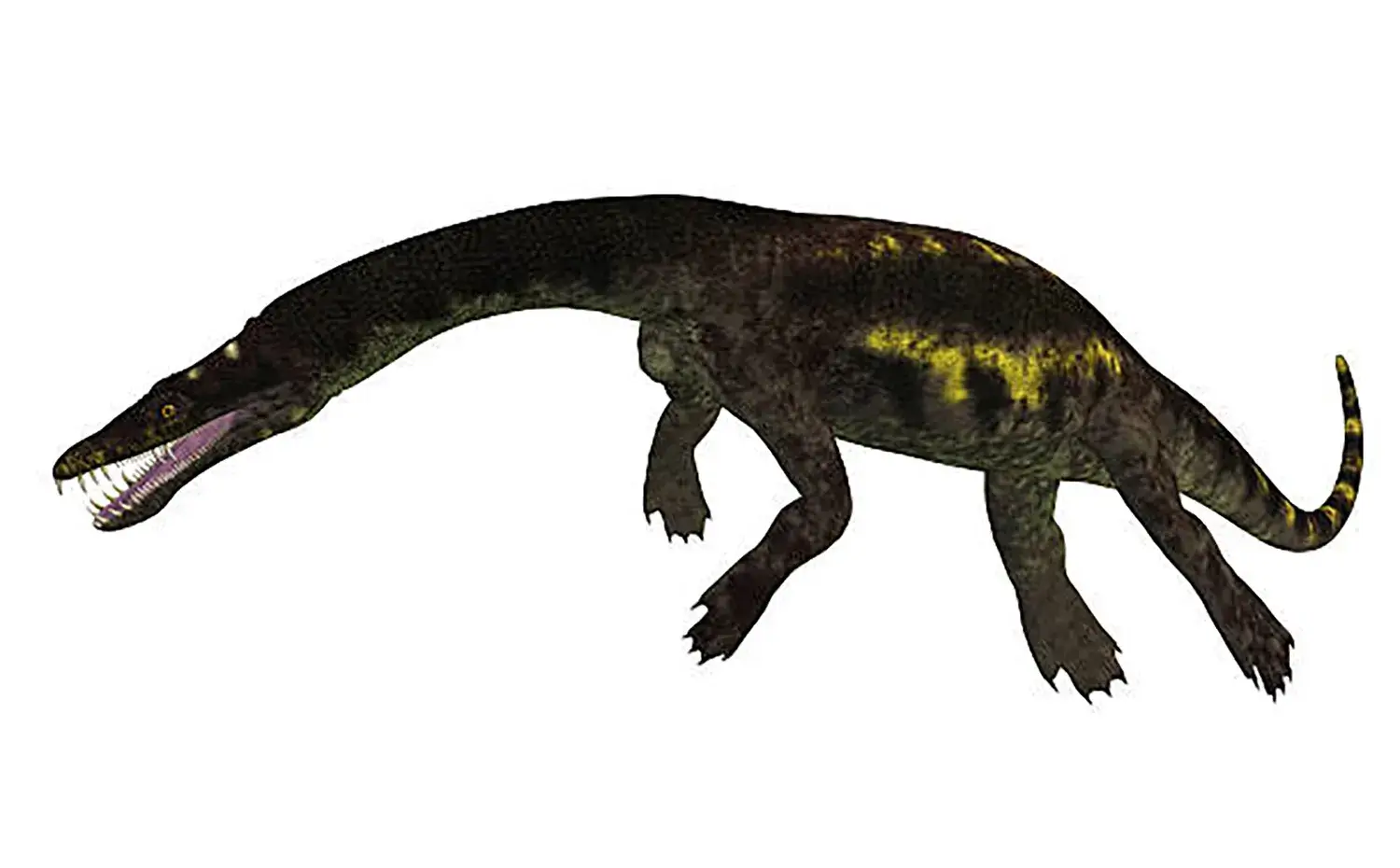
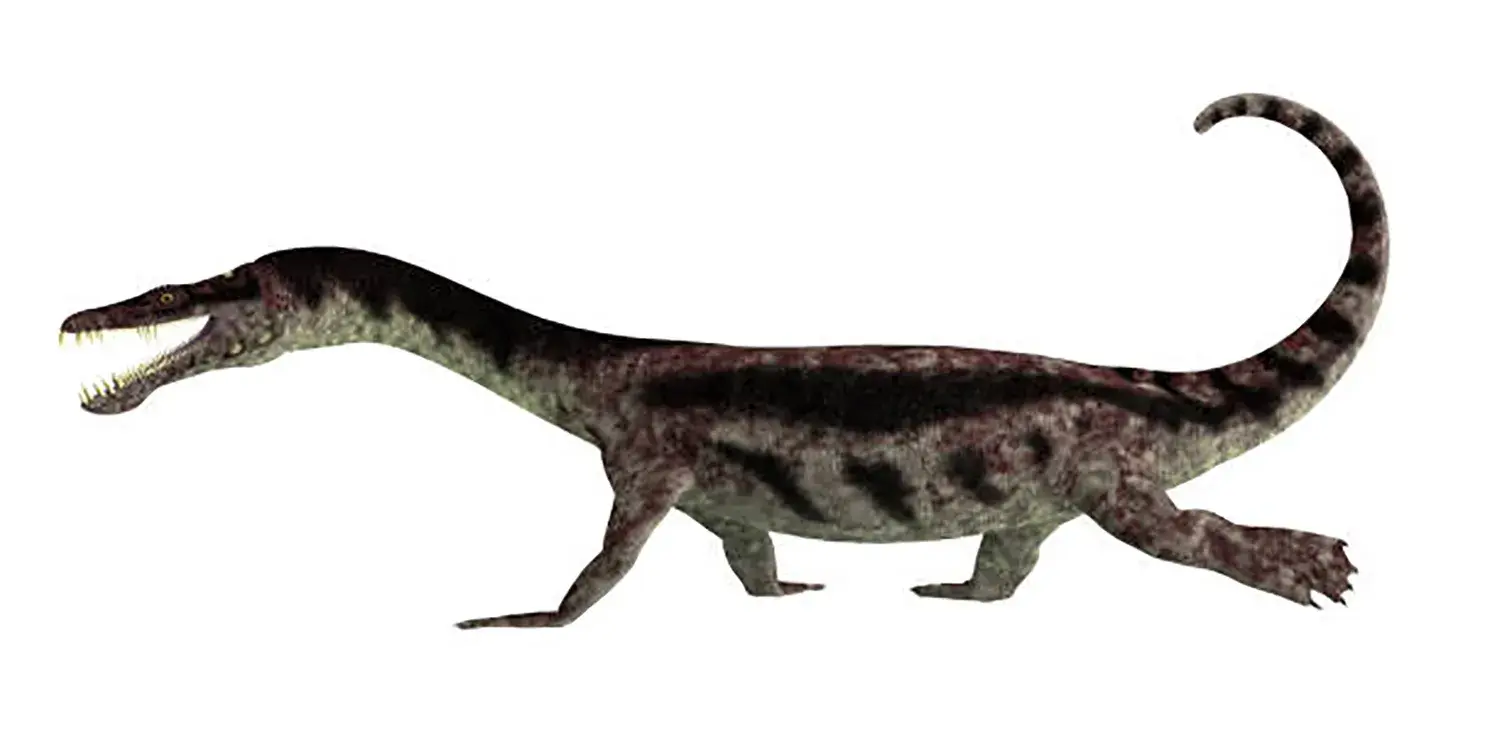
Its limbs had developed into paddle-like fins, yet the tips retained “long fingers” and “sturdy claws” characteristic of land animals.
Fossils also show traces of webbing between the fingers.
The primary propulsion for swimming came from its powerful tail, which made up a large portion of its body.
It is believed that they swam by undulating this tail from side to side, using their limbed fins for steering and for walking on land.
Skin and Camouflage
Its skin was smooth like that of a modern dolphin, reducing water resistance.
It is believed to have had a mottled pattern on its back, serving as camouflage to blend in with underwater rocks and dappled light.
Ecology: Life on Ancient Coastlines
Shallow Water Hunter and Amphibious Life
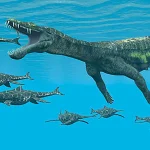
Their main habitat was the shallows and coastlines of the ancient “Tethys Sea.”
They led an amphibious life similar to modern sea lions and crocodiles, basking on rocks and hunting for fish in the sea.
Regarding reproduction, it is thought that while they mated in the water, they came ashore to lay eggs, much like sea turtles.
Astonishing Growth Rate and Short Lifespan
Studies of fossil bone tissue have revealed surprising facts.
The time it took for a Nothosaurus to reach adulthood was only about 3 years.
Furthermore, their lifespan was unexpectedly short, estimated to be around 6 years.
This rapid growth suggests the possibility that they were animals with a high metabolism.
Evolutionary Lineage and Extinction
The Great Ancestor of Plesiosaurs
With its paddle-like fins and long neck, Nothosaurus is considered an ancestor or a close relative of the “Plesiosaurs” (Plesiosauria) that would dominate the seas in later eras.
Although Nothosaurus itself went extinct, its body structure and adaptation to aquatic life were passed down to the next generation of rulers, such as Elasmosaurus.
With the End of the Triassic
With the end of the Triassic period, Nothosaurus disappeared from the face of the earth.
This is attributed to the rise of competitors like Ichthyosaurs and the mass extinction event at the end of the Triassic.
History of Discovery
The first fossil of Nothosaurus was discovered in Germany in 1834.
Almost two centuries have passed since then.
This creature that lived in the Triassic seas continues to fascinate paleontologists as a key to unlocking the “missing link” of evolution from land to sea.