
Euoplocephalus
Name Origin
Well-armed Head
Family
Ankylosauridae
Classification
Diapsida, Ornithischia, Thyreophora
Habitat (Discovery Location)
United States, Canada
Period
Approximately 76–70 million years ago (Late Cretaceous)
Length
Approximately 8 meters
Weight
Approximately 2.5 tons
Diet
Herbivore (Plant-eater)
You might also like... 

-
 Liaoningosaurus
- Classification
- Thyreophora
- Characteristics
- Carnivorous
- Era
- Cretaceous period
- Struthiomimus
- Classification
- Theropods
- Characteristics
- Herbivorous
- Omnivorous
- Feathered
- Era
- Cretaceous period
- Afrovenator
- Classification
- Theropods
- Characteristics
- Carnivorous
- Era
- Jurassic period
- Ophthalmosaurus
- Classification
- Marine reptiles
- Characteristics
- Carnivorous
- Era
- Jurassic period
-
Sponsored Links
-
Sponsored Links









![[Latest Research] What Was the Function of Spinosaurus's Giant "Sail"? Exploring the Mysteries of Thermoregulation and Underwater Locomotion](https://dinosaurmuseum.jp/wp/wp-content/uploads/eyecatch_spinosaurus-sail-function_en-1024x512.webp)
![[Latest Discovery] A Third Type of Skin, Neither Scales Nor Feathers? Meet "Haolong dongi," a New Dinosaur Species Covered Entirely in Spikes](https://dinosaurmuseum.jp/wp/wp-content/uploads/eyecatch_dinosaur-spiky-skin-discovery_en-1024x512.webp)
Description
North America during the Late Cretaceous period.
In this era, where ferocious carnivorous dinosaurs like Tyrannosaurus roamed and the law of the jungle prevailed, there lived a dinosaur like a “living tank” boasting iron-clad defenses.
Its name was “Euoplocephalus”.
Known as an armored dinosaur of the family Ankylosauridae, this creature survived harsh environments thanks to its robust armor and powerful weaponry.
A “Living Tank” Clad in Iron-Clad Armor
A Flawless Defense System
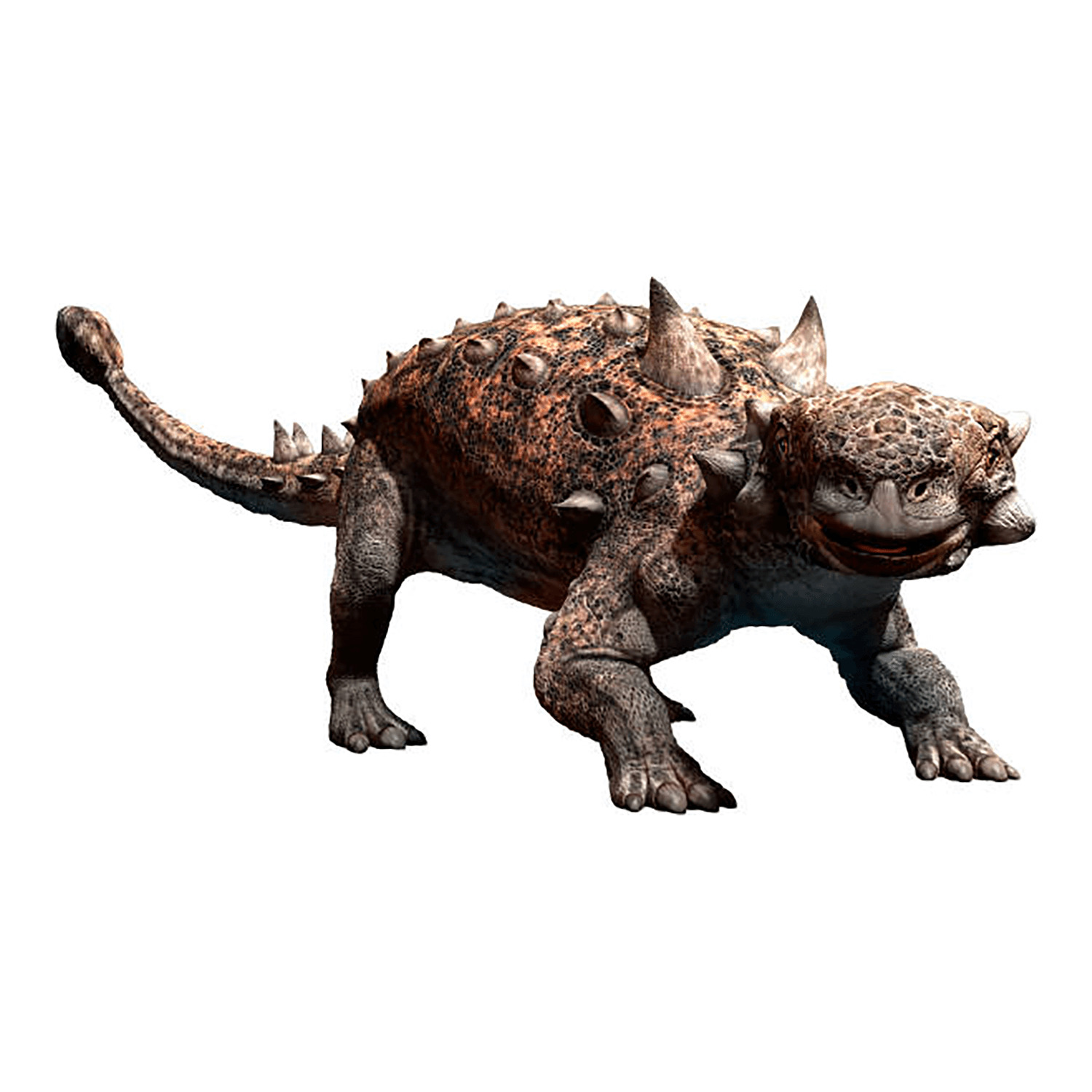
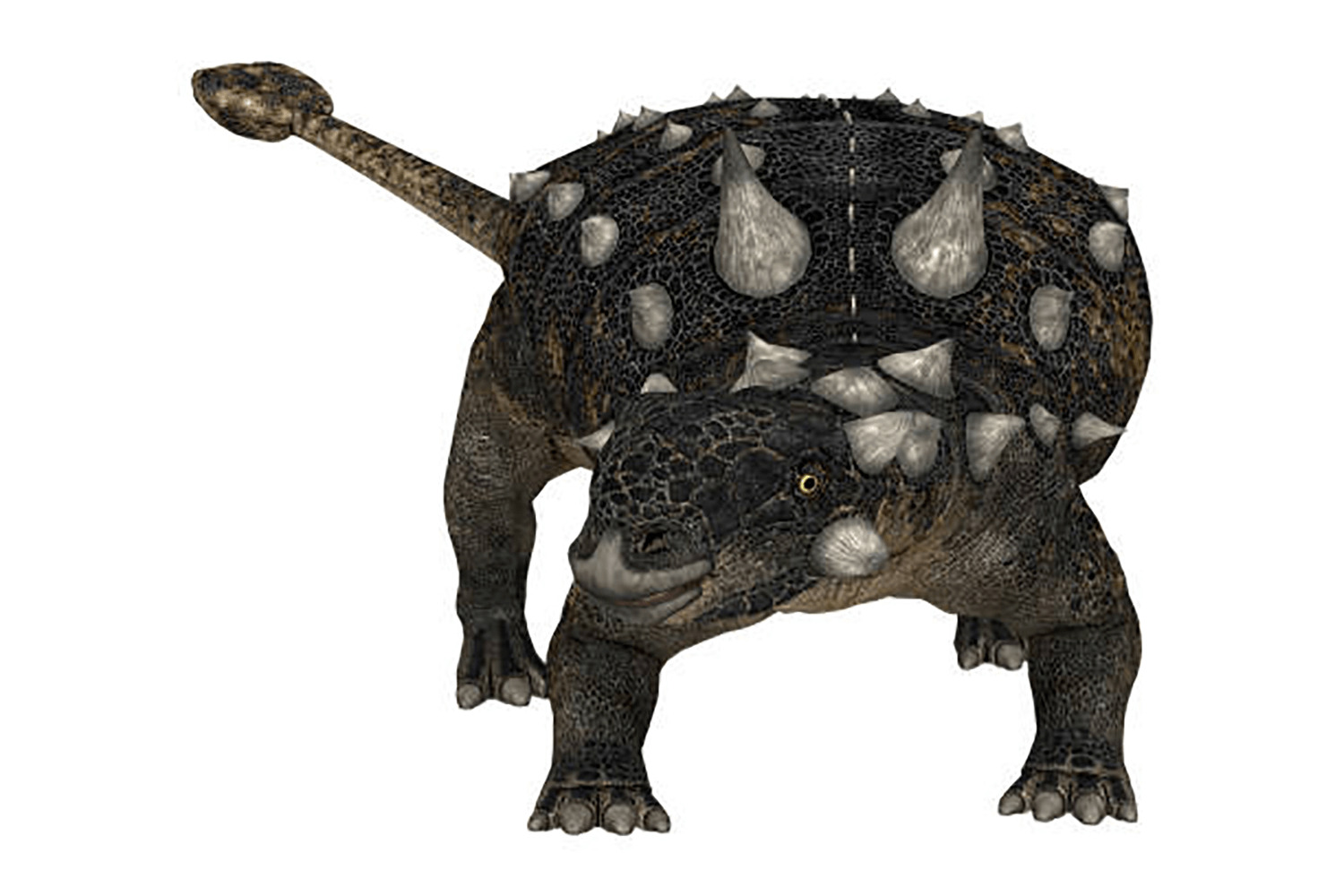
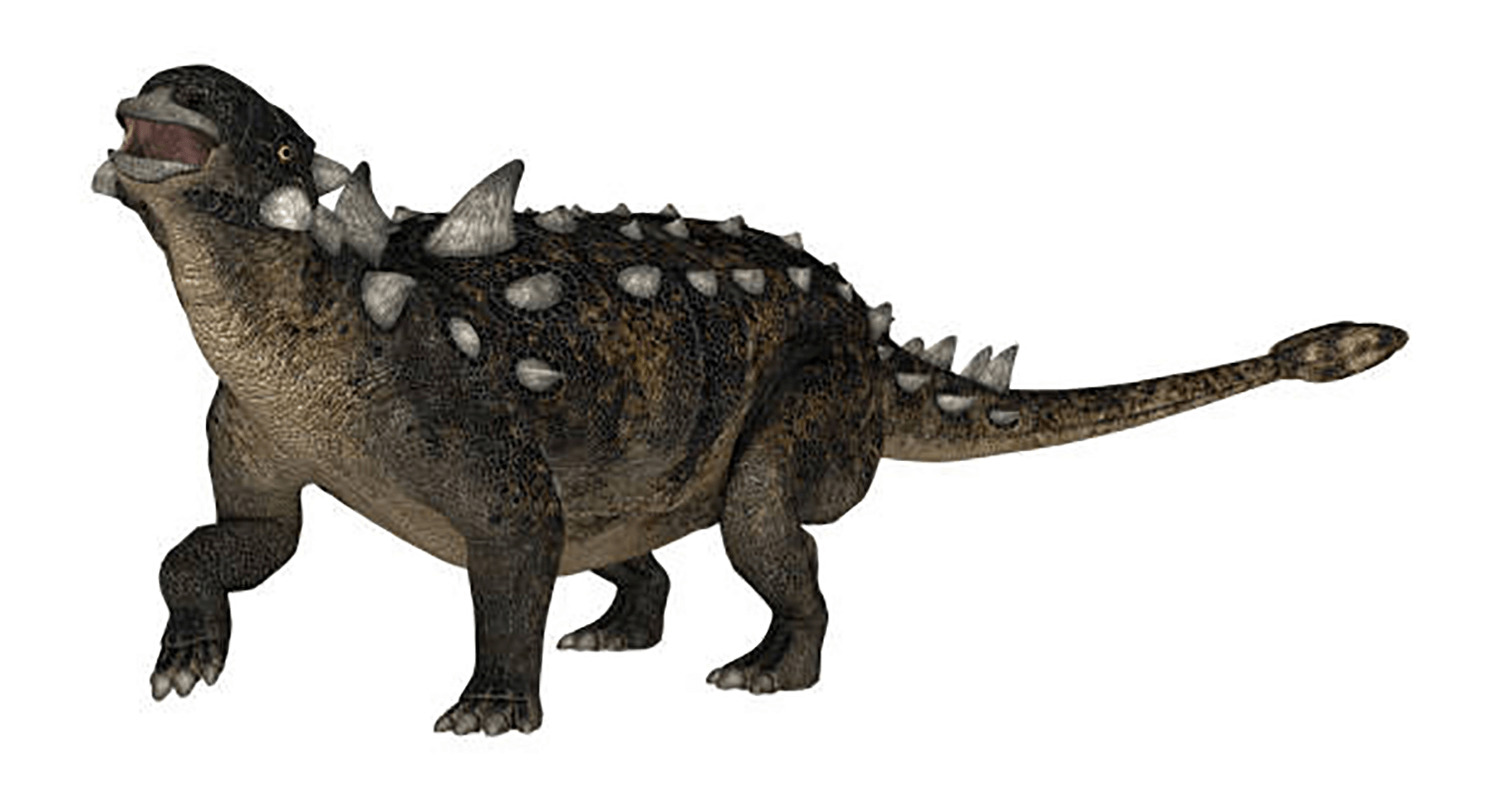
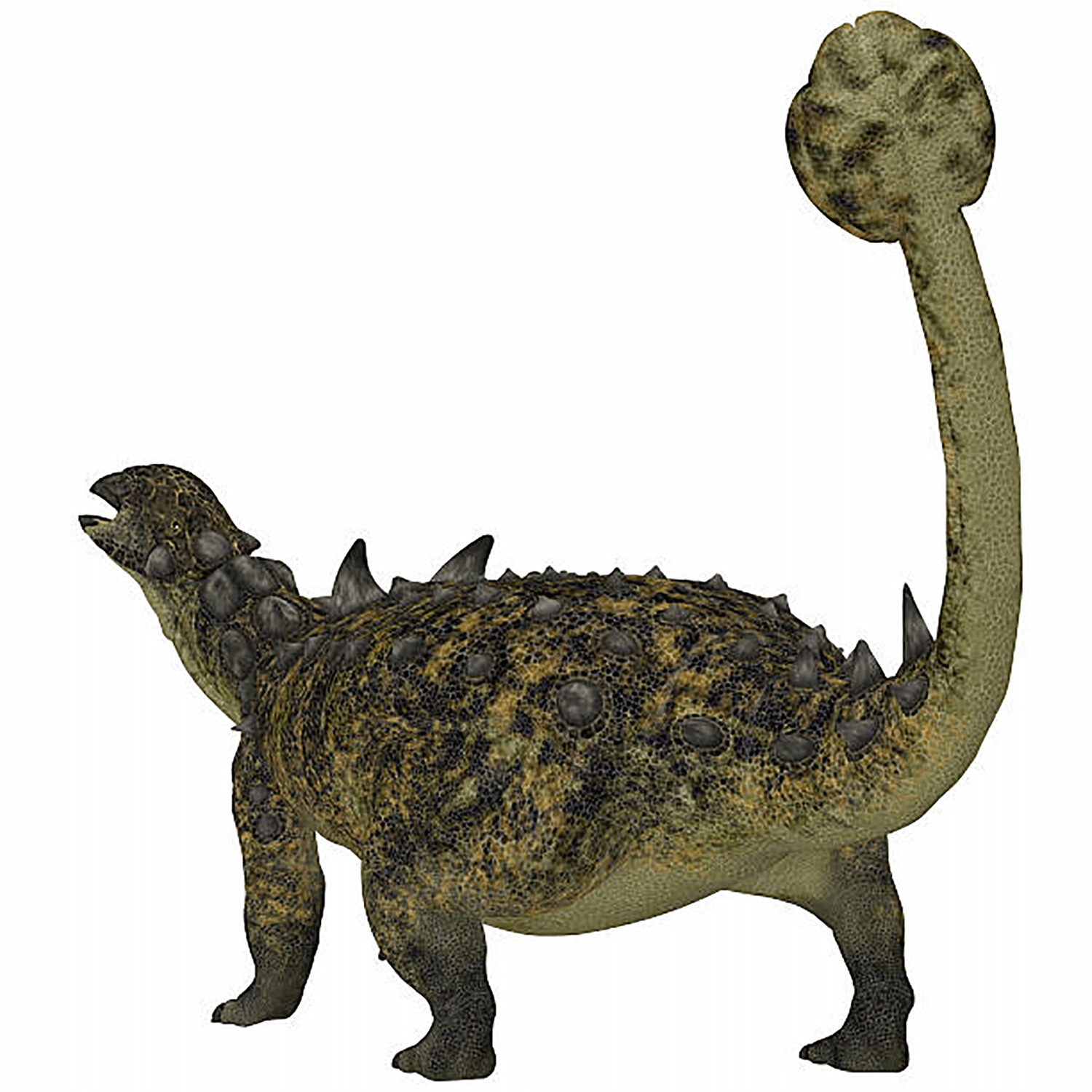
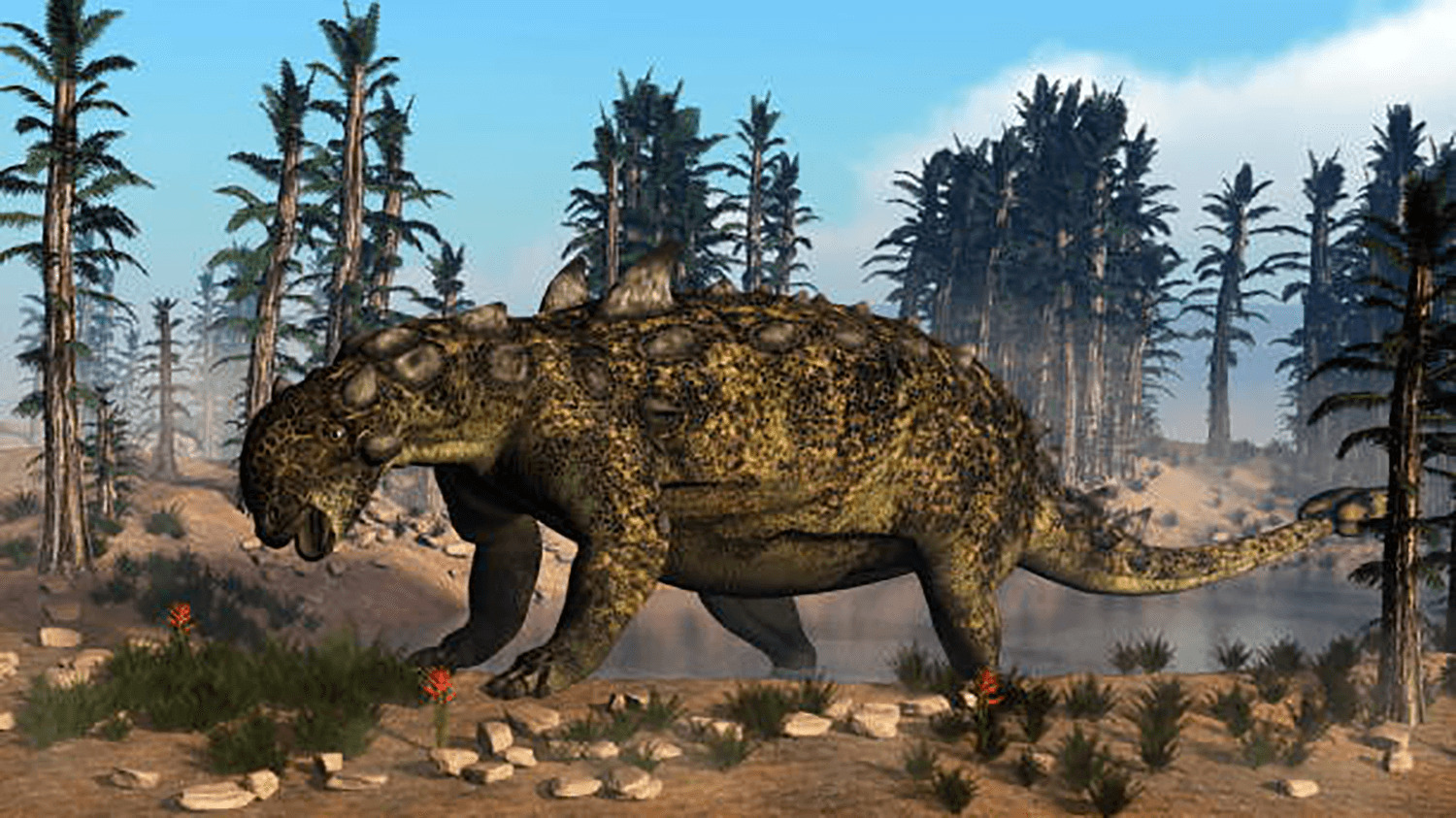
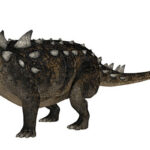
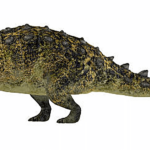
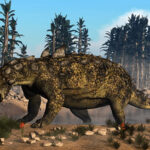
As its nickname suggests, the greatest characteristic of Euoplocephalus was the “hard armor” that completely covered its exterior.
This armor was truly impregnable, further covered by countless horn-like protrusions jutting out from the surface.
Hard armor and countless protrusions completely covering the exterior
The fact that they were able to survive in the Late Cretaceous, a time filled with powerful predators, is entirely due to this perfect defense system.
Furthermore, it is believed that in emergencies, such as when surrounded by enemies, they would crouch flat on the ground to hide their vulnerable, unarmored bellies and wait out the danger.
Just like a tank, they could assume a defensive posture with no gaps.
Differences from Ankylosaurus: Three Toes and Era
Its appearance is the spitting image of the fellow armored dinosaur star, “Ankylosaurus,” but Euoplocephalus lived in a much older era.
There are also unique features in the details of its body.
While many related dinosaur species had four toes, Euoplocephalus had only “three.”
This foot characteristic serves as an important point for distinguishing it from other species.
A One-Hit-Kill Weapon: The “Tail Hammer” That Could Crush Even a Tyrannosaurus
Structure and Power of the Bone Mass
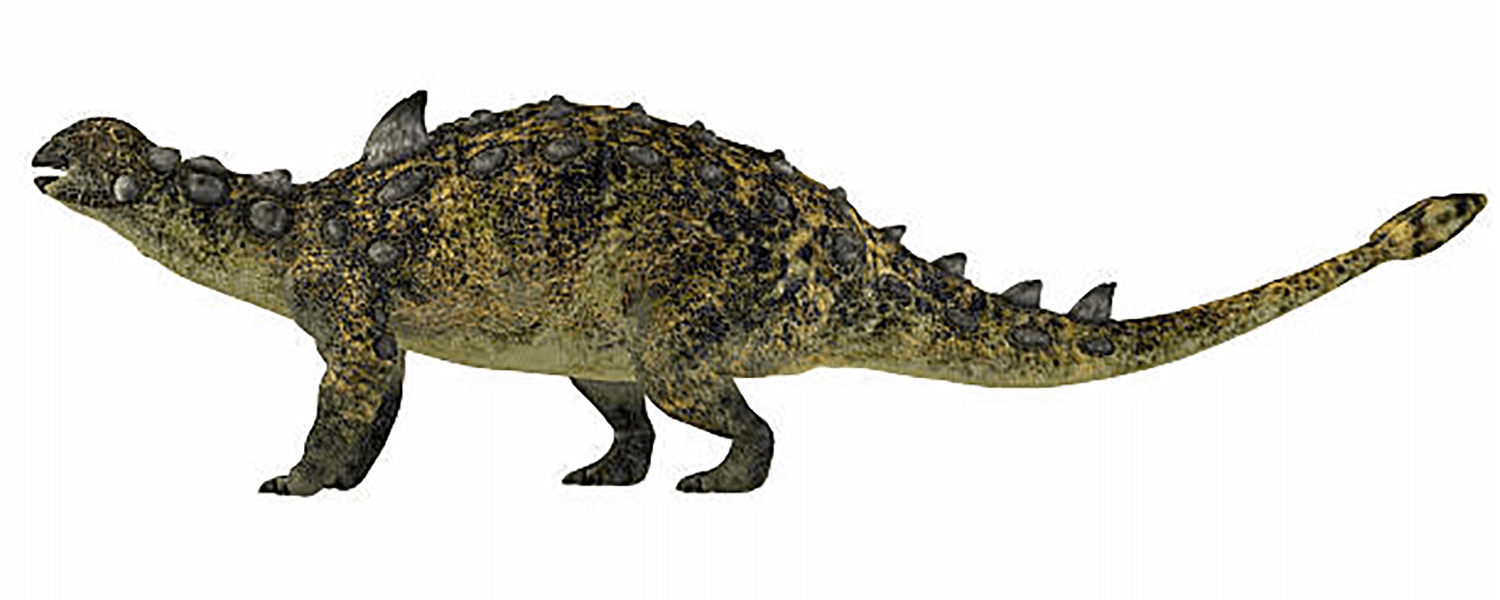
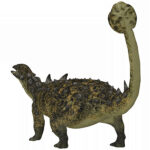
Another symbol of Euoplocephalus is the giant bony mass attached to the tip of its tail.
A giant bony mass attached to the tip of the tail
This mass, formed by several fused bones, is likened to a “mace” or “club.”
Its shape is massive enough to be described as a “Frisbee-like disc-shaped mass.”
Research indicates that while the tail muscles couldn’t move much vertically, they could swing powerfully in a horizontal (side-to-side) direction.
If an adult individual swung this tail with full force, it likely could have shattered the knee bones of even a Tyrannosaurus in a single blow.
Excellent Sense of Smell and a “Picky Eater” Side
A Picky Eater That Preferred Soft Plants
Despite its heavy equipment, Euoplocephalus had a surprisingly small head and small teeth.
Therefore, it couldn’t eat very hard plants and is believed to have selectively eaten soft grasses and flowers.
Contrary to its rugged appearance, its diet seems to have been delicate.
Excellent Sense of Smell Supporting Survival
This diet was supported by its “excellent sense of smell.”
Its keen sense of smell was highly useful not only for finding the soft plants it fed on but also for quickly detecting the approach of natural enemies like carnivorous dinosaurs.
Abundant Fossils and Contribution to Ankylosaurus Reconstruction
Armored dinosaurs are a group where finding fossils in good condition is rare, but Euoplocephalus is an exception.
Over 40 specimens have been found in North America, and since many are well-preserved, it is highly popular among scholars and research is well-advanced.
As a Model for Ankylosaurus
Because the specimens are so complete, they are even used as references for skeletal reconstruction diagrams of other armored dinosaurs.
In fact, since few parts have been discovered even for the famous Ankylosaurus, it is sometimes reconstructed by borrowing (referencing) parts of Euoplocephalus bones.