Gastonia
Name Origin
Of Gaston (Derived from a personal name)
Family
Nodosauridae
Classification
Diapsida, Ornithischia, Thyreophora
Habitat (Discovery Location)
United States
Period
Approximately 130–125 million years ago (Early Cretaceous)
Length
Approximately 4–6 meters
Weight
Approximately 2 tons
Diet
Herbivore (Plant-eater)
TODAY'S QUIZ
Correct answer = 1 coin
Which features did Gastonia have to help protect itself from carnivorous dinosaurs?
Loading…
You might also like... 

-
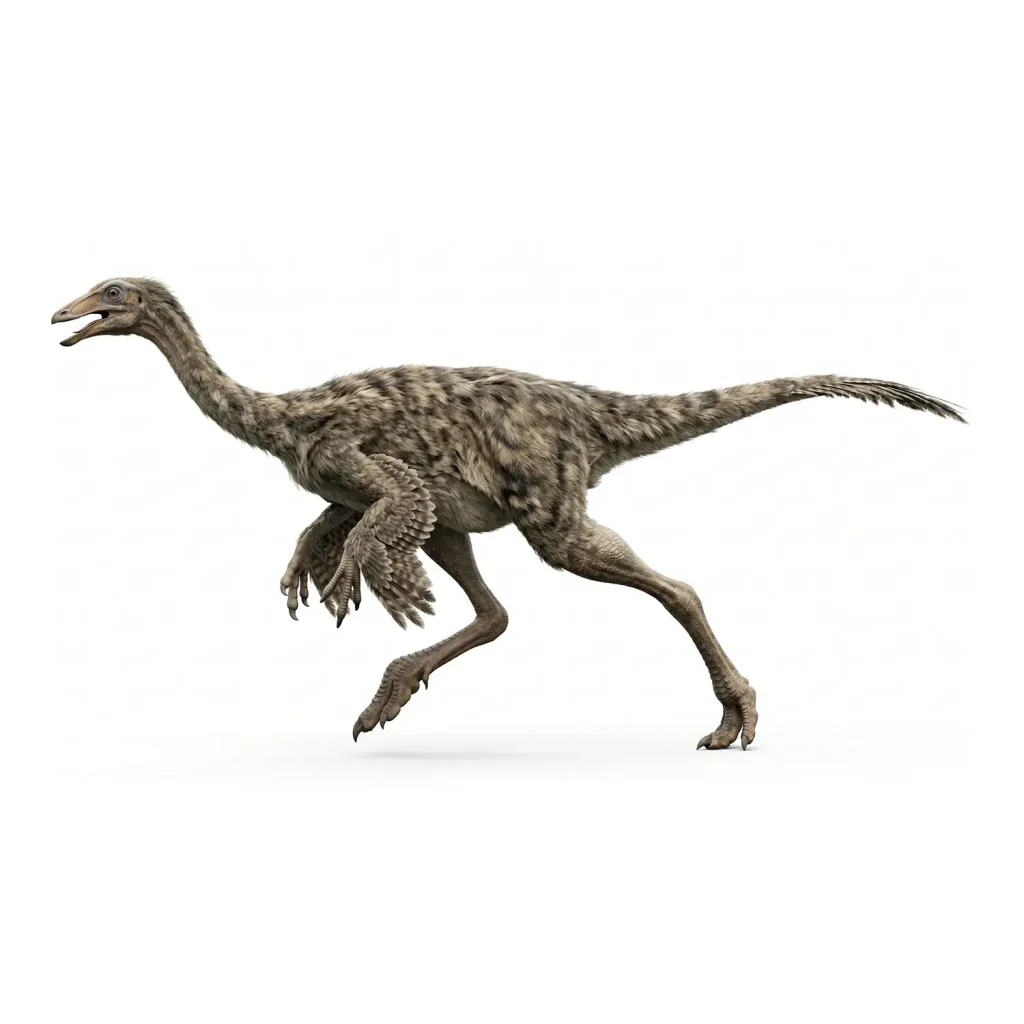
 Ornithomimus
- Classification
- Theropods
- Characteristics
- Herbivorous
- Omnivorous
- Feathered
- Era
- Cretaceous period
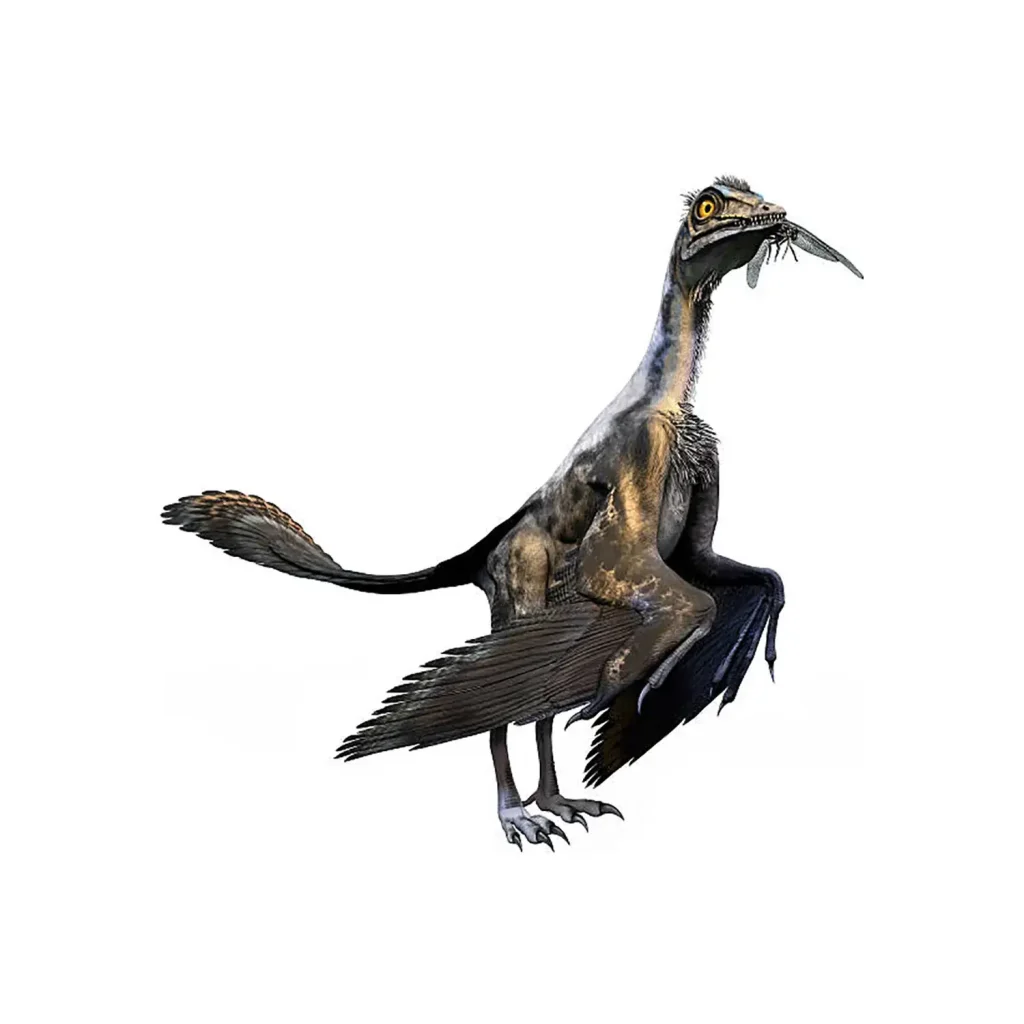
- Archaeopteryx
- Classification
- Theropods
- Characteristics
- Carnivorous
- Era
- Jurassic period
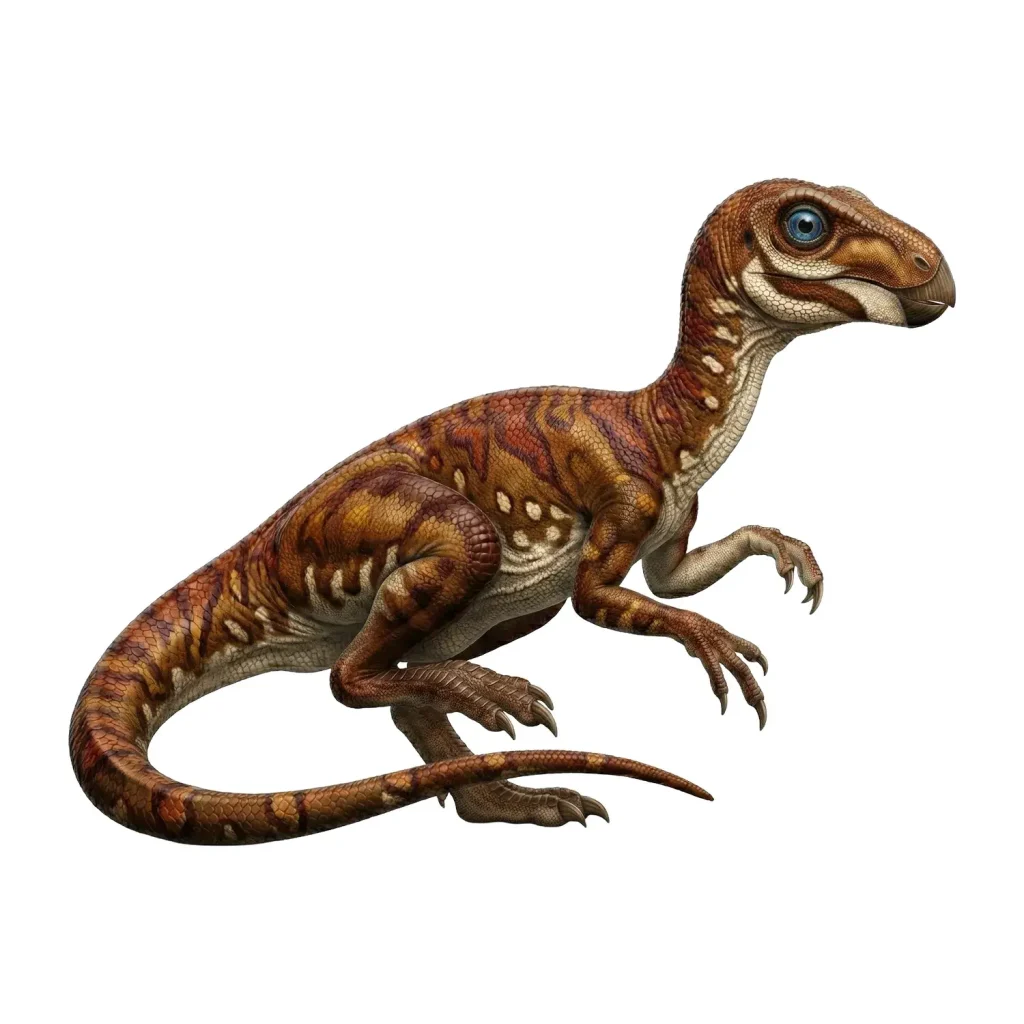
- Zephyrosaurus
- Classification
- Ornithopoda
- Characteristics
- Herbivorous
- Era
- Cretaceous period
- Mamenchisaurus
- Classification
- Sauropods
- Characteristics
- Herbivorous
- Era
- Jurassic period
-
Sponsored Links
-
Sponsored Links


![[Latest Research] What Was the Function of Spinosaurus's Giant "Sail"? Exploring the Mysteries of Thermoregulation and Underwater Locomotion](https://dinosaurmuseum.jp/wp/wp-content/uploads/eyecatch_spinosaurus-sail-function_en-1024x512.webp)
![[Latest Discovery] A Third Type of Skin, Neither Scales Nor Feathers? Meet "Haolong dongi," a New Dinosaur Species Covered Entirely in Spikes](https://dinosaurmuseum.jp/wp/wp-content/uploads/eyecatch_dinosaur-spiky-skin-discovery_en-1024x512.webp)

Description
During the Early Cretaceous period—a time within the age of dinosaurs when biodiversity exploded and a fierce evolutionary arms race unfolded.
A bizarre, massive creature strode across the desolate lands of what is now Utah in North America, looking just like a “moving fortress.”
The name of this dinosaur is “Gastonia.”
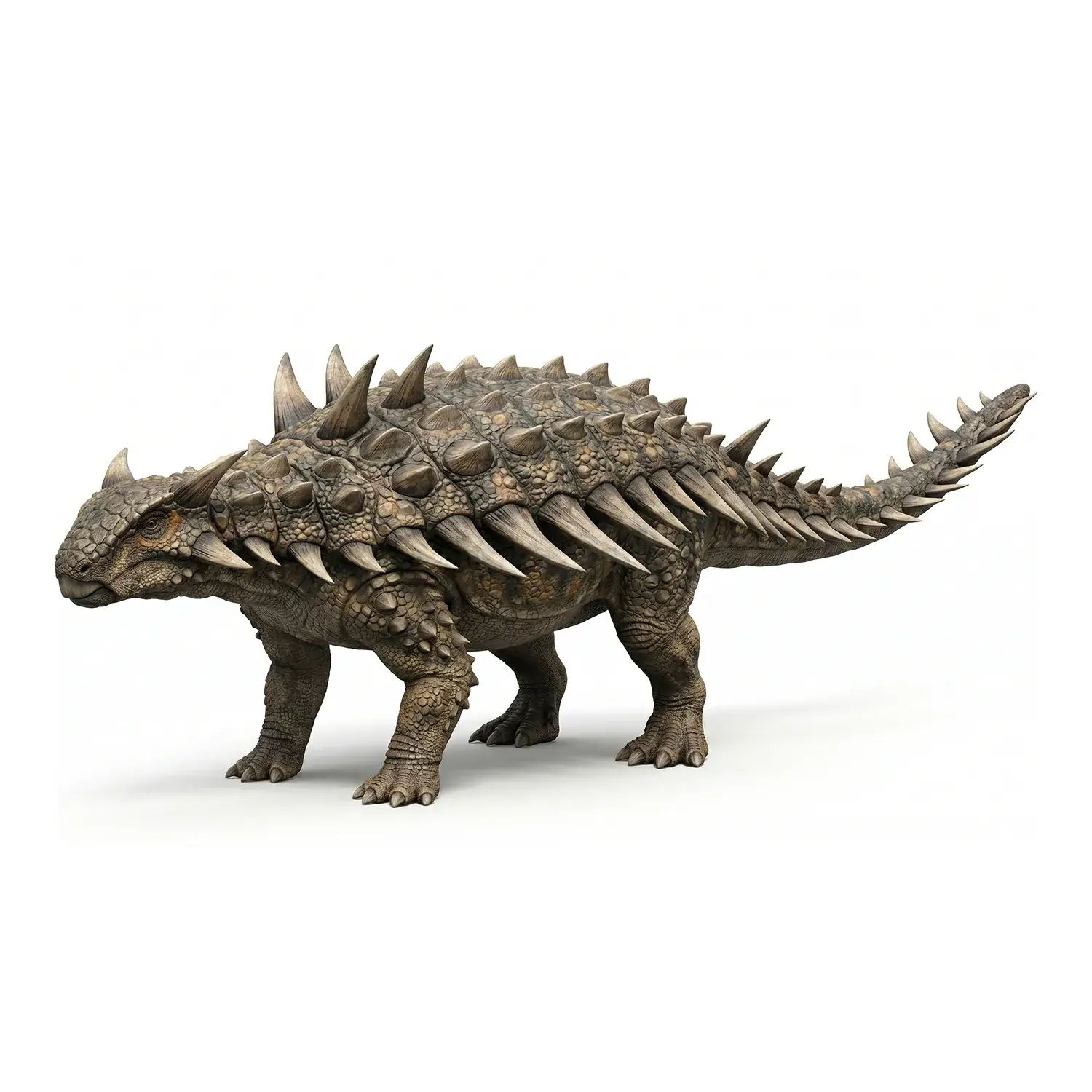
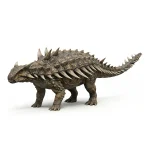
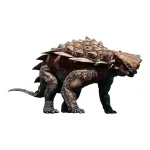
Measuring 4 to 6 meters (13.1 to 19.7 feet) in length and weighing about 2 tons (4,400 lbs), this heavily armored, tank-like herbivorous dinosaur was covered from head to tail in sharp spikes and armor.
It was the pinnacle of evolution, achieved over hundreds of millions of years, designed to counter the greatest raptor in history, Utahraptor.
A Gift from Cedar Mountain: The Origin of Its Name and Discovery
The “Rosetta Stone” of Ankylosaur Research
Paleontologist Robert Gaston made tremendous contributions to the discovery and study of Gastonia.
In 1989, the first skull was discovered in the “Cedar Mountain Formation” in Utah.
Generally, ankylosaur fossils tend to disarticulate easily, making them difficult to study, but well-preserved specimens representing about five individual Gastonia have been found.
This is a miraculous number for armored dinosaurs, which typically have a poor fossil record. It provides researchers worldwide with invaluable data, serving as a crucial “Rosetta Stone” for unraveling the mysterious ecology and armor arrangement of ankylosaurs.
An Arsenal on Legs: The “Painful-Looking” Armor and Defense System
Gastonia’s most defining feature is its absolute “heavy armament.”
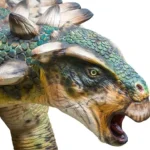
Its appearance goes beyond mere defense, exuding an aggressive aura.
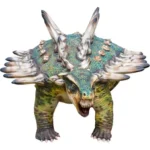
Giant Shoulder Spikes: The Front Line of Intimidation and Defense
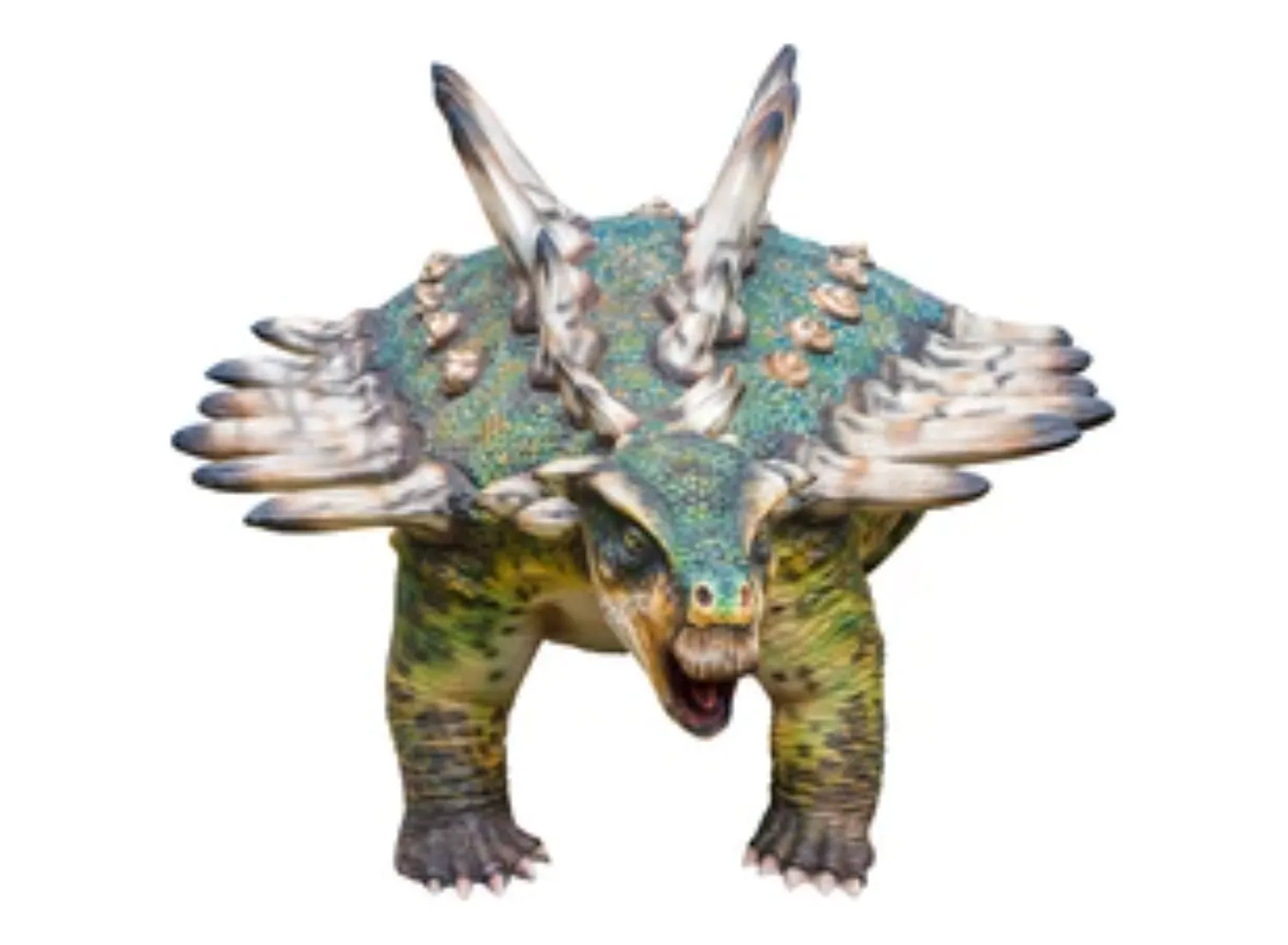
The massive spikes jutting out widely to the left and right from its shoulders are a powerful display of “rejection” against enemies attacking from the front or sides.
Massive spikes jutting out widely to the left and right from its shoulders
If a carnivorous dinosaur tried to bite its throat, the spikes acted as a barrier; if it pounced, it risked being impaled.
This was the first line of defense and functioned as an intense intimidation device.
The Sacral Shield: The Keystone of Absolute Defense
Above its hips was a massive, monolithic bone shield called the “sacral shield.”
This composite armor, formed by the fusion of countless osteoderms (bone plates in the skin), completely covered the “hips”—the greatest weak point of a quadrupedal dinosaur—boasting absolute defensive power that neutralized attacks from behind.
Blade-like Osteoderms on the Tail: A Lethal Counterattack
It lacked the tail club of the famous Ankylosaurus, but instead, “blade-like bone plates” lined both sides of its tail.
The moment a carnivorous dinosaur tried to circle around to its side, a swing of Gastonia’s tail would turn those sharp blades into a slashing counterattack, sweeping the predator’s legs and tearing its flesh.
A Taxonomic Puzzle: A Hybrid of Nodosaurus and Ankylosaurus?
Gastonia sparked taxonomic debates due to its characteristics.
Body
No tail club and spikes on its back (characteristics of the Nodosauridae family).
Head
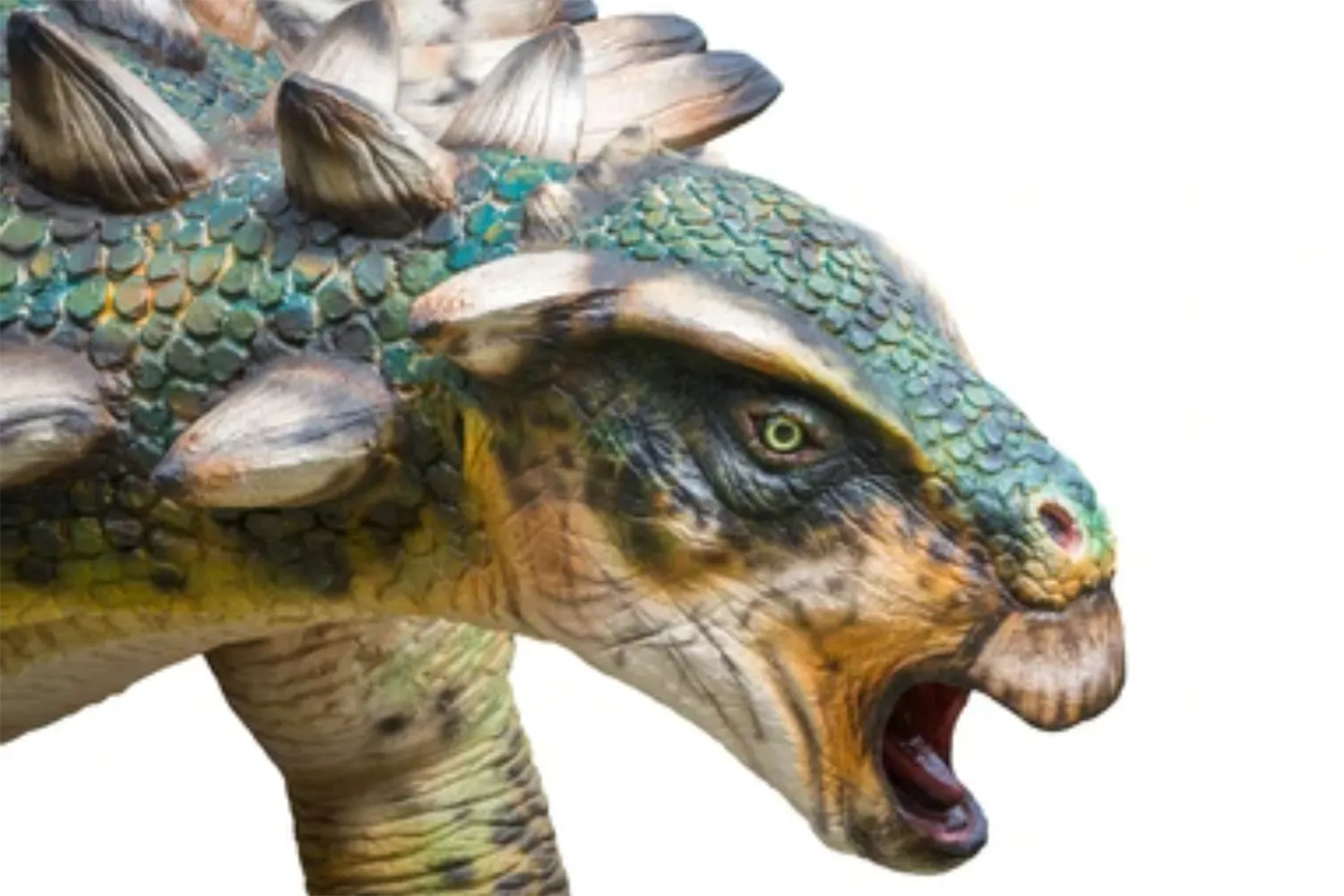
Broad and nearly trapezoidal in shape (characteristics of the Ankylosauridae family).
Possessing the hybrid features of “the body of a nodosaur and the head of an ankylosaur,” the prevailing theory currently classifies it alongside “Polacanthus“—which shares similar traits—into the family Polacanthidae (or the subfamily Polacanthinae within the family Nodosauridae).
Mortal Combat with Its Arch-Nemesis Utahraptor: The Ultimate Spear vs. The Ultimate Shield
In Utah, where Gastonia lived, there also resided “Utahraptor,” the largest species of dromaeosaur.
Both have been discovered in the same geological formation, proving without a doubt that they coexisted.
Against Utahraptor‘s massive “sickle-like claws,” Gastonia countered with its “impenetrable armor” and “spikes.”
It was an evolutionary arms race between “the ultimate spear (Utahraptor)” and “the ultimate shield (Gastonia)” fought upon the lands of Cedar Mountain.
Gastonia’s excessive, heavy armament may have evolved precisely because of the existence of this formidable natural enemy.
Moving Fortresses in a Herd
Gastonia fossils are sometimes found in “bonebeds,” where multiple individuals are discovered together in the same location.
This is strong evidence that they lived in herds rather than solitary lives.
The sight of heavily armored, spike-covered tanks moving together in a herd must have been breathtaking.
Even for Utahraptor, it must have been impossible to attack a tightly packed herd of fortresses.