
Elasmosaurus
Name Origin
Ribbon Lizard
Family
Elasmosauridae
Classification
Reptilia, Diapsida, Sauropterygia
Habitat (Discovery Location)
United States
Period
Approximately 80 million years ago (Late Cretaceous)
Length
Approximately 14 meters
Weight
Approximately 2 tons
Diet
Piscivore (Fish-eater)
You might also like... 

-
 Apatosaurus
- Classification
- Sauropods
- Characteristics
- Herbivorous
- Era
- Jurassic period
- Guanlong
- Classification
- Theropods
- Characteristics
- Carnivorous
- Feathered
- Era
- Jurassic period
- Erketu
- Classification
- Sauropods
- Characteristics
- Herbivorous
- Era
- Cretaceous period
- Acrocanthosaurus
- Classification
- Theropods
- Characteristics
- Carnivorous
- Era
- Cretaceous period
-
Sponsored Links
-
Sponsored Links







![[Latest Research] What Was the Function of Spinosaurus's Giant "Sail"? Exploring the Mysteries of Thermoregulation and Underwater Locomotion](https://dinosaurmuseum.jp/wp/wp-content/uploads/eyecatch_spinosaurus-sail-function_en-1024x512.webp)
![[Latest Discovery] A Third Type of Skin, Neither Scales Nor Feathers? Meet "Haolong dongi," a New Dinosaur Species Covered Entirely in Spikes](https://dinosaurmuseum.jp/wp/wp-content/uploads/eyecatch_dinosaur-spiky-skin-discovery_en-1024x512.webp)
Description
During the Cretaceous Period, when dinosaurs ruled the land, a world of giant and bizarre creatures also thrived in the seas.
Leading among them is the plesiosaur “Elasmosaurus,” said to be the model for the cryptid “Nessie.”
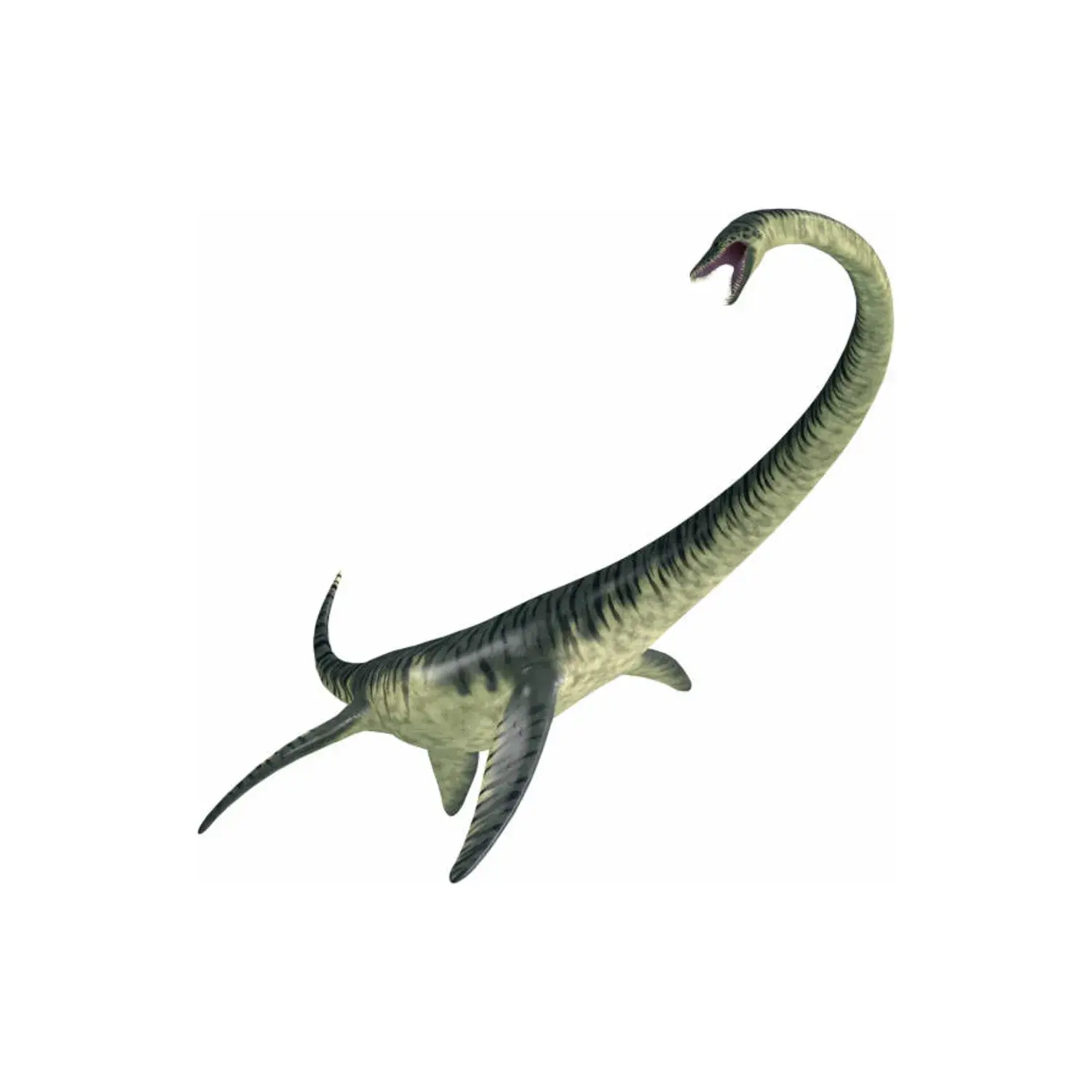
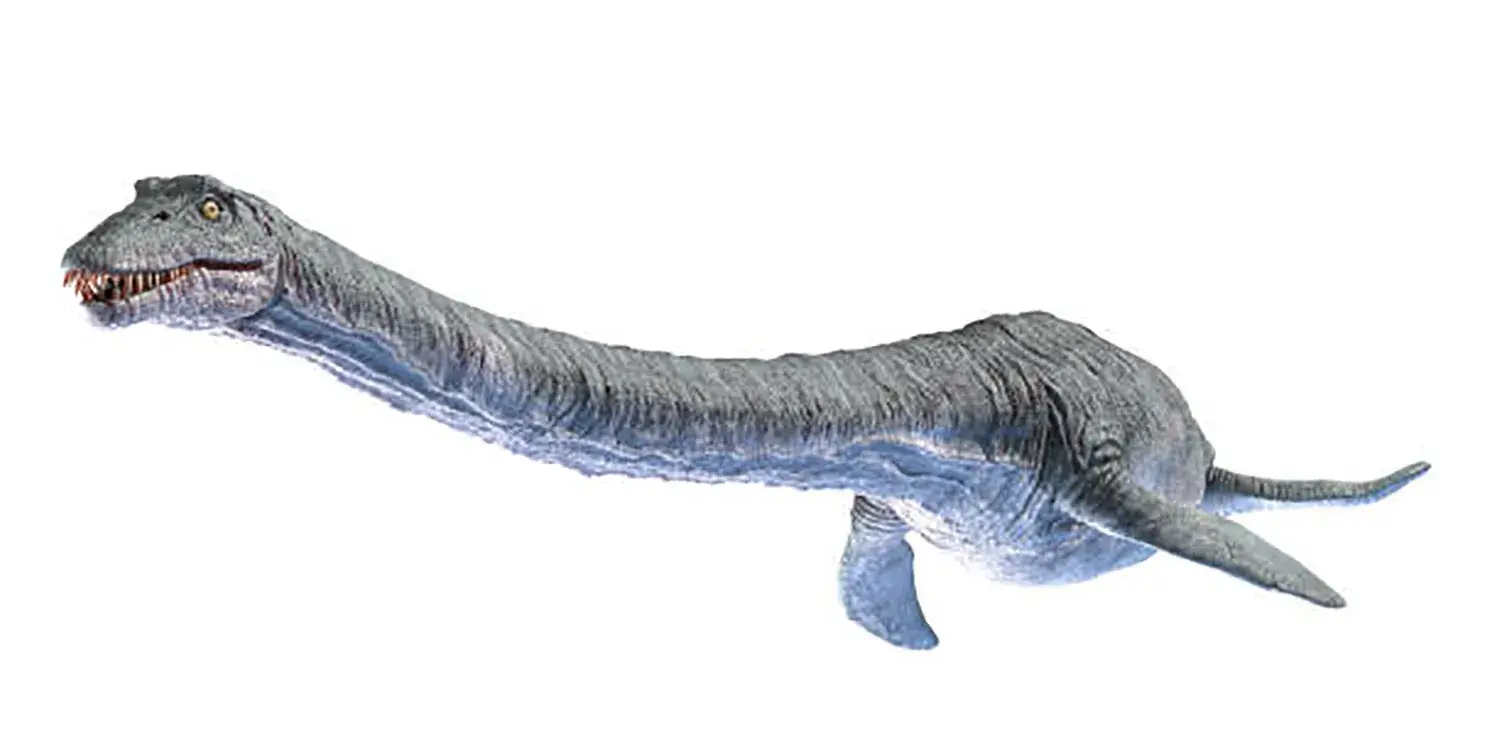
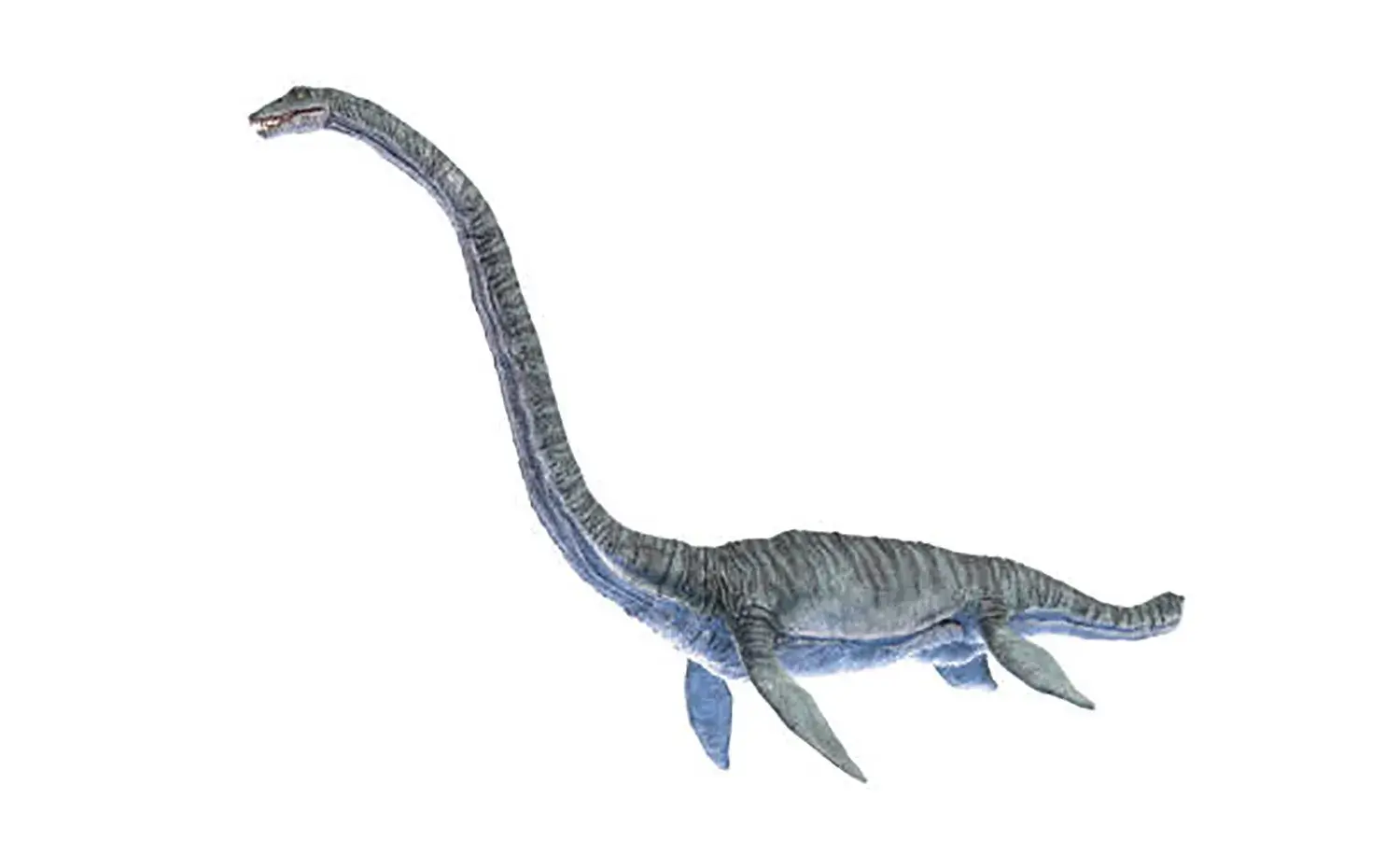
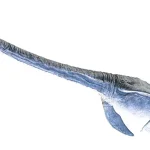
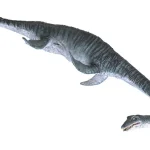
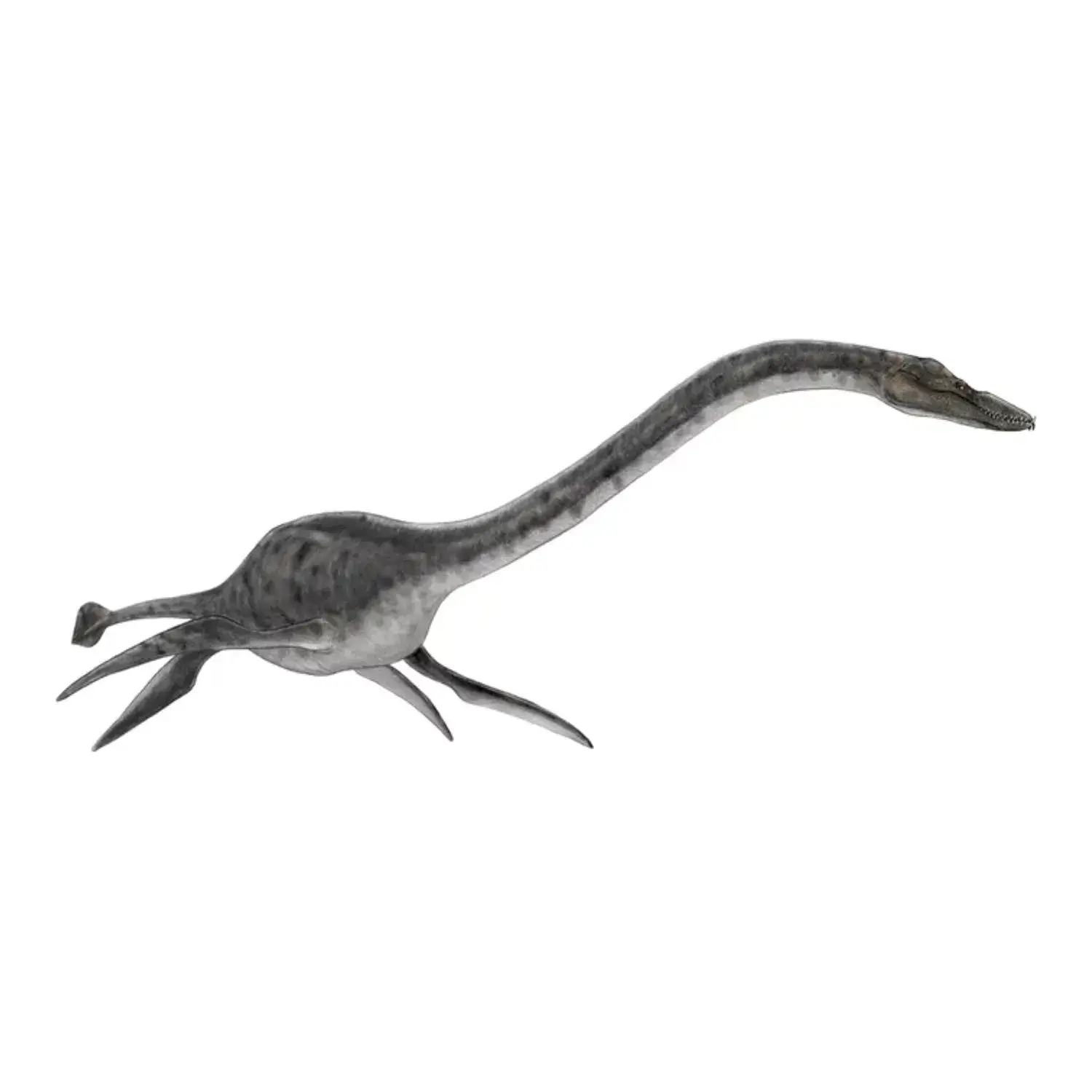
With a body like a sea turtle and a neck as long as a snake, this marine reptile dominated the ancient oceans with a massive body reaching 14 meters in total length.
The Model for Nessie! A Giant 14-Meter Plesiosaur
Elasmosaurus is one of the largest species of plesiosaurs that lived around the North American continent (Western Interior Seaway) approximately 80 million years ago (Late Cretaceous).
The True Identity of the Legendary Monster?
The eyewitness testimonies and imaginary illustrations of “Nessie,” said to inhabit Loch Ness in Scotland (a figure with a long neck sticking its head out of the water), are exactly like Elasmosaurus.
A plesiosaur said to be the model for ‘Nessie’
Although they are not dinosaurs but “marine reptiles,” due to their strong impact, many people picture this form when they hear the word plesiosaur.
Larger Than a Modern Bus
Its total length was up to approximately 14 meters, and it weighed approximately 2 tons.
This is larger than a modern large bus (approximately 12 meters), and encountering one in the sea would have been incredibly intimidating.
Incidentally, Futabasaurus discovered in Japan is also a close relative.
10 Times the Bone Count of a Giraffe? The Secret of the Amazing “Neck”
The scientific name Elasmosaurus means “Ribbon Lizard.”
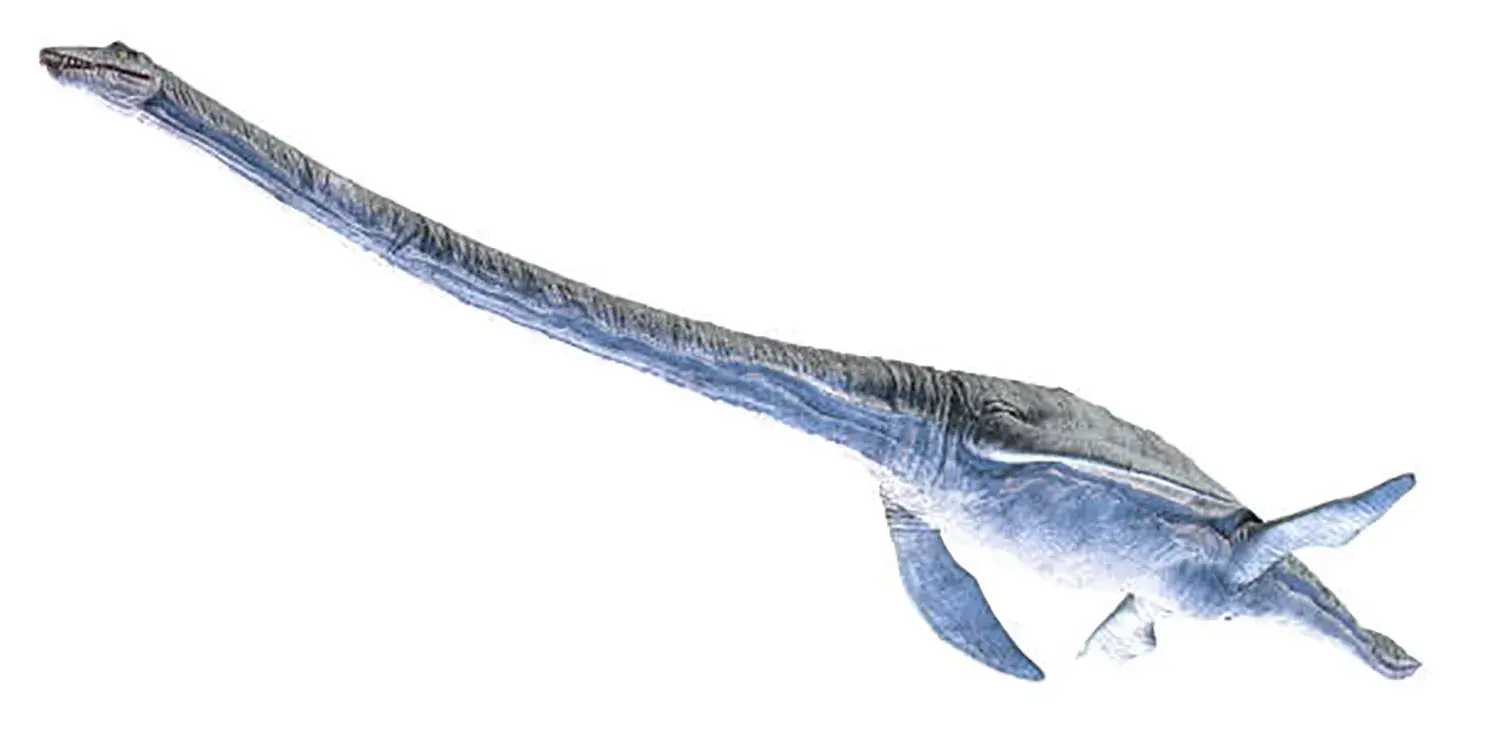
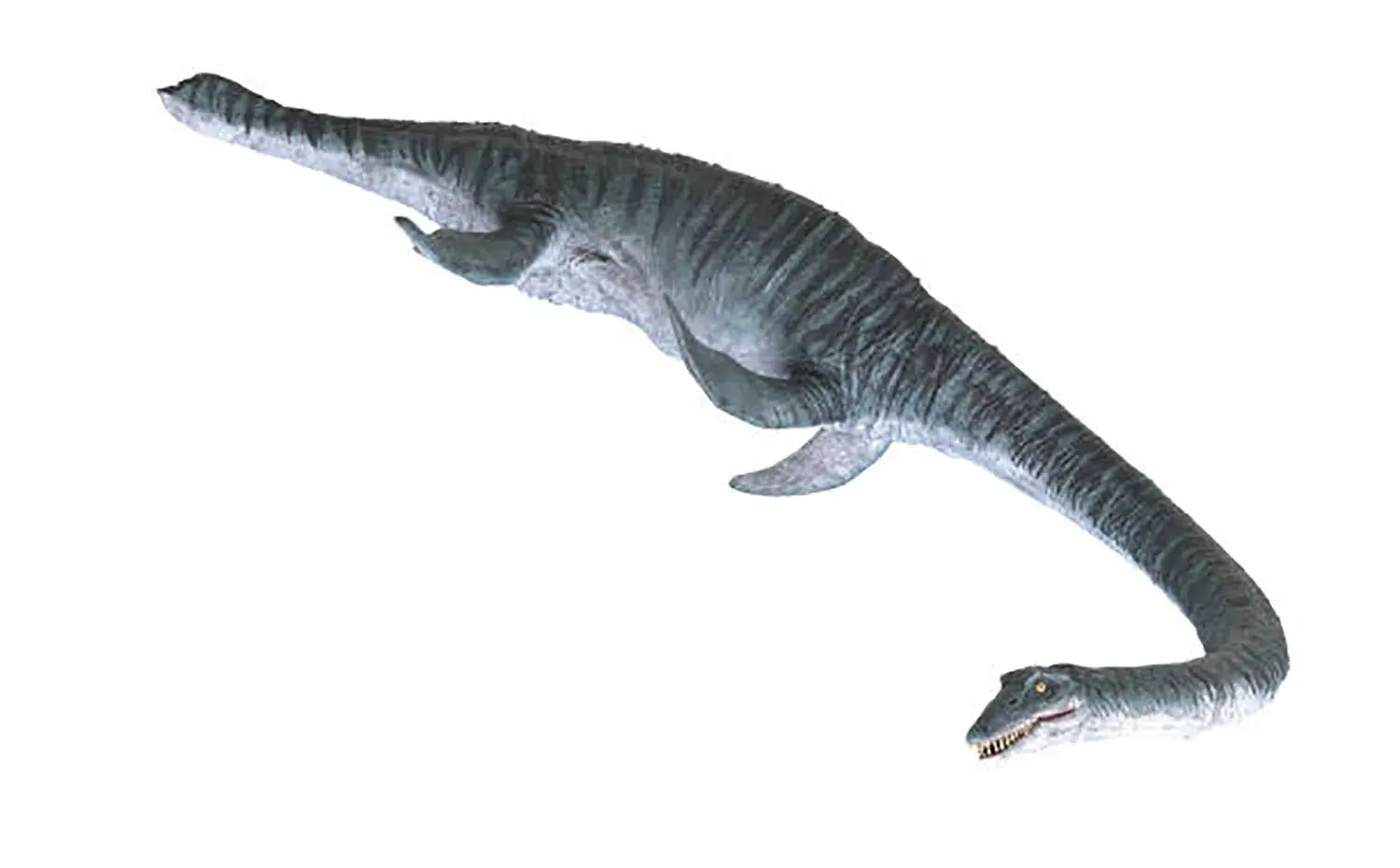
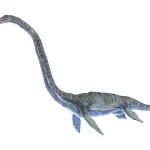
As the name suggests, its most distinctive feature lies in its freakishly long neck.
Half of Its Total Length Was “Neck”
Out of its total length of 14 meters, amazingly, more than half (6 to 8 meters) was the length of its neck.
This length was achieved by an unusually high number of neck bones, or “cervical vertebrae.”
This number is orders of magnitude higher compared not only to mammals but also to long-necked terrestrial dinosaurs.
With more than 76 bones linked together, it was capable of flexible movement like a snake.
Its neck was capable of flexible movement like a snake
It is thought that it stretched its neck straight to reduce resistance when swimming, and utilized that flexibility at the moment of hunting.
Did It Also Eat Flying Pterosaurs? Ecology of the Sea Hunter
“Nail-like Teeth” to Prevent Escape
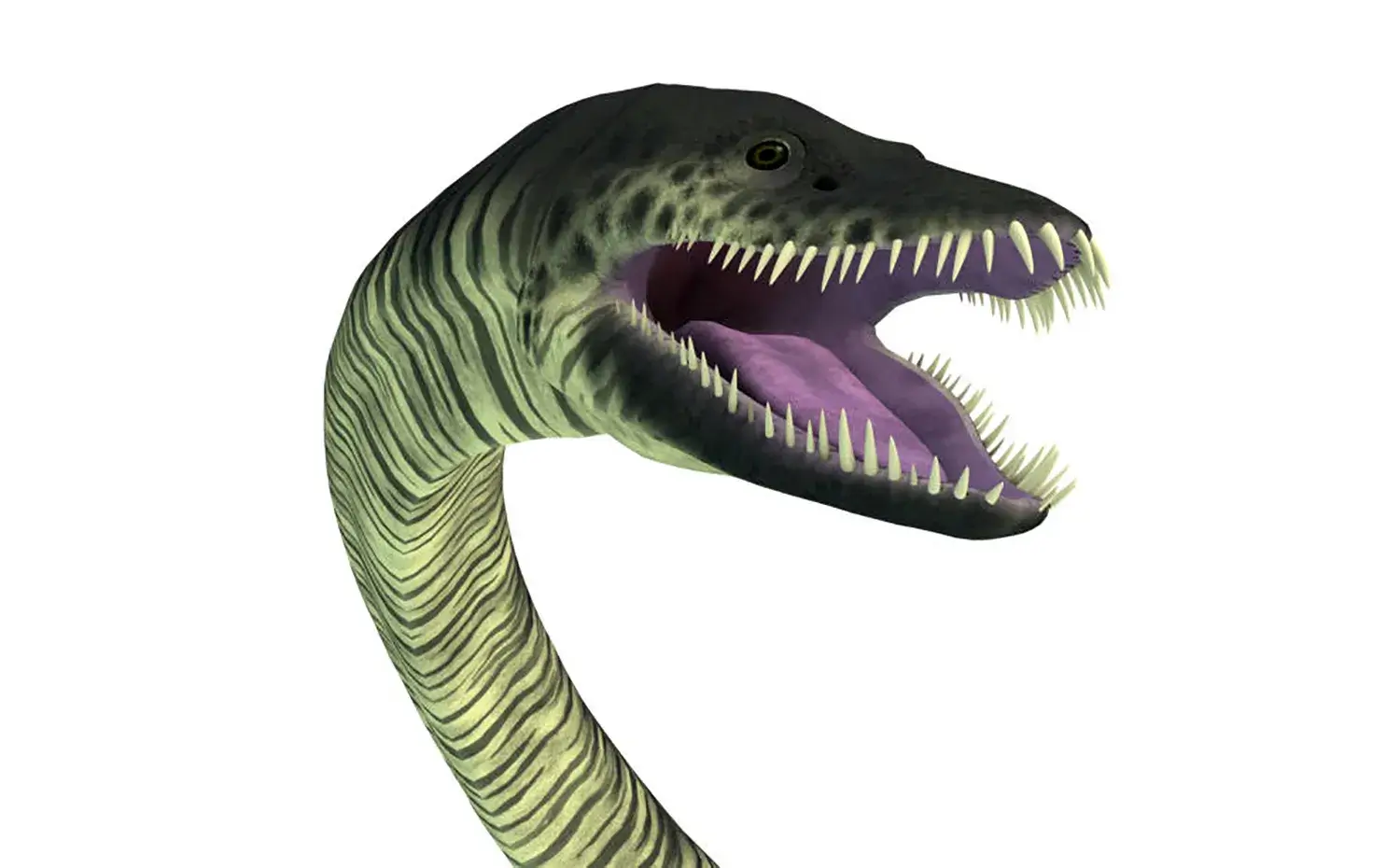
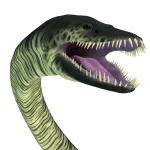
Its head was small, and its mouth was filled with countless sharp, conical teeth.
Its mouth was filled with countless sharp, conical teeth
These were shaped like nails not for cutting meat, but for “piercing and holding” fish and squid, allowing it to reliably swallow captured prey down its throat.
The Pterosaur Pteranodon Was Also a Target
Its main prey were fish and ammonites, but traces of it preying on the pterosaur Pteranodon have also been found in fossils.
It may have attacked pterosaurs flying near the sea surface by lifting its long neck like a sickle.
Additionally, “gastroliths” used to aid digestion and adjust buoyancy have been discovered in its stomach.
The Tragedy of the Bone Wars! A Reconstruction with the “Head and Tail” Swapped
In the late 19th century when Elasmosaurus was discovered, the American paleontological community was in the midst of the intense “Bone Wars.”
During this period, a famous mistake occurred.
It Was So Unconventional That It Was Assembled Backwards
The discoverer was confused by the skeleton with its excessively long neck and short tail, assuming, “There is no way a neck could be this long. This must be the tail.”
As a result, he performed an unprecedented reconstruction by “attaching the skull to the tip of the tail.”
It was initially announced as a figure with “a short neck and a long tail,” but this was later pointed out and corrected by a rival scholar.
This episode illustrates just how unconventional the length of its neck was, even for scholars of that time.