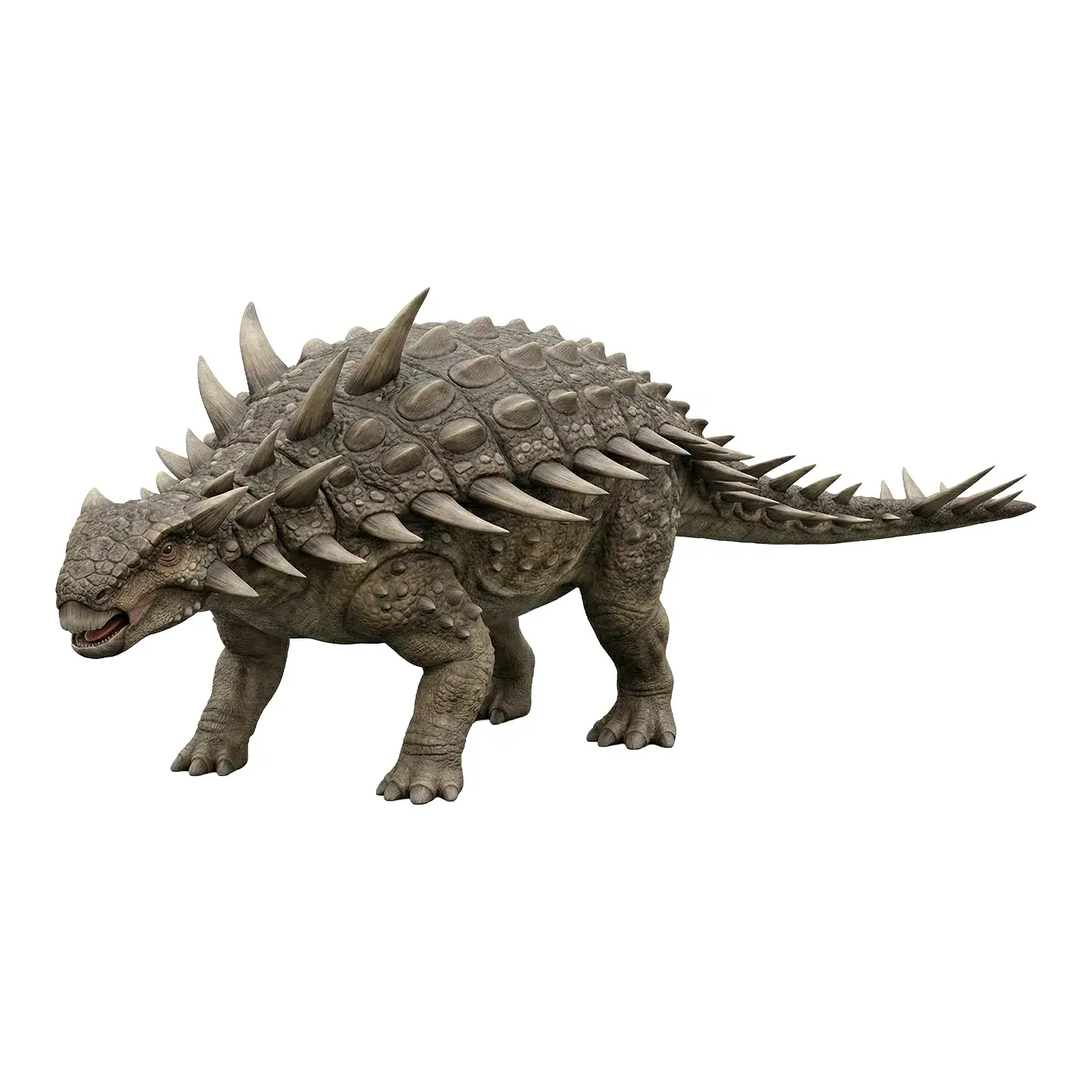
Peloroplites
Name Origin
Monstrous Heavy Hoplite (Armored Soldier)
Family
Nodosauridae
Classification
Diapsida, Ornithischia, Thyreophora
Habitat (Discovery Location)
United States
Period
Approximately 116 to 109 million years ago (Early Cretaceous)
Length
Approximately 5.5 meters
Diet
Herbivore (Plant-eater)
 Jurassic
Park / World Featured Dinosaur
Appearance in Jurassic World: Fallen Kingdom
It never appears as a living creature, showing up on screen only as a skeletonized carcass or a museum-style specimen.
During the volcanic eruption on Isla Nublar, as Owen lay paralyzed after being tranquilized by Wheatley, he watches a skeleton get swallowed and incinerated by the flowing lava right before his eyes. That skeleton belonged to a Peloroplites.
Additionally, the carcass seen lying on the ground as Claire’s group headed toward the radio tower (lab) near the volcano was also of this species. Surprisingly, it also appears as a displayed specimen inside the Lockwood Estate on the U.S. mainland.
Like Teratophoneus, this species was not included on InGen's official list of dinosaurs inhabiting Isla Nublar. Everything about it, including the circumstances of its creation, remains shrouded in mystery.
Furthermore, since its name did not appear on the inventory list for the auction at the Lockwood Estate, it is considered highly probable that the species had already gone extinct—either due to the volcanic activity or perhaps even before Claire and the rescue team arrived on the island.
You might also like... 

-
 Brachiosaurus
- Classification
- Sauropods
- Characteristics
- Herbivorous
- Era
- Jurassic period
- Unaysaurus
- Classification
- Sauropods
- Characteristics
- Herbivorous
- Era
- Triassic period
- Therizinosaurus
- Classification
- Theropods
- Characteristics
- Herbivorous
- Era
- Cretaceous period
- Allosaurus
- Classification
- Theropods
- Characteristics
- Carnivorous
- Era
- Jurassic period
-
Sponsored Links
-
Sponsored Links


![[Latest Research] What Was the Function of Spinosaurus's Giant "Sail"? Exploring the Mysteries of Thermoregulation and Underwater Locomotion](https://dinosaurmuseum.jp/wp/wp-content/uploads/eyecatch_spinosaurus-sail-function_en-1024x512.webp)
![[Latest Discovery] A Third Type of Skin, Neither Scales Nor Feathers? Meet "Haolong dongi," a New Dinosaur Species Covered Entirely in Spikes](https://dinosaurmuseum.jp/wp/wp-content/uploads/eyecatch_dinosaur-spiky-skin-discovery_en-1024x512.webp)
Description
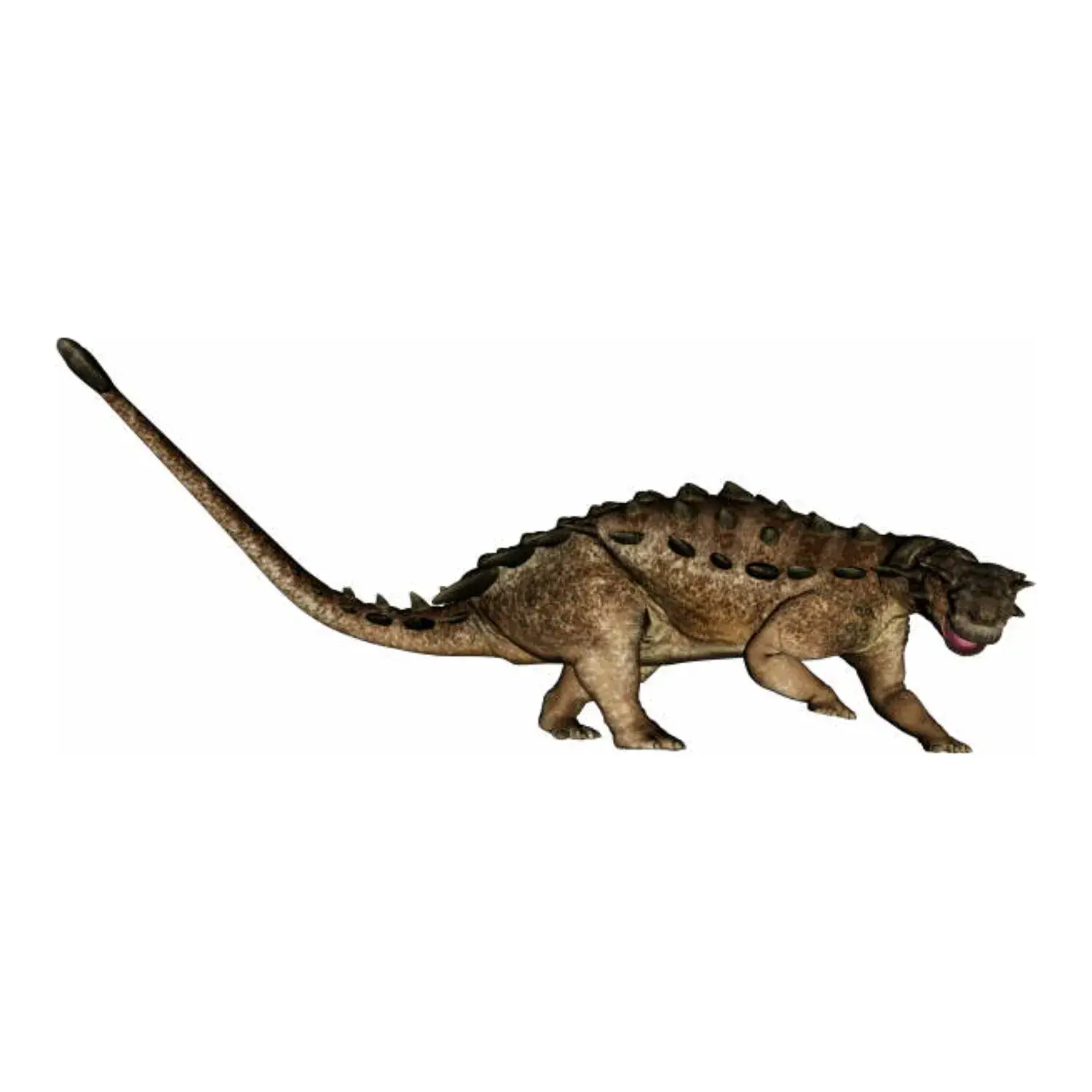
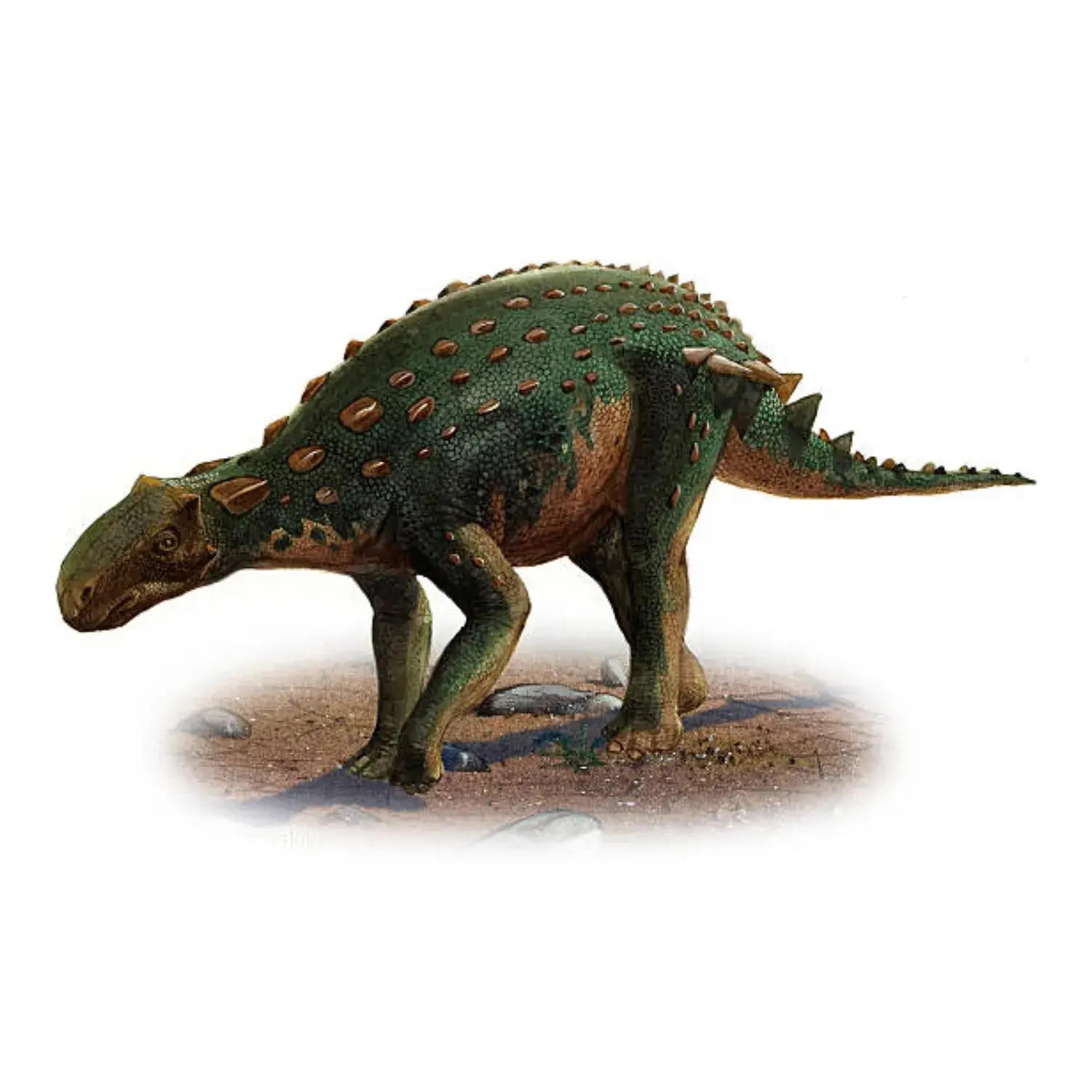
Peloroplites was a medium-sized herbivorous dinosaur that lived in North America during the Early Cretaceous period of the Mesozoic Era.
While its name might sound technical, it carries the formidable meaning of “monstrous heavy hoplite” (armored soldier), referring to this robust nodosaurid armored dinosaur that boasted a total length of about 5.5 meters.
Discovery and Characteristics: A Monstrous Skull and Beak
Its fossils were discovered at the base of the Cedar Mountain Formation in Emery County, Utah, USA, and it was named in 2008 by Kenneth Carpenter and colleagues.
The discovered fossils include nearly the entire skeleton, except for parts of the hind limbs, providing valuable clues to understanding the appearance of this dinosaur.
The skull of Peloroplites was about 56 cm long and 35.5 cm wide, with a gently domed top.
It lacked teeth at the tip of its mouth but possessed a developed keratinous beak. It is believed that in life, it used this beak to grind and eat tough plants.
Notably, the only molar preserved in the upper jaw closely resembles that of Priconodon, another nodosaurid.
Unique Skeletal Structure and Ironclad Defense
The skeleton also exhibits unique features that differ from other nodosaurids.
For example, the ulna in the forelimb is long and straight, and the astragalus (ankle bone) is not fused to the tibia.
It also had a structure supporting the hips with six vertebrae, similar to Silvisaurus.
Peloroplites was a typical nodosaurid dinosaur, protecting itself with sturdy armor covering its back.
At the time, large carnivorous dinosaurs like Acrocanthosaurus lived in the same environment. It is speculated that when attacked, Peloroplites would crouch down, curling its massive body to the ground to weather the assault using the armor on its back.