Saurolophus




Name Origin
Crowned Lizard (or Crested Lizard)
Family
Hadrosauridae
Classification
Diapsida, Ornithischia, Ornithopoda
Habitat (Discovery Location)
United States, Canada, Mongolia
Period
Approximately 70–68.5 million years ago (Late Cretaceous)
Length
Approximately 13 meters
Weight
Approximately 1.9 tons
Diet
Herbivore
You might also like... 

-
 Eocursor
- Classification
- Ornithopoda
- Characteristics
- Herbivorous
- Era
- Triassic period
- Chindesaurus
- Classification
- Theropods
- Characteristics
- Carnivorous
- Era
- Triassic period
- Maiasaura
- Classification
- Ornithopoda
- Characteristics
- Herbivorous
- Era
- Cretaceous period
- Heterodontosaurus
- Classification
- Ornithopoda
- Characteristics
- Herbivorous
- Era
- Jurassic period
-
Sponsored Links
-
Sponsored Links



![[Latest Research] What Was the Function of Spinosaurus's Giant "Sail"? Exploring the Mysteries of Thermoregulation and Underwater Locomotion](https://dinosaurmuseum.jp/wp/wp-content/uploads/eyecatch_spinosaurus-sail-function_en-1024x512.webp)
![[Latest Discovery] A Third Type of Skin, Neither Scales Nor Feathers? Meet "Haolong dongi," a New Dinosaur Species Covered Entirely in Spikes](https://dinosaurmuseum.jp/wp/wp-content/uploads/eyecatch_dinosaur-spiky-skin-discovery_en-1024x512.webp)
Description
The Late Cretaceous period, marking the final stage of the dinosaur era.
When Asia (the Eurasian continent) and the North American continent were connected by the “Beringia Land Bridge,” there was a giant plant-eating dinosaur that flourished across these two continents.
Its name is “Saurolophus.”
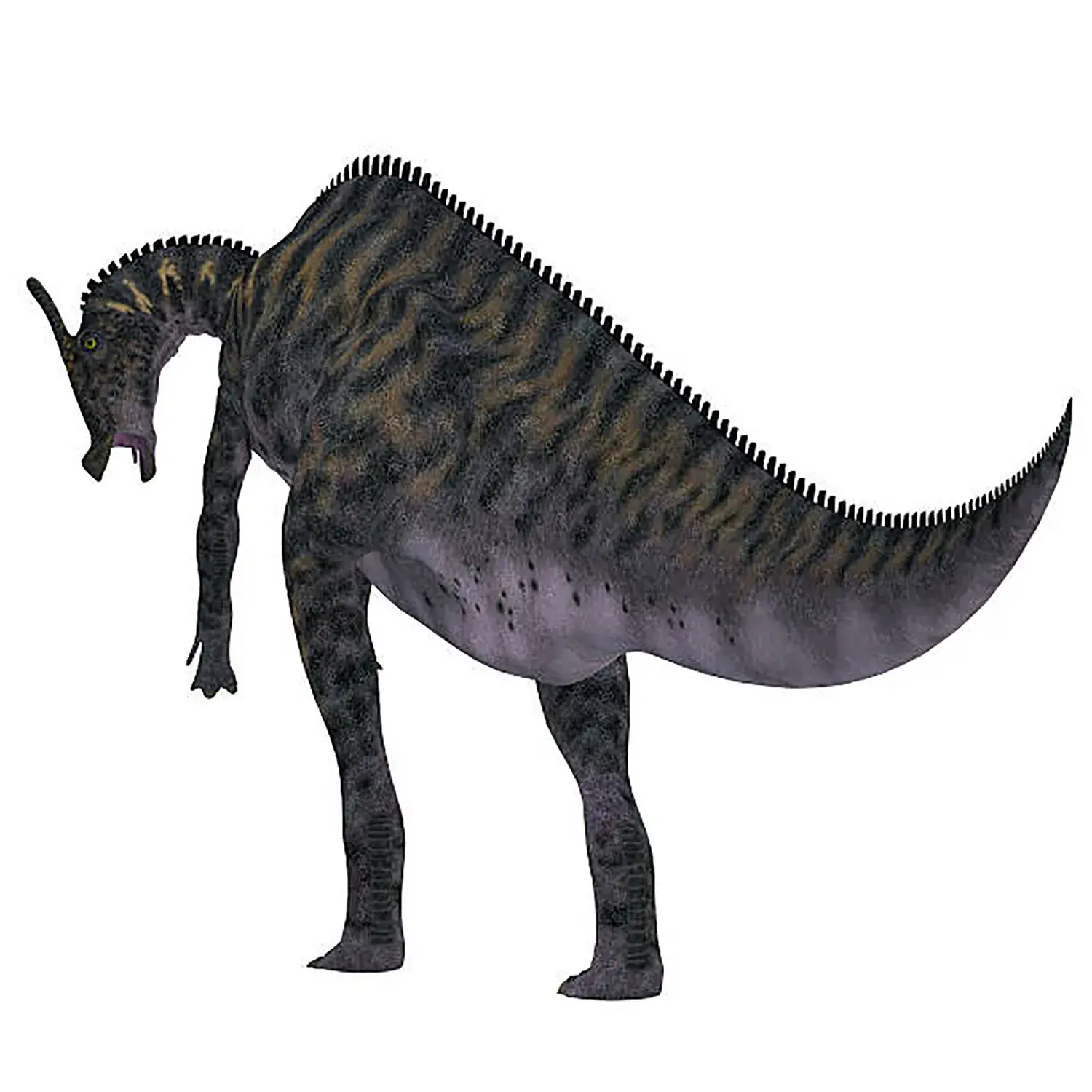
Reaching a maximum length of 13 meters, this duck-billed dinosaur served as the origin for the names of famous dinosaurs like Parasaurolophus, yet it remains a mysterious dinosaur possessing a unique crest of its own.
The True Identity of the “Crested Lizard”: The Source Material for Parasaurolophus
Meaning and Influence of the Scientific Name
The scientific name Saurolophus means “Lizard Crest” (or Crested Lizard) in Greek.
This name became the naming standard for many hadrosaurid dinosaurs discovered later.
Famous dinosaur names such as “Parasaurolophus” (Near Saurolophus) and “Prosaurolophus” (Before Saurolophus) are all derived from this dinosaur.
Discovery by a Legendary Fossil Hunter
The first discovery was in 1911.
Barnum Brown, famous as the discoverer of Tyrannosaurus, found a complete skeleton in Canada.
Later, in 1946, a Soviet expedition team found a different species in Mongolia’s Gobi Desert.
Furthermore, a new species was found in California, USA, in recent years (2013), revealing that they migrated extensively across the two continents that were once connected by land.
The Mystery of the Crest and “Nose Balloons”: How Did They Make Sound?
A “Solid” Crest Filled with Bone
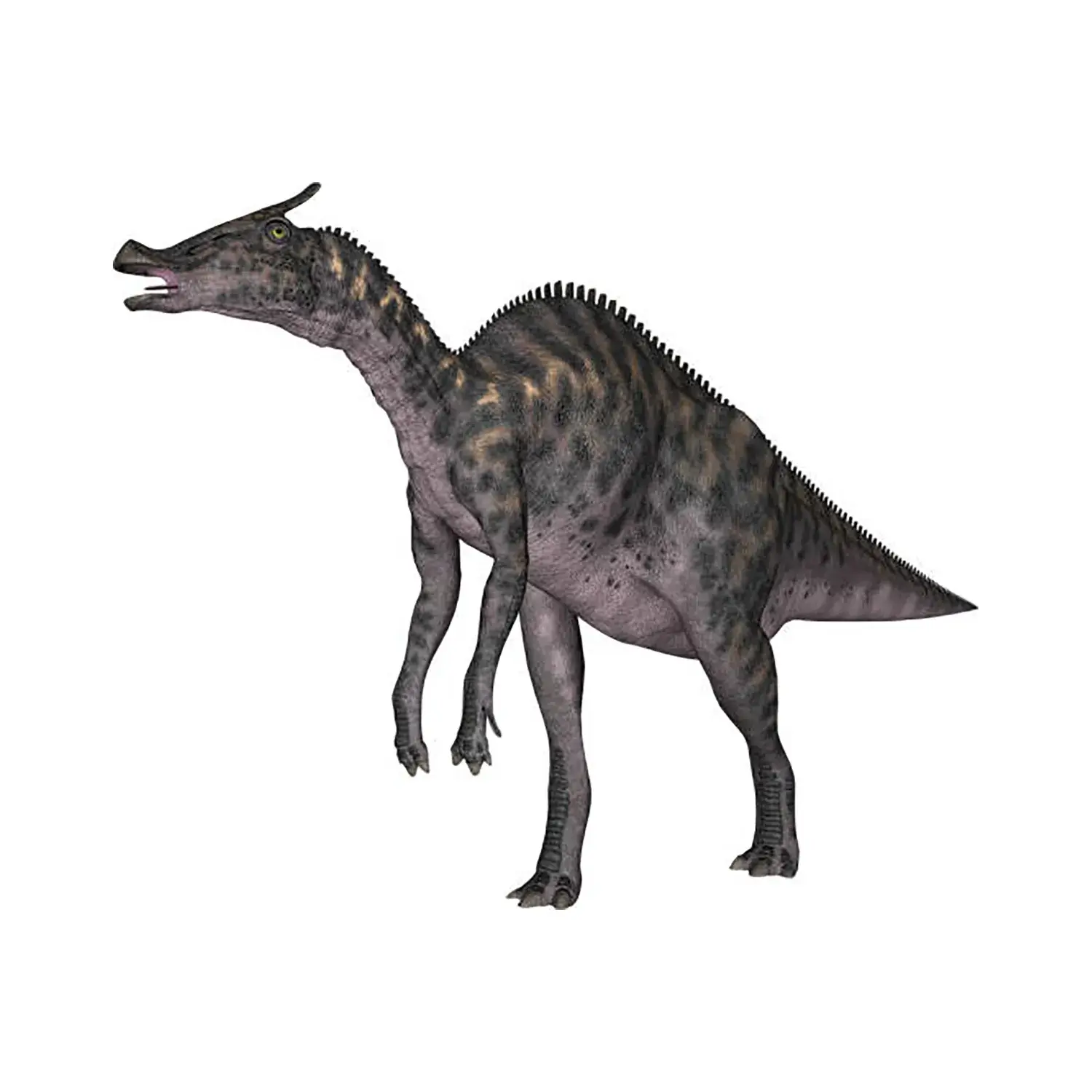
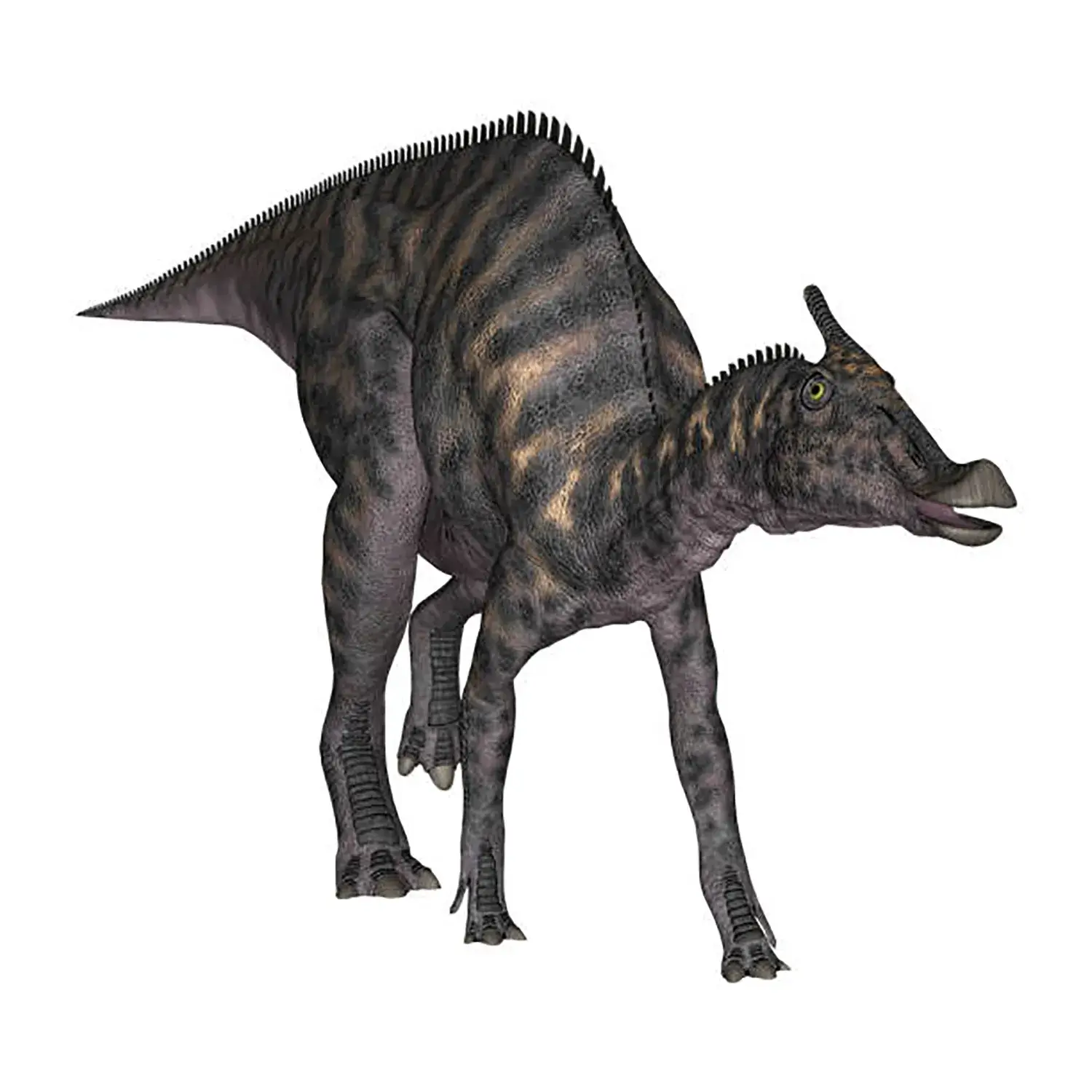
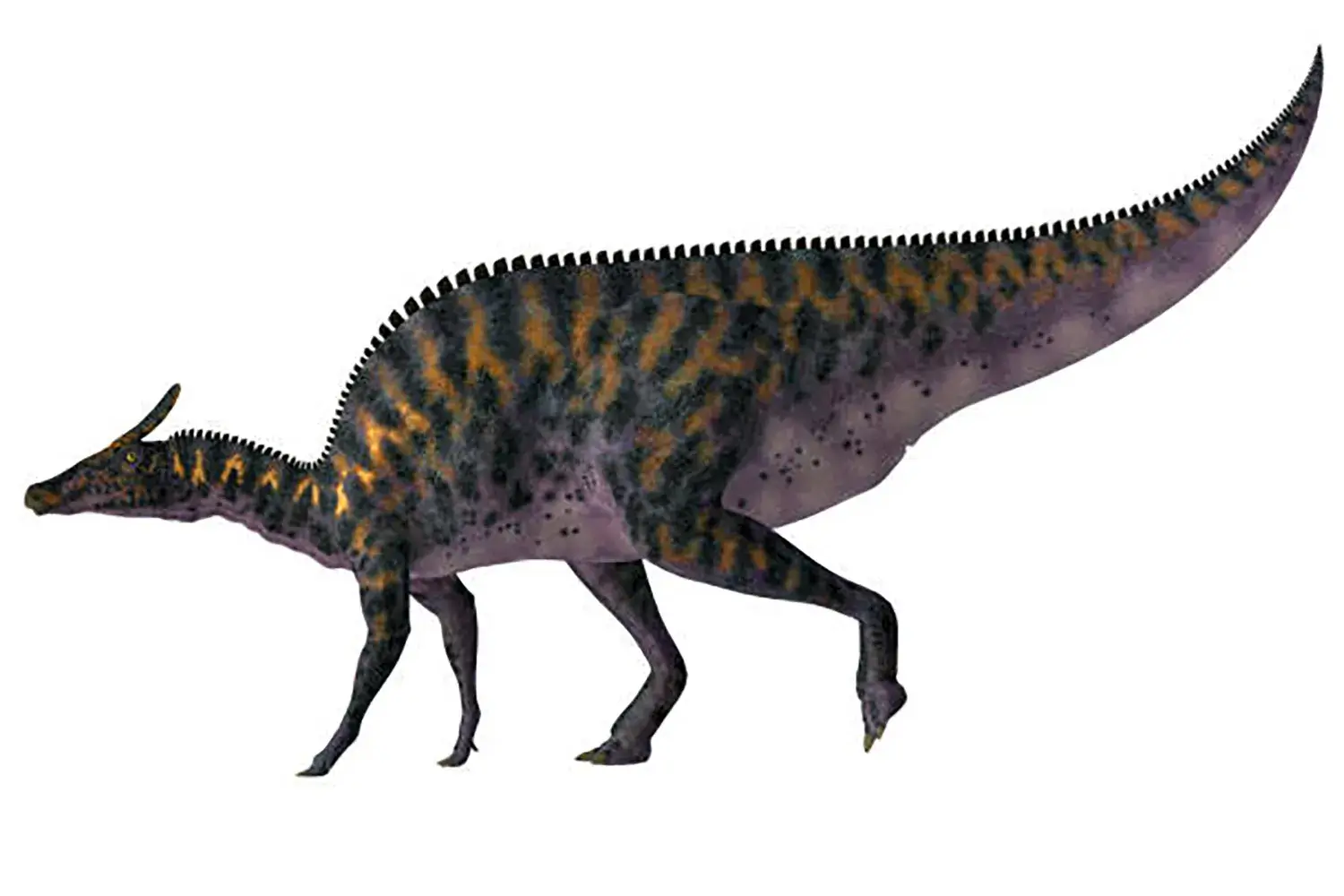
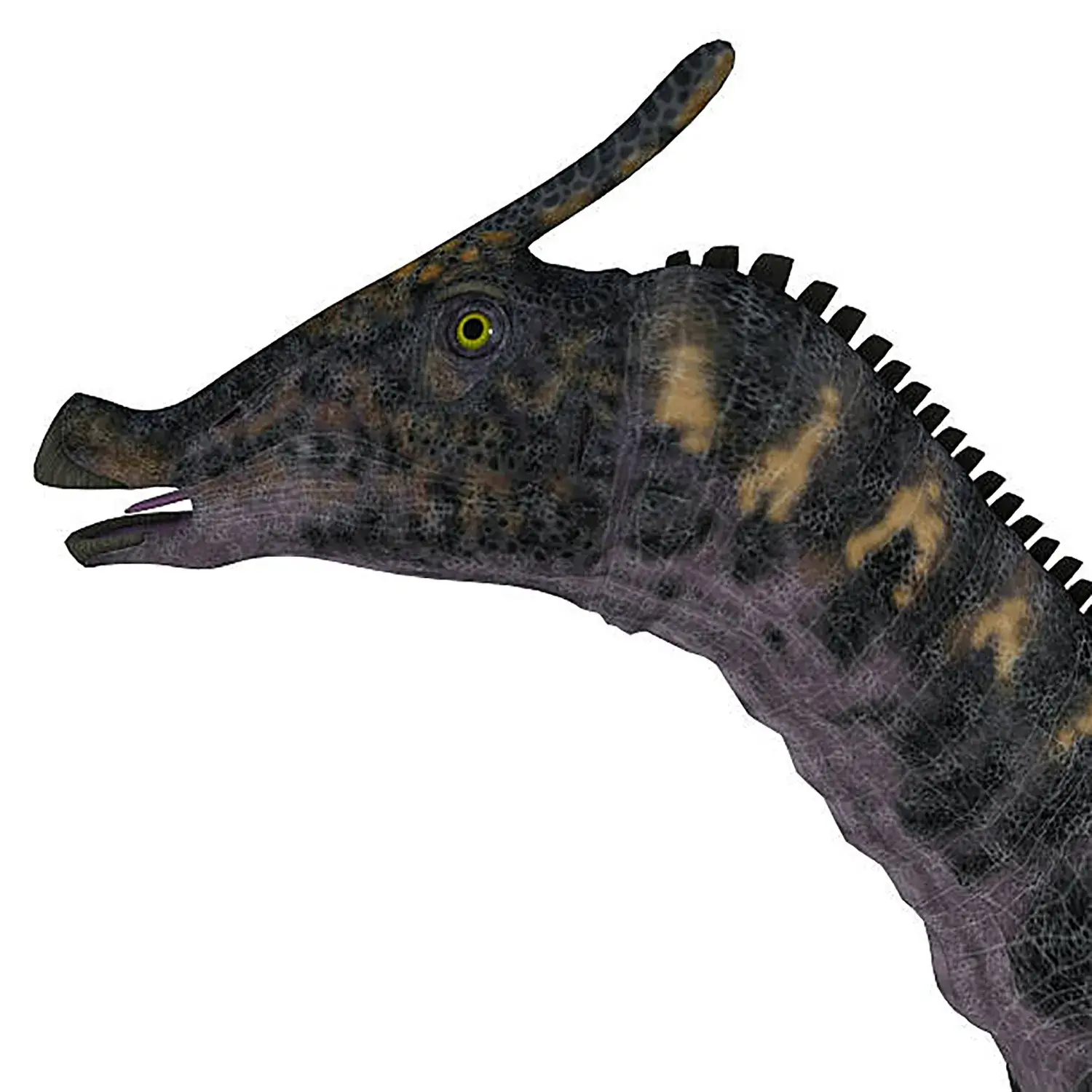
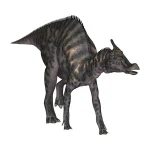
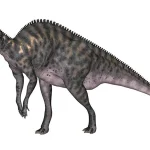
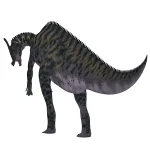
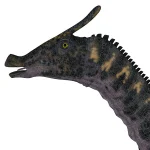
Its greatest characteristic is the long, spike-like crest projecting backward from the top of its head.
Characterized by a long, spike-like crest projecting backward from the top of the head
Unlike Parasaurolophus, which had a hollow structure to resonate sound, research has revealed that this crest was a “solid projection filled with bone.”
It is physically impossible to resonate sound within the crest itself.
So, how did they communicate?
Calls Like an Oboe?
The answer may lie in the “nose.”
There are large depressions around the nasal bones, and it is speculated that there were huge skin sacs (nasal balloons) here that could be inflated like those of an elephant seal.
They may have amplified sound by inflating these sacs while exhaling, producing a tone similar to a woodwind instrument like an oboe.
The crest might have functioned as an anchor point to support these sacs.
A Body Supporting Massive Weight and the “Dragon’s Tomb” Revealing Group Life
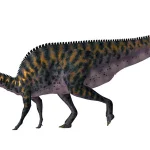
A Hybrid of Two-Legged and Four-Legged Walking
Although it had a massive body weighing 5 tons and measuring 13 meters in length, its athletic ability seems to have been high.
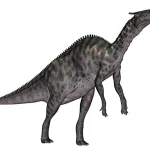
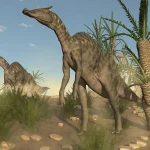
While they primarily walked on four legs, they could run on two legs in an emergency.
They could run on two legs in an emergency
It is said that when attacked by carnivorous dinosaurs, lacking weapons, they simply fled using their strong legs.
Mass Death of Over 100 Individuals
From an excavation site in Mongolia called the “Dragon’s Tomb,” over 100 estimated individuals of Saurolophus have been discovered at once.
This is evidence that they lived in huge herds and died en masse due to a disaster or similar event.
It likely created a spectacular scene of them migrating across the continent in search of plants, much like herds of wildebeest.
Mortal Combat with the Asian Tyrant Tarbosaurus
Their world was by no means safe.
Especially for the Saurolophus living in Asia, the greatest threat was the large carnivorous dinosaur “Tarbosaurus.”
Raw bite marks from a large carnivorous dinosaur remain on a Saurolophus humerus excavated in Mongolia.
This tells the harsh reality of the food chain: even if adult Saurolophus were unrivaled, juveniles and weakened individuals fell prey to ferocious hunters.