
Titanosaurus
Name Origin
Titanic Lizard
Family
Titanosauridae
Classification
Diapsida, Saurischia, Sauropodomorpha
Habitat (Discovery Location)
India
Period
Approximately 83–65 million years ago (Late Cretaceous)
Length
Approximately 12–19 meters
Weight
Approximately 14 tons
Diet
Herbivore
 Jurassic
Park / World Featured Dinosaur
Appearance in Jurassic World: Rebirth
The Titanosaurus in this film is portrayed as one of the largest sauropods in history, but there is an interesting "discrepancy" between its official specifications and its on-screen depiction.
Official Specifications
Length: 21.3m (70feet) / Height: 15.2m (50feet) / Weight: Over 27tons.
On-Screen Depiction
Aside from the height, it appears to be a massive body that far exceeds the official figures, looking like one of the largest creatures in the entire series.
Regarding this contradiction, it is possible that the same measurement method used for the Brachiosaurus in Jurassic Park III was applied here. This theory suggests that "body length" refers to the horizontal distance from the nose to the tail while the neck is raised upright. If calculated using the standard measurement method (total length)—measuring in a straight line along the spine from nose to tail—it is estimated to easily exceed 30 meters, surpassing even that Brachiosaurus.
It also possesses unique design features.
Fin-like Crests
In addition to a very long tail, it features collapsible orange fin-like crests at the base of its neck and tail. Due to this feature, some speculate it might be a conscious homage to the "Dinosaur Kaiju" of the same name from the Godzilla series (Terror of Mechagodzilla).
Hair on the Feet
If you observe its feet closely, you can confirm the presence of short, elephant-like hair.
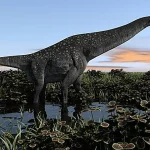
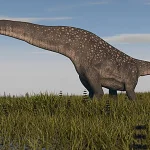
In the film, a large number of them inhabit a valley on the island overgrown with tall grass, appearing before the protagonist's group. The reveal is directed in a way that is reminiscent of the iconic Brachiosaurus scene in the first Jurassic Park movie.
Overwhelming Size
Its colossal size absolutely stunned the group.
Dr. Loomis's Tears
Dr. Loomis, in particular, was overcome with excitement at its majestic form, spreading his arms, cheering, and shedding tears of emotion.
Musical Homage
The familiar theme music playing during this scene uses the same melody as the first film, making it a memorable moment that brings tears to the eyes of long-time fans.
As the only herbivore among the "Three Major Dinosaurs" (the key species for the plot), the Titanosaurus is portrayed with a very gentle nature. It caused no harm to the group and allowed them to extract its DNA with surprising ease.
Additionally, according to the animators, its movements were based on giraffes and swans. In the film, two individuals can be seen engaging in courtship behavior modeled after that of giraffes ("necking").
You might also like... 

-
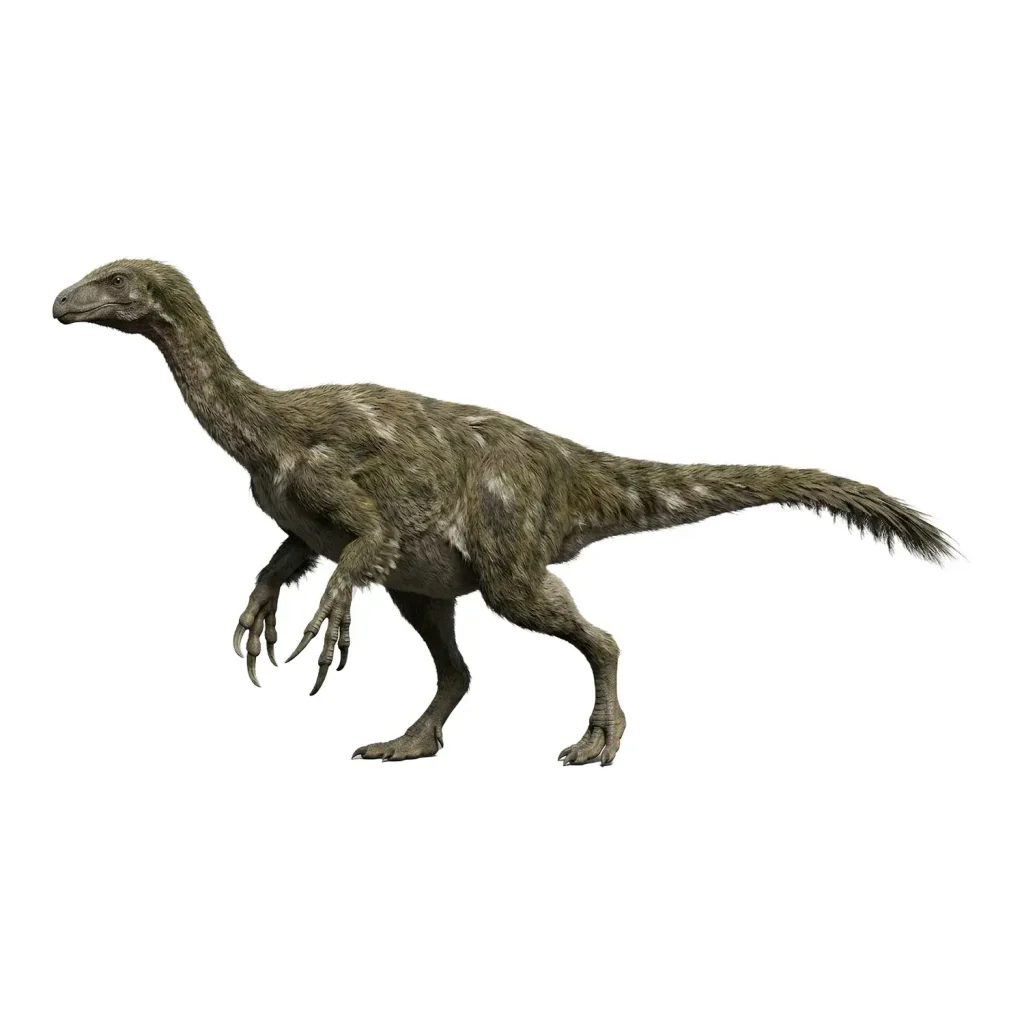
 Jianchangosaurus
- Classification
- Theropods
- Characteristics
- Herbivorous
- Feathered
- Era
- Cretaceous period
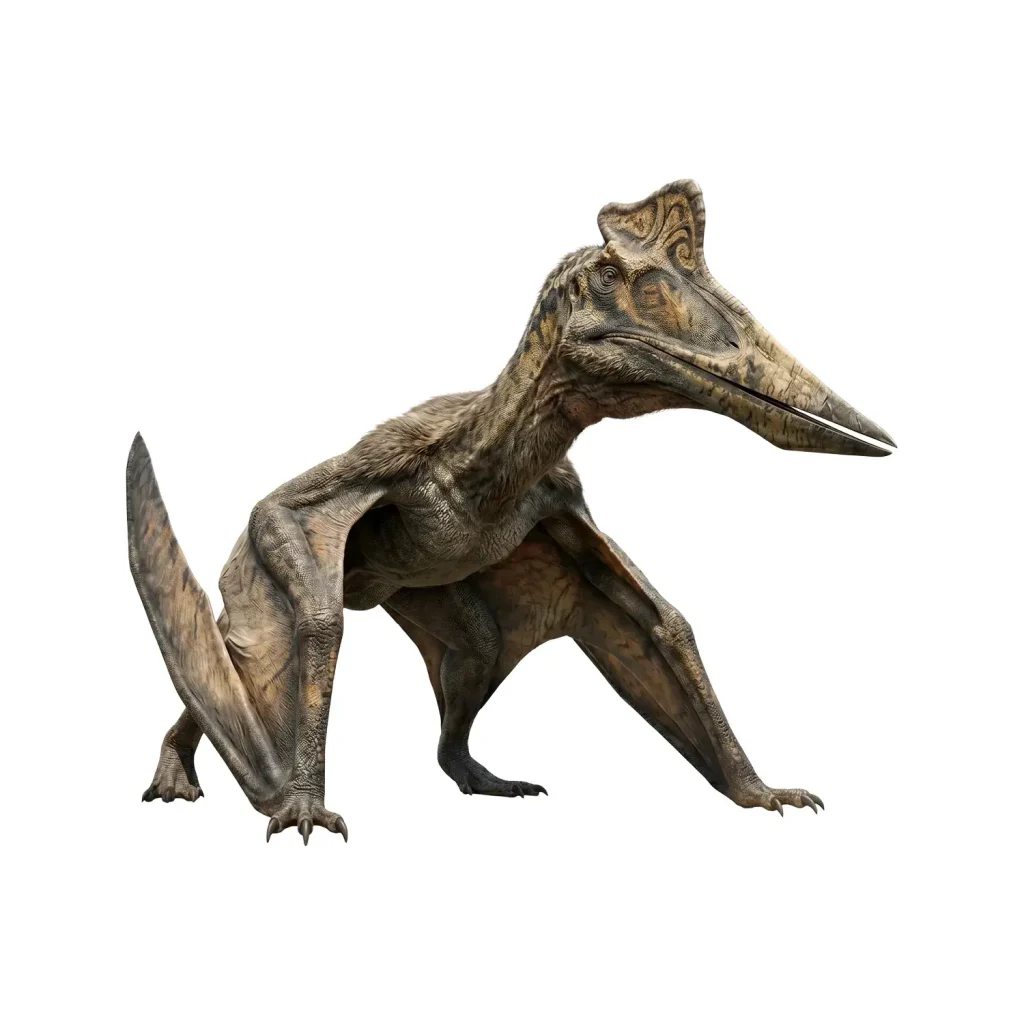
- Hatzegopteryx
- Classification
- Flying reptiles
- Era
- Cretaceous period
- Archaeornithomimus
- Classification
- Theropods
- Characteristics
- Omnivorous
- Era
- Cretaceous period
- Sinornithosaurus
- Classification
- Theropods
- Characteristics
- Carnivorous
- Feathered
- Era
- Cretaceous period
-
Sponsored Links
-
Sponsored Links









![[Latest Research] What Was the Function of Spinosaurus's Giant "Sail"? Exploring the Mysteries of Thermoregulation and Underwater Locomotion](https://dinosaurmuseum.jp/wp/wp-content/uploads/eyecatch_spinosaurus-sail-function_en-1024x512.webp)
![[Latest Discovery] A Third Type of Skin, Neither Scales Nor Feathers? Meet "Haolong dongi," a New Dinosaur Species Covered Entirely in Spikes](https://dinosaurmuseum.jp/wp/wp-content/uploads/eyecatch_dinosaur-spiky-skin-discovery_en-1024x512.webp)

Description
Dinosaur names are often imbued with grand meanings that symbolize their immense size or ferocity.
Among them, one that occupies a significant place in the history of paleontology is “Titanosaurus.”
Derived from the “Titans”—a race of giants in Greek mythology—this dinosaur bears the imposing name of “Titanic Lizard.”
It once made a spectacular debut as “India’s first dinosaur” and gained fame as the head of a group of massive dinosaurs. However, it is now branded a “nomen dubium” (doubtful name), following a peculiar destiny where its very existence is called into question.
Historic Discovery: India’s First Dinosaur and the Ancestor of “Titanosaurs”
India’s First, a Messenger from the Cretaceous
The history of Titanosaurus is long, dating back to a discovery in the 19th century.
In 1877, fossils of a sauropodomorph were discovered in Late Cretaceous strata in India.
This became the type species, T. indicus.
Although the discovery consisted only of fragmentary parts—specifically vertebrae and a portion of the ribs—it is recorded as the “first dinosaur ever discovered in India.”
The Headquarters of Giants: “Titanosauria”
The biggest reason this dinosaur’s name is so widely known is that it serves as the namesake for the “Titanosauria,” a major group of Late Cretaceous sauropods.
This group includes a star-studded lineup of massive dinosaurs, such as Argentinosaurus (one of the largest in history), the colossal Dreadnoughtus, and the North American Alamosaurus.
For a long time, Titanosaurus wore the crown as the representative of this group containing these superstar dinosaurs.
Speculated Physical Characteristics: An Armored, Medium-Sized Giant
As the representative of the group, what did Titanosaurus itself look like?
An Unexpected Size for a Name Like “Giant”
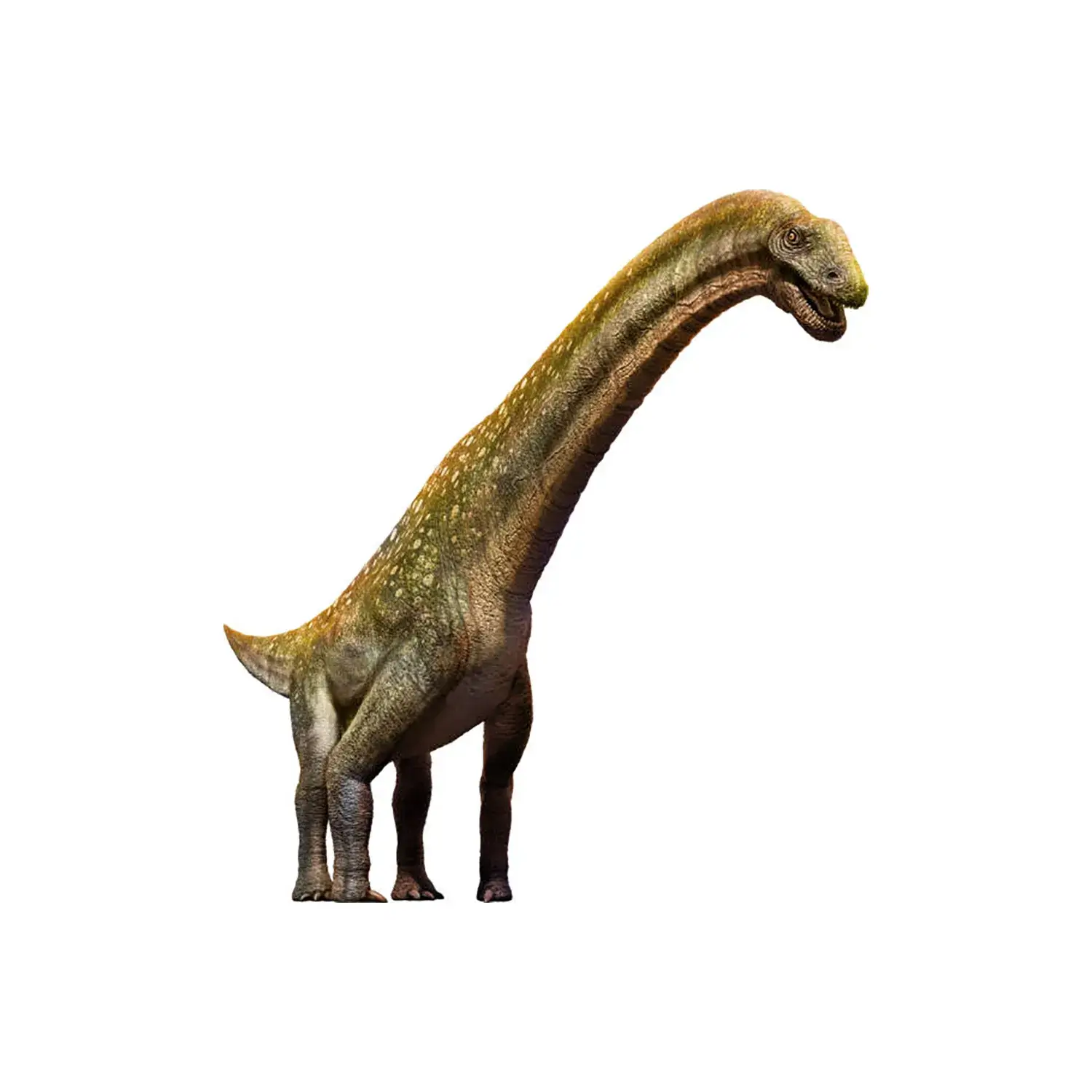
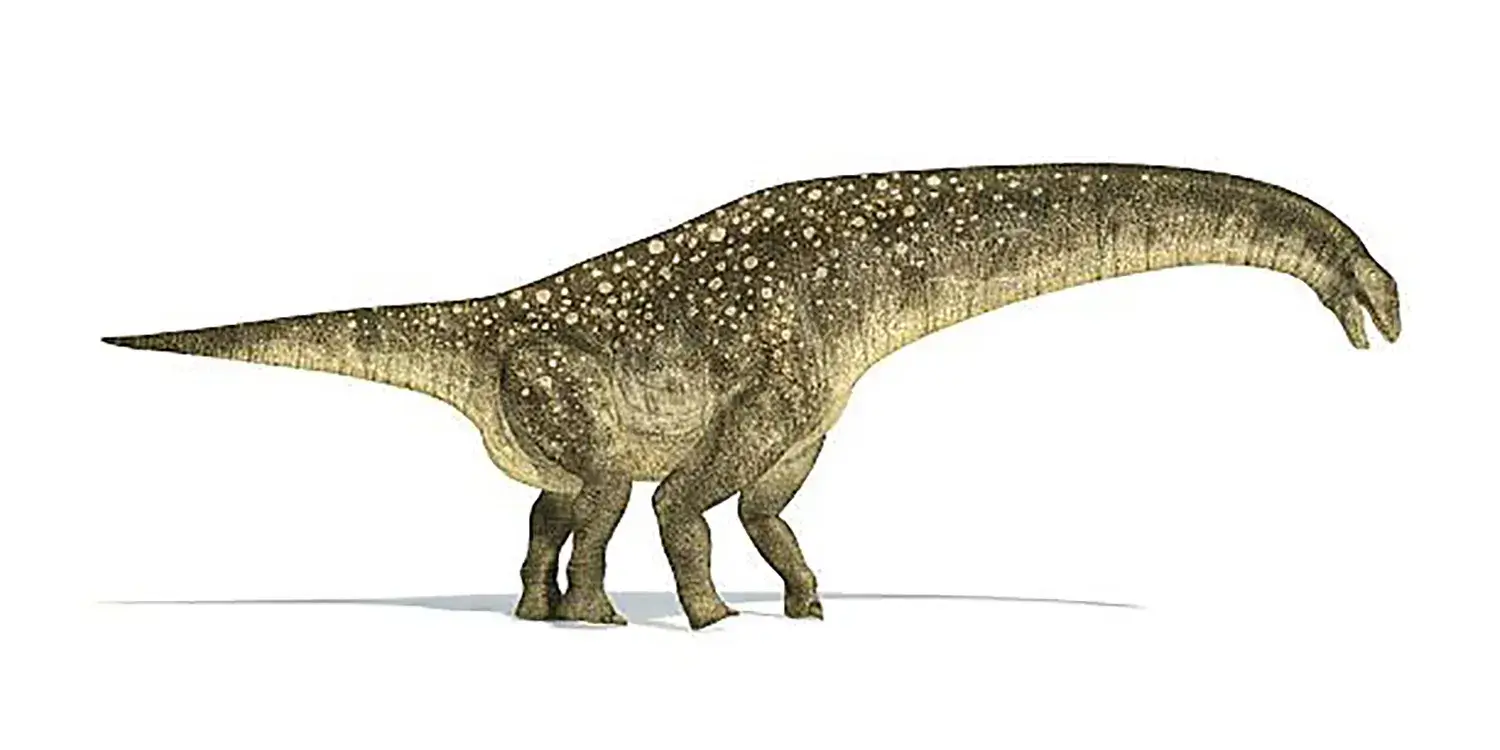
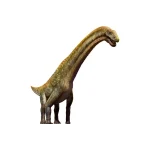
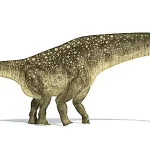
Despite bearing the name “Titan” (Giant), Titanosaurus itself is actually considered to have been medium-sized for a sauropod.
Based on estimates from closely related genera, its total length was approximately 12 to 19 meters.
Compared to super-sized species exceeding 30 meters, it was not particularly huge.
An Armored, Barrel-Shaped Body
Its physique was stocky.
It had a stocky body shape
The torso was wide, shaped almost like a barrel, supported by somewhat short limbs and a thick, sturdy neck.
Its most distinctive feature was its “armor.”
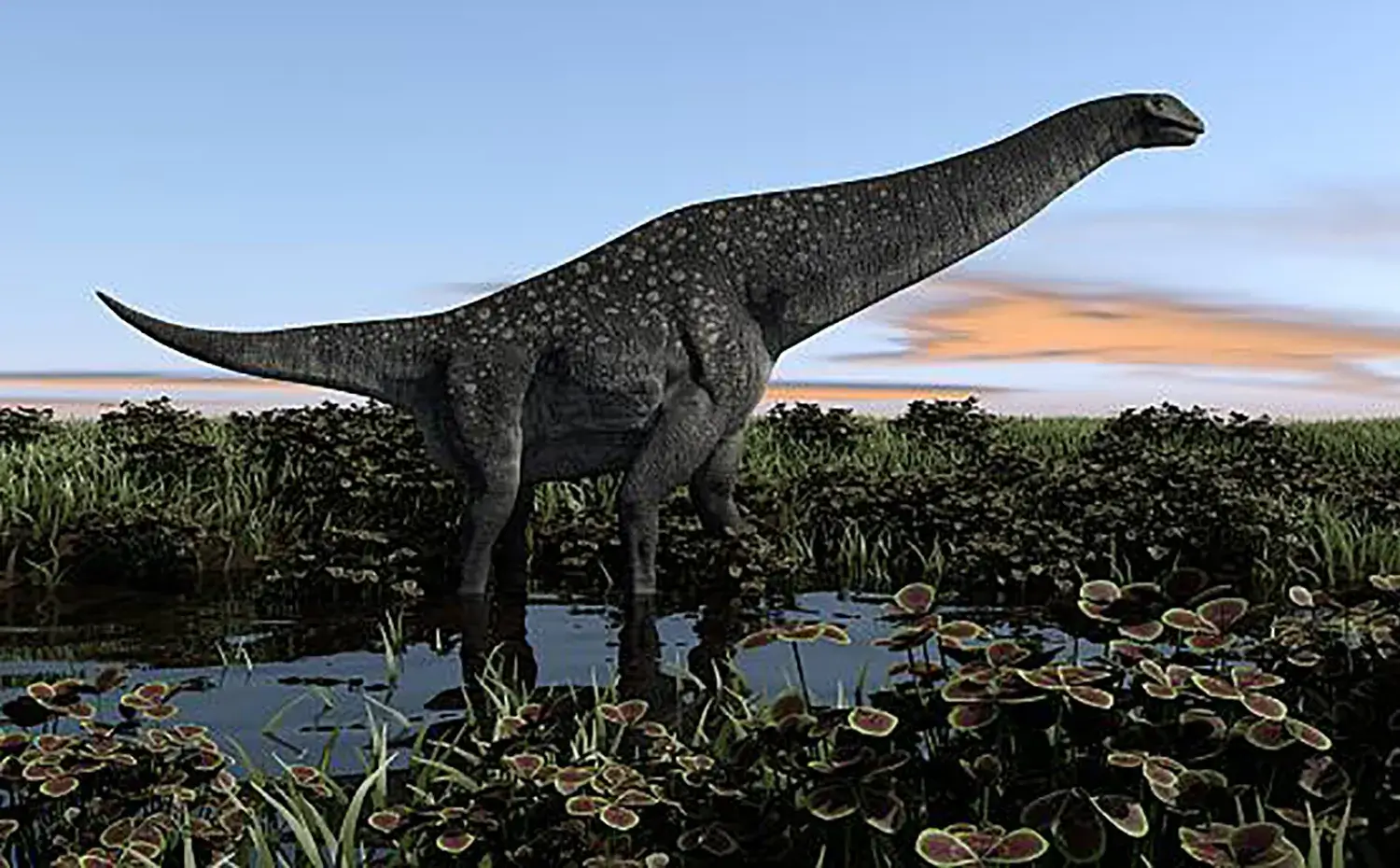
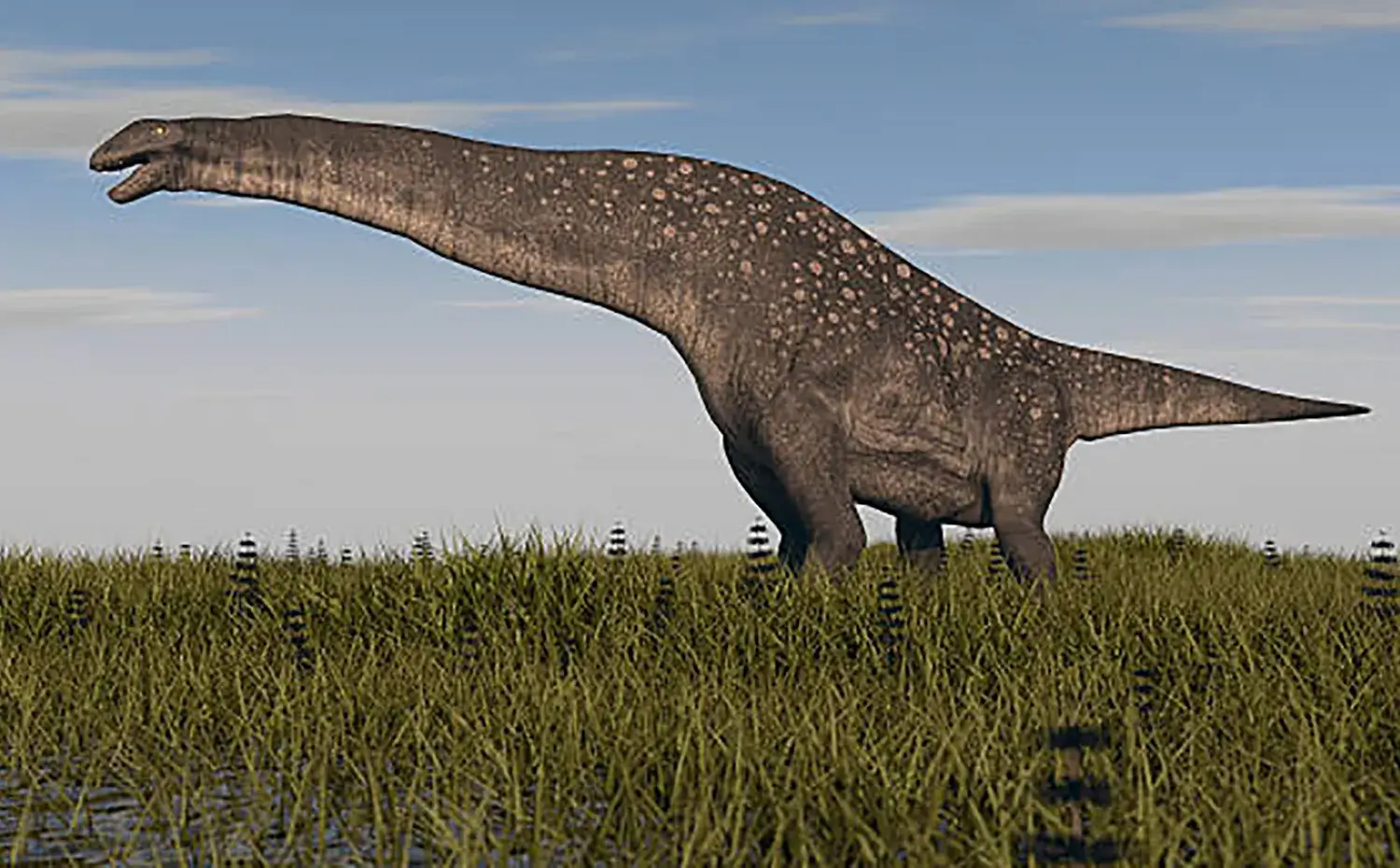
It possessed bony plates (osteoderms) on its back, leading to early reconstructions that depicted it somewhat like an armored Brachiosaurus.
Unique Skeleton and Whip-Like Tail
The prevailing theory suggests its tail was very long, with a tip shaped like a whip.
Additionally, while other giant sauropods had hollowed-out bones to reduce weight, Titanosaurs possessed a unique characteristic: their bones were solid inside.
The Shock of 2003: Why It Became a “Nomen Dubium”
Although Titanosaurus reigned for a long time, recent research has caused its status to collapse.
The Fall to “Nomen Dubium” Due to Scientific Re-examination
In 2003, a study by Wilson and Upchurch determined that almost all specimens previously attributed to the genus Titanosaurus were either “nomen dubium” (doubtful names) or belonged to separate genera.
Upon re-examination, it was found that the fossils of the type species, T. indicus, lacked unique characteristics to distinguish it as a species.
As a result, the species Titanosaurus itself came to be treated as “effectively unclassifiable.”
Former Brethren Given New Names
Following this reorganization, dinosaurs that were once considered species of Titanosaurus were renamed and gained independence.
Neuquensaurus
Formerly T. australis and T. robustus (from Argentina).
Isisaurus
Formerly T. colberti (from India).
Past reports claiming that “other parts of Titanosaurus were found” have now all been concluded to be the bones of other dinosaurs.
The Mystery of the Lost Fossils and Current Status
The Missing Holotype Specimen
There is another reason why proving the legitimacy of Titanosaurus is difficult.
That is the fact that the precious “holotype specimen” discovered in the 19th century is currently missing.
Because the actual fossil is lost, comparative study is impossible, pushing this once-prestigious dinosaur into a difficult position where its very existence is questioned.
The “Phantom Giant” That Exists Only in Name
Currently, the name Titanosaurus is losing its validity as a biological species.
However, the name “Titanosauria” as a taxonomic group remains valid and continues to live on in textbooks and research papers to refer to the group as a whole.
While the physical reality of Titanosaurus may be fading into the mist, its name remains as a symbol of the “history of evolution in dinosaur research.”
Sidenote: The “Titanosaurus” in Tokusatsu Cinema
In the kaiju film Terror of Mechagodzilla, a monster named “Titanosaurus” appears.
Although the name sounds the same, it looks like an aquatic reptile and is a completely fictional entity unrelated to the actual dinosaur.
It is a prime example of how the ring of “Titanic Lizard” captivated creators.