
Pyroraptor
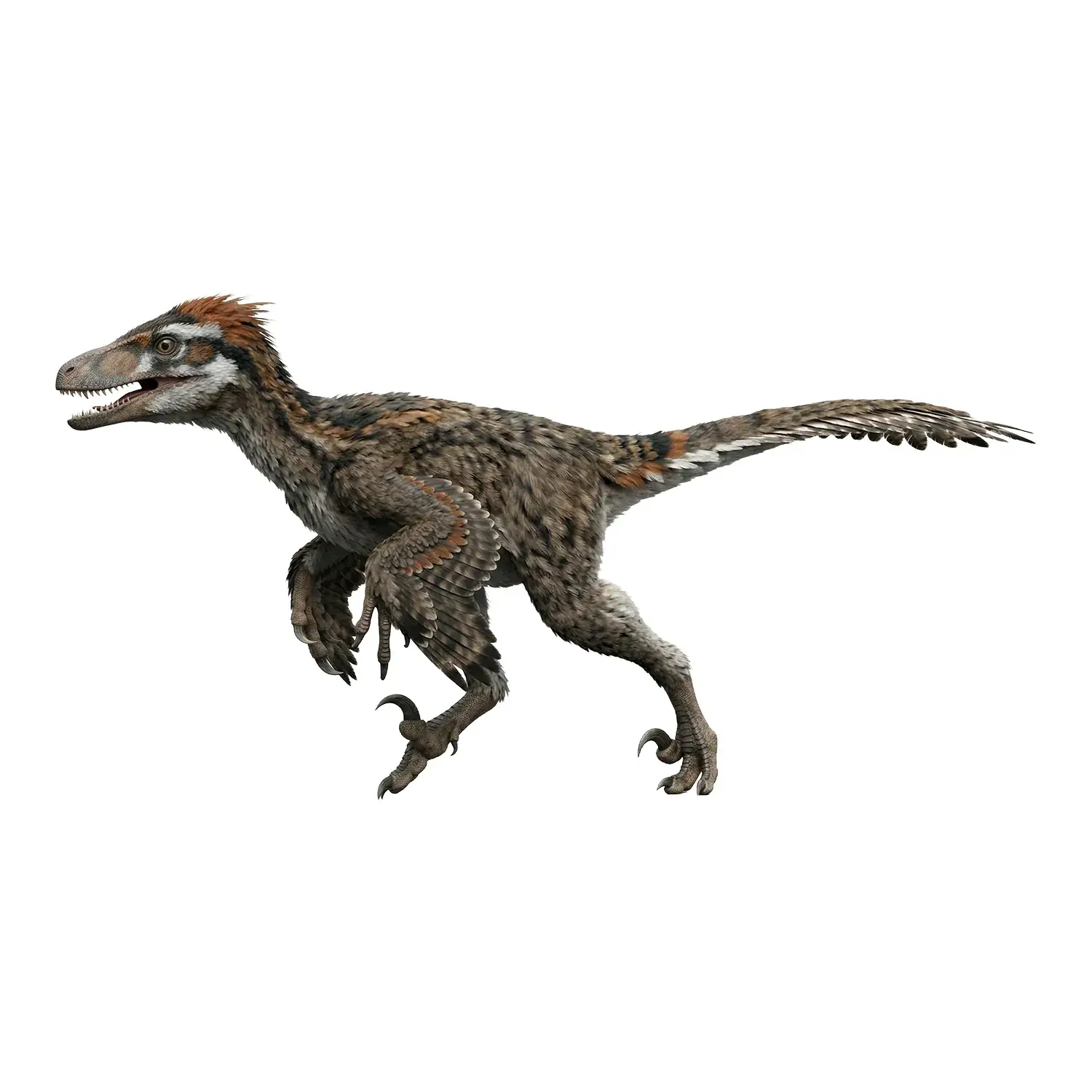
Name Origin
Fire Robber (or Fire Thief)
Family
Dromaeosauridae
Classification
Reptilia, Saurischia, Theropoda
Habitat (Discovery Location)
France
Period
Approximately 70.6 million years ago (Late Cretaceous)
Length
Approximately 2.4 meters
Diet
Carnivore (Meat-eater)
 Jurassic
Park / World Featured Dinosaur
Appearance in Jurassic World: Dominion
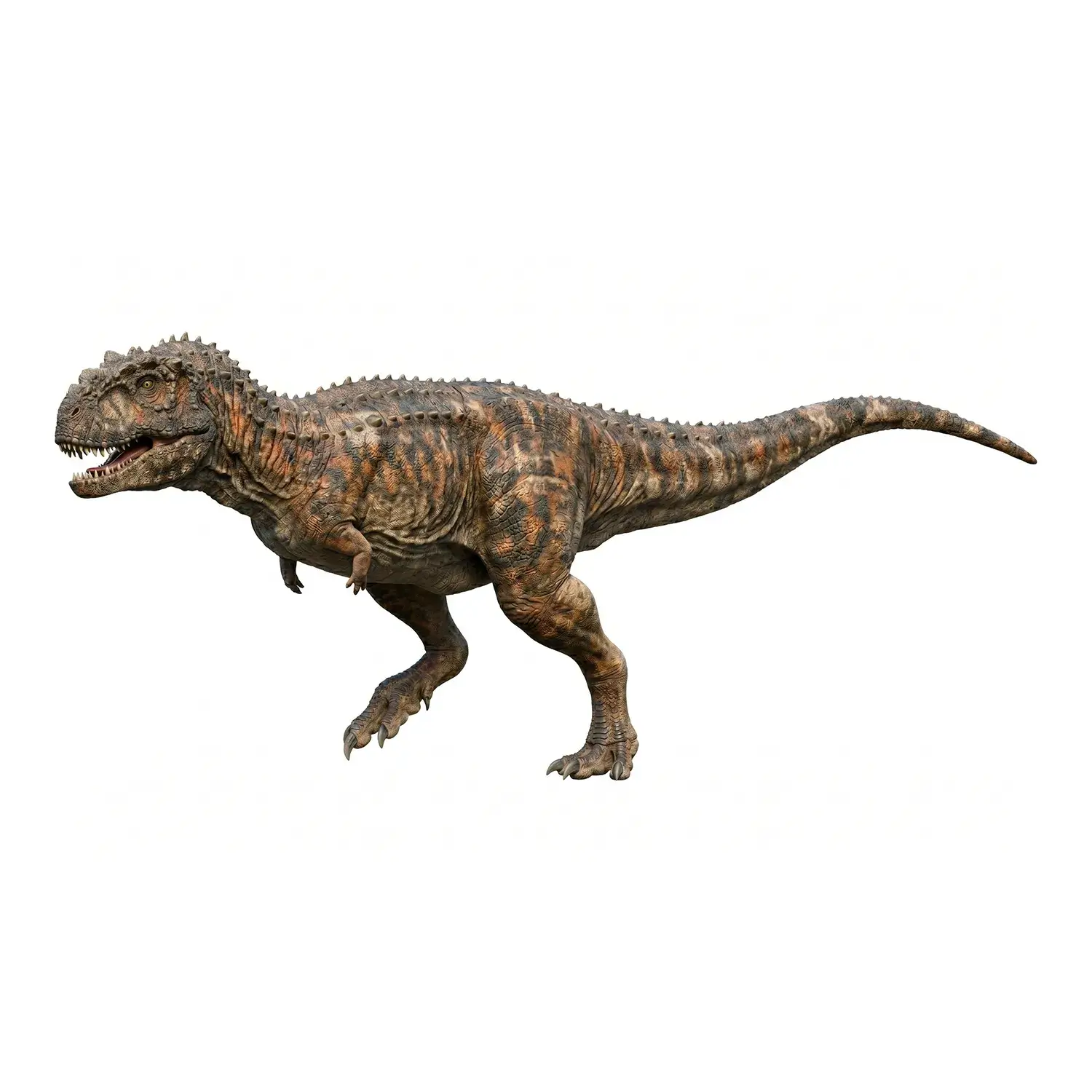
Depicted with a full coat of red feathers—a rarity for the series—its unique biology and striking visual design left a lasting impression on audiences.
Like the Atrociraptor, which also makes its debut here, the Pyroraptor has been scaled up to about twice its actual size for cinematic effect.
Its most defining feature is the vibrant red plumage covering its body, distinguishing it from the Velociraptors and Atrociraptors seen previously. This design incorporates recent scientific theories, marking a new approach to dinosaur portrayal in the franchise.
In the film, it confronts Owen and Kayla after they crash-land on a frozen lake within the Biosyn Sanctuary. In this sequence, the Pyroraptor utilizes the high insulating properties of its feathers to display astonishing adaptability. It dives into the freezing water through cracks in the ice, swimming effortlessly like a waterfowl. Moreover, it performs the spectacular feat of attacking from beneath the ice, stalking its prey much like an orca.
Utilizing tricky attacks that seamlessly transitioned between land and water, it cornered the pair, but they managed to flee into an elevator across a corridor.
Ultimately, it was blasted back by a jolt from Kayla's taser. Its role concludes with it peering into the closing elevator doors, leaving behind a look of frustration as its prey escaped.
You might also like... 

-
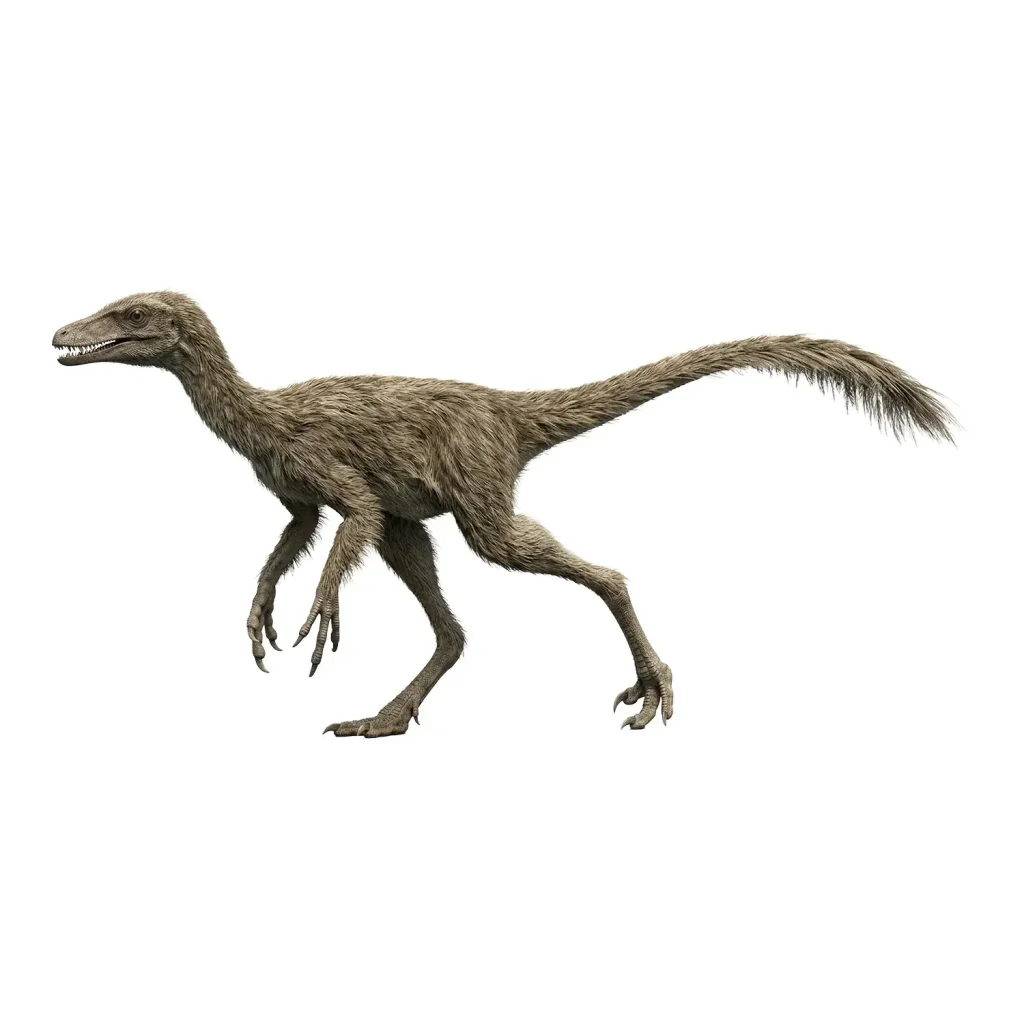
 Huaxiagnathus
- Classification
- Theropods
- Characteristics
- Carnivorous
- Era
- Cretaceous period
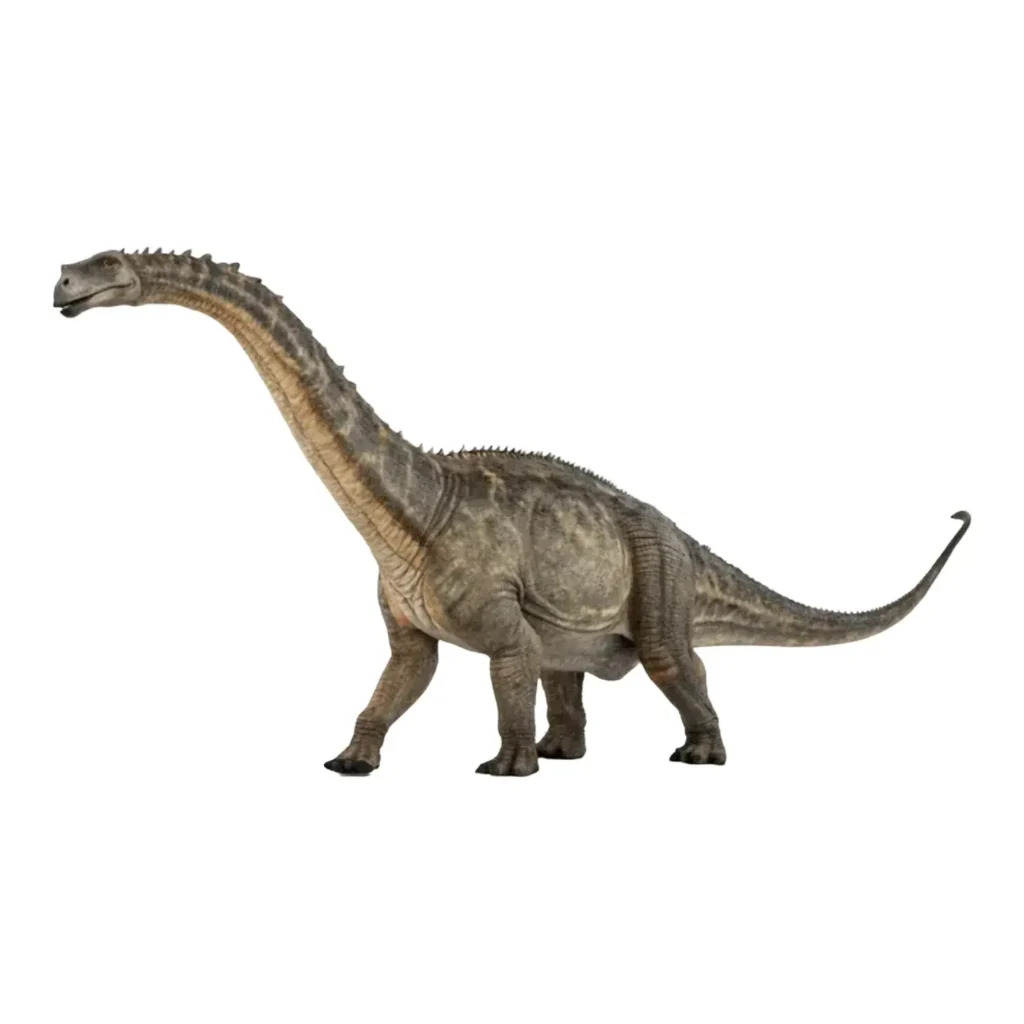
- Dreadnoughtus
- Classification
- Sauropods
- Characteristics
- Herbivorous
- Era
- Cretaceous period
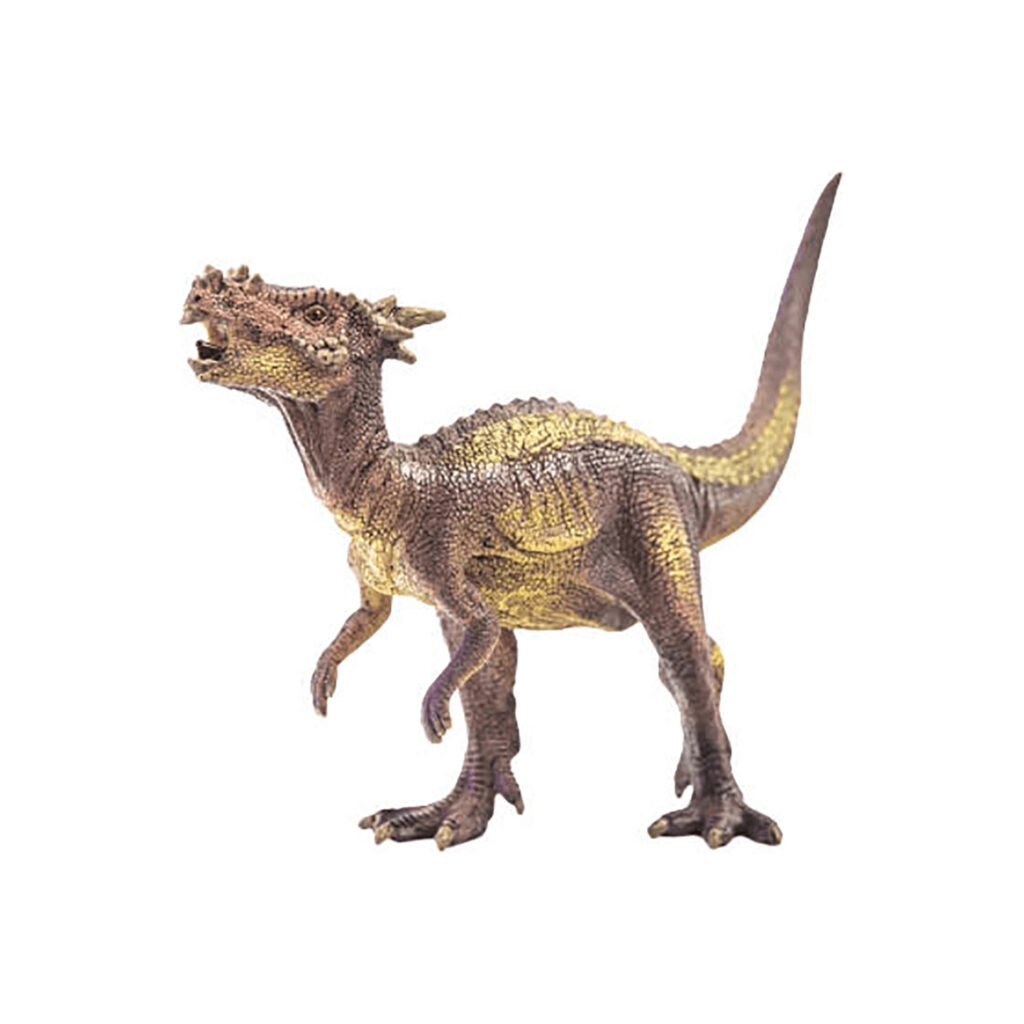
- Dracorex
- Classification
- Marginocephalia
- Characteristics
- Herbivorous
- Era
- Cretaceous period
- Psittacosaurus
- Classification
- Marginocephalia
- Characteristics
- Herbivorous
- Era
- Cretaceous period
-
Sponsored Links
-
Sponsored Links









![[Latest Research] What Was the Function of Spinosaurus's Giant "Sail"? Exploring the Mysteries of Thermoregulation and Underwater Locomotion](https://dinosaurmuseum.jp/wp/wp-content/uploads/eyecatch_spinosaurus-sail-function_en-1024x512.webp)
![[Latest Discovery] A Third Type of Skin, Neither Scales Nor Feathers? Meet "Haolong dongi," a New Dinosaur Species Covered Entirely in Spikes](https://dinosaurmuseum.jp/wp/wp-content/uploads/eyecatch_dinosaur-spiky-skin-discovery_en-1024x512.webp)



Description
Pyroraptor was a dromaeosaurid theropod that lived in Europe (present-day France) during the Late Cretaceous period. It belongs to the same family as the Dromaeosaurus.
Discovered in the geological formations of the Provence region in southern France, this small carnivorous dinosaur is known for the dramatic origin of its name and the impressive physical capabilities inferred from its scarce fossil remains.
“Olympic Fire” and “Fire Thief”: The Dramatic Origin of the Name
One of the most striking features of this dinosaur lies in the dramatic story behind its name.
Meaning of the Name
The “Pyro” in its scientific name “Pyroraptor” comes from the Greek word for “fire.”
Translated literally, the name means “Fire Robber” (or “Fire Thief”).
Discovery Background
Why was it given such a name?
It is because the fossils were discovered at the site of a forest fire that occurred at Mont Olympe (Mount Olympus).
Due to this memorable location and circumstance, it was named “Pyroraptor olympius,” meaning “Olympic Fire Thief.”
Deciphering Features from Only 10% of Fossils: Sharp Claws and Physical Ability
The detailed appearance of Pyroraptor remains shrouded in mystery.
Extremely few fossils have been excavated to date, with only about 10% of the entire skeleton having been uncovered.
Discovered Parts
Specifically, only the following few parts have been found:
Estimated Ecology and Physical Capabilities
Despite the scarcity of the remaining fossils, several physical characteristics and behaviors have been inferred.
Size
Based on data from closely related species, its total length is estimated to have been approximately 2.4 meters.
Running and Climbing
Given the discovered 6-cm sharp claws and the robust structure of its leg bones, Pyroraptor is believed to have been an adept runner.
Furthermore, it is speculated that it may have used these physical abilities to excel at tree climbing, suggesting it was a hunter that could move freely through the environment of its time.
Complex Classification: Connections to the Southern Hemisphere and the Variraptor Synonym Theory
There is an academically interesting debate regarding the classification of Pyroraptor.
Connection to Gondwana
Anatomically, it shares similarities with the “Unenlagiinae” subfamily that lived in southern Gondwana.
For this reason, in the description paper for Hesperornithoides published in 2019, Pyroraptor was placed within the Unenlagiinae.
This indicates a possible evolutionary or geographical connection between the dinosaurs of Europe and Gondwana.
Relationship with Variraptor (Synonym Theory)
On the other hand, another dromaeosaurid dinosaur called “Variraptor” has been found in the same geological formation.
Since their habitat era and location overlap, it has been pointed out that Pyroraptor might actually be a synonym for Variraptor—meaning they could be the same species with different names.
Named the “Fire Robber” based on scarce fossils, Pyroraptor remains a subject of various studies and speculations regarding its true identity.
Although the discovery rate is low, it is certain that it roamed Late Cretaceous France with its sharp claws and powerful legs.