
Lusotitan
Name Origin
Giant of Lusitania
Family
Brachiosauridae
Classification
Diapsida, Saurischia, Sauropodomorpha
Habitat (Discovery Location)
Portugal
Period
Late Jurassic
Length
Approximately 21 to 25 meters
Weight
Approximately 30 metric tons
Diet
Herbivore (Plant-eater)
You might also like... 

-
 Torvosaurus
- Classification
- Theropods
- Characteristics
- Carnivorous
- Era
- Jurassic period
- Euhelopus
- Classification
- Sauropods
- Characteristics
- Herbivorous
- Era
- Cretaceous period
- Dracorex
- Classification
- Marginocephalia
- Characteristics
- Herbivorous
- Era
- Cretaceous period
- Nigersaurus
- Classification
- Sauropods
- Characteristics
- Herbivorous
- Era
- Cretaceous period
-
Sponsored Links
-
Sponsored Links









![[Latest Research] What Was the Function of Spinosaurus's Giant "Sail"? Exploring the Mysteries of Thermoregulation and Underwater Locomotion](https://dinosaurmuseum.jp/wp/wp-content/uploads/eyecatch_spinosaurus-sail-function_en-1024x512.webp)
![[Latest Discovery] A Third Type of Skin, Neither Scales Nor Feathers? Meet "Haolong dongi," a New Dinosaur Species Covered Entirely in Spikes](https://dinosaurmuseum.jp/wp/wp-content/uploads/eyecatch_dinosaur-spiky-skin-discovery_en-1024x512.webp)





Description
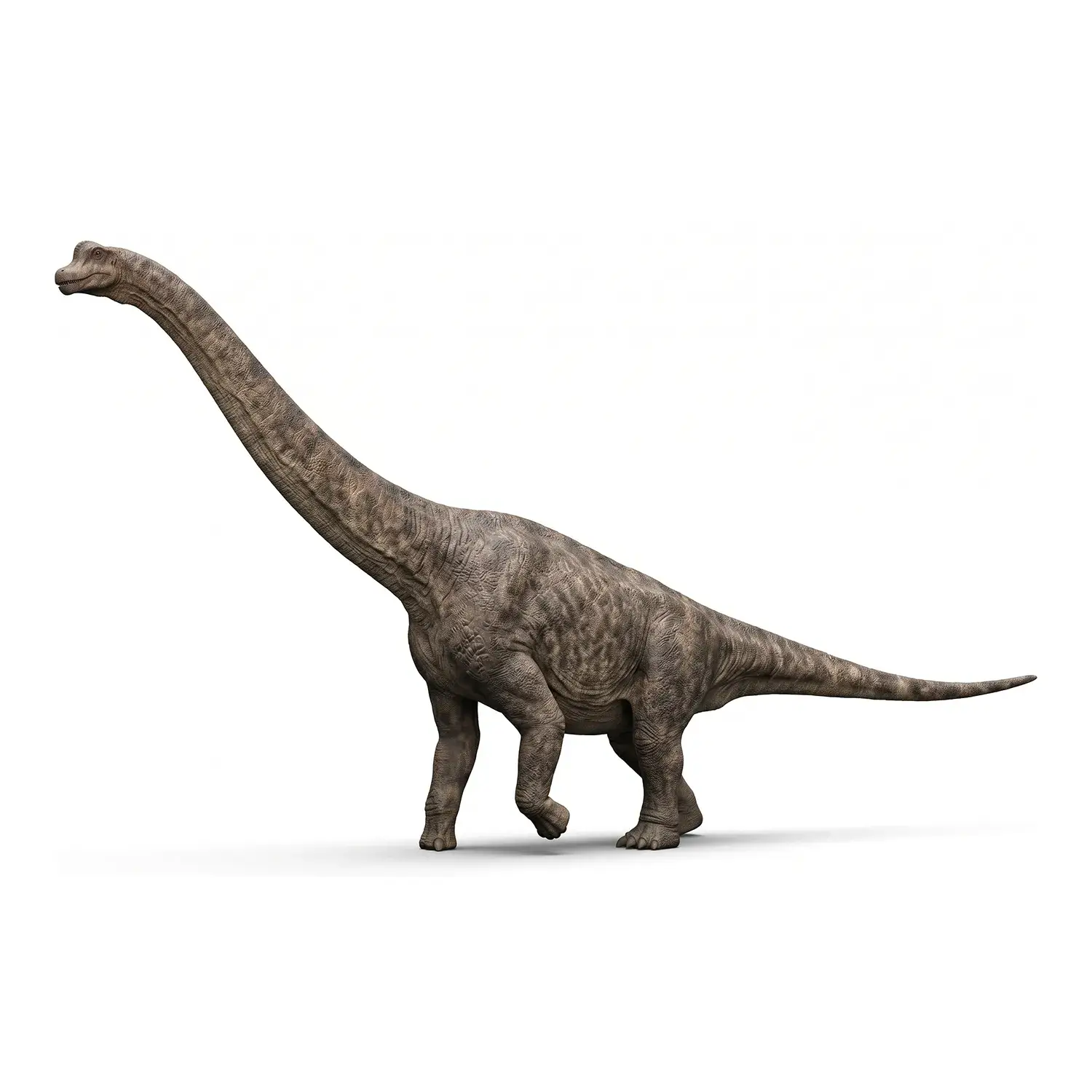
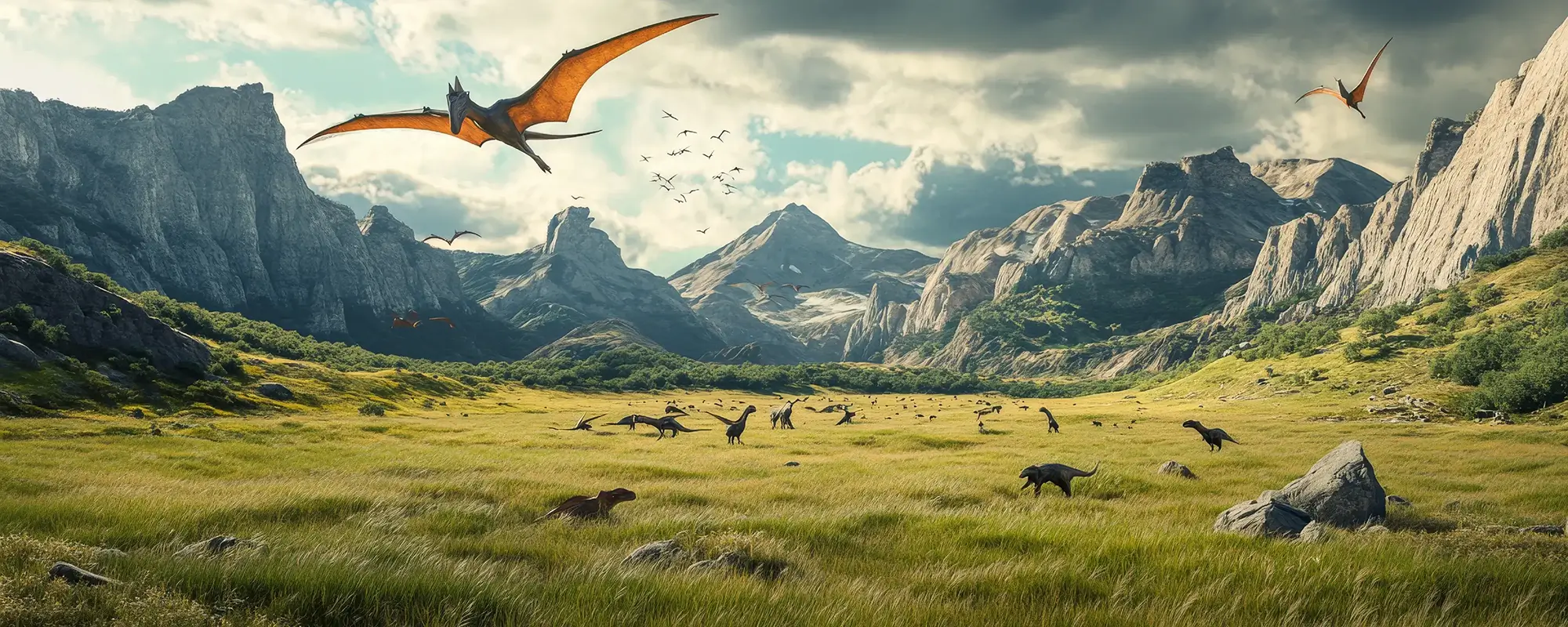
During the Late Jurassic period of the Mesozoic Era, a massive herbivorous dinosaur—so gigantic you would have had to look straight up to see it—lived in what is now Portugal.
Its name is “Lusotitan.”
It is a quadrupedal sauropodomorph belonging to the Brachiosauridae family. With its astonishing physique and distinct body shape, it commanded an overwhelming presence in the ecosystem of its time.
The Origin of the Name “Giant of Lusitania”
The genus name “Lusotitan” is a coined term combining the following two words, carrying the meaning “Giant of Lusitania.”
Luso
A Latin prefix referring to the inhabitants of “Lusitania,” the name used for the region of Portugal when it was a province of the Roman Empire.
Titan
The giant deities appearing in Greek mythology.
Additionally, the specific name “atalaiensis” of the type species “Lusotitan atalaiensis” was named after “Atalaia,” the location in Portugal where the fossils were discovered.
An Ecology Utilizing High Shoulders and Long Forelimbs
Partial skeletons have been excavated from the Lourinhã Formation. It is a super-massive dinosaur estimated to have reached 21 to 25 meters (68.9 to 82.0 feet) in length and weighed around 30 metric tons (66,000 lbs).
Forelimbs Longer Than Hind Limbs
Its greatest defining feature is the “high shoulders and extremely long forelimbs” typical of the Brachiosauridae family.
In the actual fossils, while the femur (thigh bone) of the hind limb measured 2 meters (6.6 feet), the humerus (upper arm bone) of the forelimb was an astonishing 2.05 meters (6.7 feet) long.
As a result, its shoulders were positioned significantly higher than its hips.
Eating Leaves from Tall Trees with Spoon-Shaped Teeth
It inhabited an insular environment (isolated, island-like conditions) characterized by open woodlands with dry seasons.
It is believed that it utilized its long forelimbs and high shoulders to reach up and effortlessly feed on leaves high in the trees, places other dinosaurs could not reach.
Speculations About Its Head
Although its skull has yet to be discovered, characteristics of its close relatives suggest that it had “nostrils positioned high on its head and a mouth equipped with spoon-shaped teeth for efficiently stripping vegetation.”
Independence from Brachiosaurus! The History of Its Discovery and Classification
The research history of Lusotitan is also a history of its classification being re-evaluated over more than half a century since its fossils were first discovered.
1947: Discovery of Fossils
The first fossils were discovered by Manuel de Matos of the Geological Survey of Portugal.
1957: Announced as a Species of Brachiosaurus
The fossils were described by paleontologists Albert-Félix de Lapparent and Georges Zbyszewski. At the time, it was named “Brachiosaurus atalaiensis” as a new species of the famous Brachiosaurus genus.
2003: Established as an Independent Genus
Nearly half a century after its discovery, paleontologists Octávio Mateus and Miguel Telles Antunes conducted a re-examination.
As a result, it was found to be a distinct species different from Brachiosaurus, and was reclassified into the new genus “Lusotitan atalaiensis.”
Conclusion
Although initially considered a species of Brachiosaurus when discovered in 1947, subsequent detailed studies proved Lusotitan to be its own unique genus.
The image of it leisurely eating leaves from tall trees in the open woodlands of Late Jurassic Portugal, taking full advantage of its high shoulders, must have been a majestic sight truly befitting the name “Giant of Lusitania.”
If new fossils, such as its yet-to-be-discovered skull, are unearthed in the future, we can expect even more details about the ecology of this massive sauropodomorph to be revealed.