
Scutellosaurus


Name Origin
Lizard with a small shield
Family
Scutellosauridae
Classification
Diapsida, Ornithischia, Thyreophora
Habitat (Discovery Location)
United States
Period
Early Jurassic
Length
Approximately 1.2 meters
Weight
Approximately 10 kg
Diet
Herbivore
You might also like... 

-
 Saltasaurus
- Classification
- Sauropods
- Characteristics
- Herbivorous
- Era
- Cretaceous period
- Erketu
- Classification
- Sauropods
- Characteristics
- Herbivorous
- Era
- Cretaceous period
- Nanotyrannus
- Classification
- Theropods
- Characteristics
- Carnivorous
- Era
- Cretaceous period
- Archaeornithomimus
- Classification
- Theropods
- Characteristics
- Omnivorous
- Era
- Cretaceous period
-
Sponsored Links
-
Sponsored Links







![[Latest Research] What Was the Function of Spinosaurus's Giant "Sail"? Exploring the Mysteries of Thermoregulation and Underwater Locomotion](https://dinosaurmuseum.jp/wp/wp-content/uploads/eyecatch_spinosaurus-sail-function_en-1024x512.webp)
![[Latest Discovery] A Third Type of Skin, Neither Scales Nor Feathers? Meet "Haolong dongi," a New Dinosaur Species Covered Entirely in Spikes](https://dinosaurmuseum.jp/wp/wp-content/uploads/eyecatch_dinosaur-spiky-skin-discovery_en-1024x512.webp)

Description
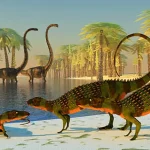
North America during the Early Jurassic.
In this era, before dinosaurs had fully mastered increasing their size and heavy armament, an important dinosaur that would become the root of the later “Thyreophora” lived.
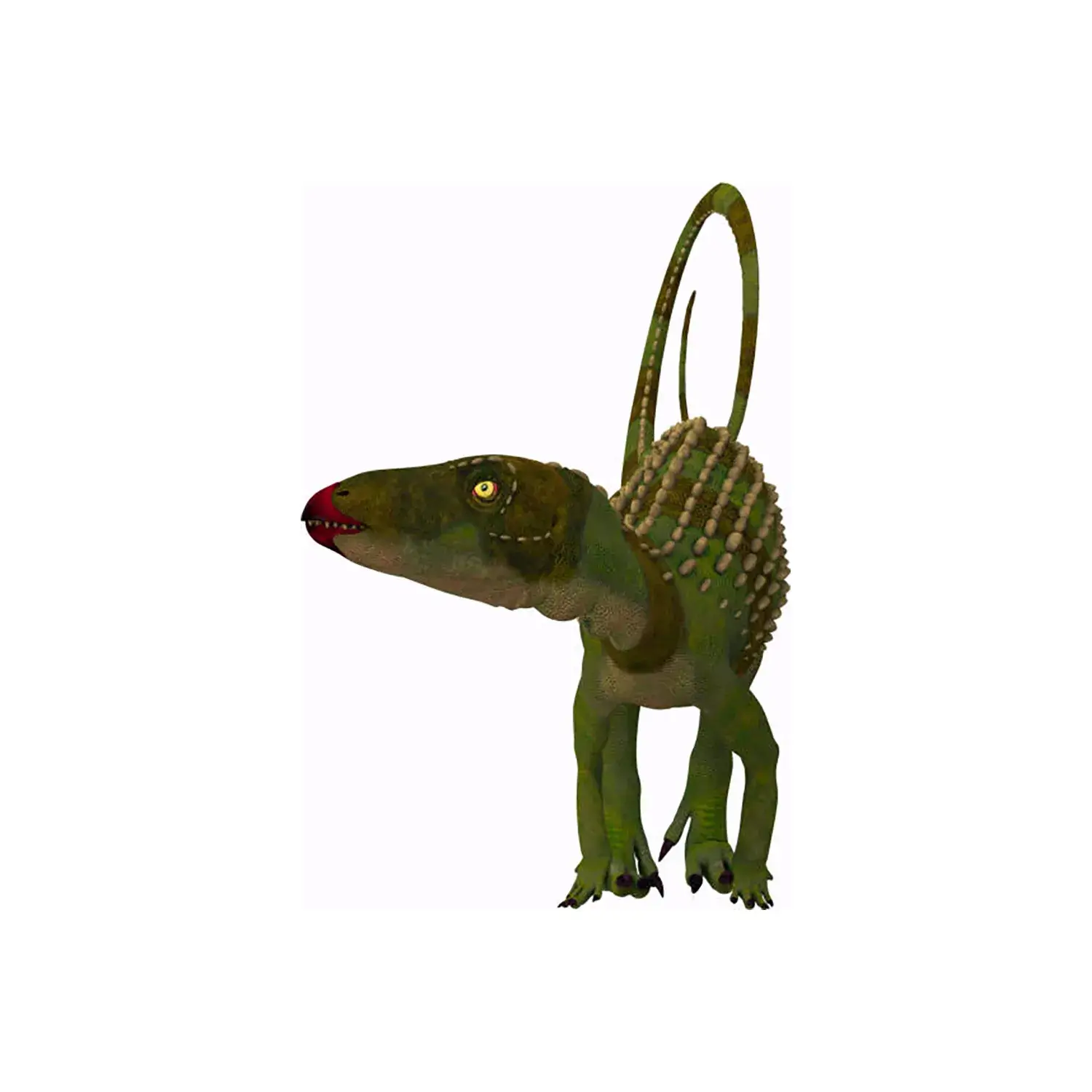
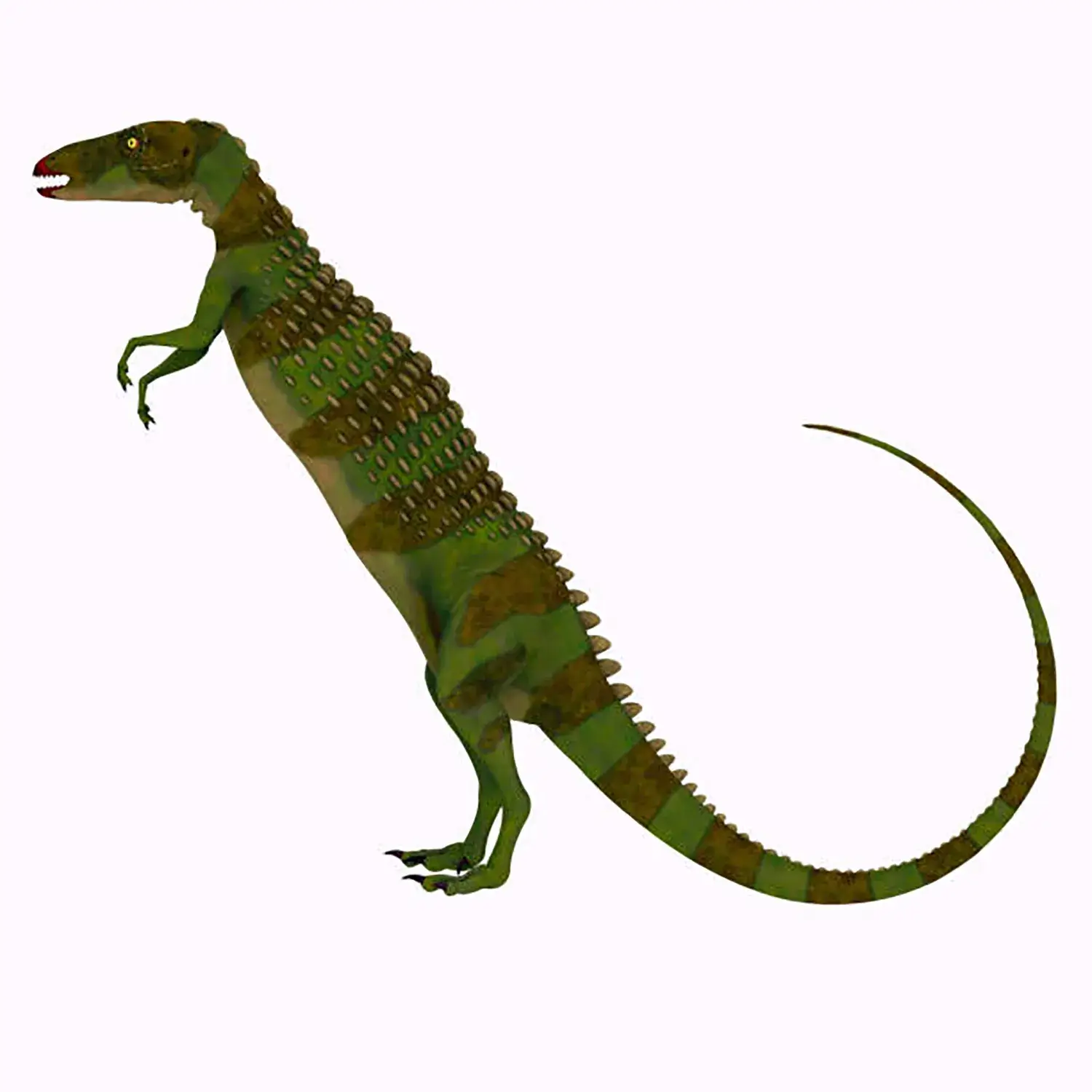
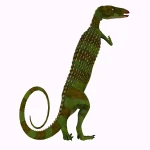
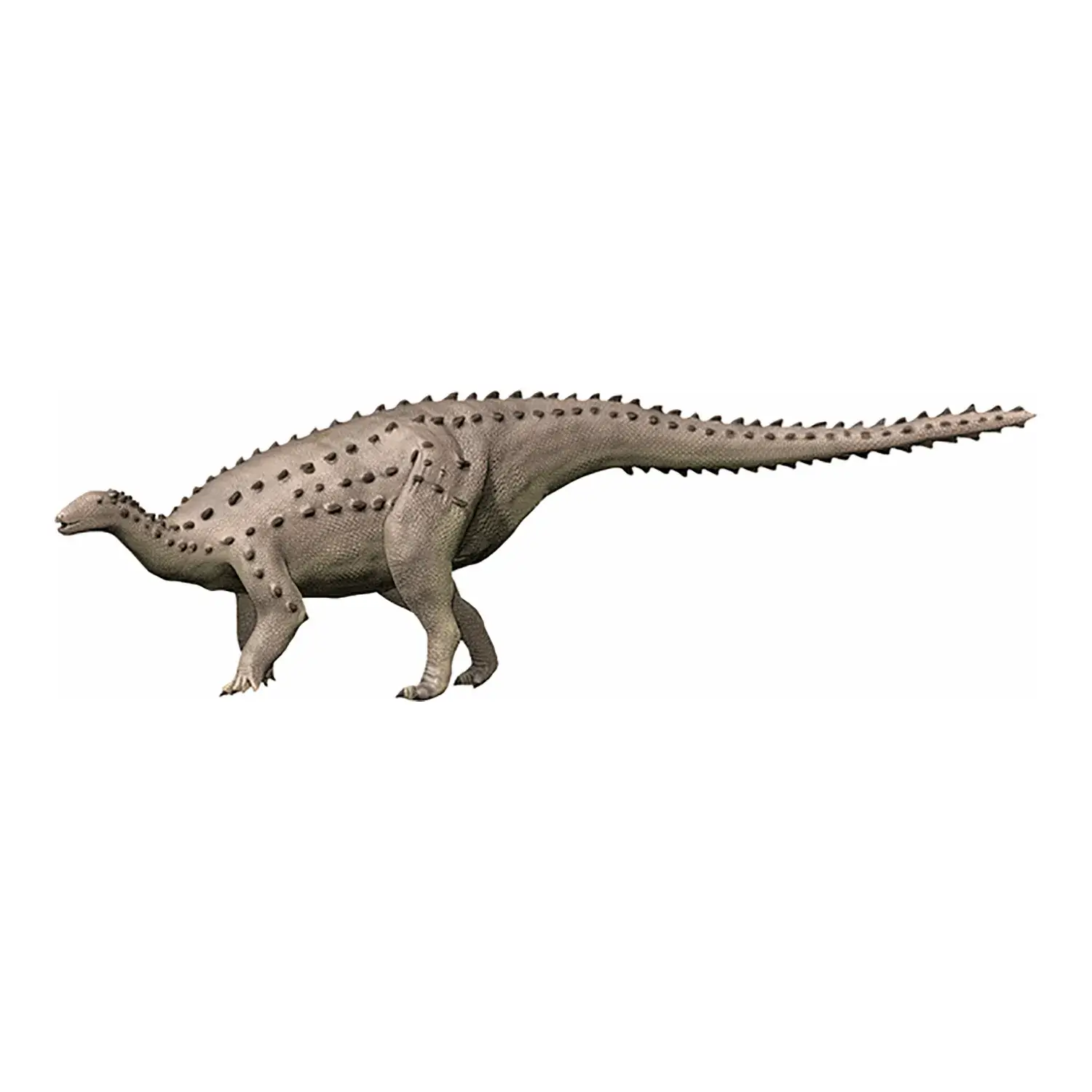
That dinosaur, running around lightly on two legs while possessing as many as 300 bone plates on its body, is “Scutellosaurus.”
Although it is a small dinosaur with a total length of about 1.2 m and weighing about 10 kg, they are essential for understanding the evolution of dinosaurs.
Common Ancestor of Stegosaurs and Ankylosaurs? A Key to Evolution
Name Derived from “Little Shield”
The scientific name Scutellosaurus combines the Latin words for “little shield (scutellum)” and “lizard (saurus),” meaning “lizard with a small shield.”
Roots of Thyreophora
The reason they are extremely important paleontologically lies in their taxonomic position.
“Stegosaurus (Stegosauria)” with plates on its back, and “Ankylosaurus (Ankylosauria)” armored all over its body.
Scutellosaurus is believed to be a species close to the common ancestor before these two major groups called “Thyreophora” split, or a dinosaur that retains their most primitive form.
Slender Body and Bipedalism: Appearance Before Becoming a Tank
While later Thyreophorans shifted to walking on four legs like heavy tanks, the early member Scutellosaurus had a very slender body shape.
A Long Tail Taking Up 60% of Total Length
The head was small, the torso was slender, and it had a very long tail that accounted for as much as 60% of its total length.
Balancing with this long tail, they were able to move around lightly, mainly walking on two legs.
It could move around lightly on two legs.
Primitive Characteristics
Its limbs were relatively short, and it was possible to walk on all fours depending on the situation.
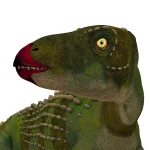
Its overall silhouette resembles the primitive Lesothosaurus, but its teeth clearly possessed characteristics of a herbivorous thyreophoran.
300 “Little Shields” and a “Run to Win” Survival Strategy
Armor Covering the Whole Body
As the name “lizard with a small shield” implies, its body was already equipped for defense.
From the neck to the back, flanks, and down to the base of the long tail, more than 300 small bone plates (ossified skin) were embedded throughout its body.
More than 300 small bone plates were embedded throughout the body.
These armor pieces were spaced apart, and their shapes varied, including flat ones, raised ones, and triangular spikes along the spine.
Armor Was Merely “Insurance”
However, this armor was not strong enough to repel enemies like the later Ankylosaurus.
It might have withstood a single blow from a small theropod, but it was not invincible.
Their greatest defense strategy was to use the armor as “insurance” while utilizing the speed of bipedal walking to “run away.”
Scutellosaurus was the very existence that heralded the beginning of the evolutionary process in which dinosaurs became heavily armored for defense.