Pachyrhinosaurus


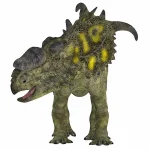
Name Origin
Thick-nosed lizard
Family
Ceratopsidae
Classification
Diapsida, Ornithischia, Marginocephalia
Habitat (Discovery Location)
United States, Canada
Period
Approximately 70 to 66 million years ago (Late Cretaceous)
Length
Approximately 5 to 8 meters
Weight
Approximately 2 to 5 tons
Diet
Herbivorous
TODAY'S QUIZ
Correct answer = 1 coin
What was the structure on the nose of a Pachyrhinosaurus made of?
Loading…
You might also like... 

-
 Lusotitan
- Classification
- Sauropods
- Characteristics
- Herbivorous
- Era
- Jurassic period
- Imperobator
- Classification
- Theropods
- Characteristics
- Carnivorous
- Era
- Cretaceous period
- Sonidosaurus
- Classification
- Sauropods
- Characteristics
- Herbivorous
- Era
- Cretaceous period
- Moros
- Classification
- Theropods
- Characteristics
- Carnivorous
- Era
- Cretaceous period
-
Sponsored Links
-
Sponsored Links




![[Latest Research] What Was the Function of Spinosaurus's Giant "Sail"? Exploring the Mysteries of Thermoregulation and Underwater Locomotion](https://dinosaurmuseum.jp/wp/wp-content/uploads/eyecatch_spinosaurus-sail-function_en-1024x512.webp)
![[Latest Discovery] A Third Type of Skin, Neither Scales Nor Feathers? Meet "Haolong dongi," a New Dinosaur Species Covered Entirely in Spikes](https://dinosaurmuseum.jp/wp/wp-content/uploads/eyecatch_dinosaur-spiky-skin-discovery_en-1024x512.webp)




Description
During the Late Cretaceous period in the North American continent (stretching from modern-day Canada to Alaska), there lived a dinosaur that underwent a unique evolution, setting it apart from other horned dinosaurs.
The name of this dinosaur is Pachyrhinosaurus.
When we think of ceratopsians (horned dinosaurs), with Triceratops as the prime example, the common perception is that they have “a frill and magnificent horns growing over their noses and eyes.”
However, Pachyrhinosaurus breaks this conventional wisdom, attracting the attention of researchers as an “unorthodox presence.”
The Greatest Feature! The Mystery of the “Massive Boss” That Replaced Horns
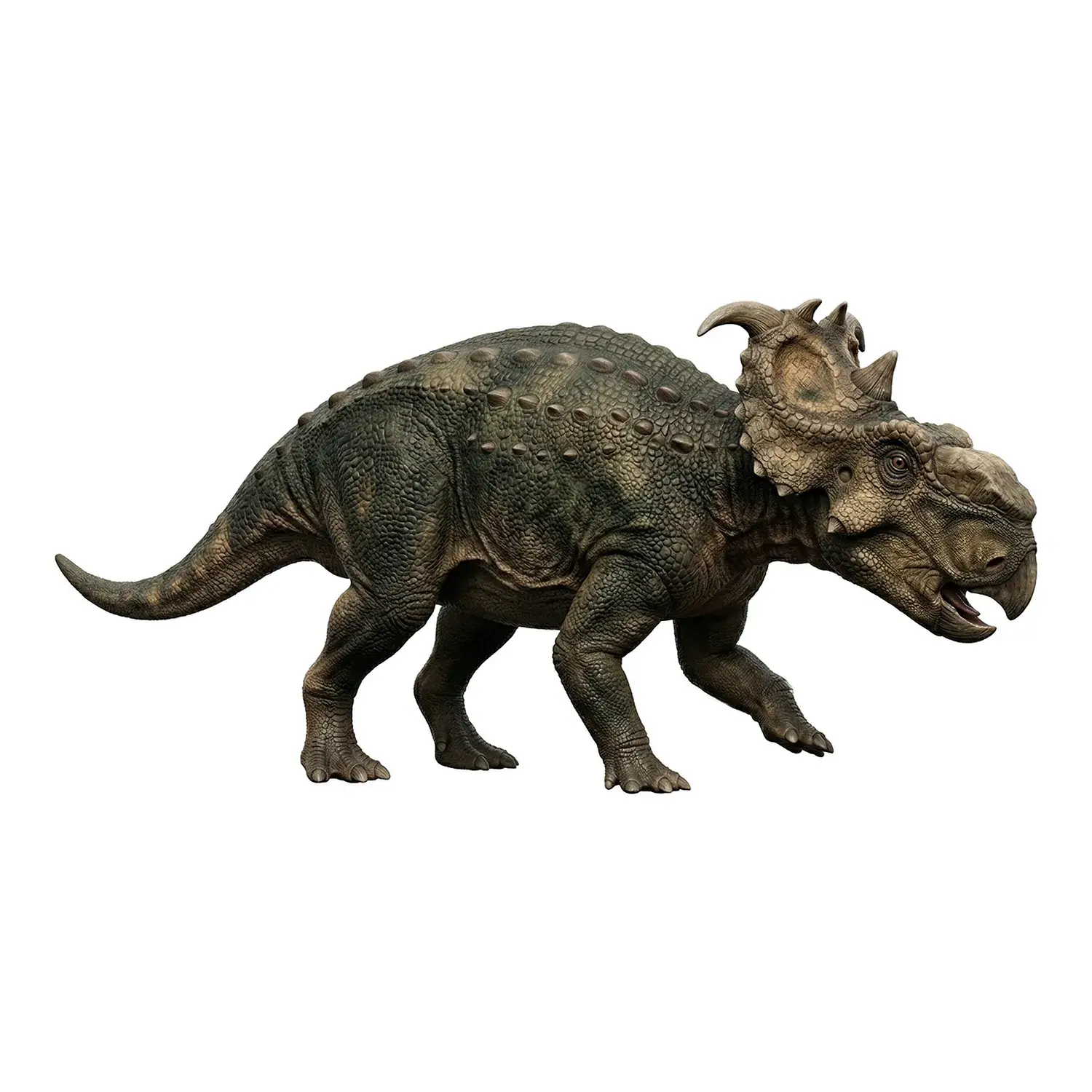
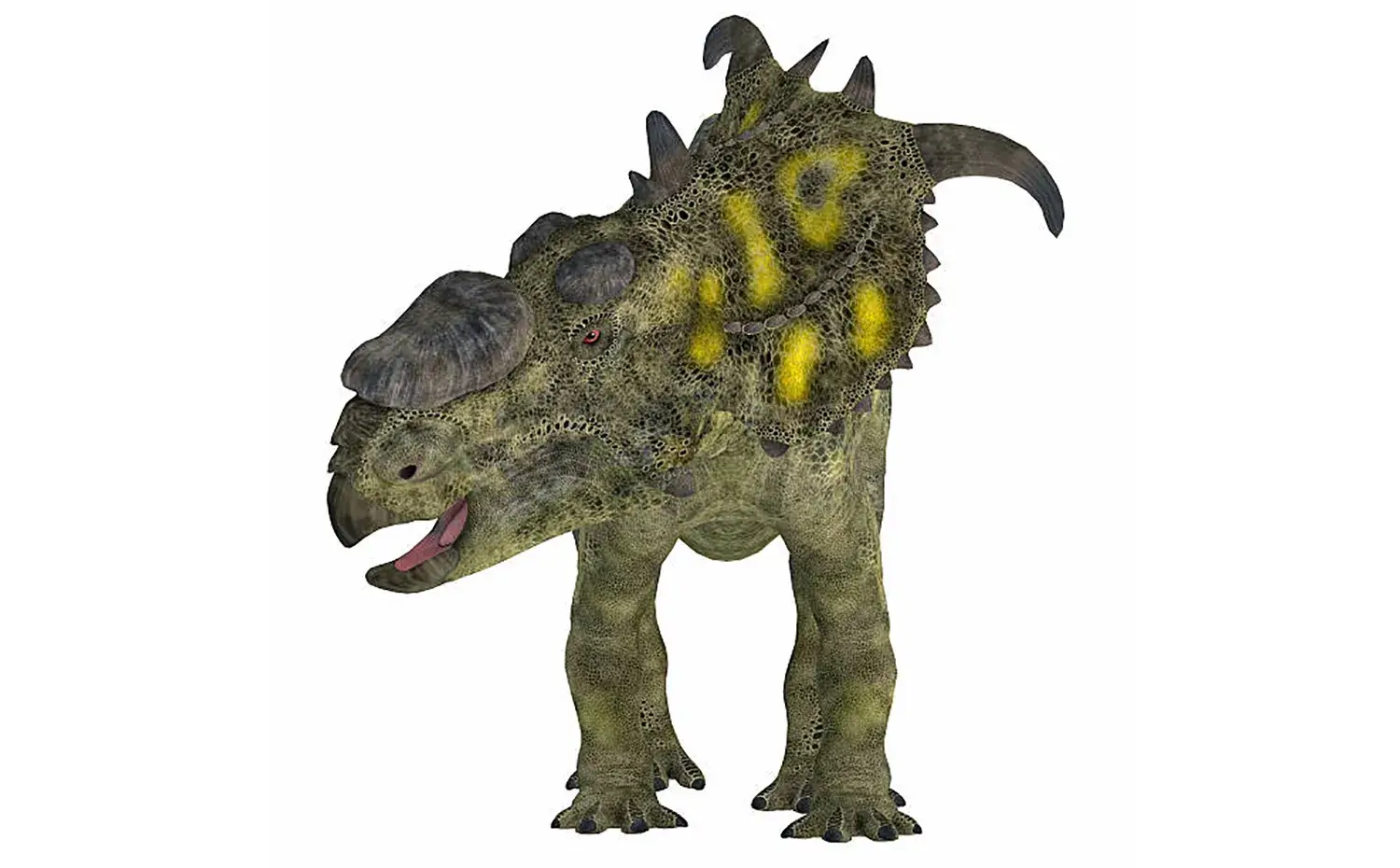
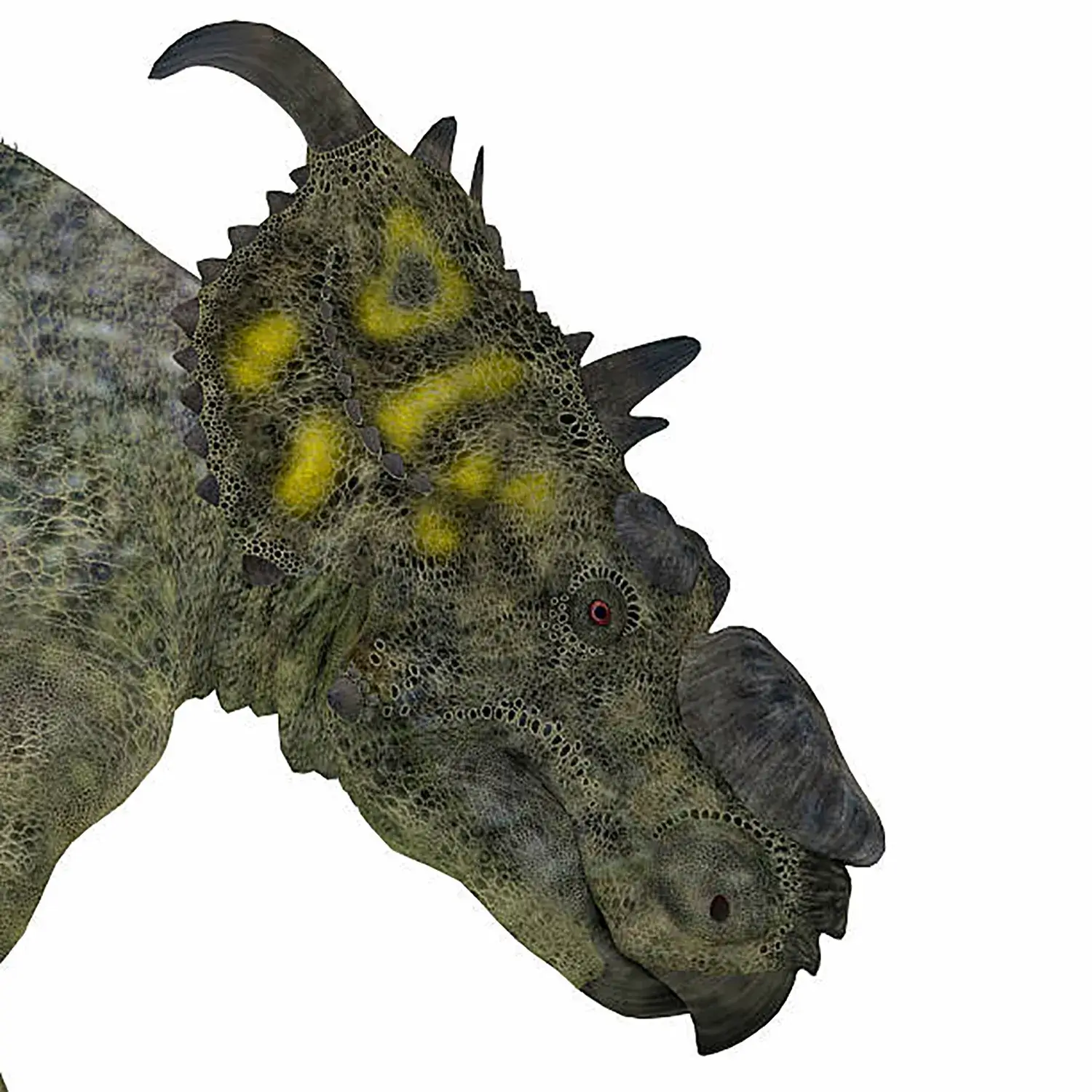
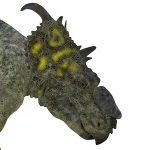
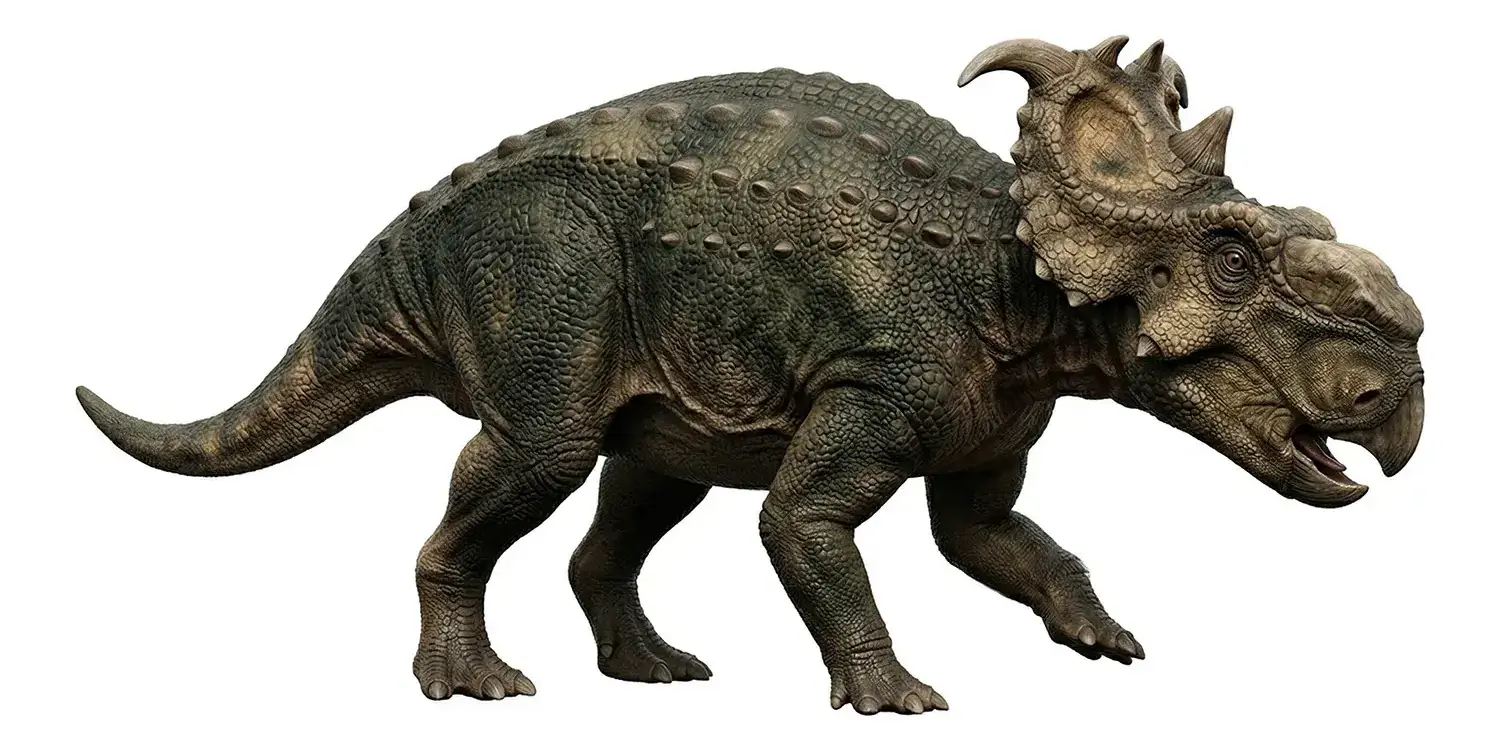
The largest and most bizarre feature of Pachyrhinosaurus is the presence of flat, rugged, “massive bosses” (bony bumps) over its nose and eyes, right where normal horned dinosaurs would have sharp horns.
It had flat, rugged, massive bosses over its nose and eyes.
Despite belonging to the same “Centrosaurinae” subfamily as Styracosaurus and others with showy nasal horns, they had faces that looked as if they had abandoned their weaponized horns.
Regarding the role of these strange bosses, the following theories have been proposed so far:
The Cushion Theory
The theory that they served as cushions specialized for pushing matches, ensuring that males competing for females would not deal fatal injuries to one another.
The Display Theory
The theory that they were visual appeals (displays) used to attract mates.
A New Theory: Did They Actually Have “Giant Keratin Horns”?
In recent years, a thrilling new theory has emerged that overturns the interpretation of these bosses.
As a result of detailed fossil examinations, “traces of blood vessels” and “remnants of ligaments” were discovered around the bosses.
This led to the possibility being pointed out that, “While lacking a bony core, Pachyrhinosaurus might have actually had ‘giant horns made of keratin’ sitting on top of the bosses, much like a rhinoceros.”
Keratin, which is the same material as human nails and hair, does not fossilize.
If this is true, it means they possessed “revolutionary horns capable of self-regeneration even if broken.”
While thick bosses are mainstream in current reconstructions, there is also paleoart depicting them with magnificent keratinous horns.
Flashy “Frills” and “Spikes” That Asserted Individuality
The strangeness of their heads does not stop at the bosses.
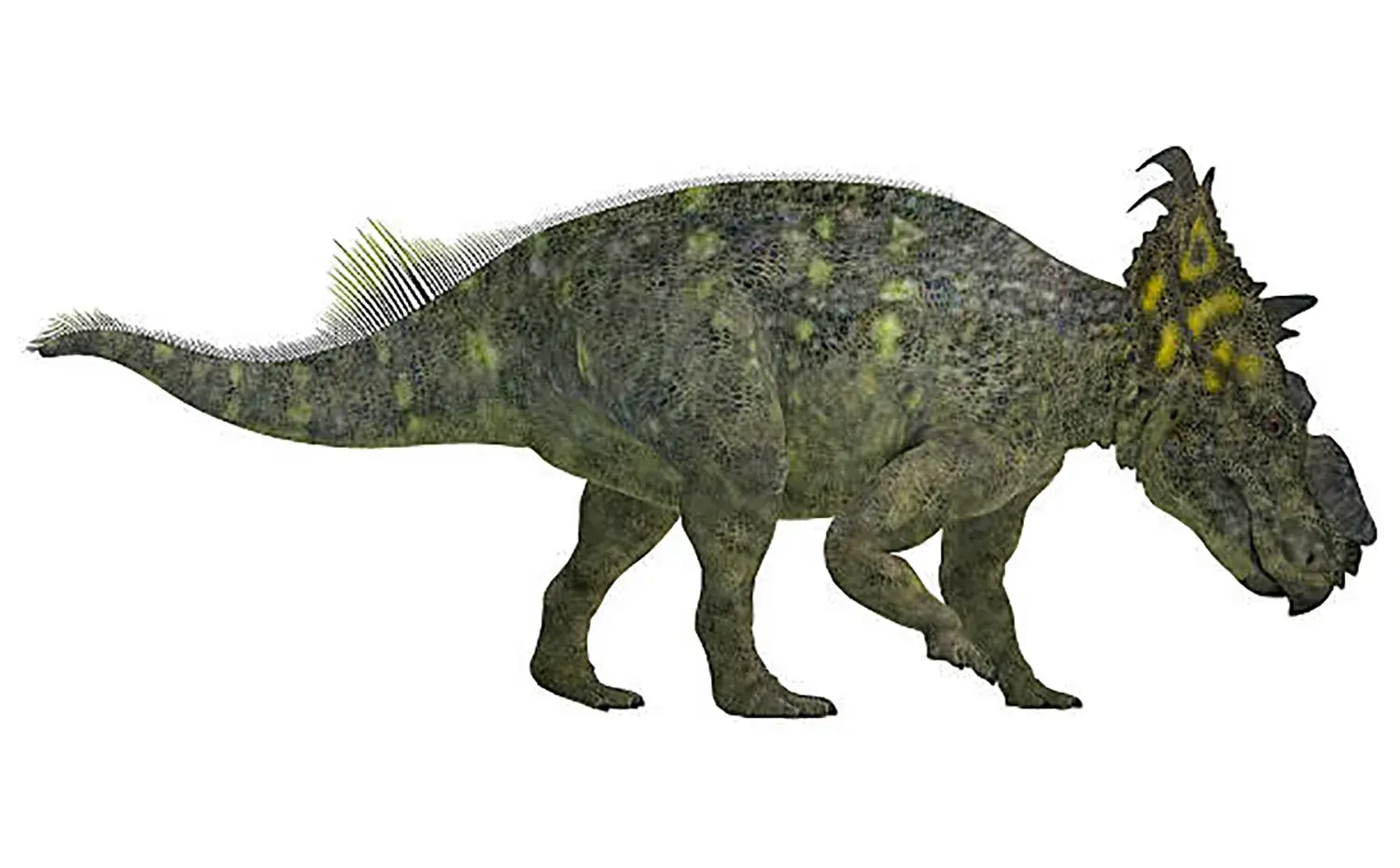
The neck frill extending from the back of the head, along with the decorations surrounding it, is also highly unique.
A Lightweight Frill
Though similar in shape to a Triceratops, it was somewhat shorter, and the inside featured two large oval holes (fenestrae) that helped reduce the weight of its massive head.
Spikes Serving as “Faces”
Large, flashy spikes grew around the frill.
There were significant differences in the shape and growth patterns of these spikes depending on the species and individual.
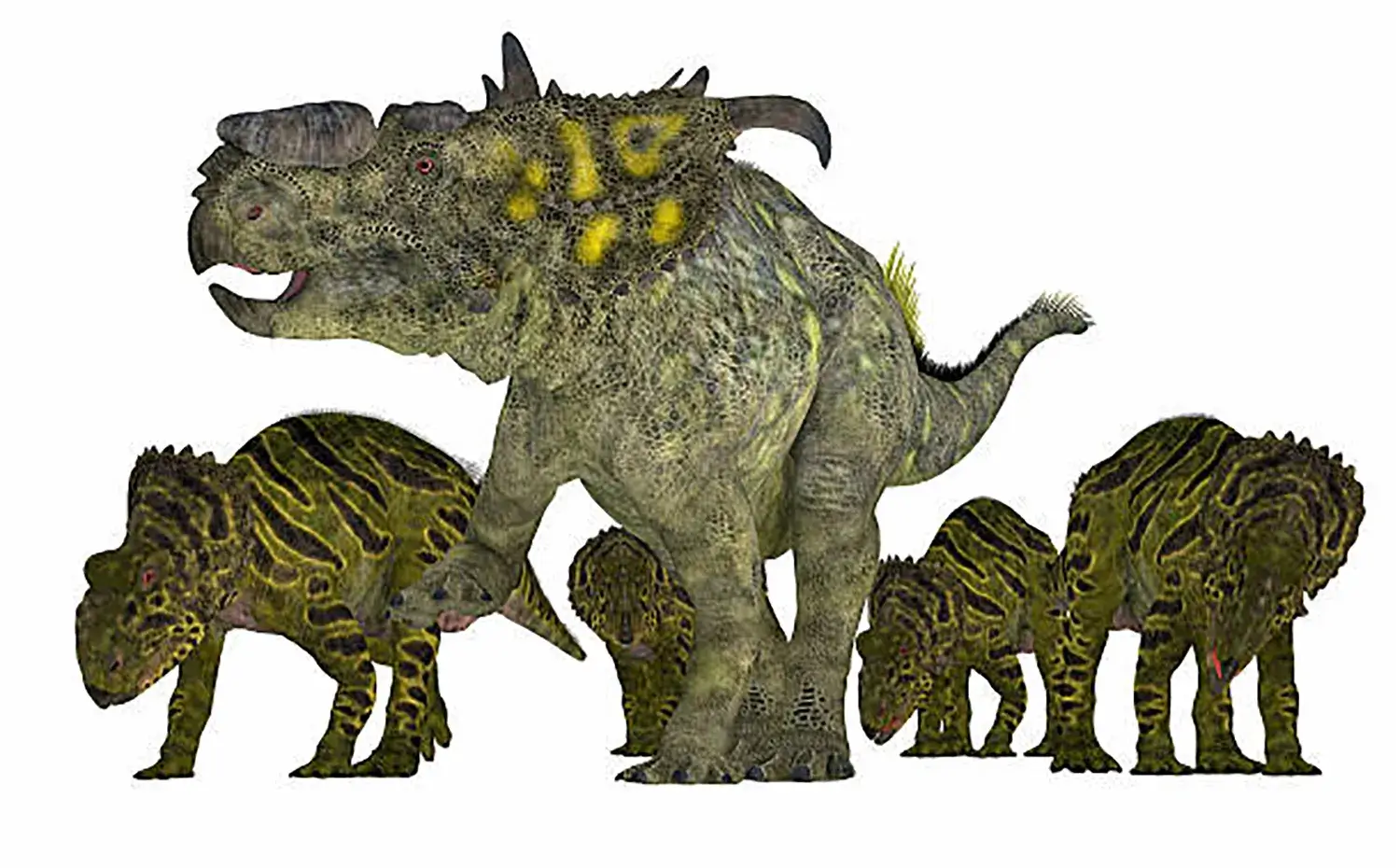
For these herd-dwelling animals, it is believed these spikes served the role of “faces” to identify companions.
Size Differences by Species and the Possibility of Feathers
Currently, three species have been named within the genus Pachyrhinosaurus, and there are major differences in their physical sizes.
P. lakustai / P. perotorum
Approximately 5 meters (16 feet) in total length and about 2 tons in weight (an average size for horned dinosaurs)
P. canadensis (Type Species)
7 to 8 meters (23 to 26 feet) in total length and 4 to 5 tons in weight (a massive body comparable to a modern minibus)
Additionally, fossils have been discovered in large numbers not only in Alberta, Canada, but also in cold regions like Alaska in the United States.
Because Alaska experienced severe cold and darkness during the winter back then, a theory has been proposed that they might have “worn a coat of feather-like fur over their entire bodies” to survive the harsh climate.
Bonebeds Reveal “High Sociality” and “Herd Strength”
Pachyrhinosaurus boasts a highly favorable number of specimens in the paleontological community, with over ten skull fossils having been discovered.
What is especially noteworthy is that they have been discovered in “bonebeds” where massive amounts of bones are densely packed together.
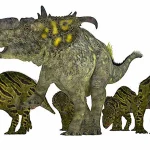
From newborns to mature adults, they were unearthed together, providing conclusive evidence that they “formed and lived in large-scale herds” regardless of age.
They lived by forming large-scale herds, regardless of age.
(*As research into this growth process advanced, a significant event in paleontology occurred: the dinosaur known as “Monoclonius” became a nomen dubium (doubtful name), as it was suggested to not be an independent species, but rather “the juvenile form of other horned dinosaurs.”)
Strong herd coordination, agile leg strength, and thick bosses (or unknown horns).
Armed with these, a herd of Pachyrhinosaurus was by no means an easy prey, even for large carnivorous dinosaurs like those in the Tyrannosaurus family.
With their unconventional bosses, Pachyrhinosaurus was sometimes ridiculed as a “failed evolution.”
However, the true picture told by the fossils is that of a highly successful herbivorous dinosaur that adapted to the polar cold, built a strong social structure, and thrived.
Precisely because it is a dinosaur with abundant fossil discoveries, the day may eventually come when a discovery of the century definitively proves the existence of those “keratinous horns.”